Skip to content
recaplica

    One moment: security check

    Cloudflare wants to make sure you're not a robot. Tick the box below and your search will continue on its own.

    IT
    recaplica Virtual influencers: the AI-made creators behind the profiles
    © 2026 Recaplica · recaplica.com — All rights reserved
    Home › Technology

    Virtual influencers: the AI-made creators behind the profiles

    By Recaplica Newsroom · Updated on September 19, 2026

    What to print

    Page numbers appear when printing with default margins.

    Slides

    Choose a cut

    Flash10 slidesThe essential thread, to present in classFull15 slidesEvery chapter and the deeper detail

    Both come with speaker notes.

    Telegram channel
    recaplica Clear in 30 seconds, yours in 10 minutes.
    In 30 seconds Key points Figures Deep dive Slides Myths Mind map Quiz Flashcards FAQ

    In 30 seconds quick read

    Virtual influencers are digital characters built by an agency or studio, complete with a face, a voice and a biography, who post on social media the way a real creator would. The phenomenon predates the generative-AI boom: Lil Miquela's account has been live since April 23, 2016, and Shudu Gram first appeared on April 22, 2017. Some of these profiles work with major brands: Miquela has partnered with Calvin Klein and Prada, while the Spanish agency The Clueless built Aitana López after finding human models and influencers too unreliable to manage. In the United States, the Federal Trade Commission updated its advertising rules in 2023 to explicitly cover virtual influencers among the content that must be disclosed as sponsored.

    Key Points

    • A virtual influencer is a digital character with a social media profile run by an agency or studio, not a personal filter or avatar.
    • The trend predates the generative-AI boom: Lil Miquela's account dates back to April 23, 2016, and Shudu Gram's to April 22, 2017.
    • Some agencies build them for practical reasons: The Clueless co-founder Rubén Cruz has said the agency launched Aitana López because human models and influencers proved unreliable to work with.
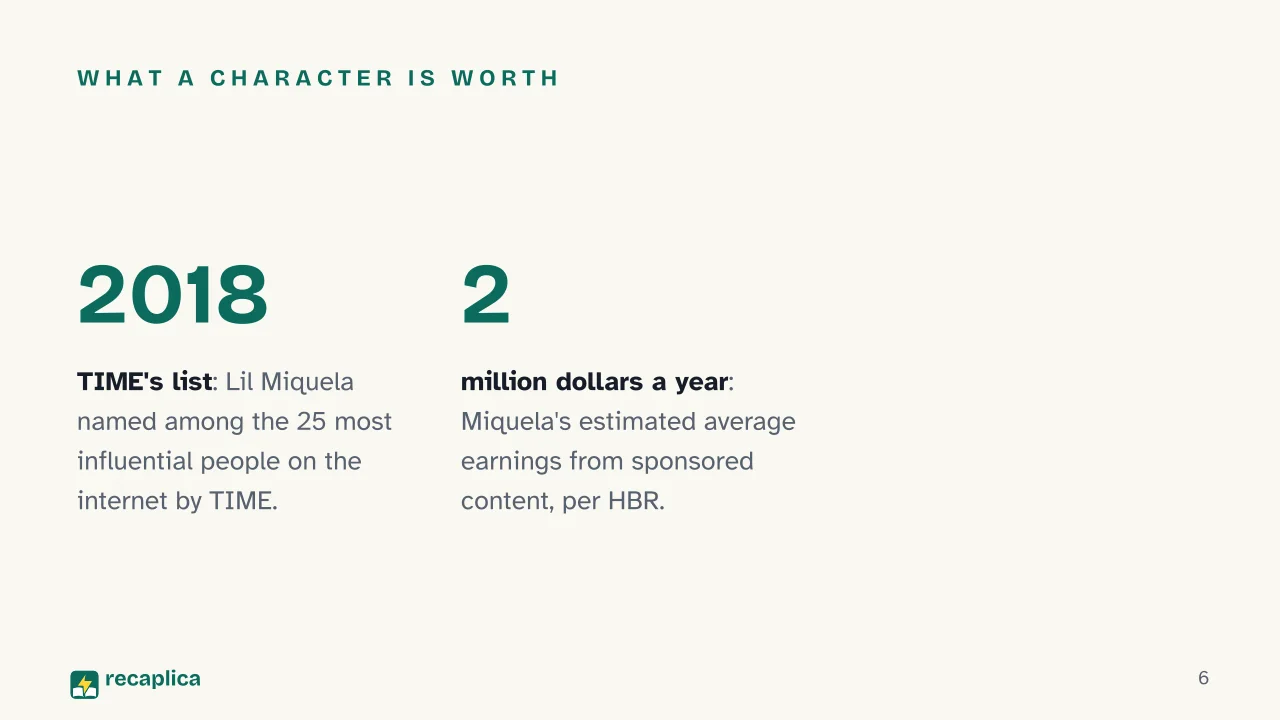
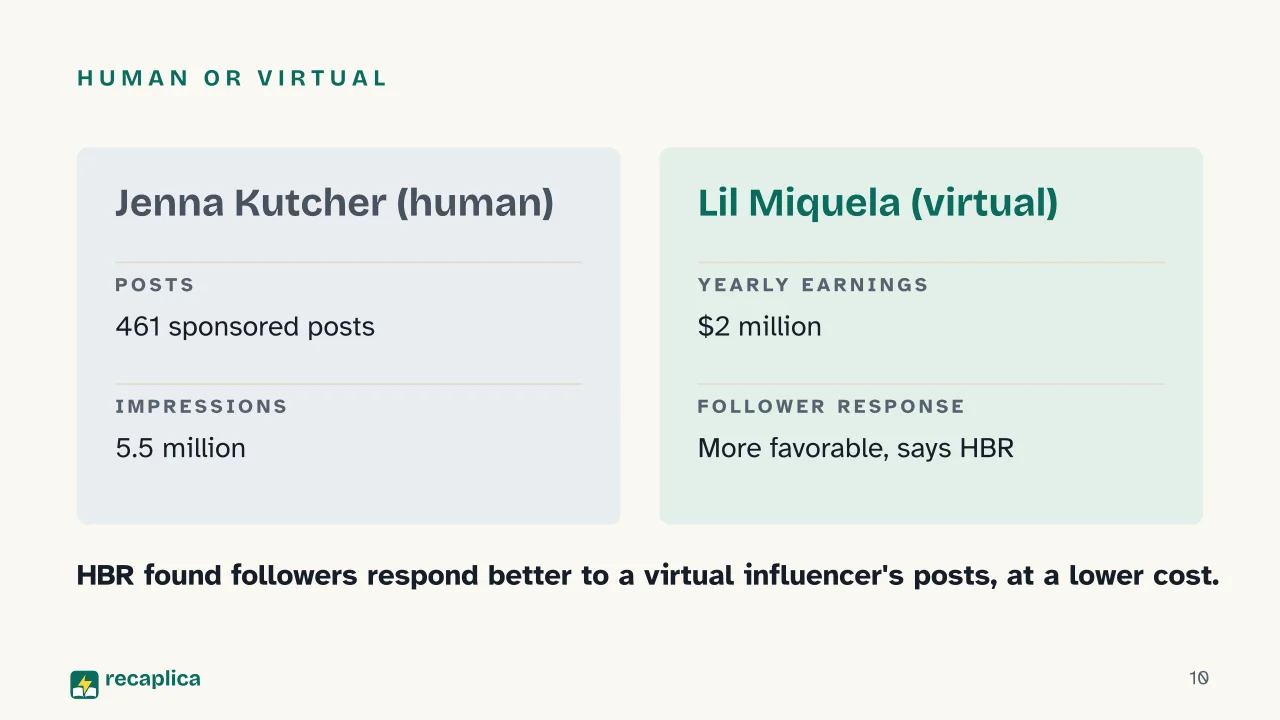
    • According to Harvard Business Review, Lil Miquela earns an average of $2 million a year posting content for major brands.
    • In the United States, the FTC revised its endorsement guidelines in 2023 to explicitly name virtual influencers.
    • Research firm SNS Insider estimates the global virtual influencer market was worth $8 billion in 2025.

    Key figures

    • $8 billion Estimated value of the global virtual influencer market in 2025, according to research firm SNS Insider. Source: SNS Insider, 2025
    • 2018 The year Lil Miquela made TIME's list of the 25 most influential people on the internet. Source: VirtualHumans.org / TIME, 2018
    • €3,000 Estimated average monthly earnings in 2023 for Aitana López, the virtual creator built by Spanish agency The Clueless (up to €10,000 in a single month). Source: Fortune, 2023

    Deep Dive

    A virtual influencer isn’t a person hiding behind a filter — it’s a digital character in its own right, with a name, a biography, a recognizable look and a social profile its creators update on a regular schedule. There’s no one snapping selfies behind the account; instead, an agency or studio writes the character’s story, shapes its appearance and posts content the way any working creator would. That’s a different goal from apps that let anyone generate a personal portrait with generative AI: there, the user stays themselves behind a new filter, while here a fictional character is born and goes on to live its own life on social media.

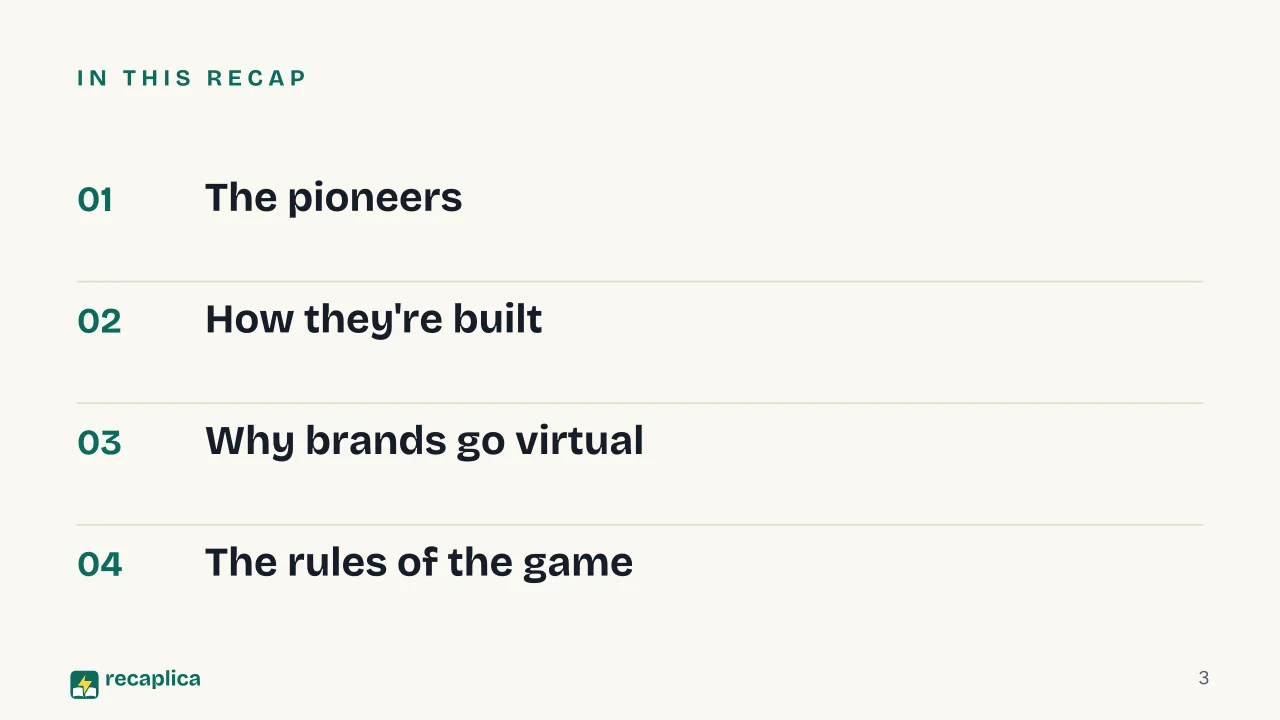
    The pioneers: before the generative-AI boom

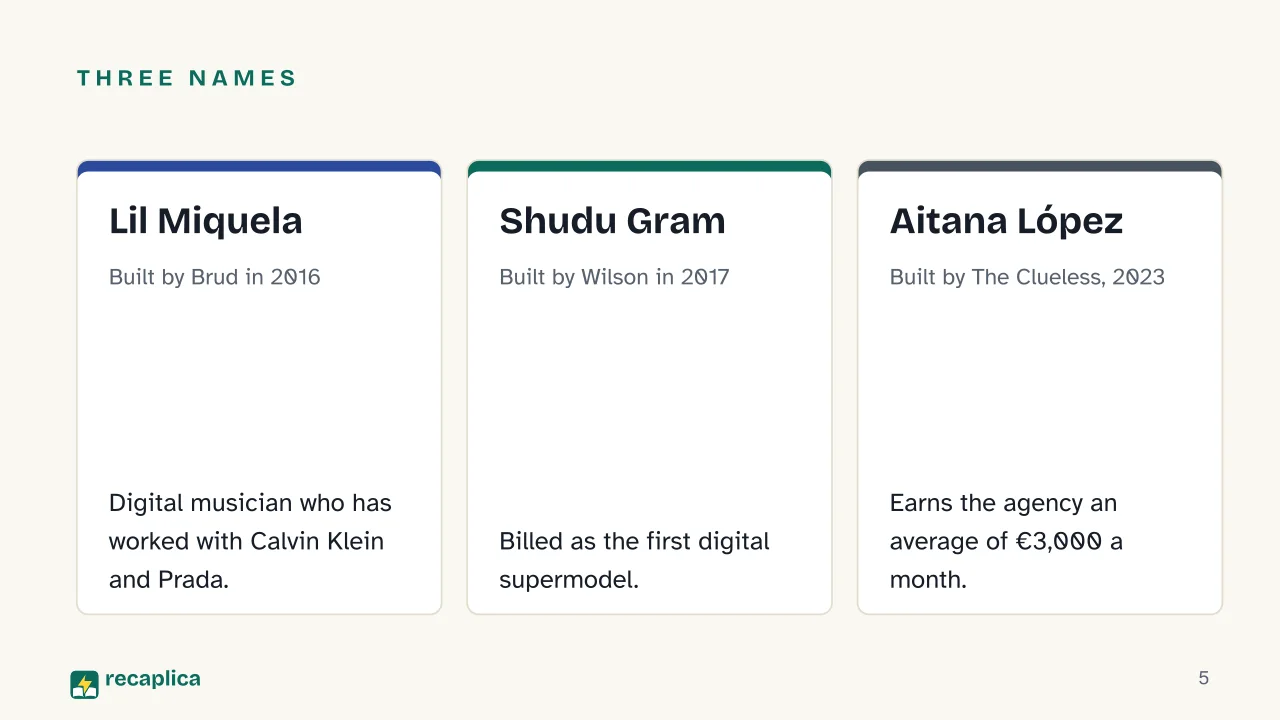
    The trend is older than it looks. Lil Miquela has had an active Instagram account since April 23, 2016, created by the agency Brud (founded by Trevor McFedries and Sara DeCou, later acquired by Dapper Labs in late 2021). Shudu Gram, whose bio calls her “the world’s first digital supermodel,” first appeared on April 22, 2017: she was built by Cameron-James Wilson, founder of the agency The Diigitals, who has said he made her “from a very cheap gaming PC in a shed in my mom’s garden.” Both profiles predate the mass adoption of generative-AI tools by ordinary users by several years.

    CharacterCreated byFirst appearanceOne known fact
    Lil MiquelaBrud agencyApril 23, 2016TIME named her among the internet’s 25 most influential people in 2018
    Shudu GramCameron-James Wilson (The Diigitals)April 22, 2017Has worked with Vogue, Cosmopolitan and Balmain
    Aitana LópezThe Clueless agencyNot precisely dated122,000 followers as of the 2023 Fortune article

    Why an agency builds a character instead of hiring a person

    The clearest case is Aitana López, the Spanish virtual model built by the agency The Clueless. Co-founder Rubén Cruz explained the choice in plain business terms: “We did it so that we could make a better living and not be dependent on other people who have egos.” The agency has said it found human models and influencers too unreliable and difficult to work with.

    Real-world example: according to a 2023 Fortune article, Aitana generates an average of €3,000 a month for the agency, with a peak of €10,000 in a particularly good month; most of that revenue comes from social media ads and ambassador deals for supplement brands.

    Not every case reaches numbers like that, but when it works, a virtual profile can bring in revenue comparable to a campaign built around a human influencer, with fewer variables to manage: no delays, no ill-timed comment, no contract to renegotiate over a change of agent.

    How a character like this gets built

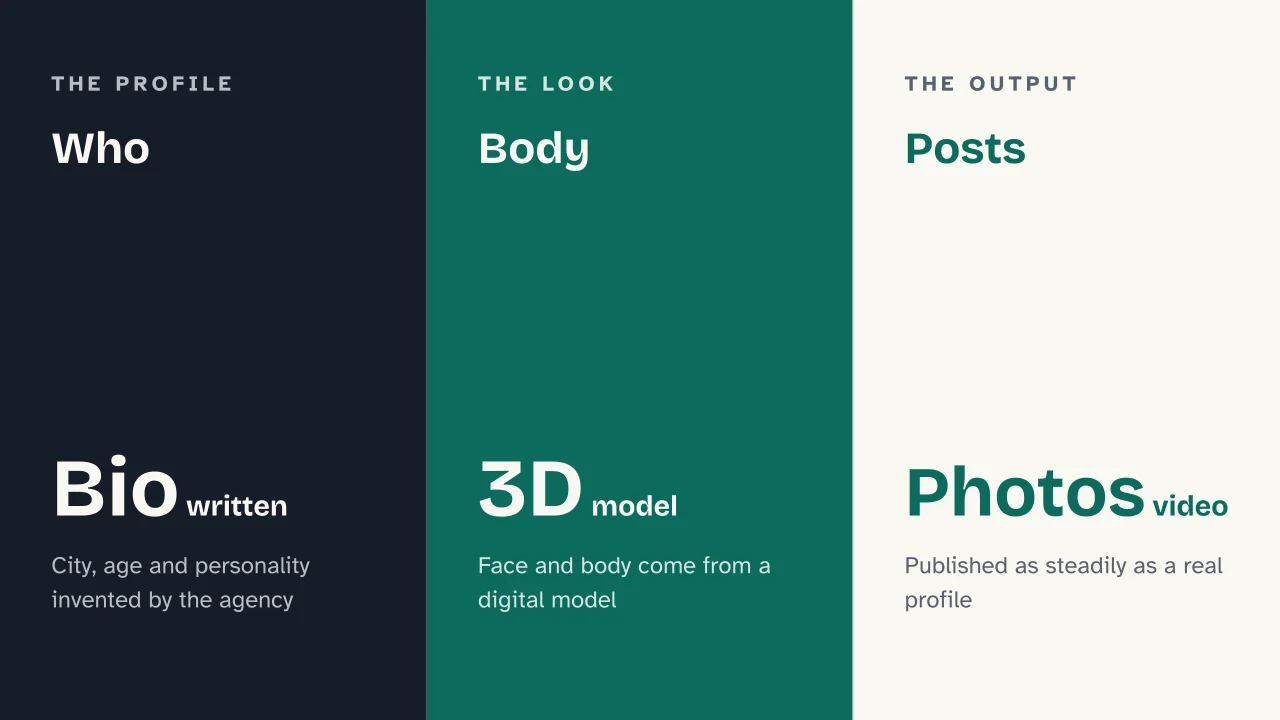
    A virtual influencer comes together from three pieces that have to stay consistent over time. The first is the biography: age, hometown, personality and even a tone of voice, written before the first image ever goes up — Miquela’s bio, for example, describes her as a “change-seeking robot with the drip.” The second is the look: a digital model of the face and body, built with graphics and image-generation techniques that also draw on the neural networks behind advanced generative-AI systems. The third is the content pipeline: photos, videos, confessional-style clips and sometimes music, published with the steadiness of a genuine profile rather than as a handful of one-off images.

    Looking closely at what sets these characters apart from a simple graphic product also helps make sense of the wider debate around artificial intelligence: here, AI isn’t just generating a single image, it’s sustaining a character that keeps “existing” day after day.

    Advertising rules don’t disappear

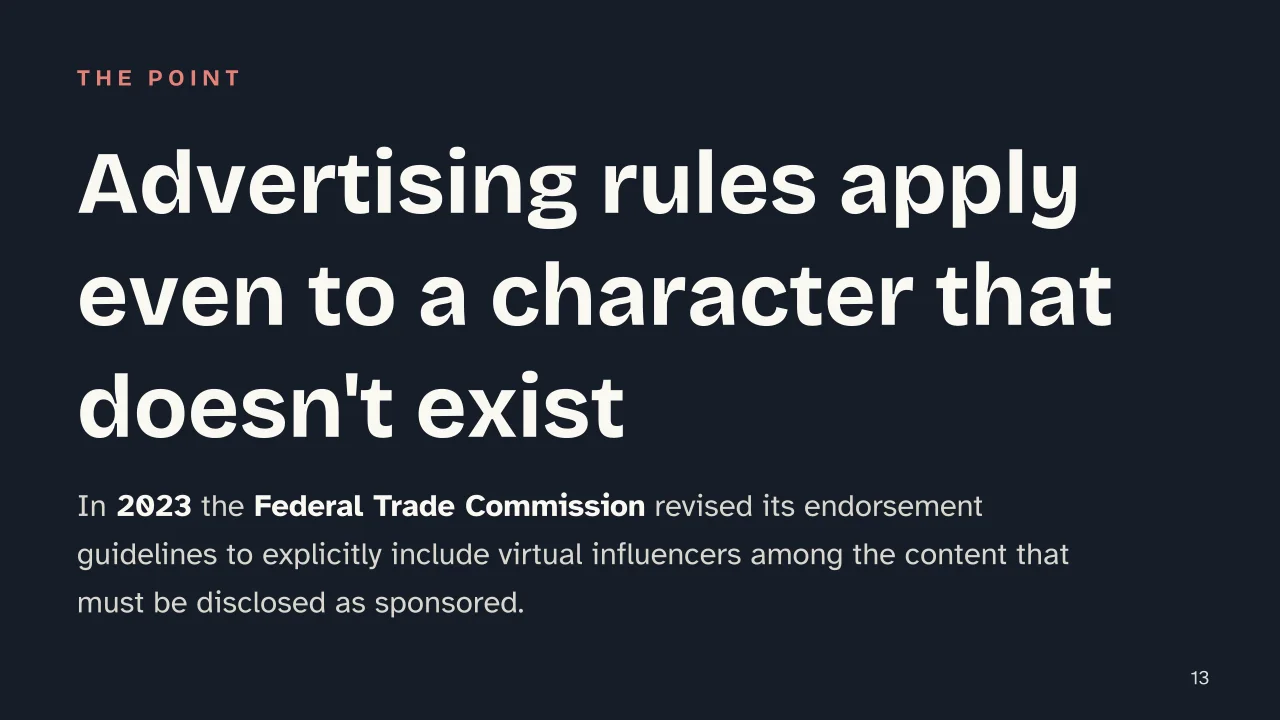
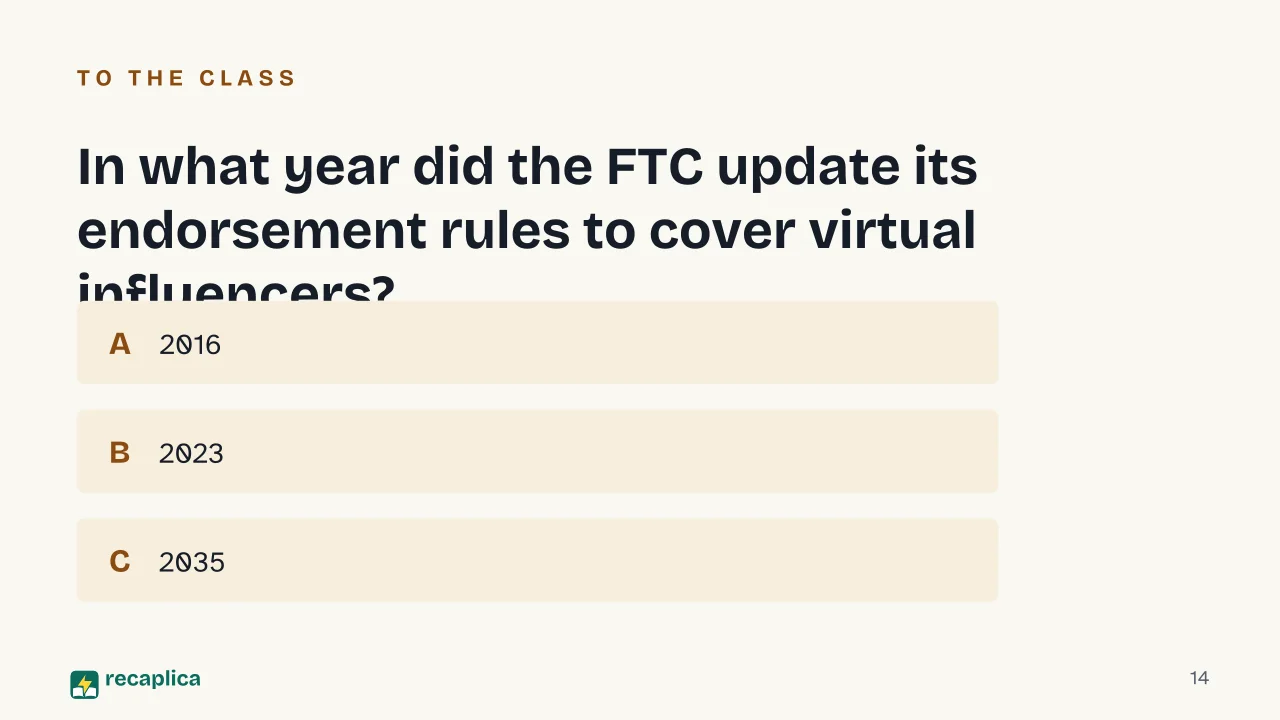
    A recurring question is whether advertising law even applies to a character with no physical body. In the United States, the answer arrived in 2023: the Federal Trade Commission revised its Endorsement Guides, “changing the definition of ‘endorsements’ to clarify the extent to which it includes fake reviews, virtual influencers, and tags in social media,” as its June 29, 2023 announcement put it. That’s a specific US rule, not a universal principle, but it draws a clear line: being digital doesn’t put a profile outside the reach of advertising transparency. Anyone scrolling past sponsored content, human or virtual, can use the same skill that helps with spotting fake news: learning to recognize a post that was built on purpose.

    A growing market, with caution

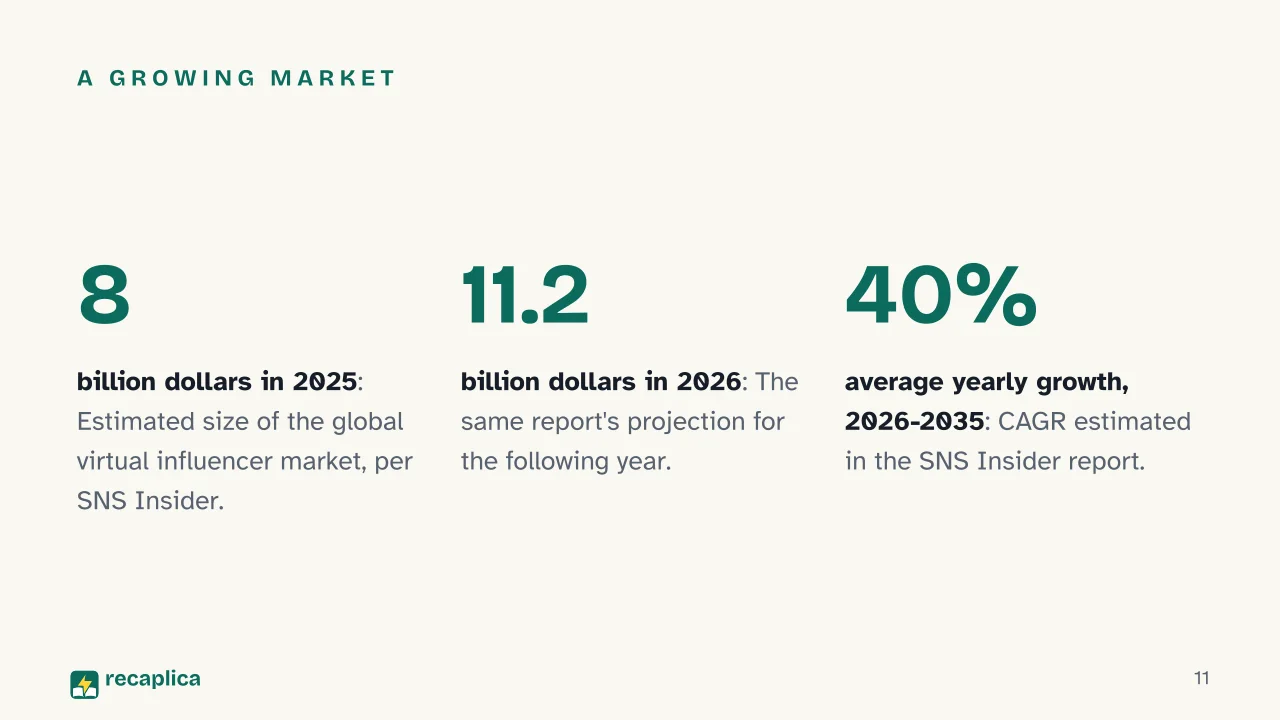
    So how big is all this, taken together? Market research firm SNS Insider puts the global virtual influencer market at $8 billion in 2025, projects $11.2 billion already by 2026, and forecasts 40% average annual growth through 2035, when it expects the market to reach $231.4 billion. Those numbers deserve to be treated for what they are: a research firm’s commercial projections, not official statistics, and ten-year forecasts on a brand-new market carry wide margins of uncertainty. Still, they point to the direction agencies and brands are heading in a field that, in 2016, didn’t even have a shared name.

    Slide deck

    Slides ready to download and make your own in PowerPoint or Google Slides, with speaker notes. Pick the Flash cut or the Full one.
    Slide 1 of the presentation on Virtual influencers: Virtual influencersSlide 2 of the presentation on Virtual influencers: How long have virtual influencers actually been around?Slide 3 of the presentation on Virtual influencers: In this RecapSlide 4 of the presentation on Virtual influencers: Chapter 01: The pioneersSlide 5 of the presentation on Virtual influencers: Three names: Lil Miquela, Shudu Gram, Aitana LópezSlide 6 of the presentation on Virtual influencers: What a character is worthSlide 7 of the presentation on Virtual influencers: Chapter 02: How they're builtSlide 8 of the presentation on Virtual influencers: Who · Body · PostsSlide 9 of the presentation on Virtual influencers: Chapter 03: Why brands go virtualSlide 10 of the presentation on Virtual influencers: Human or virtualSlide 11 of the presentation on Virtual influencers: A growing marketSlide 12 of the presentation on Virtual influencers: Chapter 04: The rules of the gameSlide 13 of the presentation on Virtual influencers: Advertising rules apply even to a character that doesn't existSlide 14 of the presentation on Virtual influencers: In what year did the FTC update its endorsement rules to cover virtual influencers?Slide 15 of the presentation on Virtual influencers: The Recap continues
    Flash10 slidesThe essential thread, to present in classFull15 slidesEvery chapter and the deeper detail

    Common myths

    • ✗ Myth A virtual influencer is just a photo run through a filter.

      ✓ Reality It's actually a character an agency builds out with a biography, a personality and constant editorial upkeep — Lil Miquela, for instance, has been managed by the Brud agency since 2016.

    • ✗ Myth Virtual influencers only showed up once generative AI took off.

      ✓ Reality Several of the best-known profiles are older than that: Lil Miquela's account goes back to 2016 and Shudu Gram's to 2017, years before generative AI tools reached a mass audience.

    • ✗ Myth Since a virtual influencer isn't a real person, advertising rules don't apply to them.

      ✓ Reality In the United States, the Federal Trade Commission rewrote its guidelines in 2023 specifically to bring virtual influencers under the same sponsorship-disclosure requirements as human ones.

    Mind map

    Drag the background to move around and the nodes to reposition them; use − and + to collapse and expand branches.
    Customize
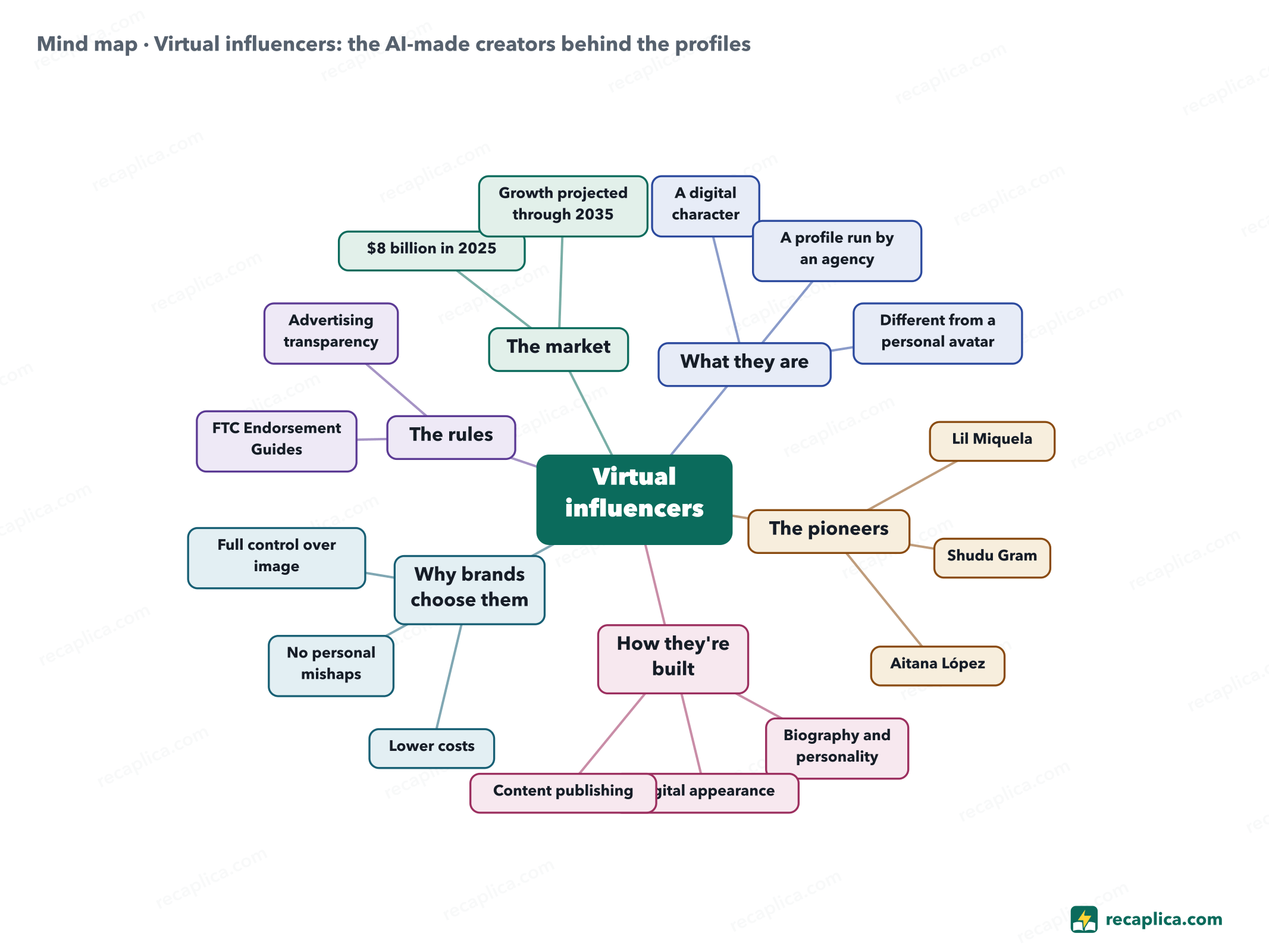
    Mind map: Virtual influencers: the AI-made creators behind the profiles
    • Virtual influencers
      • What they are
        • A digital character not a real person
        • A profile run by an agency
        • Different from a personal avatar
      • The pioneers
        • Lil Miquela account since 2016, created by Brud
        • Shudu Gram appeared in 2017, created by Cameron-James Wilson
        • Aitana López created by Spanish agency The Clueless
      • How they're built
        • Biography and personality
        • Digital appearance
        • Content publishing
      • Why brands choose them
        • Lower costs according to Harvard Business Review
        • No personal mishaps
        • Full control over image
      • The rules
        • FTC Endorsement Guides revised in 2023 in the United States
        • Advertising transparency
      • The market
        • $8 billion in 2025 SNS Insider estimate
        • Growth projected through 2035

    Quiz: test yourself

    Answer the questions to check what you have learned: you get instant feedback and a short explanation.

    Grade 0/10 0/5
    1 Who created Lil Miquela?

    Miquela was created by the Brud agency, founded by Trevor McFedries and Sara DeCou.

    2 What year did Shudu Gram first appear?

    According to VirtualHumans.org, Shudu's first appearance dates back to April 22, 2017.

    3 Why did the agency The Clueless create Aitana López?

    Co-founder Rubén Cruz has said he wanted a way to work without depending on people with hard-to-manage egos.

    4 What did the US Federal Trade Commission do in 2023?

    The FTC updated its Endorsement Guides to clarify that they also cover virtual influencers, alongside fake reviews and social media tags.

    5 True or false: according to SNS Insider, the virtual influencer market was worth more than $100 billion in 2025.

    False: SNS Insider put the 2025 figure at $8 billion, with much higher projections reserved for 2035 ($231.4 billion).

    Answers: 1-A · 2-B · 3-B · 4-B · 5-B

    Flashcards

    Tap the card to flip it and check whether you remember the answer, then move to the next one.

    1 / 6

    Explain it in your own words

    The ultimate test: if you can explain it in simple words, you've truly understood it. Write your explanation, then compare it with the Recap.

    Your explanation is saved only on this device.

    Virtual influencers are digital characters built by an agency or studio, complete with a face, a voice and a biography, who post on social media the way a real creator would. The phenomenon predates the generative-AI boom: Lil Miquela's account has been live since April 23, 2016, and Shudu Gram first appeared on April 22, 2017. Some of these profiles work with major brands: Miquela has partnered with Calvin Klein and Prada, while the Spanish agency The Clueless built Aitana López after finding human models and influencers too unreliable to manage. In the United States, the Federal Trade Commission updated its advertising rules in 2023 to explicitly cover virtual influencers among the content that must be disclosed as sponsored.

    Frequently asked questions

    Is a virtual influencer the same thing as a selfie filter?

    No: a filter edits a photo that's already been taken, while a virtual influencer is a character an agency or studio keeps running over time.

    Do virtual influencers make real money?

    Yes. According to Harvard Business Review, Lil Miquela earns an average of $2 million a year; the agency The Clueless reported average earnings of €3,000 a month for Aitana López in 2023, with peaks of €10,000.

    Do brands have to disclose that content came from a virtual influencer?

    In the United States, yes: since 2023 the Federal Trade Commission has explicitly included virtual influencers among the subjects covered by its rules on advertising endorsement transparency.

    How long have virtual influencers been around?

    Since before the generative-AI boom: Lil Miquela's account dates to 2016 and Shudu Gram's to 2017.

    Sources

    • VirtualHumans.org — Miquela Sousa (Lil Miquela) profile
    • VirtualHumans.org — Shudu Gram profile
    • Fortune (via Yahoo Finance) — A Spanish agency became so sick of models and influencers that they created their own with AI
    • Federal Trade Commission — Updated Advertising Guides to Combat Deceptive Reviews and Endorsements
    • Harvard Business Review — Should Your Brand Hire a Virtual Influencer?
    • SNS Insider — Virtual Influencer Market Size, Share & Growth Report 2035

    Every Recap goes through an independent review before publication.

    Every evening, the day's new Recaps on our Telegram channel. Join the channel →

    Keep learning

    • Technology AI Pop Culture: When Synthetic Content Rewrites History According to Lead Stories, a World War Two photo held by the Imperial War Museums circulated in 2026 in an AI-colorized version that a detector rated 99% likely to be artificially generated, even though the original shot was genuine. Cases like this also touch pop culture and current events: text, image and video models produce content that looks historical or iconic without actually being so, or alter real content in details that are hard to spot at a glance. Some tools leave technical clues, such as digital watermarks or video length limits, but no single clue covers every generator on the market. The Reuters Institute reports that in 2026 trust in AI chatbot answers about the news stays low, at 20% against 37% for news overall. Checking whether an image or video is authentic still means comparing it against the original archive that holds it. Read the Recap →
    • Technology Echo Chamber: How Recommendation Algorithms Shape What You See An echo chamber is an environment, online or offline, where a person mostly encounters opinions that confirm their own. Recommendation algorithms can build a narrower version of this, often called a filter bubble, by quietly deciding what to show someone based on what they've clicked and watched before. The two ideas get mixed up constantly, but they aren't the same phenomenon, and the strongest research available paints a more mixed picture than the popular narrative: algorithms have a measurable but modest effect, and people's own choices matter more. Whether algorithms actually drive political polarization is not something the most rigorous experiments have settled. Read the Recap →
    • Technology SEO, AEO and GEO: What Are They? SEO, AEO and GEO are three acronyms for three different ways of getting found online. SEO, Search Engine Optimization, works to get a page to rank higher in a traditional list of search results. AEO, Answer Engine Optimization, aims at a different target: appearing directly inside an answer, such as a voice reply or an answer box, with no click required. GEO, Generative Engine Optimization, is the newest of the three and covers visibility inside the text an AI system generates when it summarizes a topic. Google itself says the fundamentals of SEO still hold for showing up in its AI-powered search features. Read the Recap →

    recaplica

    Clear in 30 seconds, yours in 10 minutes.

    Recaps Mind maps Request a Recap Telegram channel Mind map maker Our method About Privacy & cookies Legal notes & terms of use

    © 2026 Recaplica · A project by Curi S.r.l. — VAT IT05472000750

    Statistics, only if you say so

    To learn which Recaps help most we would use Google Analytics, with aggregate, anonymous data. It starts only with your OK, and you can change your mind anytime. Privacy policy