|
recaplica
Socialization: Definition, Types and Examples | |||||||||||||||
| © 2026 Recaplica · recaplica.com — All rights reserved | |||||||||||||||
Socialization: Definition, Types and ExamplesWhat to print Page numbers appear when printing with default margins. SlidesChoose a cut Flash10 slidesThe essential thread, to present in classFull17 slidesEvery chapter and the deeper detailBoth come with speaker notes. In 30 seconds quick readSocialization is how a person becomes part of a society, gradually picking up its rules, values and language (Treccani, Encyclopedia of Sociology). In the earliest years it happens mostly within the family; later it widens to school, peer groups and the workplace, though sources caution that the line between these phases stays blurry. Theorists such as Durkheim, Mead, Parsons and Erikson have each described it from a different angle, and the agents involved range from the family to the media. Key Points
Key figures
Deep DiveWhat socialization isAccording to Treccani, socialization is the process through which a person becomes a social being, integrating into a group or a community: in broader terms, it turns a biological being into a social one who perceives reality through a specific cultural framework. The Encyclopedia of Sociology frames it in more operative terms: the process of interaction through which a person acquires the norms, values, beliefs, attitudes and language typical of their own group. According to Treccani, the word carries two related readings. In sociology it points to how cultural values, symbolic systems and social norms pass from one generation to the next; in psychology it points to personality development, mostly through interaction with the family. The Encyclopedia of Sociology notes that socialization answers two needs at once: the continuity of society over time and the development of the individual person. The OpenStax Introduction to Sociology textbook puts it in different terms: through social interaction, a person gradually learns to see themselves through the eyes of others, and to understand their own place in the world. Sociologist Charles Cooley had already proposed a similar idea back in 1902, the “looking-glass self”: we come to understand who we are partly by imagining how others see us. Readers who want to see how psychological science tests claims like this one, rather than taking them at face value, will find the basic criteria there. Theories that explain the processFrench sociologist Émile Durkheim, among the first to study the topic, introduced the concept of “collective conscience”: the shared values and norms of a group that every member eventually internalizes. For Durkheim, the main task of education — which he called “socialisation méthodique” — was to pass on the norms and values a social system rests on. George H. Mead founded symbolic interactionism, arguing that social action always runs through shared symbols with an agreed meaning. For Mead, children learn their family roles by trying to imagine the viewpoint of a father, a mother, a sibling. According to OpenStax, this development moves through successive stages: pure imitation, play involving a single role, then play involving several roles together, up to grasping society’s general expectations, what Mead called the “generalized other.” In Talcott Parsons’ structural-functionalist theory, the family remains the primary agency of socialization; school and peer groups contribute in their own way, bringing different role structures. School, in particular, conveys the value of merit judged by the same standards for everyone. Psychoanalyst Erik H. Erikson (see Erikson’s stages of psychosocial development) later widened the lens to the entire life course, with a model that extends primary socialization well past childhood, through a sequence of psychosocial crises; psychologist Urie Bronfenbrenner proposed a similar, “ecological” approach that weighs individual and environmental factors together in a person’s development over time. Albert Bandura (see Bandura’s social learning theory) added a more specific piece: a theory of learning through imitation, used to explain one dimension of socialization. Berger and Luckmann, finally, with their concept of the “social construction of reality,” describe how a person continually acquires social reality over the course of their own development. Jean Piaget, working from a more cognitive than social angle, studied how the self develops through the mismatch between the world a child imagines and the world they experience socially (Piaget’s stages of cognitive development cover this path in full). The two phases, primary and secondary socializationThe most common way of describing socialization in stages splits it into a primary and a secondary phase. According to the Encyclopedia of Sociology, research has focused mostly on the family, the site of “initial” or “primary” socialization: it requires an intimate, caring relationship between an adult and a child, built on language; without it, a normal sense of self and cognitive development fail to form. School, by contrast, is more closely tied to “secondary” socialization, the learning of knowledge and skills. The Encyclopedia of Sociology nonetheless warns that the line is not sharp: school teaches norms, values and aspects of personality alongside academic subjects. Treccani confirms the same caution from another angle: already by 1998, older studies called the development of a child within family and school “primary socialization,” while more recent research preferred to treat socialization as a lifelong process that runs well past childhood. Adult socialization — work, marriage, parenthood — falls, for the Encyclopedia of Sociology, under the “secondary” category: it builds on what was learned in childhood and serves to teach the roles proper to adult life. The workplace, OpenStax notes, also demands a fresh round of socialization, both for physical objects (how to use the photocopier) and for unwritten rules, such as the right way to address a boss.
Agents of socializationTreccani lists family, school, university, media and the workplace among the recognized agents of socialization. OpenStax adds the peer group and the state, through age-based laws: turning “adult” at eighteen, for instance, is itself a way the state socializes people into new roles. The family is the first agent, according to OpenStax: parents, siblings, grandparents and other relatives teach a child what they need to know. In larger families, the Encyclopedia of Sociology notes, older siblings often act as socializing agents for the younger ones. A study cited by the same textbook (National Opinion Research Center, 2008 data, referring to U.S. families) found that families with fewer resources tend to raise children toward obedience, while wealthier families place more emphasis on personal judgment and creativity.
The peer group, made up of people of similar age and social standing with shared interests, is for teenagers the first major socialization experience outside the family; the Encyclopedia of Sociology ranks it as the third most important context for children and teenagers, even though socializing is not its stated purpose. Media contribute in their own way: as far back as 1998, Treccani was noting that growing computer and internet use intertwines with family life and peer groups, and OpenStax cites an estimate (Roberts, Foehr and Rideout, 2005 data, referring to the general U.S. population and to children) that the average person spends over four hours a day in front of the television, children even more. The criteria of media literacy are a good starting point for weighing how solid sources like these are before trusting them. Slide deckSlides ready to download and make your own in PowerPoint or Google Slides, with speaker notes. Pick the Flash cut or the Full one.     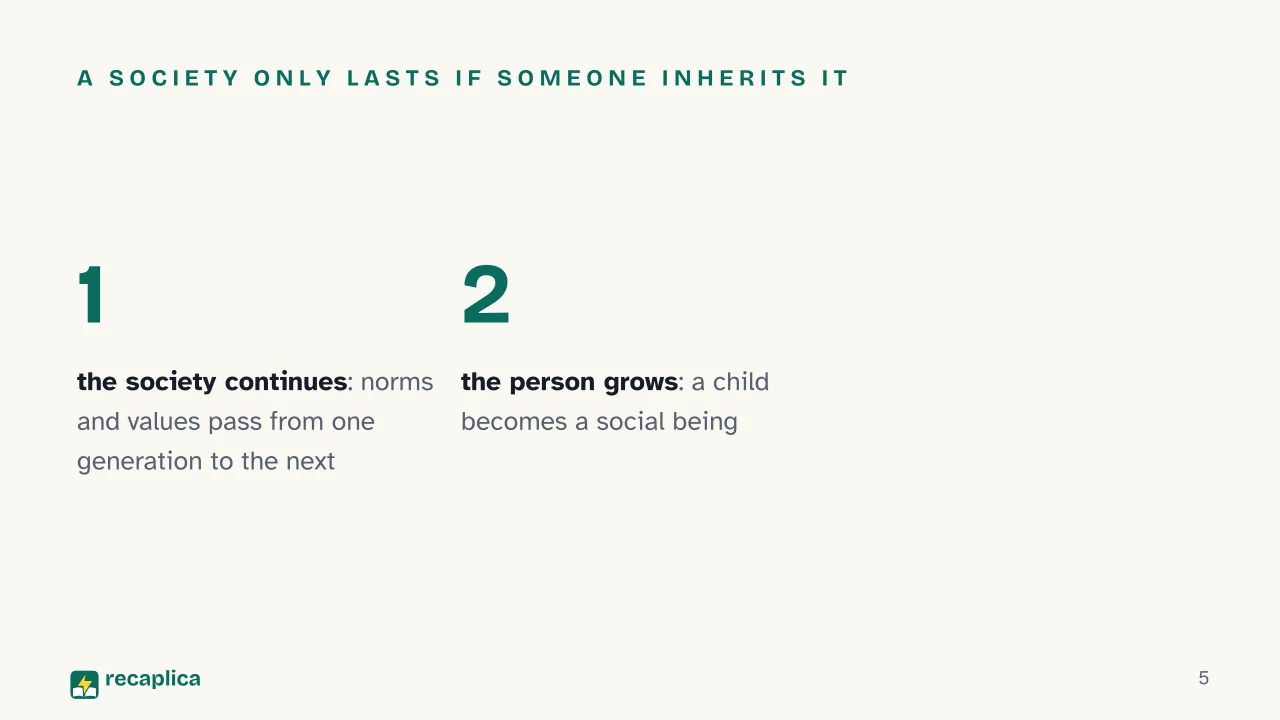 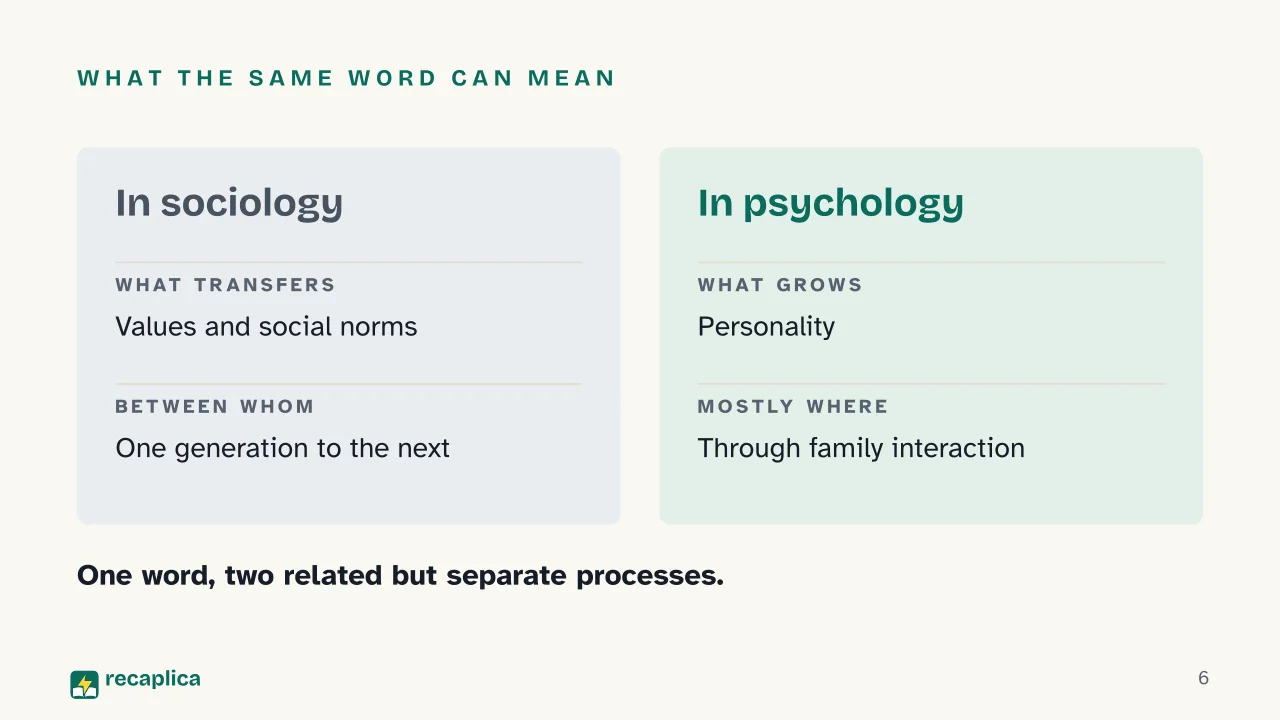  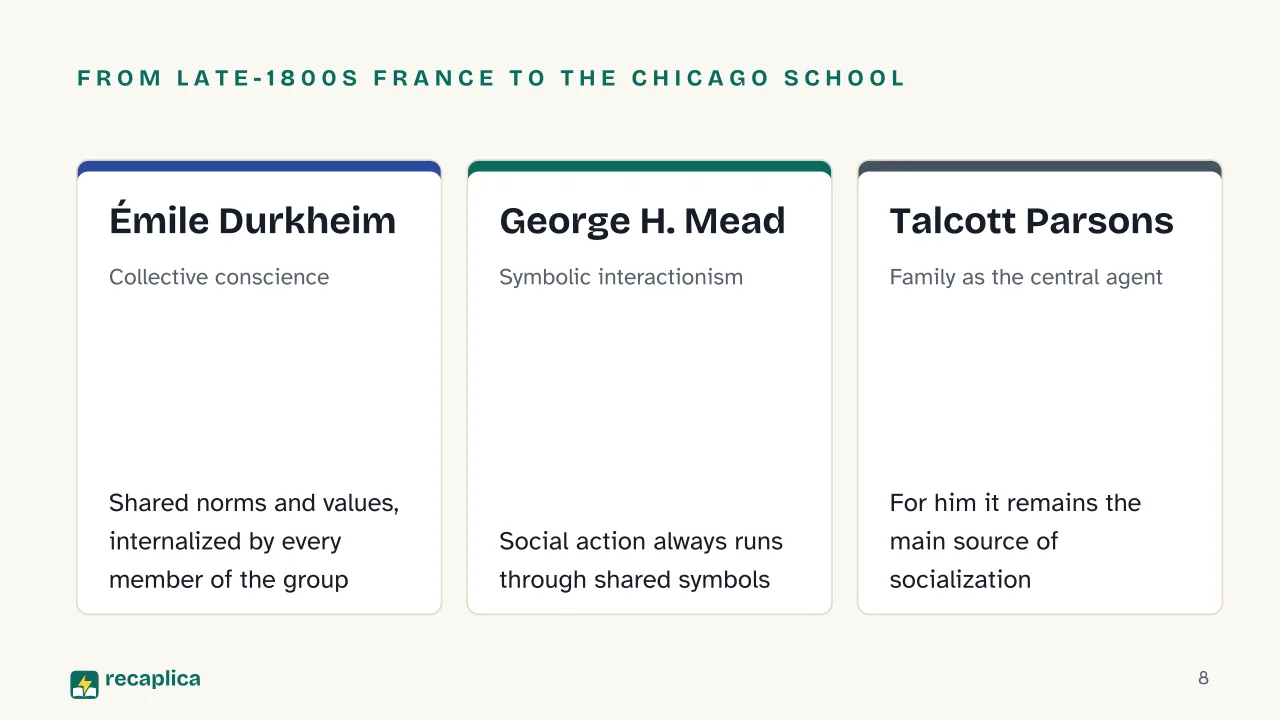 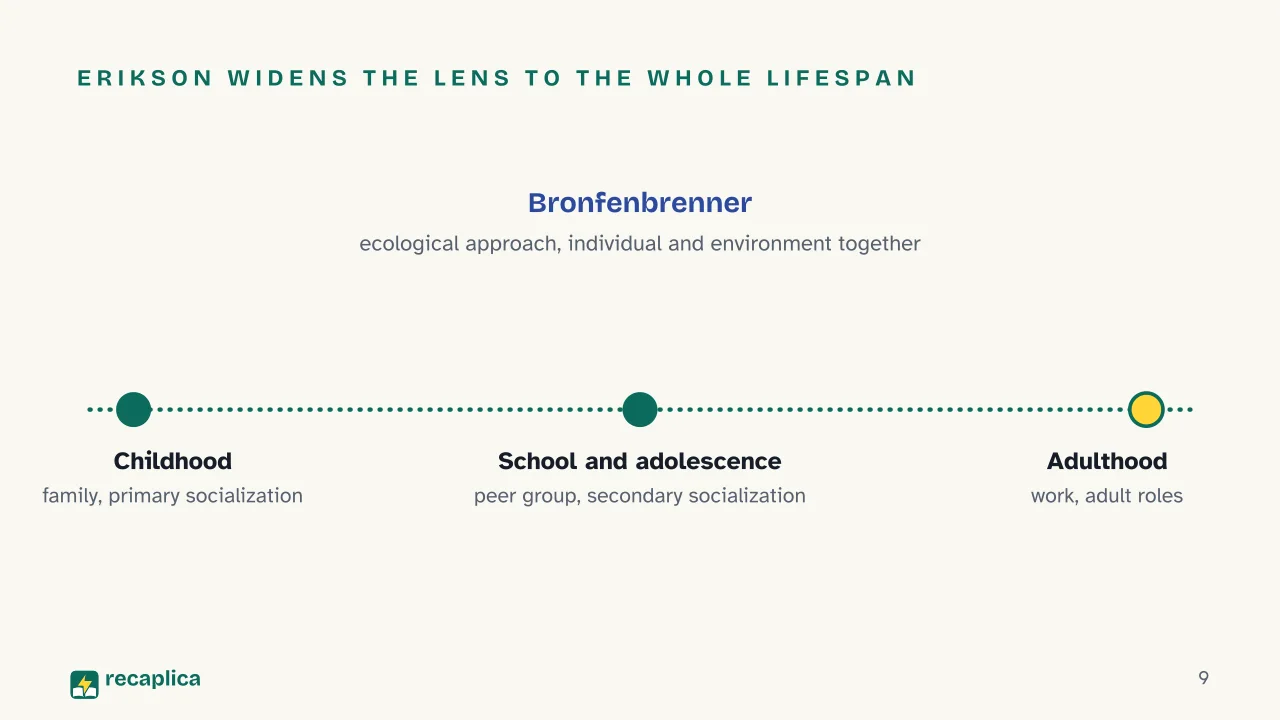  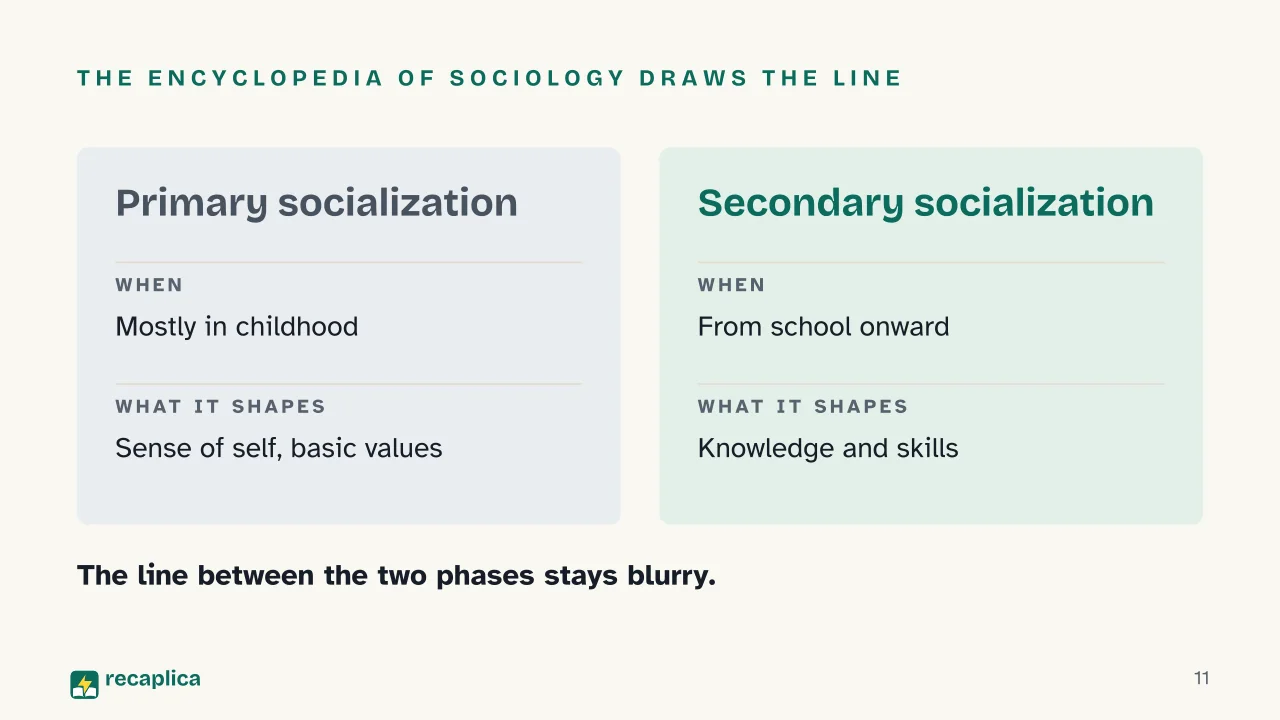   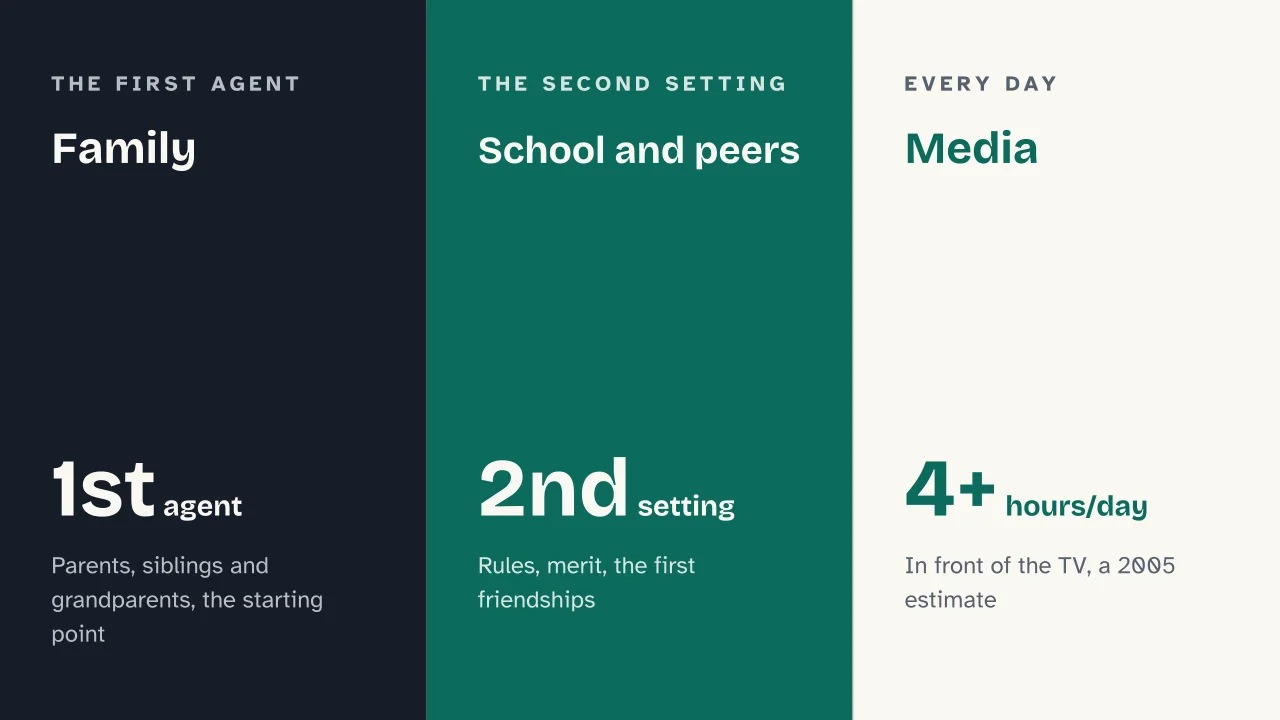 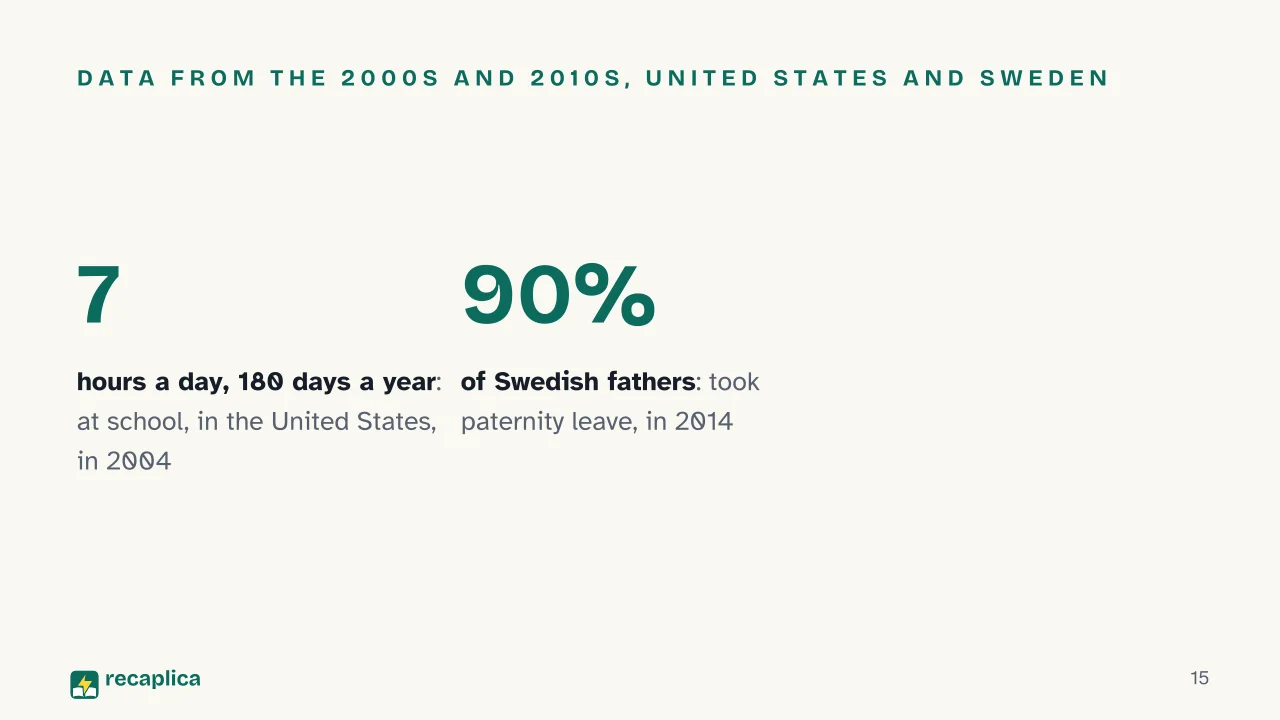 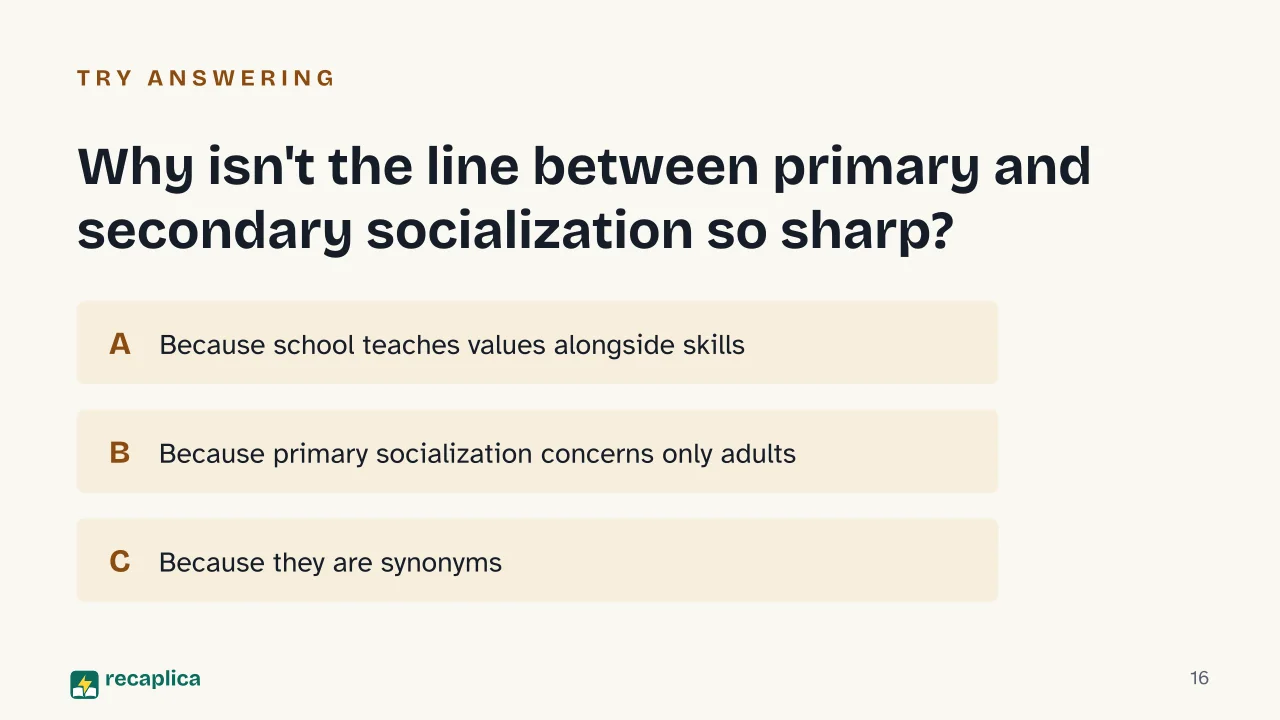  Common myths
Mind mapDrag the background to move around and the nodes to reposition them; use − and + to collapse and expand branches. 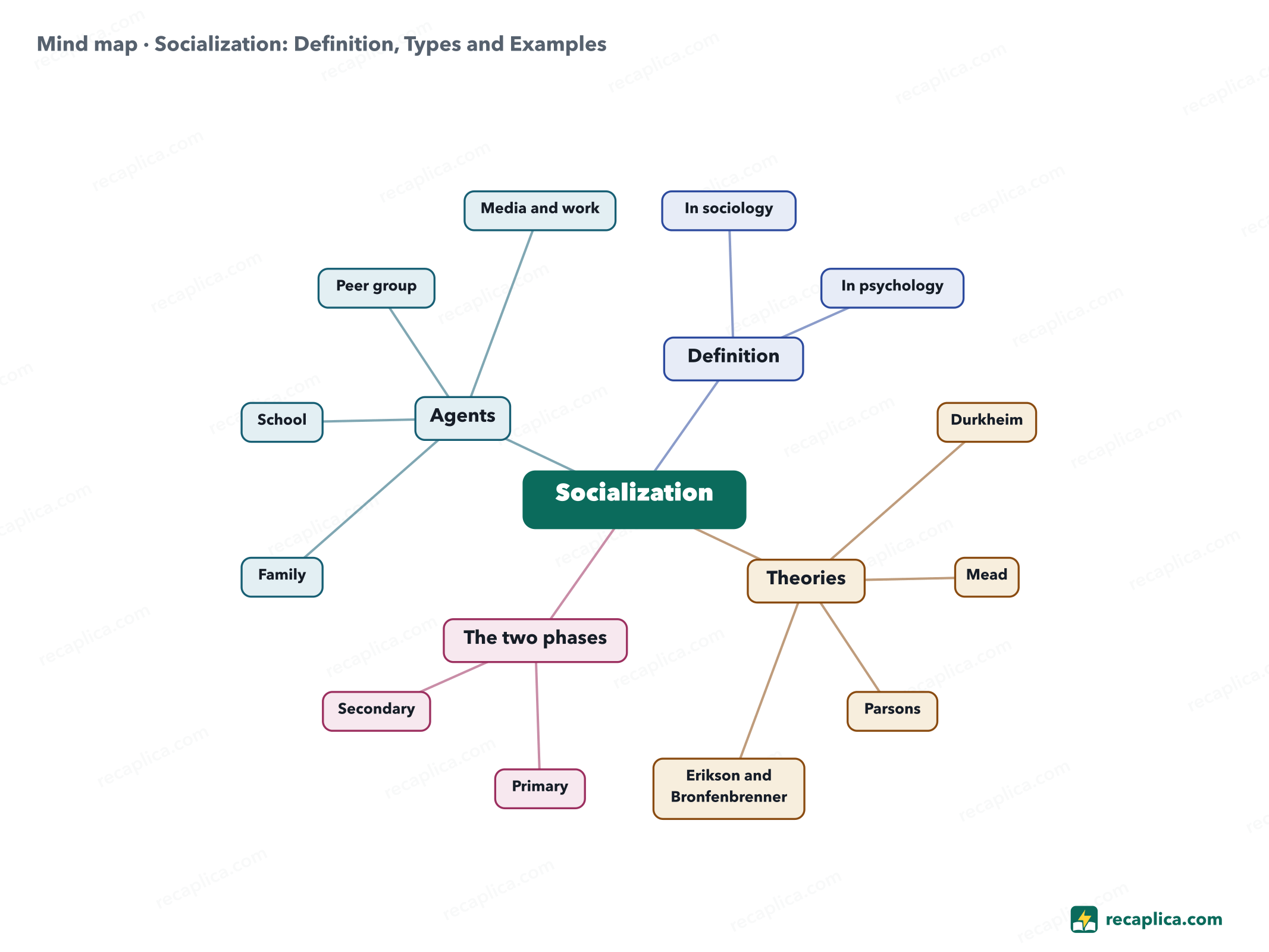
Quiz: test yourselfAnswer the questions to check what you have learned: you get instant feedback and a short explanation. Grade 0/10 0/5
FlashcardsTap the card to flip it and check whether you remember the answer, then move to the next one. 1 / 8 Explain it in your own wordsThe ultimate test: if you can explain it in simple words, you've truly understood it. Write your explanation, then compare it with the Recap. Your explanation is saved only on this device.
Frequently asked questionsWhat is socialization?It is the process by which someone joining a group, a child for example, picks up its unwritten rules, values and way of speaking (Encyclopedia of Sociology). Treccani frames it as a person turning from a biological organism into a social one, filtered through a shared cultural framework. What is the difference between primary and secondary socialization?In the earliest years, mostly within the family, a sense of self and the deepest-held values take shape; later, at school and at work, people pick up specific skills and adult roles. The Encyclopedia of Sociology still warns that this line is less sharp than it is often made out to be: school passes on rules and values alongside academic subjects. What are the agents of socialization?According to Treccani, the agents of socialization include the family, the school, the university, the media and the workplace; OpenStax adds peers and, through age-based laws, the state. Who has studied socialization?Leading theorists include Émile Durkheim (collective conscience), George H. Mead (symbolic interactionism), Talcott Parsons (family as the central agent), Erik H. Erikson and Urie Bronfenbrenner (lifelong socialization) and Albert Bandura (learning through imitation). Does primary socialization end once school starts?Not entirely: Treccani notes that scholarship has increasingly come to view socialization as a process running through an entire life, well past the earliest years. Even the line between the primary and secondary phases, according to the Encyclopedia of Sociology, stays blurrier than a simple diagram would suggest. Every Recap goes through an independent review before publication. |