|
recaplica
Psychological Science: What It Is and How It Differs From Common Sense |
| © 2026 Recaplica · recaplica.com — All rights reserved |
Psychological Science: What It Is and How It Differs From Common SenseWhat to print Page numbers appear when printing with default margins. SlidesChoose a cut Flash10 slidesThe essential thread, to present in classFull14 slidesEvery chapter and the deeper detailBoth come with speaker notes. In 30 seconds quick readPsychological science studies behavior and mental processes with the same method as any other empirical science: hypotheses that can be tested, data gathered under controlled procedures, conclusions checked by other researchers. What sets it apart from common sense is that it refuses to settle for what "feels obvious": a psychological claim only counts as scientific if it is falsifiable, meaning some observation could in principle prove it wrong. Common sense, left to its own devices, tends to explain everything after the fact and mistakes a correlation for a cause. That's why psychology relies on experimental design, statistics and variable control that everyday intuition skips right past. Key Points
Deep DiveAsk ten different people why a teenager is acting a certain way, and you’ll get ten confident explanations. Ask a psychologist, and the first response is often another question: how would we check that? That’s the difference that matters, more than the subject matter itself. A test, not an argumentThe philosopher Karl Popper proposed a precise way to separate scientific claims from ones that aren’t: an idea is scientific if some observation, even a merely conceivable one, could prove it wrong. The Stanford Encyclopedia of Philosophy entry “Science and Pseudo-Science” reports Popper’s original statement of the demarcation problem: the need for a criterion to differentiate between “empirical-scientific” and “metaphysical” assertions. In a later text, Popper sharpened it: to count as scientific, statements must be capable of conflicting with possible or conceivable observations. Applied to psychology, this means a hypothesis about human behavior only counts as scientific if it predicts something that might not happen. “People act in their own self-interest” doesn’t clear that bar, as long as it stays vague enough to explain any behavior, including one that looks selfless. “Under conditions of anonymity, the share of people who return a lost item drops below some measurable threshold” does, because an experiment could disprove it.
Why common sense doesn’t count as proofA 2022 philosophy-of-science paper in Science & Education (Blancke & Boudry) zeroes in on the underlying issue: intuition and “common sense” are extremely unreliable once you step outside the environment our minds evolved to handle. Common sense is fine for crossing a street or reading a friend’s mood. It does a much worse job when the question is whether a drug works, whether a teaching method improves learning, or whether a vivid memory is necessarily an accurate one. The same authors point out that science compensates for these built-in cognitive limits with purpose-built tools: telescopes and scanners to extend what we can observe, mathematics, logic and statistics to sharpen how we reason. They add a point about people rather than instruments: the most important error-correcting mechanism in science is the scrutiny of fellow scientists, which over time converges on the best available approximation of what’s true. One concrete case of ordinary intuition going wrong once it’s pushed past its comfort zone comes straight from psychology: hindsight bias, the “I knew it all along” effect. A 2007 study in Child Development tested preschoolers with a simple task: after recognizing an object shown in progressively sharper detail, they had to guess when a make-believe peer (the Sesame Street puppet Ernie) would be able to identify it. Across 144 children aged 3 to 5, the effect showed up clearly: once they knew what the object was, the children systematically underrated how hard it would have been to spot it earlier on. The study also found a correlation between this bias and the children’s theory of mind (r = -0.31). Correlation is not causationThe third ingredient separating psychological science from off-the-cuff reasoning is how data gets handled. Finding that two variables move together is a starting point, not a conclusion. A psychologist writing for the Association for Psychological Science made the point in a 2006 article: a purely correlational design rarely pins down a cause on its own, because too many possible third variables could be behind the same pattern.
That’s why, whenever it’s ethically possible, psychological science turns to experimental designs with random assignment of participants to conditions: spreading every other difference between people evenly across groups isolates the effect of the variable under study more cleanly. It’s slower and more expensive than an eyeballed observation, and it leans on the same toolkit covered in /en/science/probability-and-statistics/: that extra effort is exactly what separates a science from a well-argued opinion. The same principle holds outside psychology too. Evolutionary biology, for instance, remains scientific by this same falsifiability standard: Darwin’s theory of natural selection, covered in /en/science/darwin-natural-selection/, makes testable predictions about the fossil record and population genetics, which is why it has stood up to the evidence for more than a century and a half. What this changes, in practiceKnowing that psychology is an empirical science doesn’t mean demanding absolute certainty about every piece of human behavior: it means knowing which questions to ask a claim before believing it. Could this be shown false by something that might happen? Does the data come from a controlled observation, or from a memory revised after the fact? Has the correlation found ruled out the more obvious alternative explanations? Researchers in psychology ask themselves these questions before writing a conclusion; common sense, by its nature, tends to skip all three. Slide deckSlides ready to download and make your own in PowerPoint or Google Slides, with speaker notes. Pick the Flash cut or the Full one.   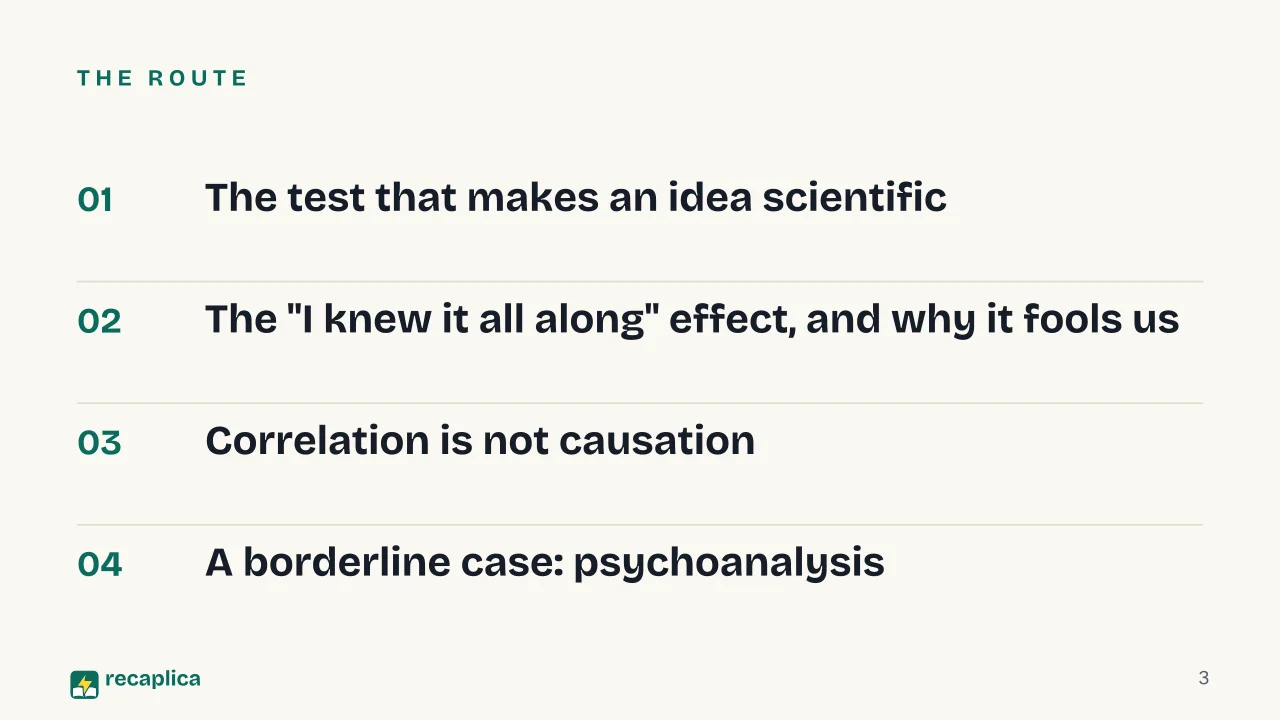  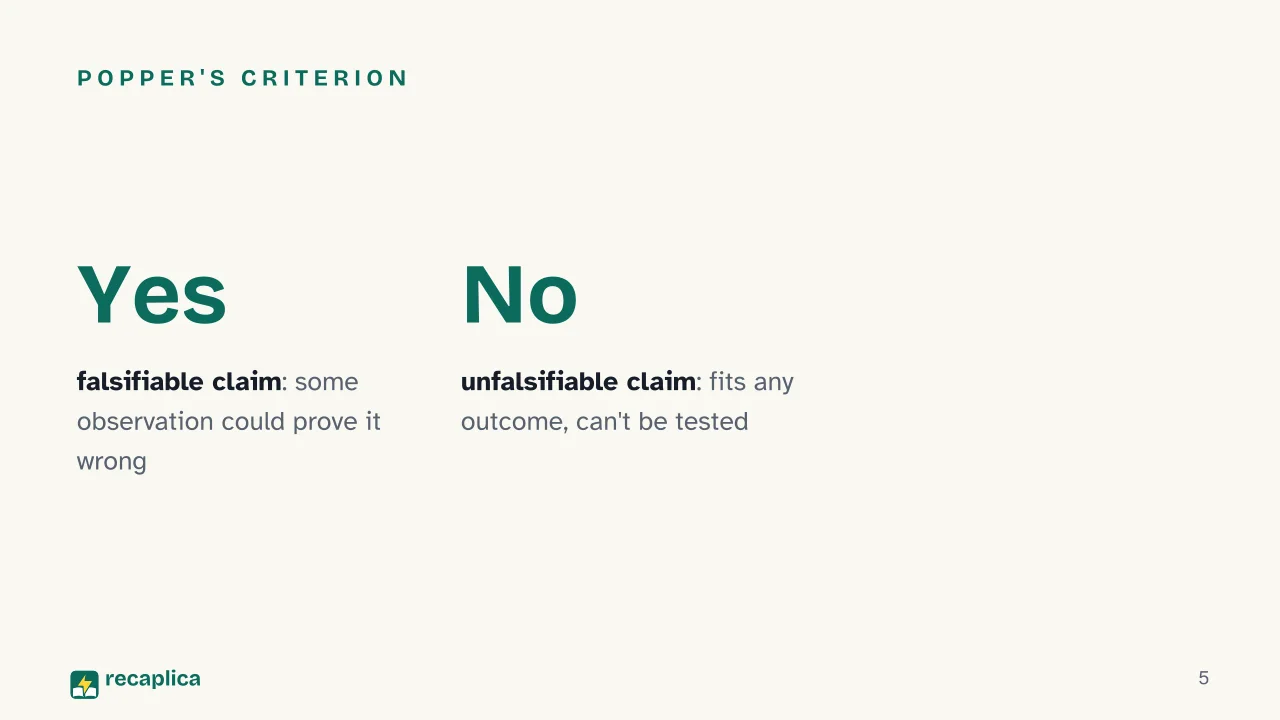  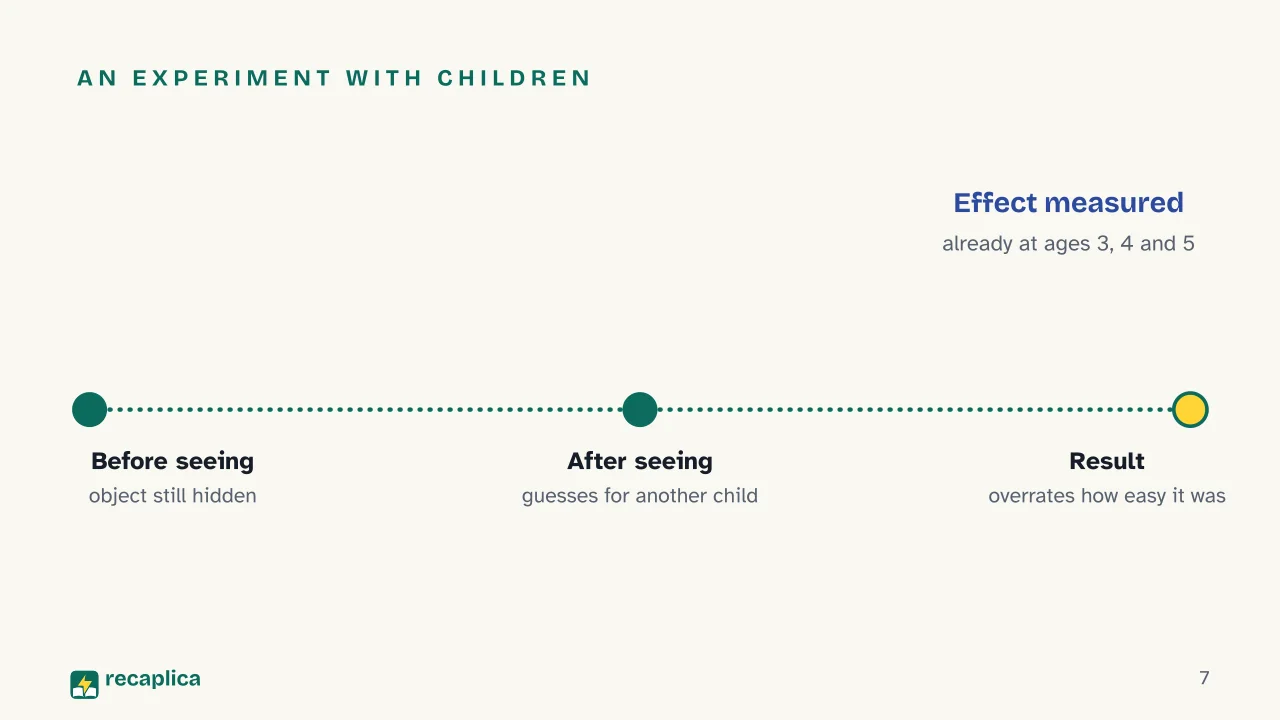  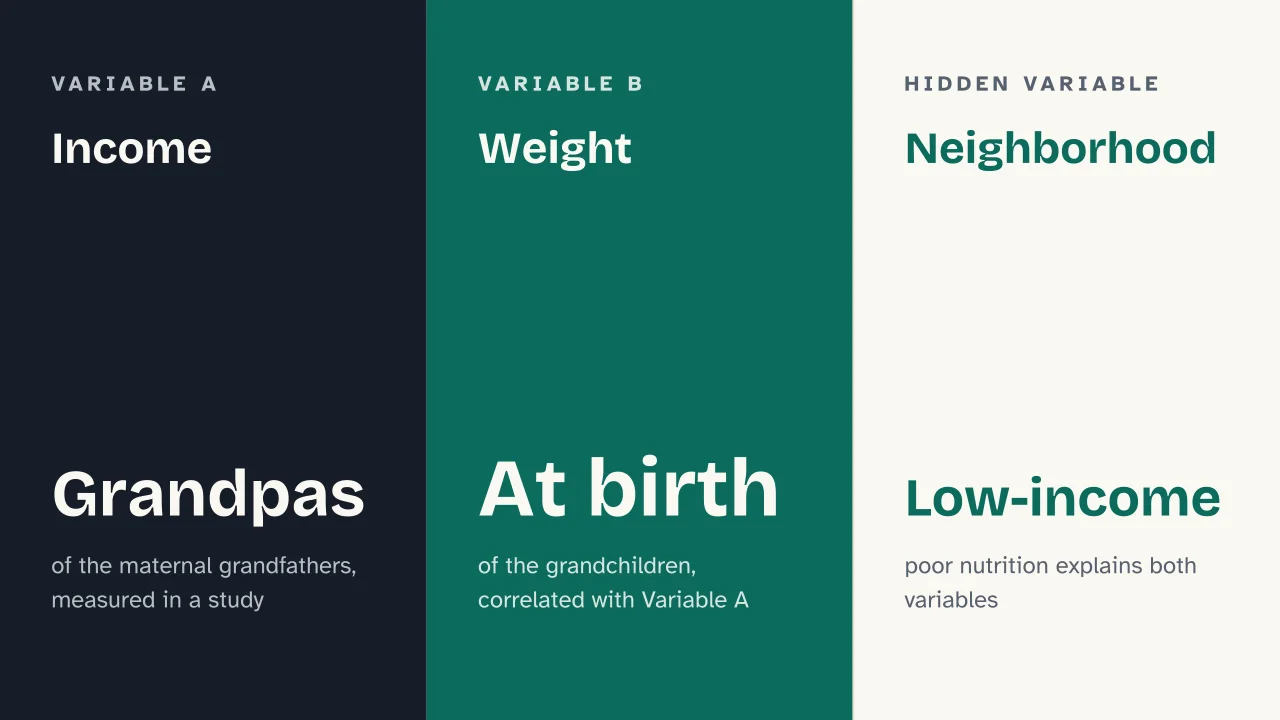 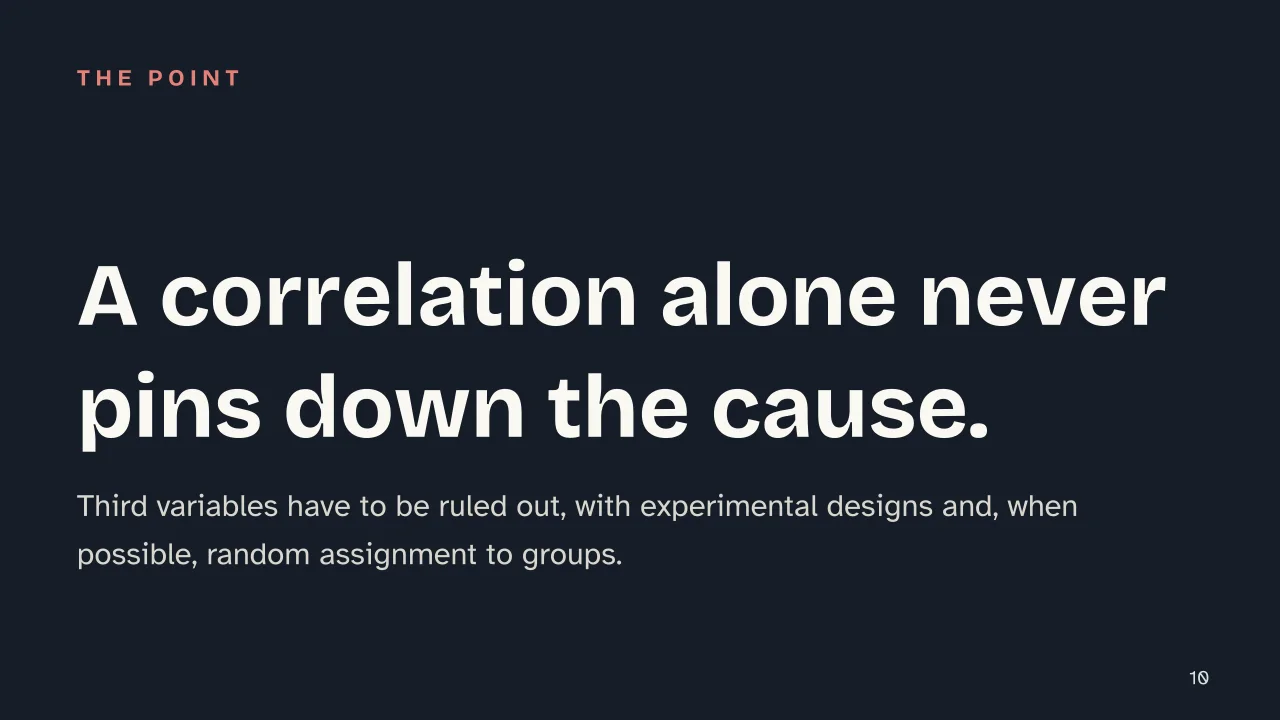  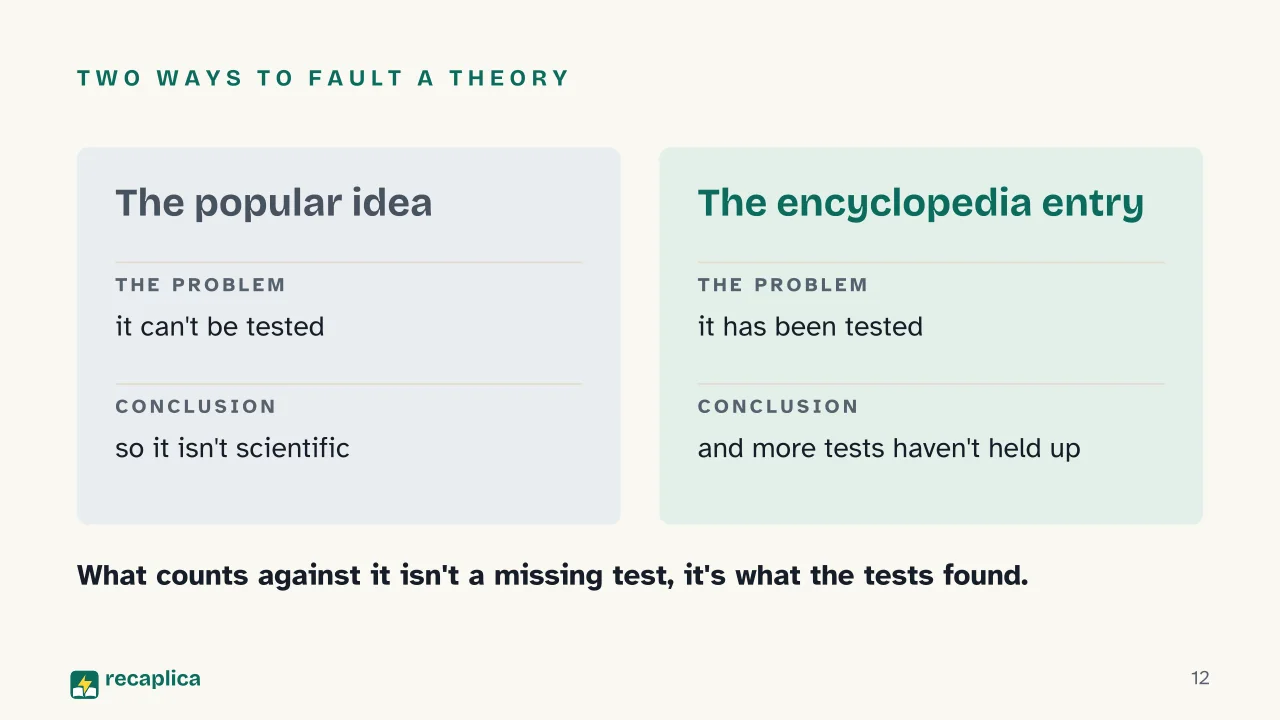   Common myths
Mind mapDrag the background to move around and the nodes to reposition them; use − and + to collapse and expand branches. 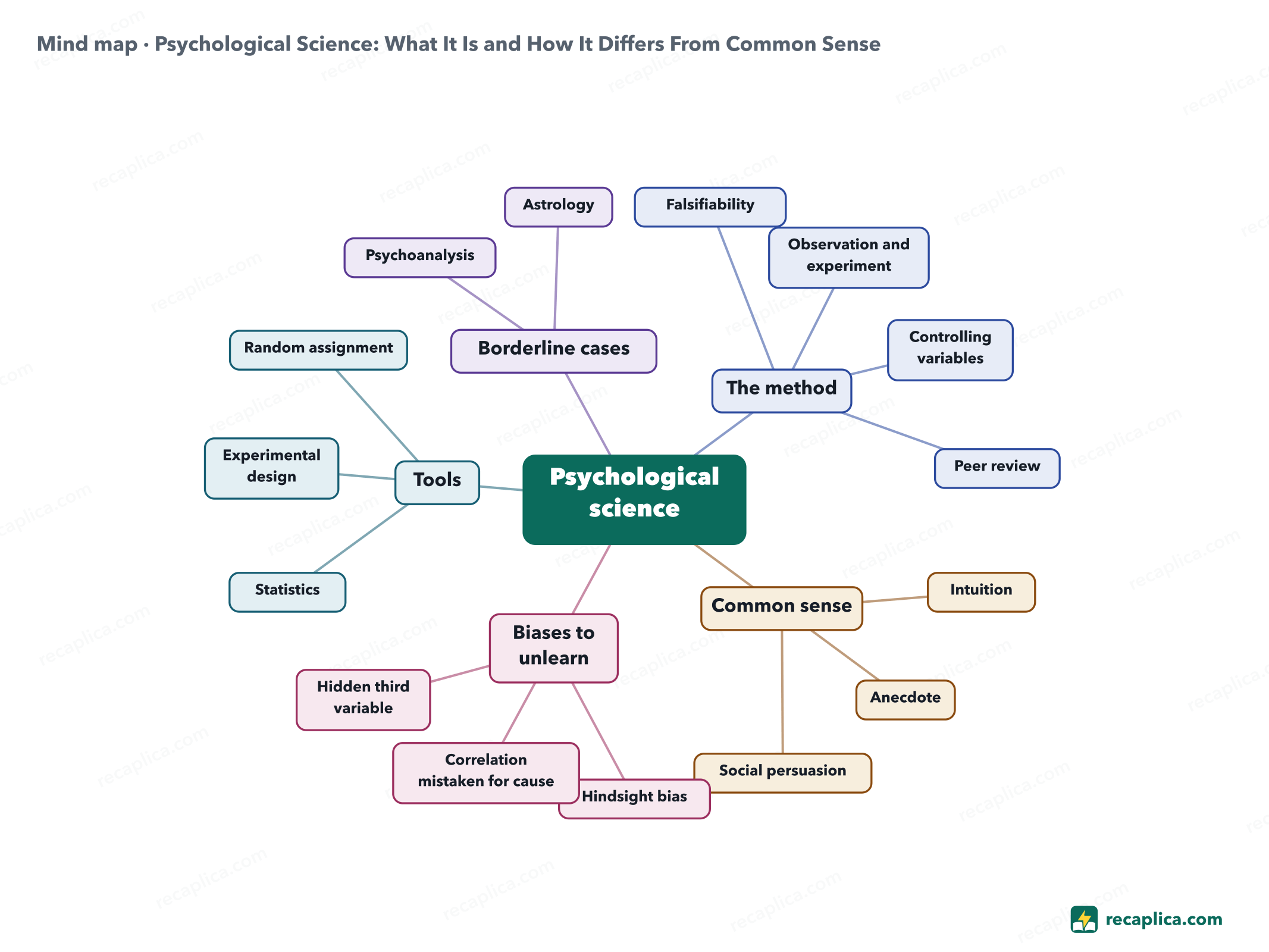
Quiz: test yourselfAnswer the questions to check what you have learned: you get instant feedback and a short explanation. Grade 0/10 0/5
FlashcardsTap the card to flip it and check whether you remember the answer, then move to the next one. 1 / 8 Explain it in your own wordsThe ultimate test: if you can explain it in simple words, you've truly understood it. Write your explanation, then compare it with the Recap. Your explanation is saved only on this device.
Frequently asked questionsWhat separates psychological science from pop psychology?Psychological science formulates testable hypotheses and checks them against observation, experiment and statistics; pop psychology leans on intuition, personal anecdotes and generalizations that are never tested. Why does a psychological claim need to be falsifiable to count as scientific?Because otherwise no observation could ever cast doubt on it: an idea that fits any possible result adds no information and can't be checked, so it doesn't qualify as scientific in this sense. Does hindsight bias only affect adults?No. A 2007 study of 144 preschoolers found a clear "I knew it all along" effect already at ages 3, 4 and 5, suggesting it's an early cognitive habit rather than something learned as adults. If two things are correlated, how do researchers work out whether one causes the other?They need experimental designs that control for other variables, ideally with random assignment to groups: only that lets them rule out a hidden third variable behind the correlation. Is psychoanalysis a pseudoscience?According to the encyclopedia entry cited in this Recap, psychoanalysis has been put through experimental tests repeatedly, and on several fronts the results haven't confirmed its claims: that's the main weakness the field recognizes in it. Every Recap goes through an independent review before publication. |