|
recaplica
Consumer Rights: What They Are and How They Work | |||||||||||||||
| © 2026 Recaplica · recaplica.com — All rights reserved | |||||||||||||||
Consumer Rights: What They Are and How They WorkWhat to print Page numbers appear when printing with default margins. SlidesChoose a cut Flash10 slidesThe essential thread, to present in classFull10 slidesEvery chapter and the deeper detailBoth come with speaker notes. In 30 seconds quick readBuying a product or a service puts two sides with different interests at the table, and a set of rules protects the one who pays. The legal guarantee covers defects for at least two years, the right of withdrawal lets an online buyer change their mind within 14 days, and unfair commercial practices are banned and can be reported to the Italian Competition Authority. Anyone with a dispute against a seller based in another EU country can also turn to the European Consumer Centre Italy, free of charge. Key Points
Deep DiveBuyers and sellers don’t sit at the table with equal power. Consumer rights are the set of rules that even out the odds for whoever is paying. Legal guarantee: what it coversAccording to the European Commission, the legal guarantee of conformity across the European Union lasts at least two years from delivery. When a product turns out to be defective or doesn’t match how it was advertised, the seller has to repair or replace it at no cost to the buyer. Within the first year from delivery, if a defect shows up, the law assumes it was already there at the time of purchase: proving otherwise is the seller’s job.
Right of withdrawal on distance purchasesAnyone buying online or at a distance can withdraw from the contract within 14 days, as the European Commission sets out, with no reason required. The clock starts at delivery for physical goods and at signing the contract for services. Return shipping costs are usually paid by the buyer, unless the seller states otherwise. The right of withdrawal has a few explicit exceptions: travel tickets, custom-made goods, audio or video products and software once the seal is broken, digital content downloaded online, and urgent repairs requested by the buyer themselves. These are cases where an unrestricted change of mind would cause a different kind of harm than the one the rule is meant to prevent.
Unfair commercial practices and consumer rightsIn Italy, the body policing this area is the Autorità Garante della Concorrenza e del Mercato (AGCM), the Italian Competition Authority, which handles unfair commercial practices aimed at consumers. The law bans both misleading and aggressive practices: a lack of transparency, excessive pressure on the buyer, and incomplete or false information all fall under this ban. An advertisement counts as misleading when it can lead the person seeing it into error: the information in it is false, or only partly true. This rule is an example of a legal norm built for a single purpose, rebalancing a relationship between two parties: competition among businesses is a separate front from protecting individual buyers, and the subject of antitrust law and, when one business harms another directly, of unfair competition. On the consumer side, reporting a scam-like practice or a misleading ad to the AGCM is a right open to anyone. Cross-border disputes: when the seller is in another EU countryAnyone living in Italy who runs into trouble with a seller established elsewhere in the EU can turn to the European Consumer Centre Italy. The Centre only handles cross-border disputes within the EU, not disputes between two Italian parties or against sellers outside the Union. Among the Centre’s services are information about consumer rights under EU law, and a free attempt to settle a complaint without going to court. All of the Centre’s services are free for the consumer. If a complaint can’t be settled amicably, going to a judge remains an option, within the Italian legal system. In the meantime, the product that was bought remains the private property of whoever paid for it, though that alone doesn’t exhaust what the seller still owes them. Slide deckSlides ready to download and make your own in PowerPoint or Google Slides, with speaker notes. Pick the Flash cut or the Full one.  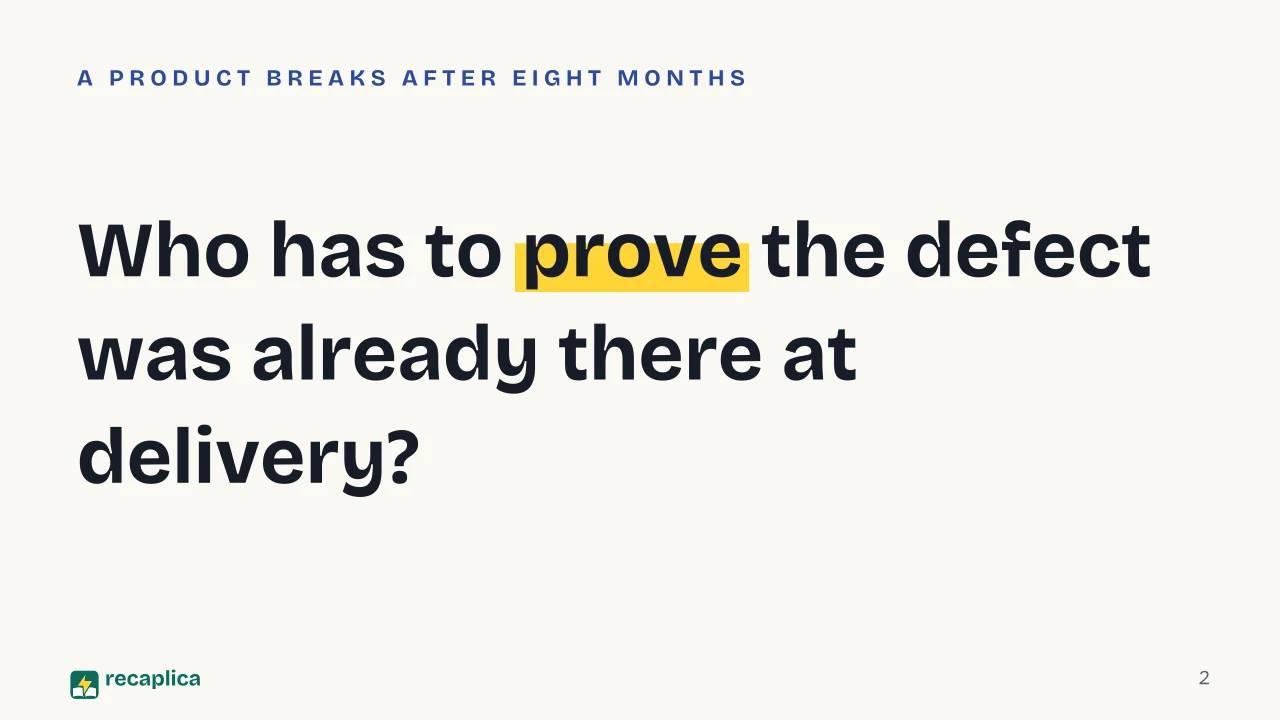 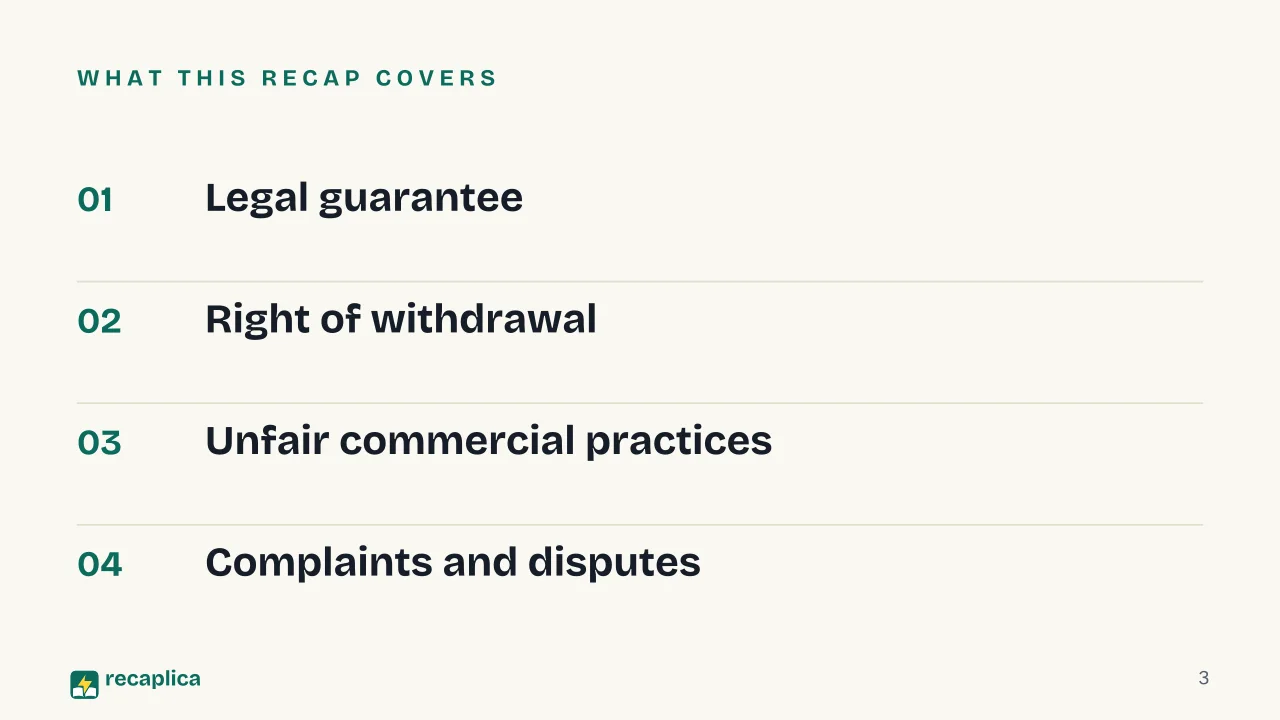 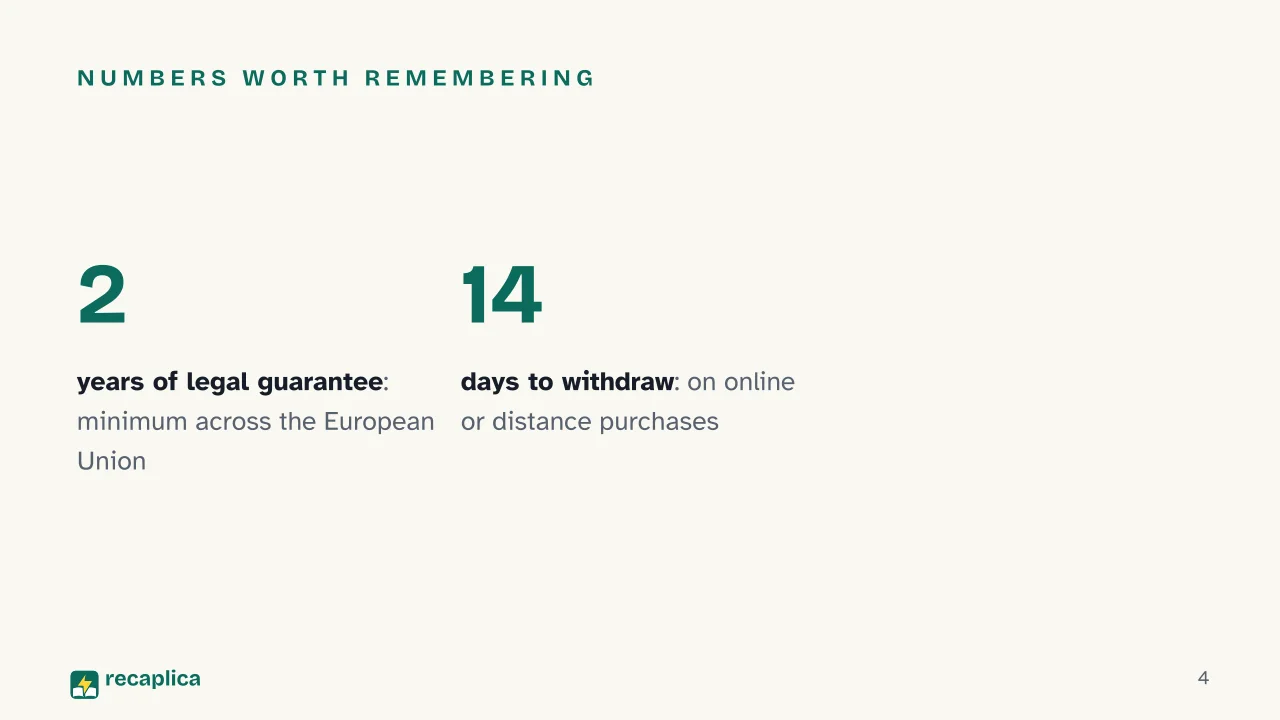 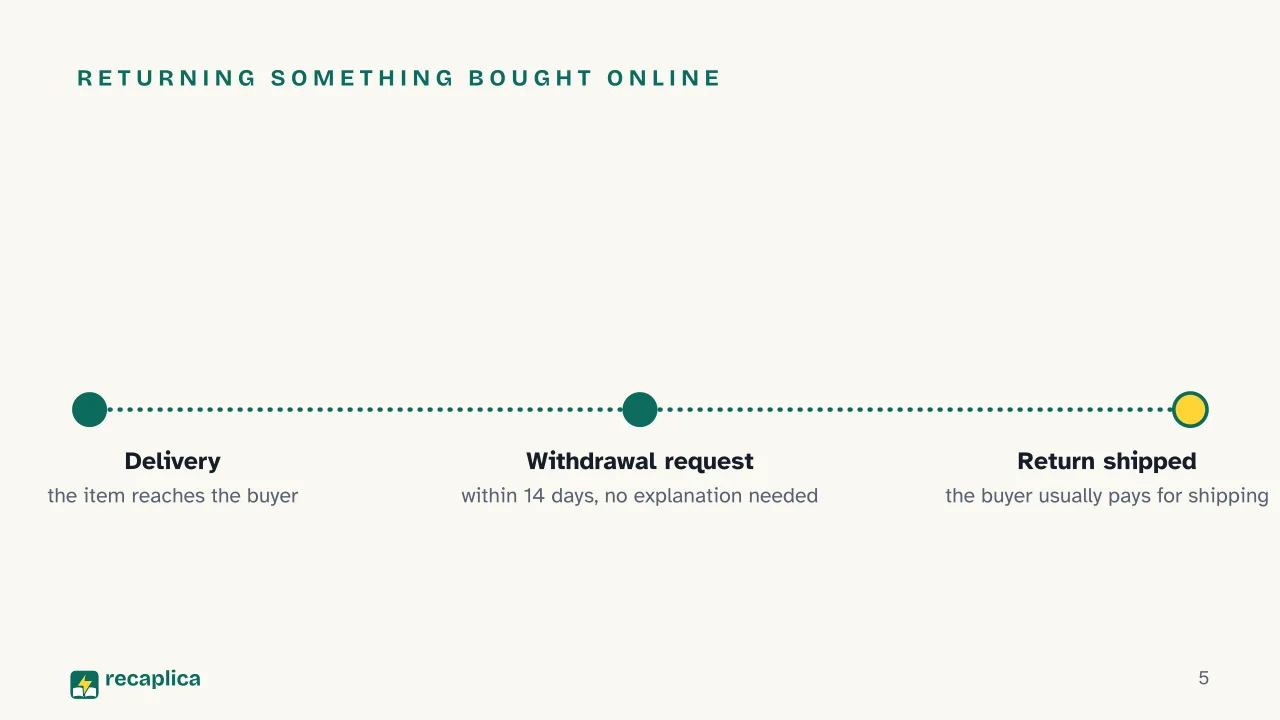 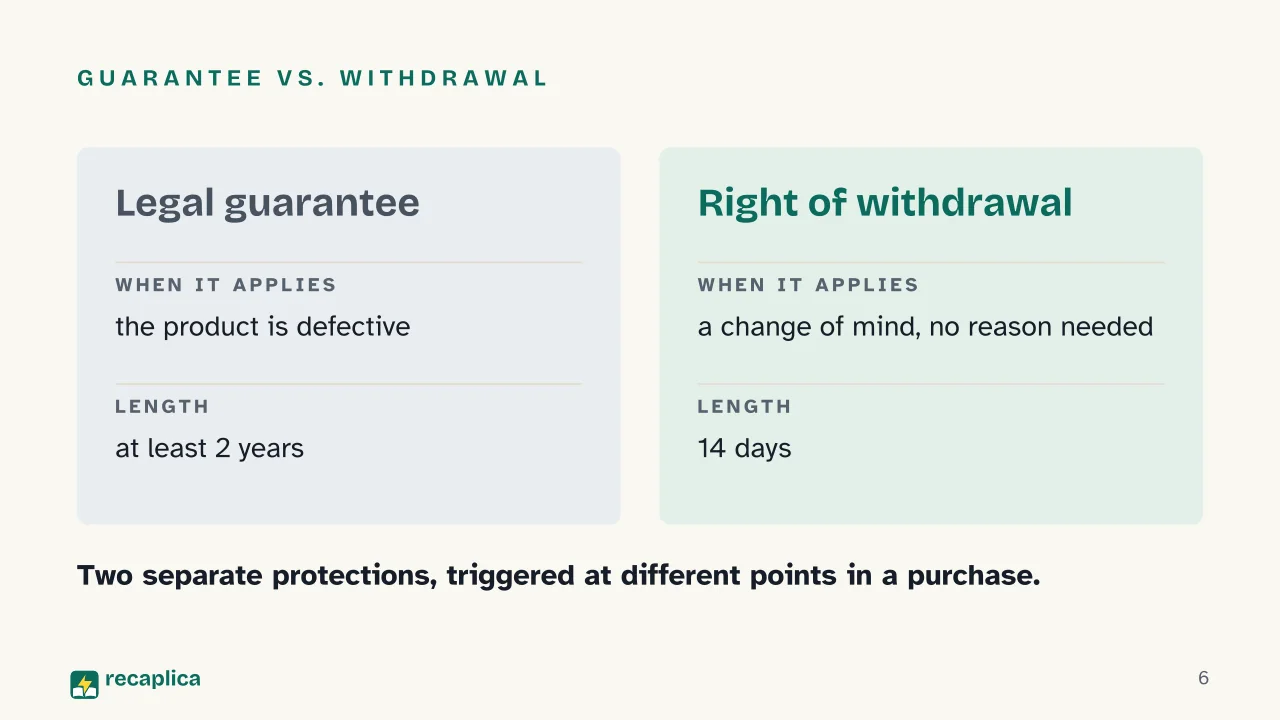 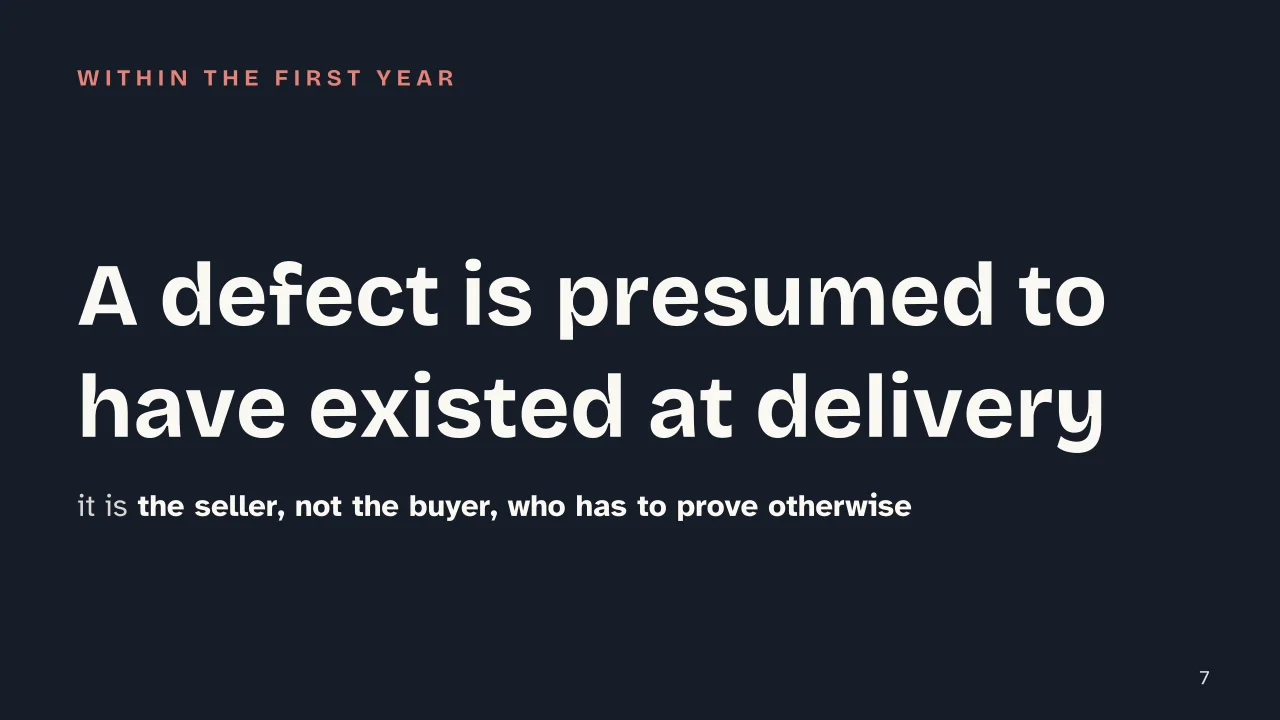 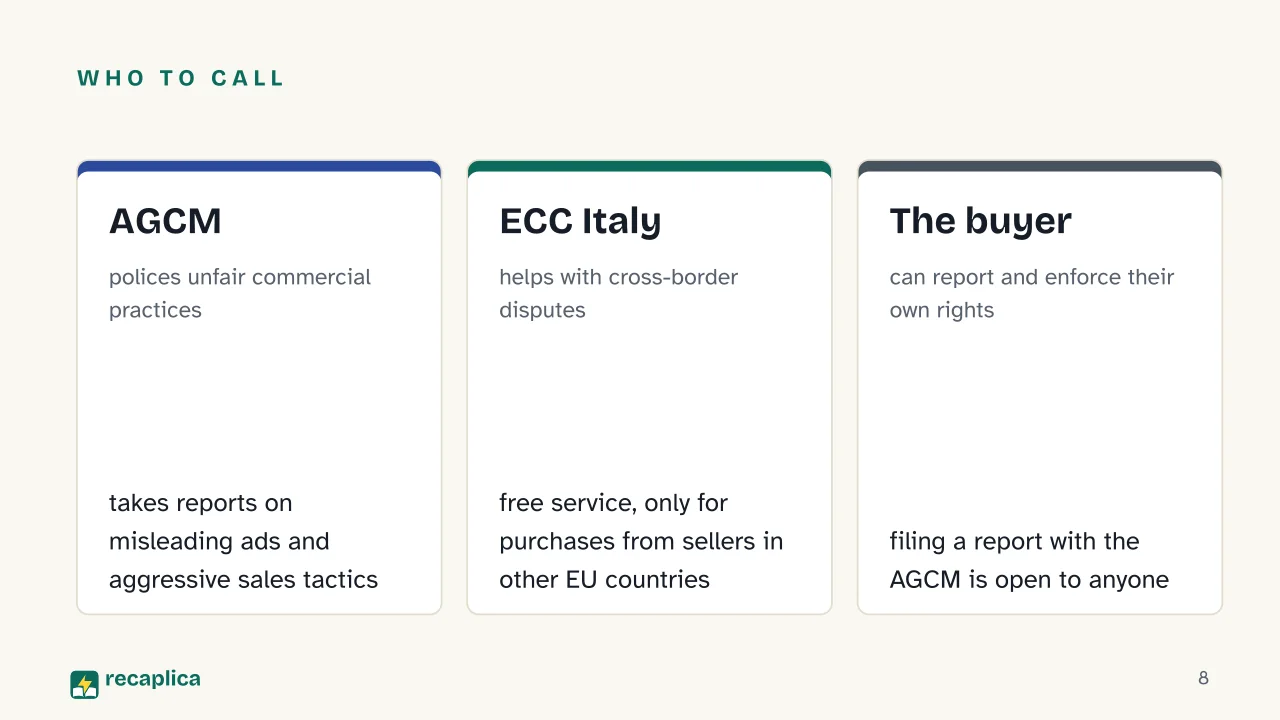 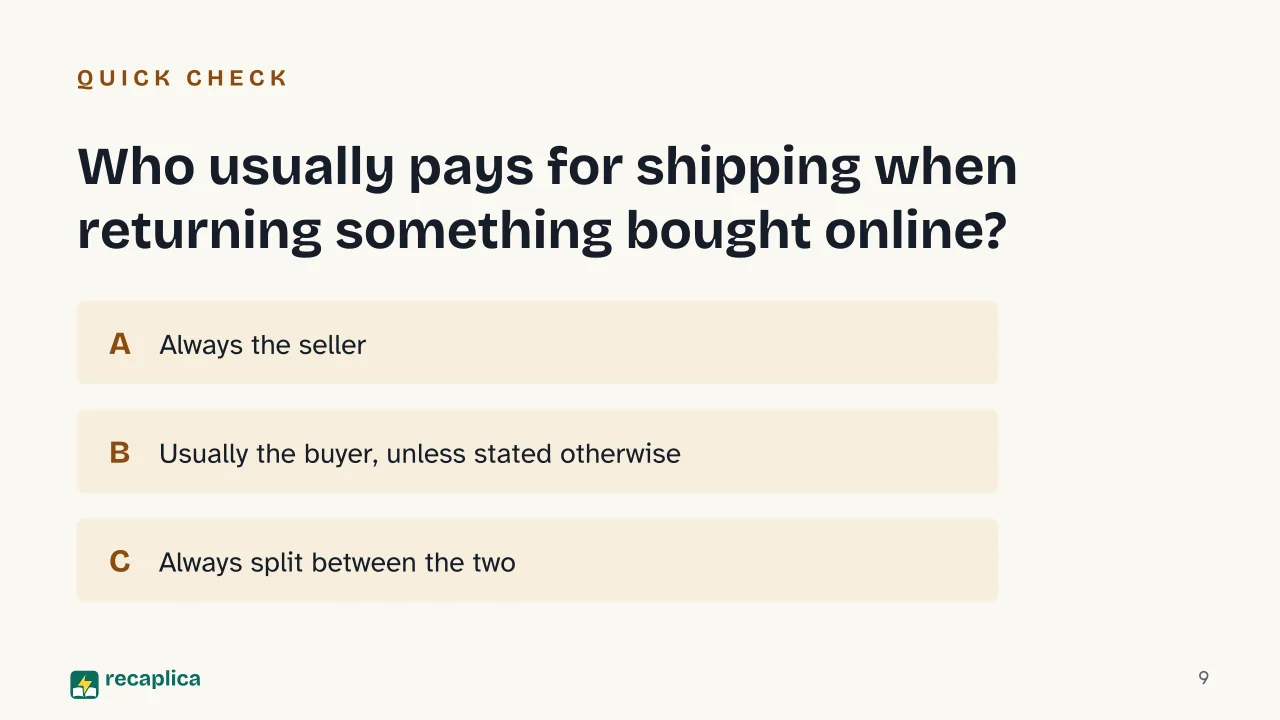  Common myths
Mind mapDrag the background to move around and the nodes to reposition them; use − and + to collapse and expand branches. 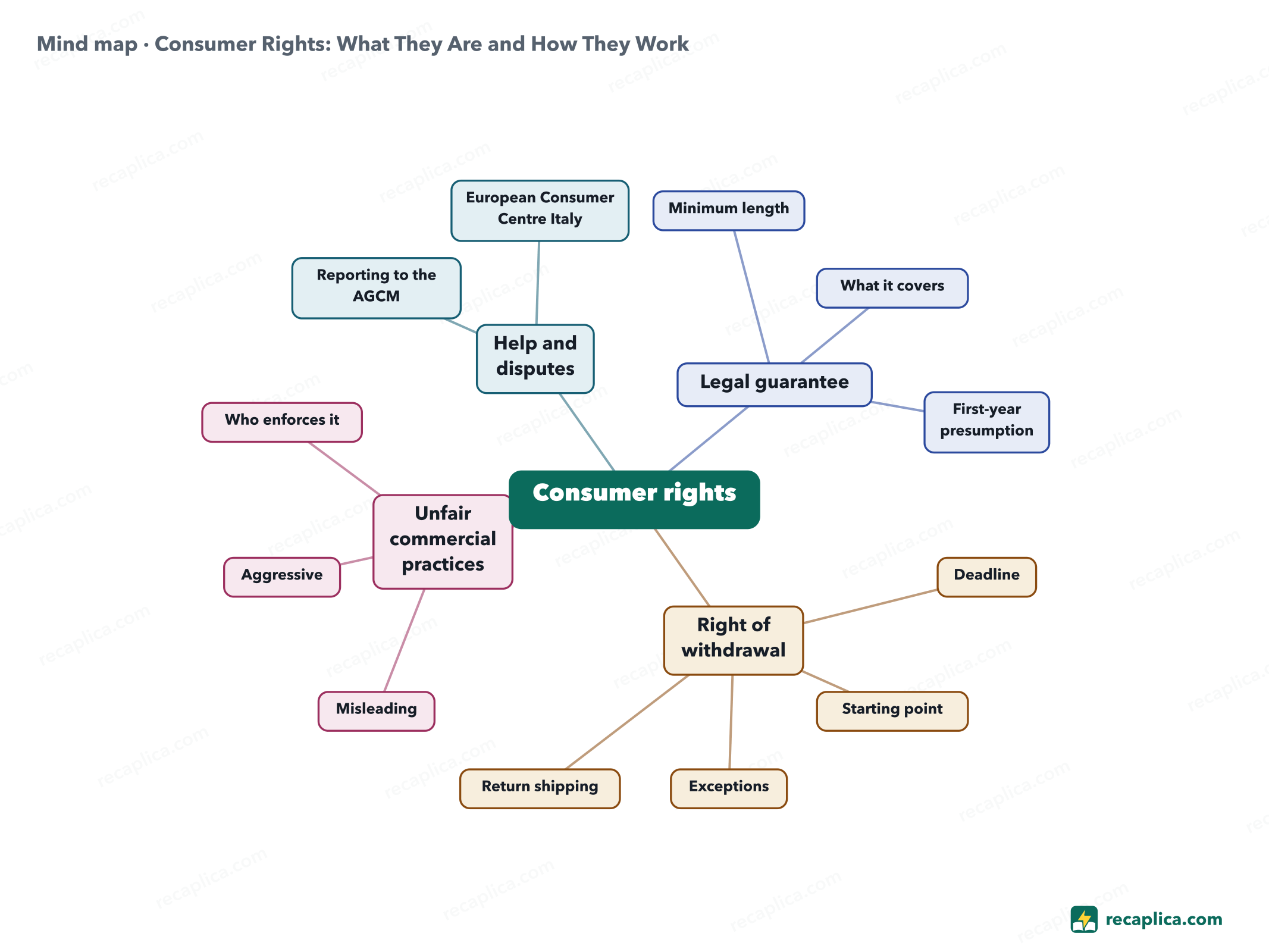
Quiz: test yourselfAnswer the questions to check what you have learned: you get instant feedback and a short explanation. Grade 0/10 0/5
FlashcardsTap the card to flip it and check whether you remember the answer, then move to the next one. 1 / 8 Explain it in your own wordsThe ultimate test: if you can explain it in simple words, you've truly understood it. Write your explanation, then compare it with the Recap. Your explanation is saved only on this device.
Frequently asked questionsWhat does consumer protection cover?It covers the rights that protect anyone buying a product or a service: the guarantee against defects, the right to change your mind on a distance purchase, and the rules against unfair commercial practices. How long does the legal guarantee on a product last?At least two years from delivery, according to the European Commission. If a problem shows up within the first twelve months, the starting assumption is that it was already there, and it is up to the seller to show otherwise. What rights does an online shopper have?Among others, the right of withdrawal: 14 days from delivery of the goods (or from signing the contract, for a service) to change your mind without giving a reason, with a few explicit exceptions such as digital content already downloaded. Who pays for shipping when I return something bought online?As a rule, the return shipping cost falls on the buyer, unless the seller states otherwise. What can I do if a seller in another EU country ignores my rights?You can turn to the European Consumer Centre Italy, free of charge. It handles cross-border disputes within the European Union and can try to settle a complaint without going to court. Every Recap goes through an independent review before publication. |