|
recaplica
Scientific Method: Steps, Types of Research, and Examples | ||||||||||||
| © 2026 Recaplica · recaplica.com — All rights reserved | ||||||||||||
Scientific Method: Steps, Types of Research, and ExamplesWhat to print Page numbers appear when printing with default margins. SlidesChoose a cut Flash10 slidesThe essential thread, to present in classFull15 slidesEvery chapter and the deeper detailBoth come with speaker notes. In 30 seconds quick readThe scientific method brings together systematic observation, inductive and deductive reasoning, and the testing of hypotheses: this is how controlled knowledge gets built. The typical path starts with an observation, moves through a question and a hypothesis that tries to answer it, continues with an experiment designed to put that hypothesis to the test, and ends with data analysis and a conclusion. Different scientists have applied it in different ways throughout history: Francis Bacon focused on the systematic collection of observations, Karl Popper on the possibility of disproving a hypothesis through an experiment. Research also splits into distinct categories: descriptive research observes without intervening, experimental research manipulates variables to test a hypothesis, and a third axis sorts the data collected into numerical or non-numerical. Key Points
Deep DiveWhat Is the Scientific MethodDoing science, in the words of the Stanford Encyclopedia of Philosophy, means observing systematically and reasoning inductively and deductively. It also means building models and testing hypotheses and theories, as far as the data allow for generalizing. Anyone studying how the mind works, as in psychological science, applies the same framework to a harder object to observe directly: behavior and mental processes. The Steps of the Scientific MethodEvery scientific path starts with an observation. From there a question arises, trying to explain the phenomenon observed, and the hypothesis is the expected answer to that question: a provisional, testable explanation. Next comes designing an experiment built to test the hypothesis and check whether the results match the predictions. The data collected then get analyzed, and the final step — the conclusion — states whether that data supports the starting hypothesis or not.
Different Interpretations Through HistoryFrancis Bacon, in the Novum Organum of 1620, proposed a method built on the methodical collection of observations and the systematic correction of the mistakes the senses can cause. Isaac Newton, in the Principia, held that his explanations came strictly from the observations he gathered, a view he summed up in the phrase hypotheses non fingo, following the same path Bacon had opened. Karl Popper, in The Logic of Scientific Discovery of 1959, moved the center of the method to the asymmetry between confirmation and disproof: a theory earns the label scientific when an experiment could, at least in principle, prove it wrong. This approach is called falsificationism. The physicist Steven Weinberg noted, in 1995, that scientists interpret this shared set of practices each in their own way, which is why the procedure looks different from one scientist to the next. Anyone reconstructing Darwin’s theory of evolution from fossils and field observations works along the same inductive path Bacon opened: collecting systematic observations before generalizing. Newton’s three laws of motion remain instead the best-known example of his own way of inferring from observations. Three Types of ResearchDescriptive research observes a phenomenon without manipulating it. The survey is its typical tool: it collects data by asking people to answer questions about their own behaviors and opinions. It captures well what people think and feel, but not as well how they actually behave in social situations. Experimental research instead investigates relationships between variables to test a hypothesis. In laboratory experiments, researchers create artificial situations where they can manipulate variables, unlike descriptive research, which observes without intervening. Observing volcanoes and earthquakes is an example of descriptive research on a large scale: the phenomena get recorded just as they happen, outside any laboratory.
Qualitative and quantitative instead describes the type of data collected, an axis separate from the descriptive-or-experimental design. The in-depth comparison between qualitative and quantitative research goes into that distinction, with the criteria used to judge its rigor. Qualitative and Quantitative DataQualitative data is, in the glossary of statistics, an observation whose value is expressed by a label — a category — instead of a number. Quantitative data is an observation whose value is a number, split into discrete, when it is countable like the number of correct answers, or continuous, when it sits on a scale, like a measurement of time or weight. Qualitative data is harder to organize and tabulate than quantitative data, and it is often observed in a natural setting instead of being produced in a lab. Anyone setting up an effective study method uses both types of data to figure out what works: a test score is quantitative, the account of how a student tackled an exercise is qualitative. Slide deckSlides ready to download and make your own in PowerPoint or Google Slides, with speaker notes. Pick the Flash cut or the Full one.  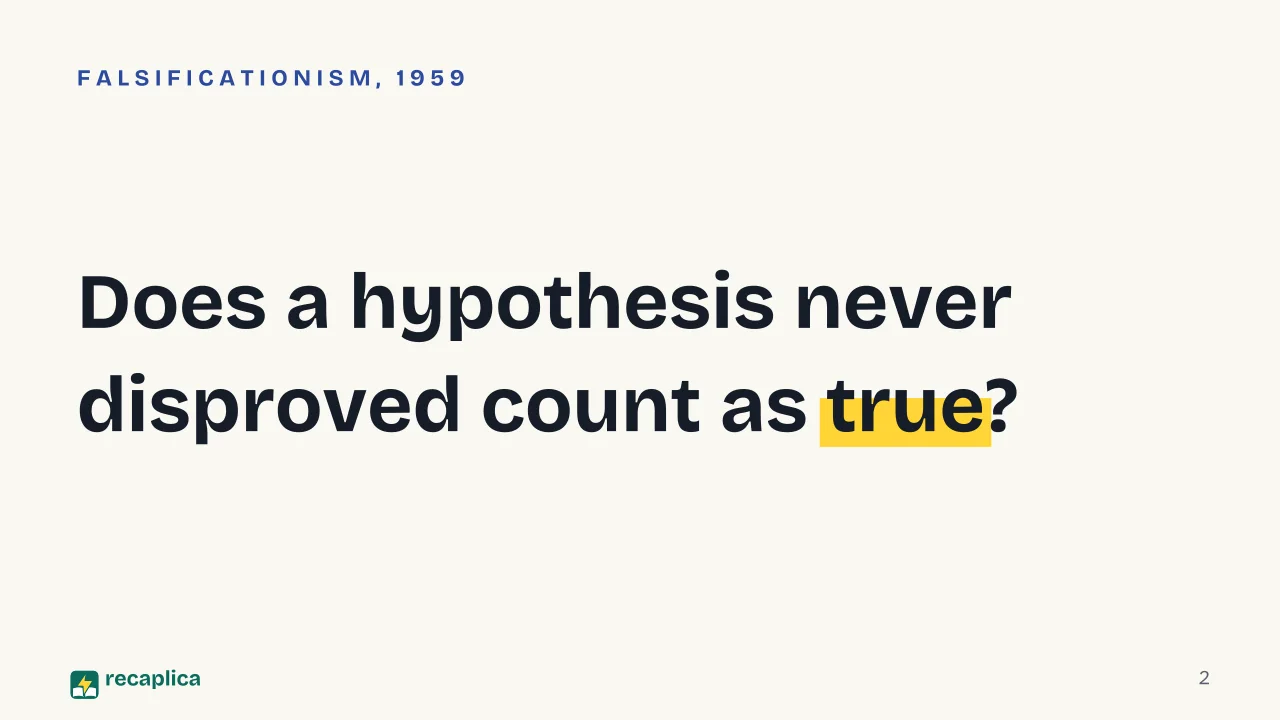   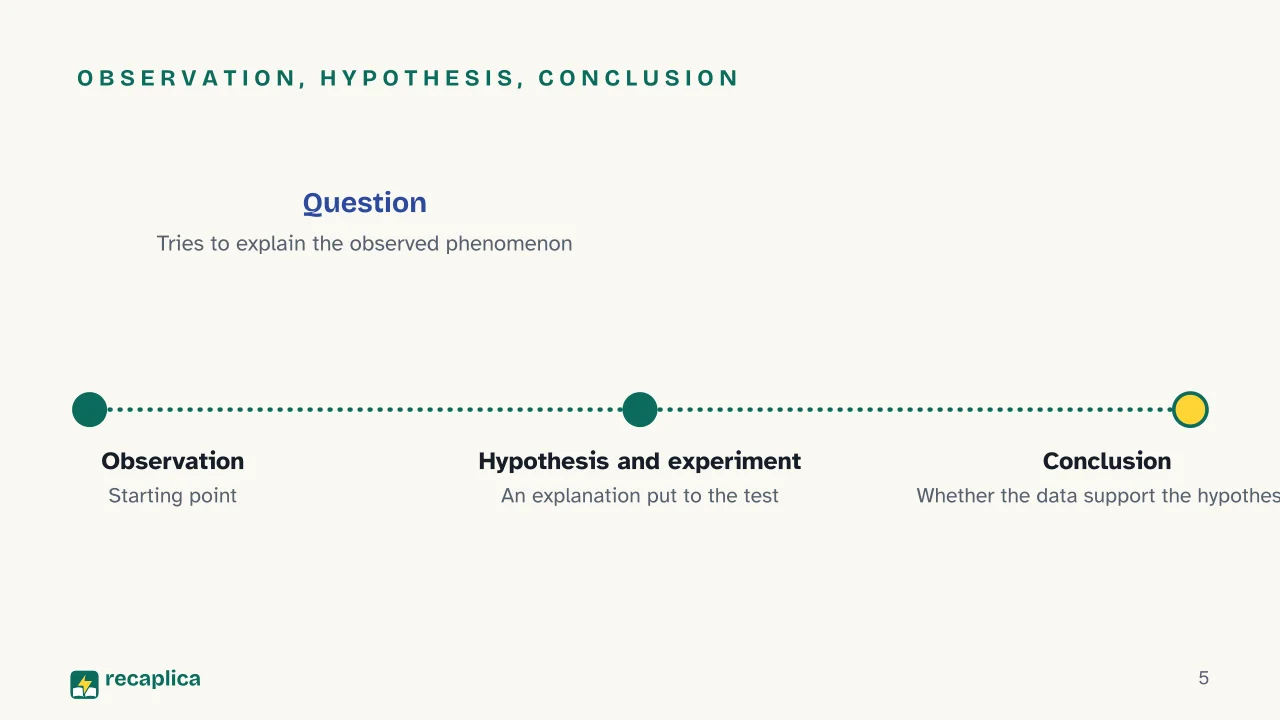  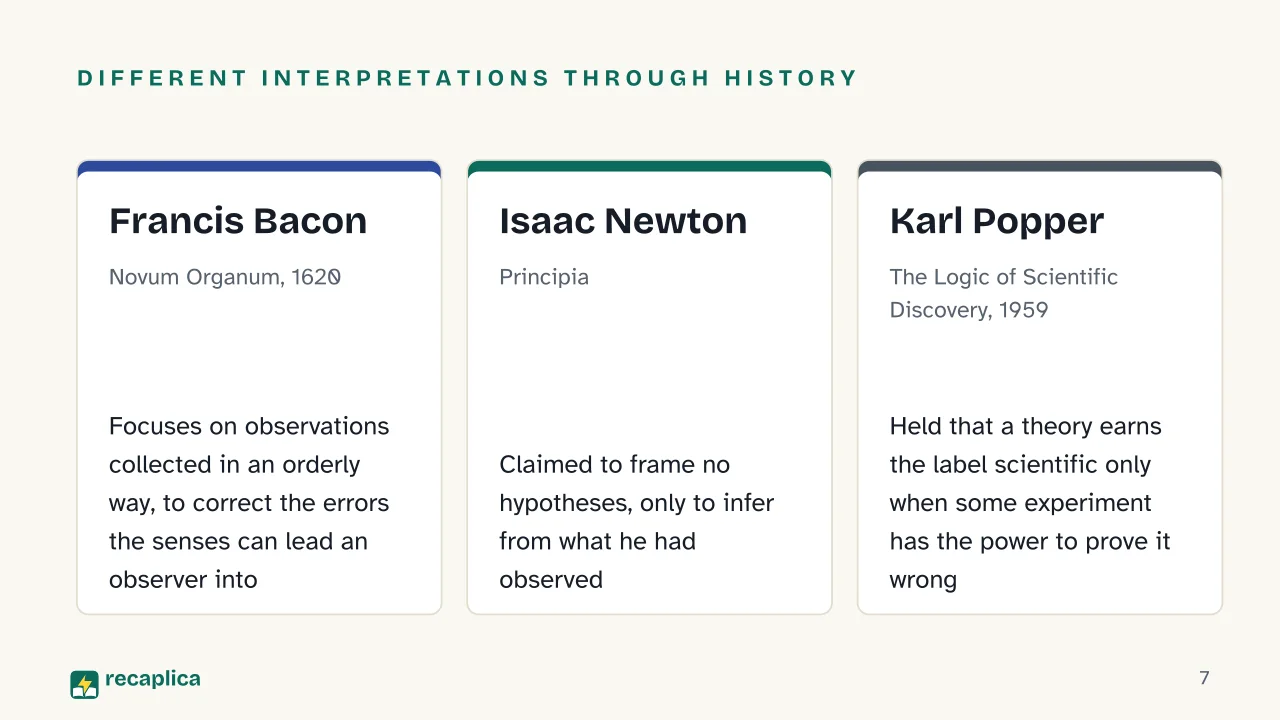   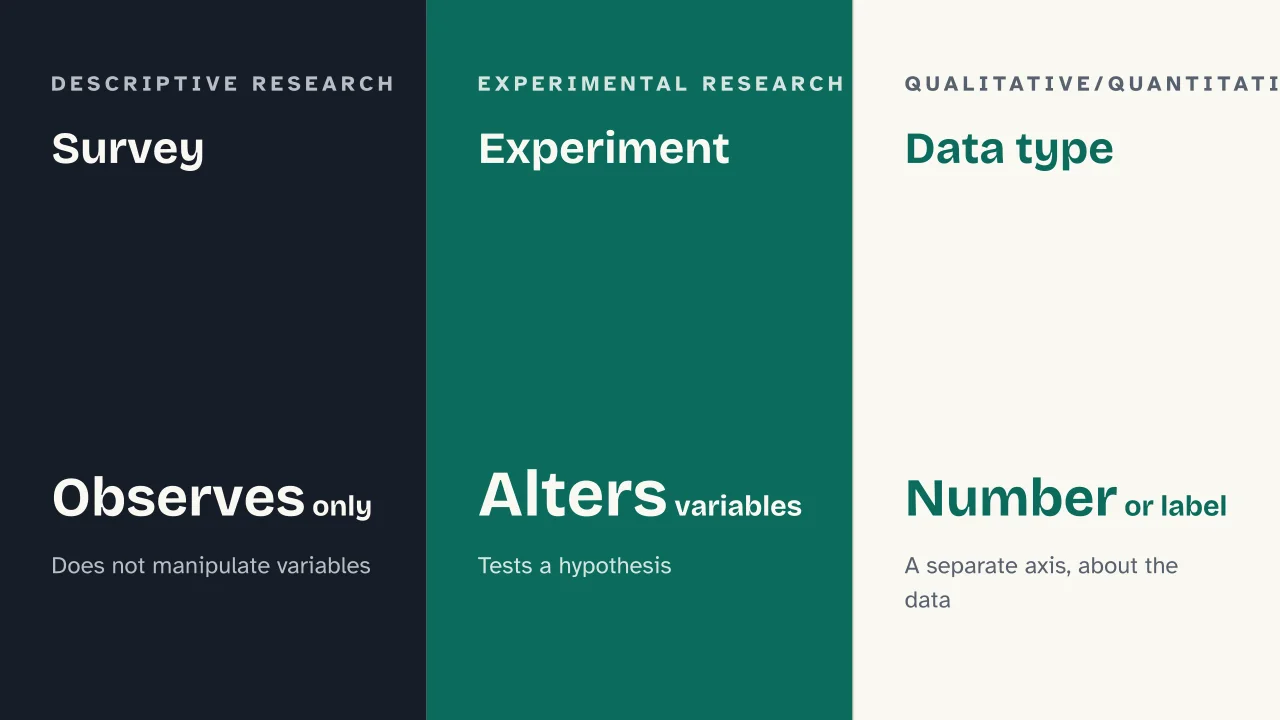 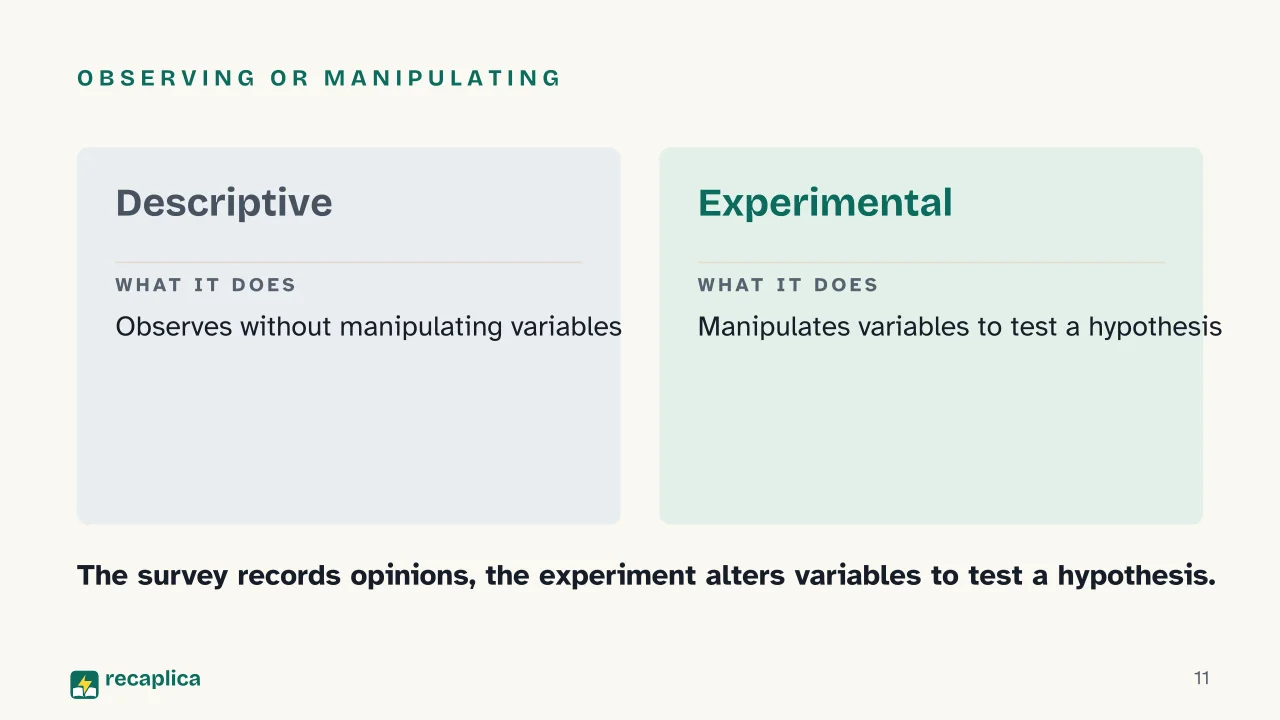  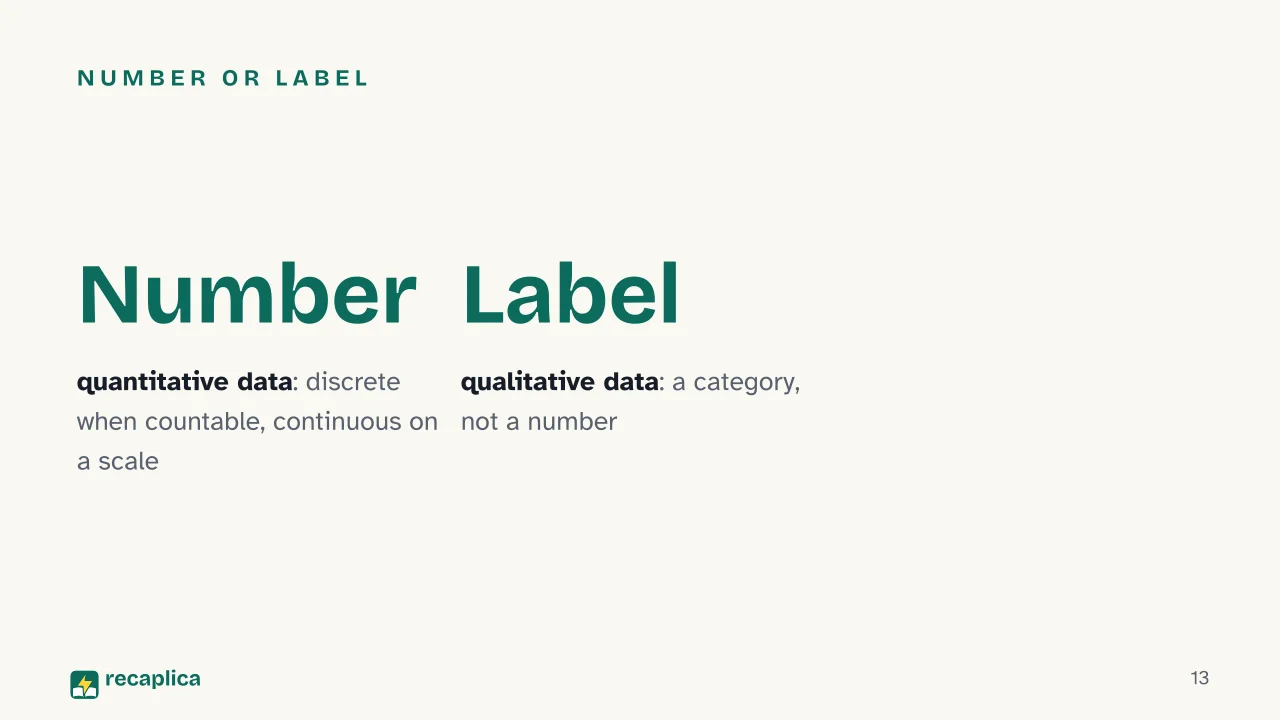   Common myths
Mind mapDrag the background to move around and the nodes to reposition them; use − and + to collapse and expand branches. 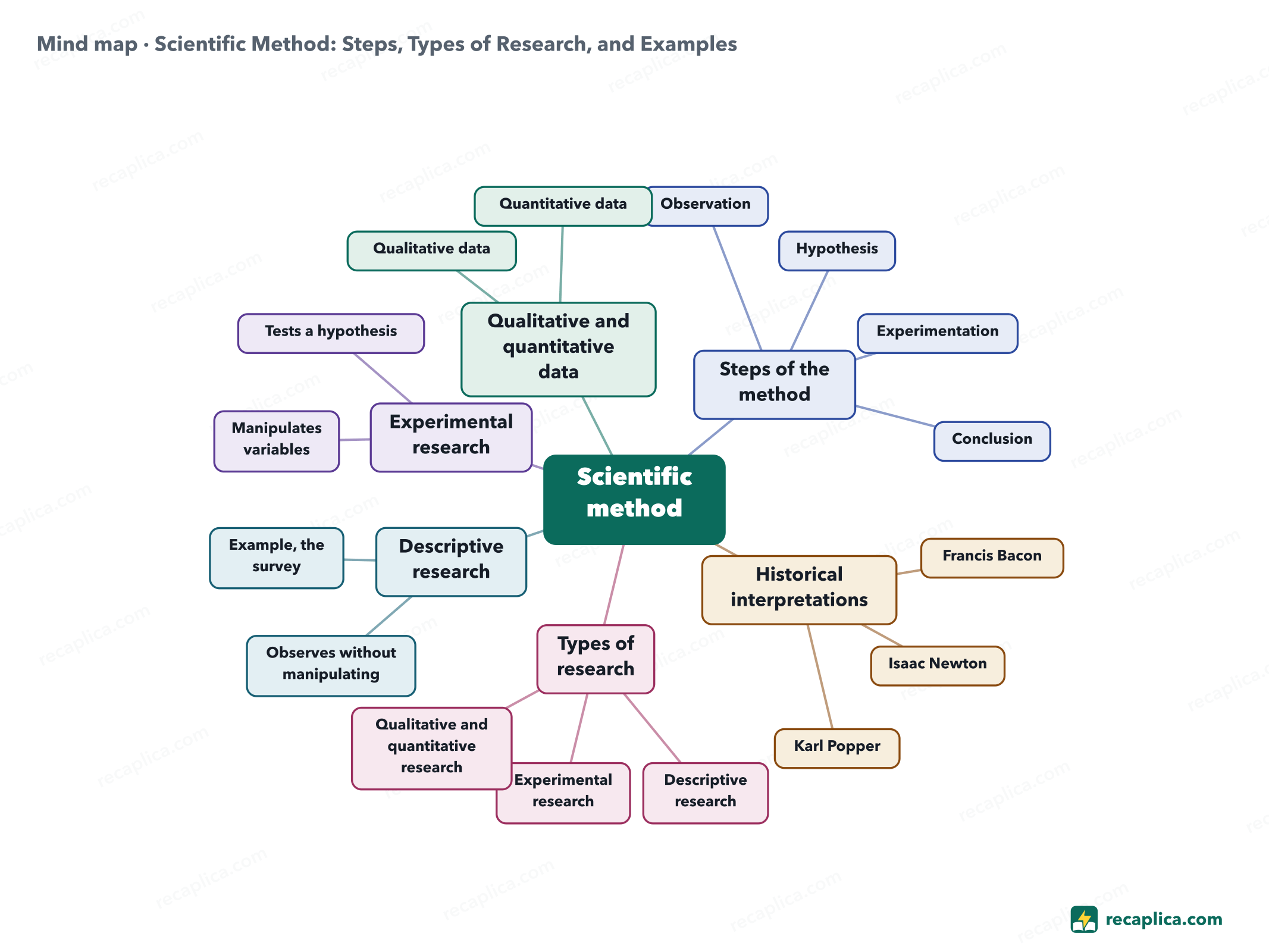
Quiz: test yourselfAnswer the questions to check what you have learned: you get instant feedback and a short explanation. Grade 0/10 0/5
FlashcardsTap the card to flip it and check whether you remember the answer, then move to the next one. 1 / 8 Explain it in your own wordsThe ultimate test: if you can explain it in simple words, you've truly understood it. Write your explanation, then compare it with the Recap. Your explanation is saved only on this device.
Frequently asked questionsWhat is the scientific method?It is the framework of practices scientists use to study a phenomenon — observing systematically, proposing hypotheses, and testing them through an experiment, then generalizing when the data allow it. What are the steps of the scientific method?In the traditional account, observation, question, hypothesis, experimentation, data analysis, and conclusion. The path always starts with an observation; the conclusion states whether the data collected support the starting hypothesis or not. What are some scientific method examples?A typical example starts with an observation, such as a plant growing less in one corner of a garden, moves through a hypothesis that tries to explain it, and reaches an experiment built on purpose to test it, with an analysis of the data collected and a final conclusion. What is the definition of a hypothesis in the scientific method?It is the proposed answer to a question raised by observation — it has to be testable, and it can turn out to be wrong once the experiment runs. What is the difference between descriptive and experimental research?The survey, the typical tool of descriptive research, records opinions and reported behaviors without intervening in the phenomenon; the experiment, typical of experimental research, manipulates conditions to put a hypothesis to the test. Every Recap goes through an independent review before publication. |