|
recaplica
Kurt Lewin: Field Theory and the Roots of Group Dynamics |
| © 2026 Recaplica · recaplica.com — All rights reserved |
Kurt Lewin: Field Theory and the Roots of Group DynamicsWhat to print Page numbers appear when printing with default margins. SlidesChoose a cut Flash10 slidesThe essential thread, to present in classFull16 slidesEvery chapter and the deeper detailBoth come with speaker notes. In 30 seconds quick readKurt Zadek Lewin was one of the psychologists who founded the scientific study of groups. Born in 1890, he left Nazi Germany for the United States in the 1930s and proposed field theory, the idea that a person's behavior depends on both who they are and the situation they are in at that moment. With his collaborators he showed experimentally that different leadership styles, authoritarian, democratic and laissez-faire, produce different group climates. In 1944 he founded a research center on group dynamics at MIT, and two years later he coined the term "action research" for a method that combines study and social intervention. Key Points
Deep DiveKurt Zadek Lewin was born in 1890 into a Jewish family in Mogilno, and studied mathematics, physics and psychology in Berlin, graduating under Carl Stumpf. When Hitler became chancellor in January 1933, Lewin realized that staying in Germany was no longer safe for him or his family: he already had ties to the United States, a congress at Yale in 1929 and a visiting professorship at Stanford in 1932, and in 1933 he left the country for good. He spent two years at Cornell University, then settled at the University of Iowa, where he stayed from 1935 to 1944. He became a US citizen in 1940. In 1944 he was invited to open his own institute at the Massachusetts Institute of Technology, where he founded a research center devoted to group dynamics. He died three years later, on February 11, 1947, of a heart attack, not yet fifty-seven. After his death, the center merged into the Survey Research Center at the University of Michigan. Field theoryLewin’s central idea is that understanding or predicting a person’s behavior takes more than looking at their character alone, and more than looking at the situation alone: it takes both together. Textbooks on scientific psychology usually sum this up with the formula B = f(P, E), behavior (B) as a function of the person (P) and the environment (E). Lewin arrived at this position by expanding on behaviorist stimulus-response models: classic behaviorism looked mainly at what comes in from outside, while Lewin added the “field” the person moves through. To describe this field he used the concept of the life space, everything that can influence a person’s behavior at a given moment: the physical and social surroundings around them, and also imagined states that do not yet exist in reality. It is an idea close to certain intuitions later developed by cognitivism: behavior does not depend on the world as it is, but on how that person represents it to themselves at that moment. The leadership-style experimentsTo study group dynamics experimentally, Lewin and his collaborators organized four groups of ten-year-old boys, each supervised by an adult and engaged in a series of craft activities. Each adult adopted a different style of guidance: authoritarian, deciding every choice for the group alone; democratic, encouraging the boys to discuss decisions together; laissez-faire, leaving the group completely free to choose, without stepping in.
Lewin described the declared purpose of these experiments as giving insight into how group dynamics actually work beneath the surface. And this is where one of his most cited insights comes in: it is not similarity or difference between people that makes a group, but interdependence of fate among its members, the fact that they share the same circumstances. A school class, a sports team, a family remain a group even when their members are very different from one another, as long as what happens to one ends up affecting the others too. Action researchIn 1946 Lewin coined the term “action research” in a paper describing a method that combines empirical study of social phenomena with practical intervention on them. The method proceeds in cycles: an action is planned, carried out, and then the results are checked before planning the next step, in a spiral that repeats. It differs from the approach of a scholar who observes from the outside without intervening: someone doing action research steps into the problem, acts, and uses what they observe to correct the next step. Around the same time, Lewin also described the phases a group passes through when moving from one state of equilibrium to another, an idea later picked up and developed into organizational change management. Slide deckSlides ready to download and make your own in PowerPoint or Google Slides, with speaker notes. Pick the Flash cut or the Full one.     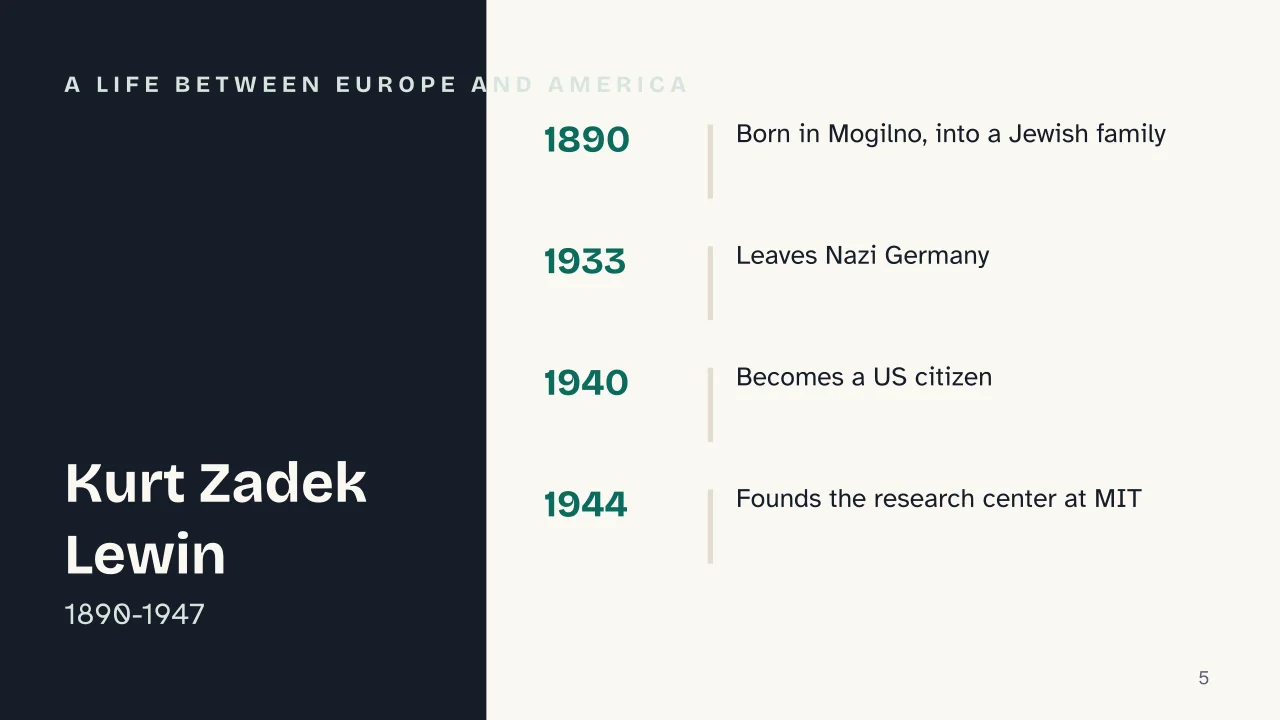 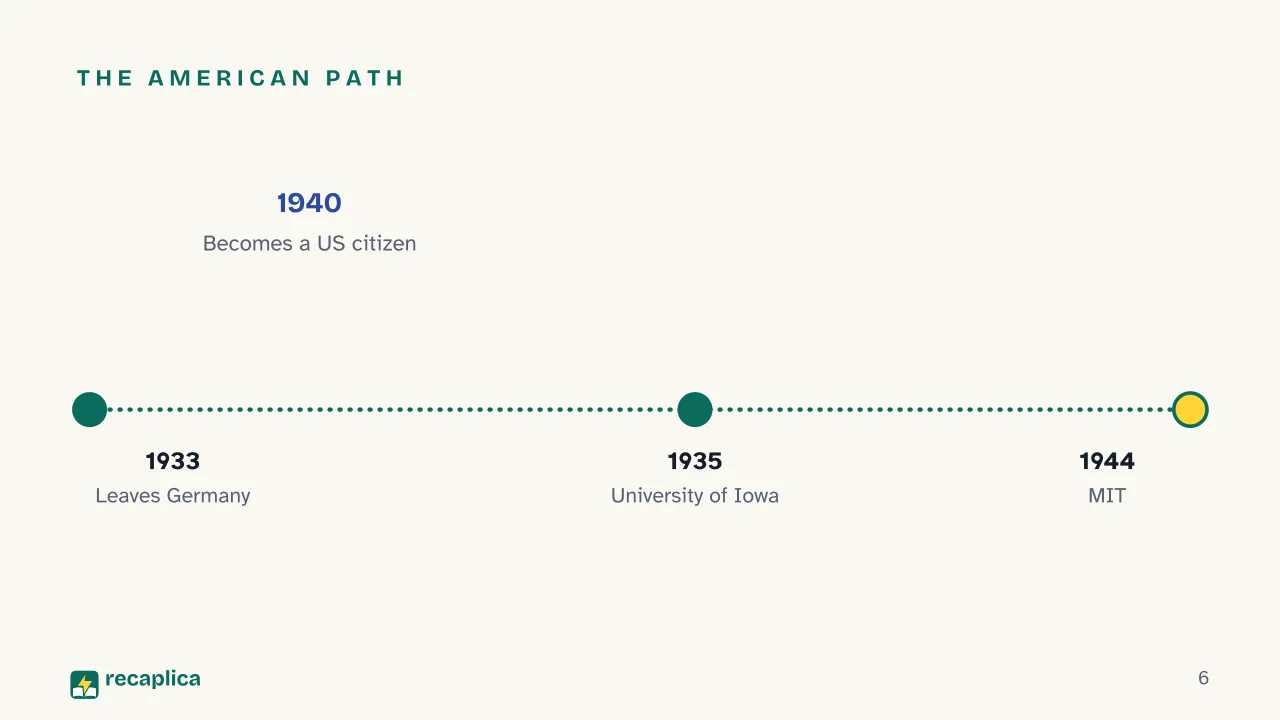  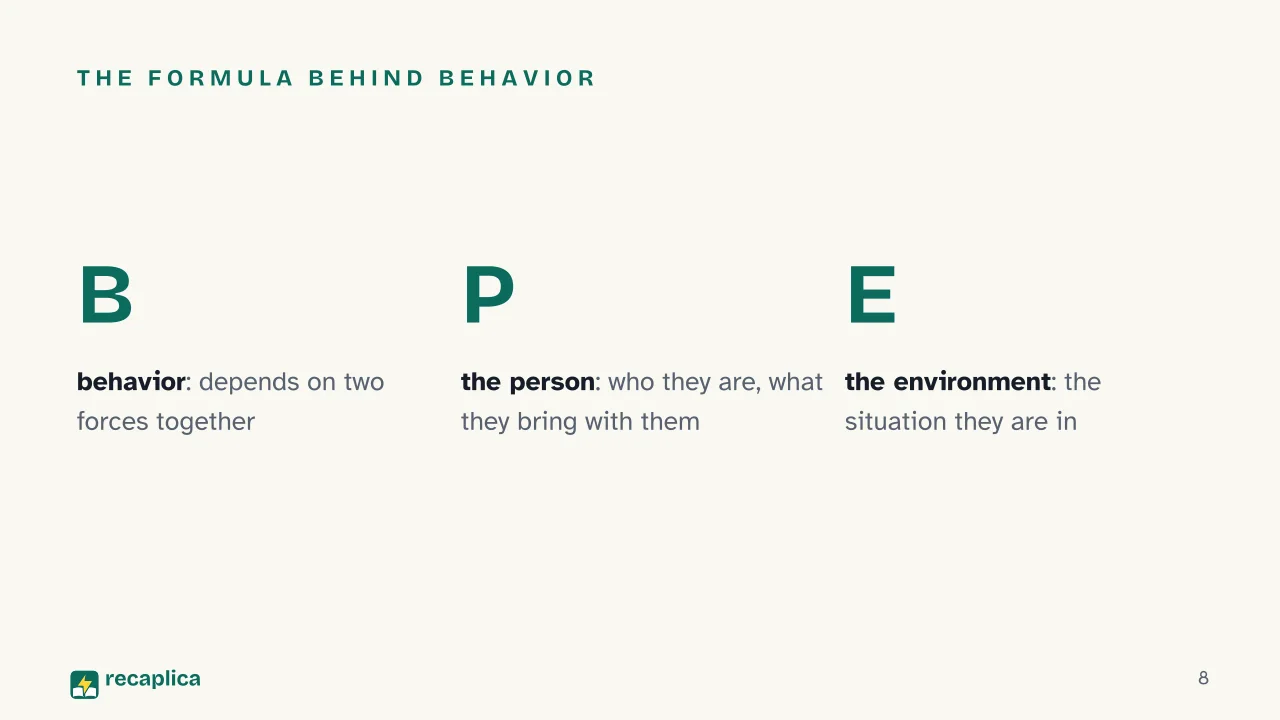   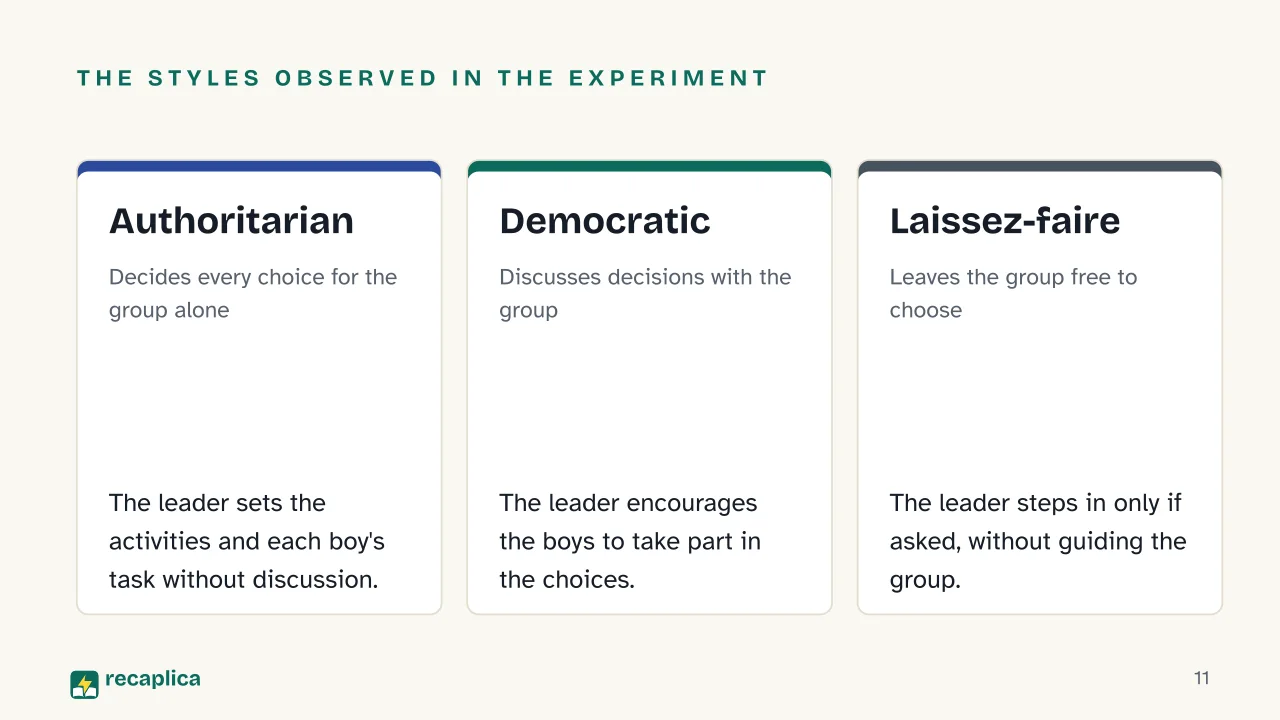   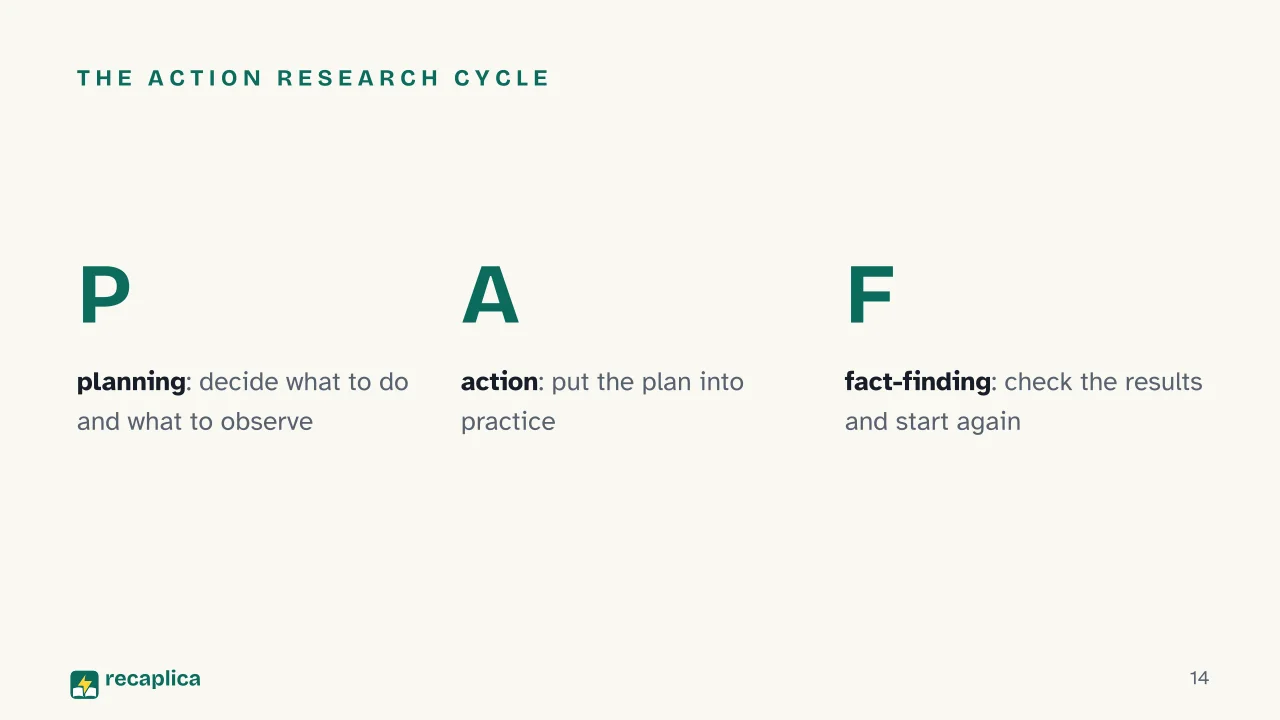 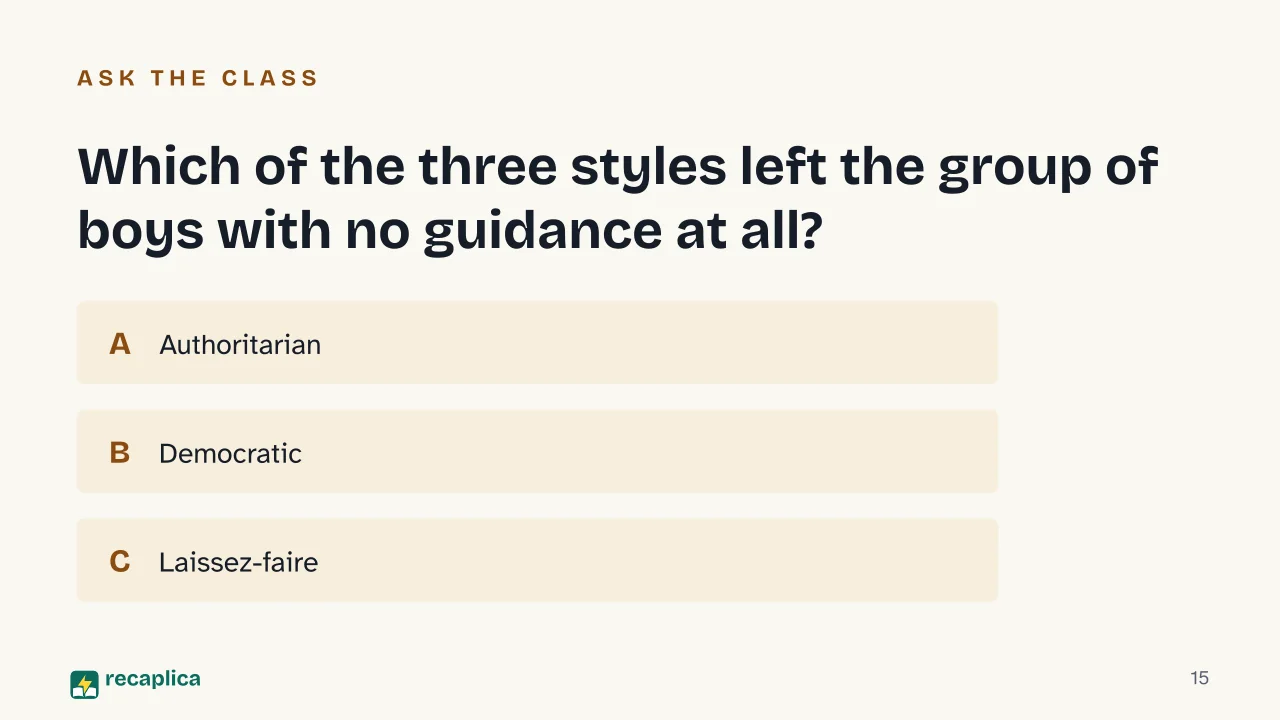  Common myths
Mind mapDrag the background to move around and the nodes to reposition them; use − and + to collapse and expand branches. 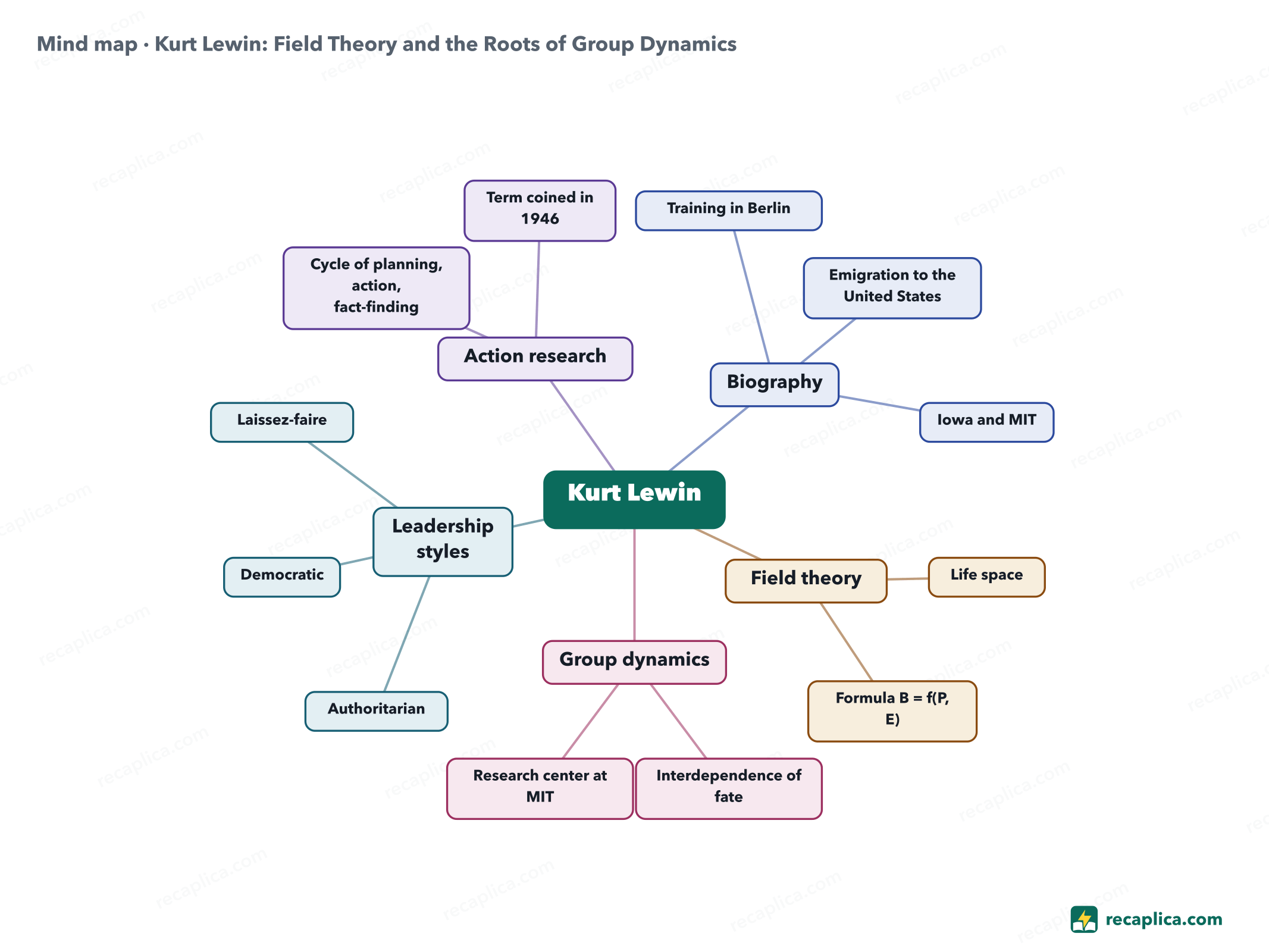
Quiz: test yourselfAnswer the questions to check what you have learned: you get instant feedback and a short explanation. Grade 0/10 0/5
FlashcardsTap the card to flip it and check whether you remember the answer, then move to the next one. 1 / 7 Explain it in your own wordsThe ultimate test: if you can explain it in simple words, you've truly understood it. Write your explanation, then compare it with the Recap. Your explanation is saved only on this device.
Frequently asked questionsWho was Kurt Lewin?Kurt Zadek Lewin (1890-1947) was a German-born psychologist who later became a naturalized American citizen, widely regarded as one of the founders of experimental social psychology. He emigrated to the United States in the 1930s, where he developed field theory and the first experimental studies of group dynamics. What is Kurt Lewin's field theory?It is the idea that a person's behavior depends jointly on their character and the situation they are in, summed up in the formula B = f(P, E), where behavior depends on the person and on the environment together. What are the three leadership styles Lewin identified?Authoritarian, where the leader decides alone; democratic, where the leader involves the group in decisions; laissez-faire, where the leader leaves the group entirely free. Lewin observed them in an experiment with groups of ten-year-old boys, each guided by a different adult. What did Lewin mean by group dynamics?The study of how a collection of people becomes and functions as a group. For Lewin, what unites members is interdependence of fate, the fact that they share the same circumstances. What is Lewin's action research?A social research method that combines empirical study, practical intervention and evaluation of results, in repeated cycles of planning, action and fact-finding. Lewin coined the name in a 1946 paper. Every Recap goes through an independent review before publication. |