recaplica
Clear in 30 seconds, yours in 10 minutes.
In 30 seconds quick read
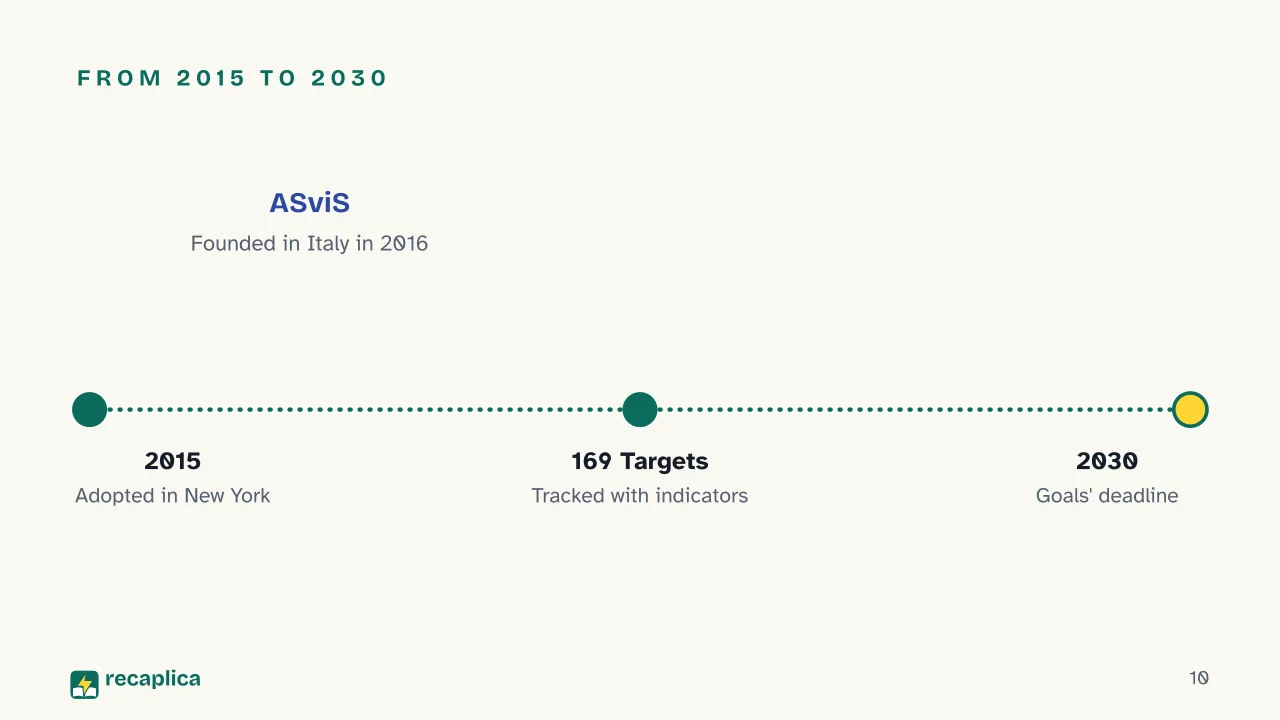
The United Nations formally adopted the 2030 Agenda on 25 September 2015, signed by 193 countries, including Italy. The Agenda groups 17 Sustainable Development Goals, from ending poverty to protecting the climate, broken down into 169 Targets and tracked by more than 240 indicators. It is a resolution of the General Assembly: a political commitment that governments made, with a 2030 deadline. The short titles widely used outside the UN's own documents, such as "No Poverty" or "Life on Land", circulate in different versions from country to country; in Italy they come from ASviS, the alliance founded in 2016 to track the Agenda's progress.
Key Points
On 25 September 2015 the UN General Assembly adopted the 2030 Agenda, signed by 193 countries.
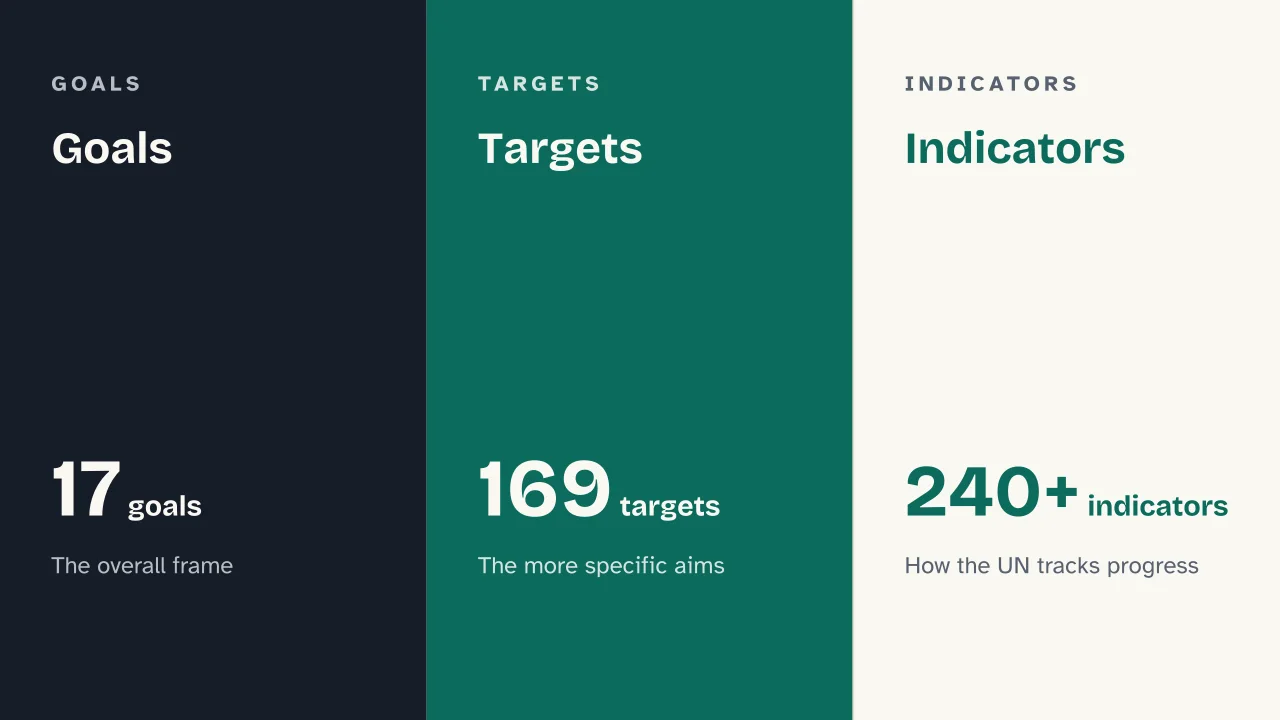
The Agenda holds 17 Sustainable Development Goals, broken down into 169 Targets and tracked by more than 240 indicators.
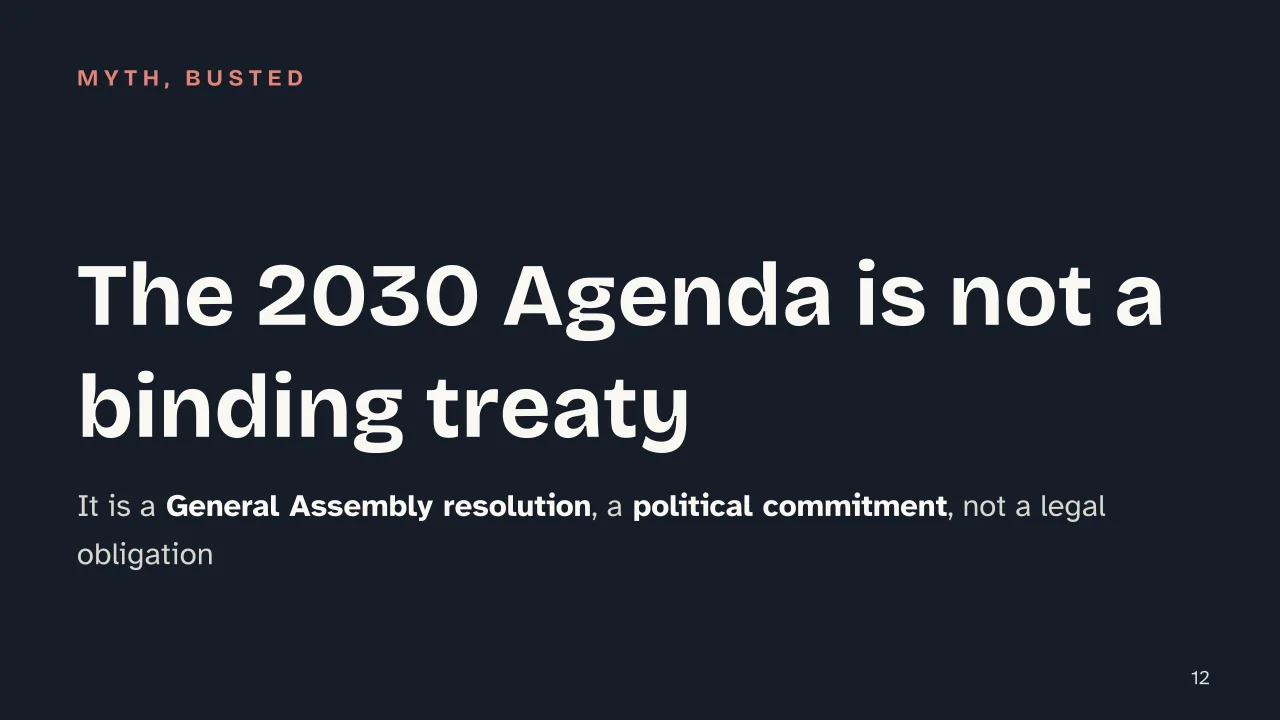
It is a resolution: a political commitment governments made, not a treaty with the force of law.
Short goal titles circulate locally too; in Italy, groups such as ASviS popularized their own set, like "Sconfiggere la povertà" (No Poverty).
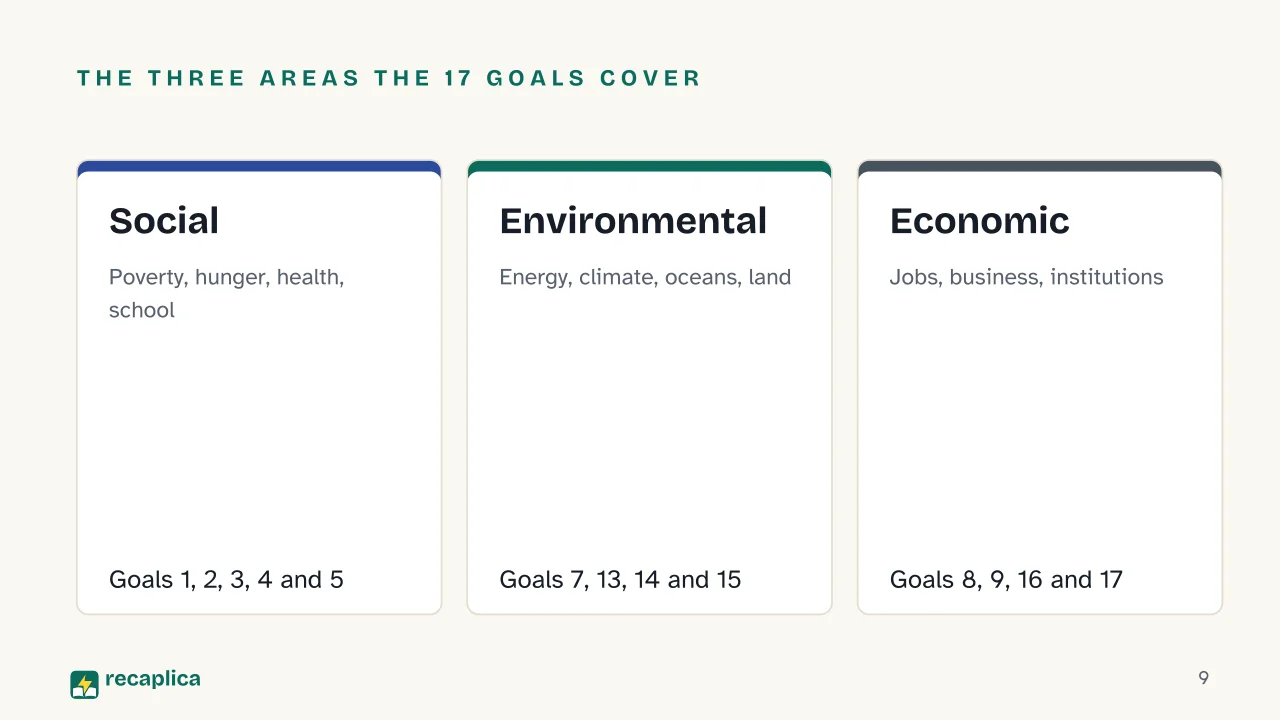
The 17 Goals span different areas: poverty and hunger, climate and the environment, work and institutions.
2030 is the deadline by which countries committed to reaching the 17 Goals.
Key figures
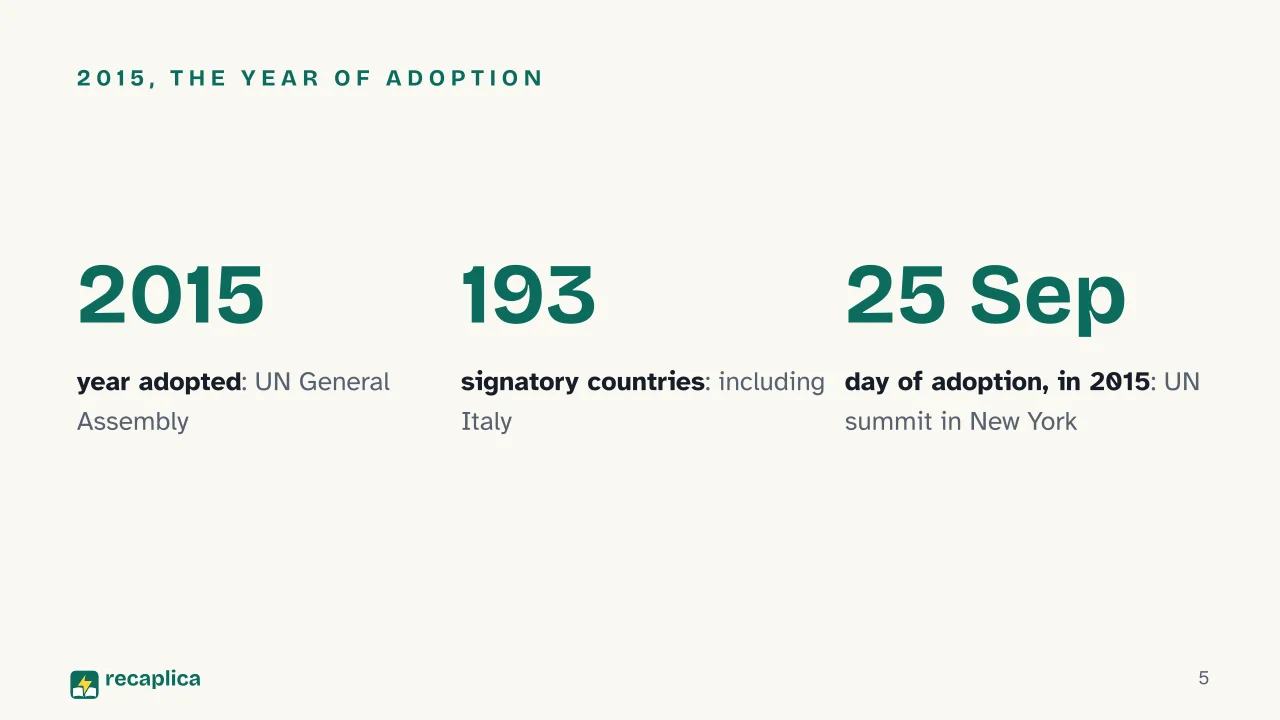
2015 Year the UN General Assembly adopted the 2030 Agenda, signed by 193 countries Source: UN, resolution A/RES/70/1
193 UN member states that signed the 2030 Agenda in 2015, including Italy Source: ASviS
169 Targets that break down the 17 Sustainable Development Goals, announced in 2015 Source: UN, resolution A/RES/70/1
Deep Dive
The name shows up everywhere, from UN documents to the colorful wheel of icons printed on reports and campaigns, but behind “SDGs” sits a precise document: the plan the UN General Assembly put into writing on 25 September 2015, at a summit in New York marking the Organization’s seventieth anniversary. 193 member states signed it, Italy among them.
The resolution that carries it, A/RES/70/1, frames it as a plan for people, the planet and prosperity, with the stated ambition of also strengthening universal peace. It is the instrument the UN used to turn the idea of sustainability into something operational: a deadline, plus a numbered list of goals. The general definition of that concept stays in the other Recap.
It is not an international treaty: it is a resolution, a political act by member governments.
The scaffolding looks like this: 17 Sustainable Development Goals, broken down into 169 more specific Targets. According to ASviS, the Italian Alliance for Sustainable Development founded on 3 February 2016, more than 240 indicators track them, with every country assessed periodically at the UN.
Short goal titles circulate outside the UN’s own text too, and they vary by country. In Italy, ASviS popularized versions like “Sconfiggere la povertà” (No Poverty) or “Lotta contro il cambiamento climatico” (climate action); the full text of each Goal stays in English on the official site, sdgs.un.org.
Goal
Short title
What it calls for
1
No Poverty
Ending poverty in all its forms, everywhere
2
Zero Hunger
Ending hunger and making agriculture sustainable
3
Good Health and Well-being
Ensuring healthy lives and well-being for all, at every age
4
Quality Education
Inclusive, equitable education and learning for all
5
Gender Equality
Equality and empowerment for women and girls
6
Clean Water and Sanitation
Sustainable management of water and sanitation
7
Affordable and Clean Energy
Affordable, reliable, sustainable energy for all
8
Decent Work and Economic Growth
Inclusive growth, full employment, decent work
9
Industry, Innovation and Infrastructure
Resilient infrastructure and sustainable innovation
10
Reduced Inequalities
Less inequality between and within countries
11
Sustainable Cities and Communities
Inclusive, safe, resilient cities
12
Responsible Consumption and Production
Sustainable patterns of consumption and production
13
Climate Action
Urgent action against climate change and its impacts
14
Life Below Water
Sustainable use of oceans, seas and marine resources
Strengthening global cooperation for sustainable development
Practical example: a school that runs a beach cleanup and ties it to Goal 14 (“Life Below Water”) is applying the 2030 Agenda at the local level: a global goal set in 2015 becomes a concrete project, measurable with something as simple as the kilos of plastic collected.
Behind the 17 short titles sit areas that differ widely from one another. Goal 1 and Goal 10 approach the same question from two sides: the first calls for ending poverty in all its forms, the second for reducing inequality between and within countries. That distinction explains part of what shows up in rankings of the poorest countries in the world: low average income and sharp internal inequality often sit in the same territory, with different consequences for absolute and relative poverty. A country can have a high average income and, at the same time, deep pockets of poverty within it, precisely because Goal 1 and Goal 10 measure different things: the first the lack of minimum resources, the second the gap between those who have more and those who have less.
Goal 13 calls for urgent action against climate change. Among the consequences the Agenda does not spell out one by one is the forced displacement that the climate crisis is making more frequent, a subject covered in the Recap on climate refugees.
Goal 16, finally, calls for peaceful societies, access to justice and effective institutions: ground that overlaps with the Universal Declaration of Human Rights, the 1948 UN document that laid the groundwork for many of the rights Goal 16 asks institutions to protect.
The deadline year, 2030, gives the plan its common name, set in 2015 by 193 governments.
Slide deck
Slides ready to download and make your own in PowerPoint or Google Slides, with speaker notes. Pick the Flash cut or the Full one.
✗ Myth The 2030 Agenda is a binding international treaty.
✓ Reality It is a UN General Assembly resolution: states signed it in 2015 as a political commitment. It carries no legal obligation enforceable in court.
✗ Myth The short, memorable titles for each Goal, like "No Poverty" or "Life on Land", are the full legal text of the Agenda.
✓ Reality They are shorthand headlines. The operative text sits in the 169 Targets set out in resolution A/RES/70/1, and local versions of the short titles vary; in Italy, for instance, ASviS popularized its own set.
✗ Myth The number 17 describes the full scope of the 2030 Agenda on its own.
✓ Reality Behind it sit 169 more specific Targets and, according to ASviS, more than 240 monitoring indicators.
Mind map
Drag the background to move around and the nodes to reposition them; use − and + to collapse and expand branches.
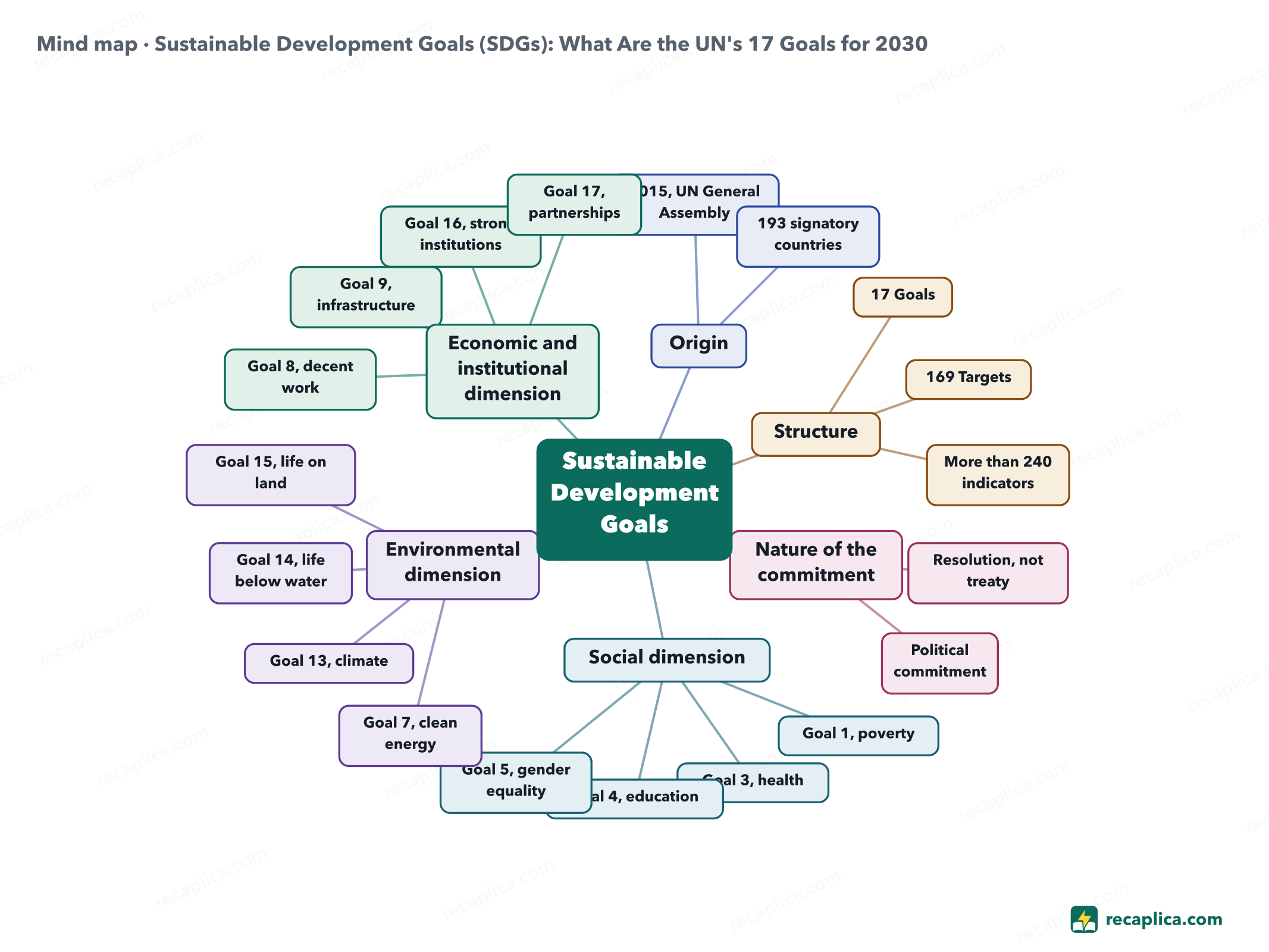
2015, UN General AssemblyAdopted on 25 September, in New York
193 signatory countriesIncluding Italy
Structure
17 Goals
169 Targets
More than 240 indicators
Nature of the commitment
Resolution, not treaty
Political commitment
Social dimension
Goal 1, poverty
Goal 3, health
Goal 4, education
Goal 5, gender equality
Environmental dimension
Goal 7, clean energy
Goal 13, climate
Goal 14, life below water
Goal 15, life on land
Economic and institutional dimension
Goal 8, decent work
Goal 9, infrastructure
Goal 16, strong institutions
Goal 17, partnerships
Quiz: test yourself
Answer the questions to check what you have learned: you get instant feedback and a short explanation.
Grade0/100/5
Answers: 1-B · 2-B · 3-B · 4-B · 5-B
Flashcards
Tap the card to flip it and check whether you remember the answer, then move to the next one.
1 / 6
Explain it in your own words
The ultimate test: if you can explain it in simple words, you've truly understood it. Write your explanation, then compare it with the Recap.
Your explanation is saved only on this device.
The United Nations formally adopted the 2030 Agenda on 25 September 2015, signed by 193 countries, including Italy. The Agenda groups 17 Sustainable Development Goals, from ending poverty to protecting the climate, broken down into 169 Targets and tracked by more than 240 indicators. It is a resolution of the General Assembly: a political commitment that governments made, with a 2030 deadline. The short titles widely used outside the UN's own documents, such as "No Poverty" or "Life on Land", circulate in different versions from country to country; in Italy they come from ASviS, the alliance founded in 2016 to track the Agenda's progress.
Frequently asked questions
What are the Sustainable Development Goals?
They are the 17 goals at the heart of the UN's 2030 Agenda, adopted on 25 September 2015 and signed by 193 countries, to be reached by 2030.
Who adopted the 2030 Agenda?
The UN General Assembly, at a summit in New York in September 2015, signed by 193 member states, including Italy.
What does SDG 13 call for?
It calls for urgent action against climate change and its effects; ASviS sums it up in Italian as "Lotta contro il cambiamento climatico" (climate action).
How many countries signed the 2030 Agenda?
193 UN member states, according to ASviS, including Italy.
Is the 2030 Agenda a legal obligation for states?
No. It is a General Assembly resolution, so a political commitment governments took on voluntarily.
Every Recap goes through an independent review before publication.
Statistics, only if you say so
To learn which Recaps help most we would use Google Analytics, with aggregate, anonymous data. It starts only with your OK, and you can change your mind anytime. Privacy policy