|
recaplica
Poverty: Definition and How It Differs from Inequality and Underdevelopment | ||||||||||||
| © 2026 Recaplica · recaplica.com — All rights reserved | ||||||||||||
Poverty: Definition and How It Differs from Inequality and UnderdevelopmentWhat to print Page numbers appear when printing with default margins. SlidesChoose a cut Flash10 slidesThe essential thread, to present in classFull16 slidesEvery chapter and the deeper detailBoth come with speaker notes. In 30 seconds quick readPoverty is the condition of lacking the minimum resources needed to live, and it can be measured in more than one way depending on the yardstick used. Absolute poverty is set against a fixed threshold, such as the basket of essential goods ISTAT uses in Italy or the World Bank's international line of $3 a day, while relative poverty compares a household's spending with the average in its own country. It is a distinct phenomenon from economic inequality, which Eurostat measures with the Gini index on the distribution of income, and from underdevelopment, which the United Nations Development Programme assesses with the Human Development Index by looking beyond economic growth alone. According to the World Bank, 831 million people worldwide were living in extreme poverty in 2025. Key Points
Key figures
Deep DiveWhat poverty meansPoverty is the condition of lacking the minimum resources needed to live. There is no single way to measure it: international and national institutions use different thresholds, depending on whether they look at a fixed minimum level or at a comparison with the rest of the population. The term is often mixed up with two related but distinct concepts. Economic inequality is about how income is spread across the people of a country, not how many people fall below a minimum threshold: a country can have relatively few people in poverty and still a large share of income concentrated in a few hands. Underdevelopment, in turn, describes the level of economic and social development of an entire country, looking at a broader set of factors than just the income of its poorest residents. The three ideas are connected, but the institutions that study them use separate indicators: the World Bank measures poverty against an income threshold, Eurostat measures inequality with the Gini index, and the UNDP measures development with the Human Development Index. Absolute and relative povertyAbsolute poverty is measured against a fixed threshold, independent of a country’s average standard of living. The World Bank uses an international line of $3 a day for extreme poverty; in Italy, ISTAT calculates absolute poverty against the monetary value of a minimum basket of goods and services considered essential. Relative poverty follows a different logic: it compares a household’s spending or income with the average in its own country. A household can be relatively poor in a rich country while having a higher income, in absolute terms, than a non-poor household in a less wealthy country.
Compared with 2023, ISTAT notes that the incidence of relative poverty among individuals rose slightly, from 14.5% to 14.9%, while the household figure held steady at 10.9%: a reminder that a household percentage and an individual percentage can move somewhat differently, since poor households do not all have the same number of members. Economic inequality: the Gini indexAccording to Eurostat, the Gini index measures how far a country’s income distribution sits from a perfectly equal split across the whole population. A Gini value of 0 would mean that income is distributed identically among every person; a value of 100 would mean that a single person receives all of the country’s income. In 2024, according to Eurostat, the Gini index for the European Union stood at 29.4. The Gini index alone does not say how many people live below a poverty line: it measures the shape of the income distribution. That is why a country with relatively contained inequality can still have a significant share of households in absolute poverty. Anyone trying to understand how an economy works as a whole, rather than the choices of a single household or firm, will find common ground with the distinction between microeconomics and macroeconomics: inequality and poverty are both measured at the aggregate level, across a country’s entire economy. Underdevelopment: looking beyond GDPAccording to the UNDP, the United Nations Development Programme, the Human Development Index was created to argue that people and their capabilities, not economic growth alone, should be the main criterion for assessing a country’s development. The index summarizes achievement across three key dimensions: a long and healthy life, measured by life expectancy at birth; education, measured by expected and completed years of schooling; and a decent standard of living. This sets underdevelopment apart from poverty in the strict sense. A country can have a GDP per capita that is not particularly high and still score well on the health and education dimensions of the Human Development Index, or the reverse. The UNDP does not publish, on its presentation pages for the index, a single numerical benchmark: what it offers is a broader criterion for comparing countries, one that goes beyond average income. Poor countries in the worldAccording to the World Bank, the number of people living below the international extreme poverty line, $3 a day, fell from about 2.3 billion in 1990 to 831 million in 2025. That is a decline measured over a trajectory spanning more than three decades, using the same threshold for both years of the comparison. Within that global total, the World Bank also points to a more specific figure: in 2024, 412 million children aged 17 or younger were living in households below the extreme poverty line in low-income countries. That figure refers to a precise subset of countries, those classified as low-income, not the broader group of developing countries as a whole. Slide deckSlides ready to download and make your own in PowerPoint or Google Slides, with speaker notes. Pick the Flash cut or the Full one.  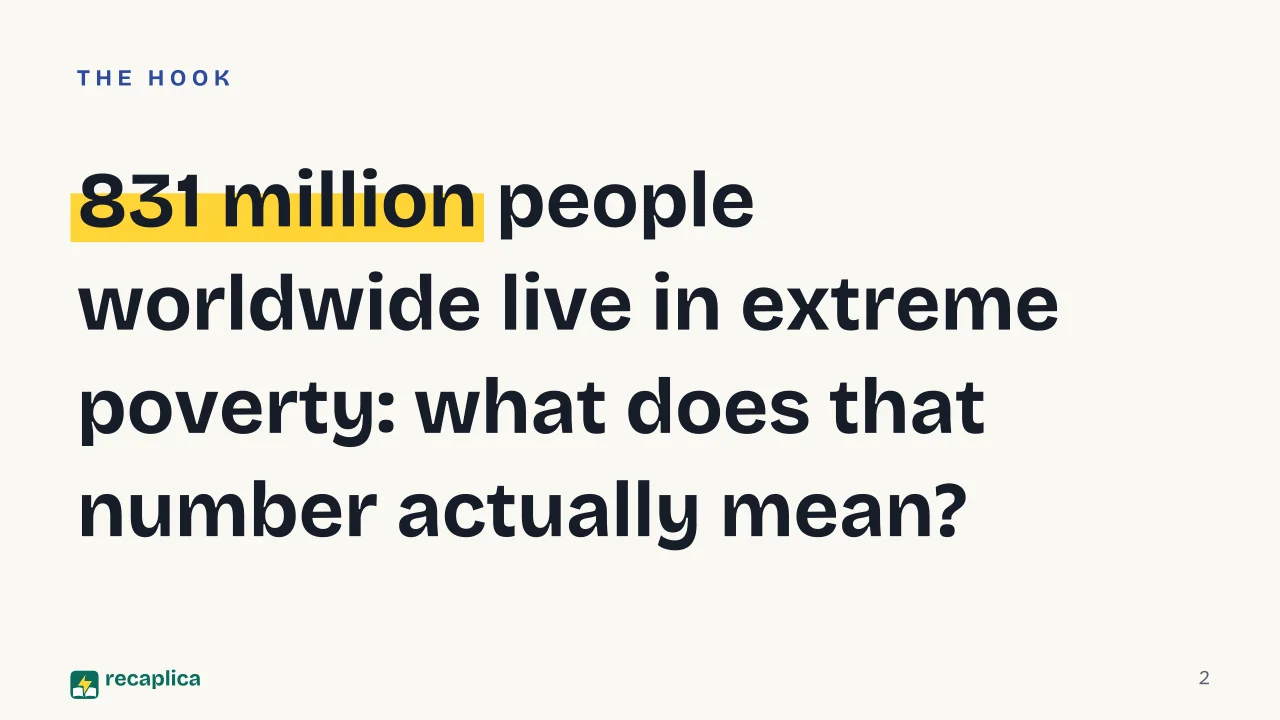 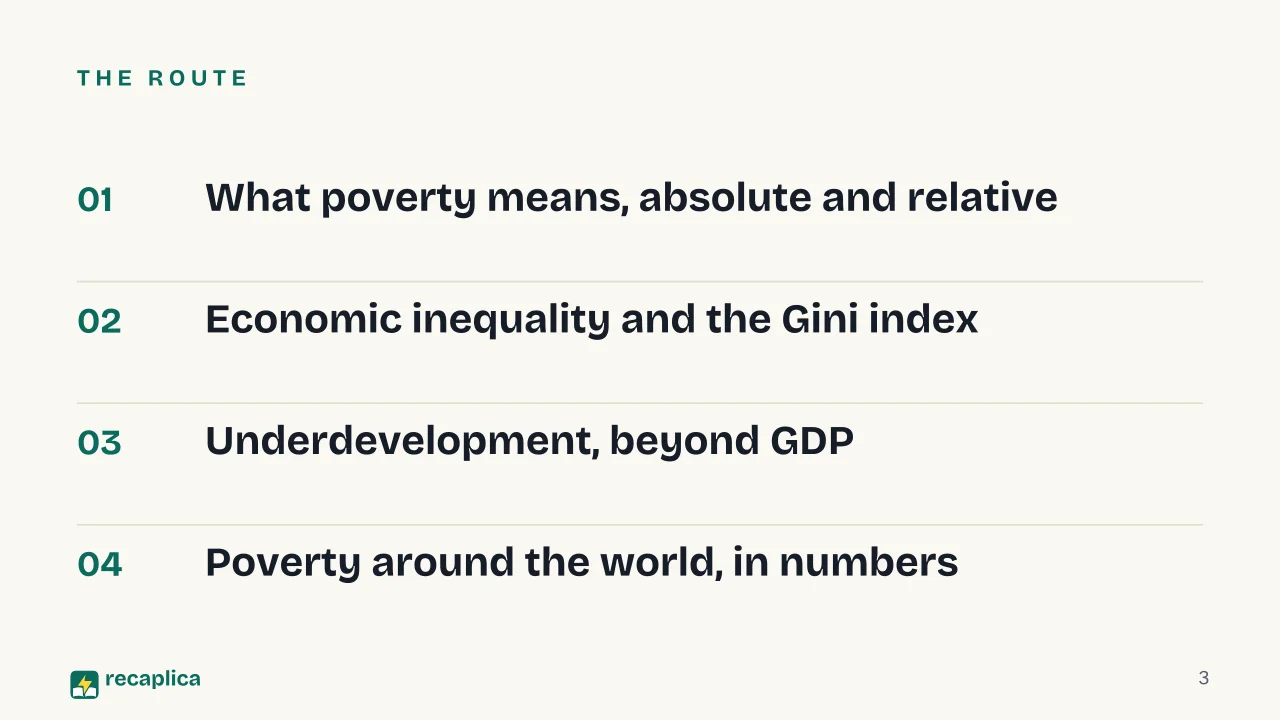  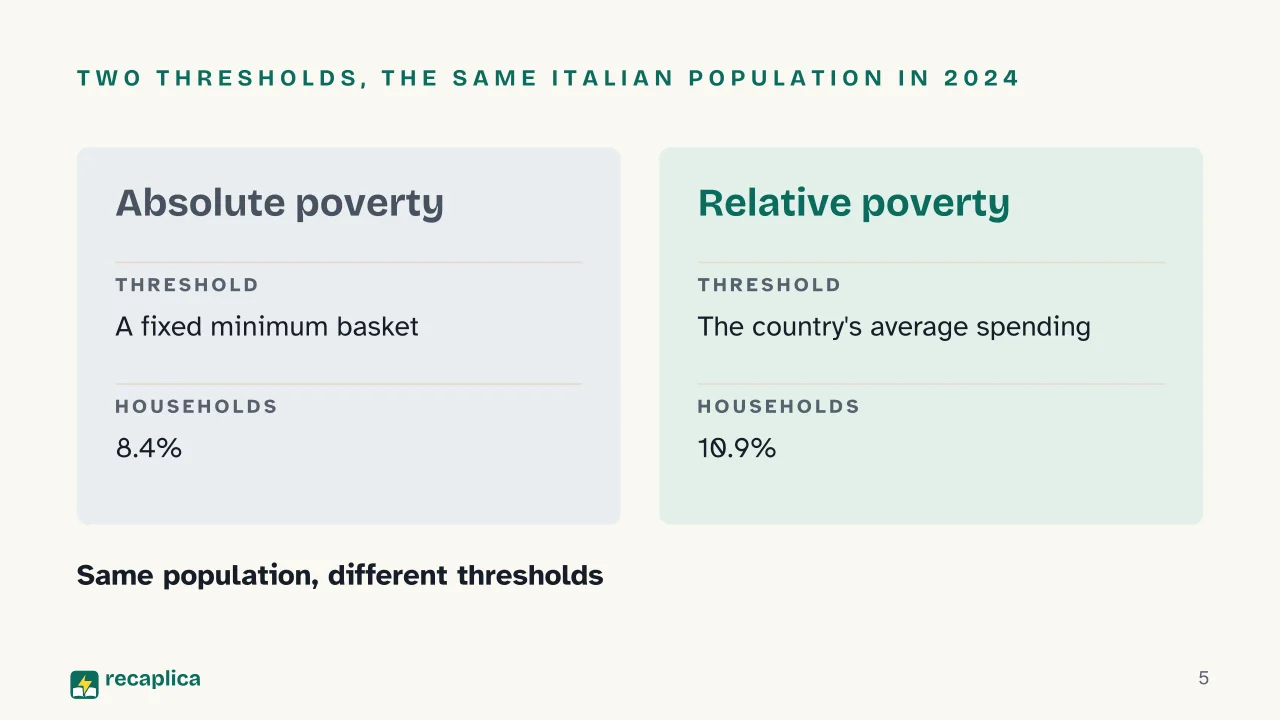 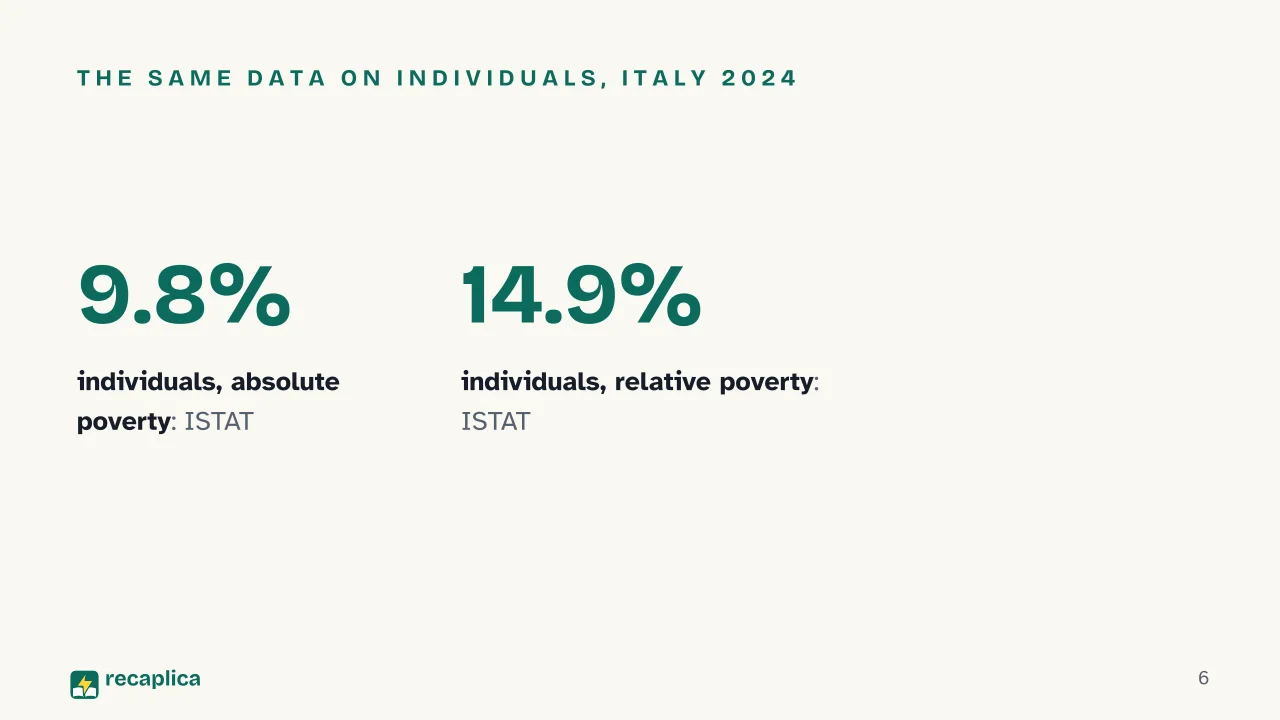  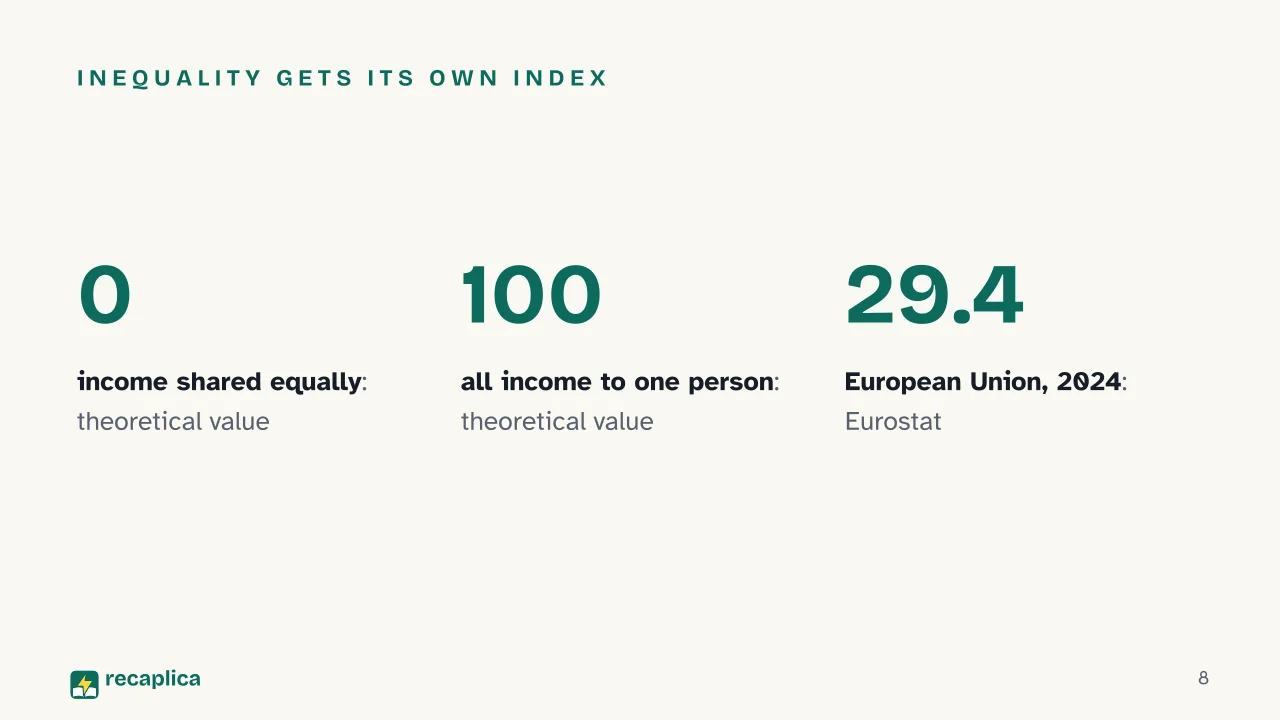  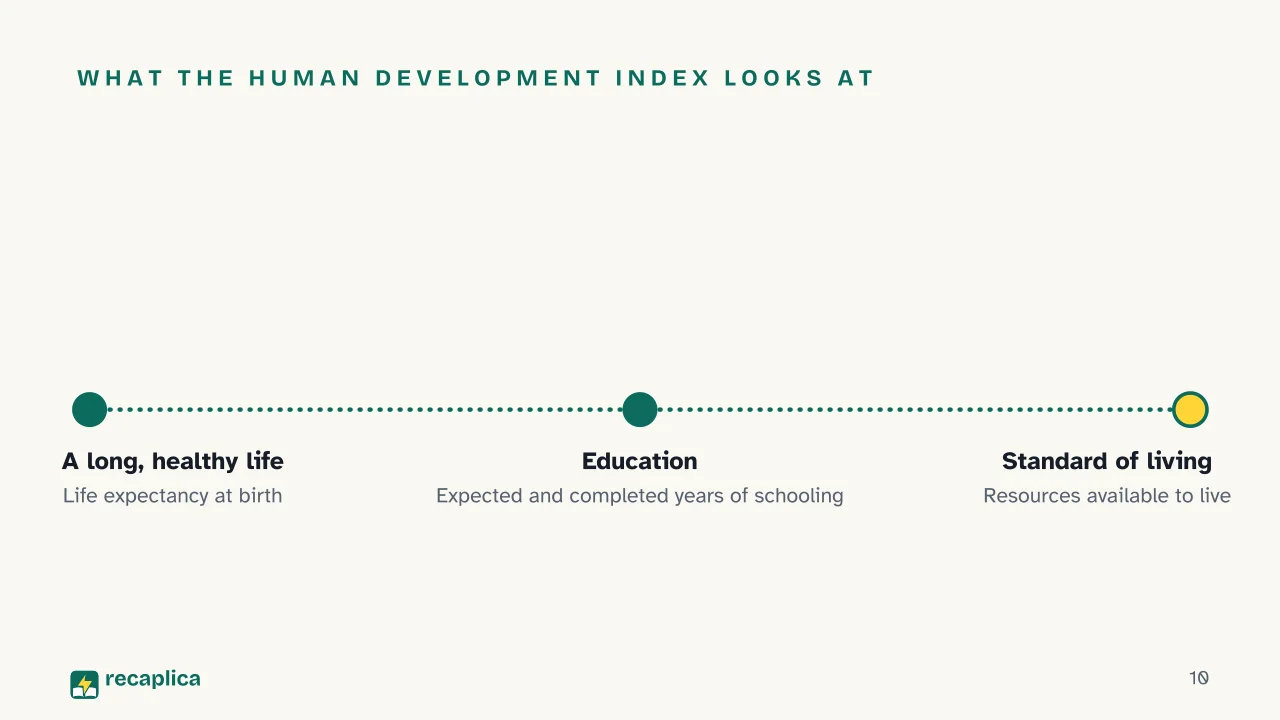  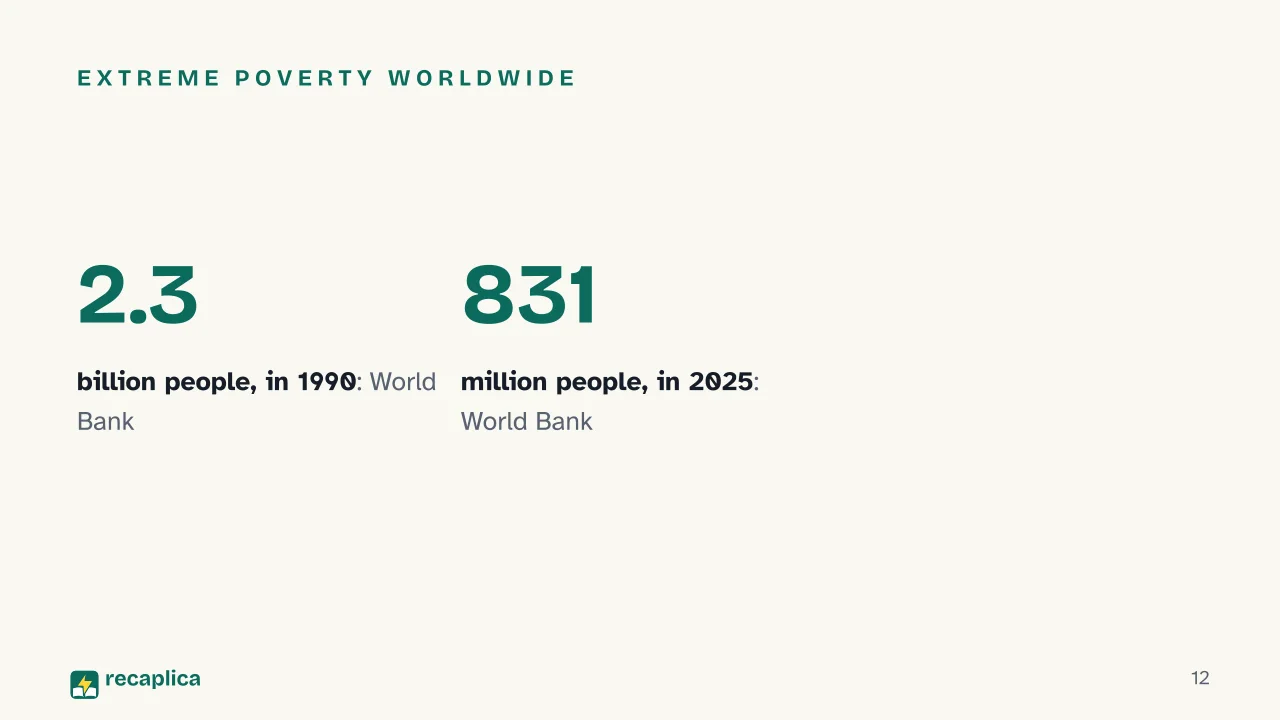 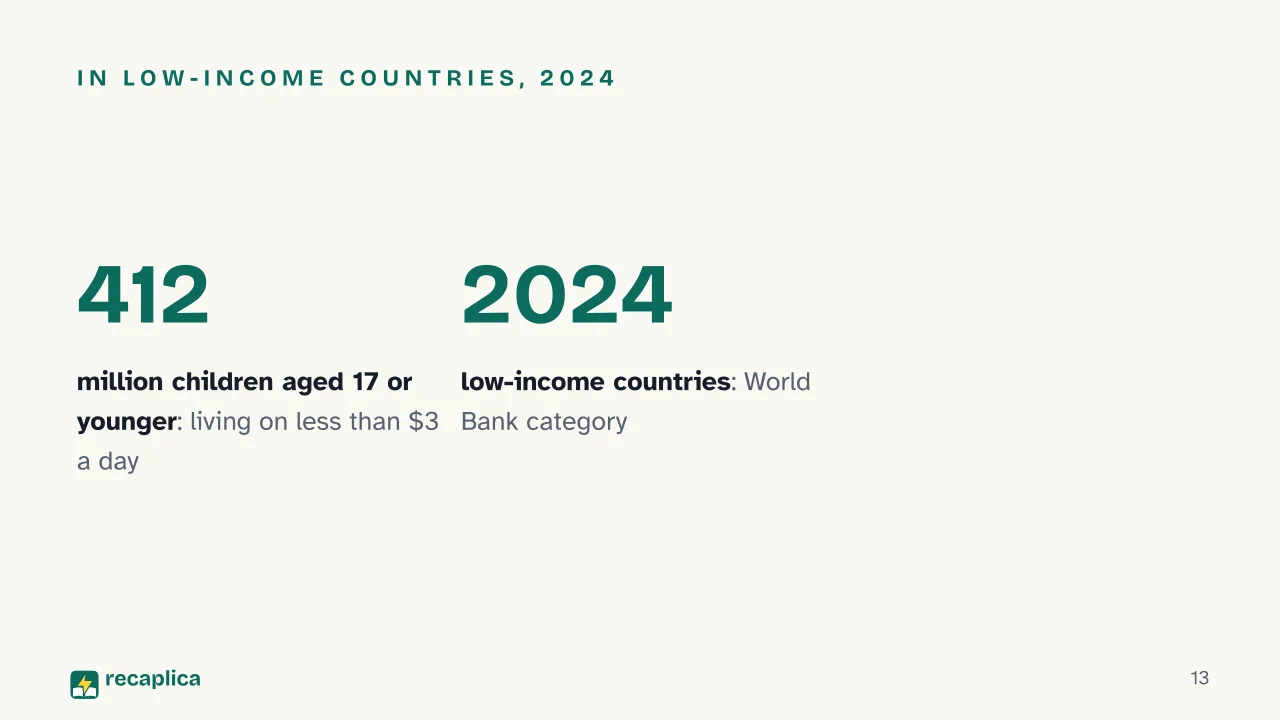 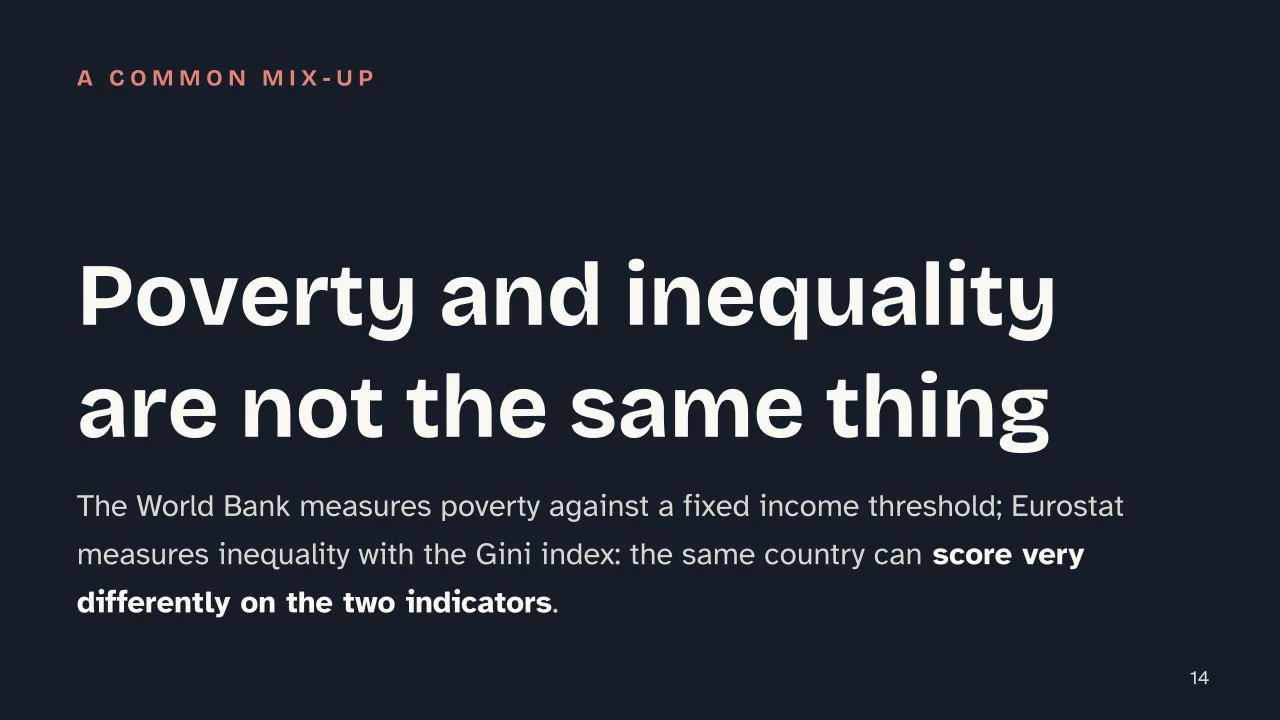 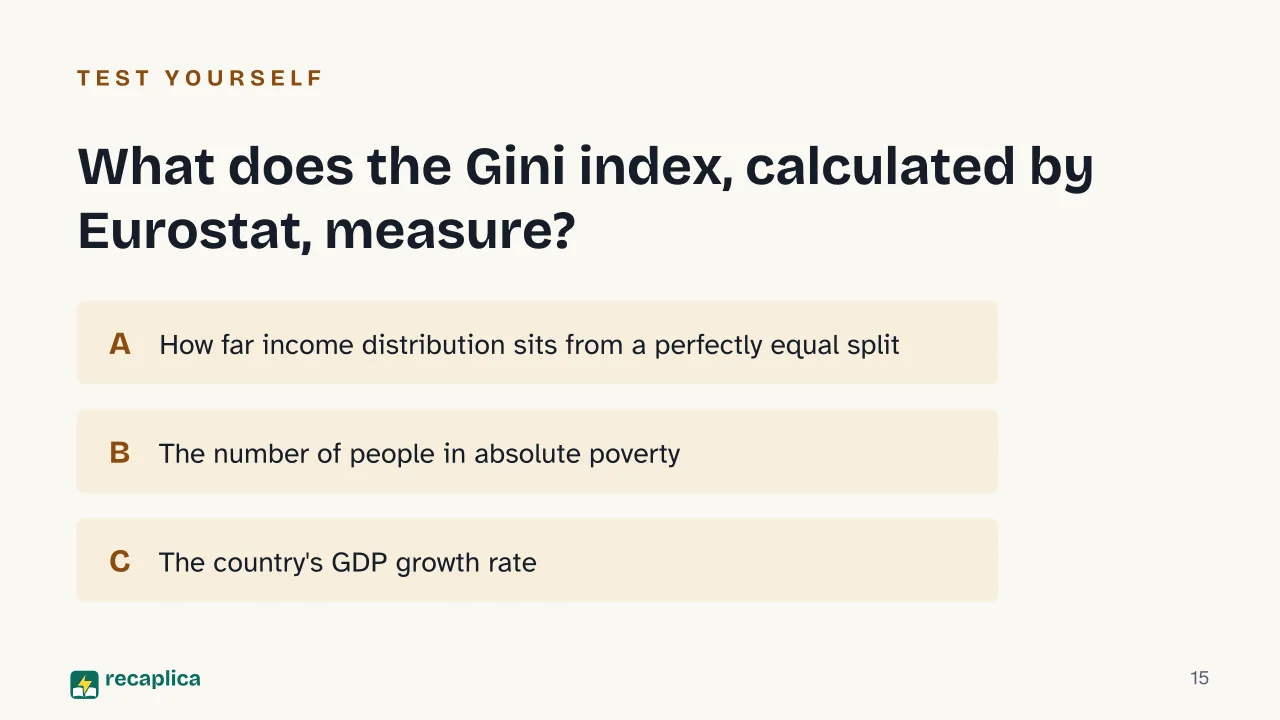  Common myths
Mind mapDrag the background to move around and the nodes to reposition them; use − and + to collapse and expand branches. 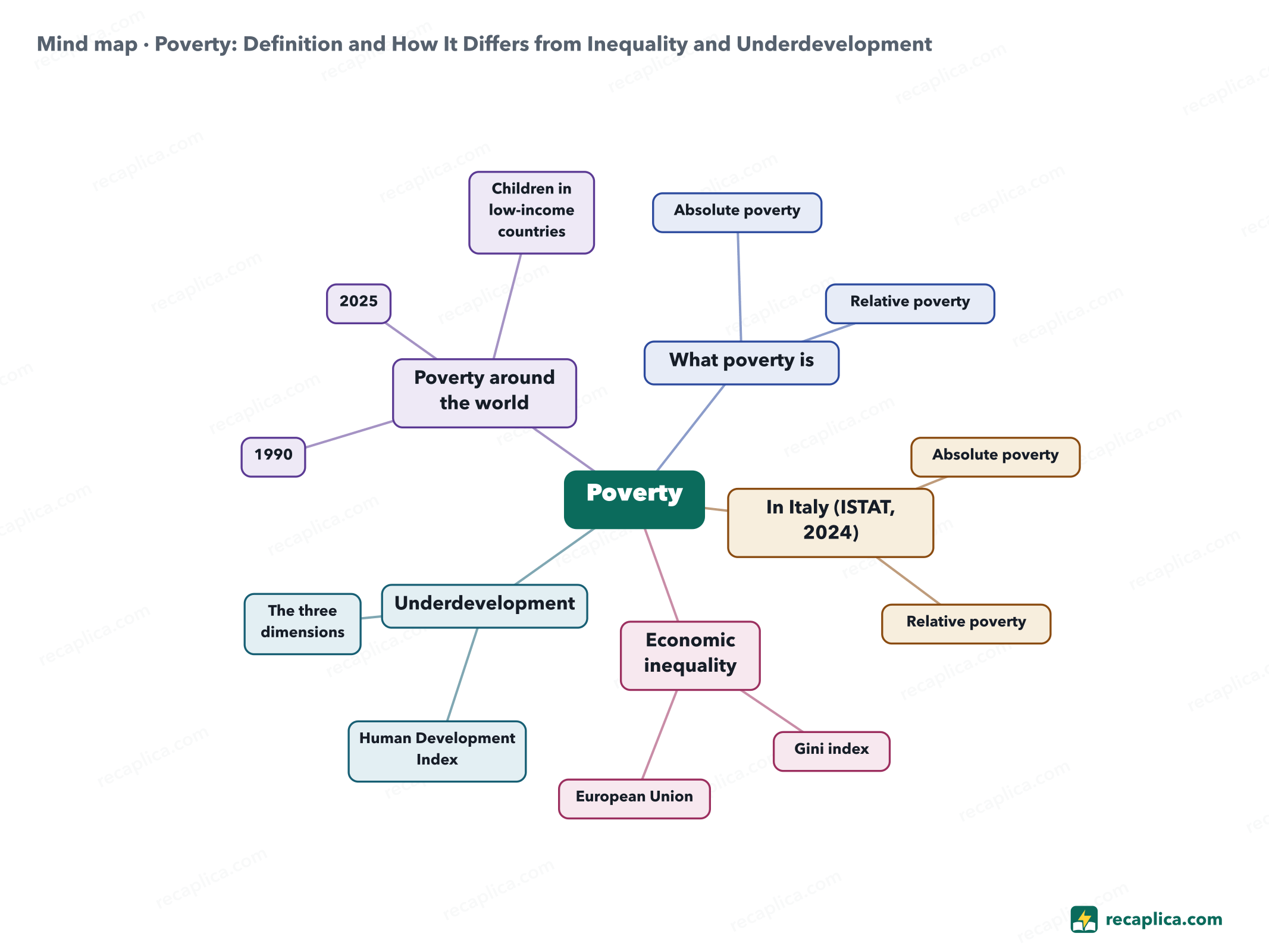
Quiz: test yourselfAnswer the questions to check what you have learned: you get instant feedback and a short explanation. Grade 0/10 0/5
FlashcardsTap the card to flip it and check whether you remember the answer, then move to the next one. 1 / 8 Explain it in your own wordsThe ultimate test: if you can explain it in simple words, you've truly understood it. Write your explanation, then compare it with the Recap. Your explanation is saved only on this device.
Frequently asked questionsWhat is poverty, in economics?It is the condition of lacking the minimum resources needed to live, measured against different thresholds depending on the yardstick used: absolute ones, such as a basket of essential goods or the World Bank's international line, or relative ones, compared with average spending in the same country. What is the difference between poverty and economic inequality?Poverty measures how many people fall short of a minimum threshold of resources; economic inequality, measured by Eurostat with the Gini index, instead describes how income is spread across all the people of a country. They are two different indicators, each measuring a different aspect of the same economy. What is the difference between absolute and relative poverty?Absolute poverty is measured against a fixed threshold, such as the value of a minimum basket of goods and services; relative poverty is measured against average spending in one's own country. According to ISTAT, in Italy in 2024 the two thresholds gave different numbers for the same population: 8.4% and 10.9% of resident households. What is underdevelopment and how is it measured?Underdevelopment describes a reduced level of economic and social development compared with other countries. The United Nations Development Programme assesses it with the Human Development Index, which looks beyond GDP alone to health, education, and the standard of living. How many people live in poverty around the world?According to the World Bank, 831 million people worldwide were living in extreme poverty in 2025, under the international threshold of $3 a day; the figure stood at 2.3 billion in 1990. In 2024, 412 million children aged 17 or younger were living in households below that threshold in low-income countries. Every Recap goes through an independent review before publication. |