|
recaplica
Social Status: Definition and How It Shapes Social Role | |||||||||
| © 2026 Recaplica · recaplica.com — All rights reserved | |||||||||
Social Status: Definition and How It Shapes Social RoleWhat to print Page numbers appear when printing with default margins. SlidesChoose a cut Flash10 slidesThe essential thread, to present in classFull14 slidesEvery chapter and the deeper detailBoth come with speaker notes. In 30 seconds quick readSocial status is the position a person holds in society, together with the duties and advantages attached to that position. Some statuses are assigned without any choice — being someone's child, or the sex a person is born with — and sociologists call these ascribed status. Others are built through effort or a personal outcome, such as a degree or a career, and these are achieved status. Social role is the behavior others expect from whoever holds a given status, recognized without any written agreement. A single status already sets off several roles at once, and when two of them demand incompatible things, a role conflict follows. Key Points
Deep DiveWhat social status meansSociology uses status to name the rung a person occupies inside society, along with the duties and privileges that rung carries with it. OpenStax defines it exactly that way: rank on the social scale. Boundless adds a complementary angle — status is also the honor or prestige tied to that position, something beyond a formal box on paper. Not every status arrives the same way. Some show up without anyone looking for them: the years a person accumulates, the sex they are born with, the economic condition of the family they grow up in. These are called ascribed status: they arrive already assigned, not chosen. Others get built step by step: leaving school before graduating, building a fortune from nothing, or becoming a nurse. These are achieved status, the outcome of a path or a decision.
From status to roleA rank always carries a matching behavior. A role is the conduct others take for granted from whoever holds a given status, conduct everyone reads as the mark of that position: a parent, a teacher, a customer each carry an unwritten pattern, understood and followed without needing an explanation.
Nobody signs anything. Both sides already know what to do. A status, though, rarely travels alone. In 1957, sociologist Robert Merton coined the term role-set for the group of roles tied to a single position: the status of student is enough to set off, at the same time, the roles of daughter, neighbor, and employee — different roles that share the same day. Examples of social roles in everyday lifeA handful of statuses already cover most of the roles a person moves through on an ordinary day. A student sits through lectures. A parent cooks, drives, and offers guidance, often without anyone asking. A host welcomes guests into a home, while a guest is expected to respect it. An employee follows a schedule someone else set, during fixed hours. None of these roles comes with a contract, yet each one is recognized the same way by everyone involved. When roles collideRoles do not always coexist without friction. When one role alone asks for more than a person can give, the result is role strain, also called role overload: a parent’s tasks — cooking, cleaning, driving, solving everyday problems, offering moral guidance — can already fill a full day on their own. A different case happens when two roles held by the same person demand incompatible things: that is role conflict. Anyone studying at university while working full time knows it well, whenever lecture hours and work shifts overlap. The line between ascribed and achieved status, standard in sociology textbooks today, has a precise birth date. American anthropologist Ralph Linton formulated it in 1936, in the book he considered his most important contribution to the discipline, The Study of Man. Why the concept matters in sociologyIt is tempting to treat every role as a personal decision. Many starting statuses, though, come already settled: the years a person has lived, the sex they were born with — which is where the gender roles society assigns come from —, the household they grew up in. The expected behavior that follows arrives stitched on from day one. The same distinction also helps read everyday institutions more clearly: someone at work has a role shaped by the employment contract, someone who votes a role tied to the status of citizenship. The same pattern, applied to society as a whole, shows up in literature too: Pirandello built much of his work on the clash between a person and the social mask a role forces onto them. The legal norm, finally, shows what changes when a shared expectation like a role turns into a formal rule, backed by a sanction. Slide deckSlides ready to download and make your own in PowerPoint or Google Slides, with speaker notes. Pick the Flash cut or the Full one.     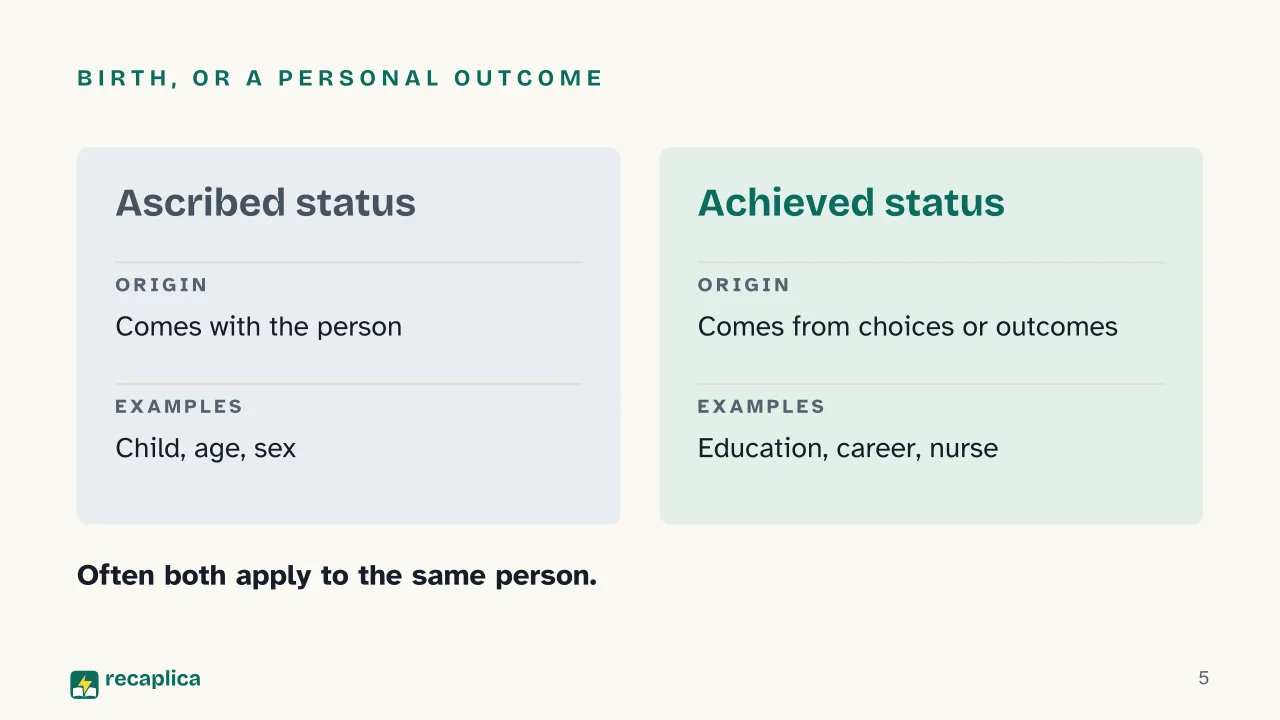 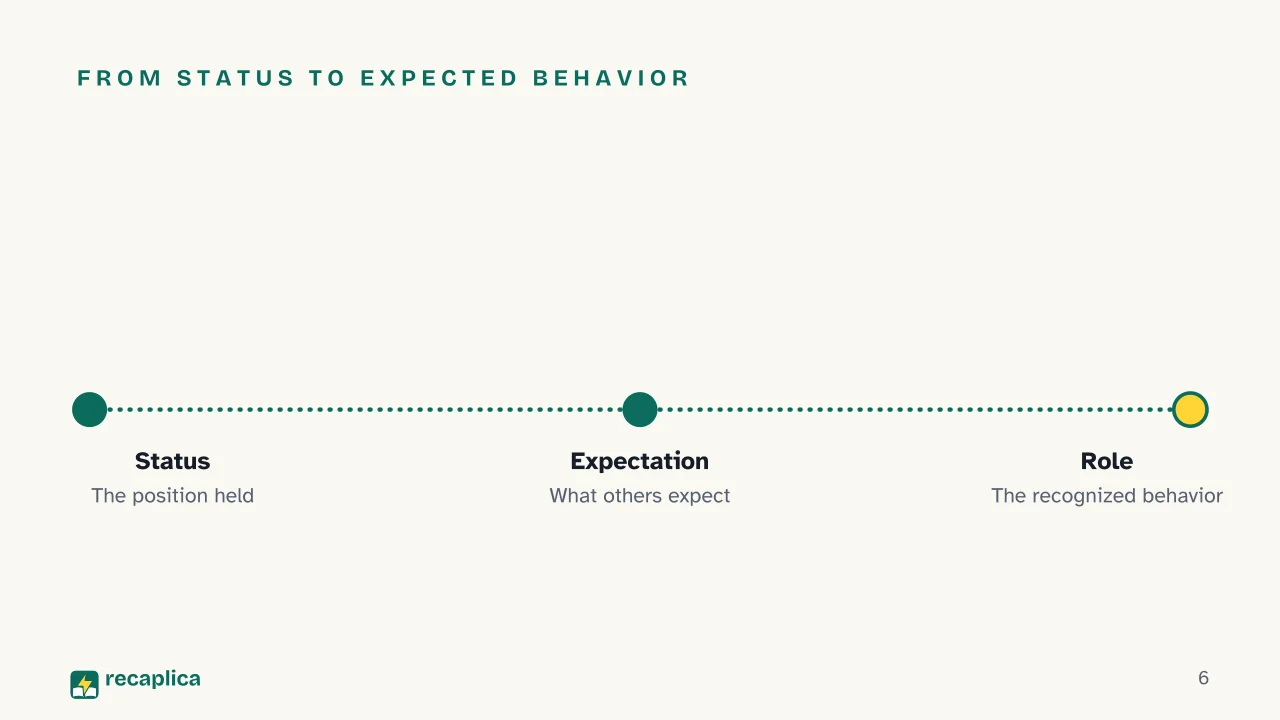  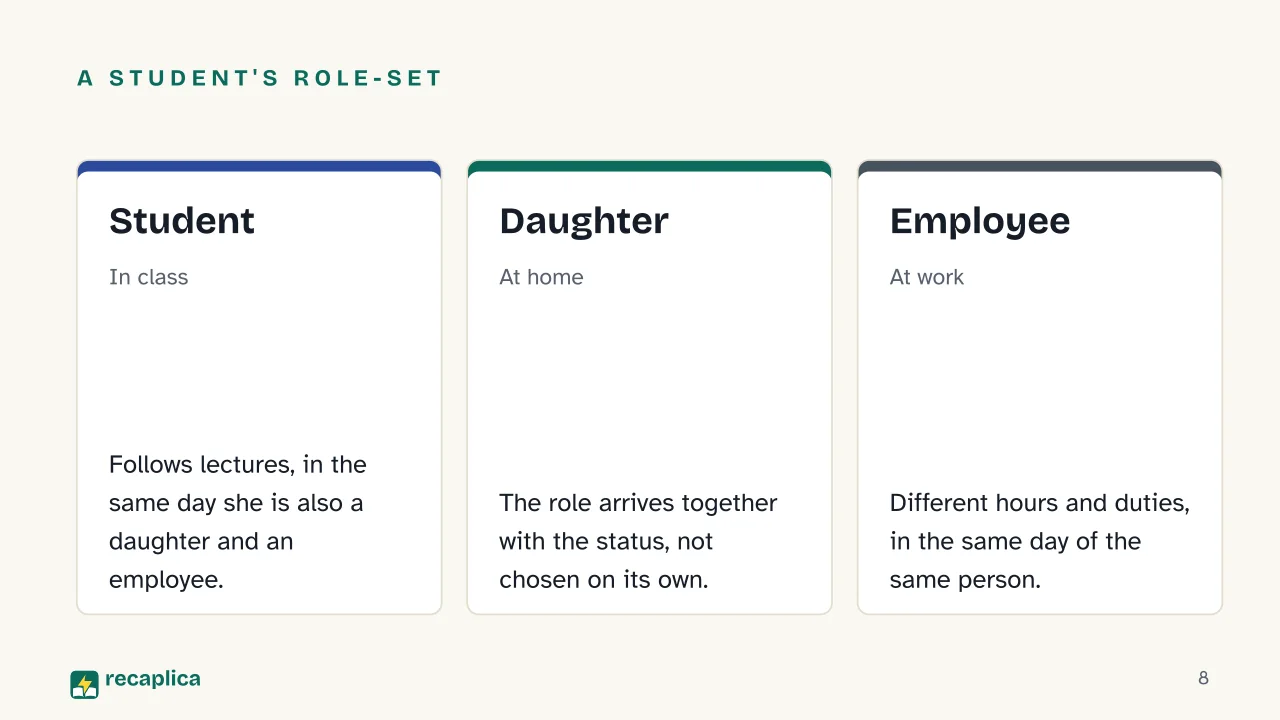  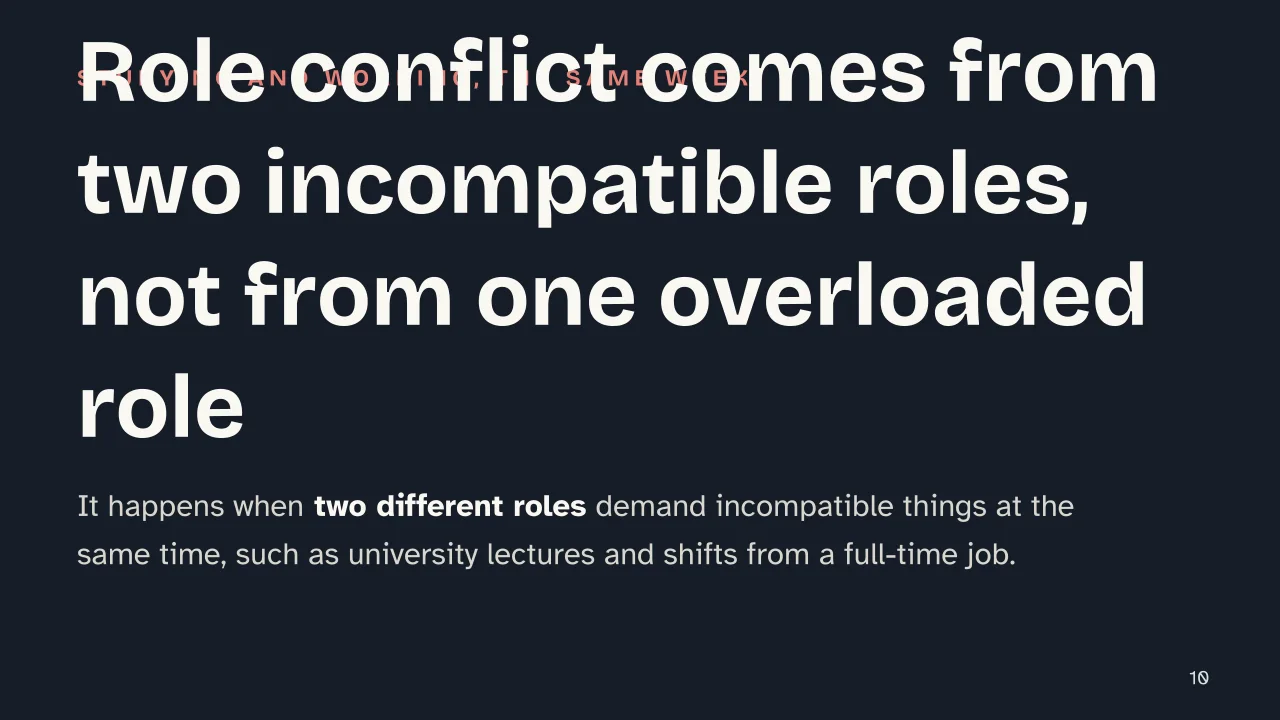  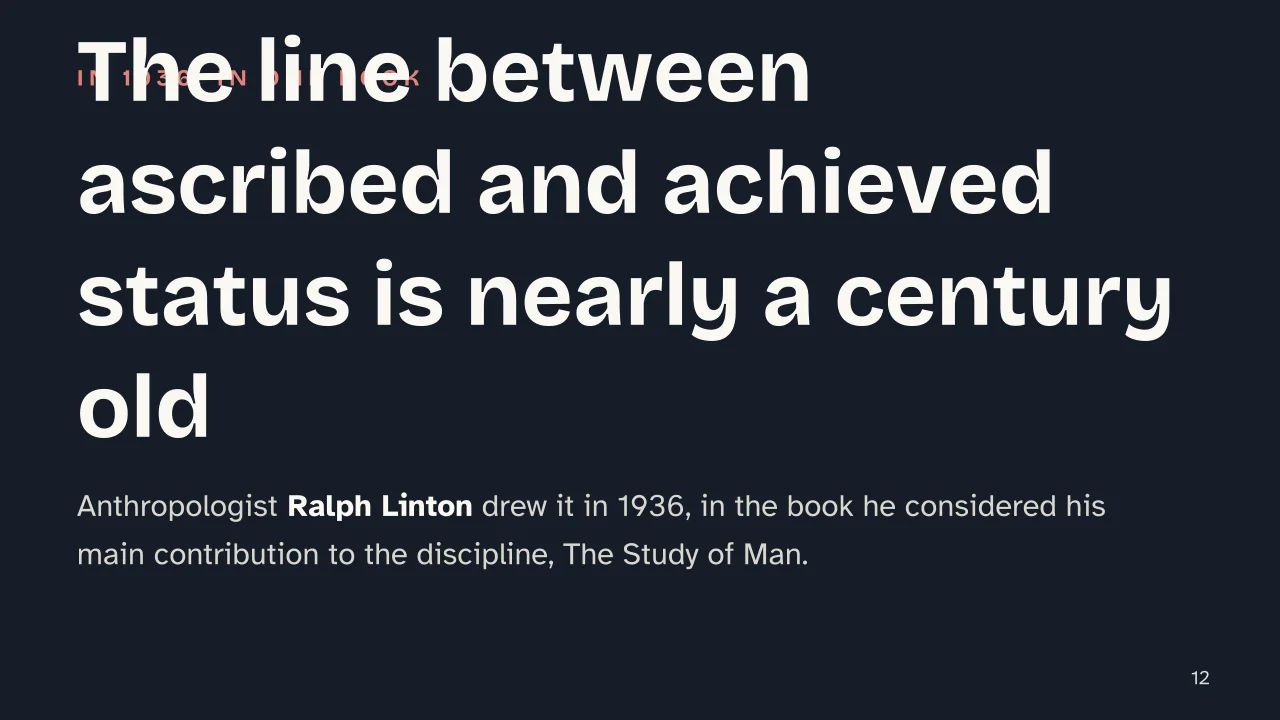 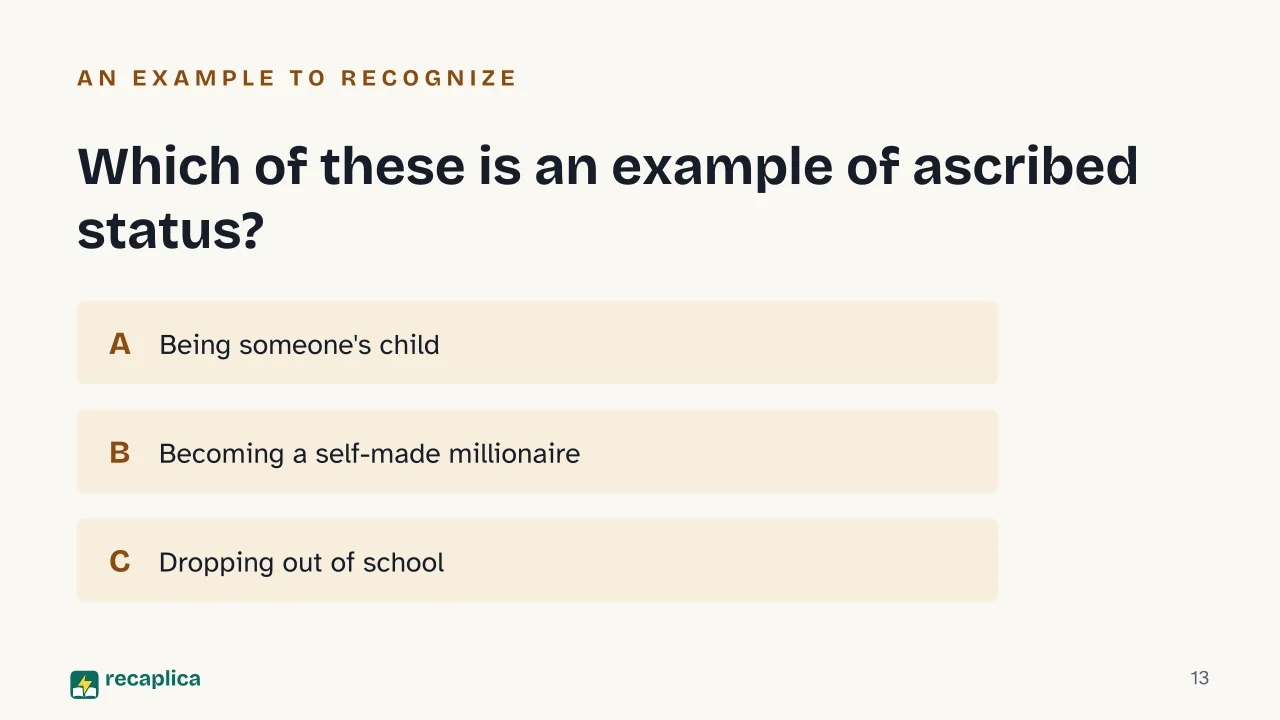  Common myths
Mind mapDrag the background to move around and the nodes to reposition them; use − and + to collapse and expand branches. 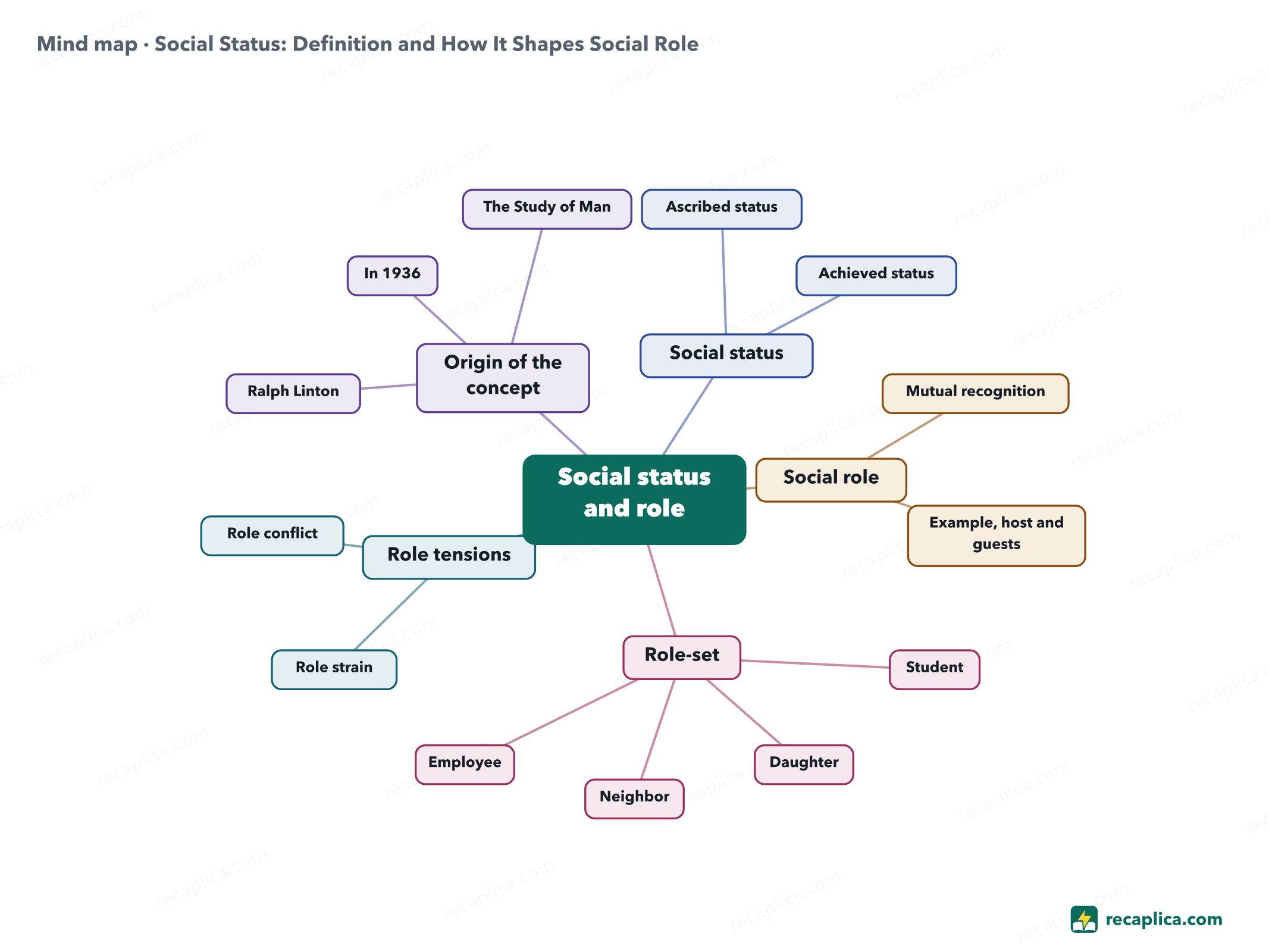
Quiz: test yourselfAnswer the questions to check what you have learned: you get instant feedback and a short explanation. Grade 0/10 0/5
FlashcardsTap the card to flip it and check whether you remember the answer, then move to the next one. 1 / 7 Explain it in your own wordsThe ultimate test: if you can explain it in simple words, you've truly understood it. Write your explanation, then compare it with the Recap. Your explanation is saved only on this device.
Frequently asked questionsWhat is the difference between social status and social role?Status is a person's social position, with the duties and advantages that position carries; role is the conduct a community expects, as behavior, from whoever holds that same position. What is the difference between ascribed and achieved status?Ascribed status is assigned without any choice, through birth or starting condition; achieved status comes from a path or a personal outcome, like leaving school early or building wealth through one's own effort. What is role conflict?A clash between the duties of two different roles belonging to the same person — for example, attending university lectures and working a full-time shift during the same period. Since when has the distinction between ascribed and achieved status existed?Anthropologist Ralph Linton proposed it in 1936, in a book he regarded as his single biggest contribution to anthropology. Why does the concept of role matter in sociology?Role links a position (status) to a shared, recognized pattern of conduct, and it shows where that pattern can overload a person or clash with another role they also hold. Every Recap goes through an independent review before publication. |