|
recaplica
History of Linux: from Torvalds' Kernel to Distributions, Summary | |||||||||||||||||||||
| © 2026 Recaplica · recaplica.com — All rights reserved | |||||||||||||||||||||
History of Linux: from Torvalds' Kernel to Distributions, SummaryWhat to print Page numbers appear when printing with default margins. SlidesChoose a cut Flash10 slidesThe essential thread, to present in classFull18 slidesEvery chapter and the deeper detailBoth come with speaker notes. In 30 seconds quick readLinux is a kernel, the core piece of software that lets a computer talk to its own hardware: it started in 1991 as the personal project of a Finnish student, Linus Torvalds. A kernel alone isn't enough to run a computer, though, it also needs system tools, most of which came from Richard Stallman's GNU project, launched in 1983. Putting those two pieces together produced complete operating systems, distributed in many different versions called distributions, from Debian to Ubuntu. The Linux kernel now sits at the base of most web servers, every single one of the world's fastest supercomputers, and, inside Android, billions of smartphones. Key Points
Key figures
Deep DiveThe origins: a student, a newsgroup and a name born by accidentIn 1991 Linus Torvalds was a computer science student at the University of Helsinki, in Finland. For his coursework he used MINIX, a small operating system designed for teaching, and it was from that base that he started writing a kernel of his own, the program that acts as the go-between for a computer and its hardware. He built it with help from the GNU C Compiler, but independently of the operating systems that already existed. On 25 August 1991, at 21, Torvalds announced the project on the comp.os.minix newsgroup, in a message that has become famous in computing history: “I’m doing a (free) operating system (just a hobby, won’t be big and professional like gnu) for 386(486) AT clones.” In that same post he noted that the kernel was “free of any minix code” and had a multi-threaded file system, though he warned that, in that first version, it wasn’t yet portable to other architectures. The first public release, version 0.01, followed shortly after, on 17 September 1991. The final name came about almost by accident. Torvalds wanted to call the project “Freax”, a blend of “free”, “freak” and “x”, and kept the files under that name for about six months; he had also considered “Linux”, but dropped it as too self-centered. It was Ari Lemmke, at the Helsinki University of Technology, who renamed the project’s folder on the FTP server to “Linux” in September 1991, without asking Torvalds first, who accepted the name after the fact. Five years later, in 1996, the mascot arrived too: Tux the penguin, drawn by Larry Ewing, inspired by a bite Torvalds got from a penguin during a visit to the National Zoo & Aquarium in Canberra, Australia. The name was suggested by James Hughes, as a play on “Torvalds’ UniX” and a nod to the color of a tuxedo. Just the kernel: why people also say GNU/LinuxThis is where one of the most common mix-ups about this operating system comes from: “Linux”, strictly speaking, isn’t a complete system, just the kernel. A kernel alone doesn’t let you switch on a computer, open a program or browse the web, it also needs the whole set of tools around it, from compilers to basic utilities to the interfaces users actually interact with. Much of that toolkit comes from the GNU project, announced by Richard Stallman on 27 September 1983 on Usenet, with development starting in January 1984. Stallman’s goal was to build a Unix-compatible operating system that was entirely free, after an episode that had shaped his thinking in the late 1970s at MIT’s AI Lab: when the institute installed a printer with proprietary firmware, he couldn’t modify its code to fix a practical problem, and saw in that restriction a wider issue, not just a technical one. The GNU Manifesto listed four essential freedoms for anyone using a program: running it for any purpose, studying and changing how it works, redistributing copies, and improving it and sharing those improvements with others. To protect these freedoms, Stallman wrote the GNU General Public License, the GPL. When Torvalds’ kernel met the GNU tools, the result was the first entirely free, complete operating system. Torvalds announced that the GPL would take effect on 1 February 1992; version 0.95, from 7 March of that year, was the first release actually distributed under that license. He later called it “the best thing I ever did”. From there came the habit, born in projects like Debian, of calling the complete system “GNU/Linux” rather than simply “Linux”: a technical distinction more than a political one, useful for remembering where the pieces of the system really came from. It’s a different story from other operating systems born from the start as closed corporate products, as our piece on the history of Microsoft Windows explains. Distributions: one kernel, many different packagesA kernel plus the GNU tools still isn’t quite what a user installs on their computer. It also takes a package manager, a boot system, often a graphical environment: that whole bundle of choices, packaged and ready to use, is called a distribution. Several were born starting in the early 1990s, each with its own priorities.
Each distribution makes different choices on top of the same underlying material. Debian focuses on stability and community control; Ubuntu, which derives from it, focuses on easy installation and commercial support; Red Hat and SUSE targeted businesses from the start. The sense that “there are too many versions of Linux” is more apparent than real: they all share the same kernel, and picking one popular distribution doesn’t require knowing all the others. Choosing between two distributions, for that matter, echoes the choice people face between Windows, macOS and Linux as their computer’s operating system, a comparison we cover in our article on the differences between Windows, macOS and Linux.
Where the Linux kernel runs: servers, supercomputers, phonesAs of September 2026, according to W3Techs tracking, Linux ran on 62.2% of websites with a known underlying operating system, and remained the dominant platform within the broader “Unix” category, which covered 92.0% of tracked sites. Sites running Linux included names such as Microsoft.com, X.com and The New York Times. Wikipedia’s entry on Linux distributions cites a similar estimate, around 64.5% of the web server market, without a precise date: rather than a contradiction between sources, it reflects different measurement methods. It’s a significant piece of the infrastructure behind the sites we visit every day. On the supercomputer side, the growth has been even sharper. Linux first appeared on the TOP500 list in June 1998, with a single system, the Avalon Cluster, ranked 314th, just 0.2% of the total. By November 2002 it had reached 14.2%, with 71 installations; by November 2009, 89.6%, on 448 of the 500 systems, a 531% growth in Linux installations in just seven years. In November 2017 the last two non-Linux systems dropped off the list, pushing the share to 100%; by November 2024, for a seventh consecutive year, all 500 supercomputers on the list still ran Linux, including the three exascale systems from the US Department of Energy: El Capitan, Frontier and Aurora. Then there’s the particular case of Android. Google’s mobile operating system is built on the Linux kernel to talk to a phone’s hardware, but from there the path diverges from traditional GNU/Linux distributions: apps run on the Android Runtime (ART) instead of as ordinary compiled binaries, the C library is Bionic instead of the GNU C Library, and the Android framework relies on its own system services, like SurfaceFlinger, instead of the traditional Unix daemons. One reason Android and Linux sometimes get confused is precisely that shared origin in the kernel; market statistics, though, treat them as separate categories: according to Statcounter, as of August 2026 Android covered 67.61% of the worldwide mobile market, while “Linux” tracked as its own category stood at just 0.01%. Anyone who wants to dig deeper into their Android phone, beyond the standard interface, usually starts right there, by turning on the hidden developer options panel, one chapter among many in the history of computers. Slide deckSlides ready to download and make your own in PowerPoint or Google Slides, with speaker notes. Pick the Flash cut or the Full one.     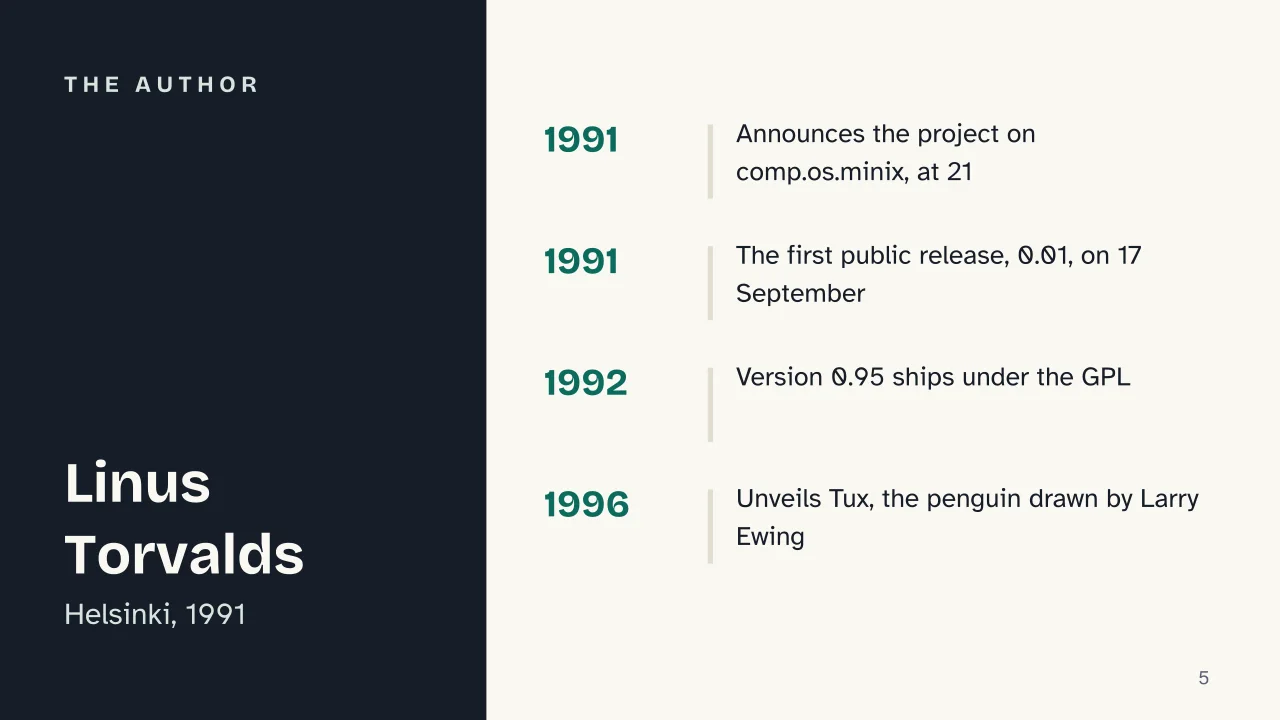 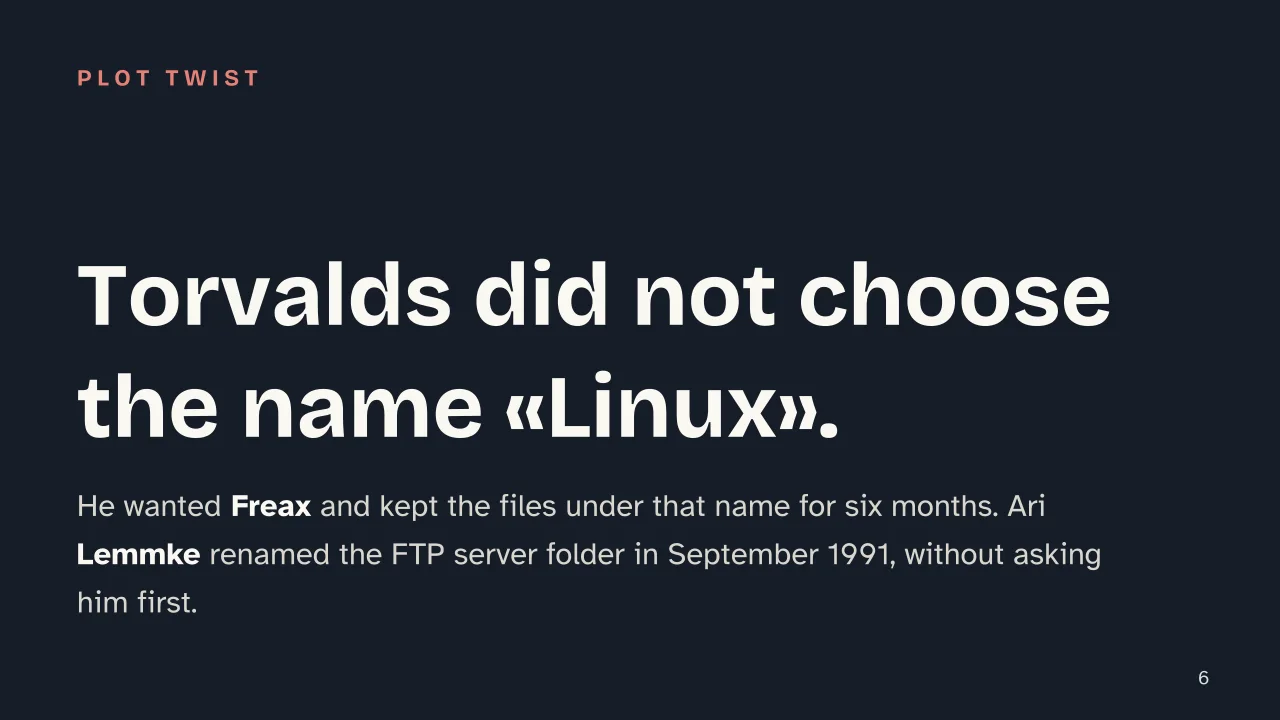  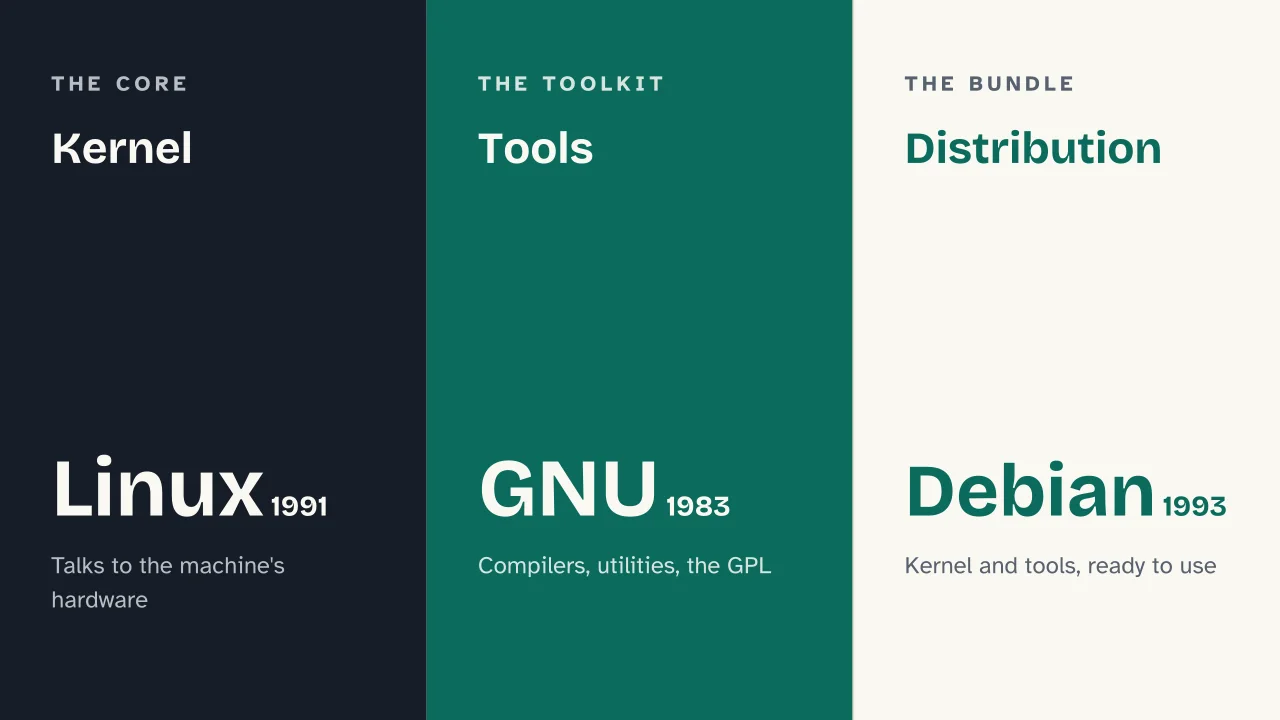 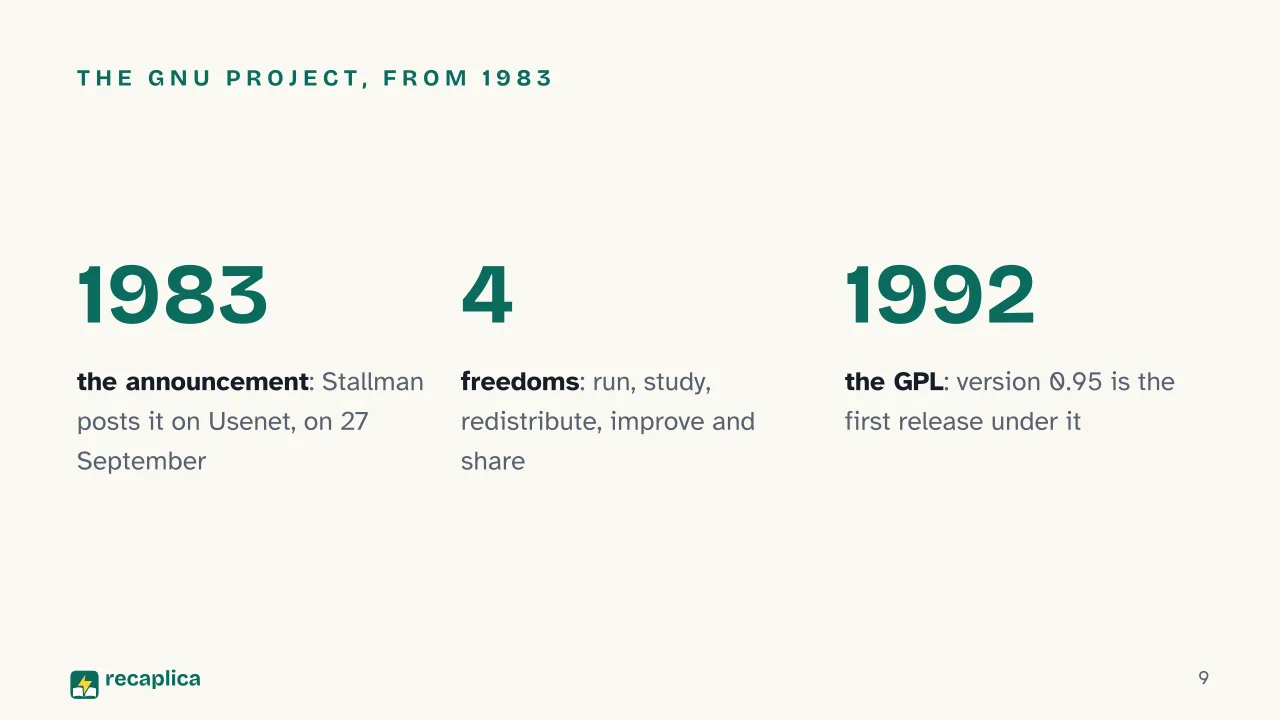  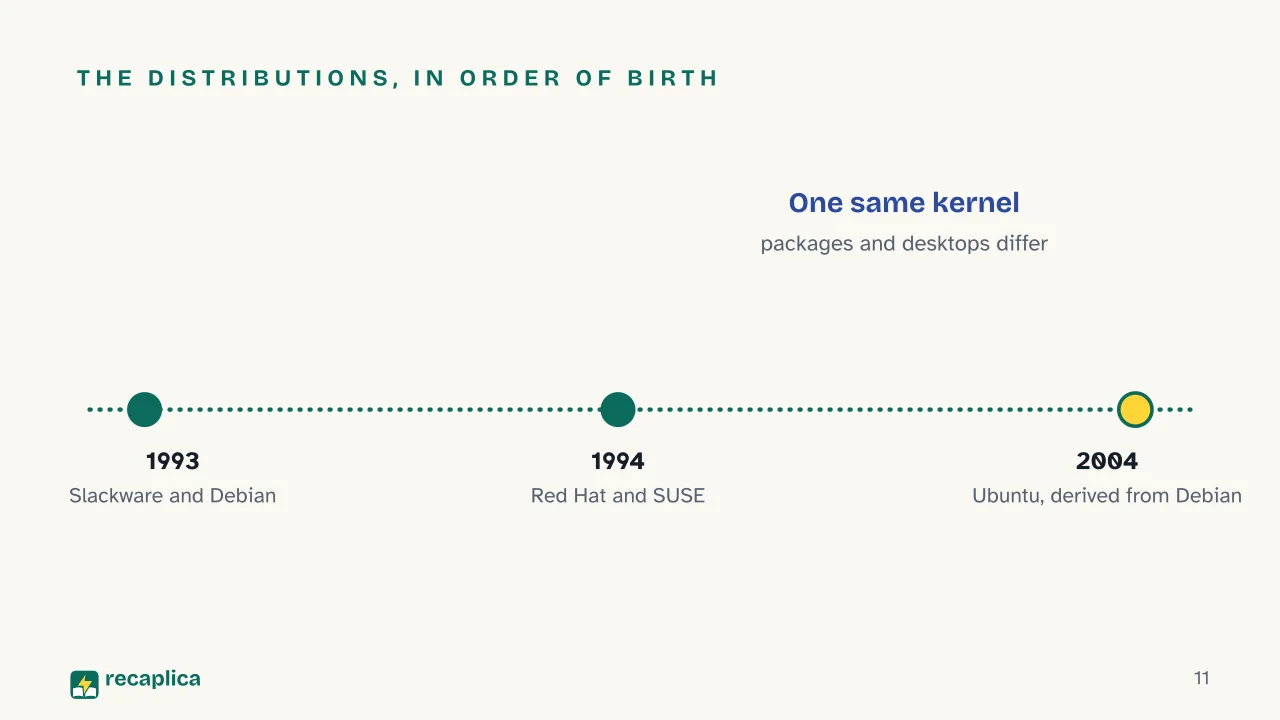 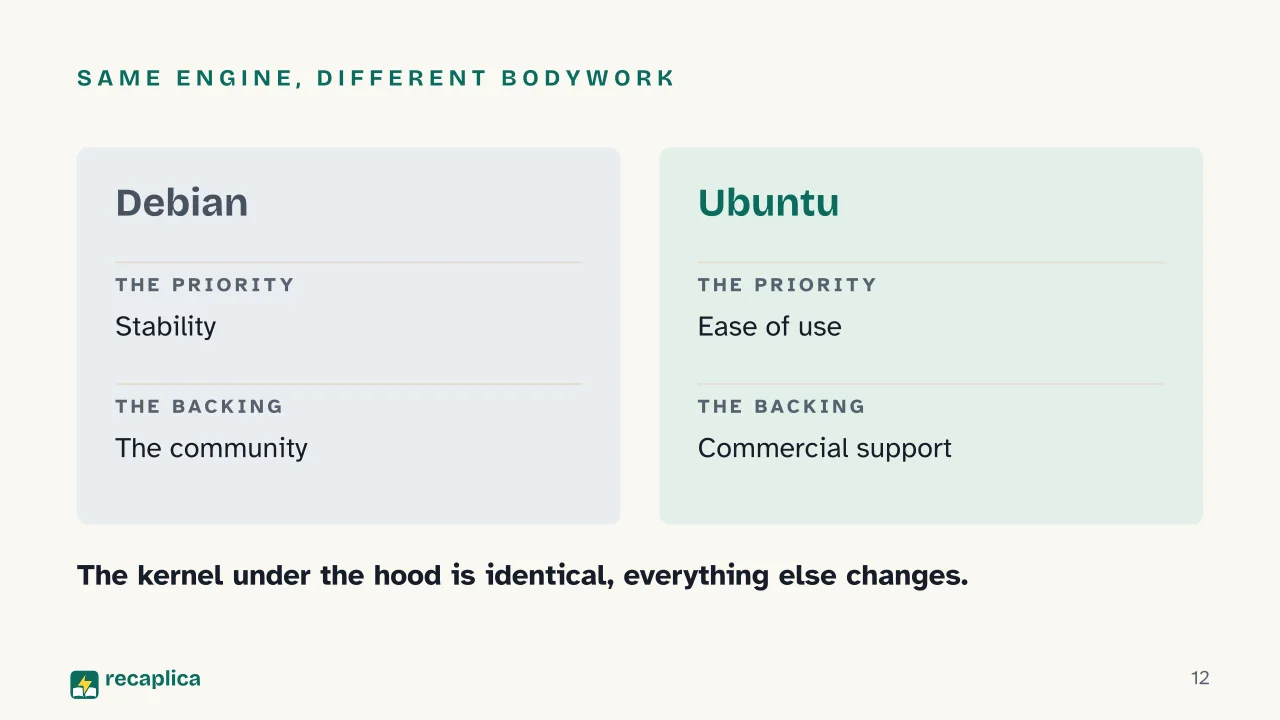  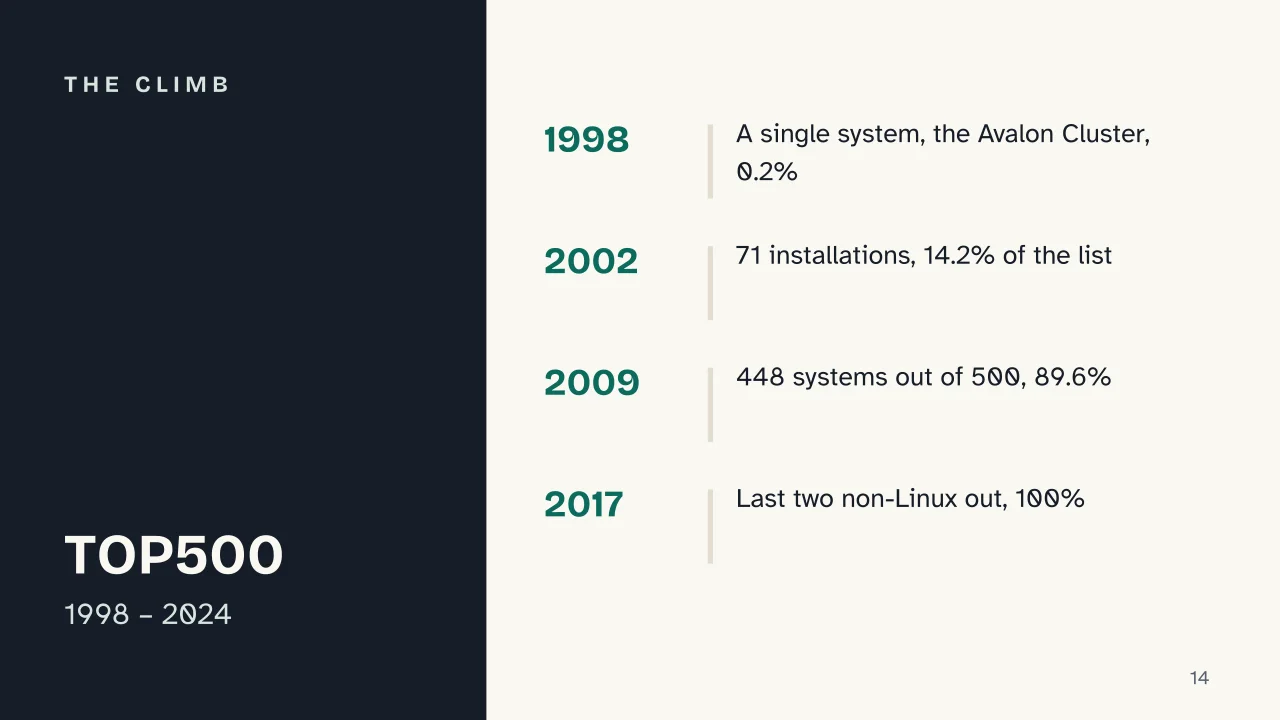 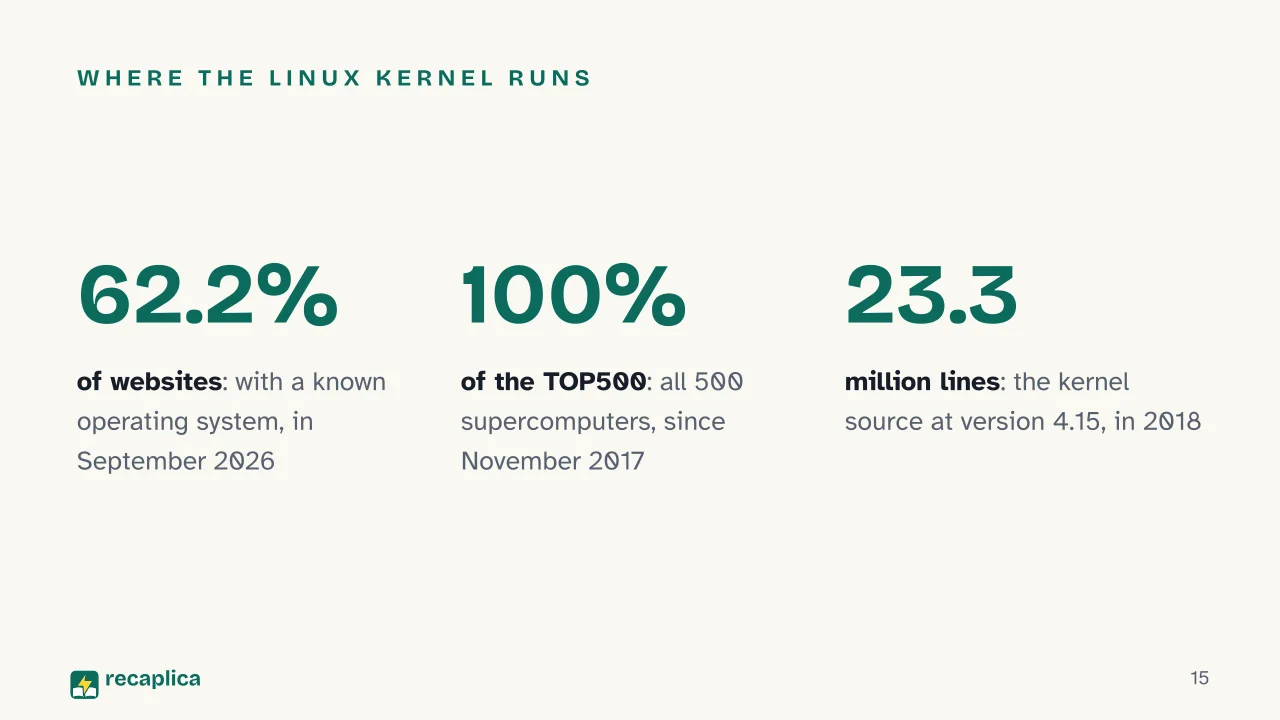 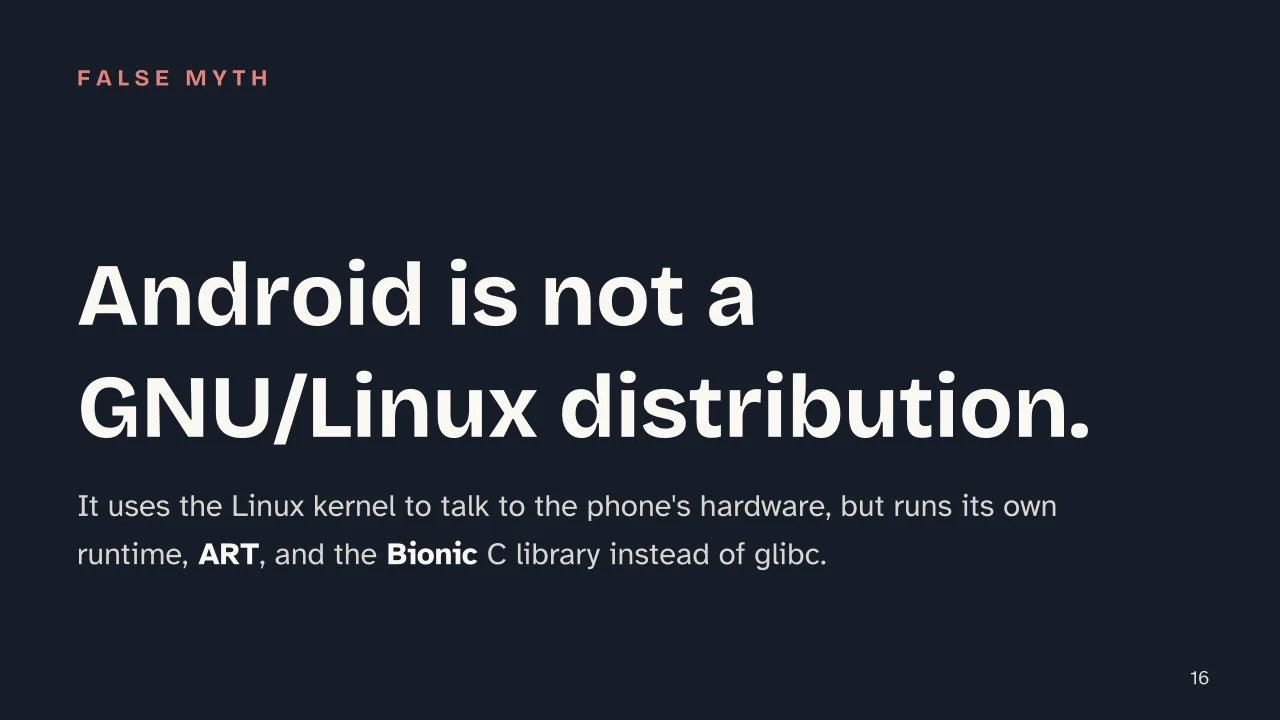   Common myths
Mind mapDrag the background to move around and the nodes to reposition them; use − and + to collapse and expand branches. 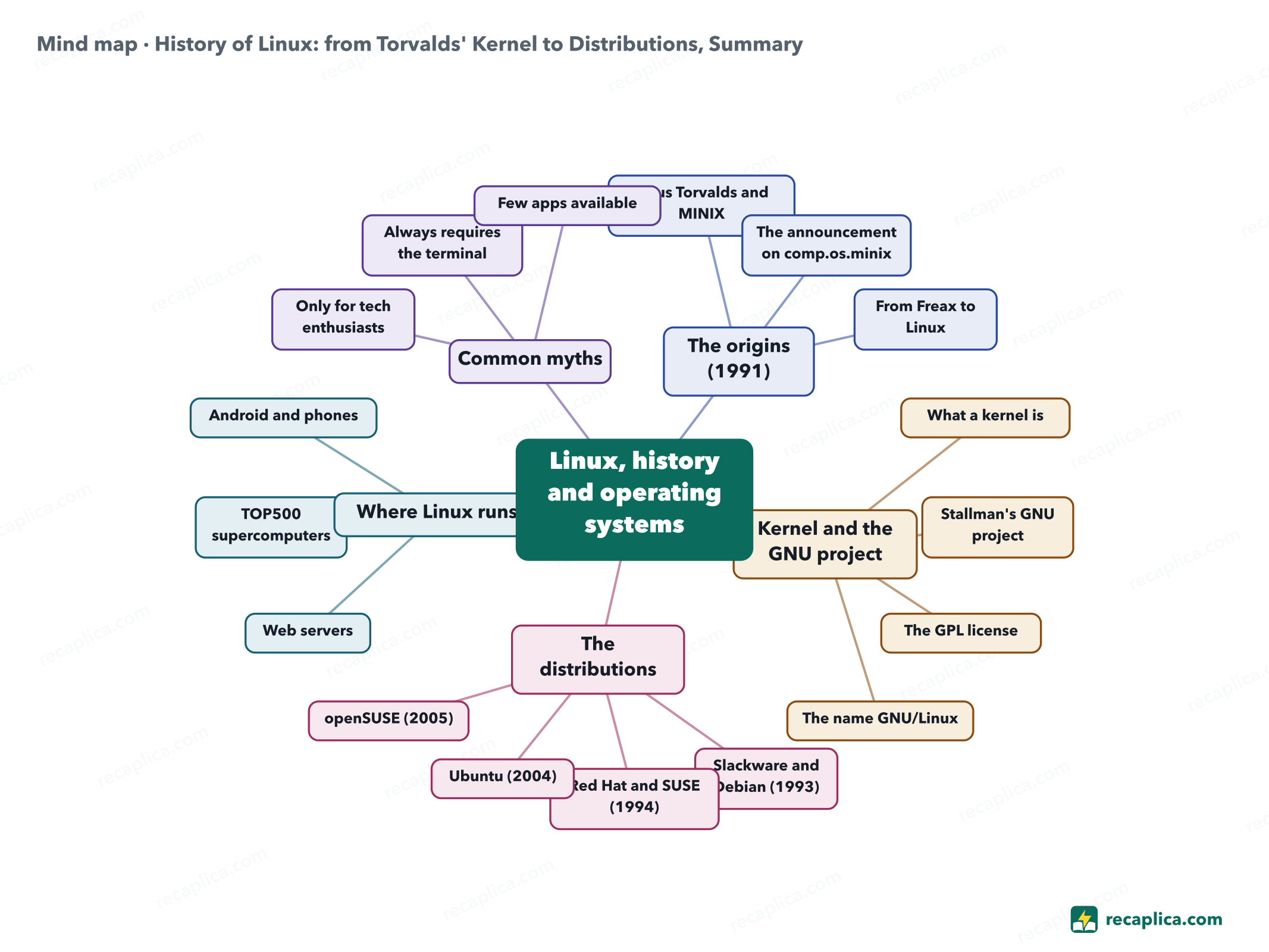
Quiz: test yourselfAnswer the questions to check what you have learned: you get instant feedback and a short explanation. Grade 0/10 0/5
FlashcardsTap the card to flip it and check whether you remember the answer, then move to the next one. 1 / 8 Explain it in your own wordsThe ultimate test: if you can explain it in simple words, you've truly understood it. Write your explanation, then compare it with the Recap. Your explanation is saved only on this device.
Frequently asked questionsWhat is Linux, in a nutshell?It's a kernel, the program that acts as the go-between for a computer and its hardware, created in 1991 by Linus Torvalds. On its own it isn't enough to run a computer, when people say "using Linux" they usually mean a distribution, a complete operating system that bundles the Linux kernel with other tools, often from the GNU project. Who invented Linux?Linus Torvalds, then a computer science student at the University of Helsinki, who announced the project on 25 August 1991 on the comp.os.minix newsgroup, building it with help from the GNU C Compiler and using the teaching operating system MINIX as his starting point. What's the difference between one Linux distribution and another?All distributions share the same Linux kernel, but they differ in package managers, installation tools, default desktop and development priorities, Debian, for instance, focuses on stability, while Ubuntu, which derives from it, focuses on ease of use. Is Android a Linux system?Only partly. Android uses the Linux kernel to talk to the hardware, but shares very little else with traditional GNU/Linux distributions, it has its own runtime (ART), a different C library (Bionic) and its own app stack built on Java and Kotlin. Do you need to know the terminal to use Linux?No. Modern desktop distributions offer a guided installer, a graphical app center, and the option to change almost every setting with the mouse; the terminal is still there for anyone who prefers it, but it isn't required for everyday use. Every Recap goes through an independent review before publication. |