|
recaplica
Human emotions: what they are and how they work | |||||||||||||||
| © 2026 Recaplica · recaplica.com — All rights reserved | |||||||||||||||
Human emotions: what they are and how they workWhat to print Page numbers appear when printing with default margins. SlidesChoose a cut Flash10 slidesThe essential thread, to present in classFull17 slidesEvery chapter and the deeper detailBoth come with speaker notes. In 30 seconds quick readAn emotion is a complex reaction pattern that combines a subjective experience, an observable behavior and a physiological response in the body, triggered by an event a person perceives as personally significant. For more than a century scientists have argued about how emotions arise: the James-Lange theory puts the body first, while Cannon and later Cannon-Bard proposed that the felt experience and the bodily response emerge together. At the center of the system sits the amygdala, a brain structure tied to fear, emotional memory and aggression. Paul Ekman proposed a set of emotions with universal facial expressions, but more recent research paints a subtler picture, made of many more categories and of cultural rules about how emotions get shown. Key Points
Key figures
Deep DiveThree things happening at oncePicture yourself hearing a sudden noise behind you, at night, while walking alone. In a split second, at least three things happen together: a precise sensation lights up inside you (fear), your body reacts without asking your permission (your heart races, your muscles tighten), and you probably spin around or freeze on the spot. Psychologists describe an emotion in exactly this way: a reaction pattern that combines a subjective experience, a physiological response in the body and an observable behavior, triggered by an event the person perceives as relevant to themselves. No single one of these three ingredients is enough on its own: a racing heart after a run isn’t an emotion, because it’s missing the personal meaning of the event. The specific kind of emotion depends on exactly that meaning: if the event looks like a threat, fear is likely to follow; if it implies someone else’s disapproval, shame is more likely to show up instead. That’s also why the same event — an exam, criticism at work, a surprise — can trigger different emotions in different people, depending on what it means to each of them.
Emotion, mood and feeling are often lumped together, but psychologists tend to keep them apart. They distinguish emotions, intense and brief reactions tied to a specific event, from moods, which are more diffuse, longer-lasting and without a sharp triggering cause: an emotion arises and fades in relation to something that happened, while a mood can sit with you for hours without an identifiable reason. A feeling, in this scheme, would be the conscious, evaluative part of what’s being experienced — what’s left once you isolate the inner experience from the event that set it off. It’s a useful distinction to have on hand, even though the boundaries between these three terms remain a matter of debate among researchers. What emotions are forEmotions aren’t baggage to put up with: they serve an adaptive function. They prepare the body for action (fear mobilizes energy to run or face danger), and they regulate relationships with others through expression — a face showing anger communicates something to others even before any words are spoken. There’s a cost built into this mechanism: compared to an automatic reflex (like pulling a hand away from a heat source), an emotion adds a margin of processing. The response arrives more slowly, but it’s far more varied and adaptable to the specific situation. The body before the mind? The James-Lange theoryIn 1884 the American psychologist William James proposed an idea that turned common sense on its head, put forward independently the following year by Carl Lange as well. It isn’t that we tremble because we’re afraid: we would feel afraid because the body trembles first. For James there was no gap between the two: registering those bodily changes while they’re happening was the emotion, not a reaction to it. The heart muscle speeding up, the muscle tension, the shortening breath: for James, these aren’t consequences of fear, they’re what fear is made of. It’s one of the earliest scientific theories of emotion, and it remains debated and compared against later theories — it was never simply replaced, but stayed a reference point that every subsequent theory has had to reckon with. Cannon’s critique and the Cannon-Bard replyThe physiologist Walter Cannon, also known for coining the phrase “fight or flight” and for his work on homeostasis, objected that the visceral reactions of even very different emotions, such as fear and anger, are nearly indistinguishable at the bodily level: if the body reacts in almost the same way in both cases, physiological changes alone can’t explain why the two emotions are experienced so differently. Cannon spelled out this objection in full in 1929, but already in 1927, together with Philip Bard — a student of Cannon’s who later chaired the physiology department at Johns Hopkins University — he had worked out an alternative to James-Lange: the Cannon-Bard theory. According to this proposal, the physiological response and the conscious emotional experience aren’t cause and effect: they would instead arise together, as two parallel and independent effects of brain activity, generated at the same moment. The two theories remain at odds on a central point — what comes first, the body or the feeling — and neither has fully settled the debate:
The amygdala and the limbic systemMuch of this processing runs through a small but central structure: the amygdala, an almond-shaped formation tucked into the temporal lobe, right under the uncus. It isn’t a single block but a set of about 13 nuclei organized into five main groups, made — like every other structure in the body — of specialized cells: neurons. The amygdala regulates anxiety, aggression, fear conditioning, emotional memory and some aspects of social cognition. Stimulating it electrically evokes fear and anxiety responses; damaging it, conversely, can block certain kinds of unlearned fear. It also affects how memories form: when an event carries a strong emotional charge, the amygdala helps “flag” it as more memorable. It connects to numerous other brain areas, especially the prefrontal cortex, with which it cooperates in the more complex processing of emotions. The amygdala is part of the limbic system, often described as the center of emotion, behavior and memory: besides emotions, this network of structures helps regulate stress responses, attention and other basic drives. (As an aside, when people talk about “neural networks” in computing, they mean something else entirely: computing systems loosely and quite simplistically inspired by how biological neurons connect to one another — they have nothing to do with the amygdala or with emotions in the proper sense.) The “basic” emotions: Ekman’s wagerA different line of research, with figures such as Silvan Tomkins, Paul Ekman and Carroll Izard, argued that certain emotions are “affect programs” shaped by evolution, each with distinctive signals, physiologies and timelines. In 1972 Ekman proposed six basic emotions — anger, surprise, disgust, joy, fear, sadness — each linked to a facial expression that, in his hypothesis, transcends language, region, culture and ethnicity. Later research strengthened the case for adding a seventh universal emotion: contempt. To test this hypothesis, in 1968 Ekman traveled to Papua New Guinea to study the Fore people, at the time culturally isolated and with very little contact with the Western world. By showing photographs of faces and asking participants to match them to emotion words in their own language, he found widespread agreement among them about which expression matched which emotion — a result that echoed, with more modern methods, the approach Charles Darwin had used to study emotional expression in animals and humans. Since then, other researchers have raised methodological objections to this kind of study, and the debate over the universality of facial expressions has never fully closed. Same expressions, different rulesUniversal doesn’t mean identical in every situation. In 1969 Ekman and his colleague Friesen coined the term “display rules” to describe how universal facial expressions still get managed depending on social context. These rules are said to come from four sources: cultural conventions, personal habits, professional requirements and the needs of the moment. The strategies identified — amplification, deamplification, masking, neutralization, simulation, qualification — explain why, for instance, sadness is often heightened at a funeral and dialed down at a wedding. Researchers who describe themselves as social constructionists go further and argue that culture doesn’t just “dress up” emotions that are otherwise identical for everyone: they document substantial variation in emotional vocabulary across languages, and even in what counts, within a given culture, as an instance of a particular emotion. A common interpretation (not without exceptions) is that more group-oriented cultures tend to regulate public expression more heavily in the name of social harmony, while more individual-centered cultures place more weight on self-expression. A more complex picture: 27 categories, not 6On September 5, 2017, two researchers at the University of California, Berkeley, Alan Cowen and Dacher Keltner, published a study in the journal PNAS that considerably complicated the picture of basic emotions. They had 853 participants, chosen for demographic diversity, rate their own emotional reactions to 2,185 short, silent video clips — births, weddings, death, spiders, natural disasters, awkward handshakes and more. Instead of finding the classic six or seven categories, 27 emerged, distinct but not isolated from one another: smooth transitions exist, for instance, between awe and calmness, or between horror and sadness. More than half of the observers, faced with the same video, still reported the same emotional reaction, a sign that agreement between people stays high even within a picture much broader than the classic theories predicted. Put side by side, these perspectives might not contradict each other as much as it seems at first glance: one possible reading is that they describe different levels of the same phenomenon, with basic emotion theories identifying recurring, recognizable cores, and the Cowen and Keltner study showing that, within and around those cores, the variety of human emotional experience is denser than a list of six words could ever hold. Slide deckSlides ready to download and make your own in PowerPoint or Google Slides, with speaker notes. Pick the Flash cut or the Full one.     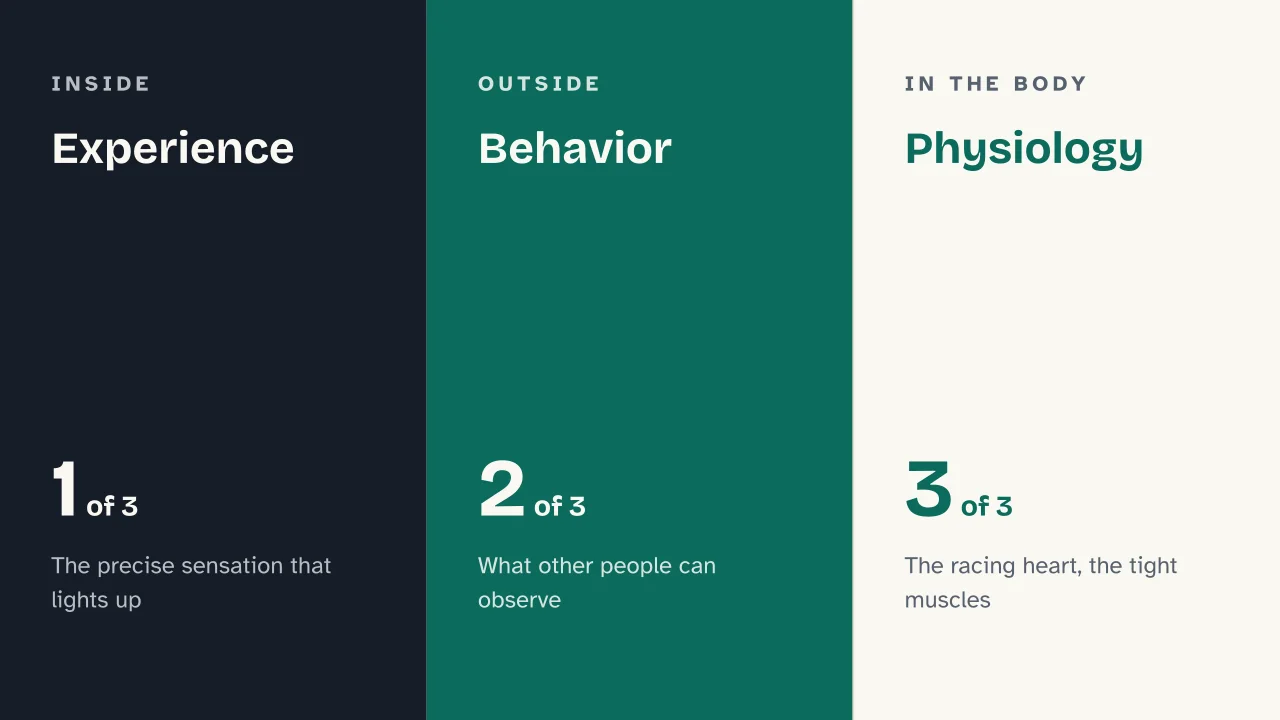 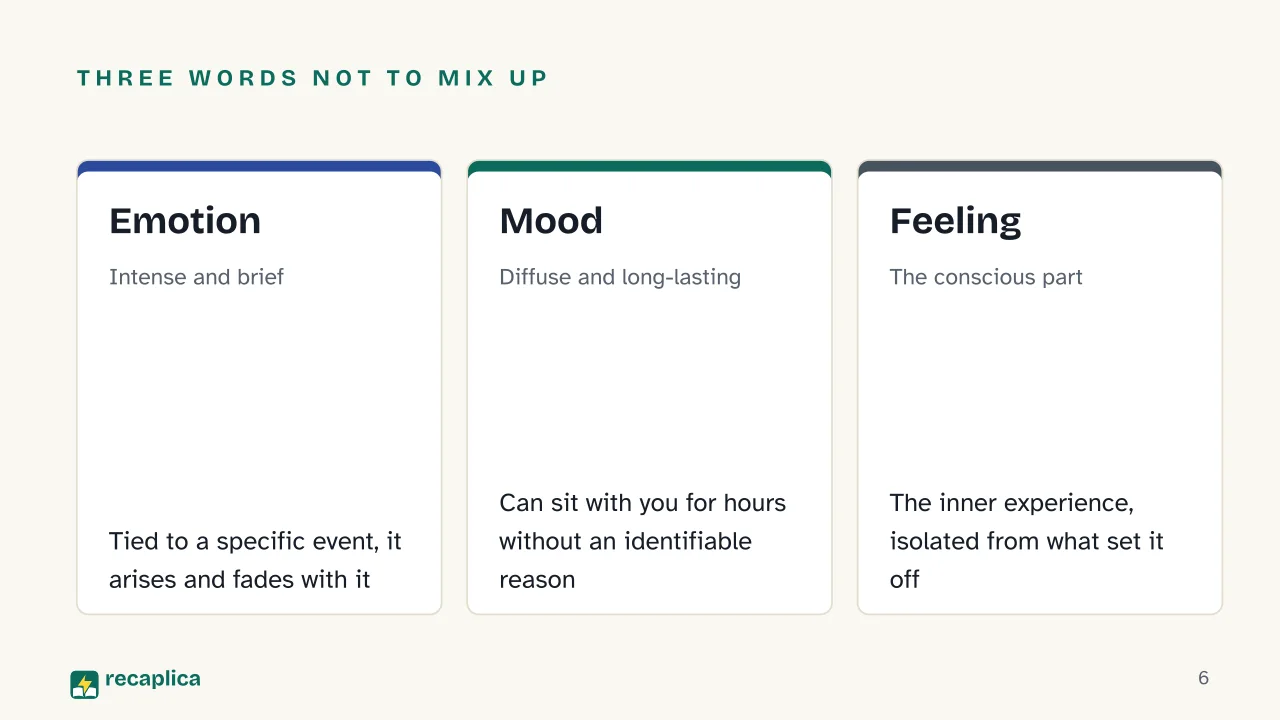  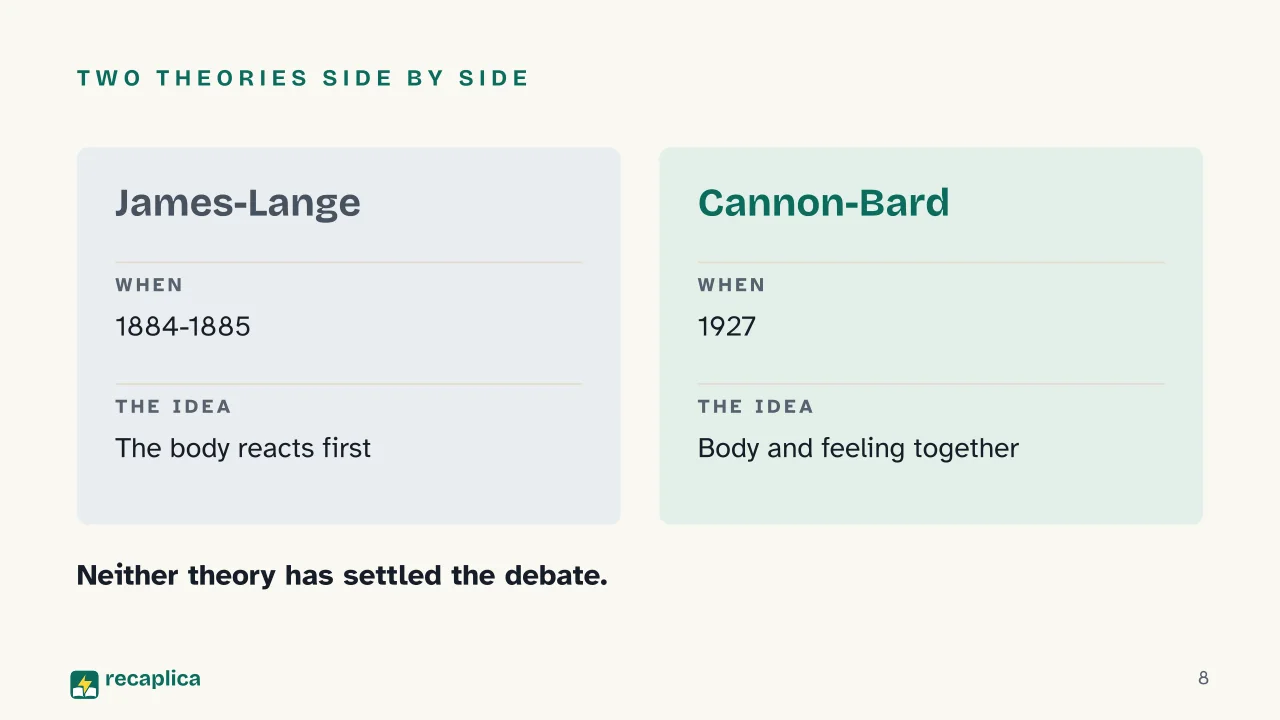 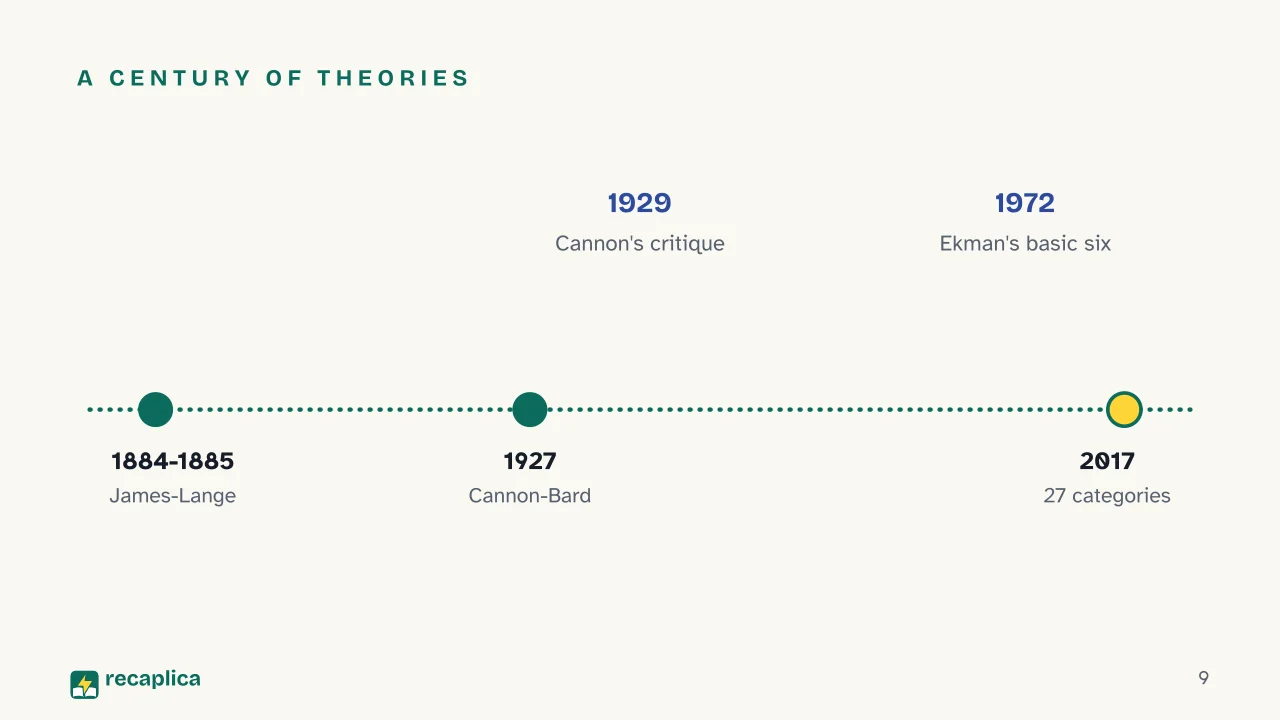  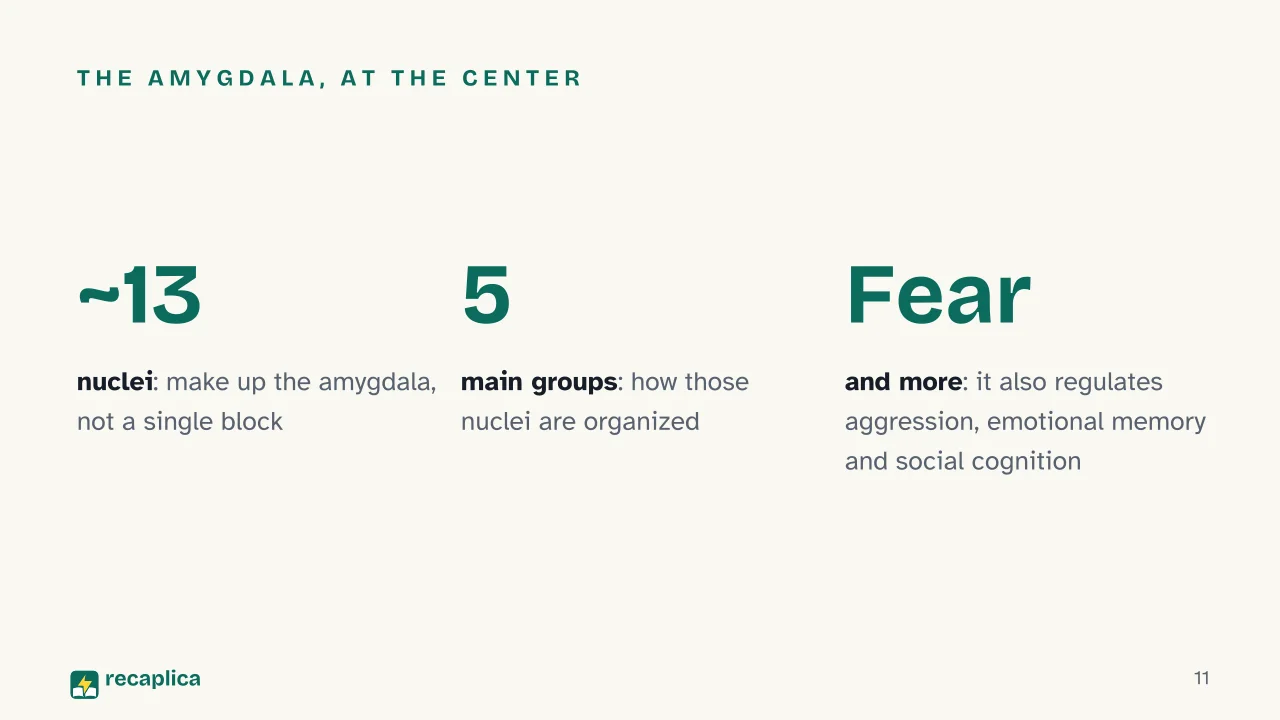  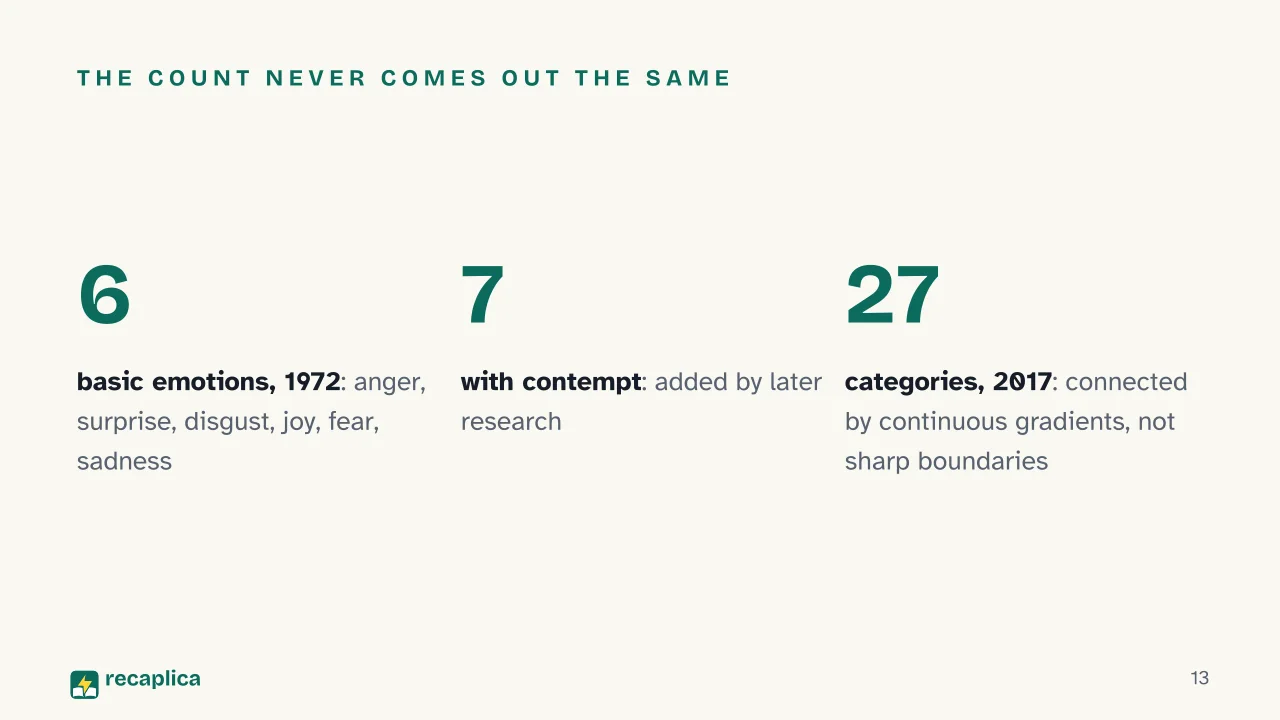 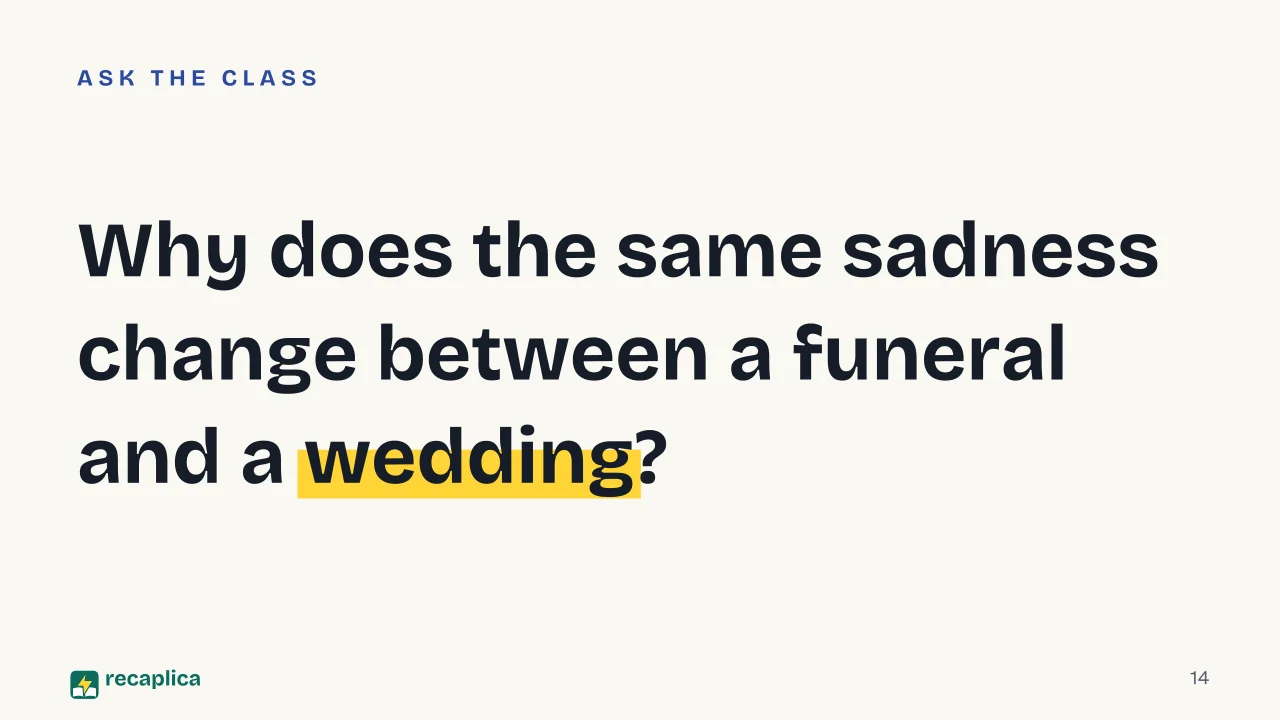 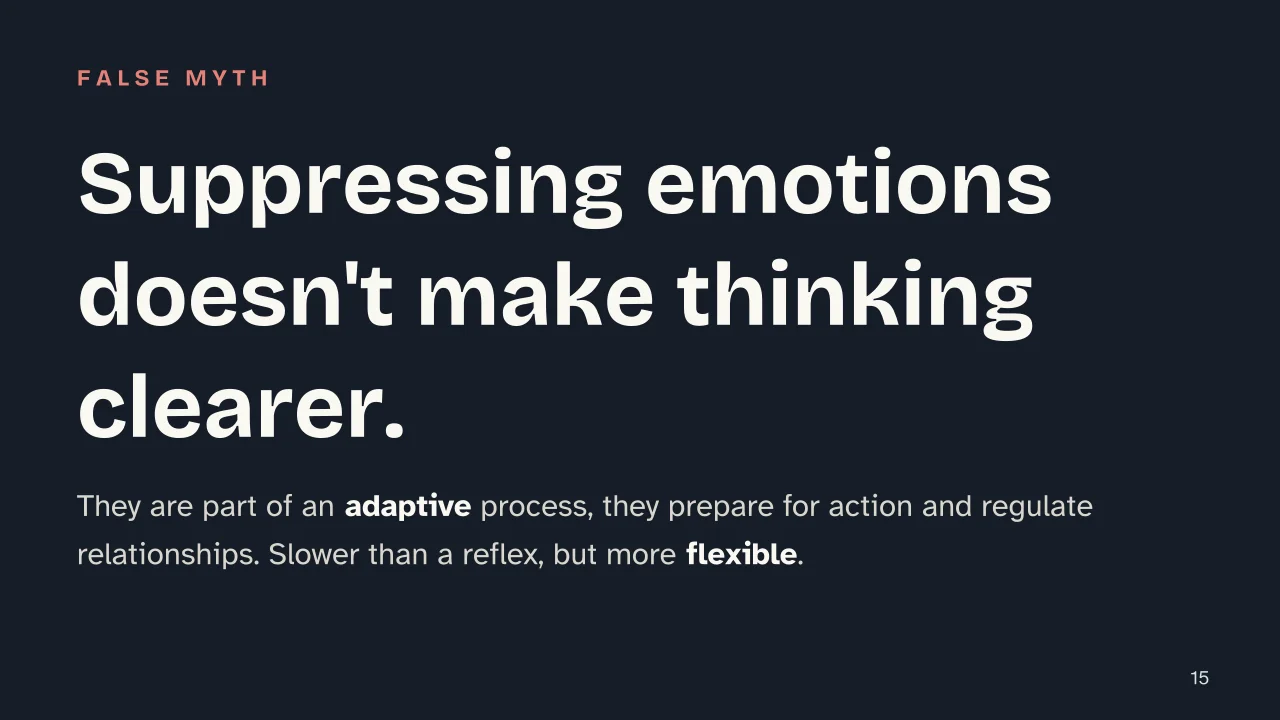 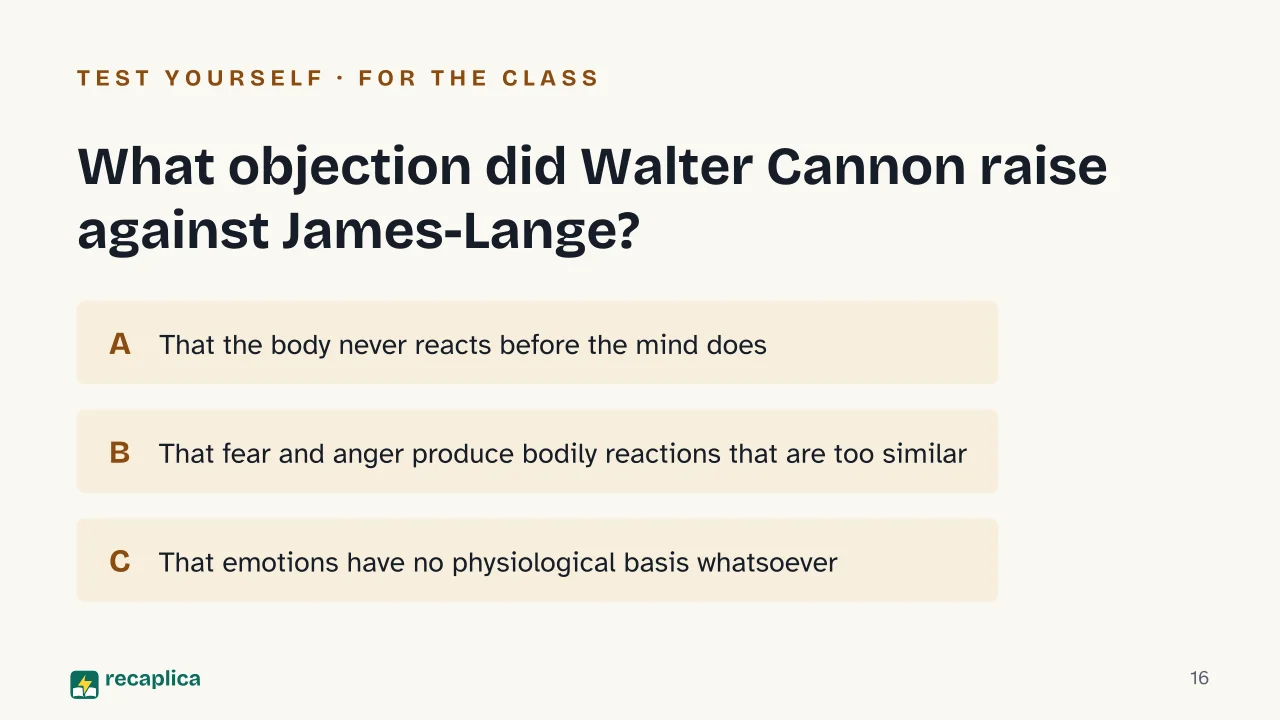  Common myths
Mind mapDrag the background to move around and the nodes to reposition them; use − and + to collapse and expand branches. 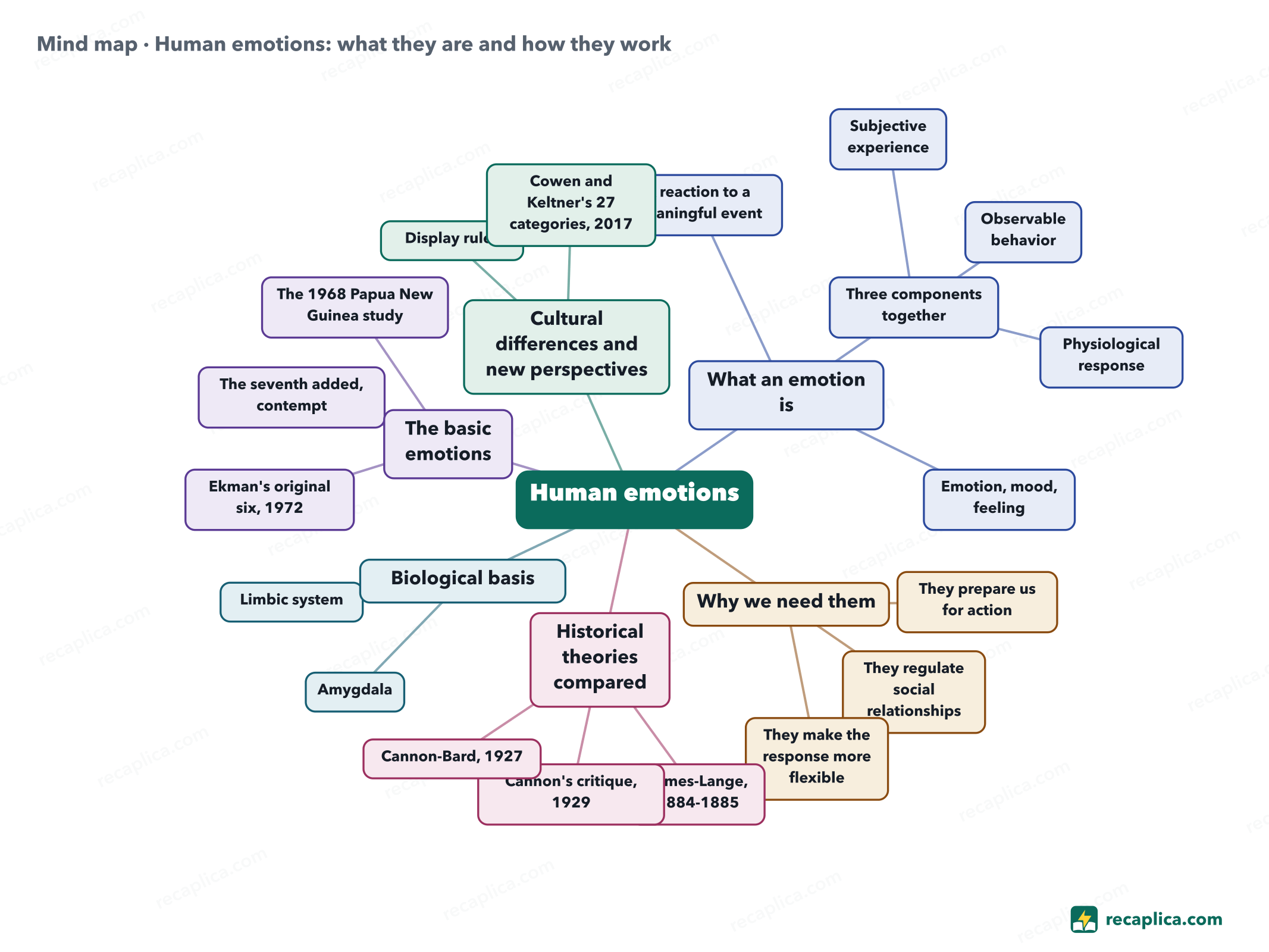
Quiz: test yourselfAnswer the questions to check what you have learned: you get instant feedback and a short explanation. Grade 0/10 0/5
FlashcardsTap the card to flip it and check whether you remember the answer, then move to the next one. 1 / 8 Explain it in your own wordsThe ultimate test: if you can explain it in simple words, you've truly understood it. Write your explanation, then compare it with the Recap. Your explanation is saved only on this device.
Frequently asked questionsWhat's the difference between an emotion and a mood?Psychologists tend to distinguish emotions, intense and brief reactions tied to a specific event, from moods, which are more diffuse, longer-lasting and without a sharp triggering cause: an emotion arises and fades in relation to something that happened, while a mood can linger for hours without an identifiable reason. The boundaries between these terms remain a matter of debate among researchers. How many human emotions are there?There is no single, universally agreed number. Paul Ekman proposed six in 1972 (anger, surprise, disgust, joy, fear, sadness) and later seven by adding contempt, while a more recent study (Cowen and Keltner, 2017) found 27, connected by continuous gradients rather than separated by sharp boundaries: the number depends on how an emotion is defined and measured. Are emotions the same across all cultures?The facial expressions of some basic emotions appear recognizable across very different cultures, as shown by Ekman's studies in Papua New Guinea in 1968, but how they're shown in public varies a great deal: so-called display rules govern when to amplify, minimize or mask an expression depending on social context and culture. What role does the brain play in emotions?The amygdala, a structure of the limbic system made up of about 13 nuclei, is among the most involved areas: it regulates fear, aggression and emotional memory, and connects to numerous other brain regions that process the more complex aspects of emotions. How can difficult emotions be managed in everyday life?Psychology has long studied how people regulate their own emotions, but useful strategies depend heavily on the situation and the person. For persistent or intense difficulties, it's best to turn to a psychologist or another mental health professional rather than rely on generic advice. Every Recap goes through an independent review before publication. |