|
recaplica
Why do we give gifts at Christmas, from Saturnalia to Saint Nicholas | ||||||||||||||||
| © 2026 Recaplica · recaplica.com — All rights reserved | ||||||||||||||||
Why do we give gifts at Christmas, from Saturnalia to Saint NicholasWhat to print Page numbers appear when printing with default margins. SlidesChoose a cut Flash10 slidesThe essential thread, to present in classFull16 slidesEvery chapter and the deeper detailBoth come with speaker notes. In 30 seconds quick readChristmas gift-giving brings together customs from different eras. In Roman times the Saturnalia ran from 17 to 23 December, and people gave each other presents and terracotta figurines. Christian tradition has the gifts of the Magi, in the Gospel of Matthew, and Saint Nicholas of Myra, a fourth-century saint who, according to legend, left gold in secret. In the nineteenth century Christmas also became a business, pushed along by publishing, even though the first card, printed in 1843, was judged a commercial flop. The date when gifts arrive still varies from country to country. Key Points
Key figures
Deep DiveDecember in Rome, with gifts and roles reversedDecember gift-giving was already a custom in ancient Rome. The World History Encyclopedia sets the Saturnalia between 17 and 23 December, around the winter solstice, and describes a holiday in which people exchanged presents. While it lasted the household ran backwards: slaves were allowed to do as they liked, and masters, wearing the pilleus of a freed slave, brought them their food or at least ate with them. The holiday closed with the market of the sigillaria, where candles, figs in jelly and, most of all, sigilla, small clay figurines, changed hands, and people with dependents gave them some coins so they could shop at those cheap stalls. The Romans had a word for a gift of good luck, strena, probably of Sabine origin, and according to Wikipedia the presents exchanged at the Saturnalia were of many kinds, coins included. The World History Encyclopedia takes the shared features, along with a date that moved later into December over time, as a sign of a strong influence on the Christian Christmas. Wikipedia adds that the festival honoured Saturn and fell just before the Natalis Solis Invicti. For the 25 December date there is the history of Christmas and its traditions; for the society that worshipped Saturn, the Recap on the Roman Empire. From the Magi to Saint NicholasIn chapter 2 of the Gospel of Matthew the Magi come to Jesus and present him with gold, frankincense and myrrh. Another story of gifts comes from fourth-century Asia Minor, where, according to Franciscan Media, Saint Nicholas lived in the city of Myra, in present-day Turkey. The legend tells of three sisters too poor to marry: three times Nicholas, unseen, threw a small bag of gold into their house, and it dropped into the stockings hung by the fire. Franciscan Media traces a line from this legend to the modern Santa Claus: the custom of giving without signing your name grew with the saint’s reputation, people moving to new lands took the figure of the gift-giving saint along, and Nicholas ended up as the Santa we know.
Who brings the gifts, and on which dayIn the Netherlands the present comes from Sinterklaas. The St. Nicholas Center says that, until the 1940s, Dutch children woke on 6 December to find it in their shoes; the giving later shifted to the evening of the 5th, pakjesavond, “packages evening”, when people swap gifts and surprises. On 6 January, in Spain and Italy, other figures bring the gifts. In Spain, National Geographic writes, children’s shoes stay outside overnight stuffed with straw, and those who have been good find presents from the Three Kings in them; in Italy they are brought by La Befana, a kindly old witch. The feast’s Greek name, Epiphany, means “manifestation”, and the magazine dates its observance to 361 AD, perhaps with pagan roots that go back further. The history of Halloween looks at another place where pre-Christian rites and Christian feasts overlap.
When Christmas became a businessIn 1843 Henry Cole had an idea: a greeting card drawn by his friend the painter John Callcott Horsley, printed in a thousand copies, each with space for a message written by hand. It was the first Christmas card. The Victoria and Albert Museum says it was also put on sale, for a shilling, a steep price then, and that the venture was judged a flop. Meanwhile, according to the museum, publishing was pushing Christmas towards commerce: cheaper gift-books and keepsakes were pitched at a growing middle class, and by the 1870s the commercial Christmas had become the norm. Santa Claus in Coca-Cola’s advertisingCoca-Cola had been selling itself at Christmas since the 1920s, in magazine ads such as those in The Saturday Evening Post. In 1931, the company says, a Michigan illustrator named Haddon Sundblom was given the job of drawing Santa Claus in person, and he looked for his model in an 1823 poem by Clement Clark Moore, “A Visit From St. Nicholas”, also known as “Twas the Night Before Christmas”. Santa stayed in the company’s advertising until 1964. Slide deckSlides ready to download and make your own in PowerPoint or Google Slides, with speaker notes. Pick the Flash cut or the Full one.     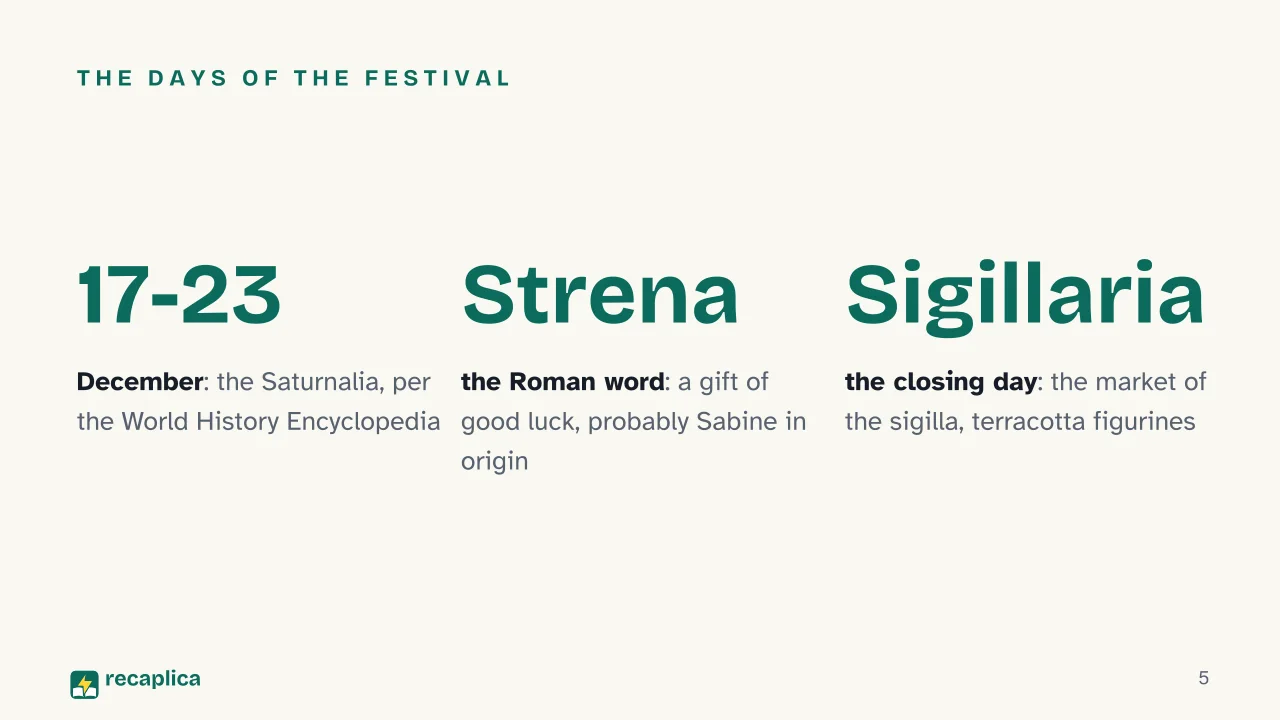 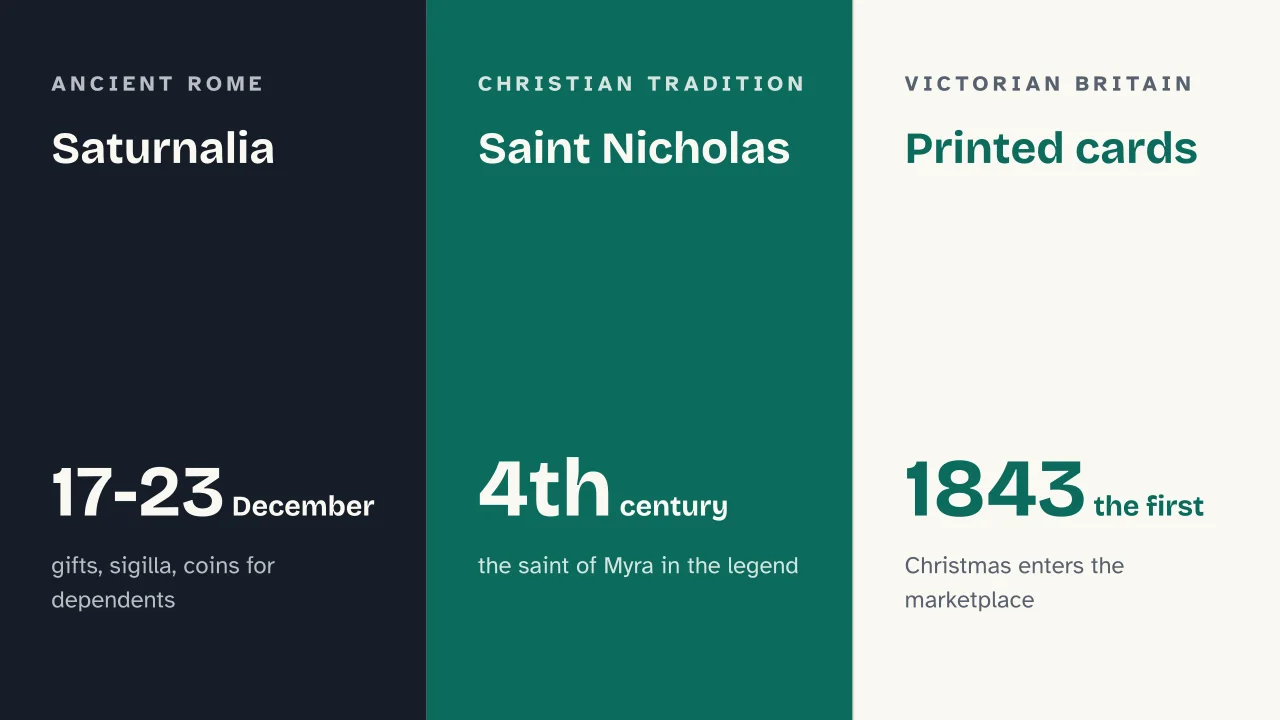  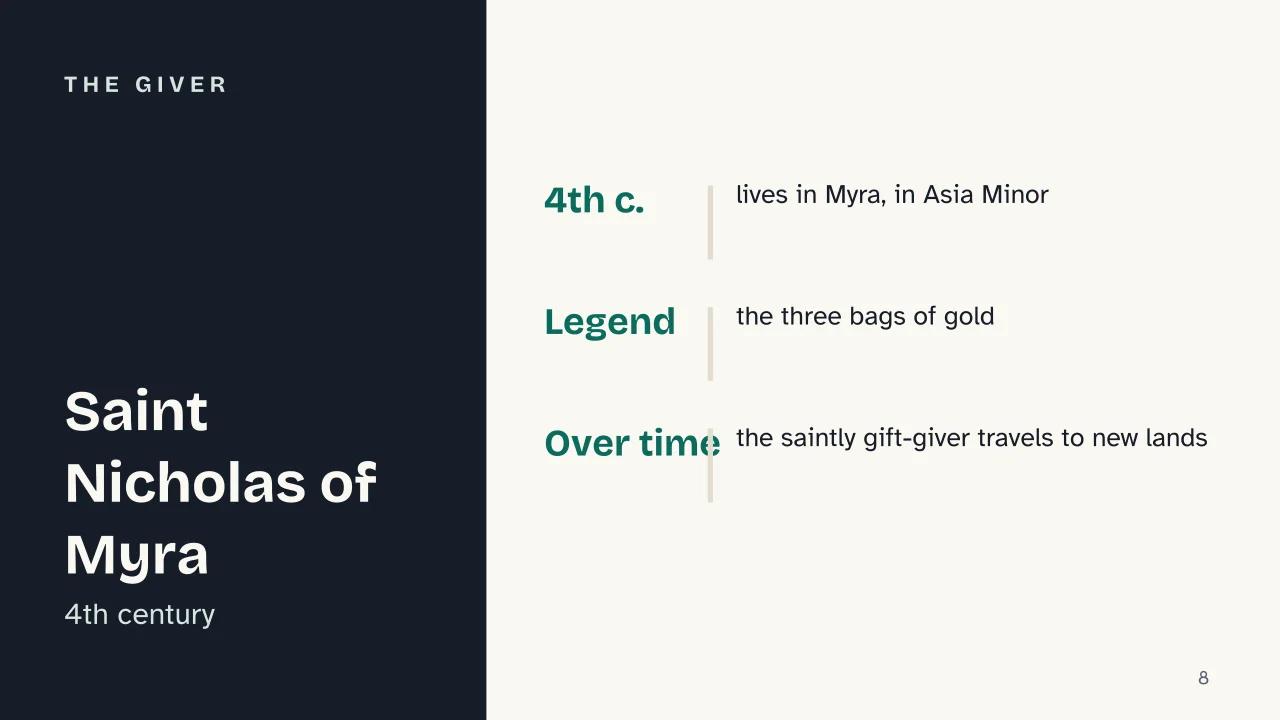  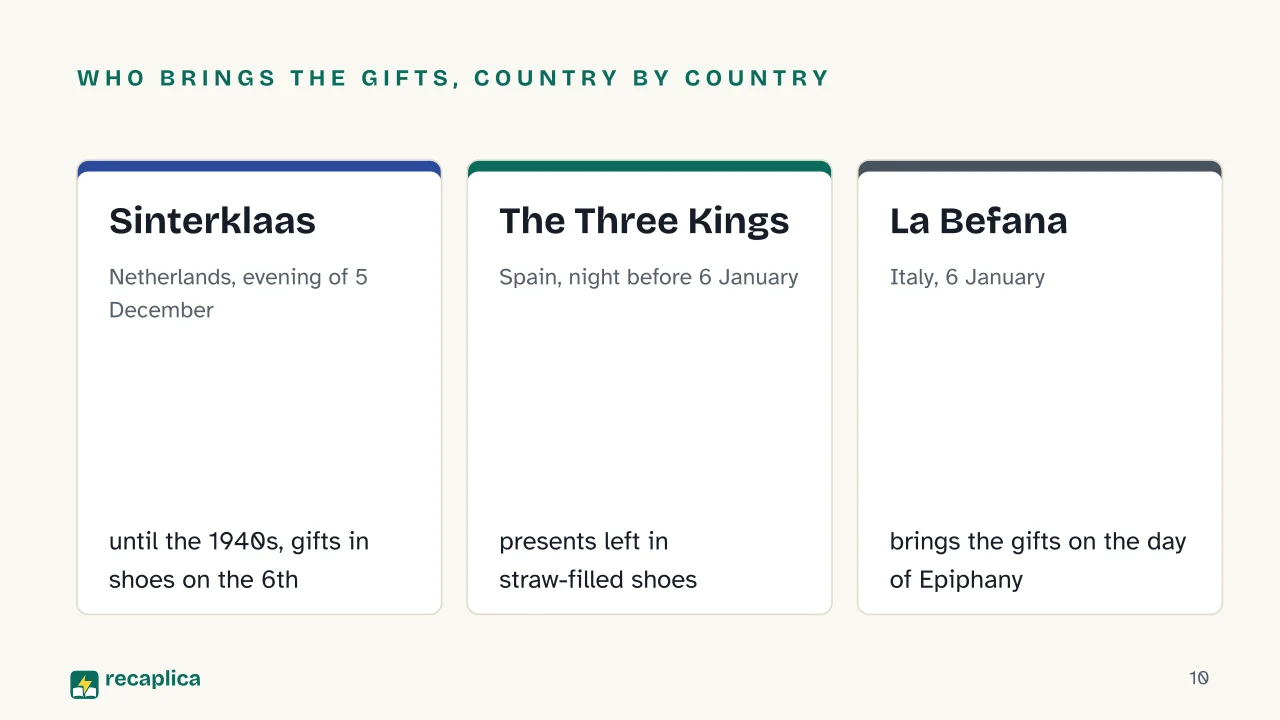  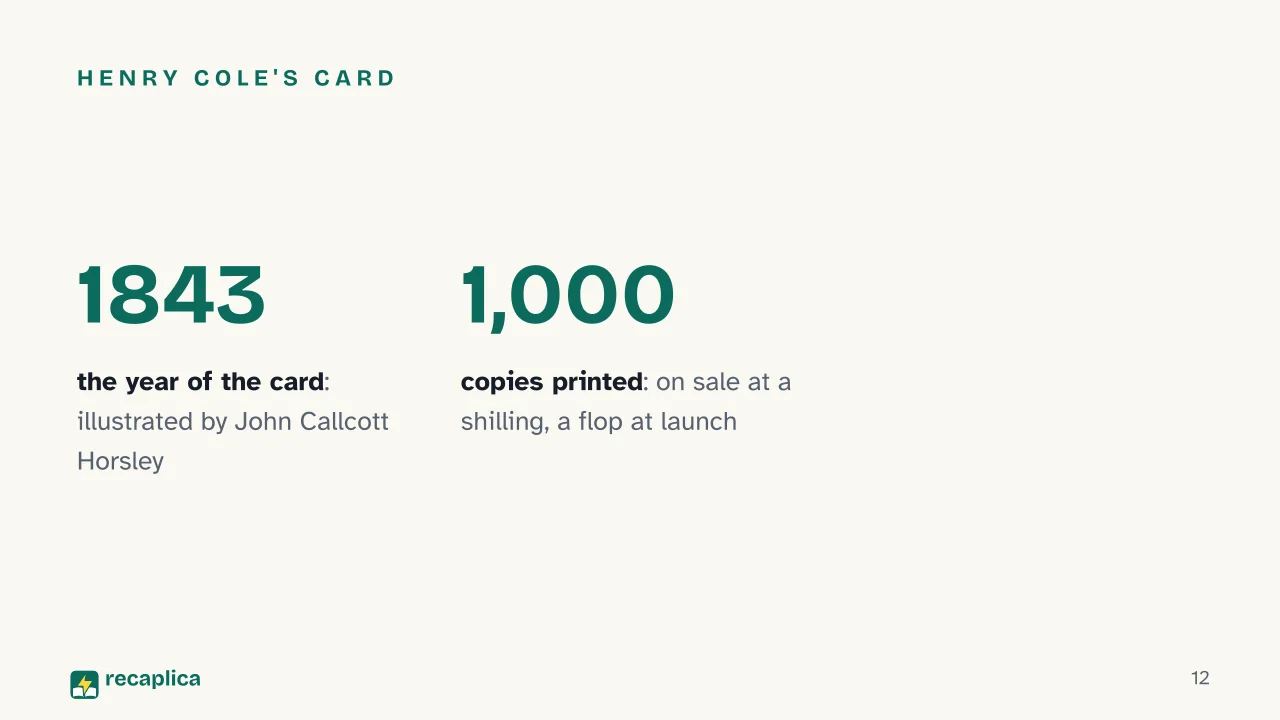  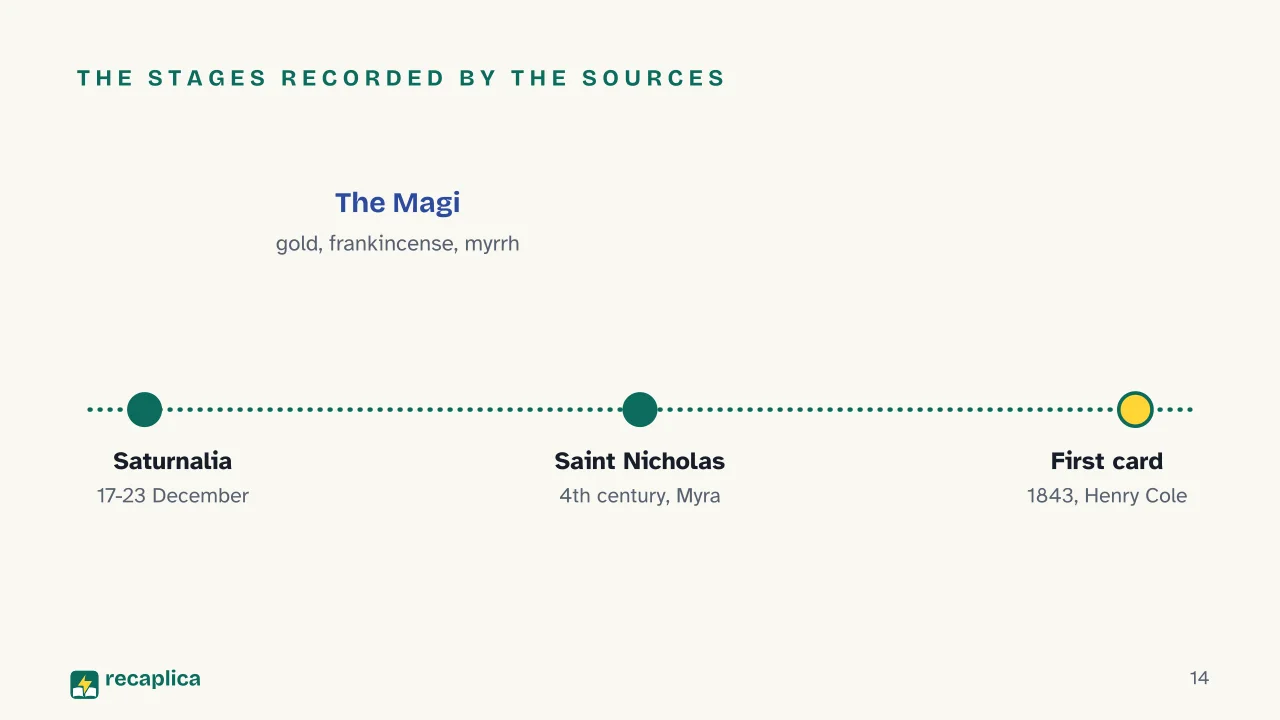 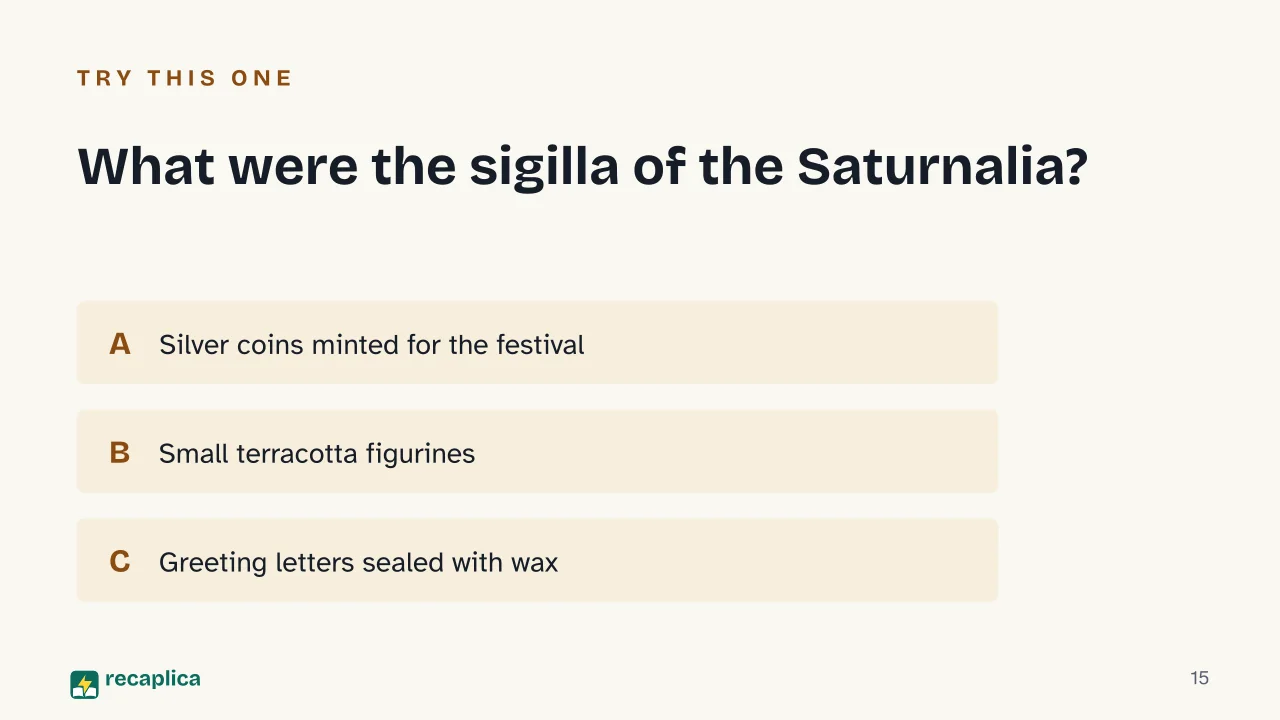  Common myths
Mind mapDrag the background to move around and the nodes to reposition them; use − and + to collapse and expand branches. 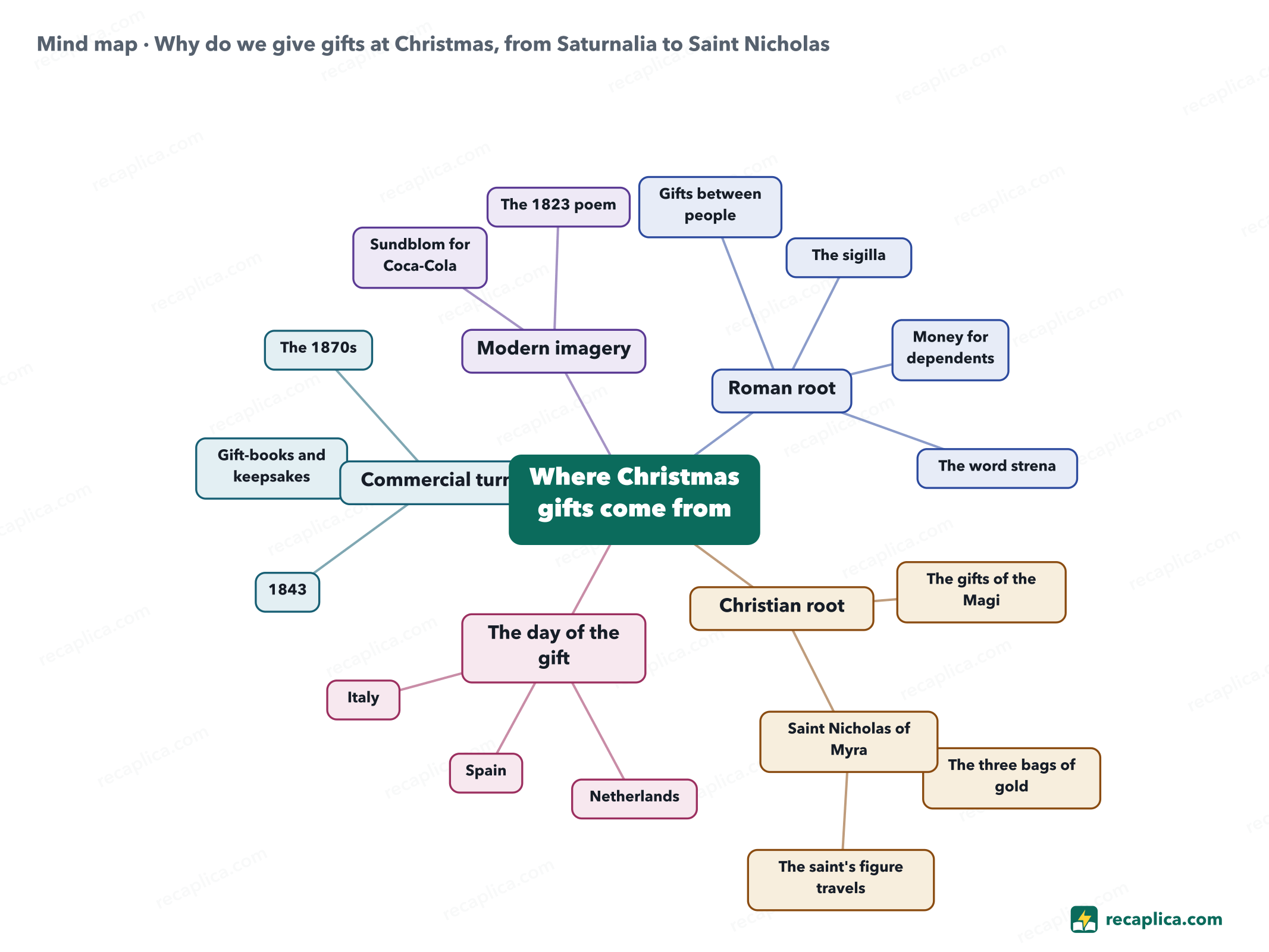
Quiz: test yourselfAnswer the questions to check what you have learned: you get instant feedback and a short explanation. Grade 0/10 0/5
FlashcardsTap the card to flip it and check whether you remember the answer, then move to the next one. 1 / 8 Explain it in your own wordsThe ultimate test: if you can explain it in simple words, you've truly understood it. Write your explanation, then compare it with the Recap. Your explanation is saved only on this device.
Frequently asked questionsWhy do we give gifts at Christmas?December was already a month of gifts in ancient Rome. During the Saturnalia, from the 17th to the 23rd, people exchanged presents, and at the market on the last day they bought candles, figs in jelly and terracotta figurines. Christian tradition then adds the gifts of the Magi and the legend of Saint Nicholas, the saint who gave in secret. Did Christmas gifts come from the Roman Saturnalia?Partly. The Saturnalia were already days of gift-giving, and the World History Encyclopedia reads the features the two festivals share, and a date that crept further into December over time, as signs of a strong influence on the Christian Christmas; the entry does not discuss the presents themselves. Is 25 December the day for presents everywhere?No. Dutch children get the Sinterklaas gifts on the evening of 5 December, and until the 1940s the presents turned up in their shoes on the morning of the 6th. In Spain the Three Kings leave presents in straw-filled shoes on the night before 6 January, and Italian children wait for La Befana on the same date. Who printed the first Christmas card?Henry Cole, in 1843. He asked his friend the artist John Callcott Horsley to illustrate the idea and had a printer run a thousand copies, each one to be finished with a handwritten greeting. Every Recap goes through an independent review before publication. |