Skip to content
recaplica

    One moment: security check

    Cloudflare wants to make sure you're not a robot. Tick the box below and your search will continue on its own.

    IT
    recaplica What is vibe coding? Meaning, origin and security risks
    © 2026 Recaplica · recaplica.com — All rights reserved
    Home › Technology

    What is vibe coding? Meaning, origin and security risks

    By Recaplica Newsroom · Updated on September 7, 2026

    What to print

    Page numbers appear when printing with default margins.

    Slides

    Choose a cut

    Flash10 slidesThe essential thread, to present in classFull18 slidesEvery chapter and the deeper detail

    Both come with speaker notes.

    Telegram channel
    recaplica Clear in 30 seconds, yours in 10 minutes.
    In 30 seconds Key points Figures Deep dive Slides Myths Mind map Quiz Flashcards FAQ

    In 30 seconds quick read

    Vibe coding is a way of programming where you describe, in speech or writing and in plain language, the result you want, and let an artificial intelligence model write (and often run) the code for you, accepting its output with little or no review. Andrej Karpathy coined the term on 2 February 2025, and it caught on so widely that Collins Dictionary named it Word of the Year 2025. It's distinct from simply using an AI assistant to complete code you already understand: in vibe coding, by the original definition, you stop reading the diffs line by line. Several independent studies report that this way of working raises the risk of security vulnerabilities and leaked credentials in the resulting code.

    Key Points

    • Vibe coding means describing a goal in plain language and letting AI write the code, accepting the changes without reviewing the "diffs" line by line.
    • The term was coined by Andrej Karpathy, an OpenAI co-founder and former Tesla AI director, in a post on X on 2 February 2025.
    • It differs from classic AI-assisted coding (such as autocompletion in GitHub Copilot) because there the developer keeps control of, and understands, what they write; in "pure" vibe coding that control is deliberately given up.
    • Collins Dictionary named "vibe coding" its Word of the Year 2025, defining it as "the use of artificial intelligence prompted by natural language to write computer code."
    • Several independent sources (Carnegie Mellon University, Veracode, Cloud Security Alliance) point to a gap between code that works and code that's secure: in CMU's SusVibes benchmark, only 10.5% of the AI agent-generated code that passed functional tests also survived a security review.
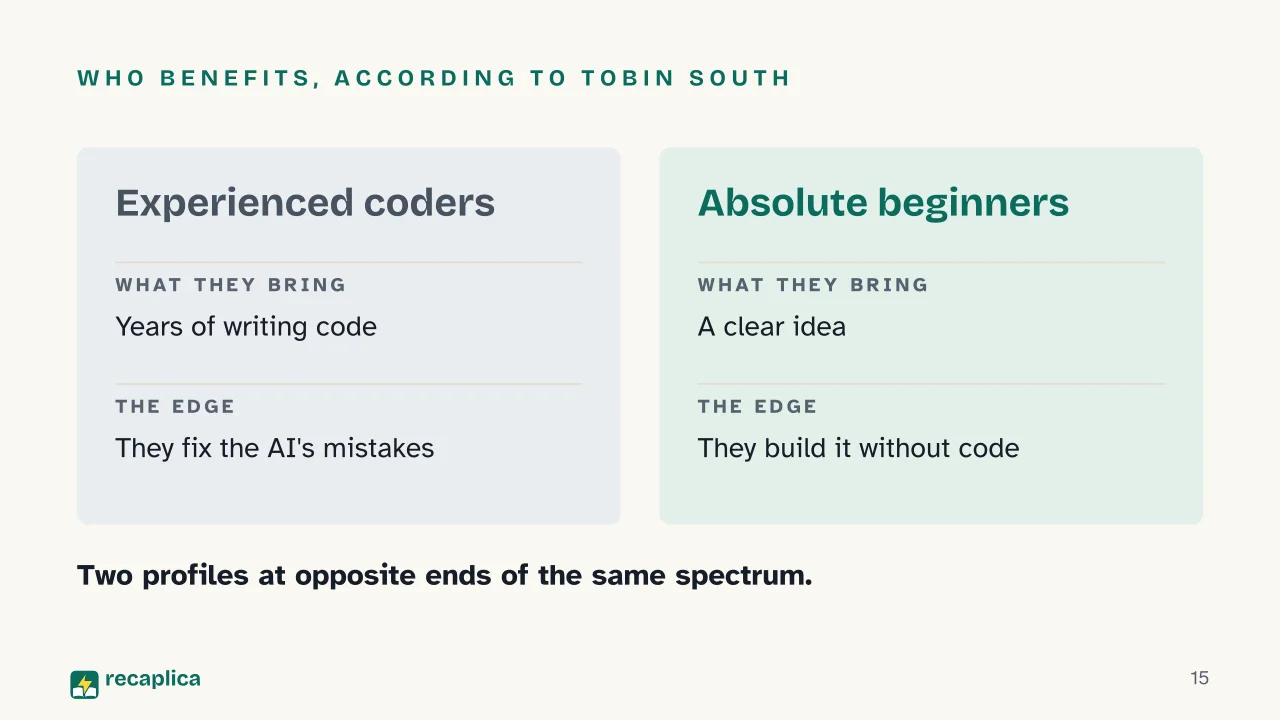
    • According to MIT Media Lab researcher Tobin South, vibe coding mostly benefits two opposite kinds of people: experienced programmers who know how to fix an AI's mistakes, and absolute beginners with an idea they couldn't build on their own.

    Key figures

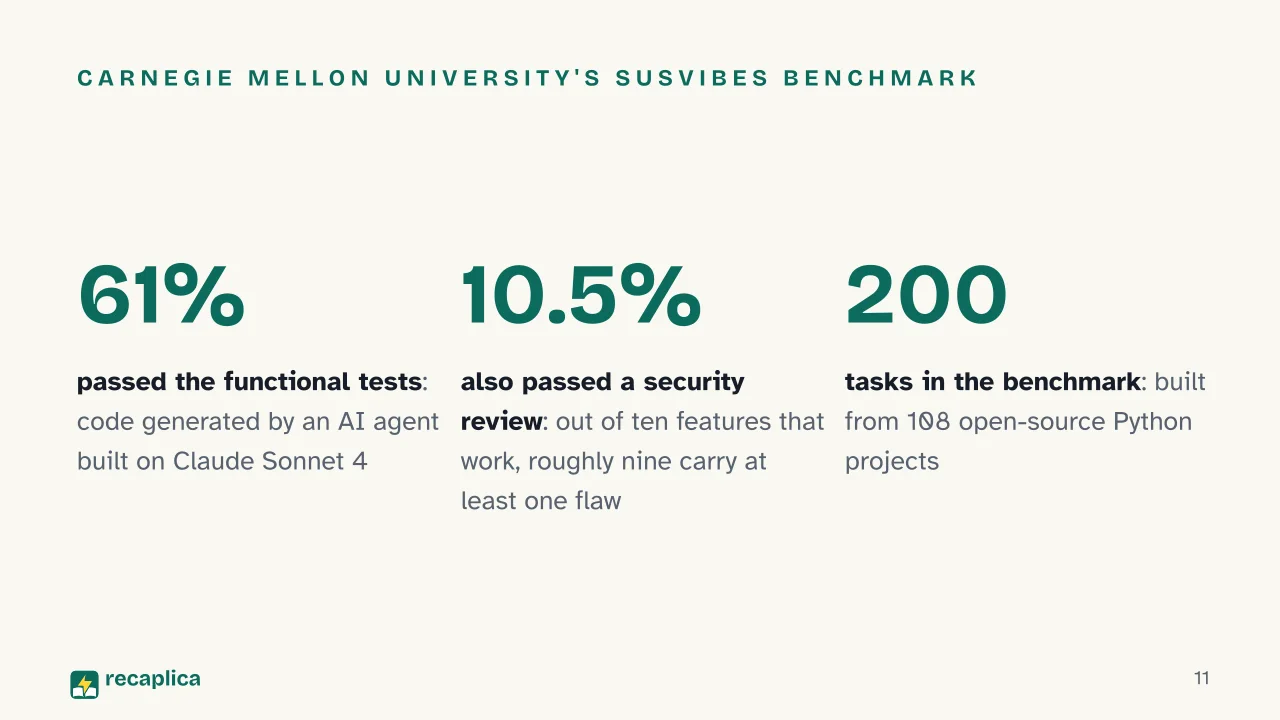
    • 61% working, 10.5% secure in the Carnegie Mellon University SusVibes benchmark (200 tasks across 108 open-source Python projects), 61% of the code generated by an AI agent built on Claude Sonnet 4 passed functional tests, but only 10.5% also passed a security review Source: Carnegie Mellon University, SusVibes benchmark
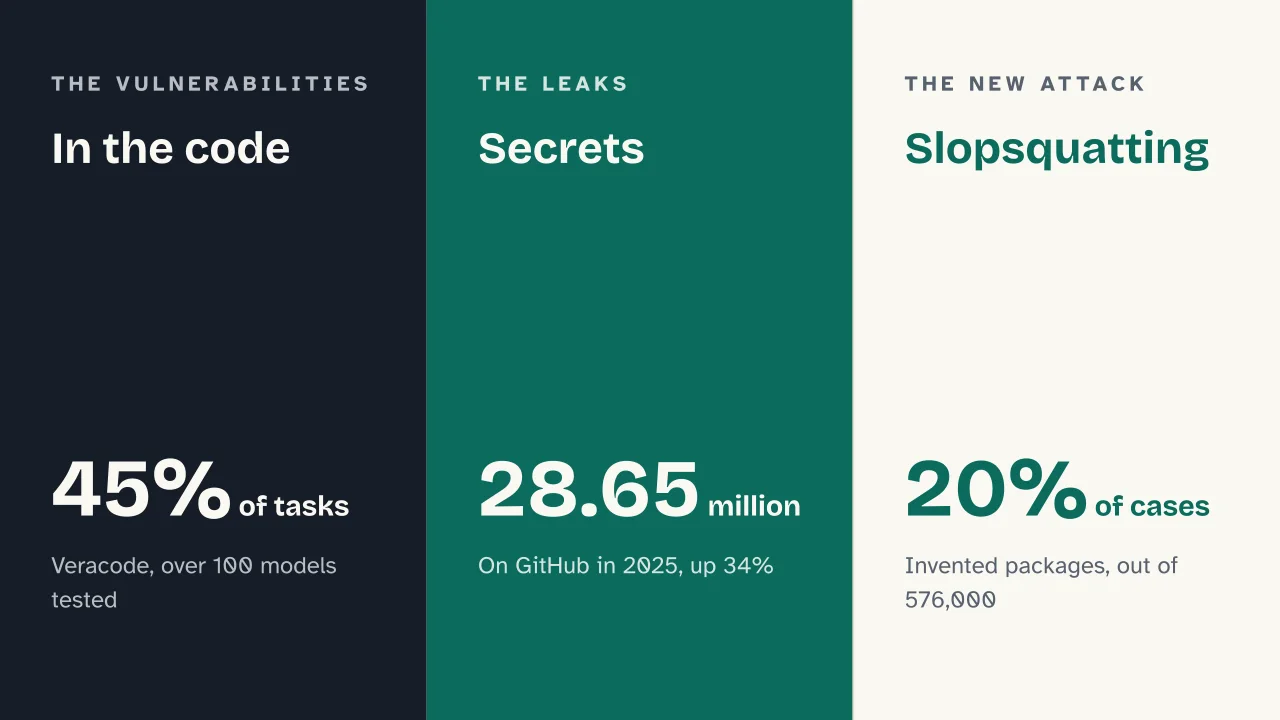
    • 28.65 million secrets (credentials, API keys) mistakenly found in code published on GitHub in 2025, a 34% jump from the year before Source: Cloud Security Alliance, 2026 research note
    • 45% the share of development tasks handed to an AI that, according to Veracode tests across more than 100 language models, introduces at least one security vulnerability Source: Veracode, cited by the Cloud Security Alliance

    Deep Dive

    Describing the outcome, not the instructions

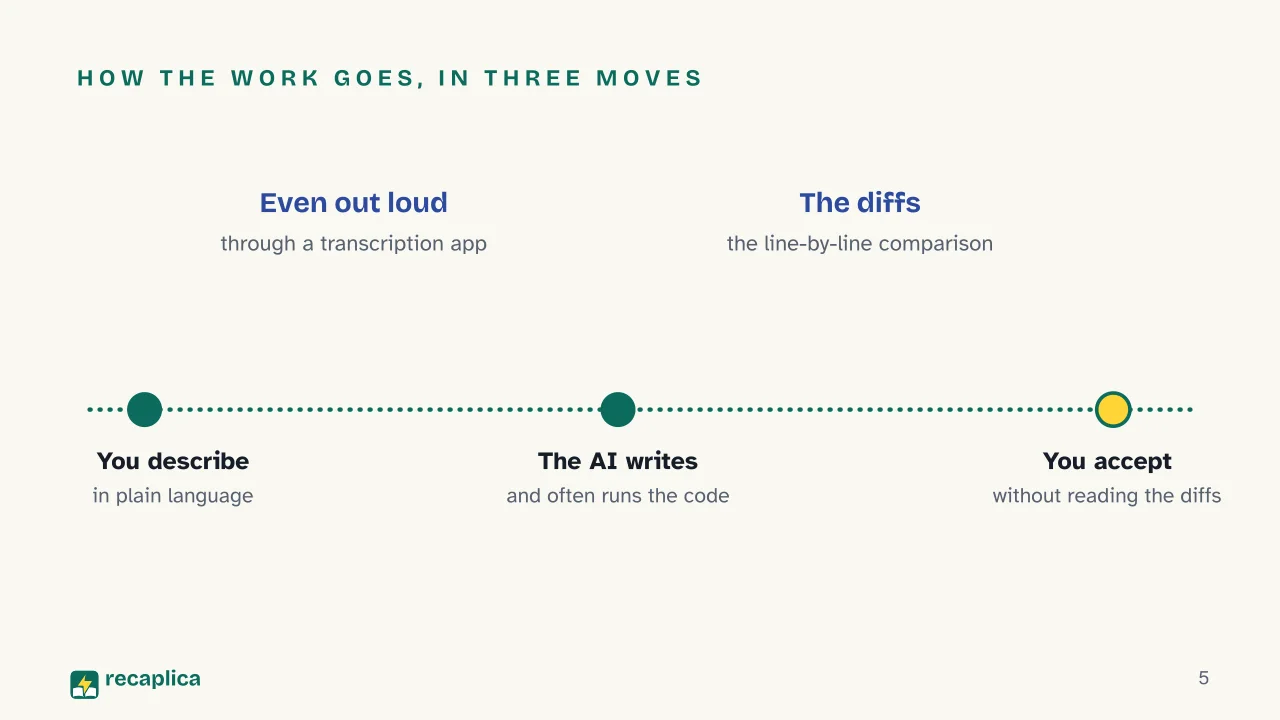
    Programming, traditionally, means writing precise instructions a machine carries out step by step: lines of code in a language like the one covered in the article on PHP, thought through and checked by the person writing them. Vibe coding turns that around: instead of writing the code, you describe it. You tell an artificial intelligence model what you want — “add a button that exports the data to PDF,” “shrink the padding on the left of the sidebar” — and let the model translate that request into working code, often running it right away.

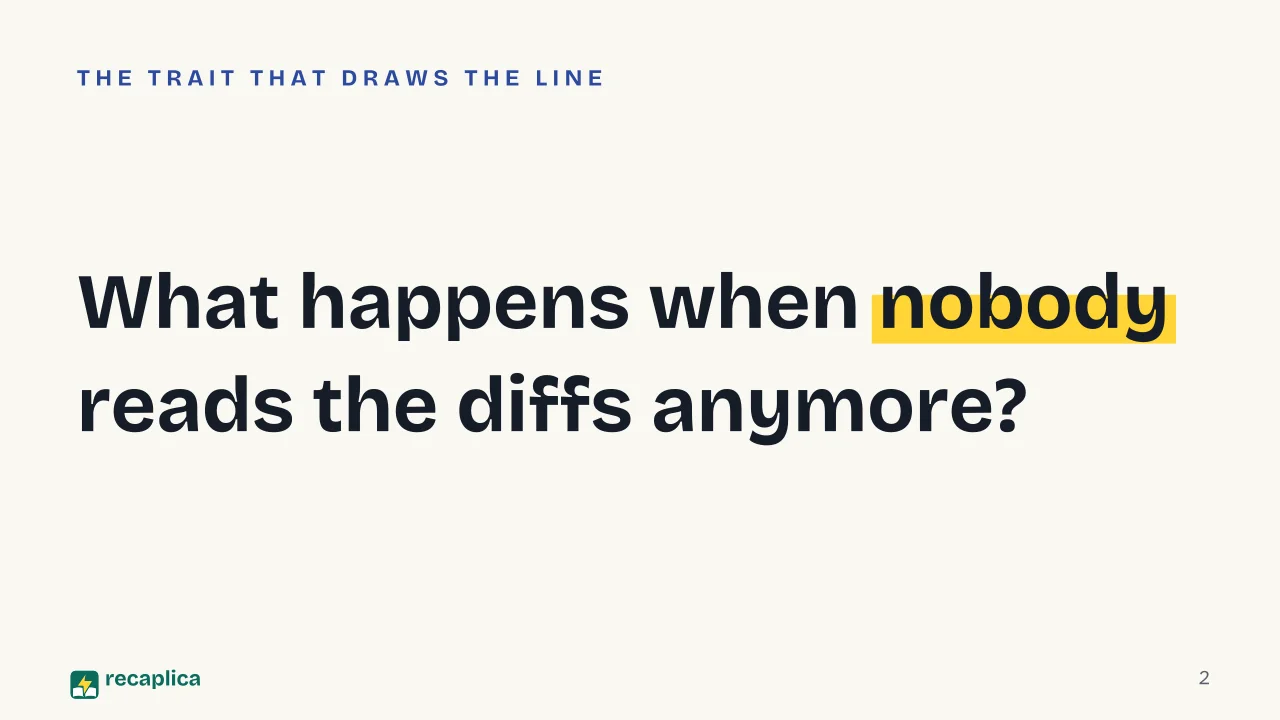
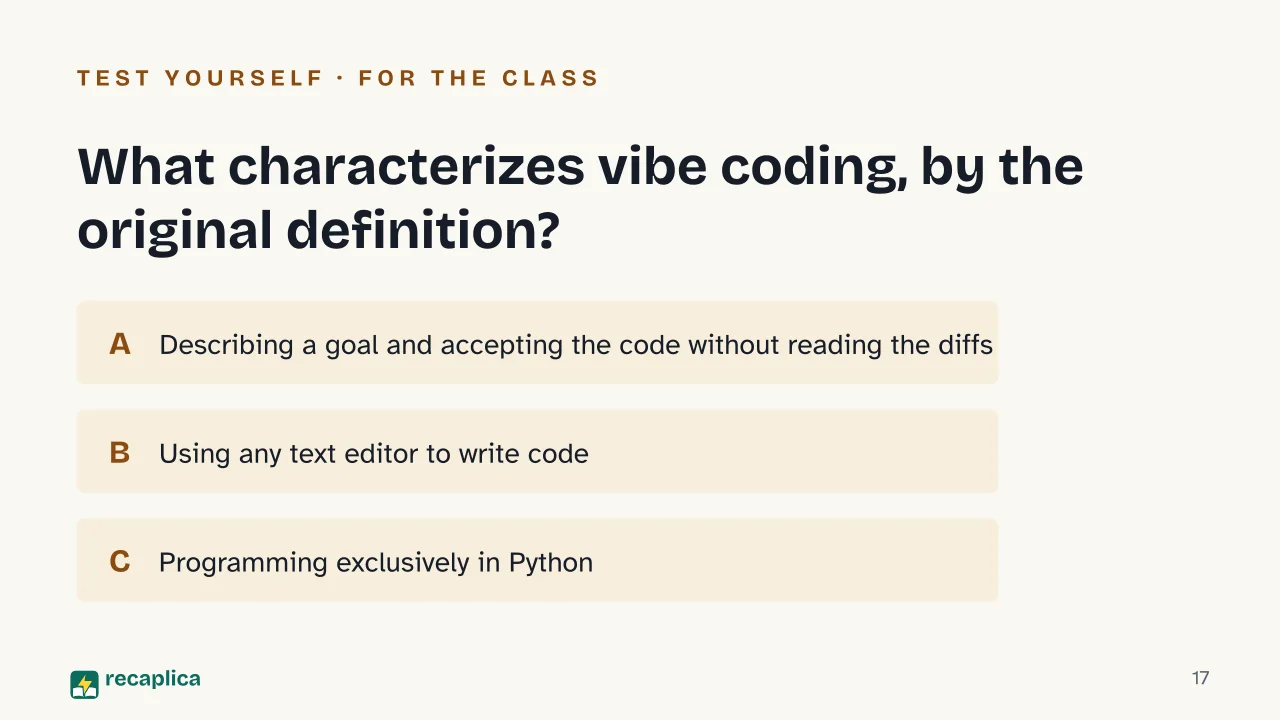
    The defining trait, by the term’s original meaning, isn’t so much using an AI to write code — that became common practice between 2025 and 2026 — but giving up on checking it. Someone doing vibe coding accepts the changes the model proposes without rereading the “diffs,” the line-by-line comparison between the old and new version of the code. What gets judged is the result on screen, not how it got there.

    Vibe coding versus classic AI-assisted coding

    Not every use of artificial intelligence in programming is vibe coding. Tools like GitHub Copilot, which suggest lines or functions as you type, or general-purpose chatbots used to get unstuck on a specific problem, have been around for years: MIT Technology Review calls this classic “AI-assisted coding,” and what separates it from vibe coding mostly comes down to the control that stays with the person programming.

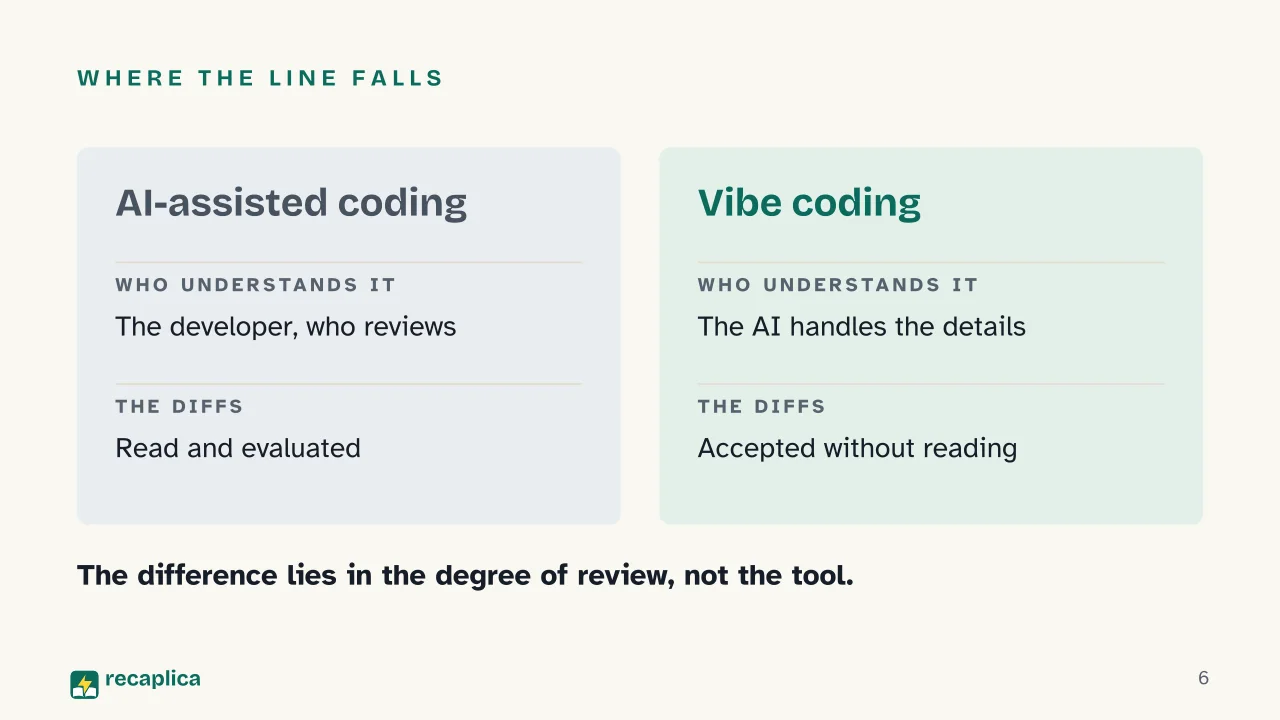
    Classic AI-assisted codingVibe coding (original definition)
    Who understands the resulting codeThe developer, who reviews itNot necessarily: the AI handles the details
    Diffs (line-by-line comparison)Read and evaluatedAccepted without reading them (“Accept All”)
    The AI’s roleCompletes or suggests parts of the codeWrites and often runs the entire change
    Typical exampleAutocomplete in an editorDescribing a feature out loud and watching it appear

    Practical example: a developer who uses Copilot to complete a function they already designed, then checks its logic line by line, is doing classic AI-assisted coding. A developer who says out loud “add a cart with an automatic discount above 50 euros” and accepts whatever code appears without checking it, trusting that the app seems to work, is doing vibe coding by the term’s original definition.

    From a tweet to word of the year

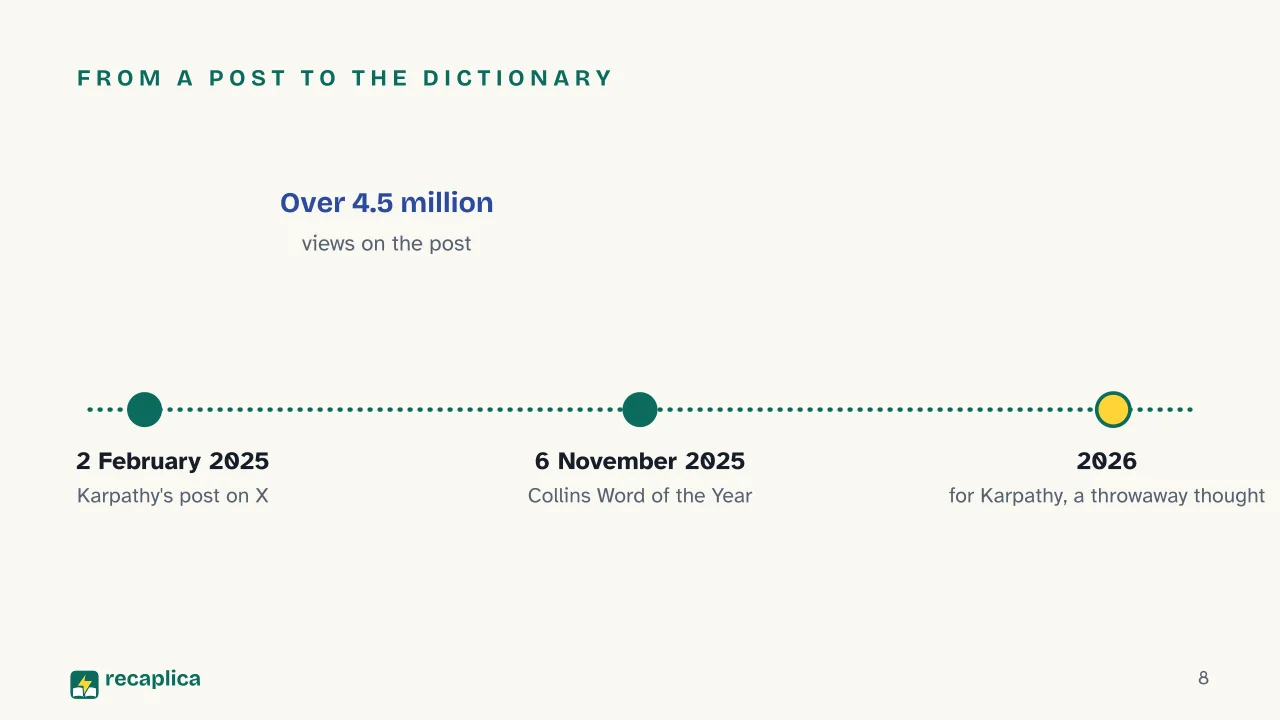
    The term comes from a post published on X (Twitter) by Andrej Karpathy, an OpenAI co-founder and former director of artificial intelligence at Tesla, on 2 February 2025. Karpathy described programming by relying almost entirely on an AI assistant built into a code editor, even dictating requests out loud with a transcription app. As he put it himself, “I don’t read the diffs anymore.” The post passed 4.5 million views according to converging secondary sources, and a year later Karpathy himself called it a throwaway thought he’d fired off, saying he could never predict which of his posts would take off.

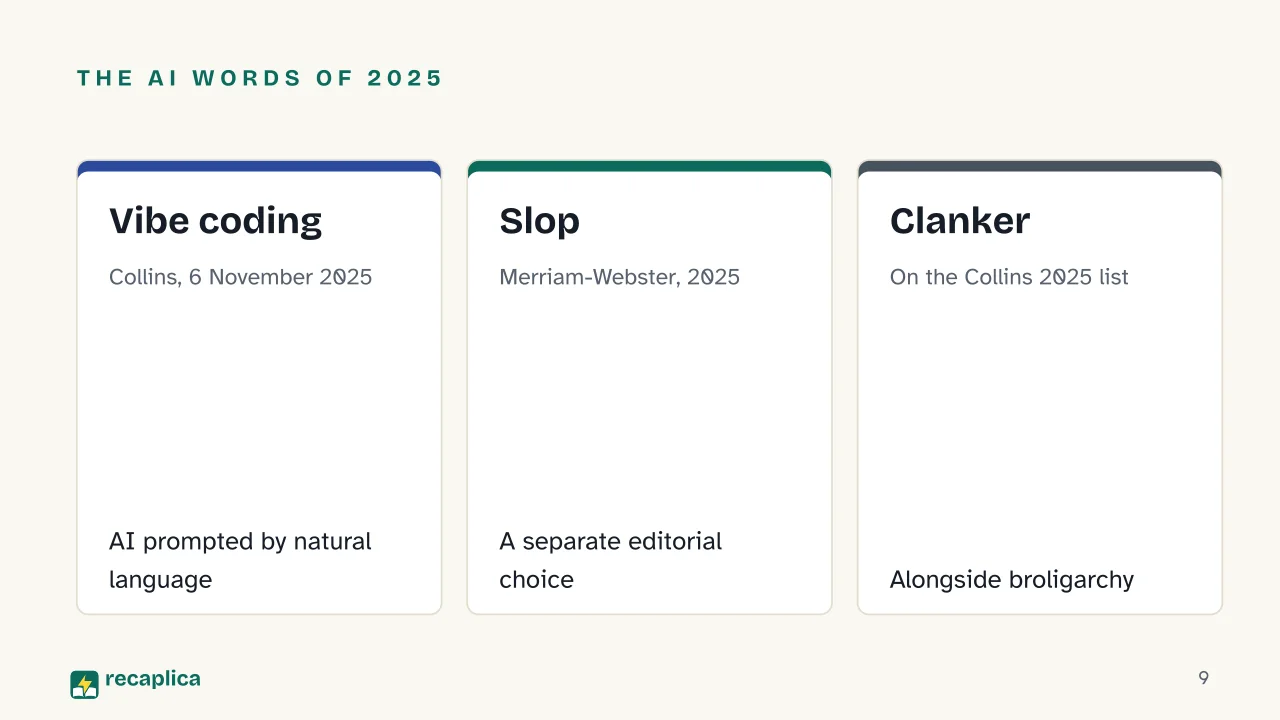
    From there the term spread fast: within a few months, articles, guides and discussions on the topic were everywhere, reaching a level of recognition that usually takes years, not months. On 6 November 2025 Collins Dictionary named it Word of the Year 2025, defining it as “the use of artificial intelligence prompted by natural language to write computer code.” The same shortlist of AI-themed words Collins considered for 2025 also included “clanker” and “broligarchy”; around the same time Merriam-Webster instead picked “slop” as its own word of the year, signaling how central the topic of AI-generated content had become in that period’s public debate.

    Who benefits, and who’s most at risk

    According to Tobin South, a researcher at the MIT Media Lab, vibe coding mostly benefits two groups at opposite ends of the spectrum: experienced programmers, who can quickly spot and fix a mistake the AI generates, and absolute beginners who have a clear idea of what they want to build but wouldn’t know how to translate it into code on their own. The sources don’t say explicitly who benefits least, but it’s reasonable to guess it’s people still learning to program: understanding code, which is also how you learn to write better code, gets handed over almost entirely to the model in that case. The reasoning behind these systems is the same one that lets a model recognize patterns across huge amounts of data, as covered in the article on machine learning, and that more broadly powers generative AI, capable of producing text, images or code from a plain-language instruction.

    The documented risks: when “working” doesn’t mean “secure”

    One of the risks discussed most often by industry studies is precisely the lack of human review. One figure stands out from the rest: in Carnegie Mellon University’s SusVibes benchmark, run on 200 tasks built from 108 open-source Python projects, 61% of the code generated by an AI agent built on Claude Sonnet 4 passed functional tests, but only 10.5% also passed a security review. In practice, out of ten features that appear to work, roughly nine carry at least one exploitable vulnerability.

    It isn’t an isolated case. Veracode tests across more than 100 language models found that 45% of development tasks handed to an AI introduce at least one security vulnerability, often falling into the OWASP Top 10 categories, the reference standard for the most common flaws in web applications. The Cloud Security Alliance also flags another, less visible but widespread risk: credential leaks. In 2025, 28.65 million secrets — API keys, passwords, access tokens — were found mistakenly left in code published on GitHub, a 34% increase from the year before, the sharpest single-year jump on record. Faster development and publishing cycles enabled by AI are likely among the factors behind that jump, though pinning the entire increase on vibe coding alone would be an oversimplification: the phenomenon is tied more broadly to the growing use of AI tools in software development.

    New classes of attack have also appeared with no real equivalent in code written entirely by human programmers. “Slopsquatting,” for instance, exploits the fact that AI models sometimes recommend nonexistent software package names, “hallucinated” during generation: across a sample of 576,000 cases analyzed by the Cloud Security Alliance, 20% contained invented packages. Attackers register those names on public repositories like npm or PyPI, waiting for someone to install them by mistake and unknowingly bring malicious code into their project.

    The gap between trust and quality

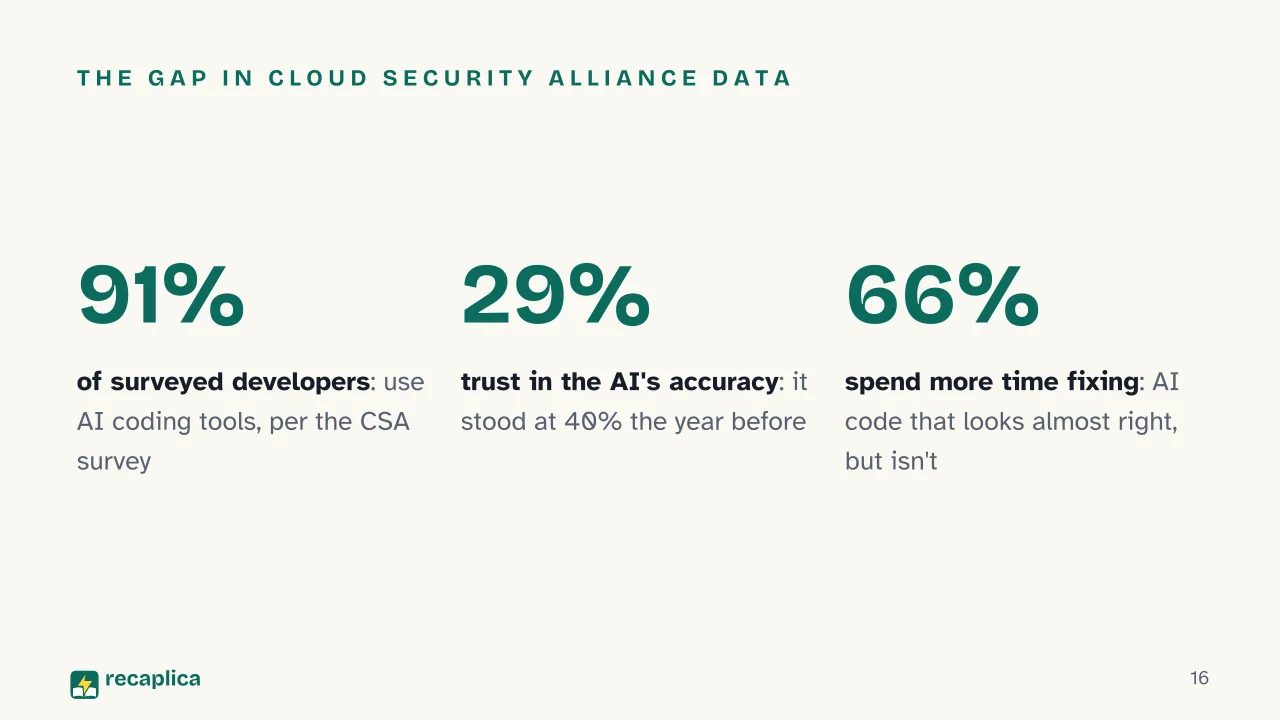
    Data collected by the Cloud Security Alliance also describes a gap between how much developers trust these tools and how well they actually perform in practice. 91% of surveyed developers use AI coding tools, and about 22% of code merged into projects is written by artificial intelligence. Over the same period, though, developer trust in AI accuracy fell from 40% to 29% year over year, and 66% say they spend more time fixing AI-generated code that looks almost right but isn’t — a sign that more use of these tools hasn’t come with more trust in how reliable they actually are. On a related front, those working on regulating the use of artificial intelligence — as covered in the article on the EU AI Act, Europe’s AI regulation — are paying growing attention to exactly the systems that can affect people’s safety and data, a category that also includes applications built entirely through vibe coding and put into production without extra checks.

    Slide deck

    Slides ready to download and make your own in PowerPoint or Google Slides, with speaker notes. Pick the Flash cut or the Full one.
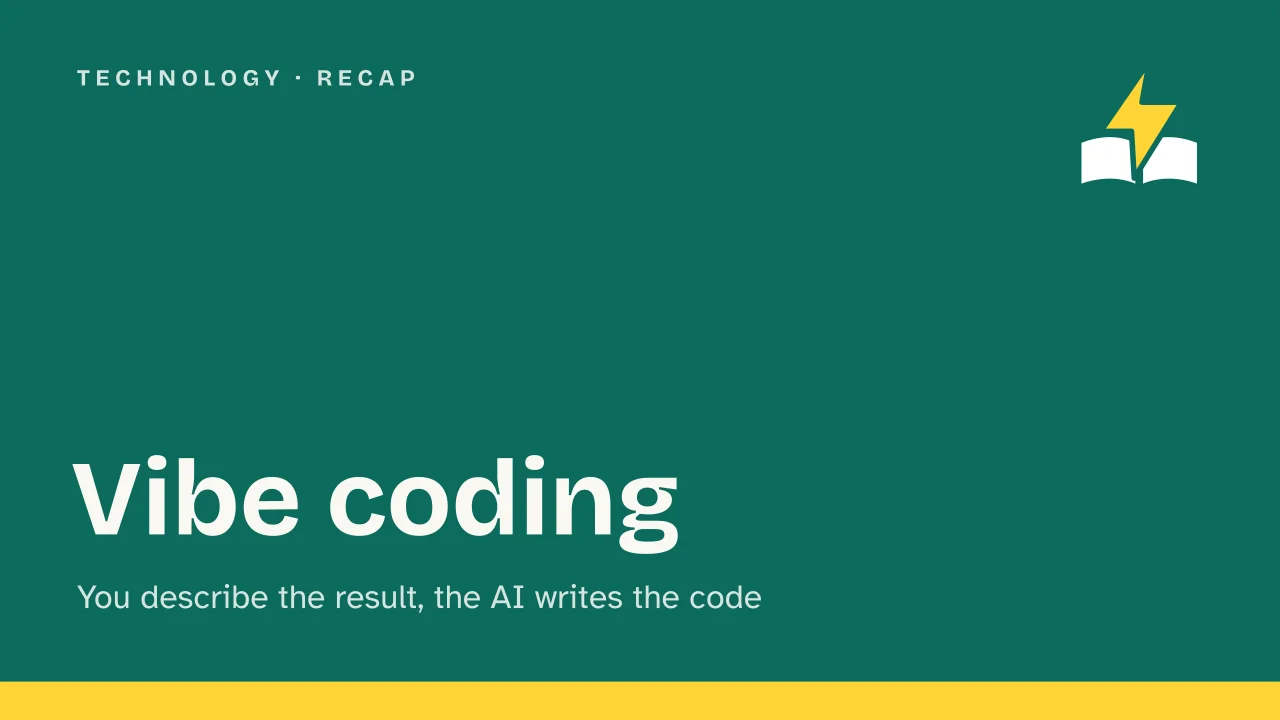
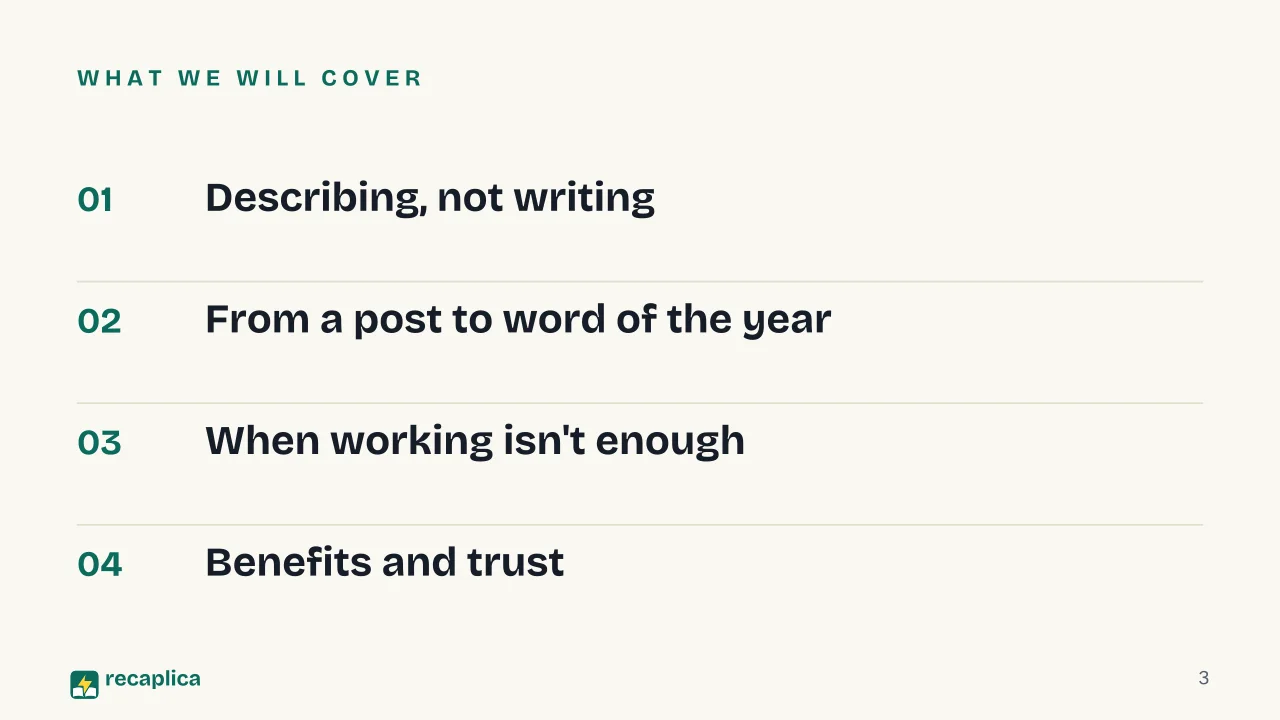
    Slide 1 of the presentation on What is vibe coding? Meaning, origin and security risks: Vibe codingSlide 2 of the presentation on What is vibe coding? Meaning, origin and security risks: What happens when nobody reads the diffs anymore?Slide 3 of the presentation on What is vibe coding? Meaning, origin and security risks: What we will coverSlide 4 of the presentation on What is vibe coding? Meaning, origin and security risks: Chapter 01: Describing, not writingSlide 5 of the presentation on What is vibe coding? Meaning, origin and security risks: How the work goes, in three movesSlide 6 of the presentation on What is vibe coding? Meaning, origin and security risks: Where the line fallsSlide 7 of the presentation on What is vibe coding? Meaning, origin and security risks: Chapter 02: From a post to word of the yearSlide 8 of the presentation on What is vibe coding? Meaning, origin and security risks: From a post to the dictionarySlide 9 of the presentation on What is vibe coding? Meaning, origin and security risks: The AI words of 2025: Vibe coding, Slop, ClankerSlide 10 of the presentation on What is vibe coding? Meaning, origin and security risks: Chapter 03: When working isn't enoughSlide 11 of the presentation on What is vibe coding? Meaning, origin and security risks: Carnegie Mellon University's SusVibes benchmarkSlide 12 of the presentation on What is vibe coding? Meaning, origin and security risks: Passing the tests doesn't mean being secure.Slide 13 of the presentation on What is vibe coding? Meaning, origin and security risks: In the code · Secrets · SlopsquattingSlide 14 of the presentation on What is vibe coding? Meaning, origin and security risks: Chapter 04: Benefits and trustSlide 15 of the presentation on What is vibe coding? Meaning, origin and security risks: Who benefits, according to Tobin SouthSlide 16 of the presentation on What is vibe coding? Meaning, origin and security risks: The gap in Cloud Security Alliance dataSlide 17 of the presentation on What is vibe coding? Meaning, origin and security risks: What characterizes vibe coding, by the original definition?Slide 18 of the presentation on What is vibe coding? Meaning, origin and security risks: And now, the review
    Flash10 slidesThe essential thread, to present in classFull18 slidesEvery chapter and the deeper detail

    Common myths

    • ✗ Myth Vibe coding is just another name for "programming with the help of ChatGPT or GitHub Copilot."

      ✓ Reality Not by the term's original definition. MIT Technology Review draws a clear line between the two: using an AI assistant to complete or refactor code you understand and review is classic AI-assisted coding; "true" vibe coding, as Karpathy described it, means letting the AI take full control and refraining from checking the diffs it generates. The difference lies in the degree of review, not the tool used.

    • ✗ Myth If AI-generated code works and passes its tests, that means it's also secure.

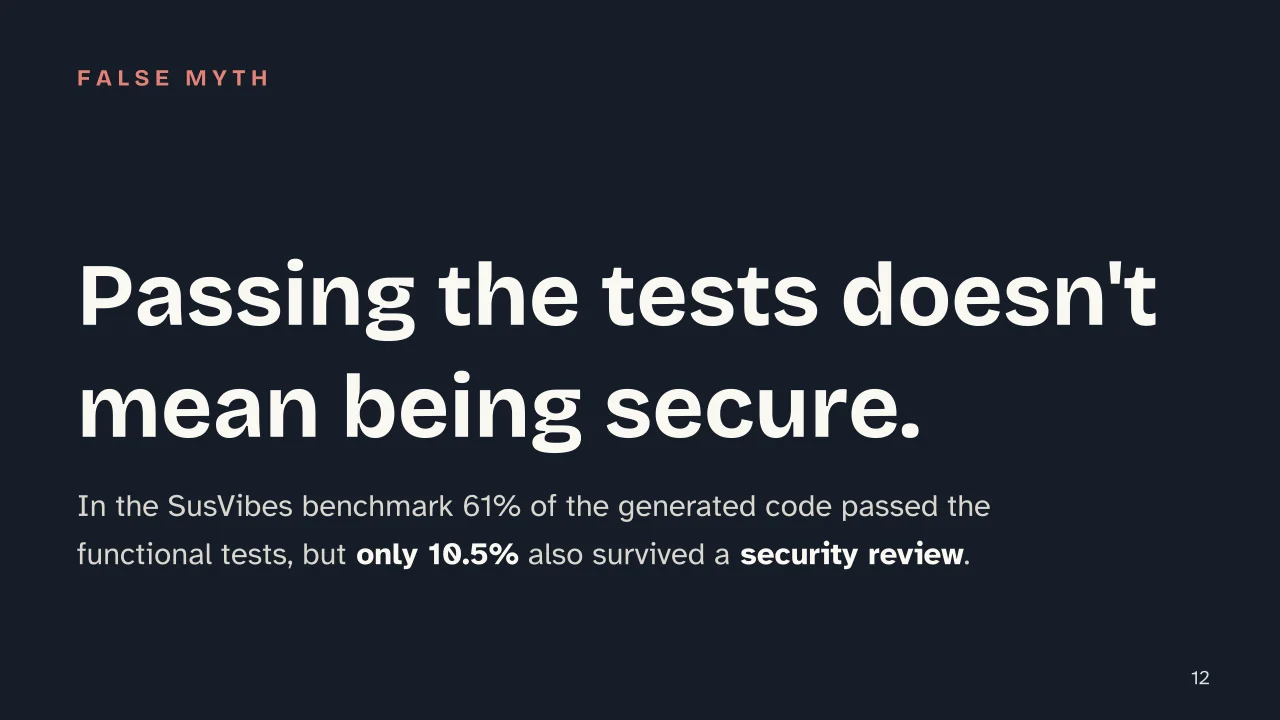
      ✓ Reality The data says otherwise. In Carnegie Mellon University's SusVibes benchmark, 61% of the code produced by an AI agent passed functional tests, but only 10.5% also survived a security review: out of ten features that work, roughly nine carry at least one exploitable vulnerability. Passing tests tells you whether the code does what it should, not whether it does it securely.

    • ✗ Myth Developers trust AI-written code because, in practice, it turns out more reliable than code written by humans.

      ✓ Reality Data from the Cloud Security Alliance points the other way: in the same period AI coding tool use rose to 91% of surveyed developers, their trust in AI accuracy fell from 40% to 29% in a year, and 66% say they now spend more time fixing AI-generated code that looks almost right but isn't. More use hasn't come with more trust — it's come with more chances to find out the code still needs checking.

    Mind map

    Drag the background to move around and the nodes to reposition them; use − and + to collapse and expand branches.
    Customize
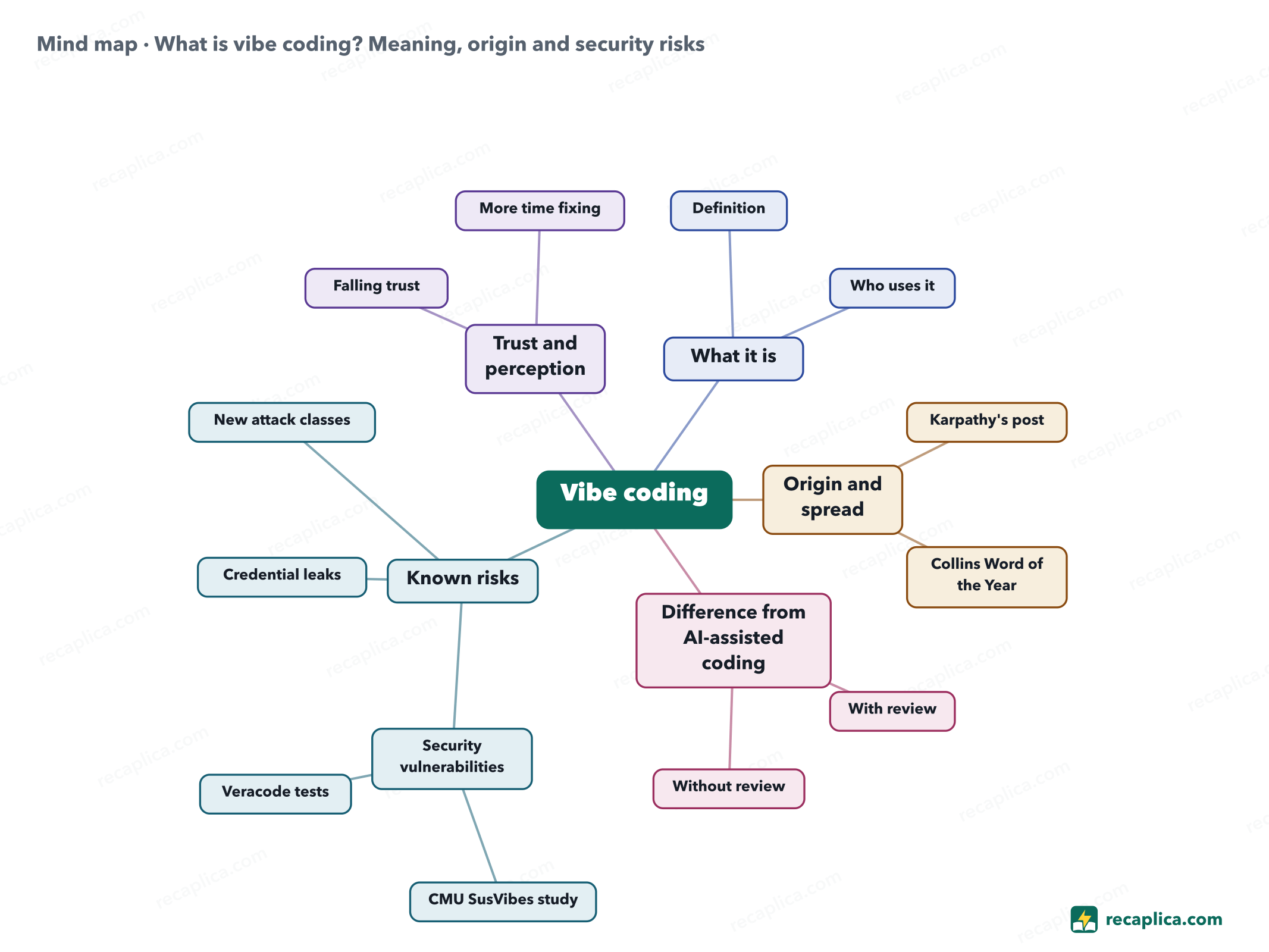
    Mind map: What is vibe coding? Meaning, origin and security risks
    • Vibe coding
      • What it is
        • Definition Describing a goal in plain language and accepting the AI's code without reviewing the diffs.
        • Who uses it Experienced programmers and absolute beginners, according to Tobin South (MIT Media Lab).
      • Origin and spread
        • Karpathy's post 2 February 2025, over 4.5 million views.
        • Collins Word of the Year Named on 6 November 2025.
      • Difference from AI-assisted coding
        • With review Completing code you understand, e.g. with GitHub Copilot.
        • Without review Accepting the AI's output without reading the diffs.
      • Known risks
        • Security vulnerabilities
          • CMU SusVibes study 61% working, only 10.5% secure.
          • Veracode tests 45% of tasks introduce a vulnerability.
        • Credential leaks 28.65 million secrets on GitHub in 2025.
        • New attack classes Slopsquatting and backdoors in configuration files.
      • Trust and perception
        • Falling trust From 40% to 29% year over year, per CSA.
        • More time fixing 66% of developers fix "almost right" AI code, per CSA.

    Quiz: test yourself

    Answer the questions to check what you have learned: you get instant feedback and a short explanation.

    Grade 0/10 0/5
    1 According to Andrej Karpathy's original definition, what really characterizes vibe coding?

    Karpathy described vibe coding as "see stuff, say stuff, run stuff, and copy paste stuff": you rely on the AI completely and stop checking the changes it proposes. It's that surrendered review, not simply using an AI, that defines "pure" vibe coding.

    2 Who coined the term "vibe coding," and when?

    The term comes from a post by Andrej Karpathy, an OpenAI co-founder and former Tesla AI director, published on X (Twitter) on 2 February 2025. Collins Dictionary only named it Word of the Year months later, on 6 November 2025 — it didn't invent it.

    3 What's the main difference between vibe coding and classic AI-assisted coding (such as autocompletion in GitHub Copilot)?

    According to MIT Technology Review, using a tool like GitHub Copilot to complete or refactor code you already understand is classic AI assistance; vibe coding, by its original definition, instead means accepting the AI's output without really reading the diffs it changes.

    4 True or false: if AI-generated code passes functional tests (meaning it "works"), that also means it's secure.

    False: in Carnegie Mellon University's SusVibes benchmark, 61% of the generated code passed functional tests, but only 10.5% also passed a security review. Working and being secure are two separate things, and the gap between them can be wide.

    5 What did Collins Dictionary do on 6 November 2025 regarding the term "vibe coding"?

    Collins Dictionary chose "vibe coding" as its Word of the Year 2025, defining it as "the use of artificial intelligence prompted by natural language to write computer code." Around the same time, Merriam-Webster picked "slop" as its own word of the year — two separate editorial choices.

    Answers: 1-A · 2-A · 3-A · 4-B · 5-A

    Flashcards

    Tap the card to flip it and check whether you remember the answer, then move to the next one.

    1 / 8

    Explain it in your own words

    The ultimate test: if you can explain it in simple words, you've truly understood it. Write your explanation, then compare it with the Recap.

    Your explanation is saved only on this device.

    Vibe coding is a way of programming where you describe, in speech or writing and in plain language, the result you want, and let an artificial intelligence model write (and often run) the code for you, accepting its output with little or no review. Andrej Karpathy coined the term on 2 February 2025, and it caught on so widely that Collins Dictionary named it Word of the Year 2025. It's distinct from simply using an AI assistant to complete code you already understand: in vibe coding, by the original definition, you stop reading the diffs line by line. Several independent studies report that this way of working raises the risk of security vulnerabilities and leaked credentials in the resulting code.

    Frequently asked questions

    What is vibe coding, in plain terms?

    It's a way of programming where you describe to an artificial intelligence, in plain language, what you want to achieve, and let it write (and often run) the code, accepting the output with little or no review. The term was coined by Andrej Karpathy on 2 February 2025.

    Are vibe coding and using an AI assistant to program the same thing?

    No. Using an assistant like GitHub Copilot to complete functions you already understand, while checking what it produces, is classic "AI-assisted coding." Vibe coding, in Karpathy's original definition, instead means giving up on reviewing the diffs and trusting the AI's output almost blindly.

    Is code written with vibe coding secure?

    Several independent studies suggest not, at least not without extra checks. Carnegie Mellon University's SusVibes benchmark found that only 10.5% of AI agent-generated code that passed functional tests also survived a security review; Veracode tests indicate that 45% of development tasks handed to an AI introduce vulnerabilities.

    Where does the name "vibe coding" come from?

    From a post published on X (Twitter) by Andrej Karpathy on 2 February 2025, describing his own way of programming while relying almost entirely on an AI assistant. The post went viral, passing 4.5 million views according to converging secondary sources, and on 6 November 2025 Collins Dictionary named it Word of the Year.

    Who benefits most from vibe coding?

    According to Tobin South, a researcher at the MIT Media Lab, mostly two opposite kinds of people: experienced programmers capable of spotting and fixing the AI's mistakes, and absolute beginners who have a clear idea but wouldn't know how to turn it into code on their own.

    Sources

    • Andrej Karpathy, post on X (coining of the term, 2 February 2025)
    • MIT Technology Review — What is vibe coding, exactly?
    • Collins Dictionary — Collins' Word of the Year 2025
    • Cloud Security Alliance — Vibe Coding Security Crisis: Credential Sprawl and SDLC Debt

    Every Recap goes through an independent review before publication.

    Every evening, the day's new Recaps on our Telegram channel. Join the channel →

    Keep learning

    • Technology SEO, AEO and GEO: What Are They? SEO, AEO and GEO are three acronyms for three different ways of getting found online. SEO, Search Engine Optimization, works to get a page to rank higher in a traditional list of search results. AEO, Answer Engine Optimization, aims at a different target: appearing directly inside an answer, such as a voice reply or an answer box, with no click required. GEO, Generative Engine Optimization, is the newest of the three and covers visibility inside the text an AI system generates when it summarizes a topic. Google itself says the fundamentals of SEO still hold for showing up in its AI-powered search features. Read the Recap →
    • Technology ASCII Table: What Is It? The ASCII table assigns a fixed number to every letter, digit, punctuation mark, and keyboard control command, so that a computer, which only handles numbers, can represent text. Published in 1963 by the ANSI X3.4 committee and adopted for U.S. federal computers in 1968, it uses 7 bits and covers 128 characters, almost all of them from the English alphabet, according to the IEEE's Engineering and Technology History Wiki. RFC 20 shows how those 7 bits fit neatly inside an 8-bit byte, with the highest bit left unused; putting that extra bit to work opens up more combinations, the basis for the variants known as Extended ASCII. Because it only covers English, though, standard ASCII falls short for languages with accents, ideograms, or other alphabets — a gap Unicode was built to close. Read the Recap →
    • Technology Binary Code: What It Is and How Computers Write Numbers Binary code is how a computer represents numbers using only two digits, 0 and 1. The reason is physical: a computer's circuits reliably tell apart only two electrical states, current off or current on, and we label them 0 and 1 for convenience. Just like the decimal system, each digit's value depends on its position, but here positions are worth powers of two instead of powers of ten: the number 101 works out to (1×4)+(0×2)+(1×1), which is 5. Eight of these digits together form a byte, the unit a computer typically uses to hold one number. Binary alone covers numbers; writing letters needs an extra convention, such as ASCII or Unicode, covered in their own Recaps. Read the Recap →

    recaplica

    Clear in 30 seconds, yours in 10 minutes.

    Recaps Mind maps Request a Recap Telegram channel Mind map maker Our method About Privacy & cookies Legal notes & terms of use

    © 2026 Recaplica · A project by Curi S.r.l. — VAT IT05472000750

    Statistics, only if you say so

    To learn which Recaps help most we would use Google Analytics, with aggregate, anonymous data. It starts only with your OK, and you can change your mind anytime. Privacy policy