|
recaplica
What is PHP? The programming language running the web | |||||||||||||||||||||
| © 2026 Recaplica · recaplica.com — All rights reserved | |||||||||||||||||||||
What is PHP? The programming language running the webWhat to print Page numbers appear when printing with default margins. SlidesChoose a cut Flash10 slidesThe essential thread, to present in classFull18 slidesEvery chapter and the deeper detailBoth come with speaker notes. In 30 seconds quick readPHP is a programming language built for the web: the code runs on the server, not in the browser, and produces the HTML page a visitor sees. It was created in 1994 by Rasmus Lerdorf, who wanted to track visits to his own online résumé, and in 2026 it is the most widely used server-side technology in the world. It has gone through several major versions — with the curious exception of the sixth, which never shipped — up to the PHP 8, the major version in use in 2026 — far more modern than its reputation as an old language suggests. From WordPress to Facebook, and frameworks like Laravel and Symfony, PHP remains everywhere beneath the surface of the web. Key Points
Key figures
Deep DiveA language that works behind the scenesWhen you open a page built with WordPress, you’re not reading PHP code: you’re reading its output. PHP (a recursive acronym for “PHP: Hypertext Preprocessor”) is a server-side scripting language, built specifically for web development and embeddable directly into HTML. The official manual draws a sharp line between it and a client-side language like JavaScript: PHP code runs on the server, which generates the HTML and sends it to the browser. Visitors receive the result, never the instructions that produced it. To work in its most common setup, PHP needs three pieces: a PHP parser, a web server and a browser to receive the output. There’s also a command-line mode, with no server or browser involved, used for scheduled tasks or for processing plain text. What it can actually doThe list of PHP’s capabilities explains why it became the de facto standard for dynamic websites: it collects data from forms, generates different content on every visit, handles cookies and sessions, produces files in various formats (images, PDFs), encrypts data, sends email, talks to a wide range of databases (MySQL, PostgreSQL and others), processes text with regular expressions, and handles network protocols like HTTP, IMAP or LDAP. It runs on every major operating system and with most modern web servers, from Apache to nginx. A taste of the syntax, without turning into a courseYou don’t need to know how to code to understand PHP, but a couple of
details help you recognize it when you see it. Variables always start
with a dollar sign, followed by a name that must begin with a letter or
underscore; they’re also case-sensitive, so
From a programmer’s résumé to half the webPHP was born in 1994 out of a small, concrete need: Rasmus Lerdorf wanted to know who was visiting his online résumé, so he wrote some scripts he called “Personal Home Page Tools.” In June 1995 he published the source code; within months the project changed names a few times before merging into “PHP/FI.” By 1998, when version 3 came out, nearly 60,000 domains were already using PHP — roughly 1% of all domains at the time — and with the announcement of the new version, rewritten by Andi Gutmans and Zeev Suraski, that number climbed to about 70,000. From there, growth never really stopped, version after version:
The empty row for PHP 6 isn’t a typo: the project aimed for deep Unicode support built into the language’s own engine, but it was abandoned because of the performance problems that came with it. Some of the ideas planned for that version — namespaces, for instance — made it into PHP 5.3 and 5.4 anyway, before development jumped straight to version 7. Who uses PHP in 2026 (and who built on top of it)According to W3Techs, as of September 2026, 70.2% of websites whose server-side language is known are written in PHP, with Facebook, Wikipedia, WordPress and some Microsoft subdomains among the well-known names that use it. Among PHP sites, version 8 is already the majority (63.4%), followed by version 7 (28.6%) and a long tail of older releases. On top of the language, frameworks have grown up to structure its use in large projects: Laravel, described by its official site as a “batteries-included” PHP framework, meaning most of the tools you need come ready to use, and Symfony, which bills itself as a “full-stack” framework and has passed 41 billion downloads according to its own site. Symfony also provides reusable components picked up by other projects: Laravel itself integrates several of them, and so does Drupal. Old by reputation, current in practicePHP’s image is still often that of a 2000s-era language, good at best for running a blog. The numbers tell a different story: it remains by far the most widely used server-side technology, and version 8 brought a JIT compiler and a much stricter type system than its origins would suggest: the usage numbers describe a language quite different from the one its reputation suggests. Slide deckSlides ready to download and make your own in PowerPoint or Google Slides, with speaker notes. Pick the Flash cut or the Full one.     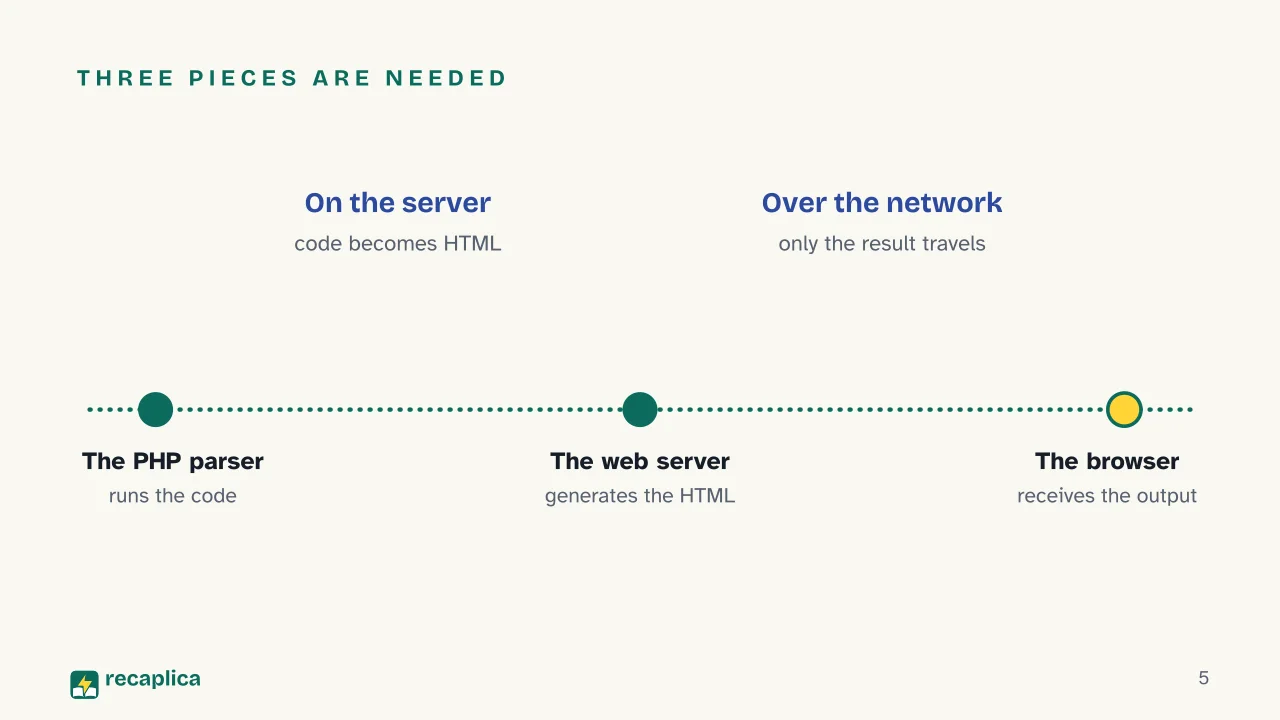 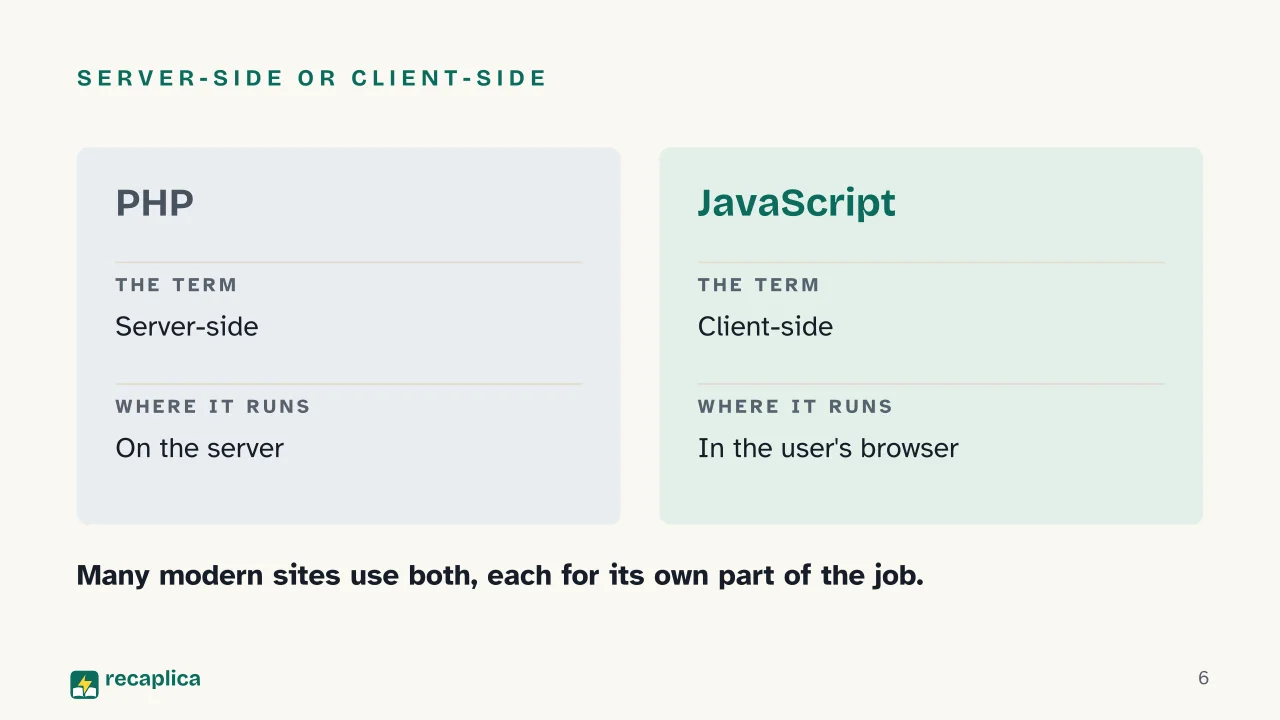 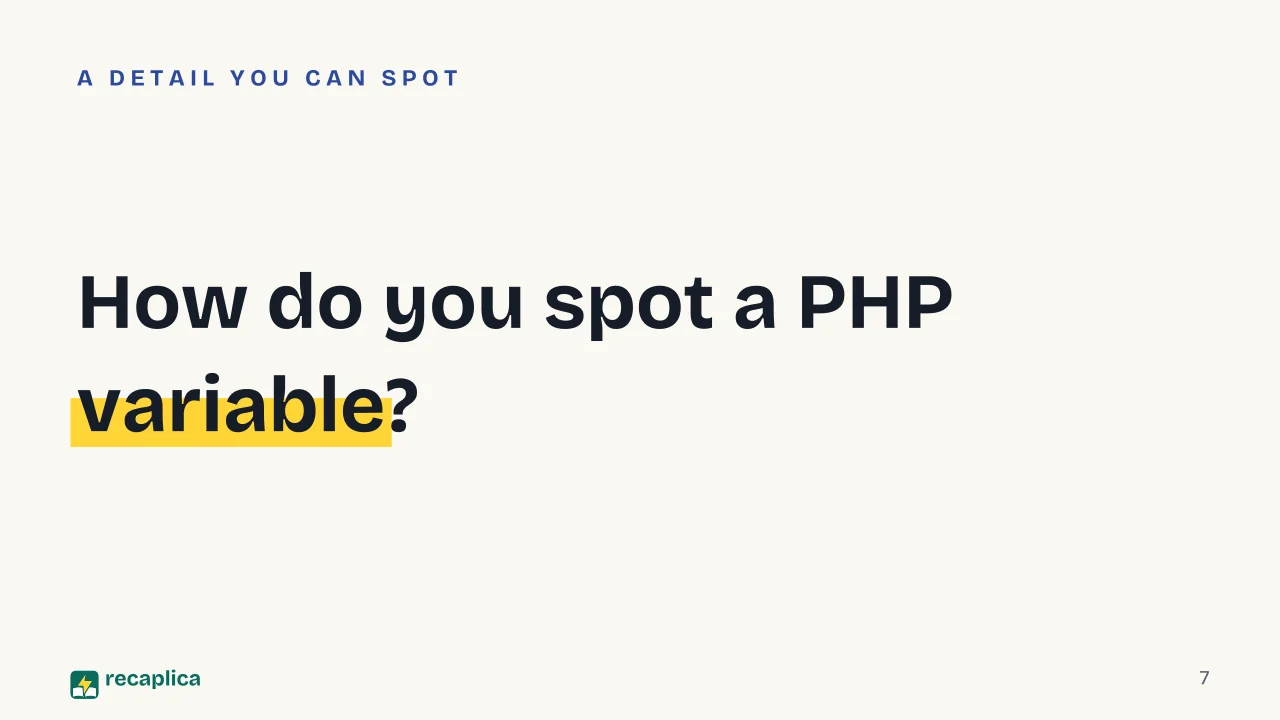  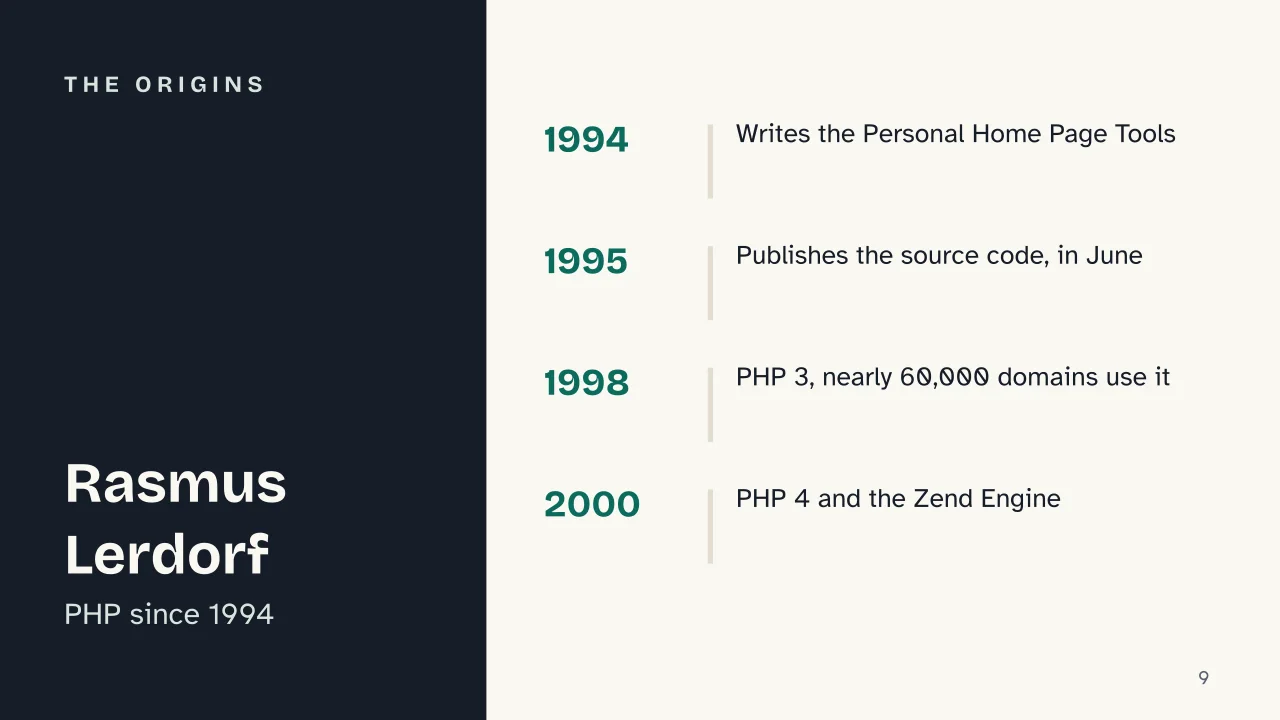 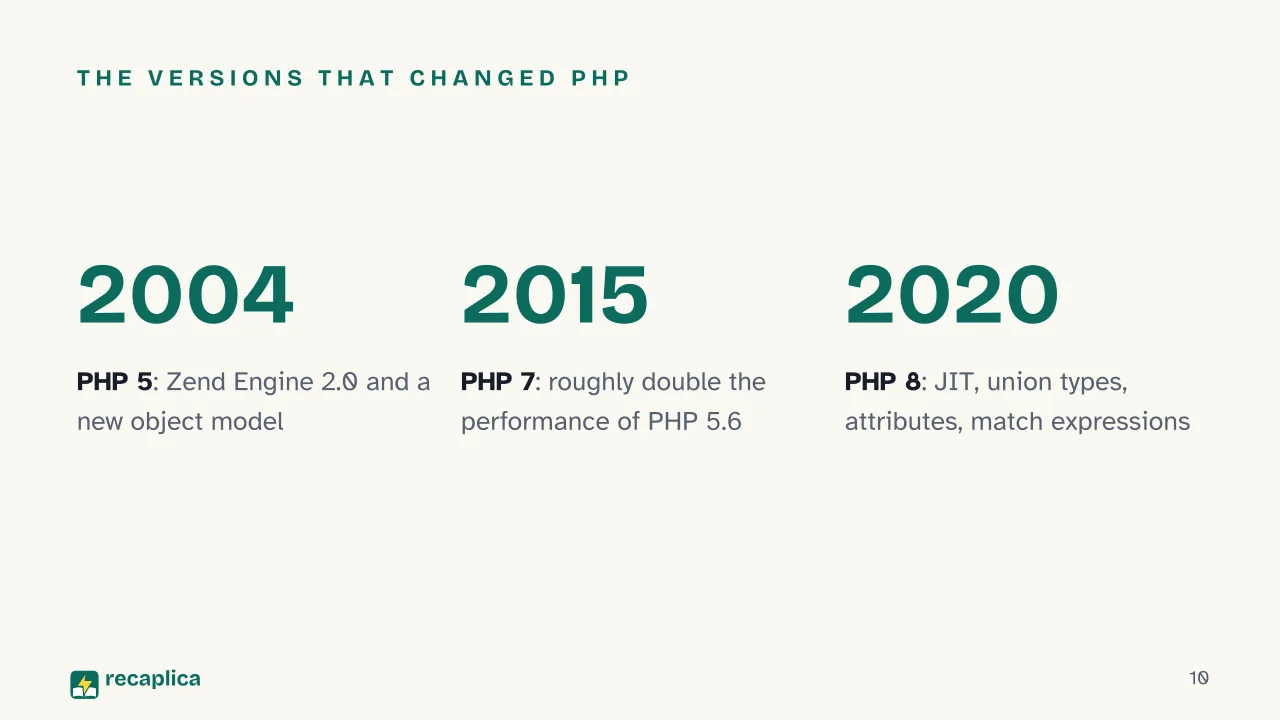 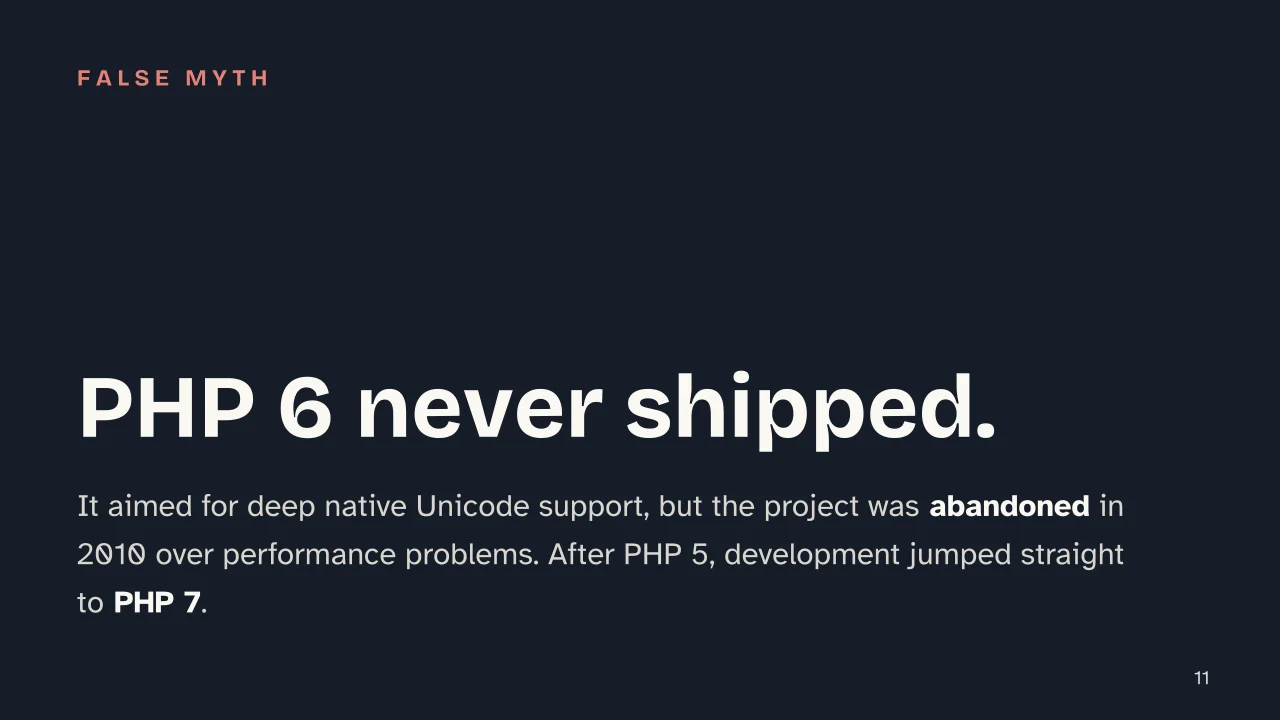  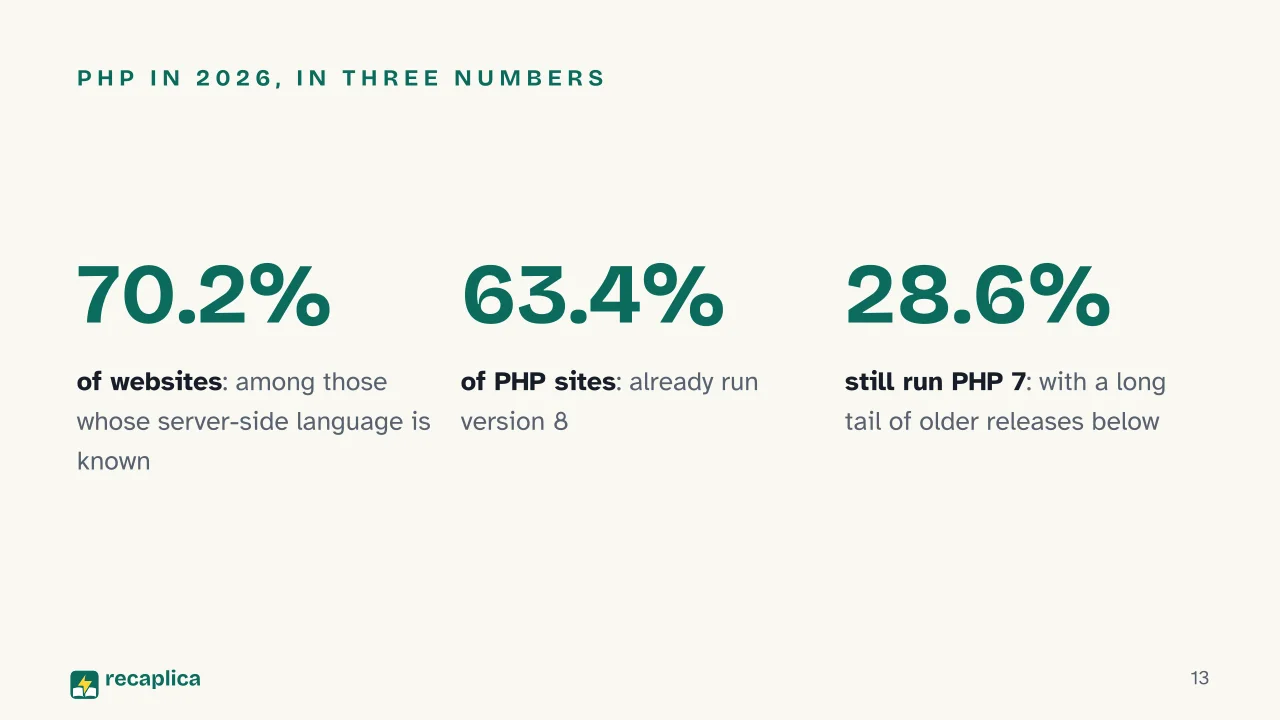 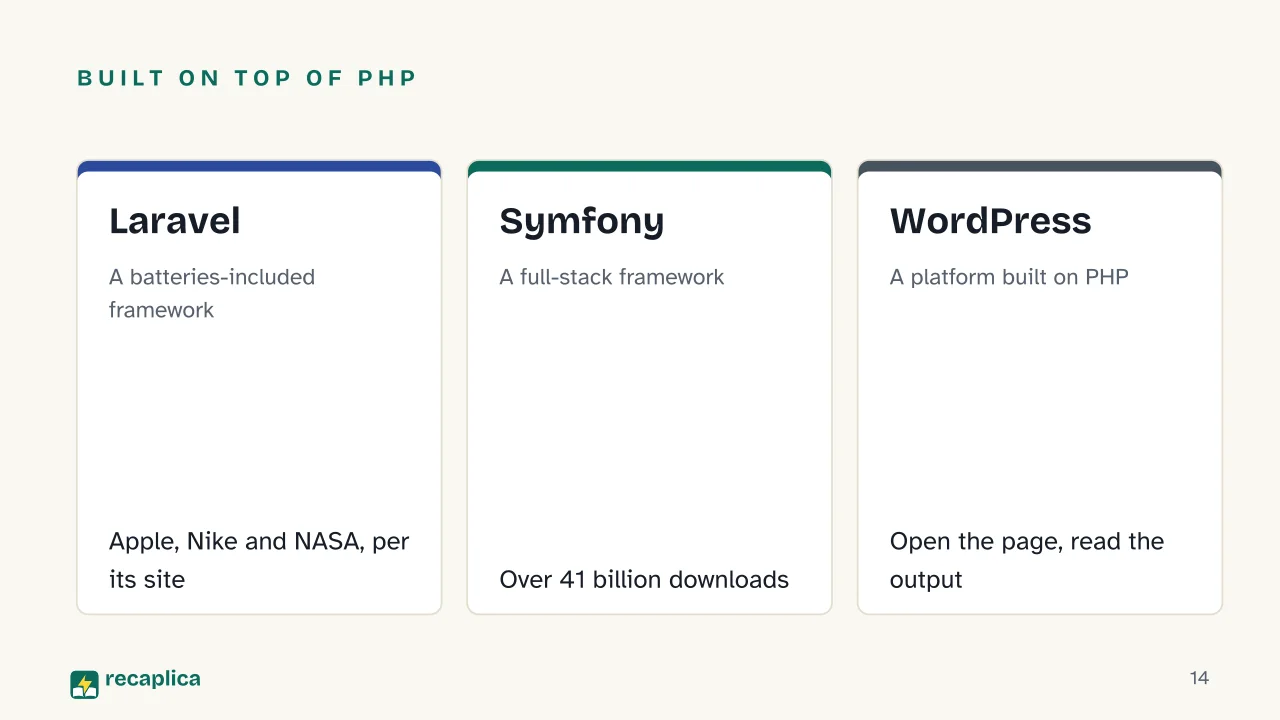  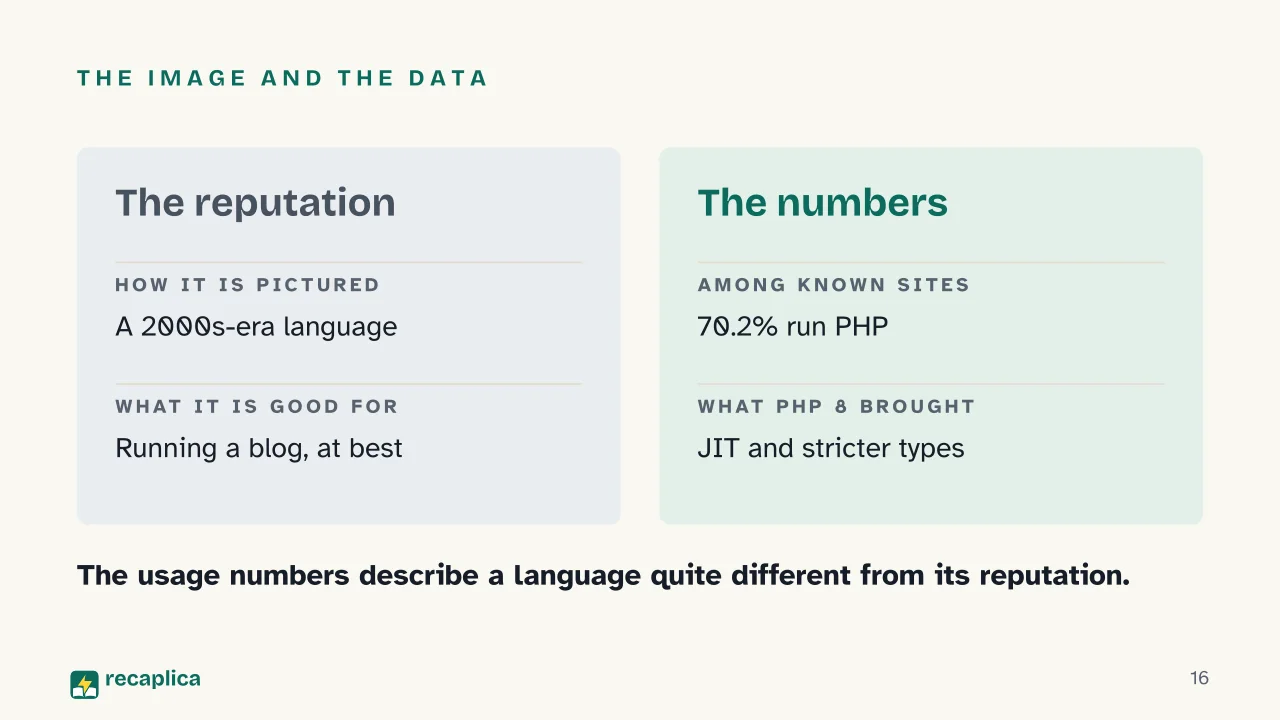 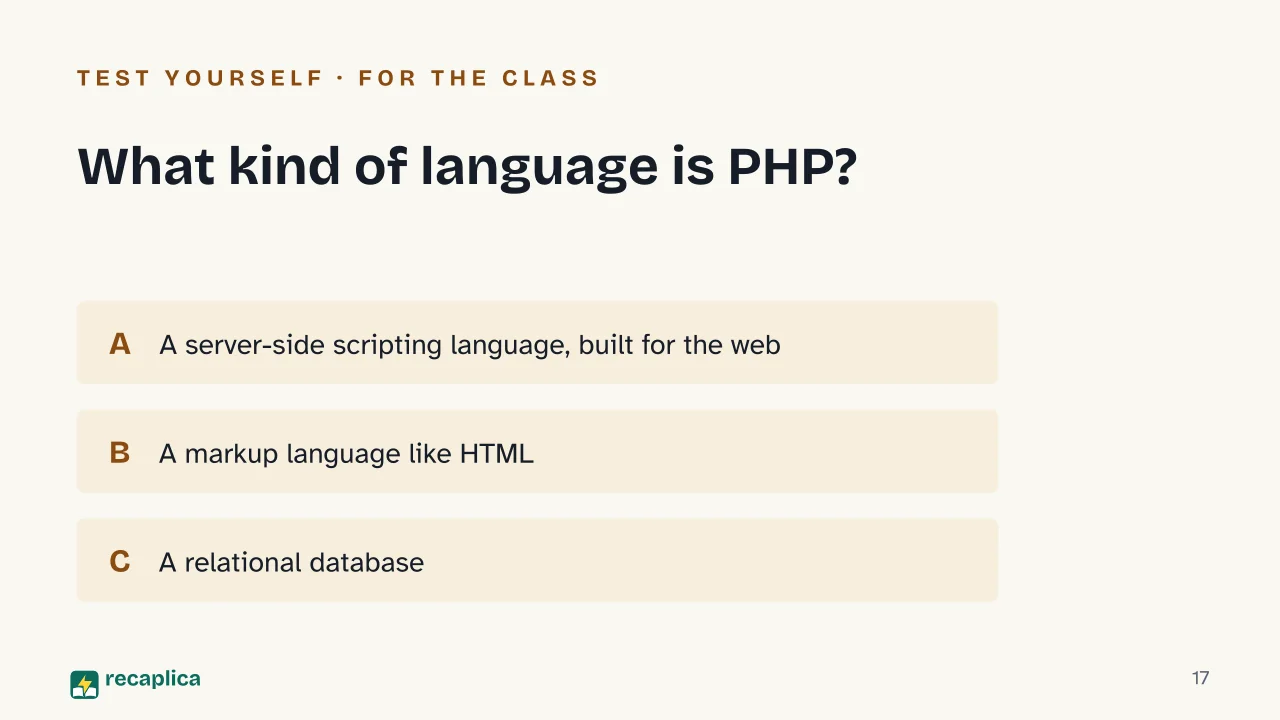  Common myths
Mind mapDrag the background to move around and the nodes to reposition them; use − and + to collapse and expand branches. 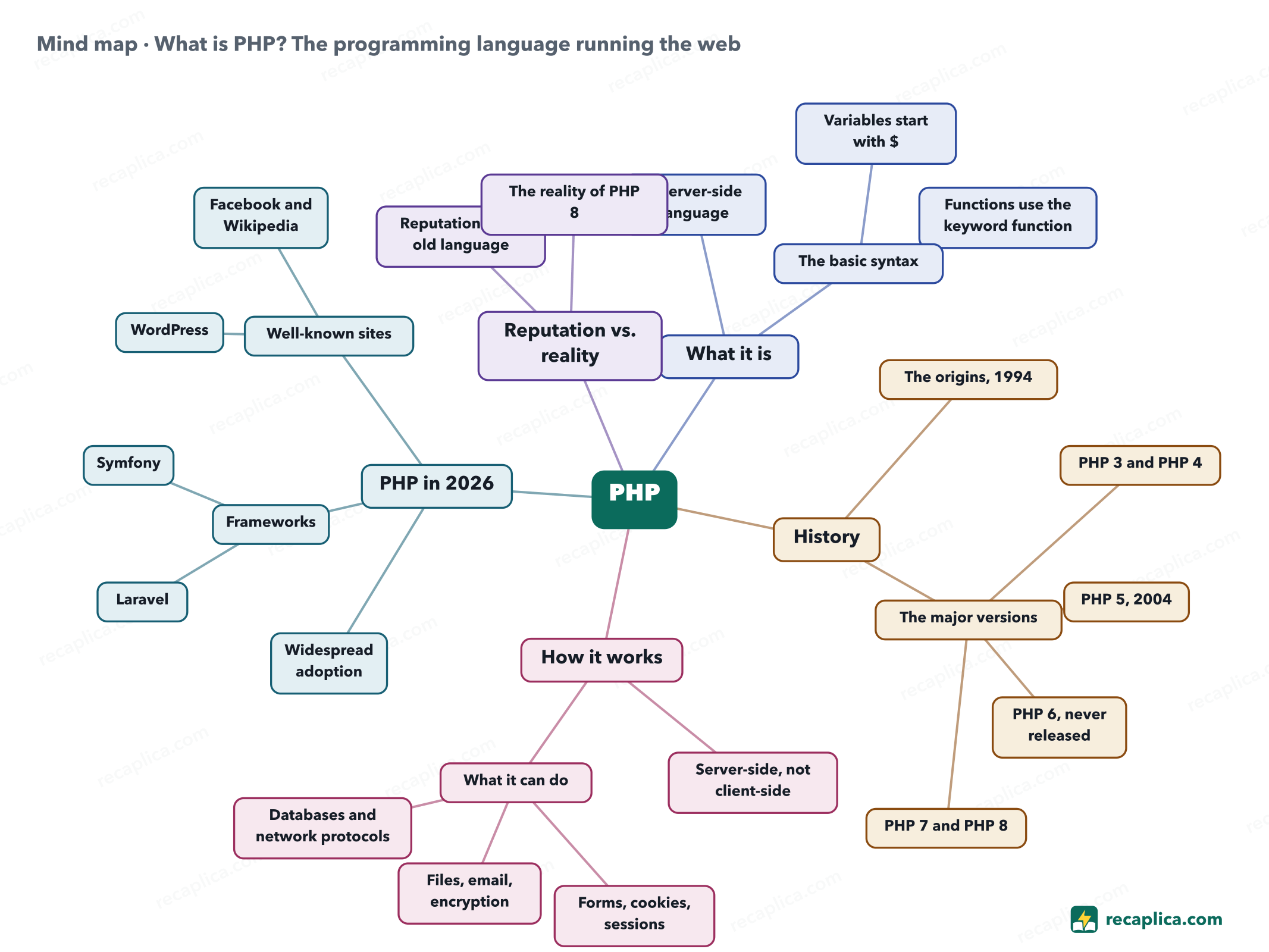
Quiz: test yourselfAnswer the questions to check what you have learned: you get instant feedback and a short explanation. Grade 0/10 0/5
FlashcardsTap the card to flip it and check whether you remember the answer, then move to the next one. 1 / 7 Explain it in your own wordsThe ultimate test: if you can explain it in simple words, you've truly understood it. Write your explanation, then compare it with the Recap. Your explanation is saved only on this device.
Frequently asked questionsIs PHP still used in 2026?Yes, and it's the most widely used server-side technology: according to W3Techs, as of September 2026, 70.2% of websites whose server-side language is known are written in PHP, with version 8 already the majority among them (63.4%). What's the difference between PHP and JavaScript?PHP is server-side: the code runs on the server and produces the HTML that arrives ready-made in the browser, without the user ever seeing the original instructions. JavaScript, in its most familiar form, is client-side: it runs directly in the user's browser. Many modern sites use both, each for its own part of the job. What do you need to run a PHP script?In the most common setup, a web server with the PHP parser installed and a browser to receive the result. PHP can also run from the command line, without a server or browser, for example for scheduled tasks or plain text processing. What is Laravel?Laravel is a PHP framework for building web applications, described by its official site as 'batteries-included', meaning most of the tools you need come ready to use. Companies like Apple, Nike and NASA use it, according to the project's official site. What does the acronym PHP stand for?PHP is a recursive acronym for 'PHP: Hypertext Preprocessor'. Its original name, back when it was created in 1994, was 'Personal Home Page Tools'. Every Recap goes through an independent review before publication. |