|
recaplica
Winter: Why It Happens and How the Season Works | ||||||||||||
| © 2026 Recaplica · recaplica.com — All rights reserved | ||||||||||||
Winter: Why It Happens and How the Season WorksWhat to print Page numbers appear when printing with default margins. SlidesChoose a cut Flash10 slidesThe essential thread, to present in classFull19 slidesEvery chapter and the deeper detailBoth come with speaker notes. In 30 seconds quick readWinter is the coldest season of the year, falling between autumn and spring, and it exists because of the tilt of Earth's axis, not because of the planet's distance from the Sun: during the Northern Hemisphere's winter, Earth is actually at the closest point in its orbit to the Sun. Its astronomical marker is the winter solstice, the day with the fewest hours of daylight and the longest night of the year, which falls in December in the Northern Hemisphere and in June in the Southern Hemisphere. Lower temperatures, rainfall and snow depend on how cold and atmospheric moisture combine. The human body responds to the season too, with a possible dip in mood linked to shorter daylight hours and, after prolonged exposure to cold, a risk of hypothermia. Key Points
Key figures
Deep DiveWhy winter happens, and why it has nothing to do with distance from the SunWinter is not caused by the distance between Earth and the Sun: it is caused by the tilt of Earth’s axis, an angle of about 23.4 degrees relative to the plane of its orbit. As the planet circles the Sun over the course of a year, that tilt means each hemisphere receives sunlight more or less directly depending on the time of year: when a hemisphere is tilted toward the Sun, its rays arrive nearly perpendicular to the ground and concentrate more energy over the same surface area, producing summer; when the same hemisphere is tilted away from the Sun, the rays arrive at a shallower angle, spread out over a wider area and warm the ground less, producing winter. The fact that debunks the most common misconception is, fittingly, an orbital one. According to NASA, Earth traces a slightly elliptical orbit around the Sun, and at its closest point, perihelion, it sits about 91.4 million miles from the star; at its farthest point, aphelion, the distance rises to about 94.5 million miles. The Northern Hemisphere passes through perihelion during its own winter, and through aphelion during its own summer: if cold depended on distance, those months should see the opposite happen. That said, the difference between the two distances is small relative to the average Earth-Sun distance. So where does that 23.4-degree tilt come from? Here the science moves from certainty into hypothesis: one of the most widely accepted explanations, reported by NASA, concerns the early Solar System. When Earth was young, a large celestial body known as Theia is thought to have struck it with enough force to knock its axis out of its original alignment. That remains a hypothesis about the tilt’s origin, not an established fact on the same footing as the measurement of the tilt itself. The winter solstice, in both hemispheresThe astronomical marker of winter is the solstice. According to the National Weather Service, there are only two moments each year when Earth’s axis is tilted neither toward nor away from the Sun: the equinoxes, when daylight and darkness are distributed almost equally across all latitudes. In the months between one equinox and the next, the tilt toward or away from the Sun instead grows to a maximum: that maximum is the solstice. The summer solstice marks the day with the most hours of daylight in the year; the winter solstice, at the opposite extreme, marks the day with the fewest hours of daylight and the longest night. In the Northern Hemisphere, the winter solstice arrives when the Sun, as seen from Earth, sits directly over the Tropic of Capricorn, at 23.5 degrees south latitude: in 2026 that falls on December 21, at 3:50 p.m., US Eastern time, according to the Old Farmer’s Almanac. In the Southern Hemisphere the opposite happens: winter arrives when the Sun is farther north, directly over the Tropic of Cancer, and in 2026 the corresponding solstice falls on June 21, at 08:25 GMT according to timeanddate.com — the same instant summer begins in the other hemisphere. According to Britannica, the astronomical winter season in the Southern Hemisphere runs roughly from June 21 or 22 to September 22 or 23.
Cold, rain and snow: winter’s signature phenomenaThe most visible consequences of winter are lower temperatures, a shift in rainfall patterns and, where conditions allow, snow. Cold alone is not enough to produce snow: according to the National Snow and Ice Data Center, snow is precipitation that forms when water vapour freezes directly, skipping the liquid stage entirely, a process that happens below 0°C. Once formed, the ice crystal grows by absorbing more water vapour from the surrounding air until it becomes a full snow crystal, or flake, which then falls to the ground: it is one of the many transformations in the water cycle, the same mechanism that governs rain and evaporation throughout the year. Alongside the cold, enough atmospheric moisture is also needed. In warm, humid places like Florida there is no shortage of moisture in the air, but temperatures rarely drop low enough; in many deserts, winter brings cold but the air is too dry. When fresh, clean snow does form, it has a few physical properties that are not immediately obvious: it reflects a substantial share of the sunlight that hits it, sending it back toward space; it dampens sound, because the fresh layer absorbs sound waves; and it looks white, but is actually translucent.
On the climate front, according to the World Meteorological Organization’s Global Annual to Decadal Climate Update 2026-2035, projections for 2026-2030 — not a description of “normal” winter climate, but a five-year forecast — point to conditions that tend to be wetter than average at high latitudes in the Northern Hemisphere for the next five extended winter seasons (November to March). The same report estimates that global average near-surface temperatures between 2026 and 2030 will sit between 1.3°C and 1.9°C above the 1850-1900 average, with an 86% chance that at least one of those years will surpass 2024 as the hottest year on record; Arctic temperature anomalies are expected to exceed the global average. It is a warming backdrop that adds to, without replacing, the underlying mechanism described in the article on the greenhouse effect: among the factors the report points to are more precipitation in the tropics and at high latitudes and less in subtropical zones, particularly in the Southern Hemisphere. In a sense, it is the reverse of what happens during heat waves, where it is a stalled high-pressure system, not the tilt of the axis, that traps heat in place for days or weeks. What happens to the body as the days grow shorterWinter does not just change the scenery: it shows up in mood and physiology too. The National Institute of Mental Health describes seasonal affective disorder (SAD) as a form of depression tied to the change of season, with a more common pattern that appears in late autumn or early winter and eases off by spring or summer, and a less frequent pattern running the other way. Symptoms typically last around 4-5 months a year: in milder forms they bring low mood alongside a maintained ability to care for oneself, sleep problems and reduced energy; in more severe forms they add social withdrawal, oversleeping, weight gain and a stronger craving for carbohydrate-rich foods. Studies cited by the NIMH observe reduced serotonin levels, the neurotransmitter that helps regulate mood, in people with SAD, along with a tendency that sometimes runs in families; the link between light, the brain and mood is explored further in the article on human emotions. Among the treatments the NIMH lists as existing options, not as recommendations from this article, are light therapy, psychotherapy, medication and vitamin D supplements. Prolonged cold also carries a direct physical risk: hypothermia. The CDC describes the mechanism this way, the body loses heat faster than it can produce it, stored energy runs out, and body temperature drops; once it drops too far, the brain is affected, and the person may not realize what is happening, which makes the condition especially dangerous. It does not take extreme cold: according to the CDC, hypothermia can appear even above 4°C if the body stays wet from rain, sweat or cold-water immersion, and a body temperature below 35°C calls for immediate medical care.
The National Institute on Aging adds that, in older adults, certain age-related physiological changes reduce the ability to sense a drop in body temperature, while chronic conditions such as diabetes or thyroid problems, along with certain medications — including some over-the-counter cold remedies — can weaken the body’s natural response to cold; in older populations, a body temperature of 35°C or lower can cause heart-rhythm problems, kidney trouble or liver damage. Among the measures the institute describes as part of reducing that risk are, for example, keeping indoor heating at 68-70°F (20-21°C) and limiting alcohol, which speeds the loss of body heat: guidance reported from the source, not advice from this article. Slide deckSlides ready to download and make your own in PowerPoint or Google Slides, with speaker notes. Pick the Flash cut or the Full one.     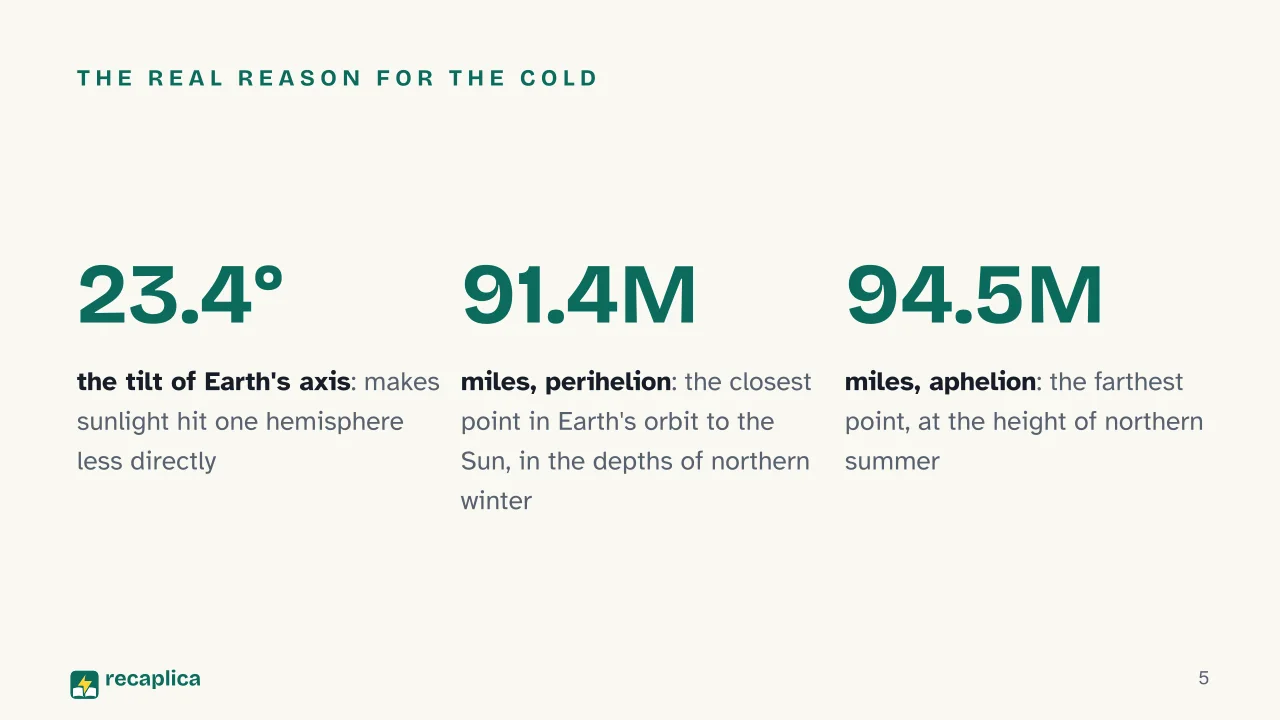   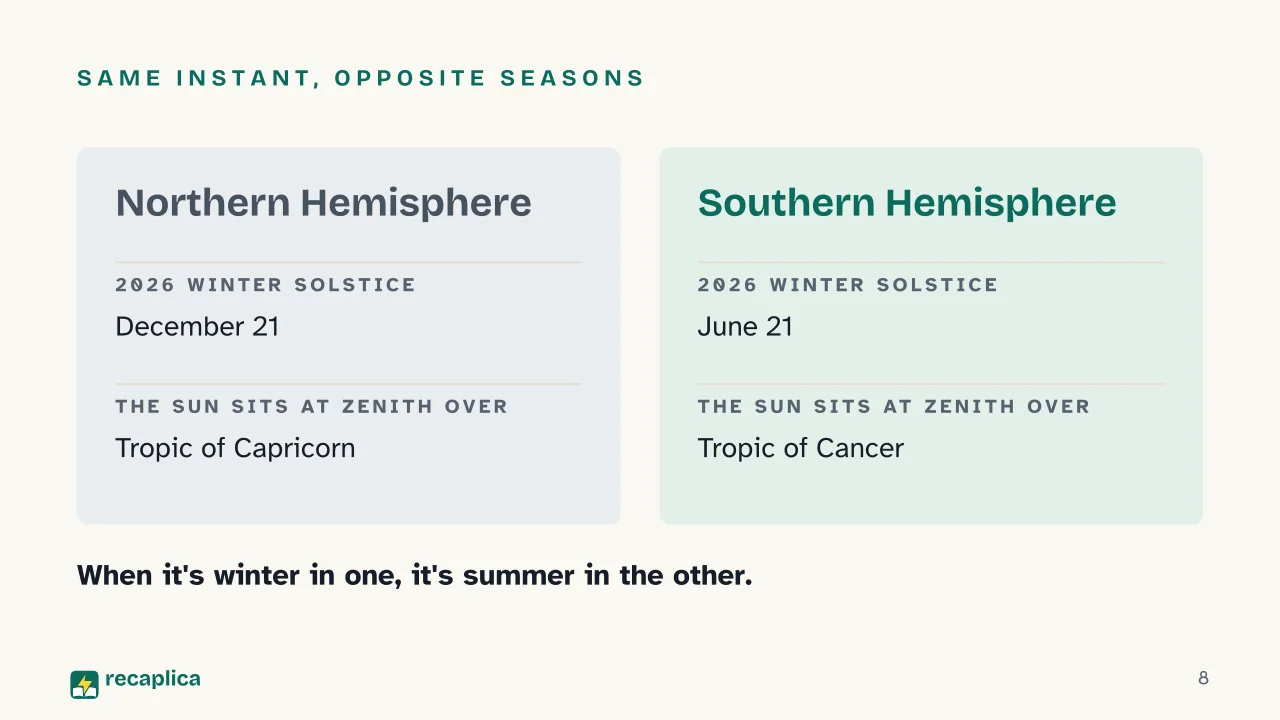 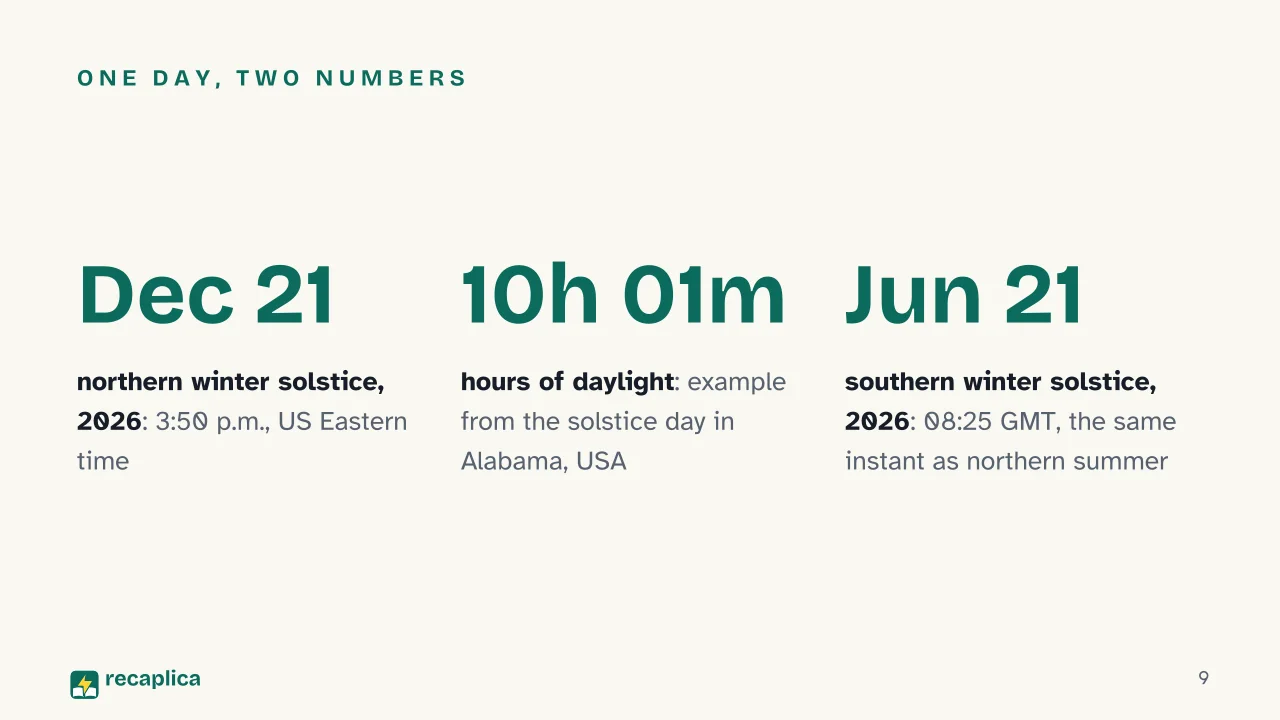  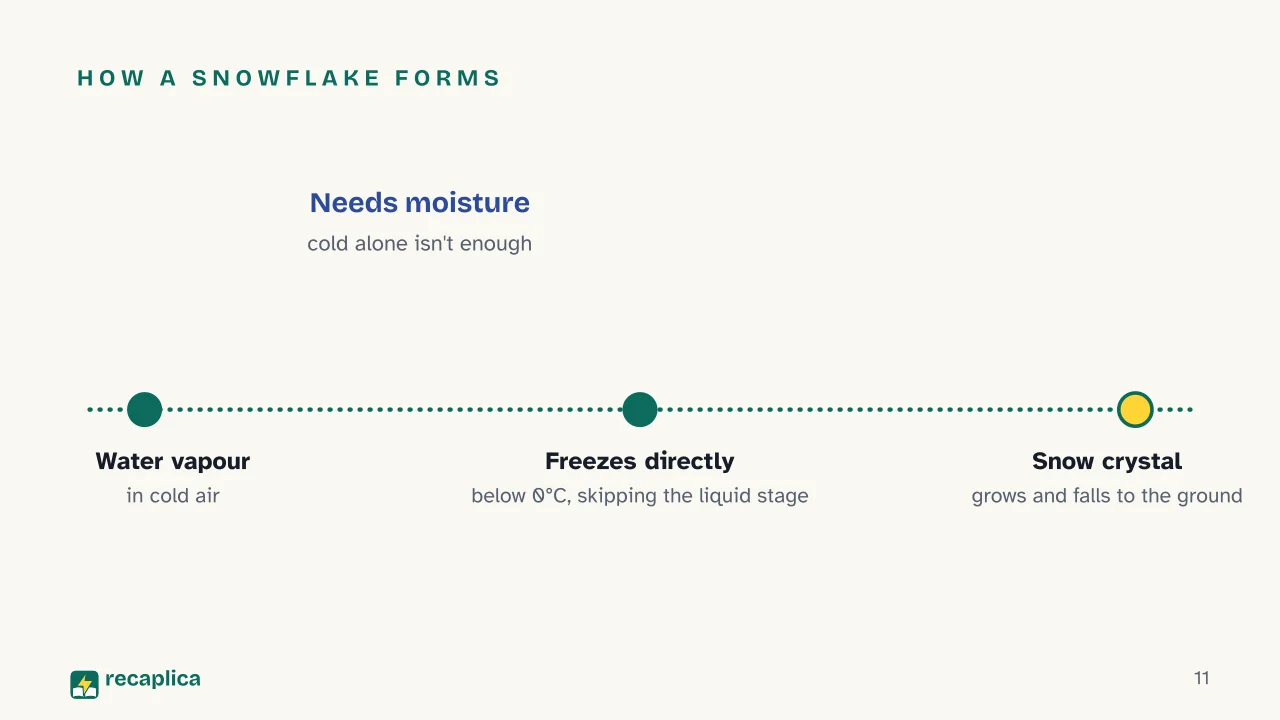 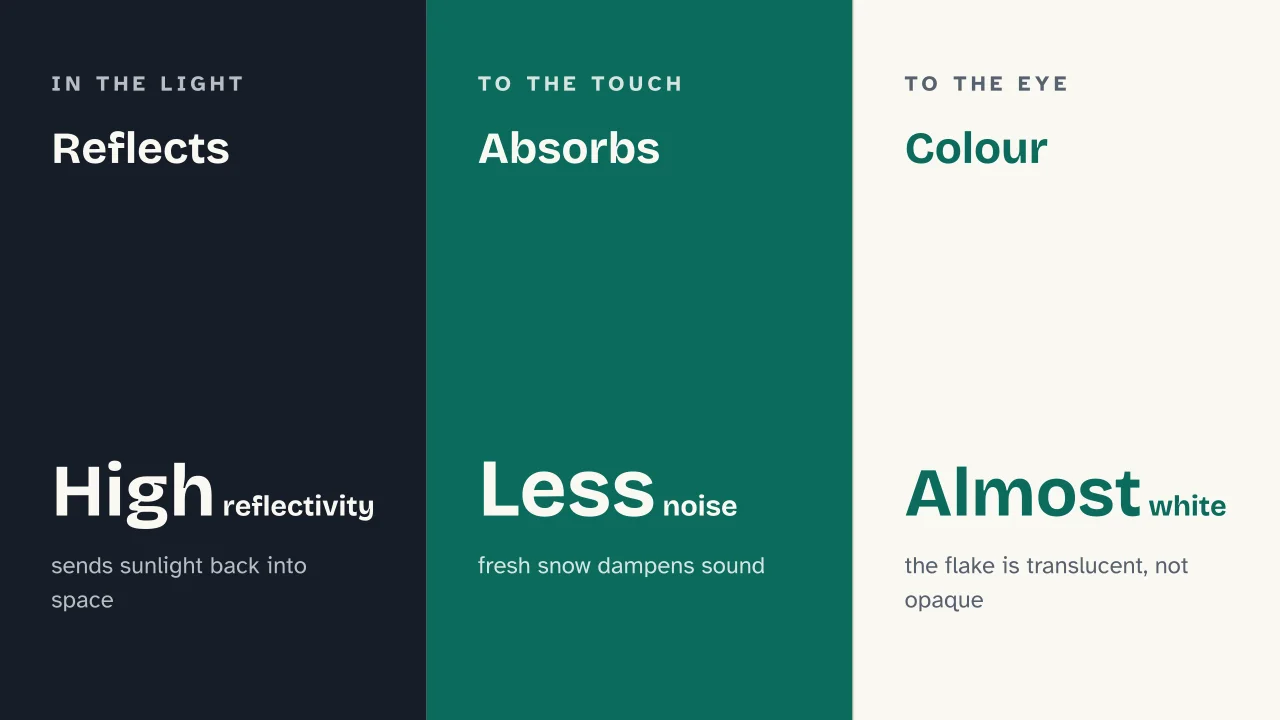 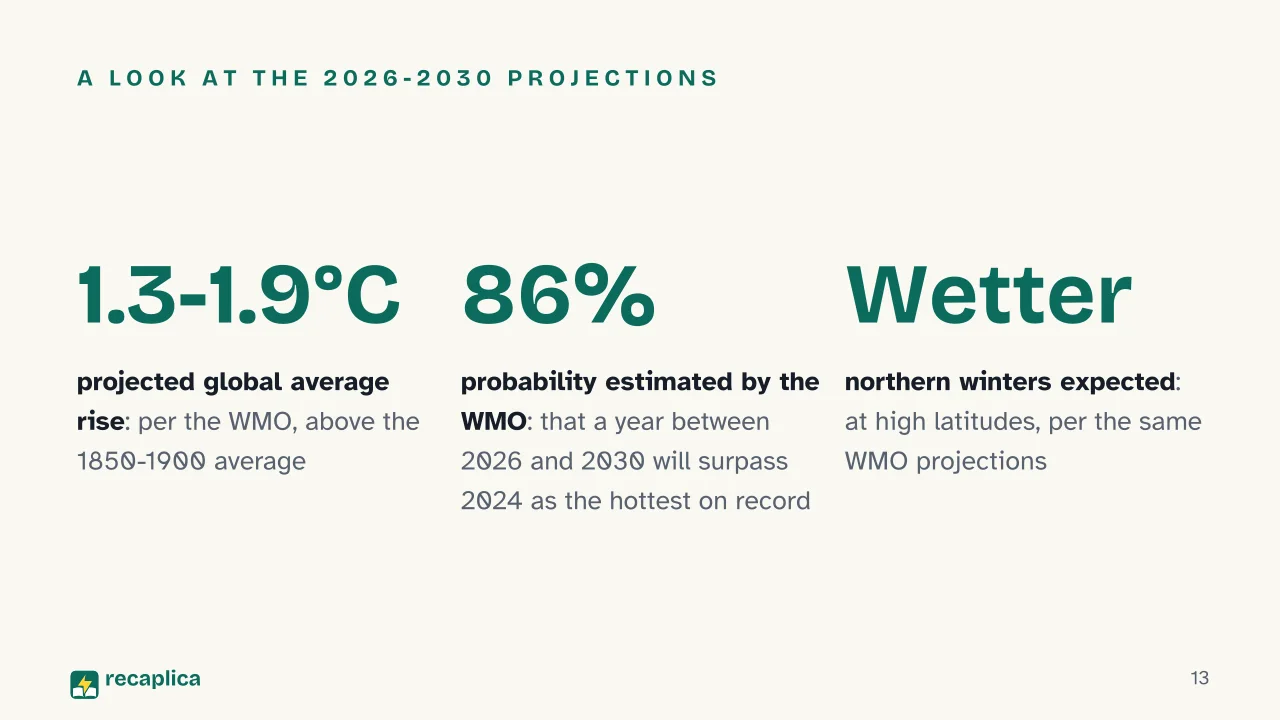 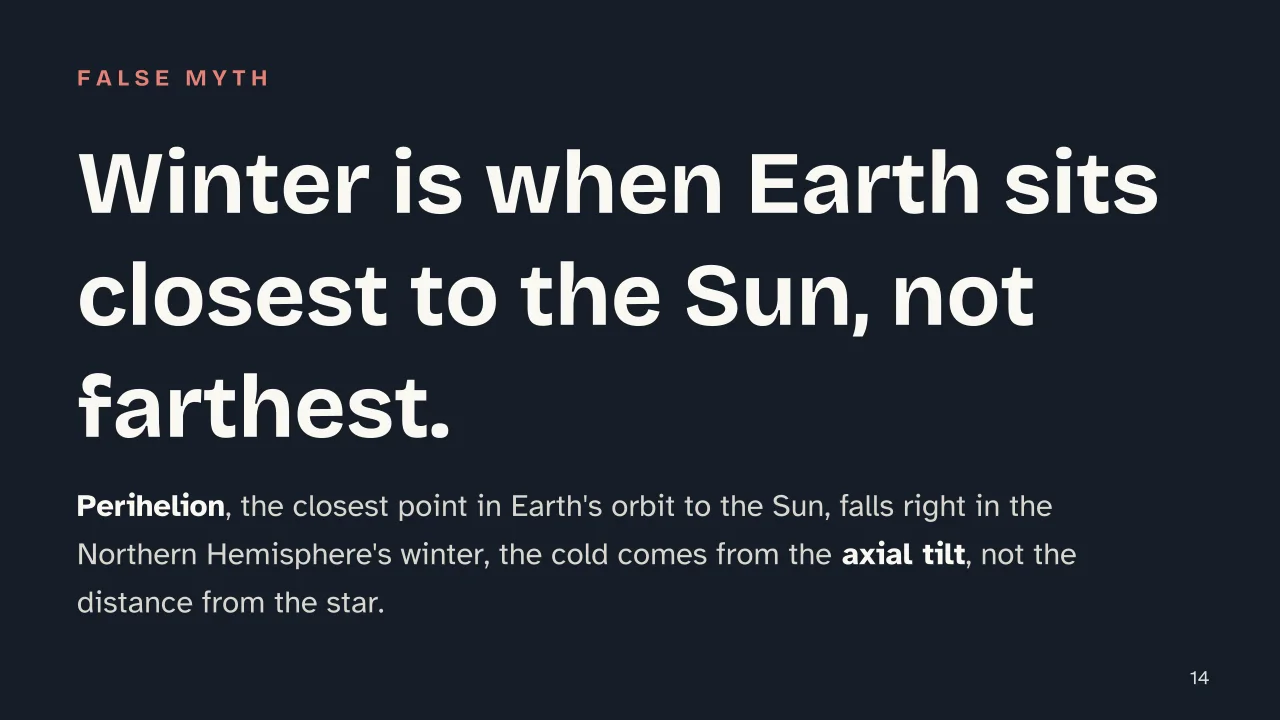  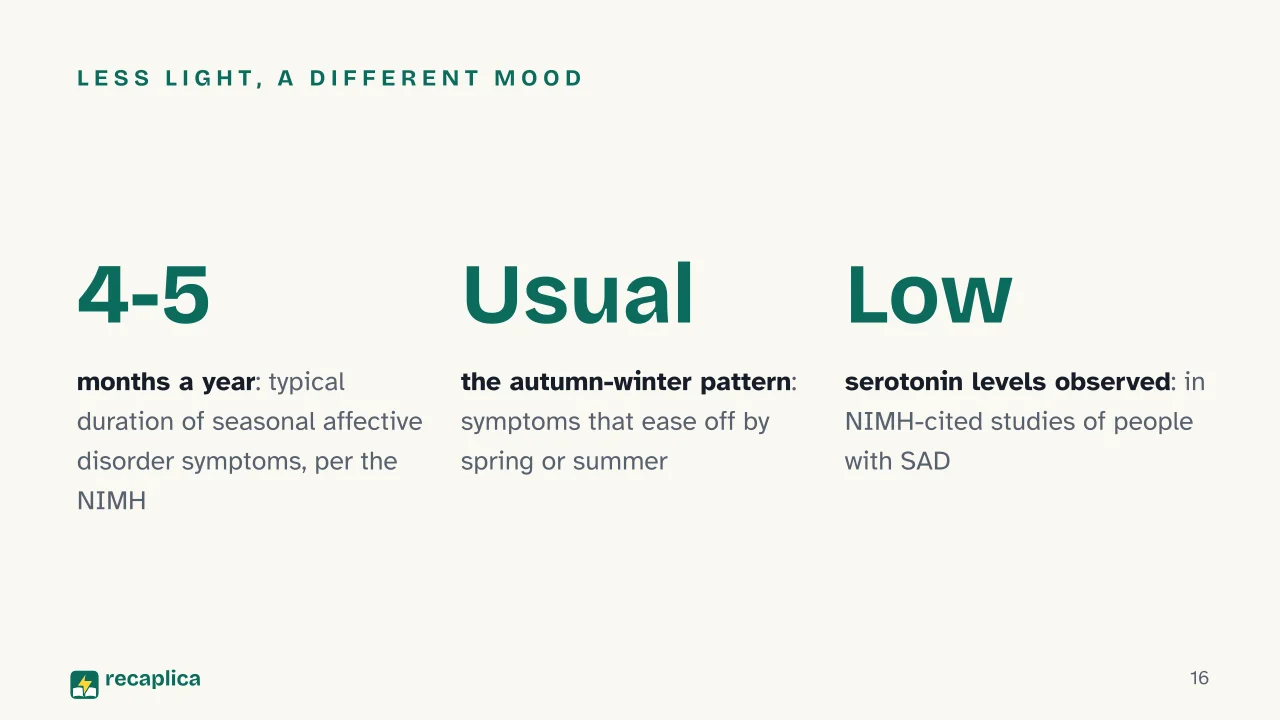 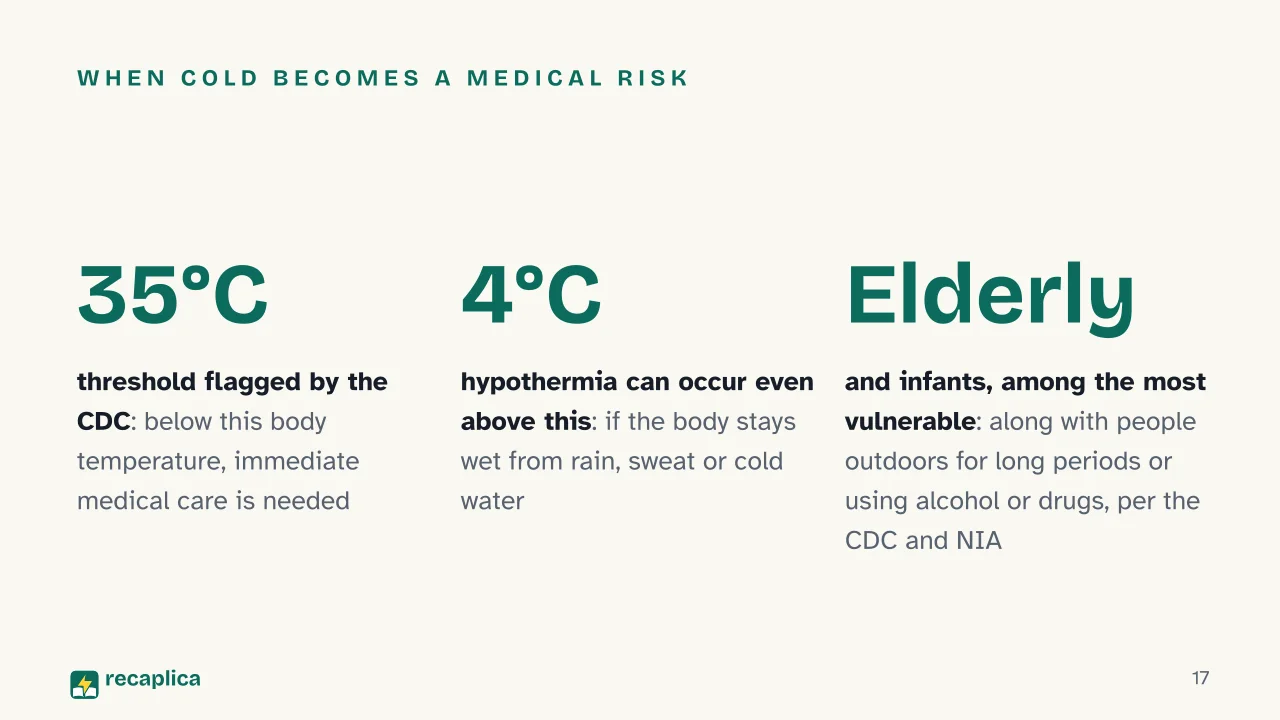 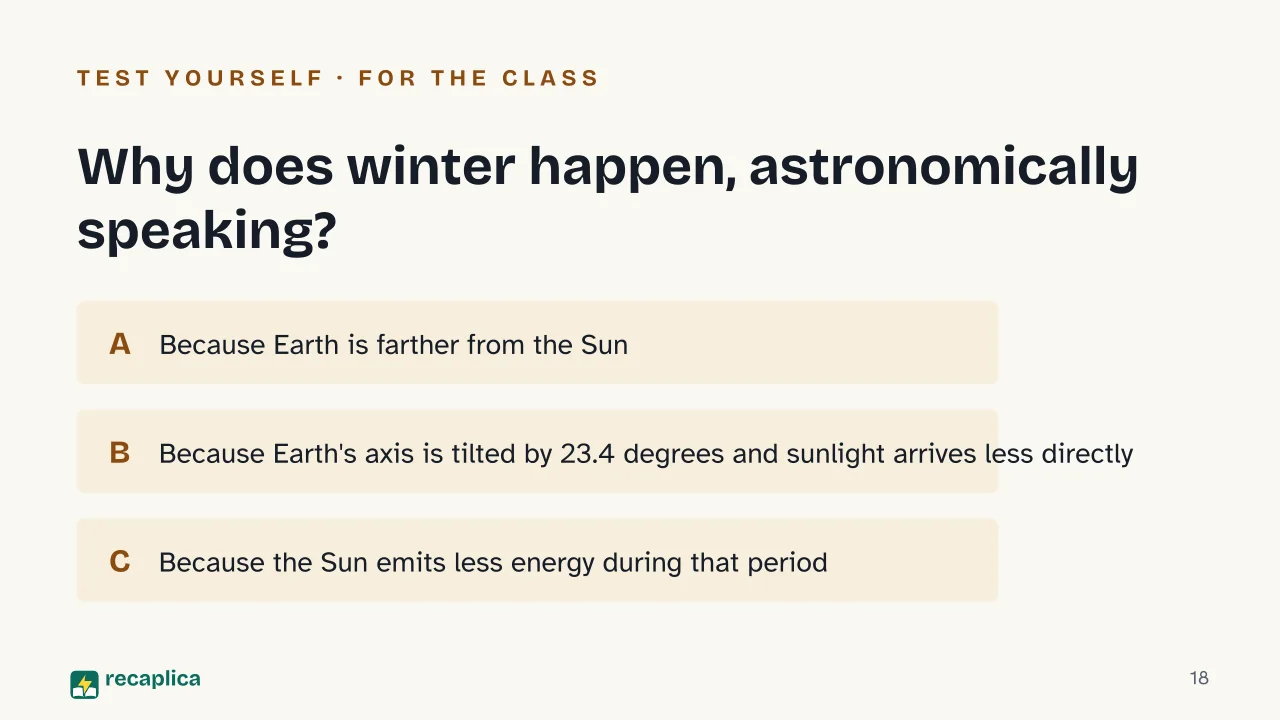  Common myths
Mind mapDrag the background to move around and the nodes to reposition them; use − and + to collapse and expand branches. 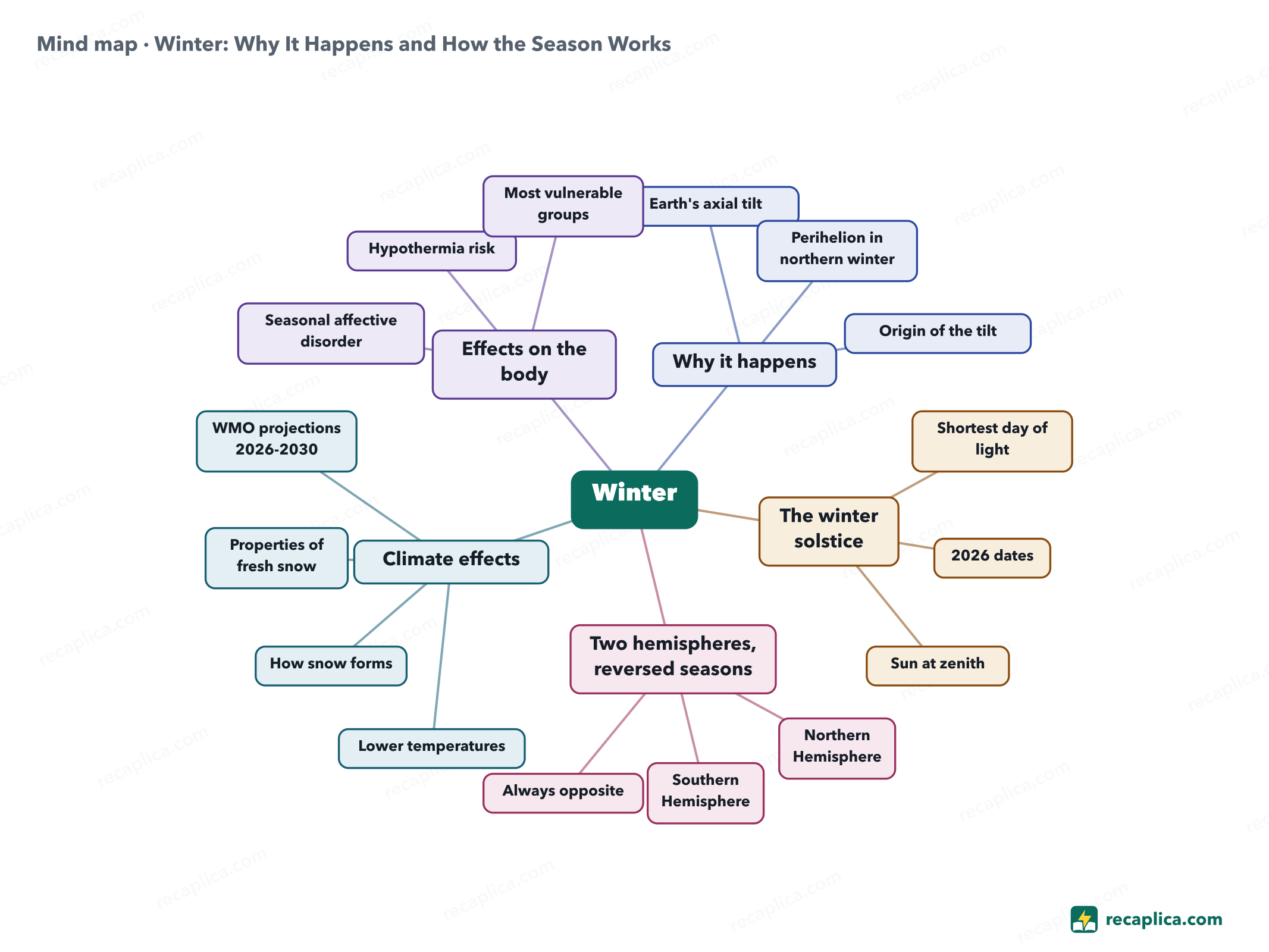
Quiz: test yourselfAnswer the questions to check what you have learned: you get instant feedback and a short explanation. Grade 0/10 0/5
FlashcardsTap the card to flip it and check whether you remember the answer, then move to the next one. 1 / 8 Explain it in your own wordsThe ultimate test: if you can explain it in simple words, you've truly understood it. Write your explanation, then compare it with the Recap. Your explanation is saved only on this device.
Frequently asked questionsWhy is it cold in winter if Earth is closer to the Sun during that period?Because winter cold does not depend on distance from the Sun, but on the 23.4-degree tilt of Earth's axis: during a hemisphere's winter, that hemisphere receives sunlight less directly, regardless of whether the whole planet happens to be closer to or farther from the Sun at that moment. If anything, according to NASA, the Northern Hemisphere passes through perihelion, the closest point in its orbit to the Sun, during its own winter. When does the winter solstice fall in 2026?In the Northern Hemisphere the winter solstice falls on December 21, 2026; in the Southern Hemisphere it falls on June 21, 2026, at 08:25 GMT, the same instant summer begins in the Northern Hemisphere. According to Britannica, the astronomical winter season in the Southern Hemisphere runs roughly from June 21 or 22 to September 22 or 23. Why doesn't snow fall everywhere it's cold?Because, according to the National Snow and Ice Data Center, two conditions have to combine: temperatures below 0°C and enough atmospheric moisture. In places like Florida there is plenty of humidity but temperatures rarely drop low enough; in many winter deserts it is cold enough but the air is too dry. What is seasonal affective disorder?It is a form of depression, described by the National Institute of Mental Health, tied to the change of season. In its most common form ('winter-pattern'), symptoms begin in late autumn or early winter, with low mood, reduced energy and sleep problems in milder cases, easing off by spring or summer. When does hypothermia become a medical emergency?The CDC notes that hypothermia can occur even at non-extreme temperatures, above 4°C, if the body stays wet from rain, sweat or cold-water immersion, and it becomes a medical emergency once body temperature drops below 35°C: at that point the brain is affected and the person may not realize what is happening. Every Recap goes through an independent review before publication. |