Skip to content
recaplica

    One moment: security check

    Cloudflare wants to make sure you're not a robot. Tick the box below and your search will continue on its own.

    IT
    recaplica Muscle hypertrophy: how muscle grows and what the research says
    © 2026 Recaplica · recaplica.com — All rights reserved
    Home › Science

    Muscle hypertrophy: how muscle grows and what the research says

    By Recaplica Newsroom · Updated on August 31, 2026

    What to print

    Page numbers appear when printing with default margins.

    Slides

    Choose a cut

    Flash10 slidesThe essential thread, to present in classFull18 slidesEvery chapter and the deeper detail

    Both come with speaker notes.

    Telegram channel
    recaplica Clear in 30 seconds, yours in 10 minutes.
    In 30 seconds Key points Figures Deep dive Slides Myths Mind map Quiz Flashcards FAQ

    In 30 seconds quick read

    Muscle hypertrophy is the enlargement of the fibres you already have, not the appearance of new ones. It happens when resistance training puts muscles under more tension than they are used to: the tissue responds by building more contractile protein than it breaks down, and repeating that cycle for months thickens the fibre. The most recent research syntheses link hypertrophy above all to the total amount of work done each week, while load is free to vary across a wide range.

    Key Points

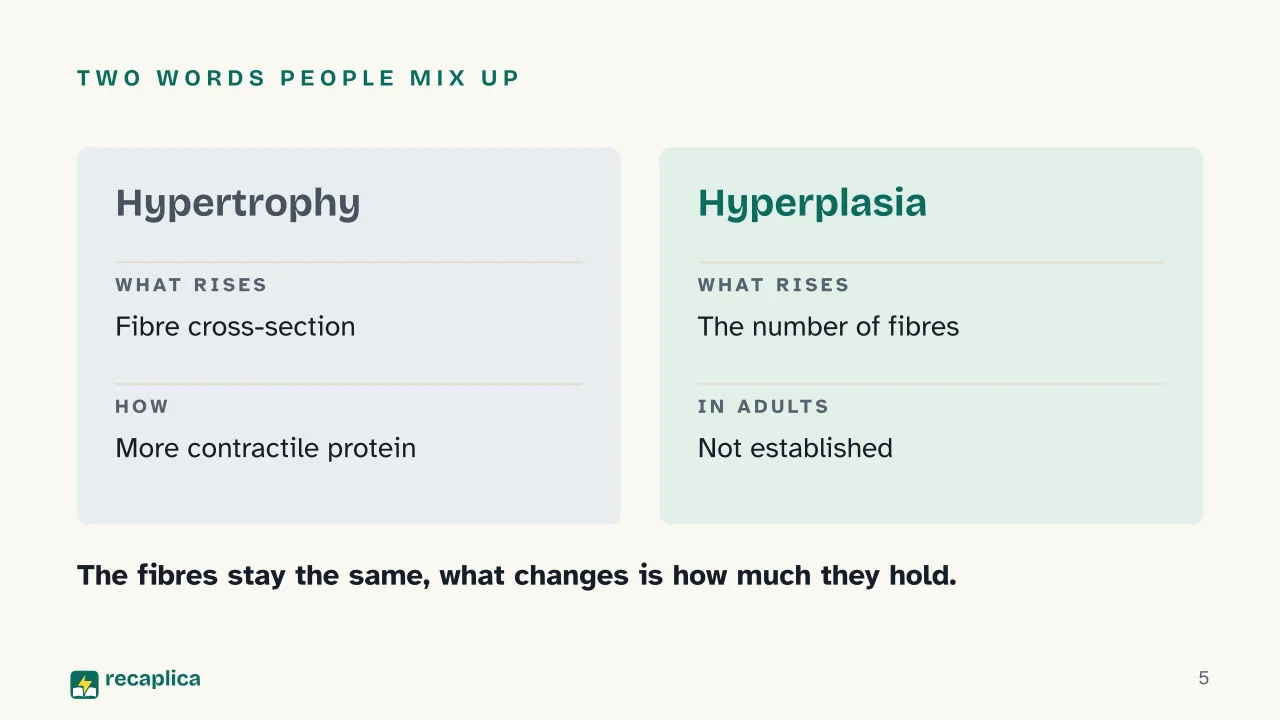
    • Hypertrophy means thicker fibres, not more of them: the cross-sectional area of existing fibres increases.
    • The trigger is mechanical tension produced by intense, repeated effort.
    • Muscle grows only when protein synthesis stays consistently above protein breakdown.
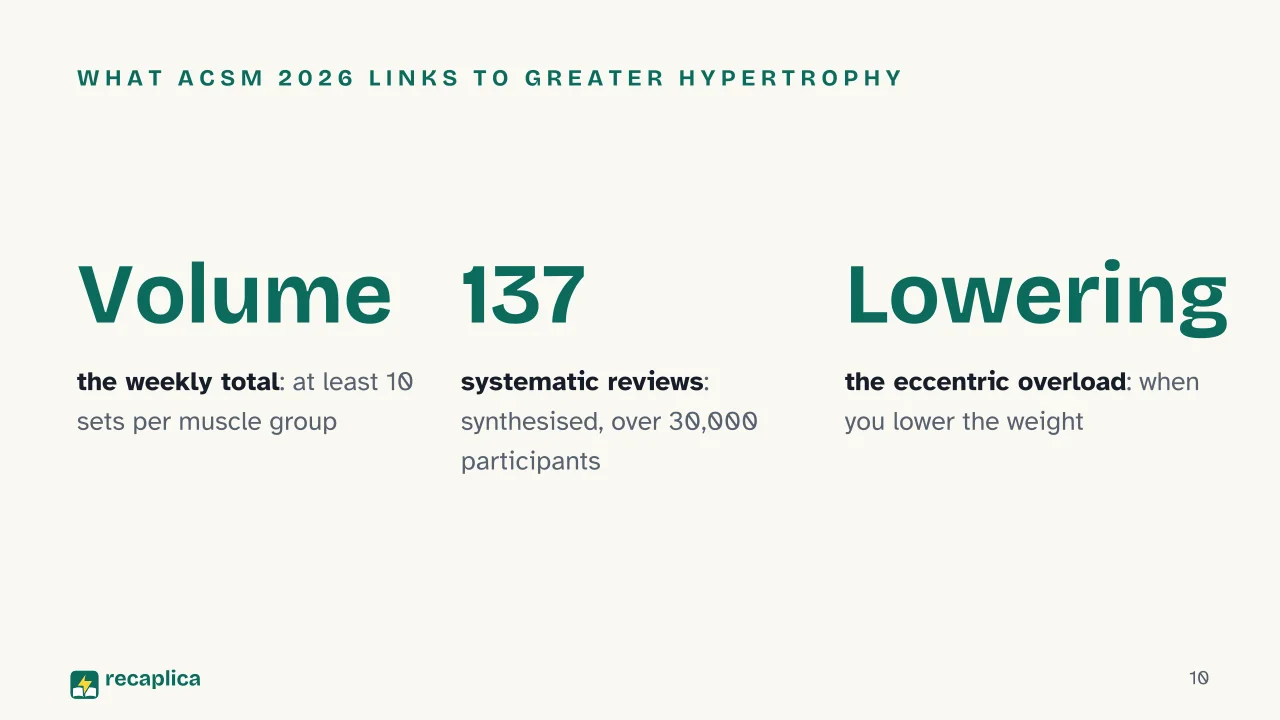
    • The 2026 ACSM position links greater hypertrophy to two things: higher weekly volumes (at least 10 sets per muscle group) and eccentric overload.
    • Load can be light or heavy: in the studies, with matched effort, growth is similar, while maximal strength needs heavy loads.
    • In the studies, taking every set to failure does not produce more hypertrophy; with protein supplementation, gains in fat-free mass stop past about 1.62 g per kg per day.

    Key figures

    • ≥10 sets the weekly volume threshold per muscle group above which ACSM observes greater hypertrophy Source: ACSM Position Stand, Medicine & Science in Sports & Exercise, 2026
    • 1.62 g/kg the daily protein intake beyond which supplementation produced no further gains in fat-free mass Source: Morton et al., British Journal of Sports Medicine, 2018
    • 137 reviews the systematic reviews synthesised by ACSM for its 2026 guidance, covering over 30,000 participants Source: ACSM Position Stand, 2026

    Deep Dive

    What “building muscle” actually means

    When a muscle gets bigger it is not gaining new parts: it is enlarging the ones it already has. That is the technical meaning of hypertrophy, an increase in the cross-sectional area of existing muscle fibres. Fibres are long, specialised cells packed with protein filaments that slide over one another to produce contraction, and enlarging them means packing more filaments into the same fibre.

    The distinction matters more than it sounds. It explains why results don’t arrive in a week, since accumulating protein inside a cell is slow, and why two people on the same programme end up in different places: they start from fibres that differ in number, type and history.

    Practical example: a quadriceps fibre in a trained person can have a far larger cross-section than the same fibre in a sedentary person, even though it is the same fibre, present since birth. What changed is how much contractile material it holds.

    The mechanism, in three steps

    1. The signal: mechanical tension

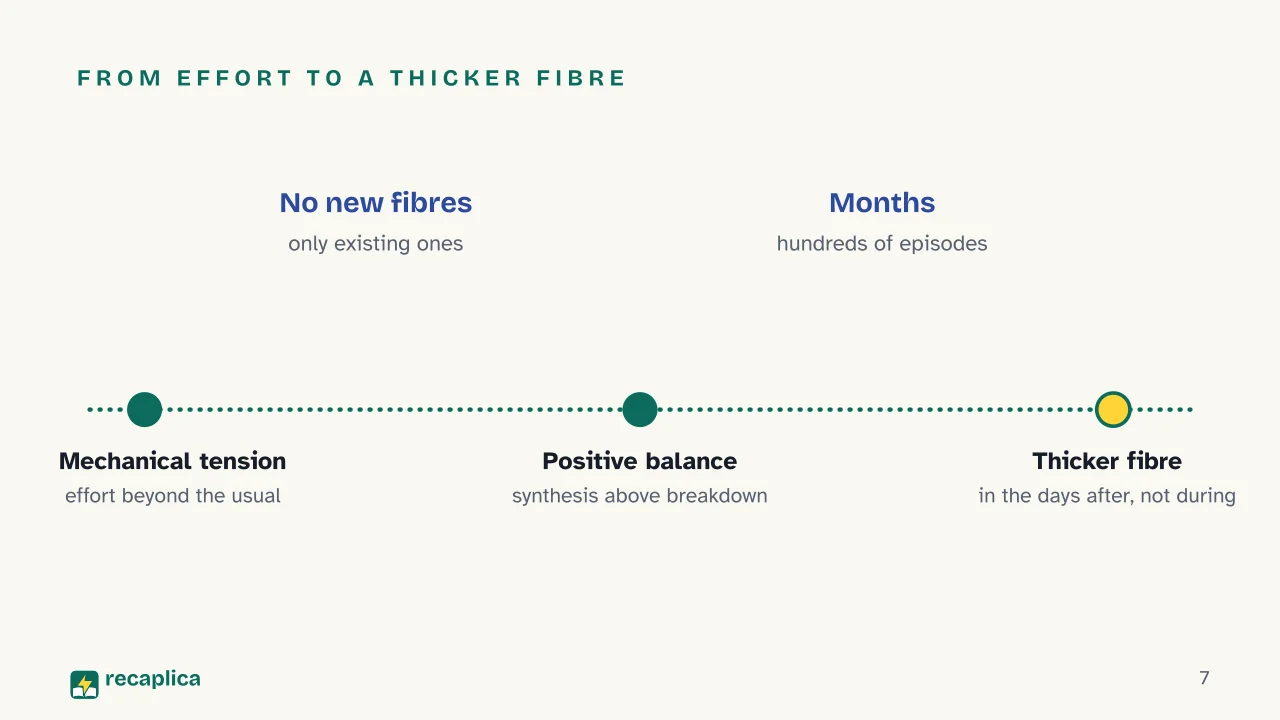
    The factor that starts everything is mechanical tension: a force the fibres must resist that exceeds what they are used to. Lifting a demanding weight, or lifting a lighter one until the reps become hard, puts fibres under high tension. The literature on hypertrophy mechanisms treats mechanical tension as central, alongside muscle damage and metabolic stress, which can also contribute to exercise-induced growth.

    2. The response: more building than breaking down

    Every fibre is a construction site that never closes: muscle proteins are continuously broken down and rebuilt. Under normal conditions the two balance out. After resistance training, and with enough amino acids available, muscle protein synthesis rises above breakdown for a number of hours. A single episode changes little; it is hundreds of episodes, one after another, that produce a visibly thicker fibre.

    3. The support crew: satellite cells

    Satellite cells, stem cells on standby, live along each fibre and are switched on by training. In the most studied model they multiply, through the same division process described in mitosis, then fuse with the fibre and hand over their nuclei: more nuclei means more copies of the DNA available for manufacturing protein. Specialists do not agree on how necessary this step is, though. A 2019 review calls the question “unresolved and highly debated”.

    What the research shows about training

    In 2026 the American College of Sports Medicine updated its position on resistance training by synthesising 137 systematic reviews covering more than 30,000 participants. It is the broadest document available, and some of its conclusions are unusually clear-cut.

    GoalWhat the 2026 ACSM synthesis indicates
    HypertrophyHigher weekly volumes (at least 10 sets per muscle group) and eccentric overload
    Maximal strengthHeavy loads (≥80% of one-rep max), through a full range of motion, 2-3 sets, at least 2 sessions a week
    PowerModerate loads (30-70% of one-rep max), low-to-moderate volume, fast movements

    Eccentric overload is the part people usually skip over: the phase in which the muscle lengthens while resisting the load, meaning the moment you lower the weight rather than lift it.

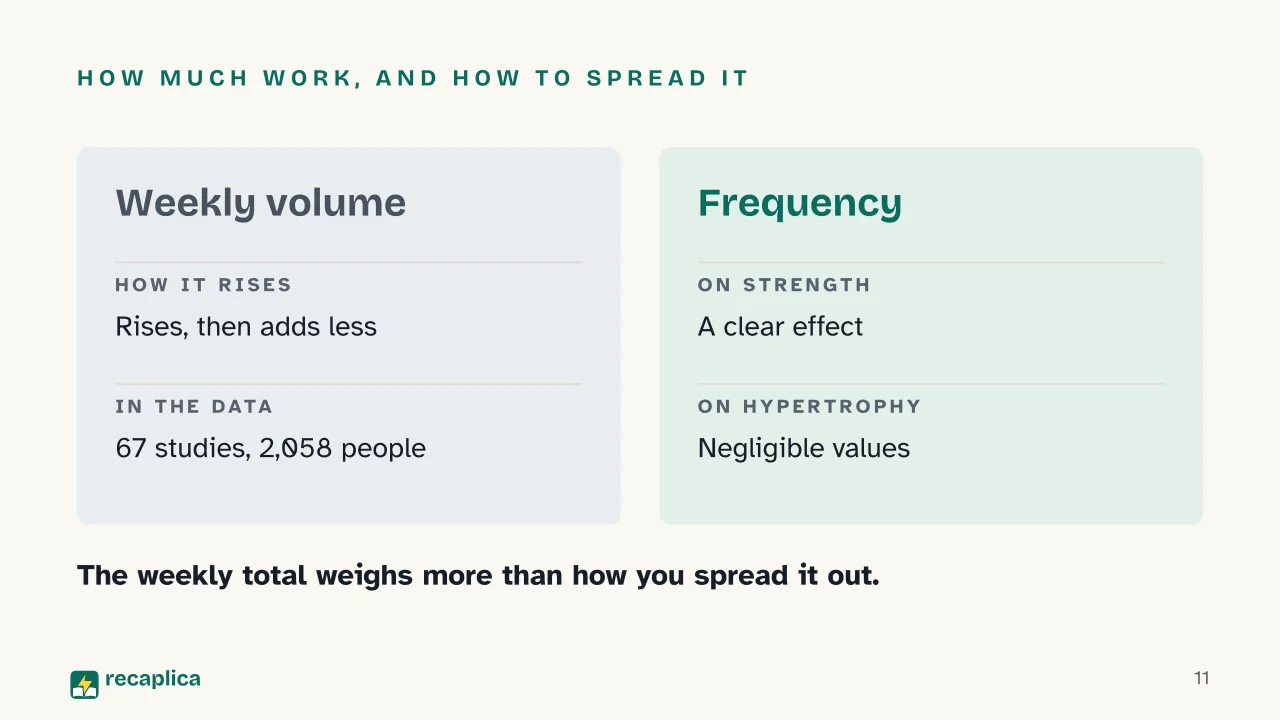
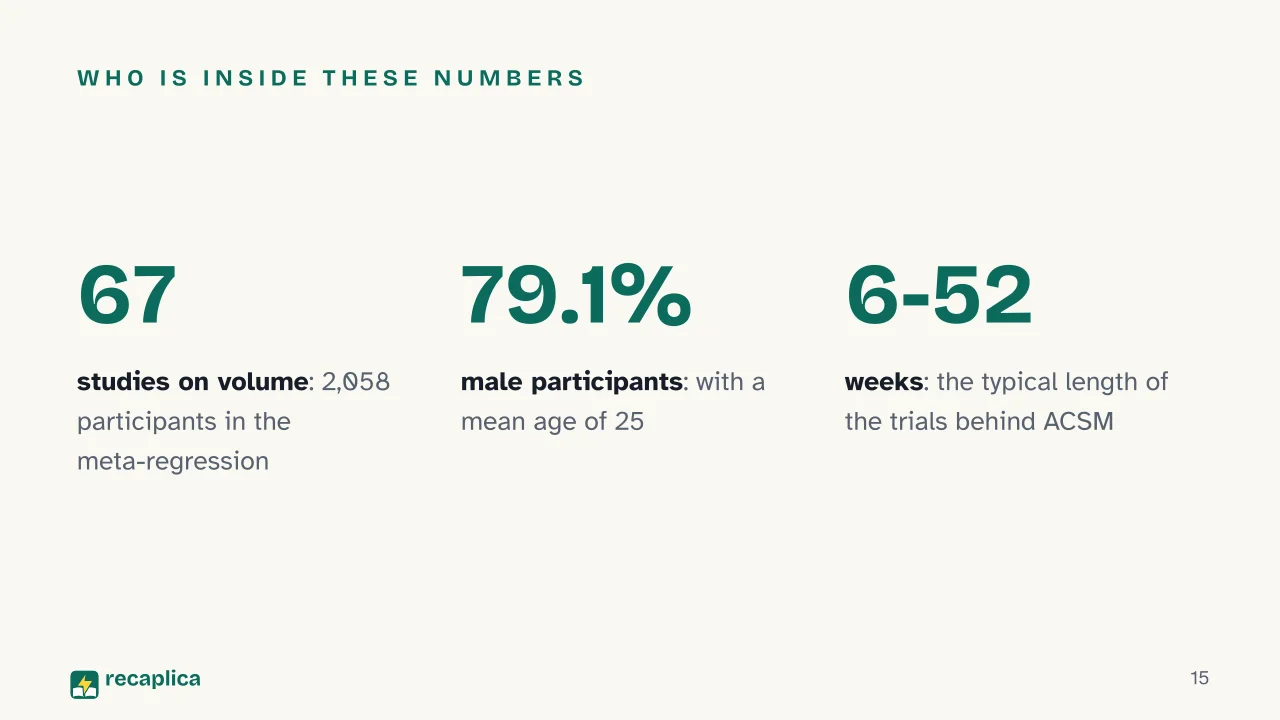
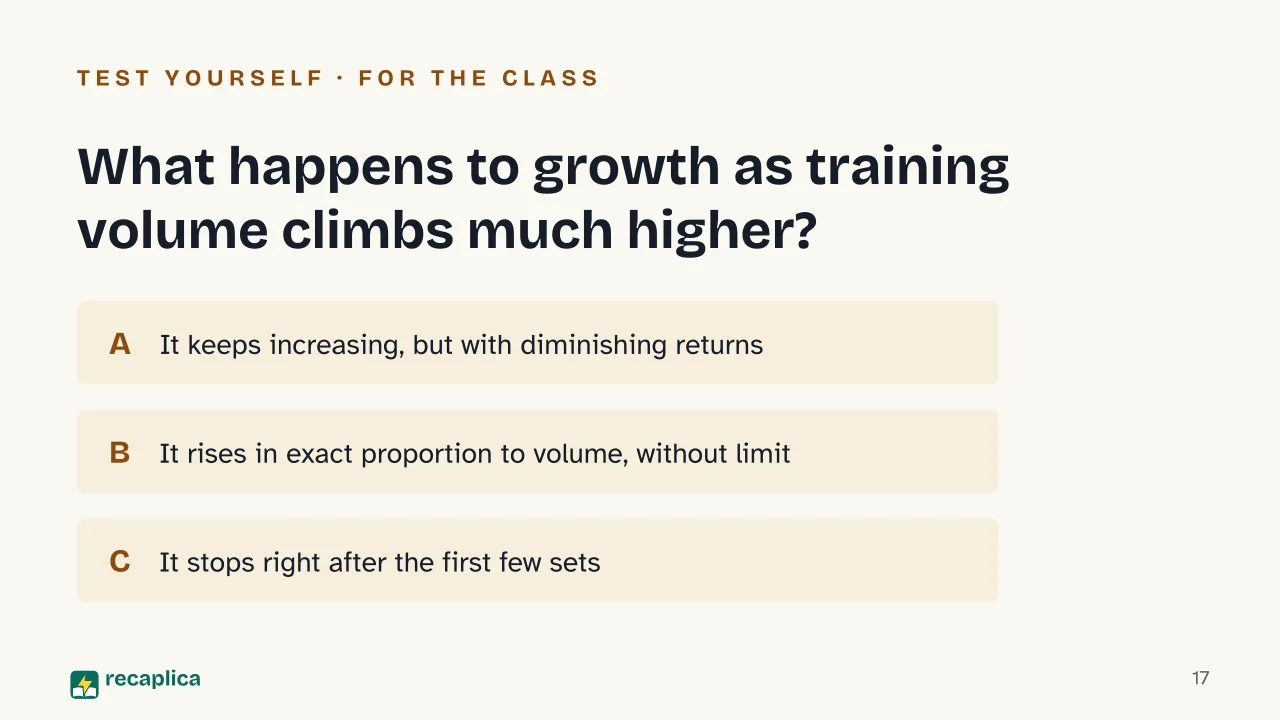
    The picture on volume matches the meta-regression published in Sports Medicine, which analysed 67 studies across 2,058 participants: size and strength both climb as weekly volume rises, but both best-fit models describe diminishing returns. In plain terms, the tenth weekly set adds less than the fifth, and the twentieth less than the tenth. That drop-off is considerably more pronounced for strength than for hypertrophy. The same work finds that frequency, meaning how many times a week you train a muscle, clearly affects strength, while its effect on muscle size is compatible with negligible values.

    Load matters less than people think

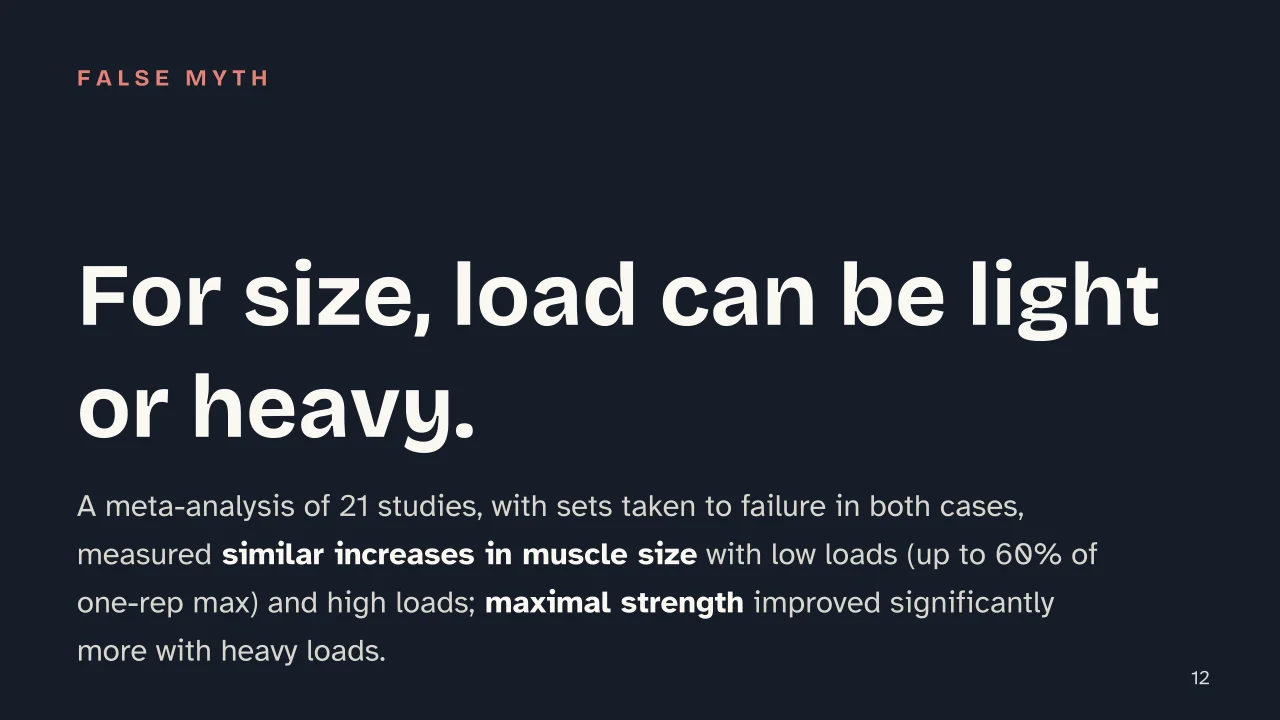
    In 2017 a meta-analysis of 21 studies compared low loads (up to 60% of one-rep max) against high loads, with sets taken to failure in both cases. Changes in muscle size came out similar; gains in maximal strength, by contrast, significantly favoured the heavy loads, while isometric strength showed no difference between conditions. So there is plenty of latitude on load for anyone focused on size, and much less for anyone chasing a bigger one-rep max.

    Failure is not mandatory

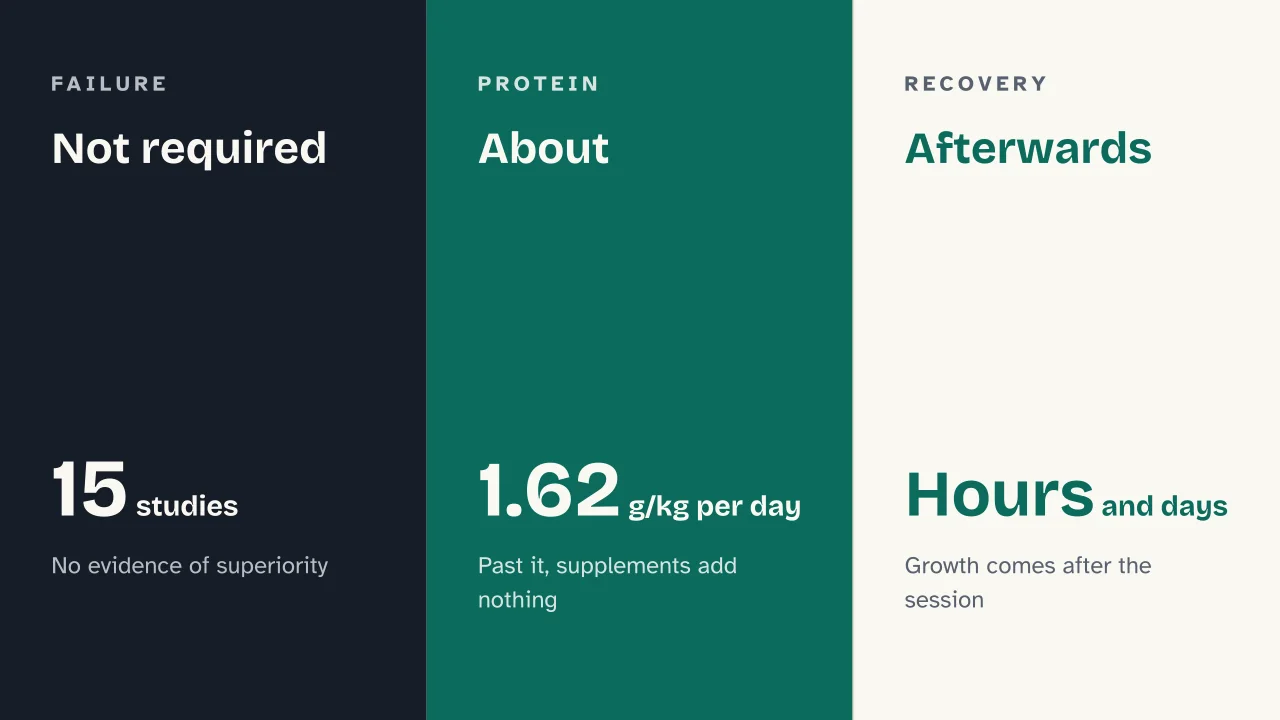
    A systematic review of 15 studies examined how much proximity to failure matters. The main analysis found a statistically significant but trivially small advantage for sets taken to failure (effect size 0.19, 95% confidence interval 0.00-0.37), which disappears once the studies on momentary muscular failure itself are isolated (0.12, not significant). The authors’ conclusion is blunt: there is no evidence that training to failure is superior, and the relationship between closeness to failure and growth looks non-linear.

    Practical example: two people each do 12 weekly sets for their legs. The first takes every set to the point where another rep is impossible, the second stops a couple of reps short. Over months, the available literature does not let us claim the first one gets more hypertrophy than the second.

    The conditions that make growth possible

    Training is the signal; the building material comes from the diet. The reference meta-analysis on protein, 49 studies and 1,863 participants, confirms that protein supplementation increases strength and fat-free mass in people who train, but identifies a ceiling: past a total intake of about 1.62 g per kg of body mass per day, supplementation produces no further gains in fat-free mass. The same work reports a stronger effect in already-trained people and a reduced one in older adults.

    The wider context deserves a mention, because it changes the proportions of the discussion: according to the World Health Organization, 31% of adults worldwide, 1.8 billion people, do not reach recommended levels of physical activity. For the vast majority, the difference that counts is not between ten and twelve sets a week, but between zero and something.

    Why two people don’t respond the same way

    Meta-analysis numbers are group averages, and around every average sits a wide spread. Genetics, age, hormones, sleep, nutrition, stress and years of training all change the size of the response. Gains come quickly in the early stages, while after years of work the remaining room for adaptation narrows and progress slows down considerably.

    There is also a limit in the data itself, worth keeping in mind. The participants in the volume meta-regression were 79.1% male, with a mean age of 25: much of what we know about hypertrophy has been measured on young adult men, and it cannot simply be assumed to transfer unchanged to populations that differ in sex or age.

    For the same reason, an explanatory article can describe the mechanism and report what has been measured across groups of people, but it cannot say how many sets you need. That stays an individual judgement, best left to someone qualified who can watch you train.

    Slide deck

    Slides ready to download and make your own in PowerPoint or Google Slides, with speaker notes. Pick the Flash cut or the Full one.

    Slide 1 of the presentation on Muscle hypertrophy: Muscle hypertrophySlide 2 of the presentation on Muscle hypertrophy: Is muscle built while you lift the weight?Slide 3 of the presentation on Muscle hypertrophy: What we coverSlide 4 of the presentation on Muscle hypertrophy: Chapter 01: What actually growsSlide 5 of the presentation on Muscle hypertrophy: Two words people mix upSlide 6 of the presentation on Muscle hypertrophy: Chapter 02: The mechanism, step by stepSlide 7 of the presentation on Muscle hypertrophy: From effort to a thicker fibreSlide 8 of the presentation on Muscle hypertrophy: Who hands new nuclei to the fibre?Slide 9 of the presentation on Muscle hypertrophy: Chapter 03: What the research measuredSlide 10 of the presentation on Muscle hypertrophy: What ACSM 2026 links to greater hypertrophySlide 11 of the presentation on Muscle hypertrophy: How much work, and how to spread itSlide 12 of the presentation on Muscle hypertrophy: For size, load can be light or heavy.Slide 13 of the presentation on Muscle hypertrophy: Not required · About · AfterwardsSlide 14 of the presentation on Muscle hypertrophy: Chapter 04: Why the answer is yoursSlide 15 of the presentation on Muscle hypertrophy: Who is inside these numbersSlide 16 of the presentation on Muscle hypertrophy: This is the mechanism, not a training programme.Slide 17 of the presentation on Muscle hypertrophy: What happens to growth as training volume climbs much higher?Slide 18 of the presentation on Muscle hypertrophy: Now for the revision
    Flash10 slidesThe essential thread, to present in classFull18 slidesEvery chapter and the deeper detail

    Common myths

    • ✗ Myth You need very heavy weights to build muscle.

      ✓ Reality A meta-analysis of 21 studies compared low loads (up to 60% of one-rep max) with high loads, with all sets taken to failure: the increase in muscle size was similar across both conditions, while maximal strength improved significantly more with heavy loads. Load therefore weighs mainly on strength gains.

    • ✗ Myth Every set must be taken to failure or it's wasted.

      ✓ Reality A systematic review of 15 studies measured an advantage for sets taken to failure that was trivial at best (effect size 0.19), and that disappears once you isolate the studies on momentary muscular failure itself (0.12, not significant). The authors conclude there is no evidence that failure is superior for hypertrophy.

    • ✗ Myth The more protein you eat, the more muscle you build.

      ✓ Reality The meta-analysis of 49 studies and 1,863 participants shows protein supplementation increases fat-free mass in people who train, but stops adding anything past a total intake of about 1.62 g per kg of body mass per day. Above that threshold the measured gains do not rise further.

    Mind map

    Drag the background to move around and the nodes to reposition them; use − and + to collapse and expand branches.
    Customize
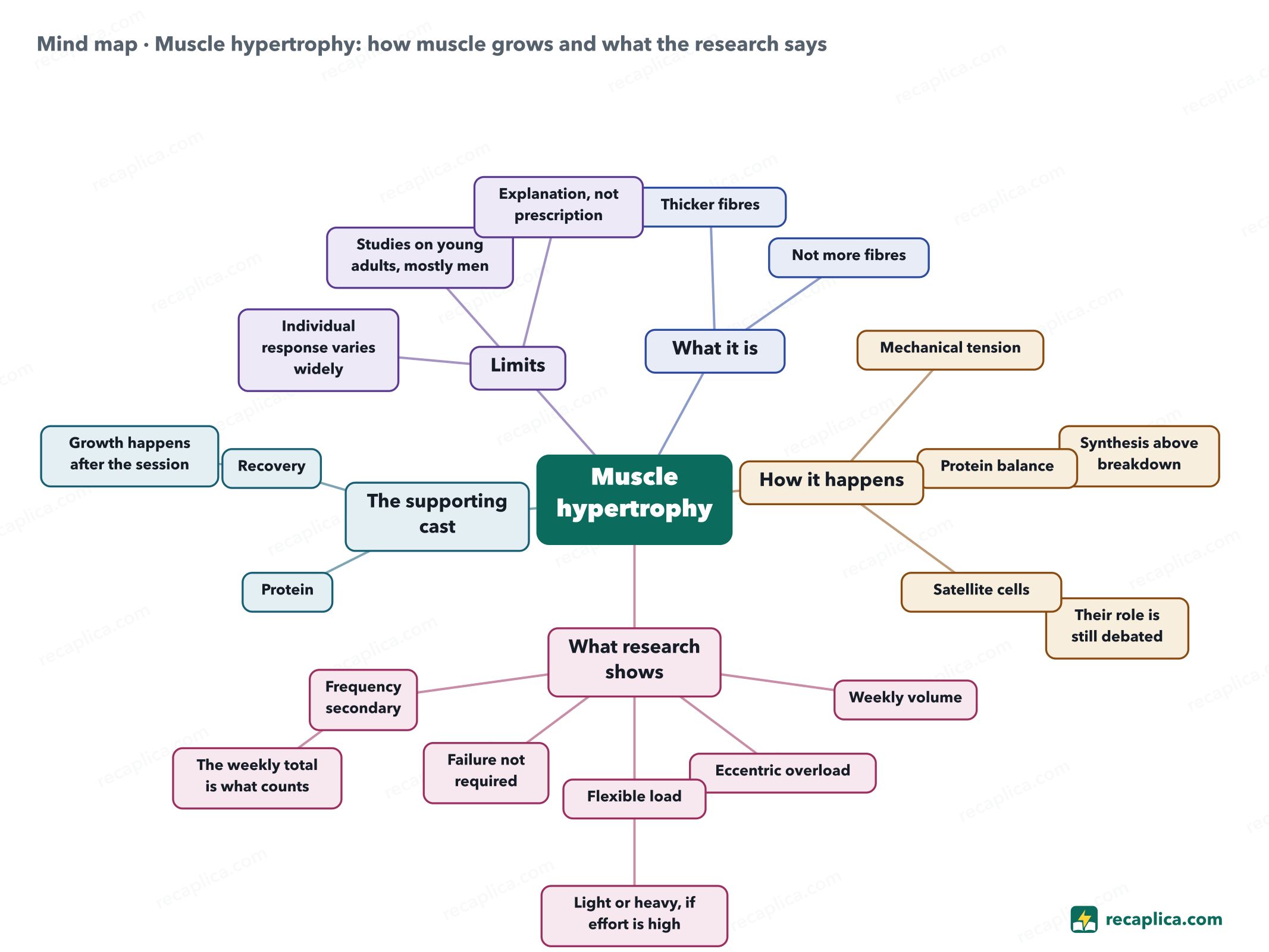
    Mind map: Muscle hypertrophy: how muscle grows and what the research says
    • Muscle hypertrophy
      • What it is
        • Thicker fibres The cross-sectional area of existing fibres grows.
        • Not more fibres In adults, an increase in fibre number is not established.
      • How it happens
        • Mechanical tension Hard effort is the starting signal.
        • Protein balance
          • Synthesis above breakdown
        • Satellite cells
          • Their role is still debated
      • What research shows
        • Weekly volume At least 10 sets, with diminishing returns.
        • Eccentric overload The second element named by ACSM in 2026.
        • Flexible load
          • Light or heavy, if effort is high
        • Failure not required
        • Frequency secondary
          • The weekly total is what counts
      • The supporting cast
        • Protein Threshold around 1.62 g per kg per day.
        • Recovery
          • Growth happens after the session
      • Limits
        • Individual response varies widely
        • Studies on young adults, mostly men
        • Explanation, not prescription

    Quiz: test yourself

    Answer the questions to check what you have learned: you get instant feedback and a short explanation.

    Grade 0/10 0/5
    1 What exactly increases when a muscle undergoes hypertrophy?

    Hypertrophy is an increase in the cross-sectional area of existing fibres: they thicken by accumulating contractile protein. An increase in fibre number (hyperplasia) is not established in adult humans.

    2 What does the 2026 ACSM position link hypertrophy to?

    The 2026 ACSM synthesis names two things linked to greater hypertrophy: weekly volumes of at least 10 sets per muscle group, and eccentric overload. Heavy loads (≥80% of one-rep max) are the specific recommendation for maximal strength instead.

    3 What happens to muscle growth as training volume climbs much higher?

    The meta-regression across 67 studies and 2,058 participants found that size and strength both increase as volume rises, but the best-fit models show diminishing returns: each extra set counts a little less than the one before. The drop-off is considerably more pronounced for strength than for hypertrophy.

    4 What role does weekly frequency play in hypertrophy?

    In the meta-regression, frequency showed a clear and rising effect on strength, while for hypertrophy the effect was compatible with negligible values: the weekly total weighs more than how you spread it out.

    5 True or false: muscle grows during the workout itself.

    False. The workout provides the signal, but construction happens afterwards, over the following hours and days, when muscle protein synthesis exceeds breakdown. Without recovery and enough protein the balance never turns positive.

    Answers: 1-B · 2-C · 3-B · 4-D · 5-B

    Flashcards

    Tap the card to flip it and check whether you remember the answer, then move to the next one.

    1 / 8

    Explain it in your own words

    The ultimate test: if you can explain it in simple words, you've truly understood it. Write your explanation, then compare it with the Recap.

    Your explanation is saved only on this device.

    Muscle hypertrophy is the enlargement of the fibres you already have, not the appearance of new ones. It happens when resistance training puts muscles under more tension than they are used to: the tissue responds by building more contractile protein than it breaks down, and repeating that cycle for months thickens the fibre. The most recent research syntheses link hypertrophy above all to the total amount of work done each week, while load is free to vary across a wide range.

    Frequently asked questions

    How long does it take to see results?

    The trials behind the ACSM synthesis typically run from 6 to 52 weeks, and they already measure gains in size and strength within those windows. Fibre thickening remains a slow process, though, visible over months rather than days.

    Are light or heavy weights better?

    For muscle growth the research does not crown a clear winner: with sets taken to a high level of effort, light and heavy loads produced similar increases in size. The difference appears in maximal strength, where heavy loads came out significantly ahead.

    Does hypertrophy work the same way at every age?

    Muscle stays adaptable into older age: the ACSM synthesis reports improvements in strength, size and physical function in older adults. The protein meta-analysis does note reduced efficacy of supplementation in older people, a sign that the anabolic response shifts over time.

    Can this article replace a training programme?

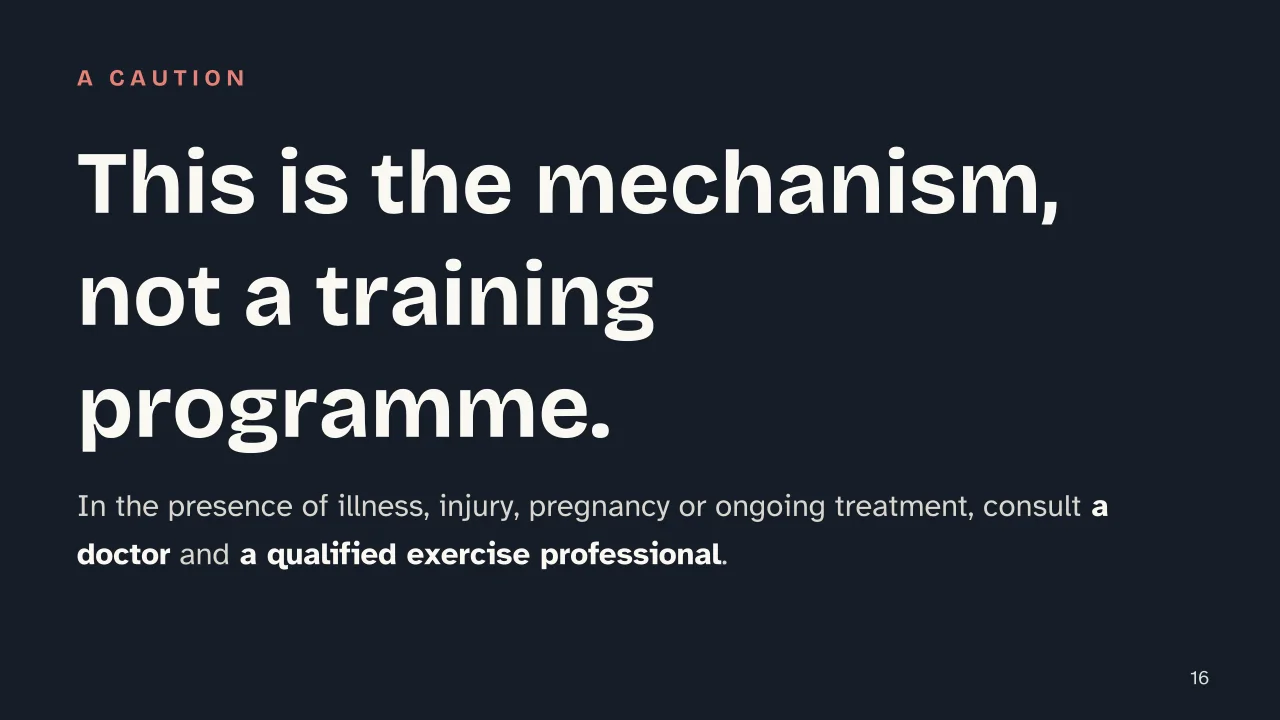
    No. It explains how the phenomenon works and what the literature has measured across groups of people, not what to do individually. For a programme suited to your situation, and always in the presence of illness, injury, pregnancy or ongoing treatment, consult a doctor and a qualified exercise professional.

    Sources

    • ACSM Position Stand — Resistance Training Prescription for Muscle Function, Hypertrophy, and Physical Performance in Healthy Adults (Medicine & Science in Sports & Exercise, 2026)
    • Pelland et al., The Resistance Training Dose Response — Meta-Regressions on Weekly Volume and Frequency (Sports Medicine, 2026)
    • Schoenfeld et al., Strength and Hypertrophy Adaptations Between Low- vs. High-Load Resistance Training (Journal of Strength and Conditioning Research, 2017)
    • Refalo et al., Influence of Resistance Training Proximity-to-Failure on Skeletal Muscle Hypertrophy (Sports Medicine, 2023)
    • Morton et al., Protein supplementation and resistance training-induced gains in muscle mass and strength (British Journal of Sports Medicine, 2018)
    • Schoenfeld, The mechanisms of muscle hypertrophy and their application to resistance training (Journal of Strength and Conditioning Research, 2010)
    • Brook et al., The role of ribosomal biogenesis and satellite cells in the regulation of skeletal muscle hypertrophy (European Journal of Sport Science, 2019)
    • WHO — Physical activity (fact sheet)

    Every Recap goes through an independent review before publication.

    Every evening, the day's new Recaps on our Telegram channel. Join the channel →

    Keep learning

    • Science Digestive System: How It Breaks Down Food, Step by Step The digestive system breaks food down, piece by piece, into molecules the body can absorb. It starts in the mouth, where teeth cut food into fragments and saliva carries the first enzymes, continues in the stomach, which churns food with gastric acid, and does most of its chemical work in the small intestine, according to StatPearls (2022). Along the way, the liver, pancreas, and gallbladder — organs outside the digestive tract itself — add bile and enzymes to the mix. What's left moves on to the large intestine, which reclaims water and minerals before waste leaves the body. Read the Recap →
    • Science How the Immune System Works: Barriers, Cells, and Memory The immune system isn't a single organ — it's a network of barriers, cells and organs scattered across the whole body. Skin and mucous membranes form the outer wall, stopping most invaders before they get anywhere. Anything that gets past this wall runs into innate immunity, fast but generic, and then adaptive immunity, slower but aimed at that one invader specifically. Adaptive immunity also leaves something behind: memory, which is why a second encounter with the same pathogen gets a much quicker response. Read the Recap →
    • Science Indigestion Remedies: Symptoms, Causes, and What Really Helps Indigestion, which doctors call dyspepsia, isn't one disease but a group of symptoms that show up together after meals, according to the NIDDK (National Institutes of Health): pain or burning in the upper abdomen, feeling full too soon, bloating. The causes fall into three families, per the same source: a misfiring gut-brain conversation, certain common medications, and organic or infectious stomach problems. Heartburn from acid reflux is a different condition, with a different mechanism. Remedies range from everyday habits to over-the-counter medicine, with a doctor's visit when specific warning signs show up. Read the Recap →

    recaplica

    Clear in 30 seconds, yours in 10 minutes.

    Recaps Mind maps Request a Recap Telegram channel Mind map maker Our method About Privacy & cookies Legal notes & terms of use

    © 2026 Recaplica · A project by Curi S.r.l. — VAT IT05472000750

    Statistics, only if you say so

    To learn which Recaps help most we would use Google Analytics, with aggregate, anonymous data. It starts only with your OK, and you can change your mind anytime. Privacy policy