Skip to content
recaplica

    One moment: security check

    Cloudflare wants to make sure you're not a robot. Tick the box below and your search will continue on its own.

    IT
    recaplica How to Choose a Genre for Writing a Story
    © 2026 Recaplica · recaplica.com — All rights reserved
    Home › Literature

    How to Choose a Genre for Writing a Story

    By Recaplica Newsroom · Updated on October 8, 2026

    What to print

    Page numbers appear when printing with default margins.

    Slides

    Choose a cut

    Flash10 slidesThe essential thread, to present in classFull15 slidesEvery chapter and the deeper detail

    Both come with speaker notes.

    Telegram channel
    recaplica Clear in 30 seconds, yours in 10 minutes.
    In 30 seconds Key points Deep dive Slides Myths Mind map Quiz Flashcards FAQ

    In 30 seconds quick read

    Anyone writing a story or a novel often realizes only halfway through that they're not sure which genre they're actually working in. Purdue OWL suggests looking at four things together to figure it out, how the text is built, what readers come to it expecting, the job it does and who it's written for. Writing Commons explains that those habits take shape through repeated use inside a community of readers and writers. Mystery relies on gathering clues one by one, fantasy relies on its world rules holding up, and in both cases it helps to check what each part of the text is doing, not just what it says.

    Key Points

    • A genre for writing shows itself through four things looked at together, how it's built, what it leads a reader to expect, the job it does and who it's meant for (Purdue OWL).
    • A genre's conventions are a shared habit that takes hold as readers and writers keep repeating it over time, according to Writing Commons.
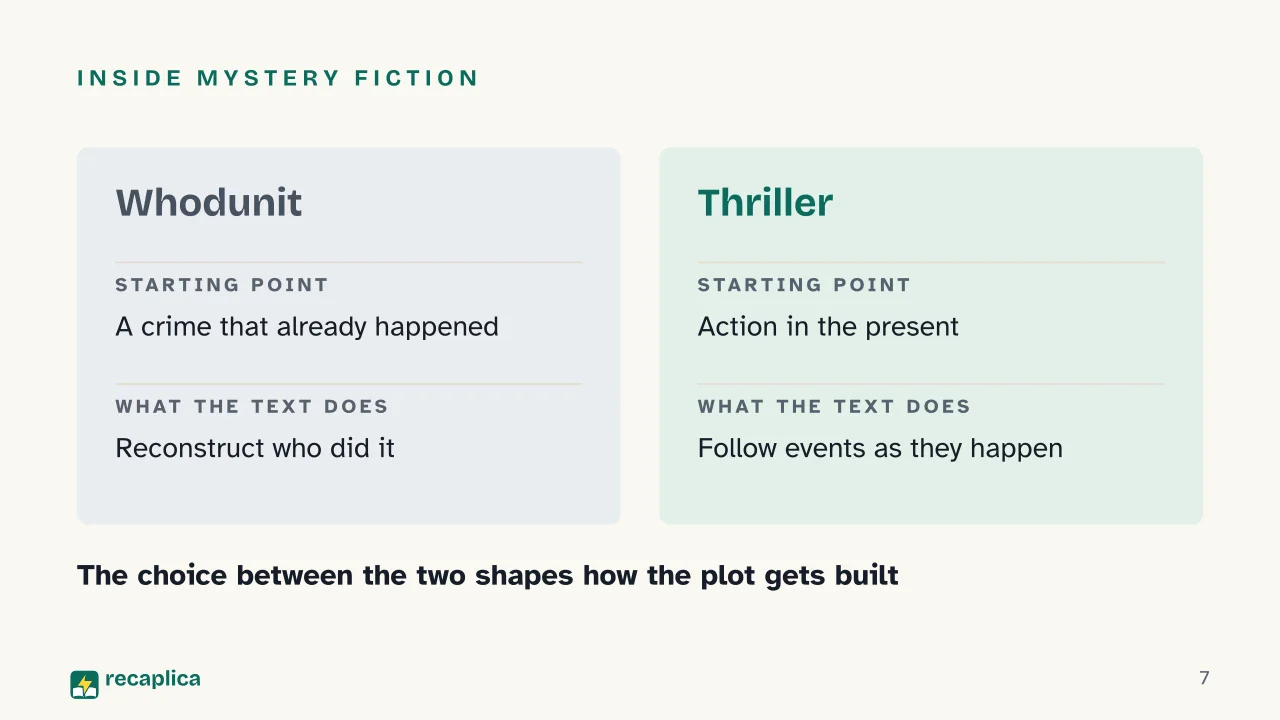
    • In mystery fiction the key convention is gathering clues one by one; within the genre, the whodunit reconstructs a crime that already happened, the thriller follows action as it unfolds (Univ. at Buffalo).
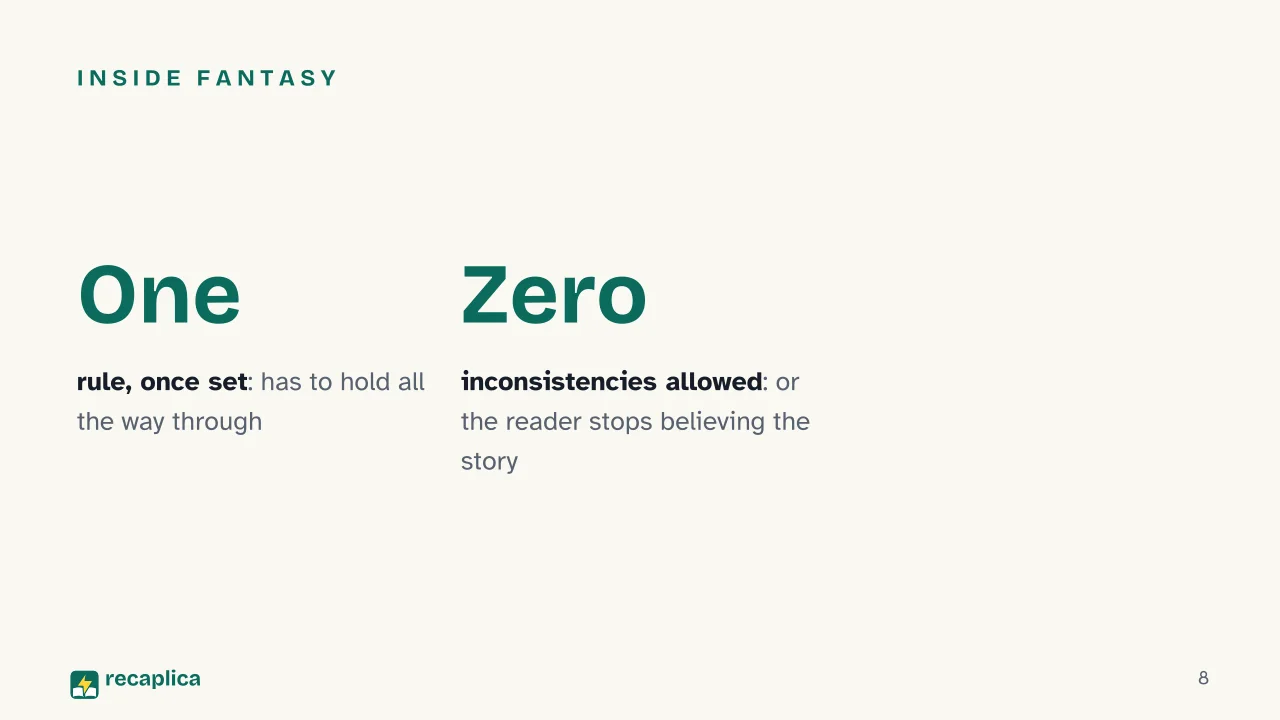
    • Fantasy's most fragile convention is internal consistency: once a world rule, like how magic works, is set, it has to hold for the rest of the story.
    • Choosing fantasy or science fiction means an extra step other genres skip, working out how magic or technology functions before touching the plot.
    • A good way to test a genre choice is to check what each part of the text does for the overall purpose, rather than what it looks like at a glance.

    Deep Dive

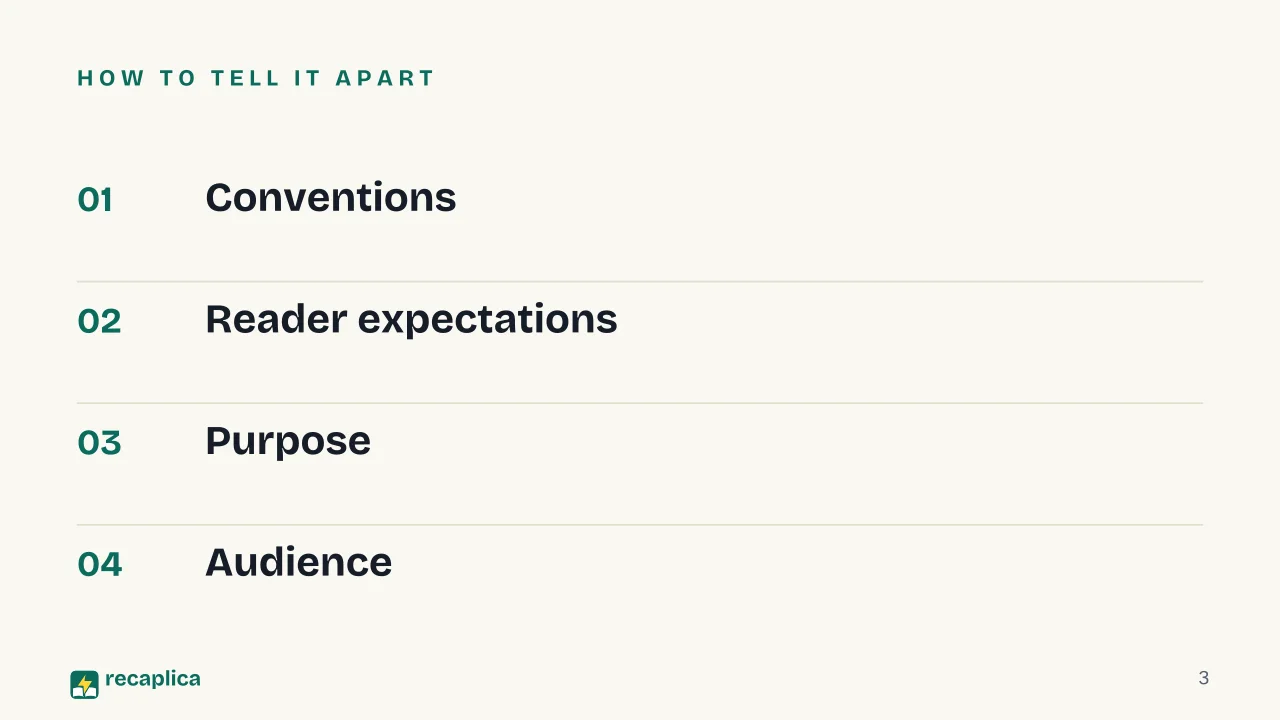
    Anyone holding a half-finished story, or a novel idea still coming into focus, often asks the wrong question first: “what story do I want to tell” instead of “what genre am I telling it in.” They’re two different questions, and the second one has a more practical answer than it sounds like. According to Purdue OWL, identifying a text’s genre means looking at four connected elements together: the conventions that govern it, the expectations it raises in a reader, the purpose it serves and the audience it’s aimed at. They need to be read as a set: a text can follow the surface conventions and still miss the point of the genre it claims to belong to.

    Conventions, built through use

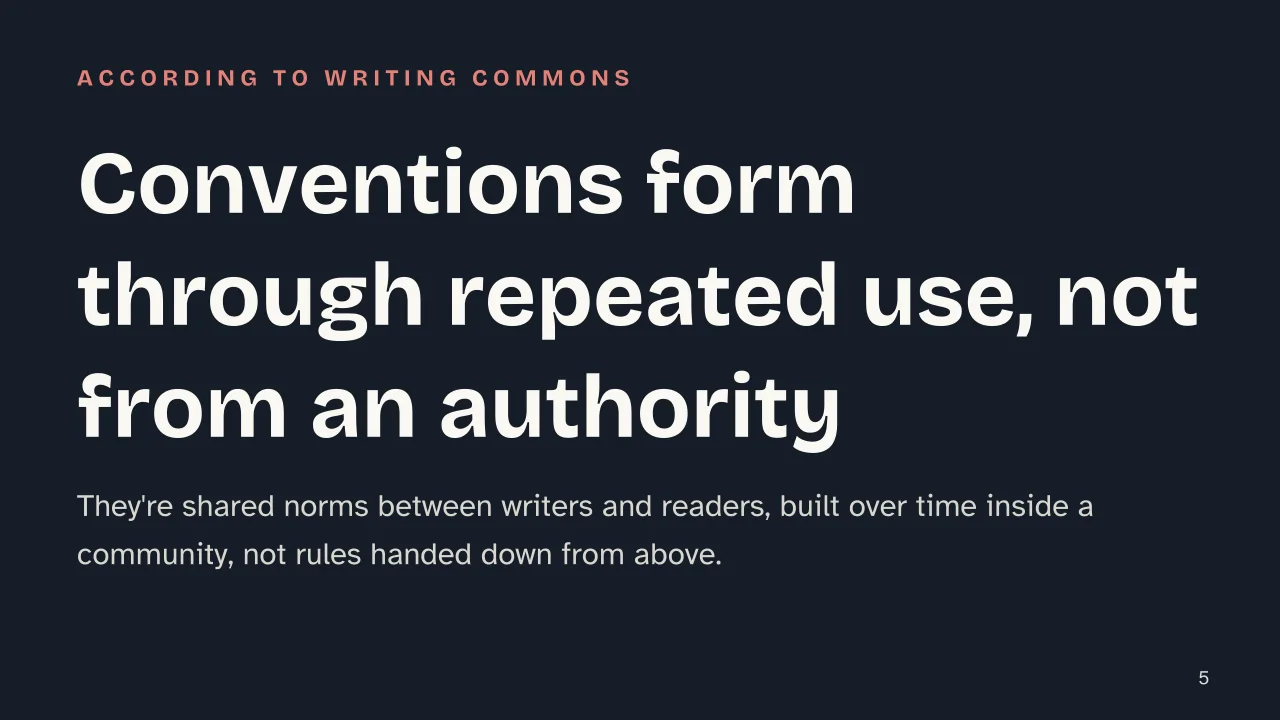
    Writing Commons describes a genre’s conventions as shared norms between writers and readers, built over time inside a community through repeated use. A mystery reader expects clues, a poetry reader expects a certain relationship with form, and that expectation exists because thousands of earlier texts built the habit. No outside authority declared it by decree. A writer steps into that network of shared habits, and can follow it, bend it or break it, but has to know it’s there first.

    Understanding a convention also helps when reading texts that play with it openly. Our Recap on The Name of the Rose looks at how the novel plays with mystery conventions inside a historical frame, using reader expectations as narrative material in its own right.

    Practical example: mystery fiction is organized around gathering clues one by one, according to the University at Buffalo Libraries guide: it’s this convention that sets the genre apart from other kinds of fiction. Within the same genre, though, there are at least two different setups: the whodunit, centered on a crime that already happened and needs reconstructing, and the thriller, centered on action unfolding in the present. The choice between the two changes how the plot gets built from the first page on.

    Reader expectations

    Every genre carries, according to Writing Commons, a shared expectation between writer and reader about how a text of that kind should be structured and presented. Meeting reader expectations doesn’t mean telling the same story every time. It means giving readers the footholds they need to orient themselves, then using that space to surprise them.

    In fantasy that expectation takes a particular shape: internal consistency. F(r)iction calls it the main risk for anyone writing in the genre, because if a reader notices that the rules of the imagined world don’t add up, they lose the suspension of disbelief, meaning they stop believing the story while reading it. Horror and weird fiction play with a similar mechanism: our Recap on Lovecraft’s non-Euclidean geometry shows how the horror comes precisely from world rules pushed to the breaking point while staying consistent with themselves.

    Practical example: once a world rule is set, how magic works, for example, the fantasy genre requires following it all the way through, or the whole story’s credibility collapses. That’s why choosing fantasy or science fiction means an extra round of groundwork other genres skip: building the rules for how technology or magic works from scratch before even touching the plot.

    Purpose

    The third criterion shifts attention from what a text says to what a text does. Purdue OWL suggests a practical way to check whether a text really sticks to its chosen genre: look at what each individual part is doing for the overall purpose, not just what it seems to be about on the surface. A chapter that looks like a mystery on the surface, clues, suspects, a twist, but actually works to build a coming-of-age novel belongs to a different genre than the one it appears to be at first glance.

    This criterion applies outside fiction too, and the contrast is useful. Our Recap on the Petrarchan sonnet’s structure and rhyme scheme describes a form with fixed conventions, fourteen lines, a precise rhyme scheme, built to concentrate a thought into a short space: a different purpose than a novel’s, which has all the room it needs to follow a character over time.

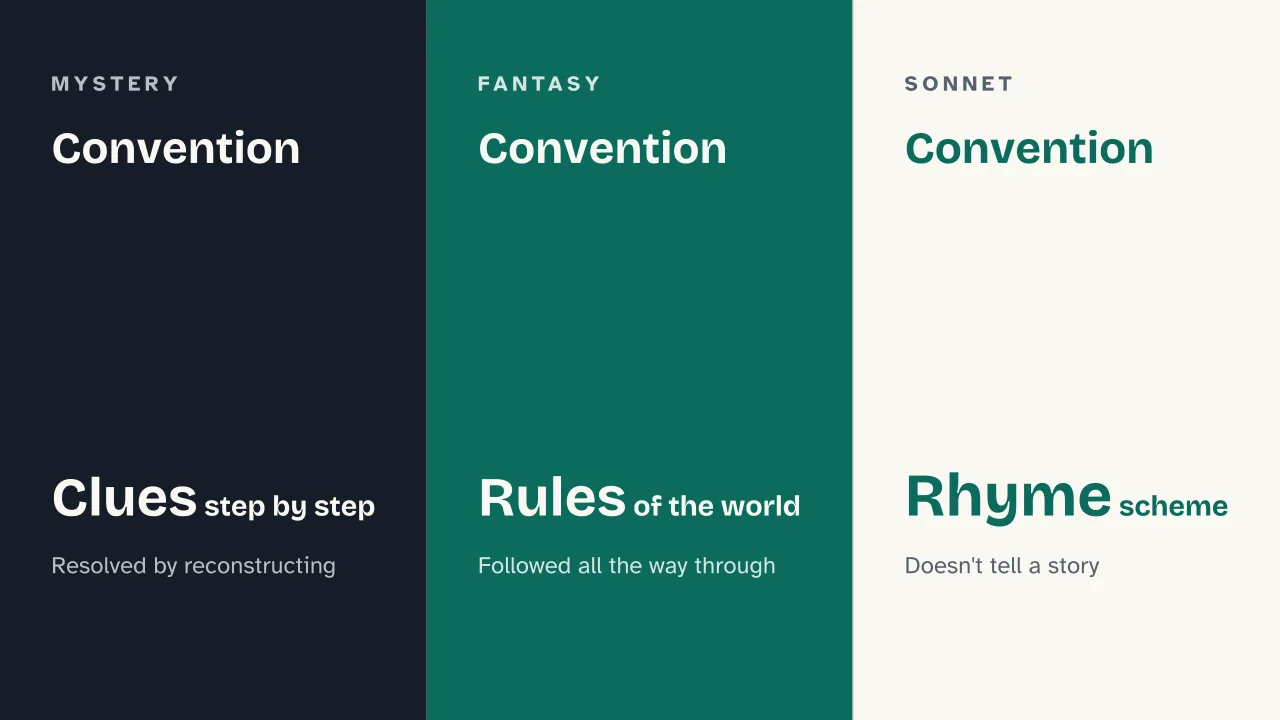
    GenreDefining conventionTypical purpose
    MysteryGathering clues step by stepHave the reader reconstruct or follow a crime
    FantasyConsistency of world rulesSustain a believable imagined world
    SonnetFixed rhyme scheme across 14 linesConcentrate a thought into a short form

    Audience

    The fourth criterion, audience, is the one most often forgotten while writing, because it sounds more like a marketing question than a writing one. Knowing who a text is aimed at changes the pace of its sentences, how much explanation it allows itself, even how long its chapters run. A genre aimed at a young audience tolerates less moral ambiguity than one aimed at adult readers, part of the same network of shared expectations Writing Commons describes.

    The four criteria give a way to get your bearings when you’re not sure which genre you’re actually in.

    Put all four together against a manuscript, and they hand back a more precise answer than any one of them would alone. For a broader look at what literary genres actually are, our Recap on literary genres: novel, short fiction, poetry and theatre still works as a wider map to start from.

    Slide deck

    Slides ready to download and make your own in PowerPoint or Google Slides, with speaker notes. Pick the Flash cut or the Full one.
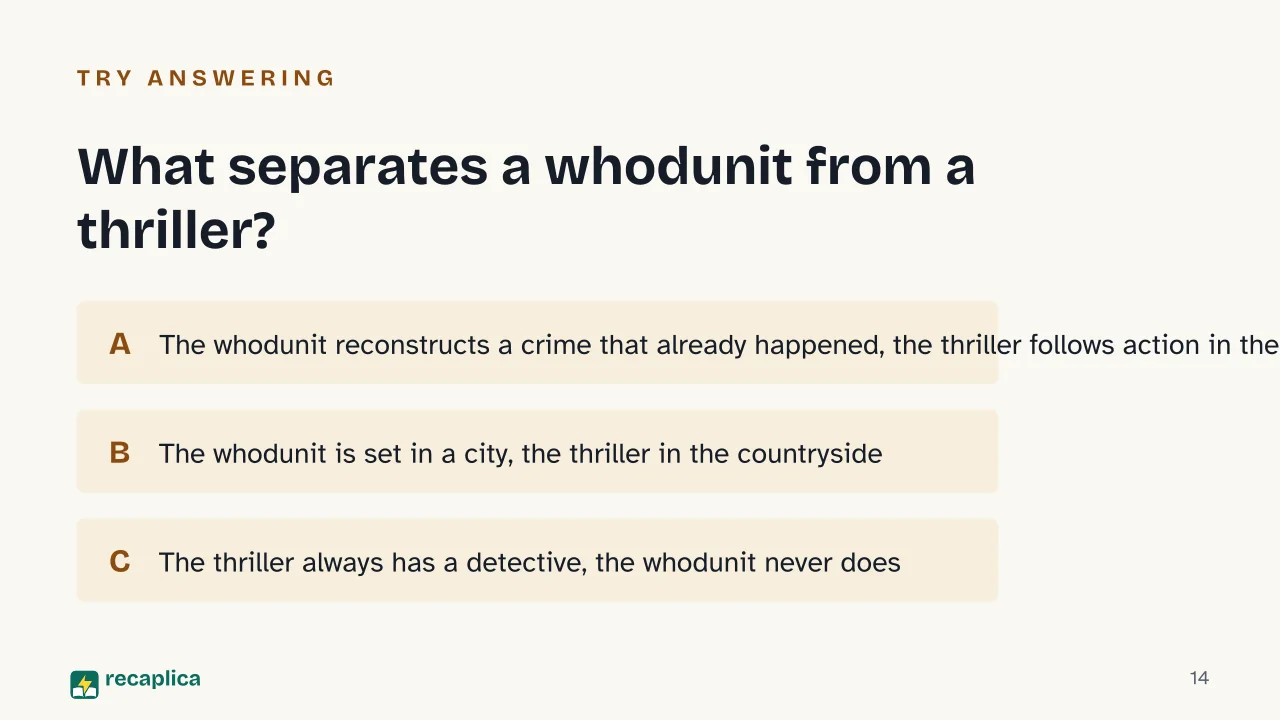
    Slide 1 of the presentation on How to Choose a Genre for Writing a Story: Choosing a GenreSlide 2 of the presentation on How to Choose a Genre for Writing a Story: What genre is your story actually inSlide 3 of the presentation on How to Choose a Genre for Writing a Story: How to tell it apartSlide 4 of the presentation on How to Choose a Genre for Writing a Story: Chapter 01: ConventionsSlide 5 of the presentation on How to Choose a Genre for Writing a Story: Conventions form through repeated use, not from an authoritySlide 6 of the presentation on How to Choose a Genre for Writing a Story: Chapter 02: Genre examplesSlide 7 of the presentation on How to Choose a Genre for Writing a Story: Inside mystery fictionSlide 8 of the presentation on How to Choose a Genre for Writing a Story: Inside fantasySlide 9 of the presentation on How to Choose a Genre for Writing a Story: Chapter 03: Purpose and audienceSlide 10 of the presentation on How to Choose a Genre for Writing a Story: What is each part of the text actually doingSlide 11 of the presentation on How to Choose a Genre for Writing a Story: Chapter 04: Common mythsSlide 12 of the presentation on How to Choose a Genre for Writing a Story: Genre conventions are not a creative cageSlide 13 of the presentation on How to Choose a Genre for Writing a Story: Convention · Convention · ConventionSlide 14 of the presentation on How to Choose a Genre for Writing a Story: What separates a whodunit from a thriller?Slide 15 of the presentation on How to Choose a Genre for Writing a Story: Time for the recap
    Flash10 slidesThe essential thread, to present in classFull15 slidesEvery chapter and the deeper detail

    Common myths

    • ✗ Myth You pick the genre after the story is written, based on how it turned out.

      ✓ Reality Writing Commons frames conventions as a shared sense of what form a text like that is expected to take, something that shapes choices from the first lines; a genre still stays identifiable after the fact, by checking the manuscript against Purdue OWL's four criteria.

    • ✗ Myth A genre's conventions are creative constraints to avoid.

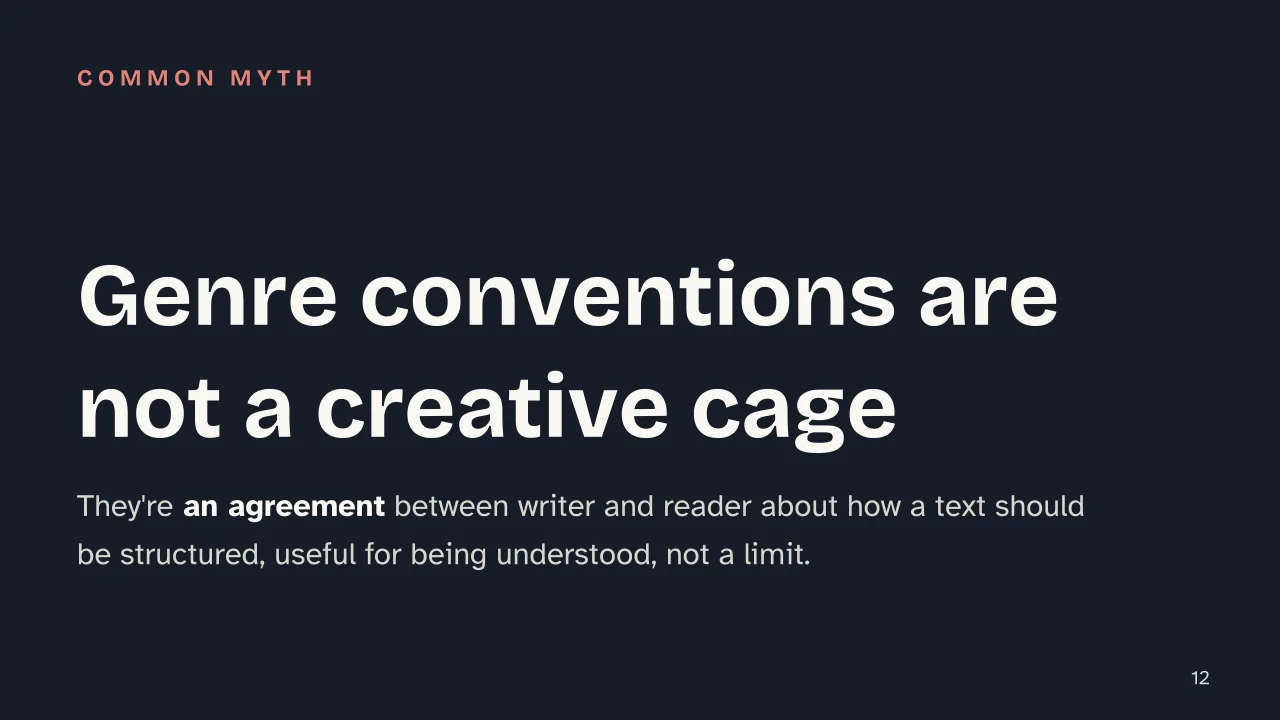
      ✓ Reality Writing Commons describes them as an agreement between writer and reader, meant to get the writer understood by a reader holding certain expectations, built together over time by a community.

    • ✗ Myth Fantasy and science fiction get written like any other genre, all you need is an original idea.

      ✓ Reality F(r)iction describes an extra step these genres demand over others, fixing in advance how magic or technology works, because those rules will carry the entire story, from the first page to the last.

    Mind map

    Drag the background to move around and the nodes to reposition them; use − and + to collapse and expand branches.
    Customize
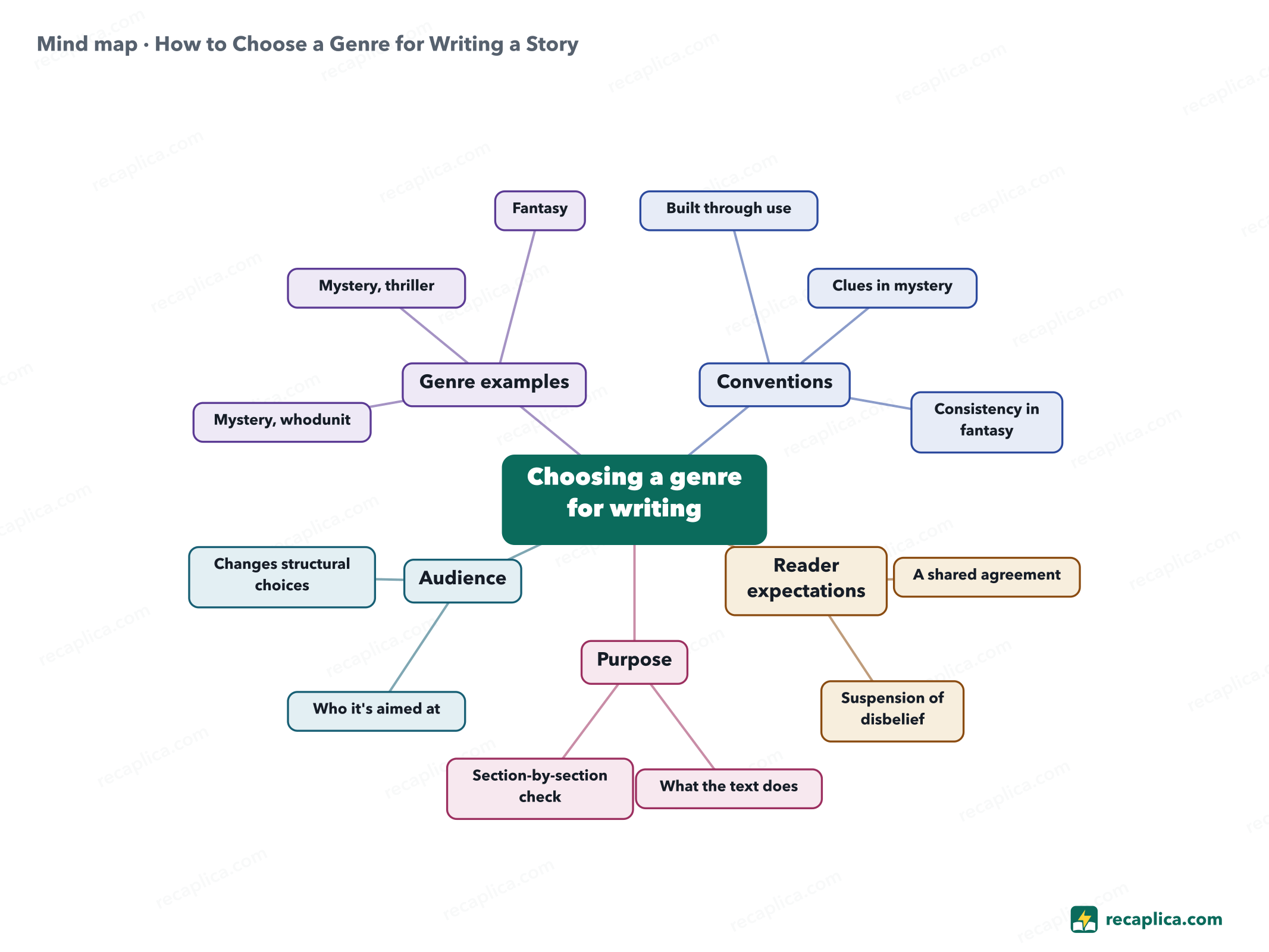
    Mind map: How to Choose a Genre for Writing a Story
    • Choosing a genre for writing
      • Conventions the shared norms that govern a text's form
        • Built through use not handed down from above, per Writing Commons
        • Clues in mystery the step-by-step gathering that marks the genre
        • Consistency in fantasy world rules followed all the way through
      • Reader expectations
        • A shared agreement a sense of what shape the text should take
        • Suspension of disbelief breaks when the world's rules stop adding up
      • Purpose
        • What the text does not just what it says, per Purdue OWL
        • Section-by-section check each part checked against the overall purpose
      • Audience
        • Who it's aimed at
        • Changes structural choices
      • Genre examples
        • Mystery, whodunit a crime that already happened, to reconstruct
        • Mystery, thriller action unfolding in the present
        • Fantasy consistent world rules, groundwork up front

    Quiz: test yourself

    Answer the questions to check what you have learned: you get instant feedback and a short explanation.

    Grade 0/10 0/5
    1 According to Purdue OWL, what four elements together define a genre for writing?

    Purdue OWL asks writers to look at all four together, because conventions alone don't guarantee a text actually does what its genre is supposed to do.

    2 How does Writing Commons describe a genre's conventions?

    For Writing Commons, conventions are norms a community of readers and writers builds by using them, repeatedly, across generations of texts.

    3 What separates a whodunit from a thriller within the mystery genre?

    According to the University at Buffalo Libraries guide, this difference in setup shapes how the entire plot is built, even though both stay inside the mystery or crime genre.

    4 According to F(r)iction, what's the main risk for someone writing fantasy?

    A reader who notices a crack in the rules of the imagined world stops believing in it, and that trust is exactly what holds a fantasy story together.

    5 True or false: a genre's conventions are creative constraints a writer should avoid.

    False. Writing Commons describes them as an agreement that helps a writer get through to readers who hold certain expectations, built over time by the community of readers itself.

    Answers: 1-A · 2-B · 3-A · 4-B · 5-B

    Flashcards

    Tap the card to flip it and check whether you remember the answer, then move to the next one.

    1 / 7

    Explain it in your own words

    The ultimate test: if you can explain it in simple words, you've truly understood it. Write your explanation, then compare it with the Recap.

    Your explanation is saved only on this device.

    Anyone writing a story or a novel often realizes only halfway through that they're not sure which genre they're actually working in. Purdue OWL suggests looking at four things together to figure it out, how the text is built, what readers come to it expecting, the job it does and who it's written for. Writing Commons explains that those habits take shape through repeated use inside a community of readers and writers. Mystery relies on gathering clues one by one, fantasy relies on its world rules holding up, and in both cases it helps to check what each part of the text is doing, not just what it says.

    Frequently asked questions

    How do I know if my story is a mystery or a thriller?

    Look at where the story's tension comes from. A crime that needs reconstructing points toward a whodunit, action the reader follows as it happens points toward a thriller, two setups the University at Buffalo Libraries treats as variants of the same genre, each with its own plot logic.

    Do I need to settle on a genre before I start writing?

    Deciding early helps, because it shapes structural choices from the first pages. It's still possible to work out the genre after the fact, by checking what the manuscript actually does against conventions, reader, purpose and audience (Purdue OWL).

    Do genre conventions limit creativity?

    Writing Commons calls them an implicit agreement, the reader knows what to expect from a text's form and the writer honors that agreement to be understood, not to obey an imposed rule.

    Why does fantasy need more groundwork than other genres?

    The imagined world needs its own rules, how magic works, for example, fixed before writing and then followed without exception afterward, or the whole story loses credibility (F(r)iction).

    Is there a practical way to check whether I've stuck to the genre I chose?

    Purdue OWL suggests going through each section of the manuscript and asking what job it's doing for the story's overall purpose, beyond its surface subject.

    Sources

    • Purdue OWL — Genre Analysis & Reverse Outlining
    • Writing Commons — Discourse Conventions
    • University at Buffalo Libraries — Mystery and Crime Fiction
    • F(r)iction / Brink Literacy Project — Living the Fantasy: Worldbuilding 101

    Every Recap goes through an independent review before publication.

    Every evening, the day's new Recaps on our Telegram channel. Join the channel →

    Keep learning

    • Literature Best Dark Romance Books: A List for Every Subgenre A selection of dark romance books sorted by subgenre, for readers who already know what the genre is and just want a place to start. Dark mafia romance books cover forced marriages and warring crime families, as in Ruthless People and Killing Sarai. Dark fantasy romance books and paranormal romance move the same pull between desire and threat into worlds with gods, vampires and power struggles. Dark academia romance sets it among visions and fairy tales, while spicy dark romance books and stalker romance push the premise to the edge of real obsession. Read the Recap →
    • Literature Best Stephen King Books: 10 Novels and the Case for Each One Stephen King has written novels across several genres, from Carrie in 1974 to The Institute in 2019, and Wikipedia credits his books with more than 400 million copies sold overall. This list lines up ten titles that come up often in recommendations, with a reason for each pick, from horror staples like It and The Shining to novels that step outside the genre, such as 11/22/63 and The Green Mile. Every book comes with its publication year, its publisher and, where one exists, the award it won or was nominated for. There's no single agreed ranking: Hans-Åke Lilja, interviewed by Five Books as someone who has followed King's career for over 40 years, leaves well-known titles such as Carrie and The Shining out of his own personal picks. Read the Recap →
    • Literature Horror Story Ideas: Everyday Details, Old Fears and a Twist That Lands Writing a horror story often starts with a blank page more uncomfortable than the story itself. This Recap collects starting situations, recurring fears and ways to build a twist, with concrete examples to work from. It doesn't cover the techniques that build tension on the page — those live in the parent Recap on how to write a horror story. The sturdiest ideas tend to start with an everyday detail that stops behaving the way it should, or an old fear dressed in a setting readers recognize. Read the Recap →

    recaplica

    Clear in 30 seconds, yours in 10 minutes.

    Recaps Mind maps Request a Recap Telegram channel Mind map maker Our method About Privacy & cookies Legal notes & terms of use

    © 2026 Recaplica · A project by Curi S.r.l. — VAT IT05472000750

    Statistics, only if you say so

    To learn which Recaps help most we would use Google Analytics, with aggregate, anonymous data. It starts only with your OK, and you can change your mind anytime. Privacy policy