|
recaplica
Horror Story Ideas: Everyday Details, Old Fears and a Twist That Lands |
| © 2026 Recaplica · recaplica.com — All rights reserved |
Horror Story Ideas: Everyday Details, Old Fears and a Twist That LandsWhat to print Page numbers appear when printing with default margins. SlidesChoose a cut Flash10 slidesThe essential thread, to present in classFull15 slidesEvery chapter and the deeper detailBoth come with speaker notes. In 30 seconds quick readWriting a horror story often starts with a blank page more uncomfortable than the story itself. This Recap collects starting situations, recurring fears and ways to build a twist, with concrete examples to work from. It doesn't cover the techniques that build tension on the page — those live in the parent Recap on how to write a horror story. The sturdiest ideas tend to start with an everyday detail that stops behaving the way it should, or an old fear dressed in a setting readers recognize. Key Points
Deep DiveStarting from an everyday detail that breaksReedsy’s collection of prompts keeps returning to the same shape: a small, everyday detail that, without warning, quits working the way it’s supposed to.
The detail doesn’t need to be spectacular. It only needs to break a small, recognizable expectation — something a reader would have taken for granted. A contradiction the reader notices before the character doesAnother route, also collected by Reedsy, uses the contrast between a fact the reader already knows about the protagonist and a secondary character’s claim that contradicts it. The doubt doesn’t come from what happens, but from what someone says.
Readers who want to see this kind of doubt worked into an already-written plot can start with Best Horror Books: 10 Novels From Gothic Classics to New Favorites. Fears that have worked for a long timeA review published in PMC lists, among others, these recurring ingredients horror fiction and film draw on: the unknown, the supernatural, mutilation, death, darkness and personal space getting invaded. The same review describes suspense as an experience of uncertainty, one that can feel unpleasant or pleasant depending on who’s living it. The origins of these conventions are traced in the Recap on Horror Fiction: What It Means and the Classics That Shaped It. Why some fears still workAccording to an article in Psychology Today, horror’s effectiveness ties back to threats that, for the author, kept our ancestors awake at night: survival dangers rather than modern ones. The example given is the zombie, which combines two primal fears — being hunted and being infected — in one figure. The same source describes the human fear system as selective: it would have evolved to respond to dangers from the species’ evolutionary history, like predators, disease and hostile environments, more than to the risks of contemporary life in general. Sound, and silence, as a toolAccording to the same PMC review, horror film relies mostly on sound to generate fear. A jump scare is defined as a loud sound arriving after a long stretch of silence, and the startle reflex it triggers grows stronger when a person already expects danger. In a written story, silence translates into a conversation that cuts off, or a sound the reader can’t explain. Building that tension page after page is the subject of the Recap on the techniques that build fear on the page — here, we stay one step earlier, at the idea itself. Places that help the fearThe Victorian house turned hotel, from the Reedsy example, shows how a familiar place made just a little strange multiplies the effect of the odd detail. The classics of the gothic novel, covered in the Recap on Gothic Literature: Meaning, Features and Classic Novels, remain a useful repertoire of settings for anyone looking for a backdrop. A twist the reader almost expectsThe most effective twist, among the ideas gathered here, doesn’t come out of nowhere. It combines two known fears in the same threat, as with the zombie, or flips a fact the reader takes as certain through another character’s words.
Building an idea like this only takes two pieces — the base fear and the detail that betrays it — and letting the contradiction between them do the rest of the work. Spooky short story ideas, for a shorter pieceNot every horror idea needs a full plot. For a short piece, spooky short story ideas and scary short story ideas usually work best when they stay close to a single detail: one odd object, one contradiction, one image that shouldn’t exist, without building toward a second twist. The voice-assistant example above, or the photo nobody remembers taking, both hold up on their own in a page or two — the shorter the piece, the less room there is for more than one unsettling idea. Slide deckSlides ready to download and make your own in PowerPoint or Google Slides, with speaker notes. Pick the Flash cut or the Full one.     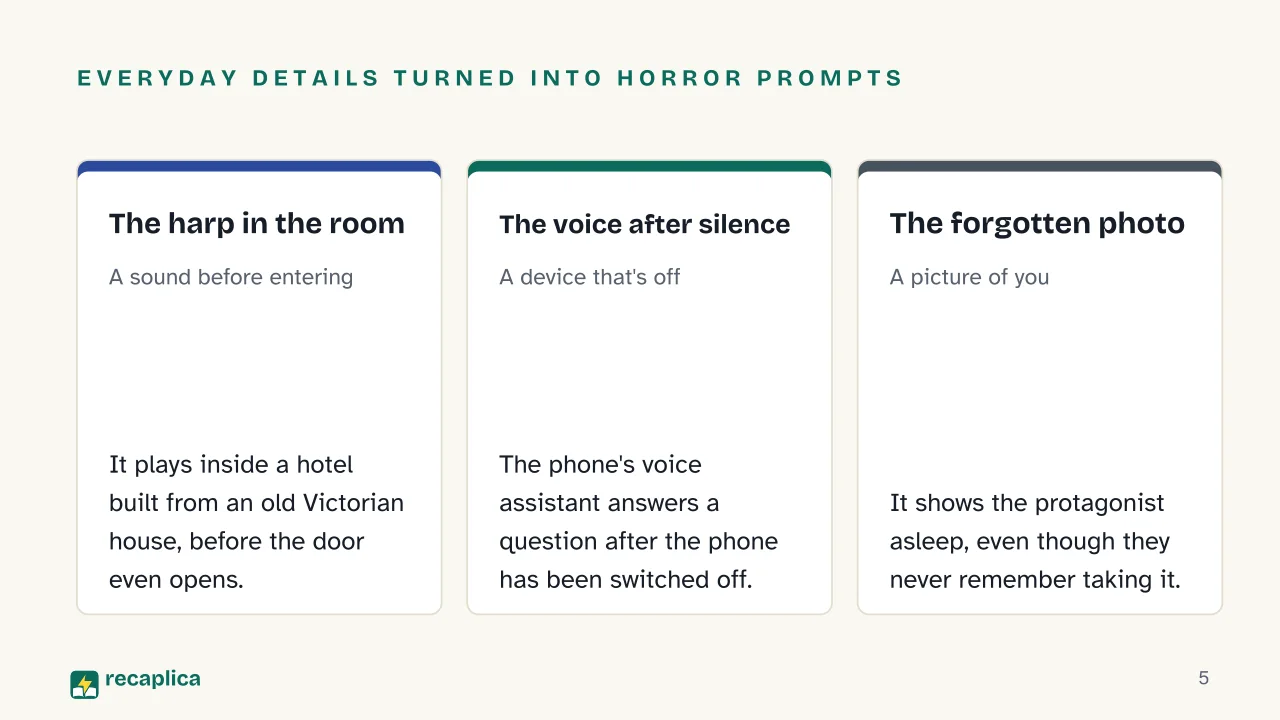 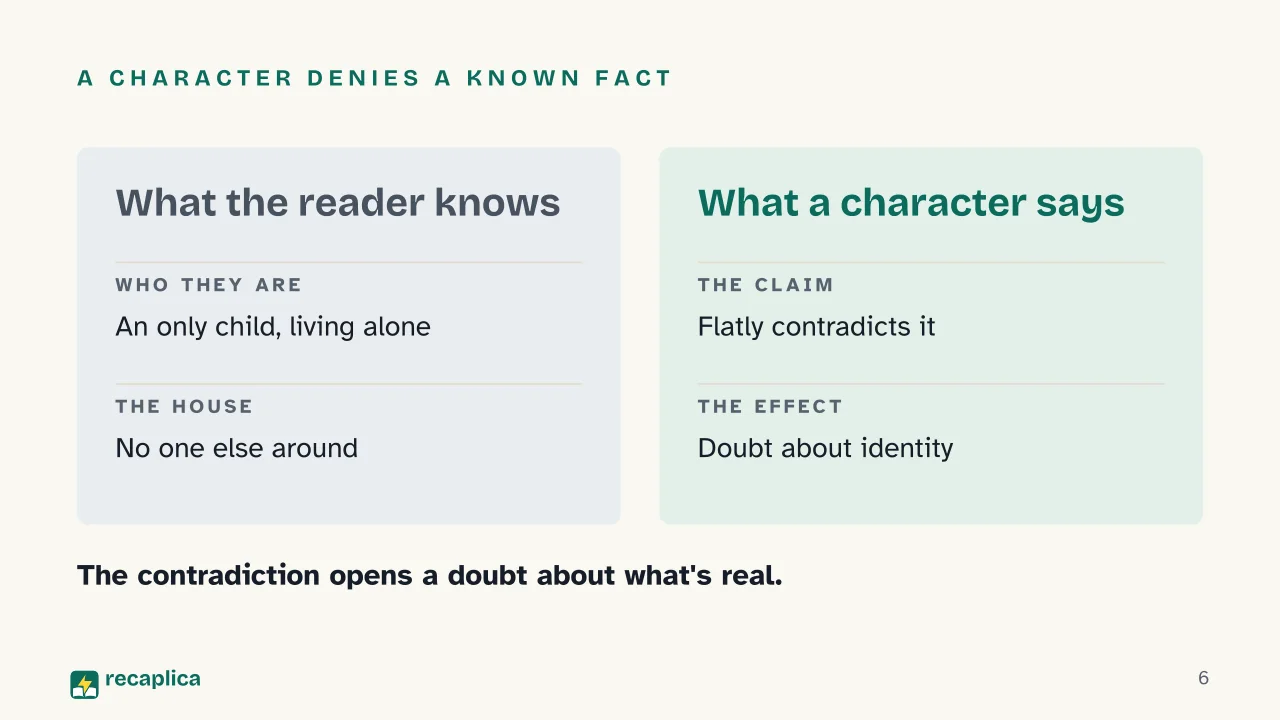  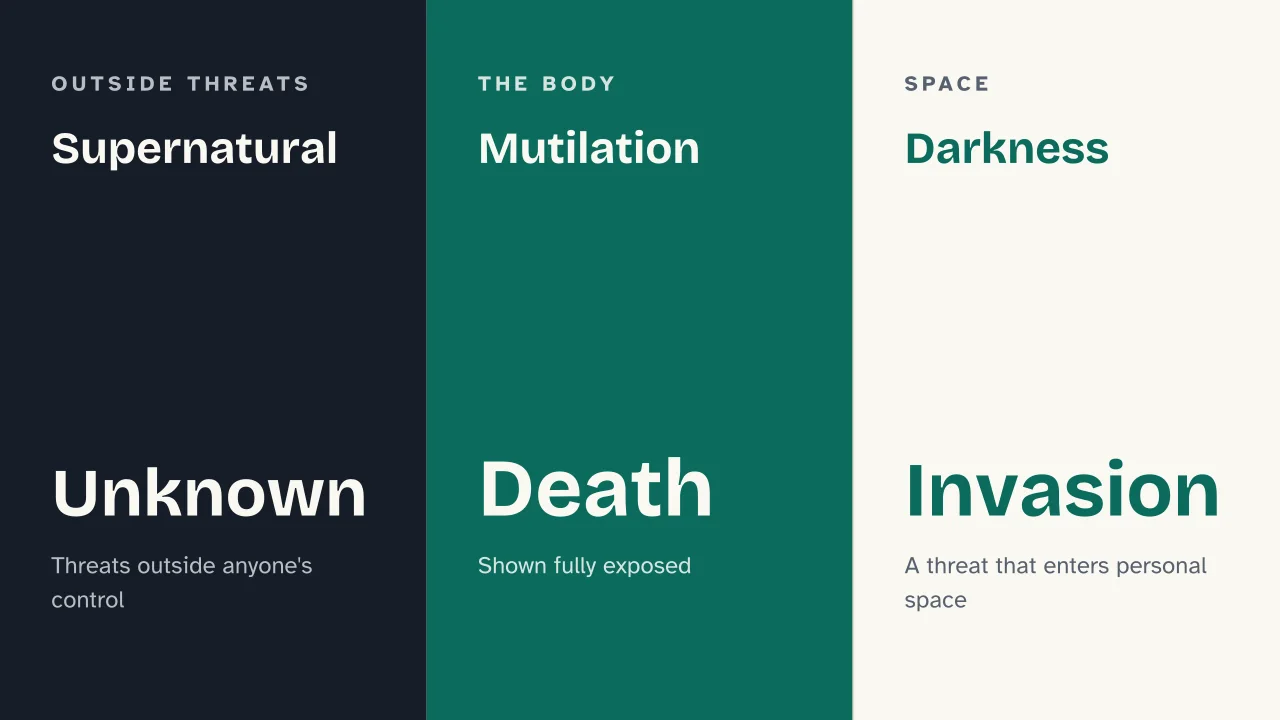 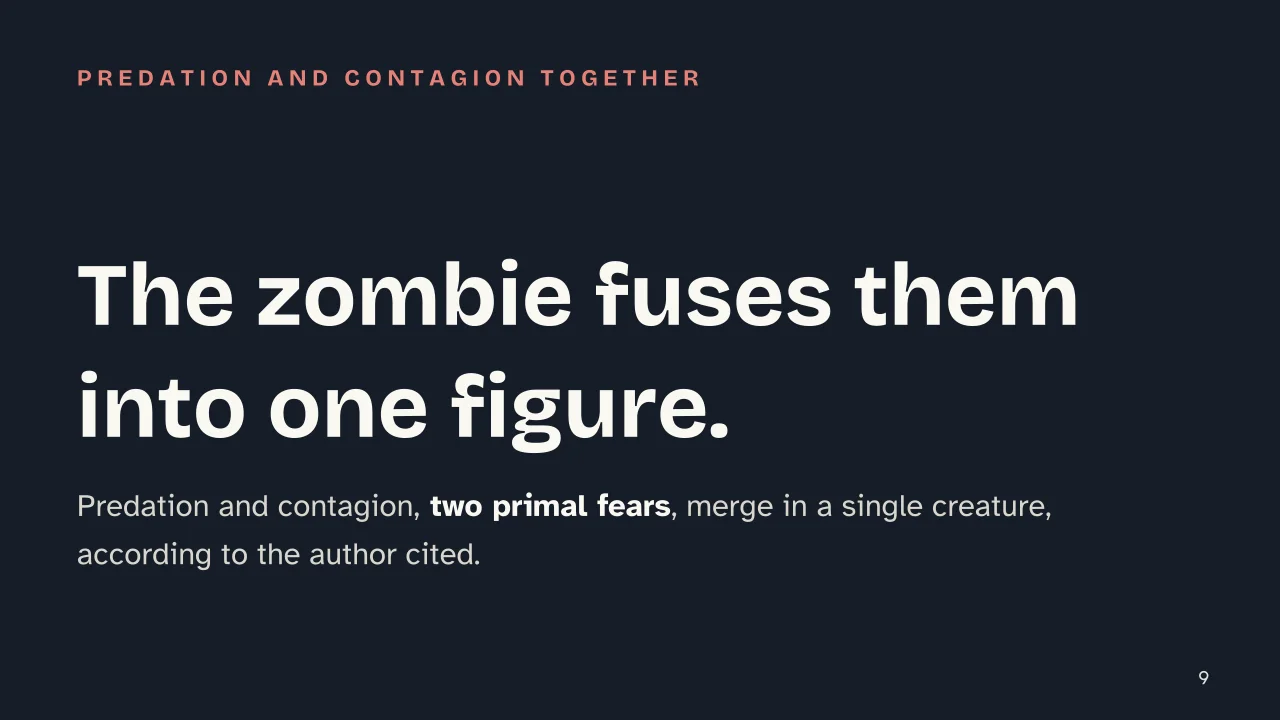  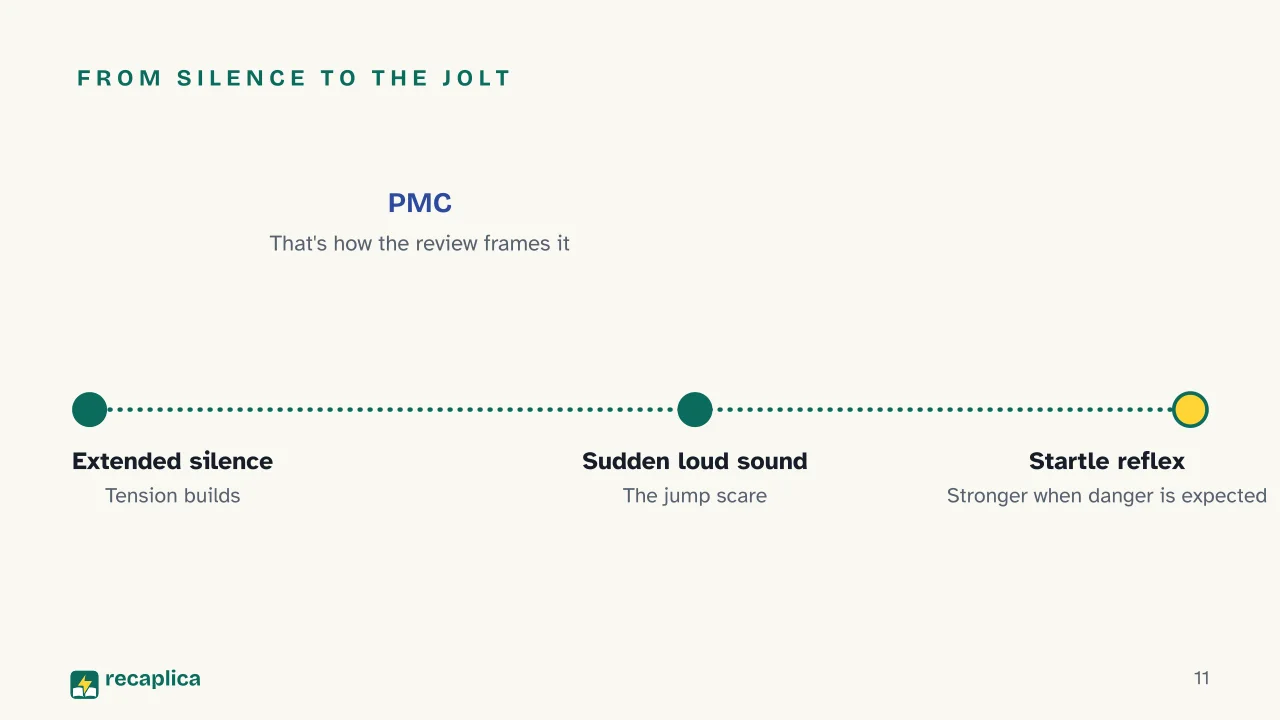  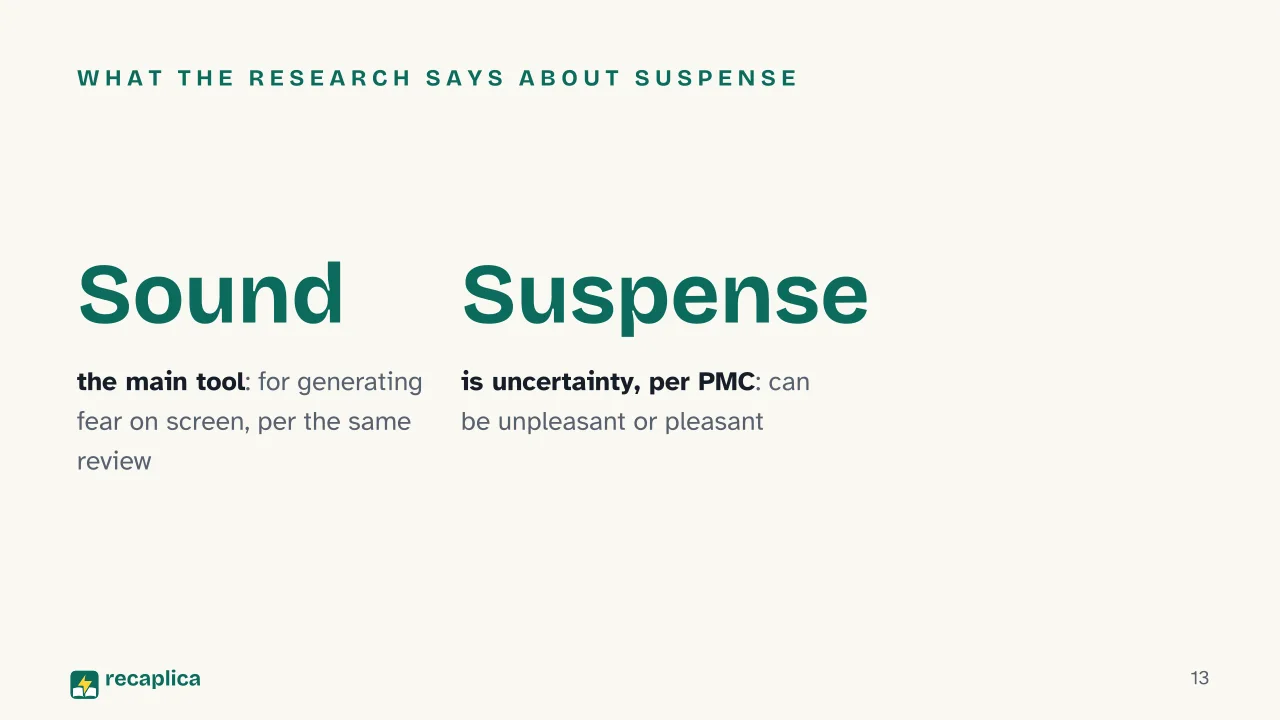 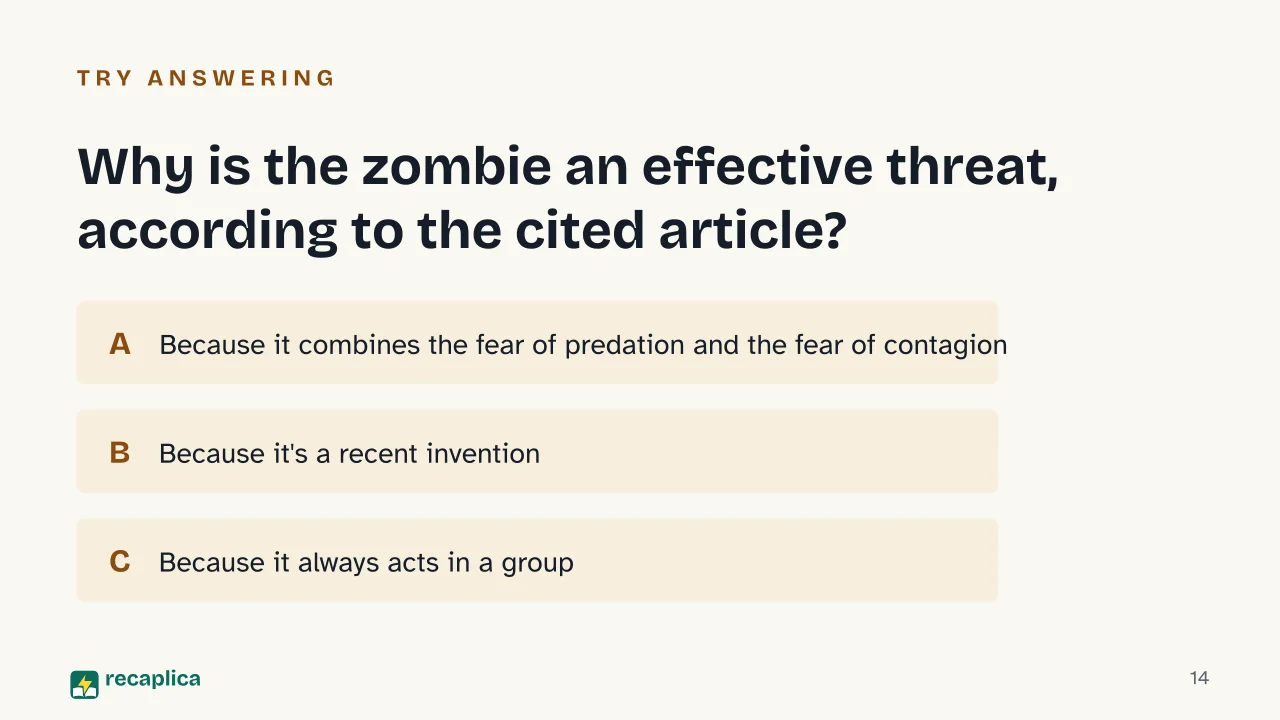  Common myths
Mind mapDrag the background to move around and the nodes to reposition them; use − and + to collapse and expand branches. 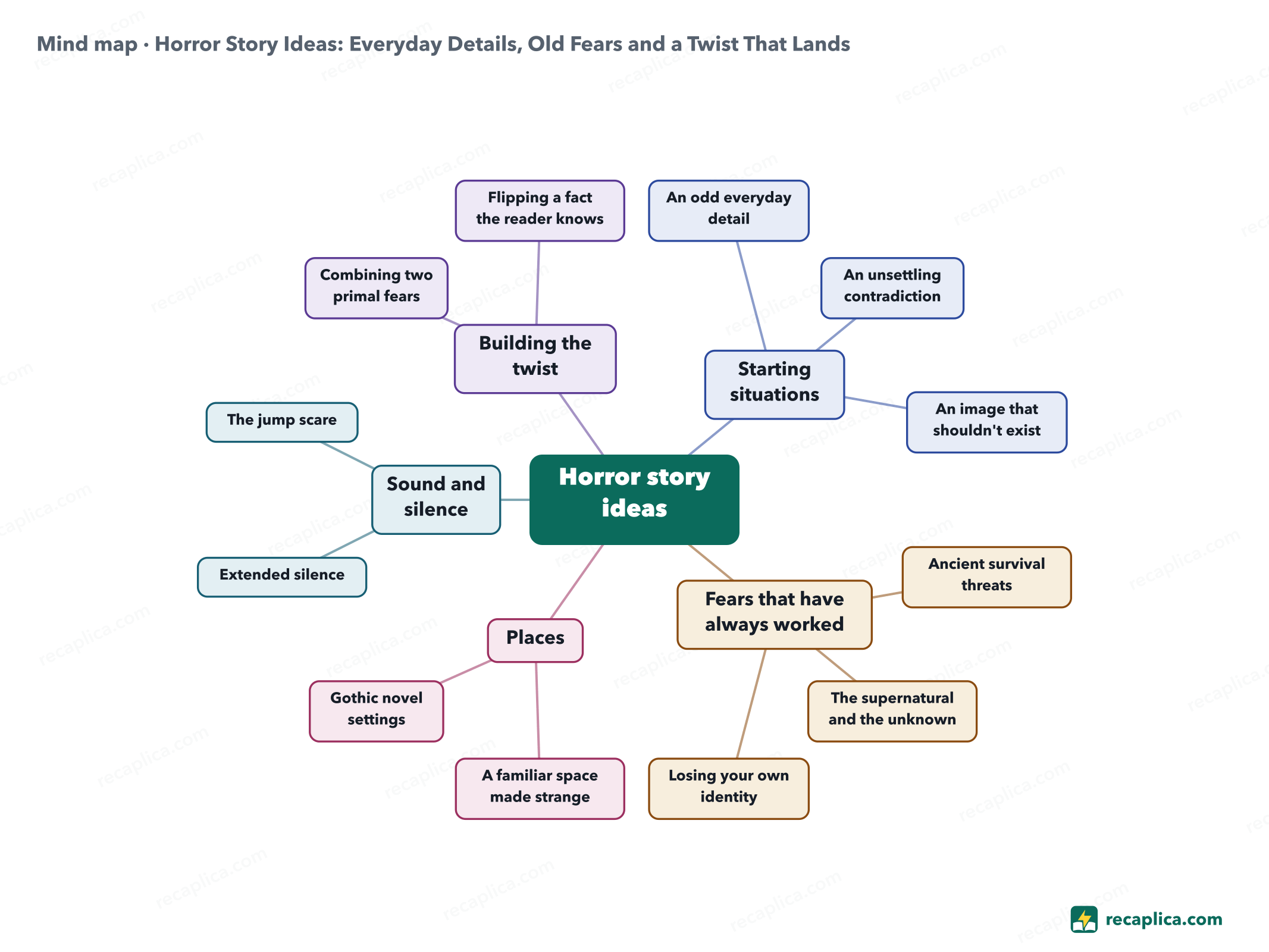
Quiz: test yourselfAnswer the questions to check what you have learned: you get instant feedback and a short explanation. Grade 0/10 0/5
FlashcardsTap the card to flip it and check whether you remember the answer, then move to the next one. 1 / 7 Explain it in your own wordsThe ultimate test: if you can explain it in simple words, you've truly understood it. Write your explanation, then compare it with the Recap. Your explanation is saved only on this device.
Frequently asked questionsWhere can I find horror story ideas or prompts to start writing?A useful starting point is a small everyday object or sound that, at some point, starts behaving the wrong way. Which fears work best in a horror story?Ones tied to ancient survival threats, like predators, contagious disease and hostile environments: the author cited in Psychology Today links the human fear system to exactly these dangers. How do you build a good twist in a horror story?Often by pairing two primal fears inside one threat, or by having another character's words upend something the reader was sure was true. What's a horror writing prompt?A short cue meant to kick off the writing, usually a situation or image that later grows into a plot. The horror writing prompts and horror story prompts gathered here are organized by situation, fear and sound, rather than handed over as a single generic list. Does setting matter as much as the idea in a horror story?Yes: a familiar space made strange helps make the fear credible, as shown by the hotel built from an old Victorian house. Every Recap goes through an independent review before publication. |