|
recaplica
How to Avoid Foreign Transaction Fees When You Pay or Withdraw Abroad | ||||||||||||||||||||
| © 2026 Recaplica · recaplica.com — All rights reserved | ||||||||||||||||||||
How to Avoid Foreign Transaction Fees When You Pay or Withdraw AbroadWhat to print Page numbers appear when printing with default margins. SlidesChoose a cut Flash10 slidesThe essential thread, to present in classFull14 slidesEvery chapter and the deeper detailBoth come with speaker notes. In 30 seconds quick readWhen you pay or withdraw money in a currency other than your own, the cost of the conversion shows up in two possible ways, a margin built into the exchange rate and, sometimes, a fixed fee per transaction. Dynamic Currency Conversion (DCC) is the option to see the amount charged in your home currency instead of the local one, and it comes with a margin set by whoever offers it. Regulation (EU) 2019/518 requires that margin to be disclosed as a percentage before a payment is confirmed, at both card terminals and ATMs. Traditional credit cards, prepaid travel cards and multi-currency digital accounts each handle these charges under their own rules, worth checking before a trip. Key Points
Key figures
Deep DiveWhat Is a Foreign Currency Transaction Fee, and Where Does It Come FromRegulation (EU) 2019/518 treats currency conversion charges as a distinct cost within a cross-border payment, separate from the rest, and requires that cost to be made transparent. In practice, it comes from two different sources: a margin applied on top of the reference exchange rate, and a fixed fee per transaction that some cards charge and others don’t. A cash withdrawal at an ATM can carry an additional charge set by the bank that operates the machine, independent of the conversion margin itself. The exchange rate margin is the less visible of the two, because it never appears as a separate line on a receipt or a statement, it’s simply the rate itself, slightly less favorable than the reference rate. A fixed fee, by contrast, shows up immediately. That’s why a card or account with no fixed fee doesn’t yet say anything about the real cost of the transaction. How Dynamic Currency Conversion Works, the DCC MechanismVisa describes Dynamic Currency Conversion as the service that, when you pay or withdraw money in a foreign country, offers to show the amount directly in your home currency instead of the local one. It happens both at the point of sale and at ATMs: the machine asks whether you’d rather pay, say, in dollars instead of pesos or yen. That conversion, Visa explains, includes an exchange rate and any extra fees decided by whoever offers the service, not by the card network itself.
Visa is explicit on one point: the choice between the two options always belongs to the customer. Merchants and ATM operators cannot decide on the customer’s behalf, or use tricks like a different font size or color to steer the decision. Declining DCC, Visa adds, doesn’t limit the ability to complete the purchase or the withdrawal. Transparency Rules in the European UnionRegulation (EU) 2019/518 applies in general from December 15, 2019, but the more specific obligations on the conversion margin, Article 3a(1)-(4), took effect on April 19, 2020, and a further obligation on electronic cost messaging applies from April 19, 2021. The rule requires two distinct things: expressing the conversion margin as a percentage over the reference rate published by the European Central Bank, and displaying that information, together with the amount in both currencies, before the payment is confirmed. In the United Kingdom, the Financial Conduct Authority published guidance on May 1, 2025 covering good and poor practice in the transparency of international payment pricing. Among the poor practices the FCA lists is presenting the absence of a fixed fee as a zero-cost transaction, when a margin can remain built into the exchange rate applied; among the good practices, the FCA cites explicitly stating that a rate includes a markup, not just the final figure. What Changes With a Credit CardTraditional credit cards follow the terms set by the issuing bank and the network they belong to: some charge a fixed fee on foreign currency transactions, others fold it into the exchange rate margin, and some waive it entirely for certain card products. The basic mechanics of a card payment, from inserting the card to receiving the cash, are covered in How ATMs Work, From Card Insertion to Cash in Hand, the same network that authorizes a withdrawal at home is the one that, abroad, can offer DCC at the machine. Forex Card Fees and Foreign Currency Fees on Prepaid Cards and Digital AccountsAlongside traditional credit cards there’s a category of products built specifically for spending in different currencies: prepaid travel cards and multi-currency digital accounts. The Consumer Financial Protection Bureau, the US agency for consumer financial protection, defines a foreign transaction fee as the charge a card provider applies when the card is used in a foreign country or to pay in a currency other than the one it was issued in, the same charge appears, under different names, on prepaid cards and digital accounts issued in Europe too. Terms differ from product to product, and there’s no single rule that applies to the whole category: some multi-currency accounts and prepaid cards charge a margin on the conversion, others reduce or waive it for certain transactions, with terms that vary from issuer to issuer. Reading the specific terms of your own product remains the only way to know what to expect in advance, since none of the institutional sources consulted gives a typical cost range for the category as a whole. Comparing Payment Methods
What to Check Before You TravelAccording to the institutional sources consulted, the starting point is the screen that appears before confirming a payment or withdrawal: Regulation (EU) 2019/518 requires it to show the amount in both currencies, the exchange rate and the margin applied. Comparing that rate against the day’s official exchange rate, even roughly from memory, helps judge whether the margin offered is reasonable, regardless of whether a separate fixed fee is charged. Frequent travelers can also check the terms of their credit card, any prepaid travel card, or a multi-currency digital account ahead of time, so they already know before departure which option, local currency or DCC, which card at the ATM, tends to cost less in their own case. Sorting out the practical side of a trip in advance helps free up attention for that decision at the right moment, the rules on what you can carry on board, covered in Power bank on a plane, the rules for carrying and using it safely, settle a different question that also needs handling before departure, not at checkout. Over time, it’s also worth remembering that a currency’s purchasing power changes, the dynamics described in Inflation, What It Is, How It Works and Why Prices Rise affect the real value of a conversion even when the nominal rate stays the same. Slide deckSlides ready to download and make your own in PowerPoint or Google Slides, with speaker notes. Pick the Flash cut or the Full one.   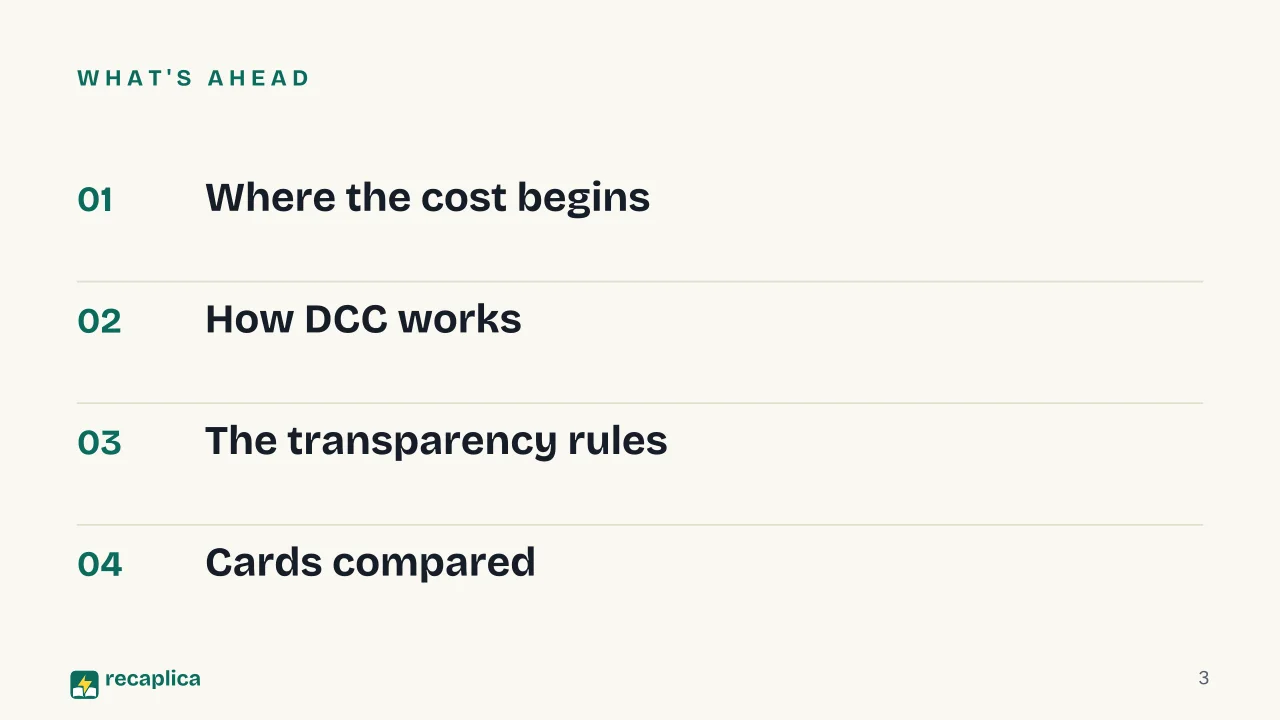  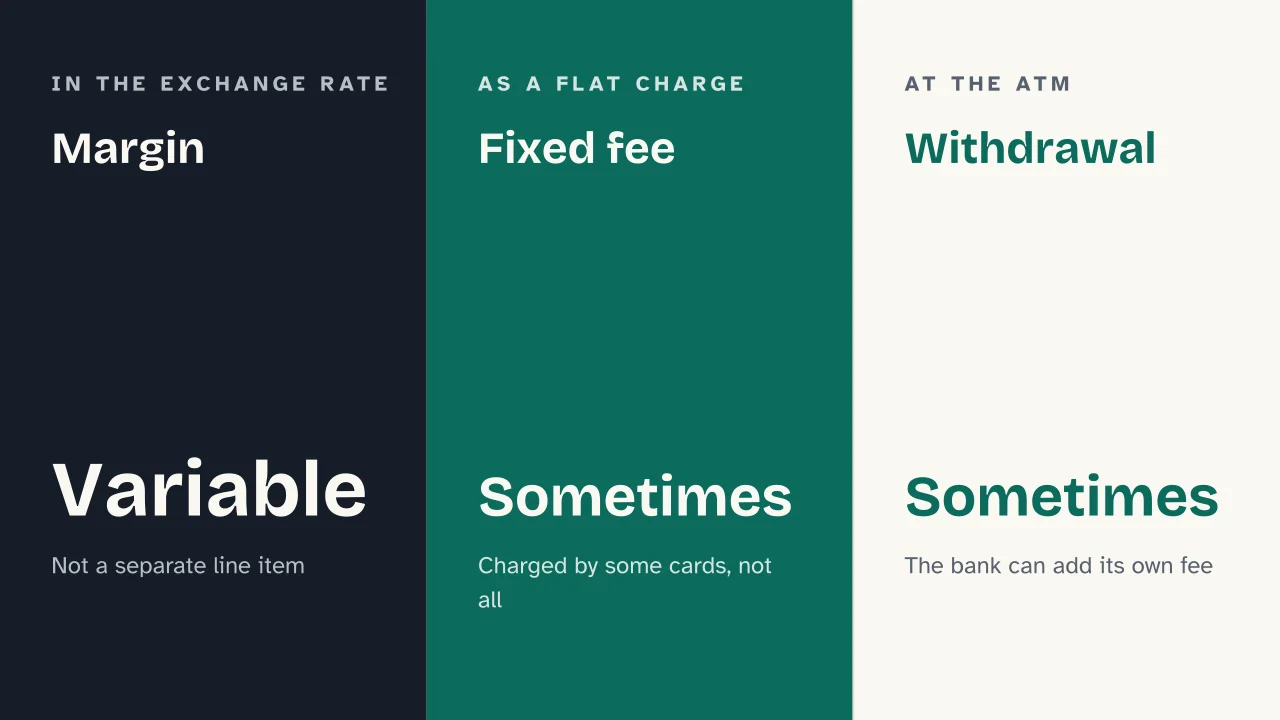  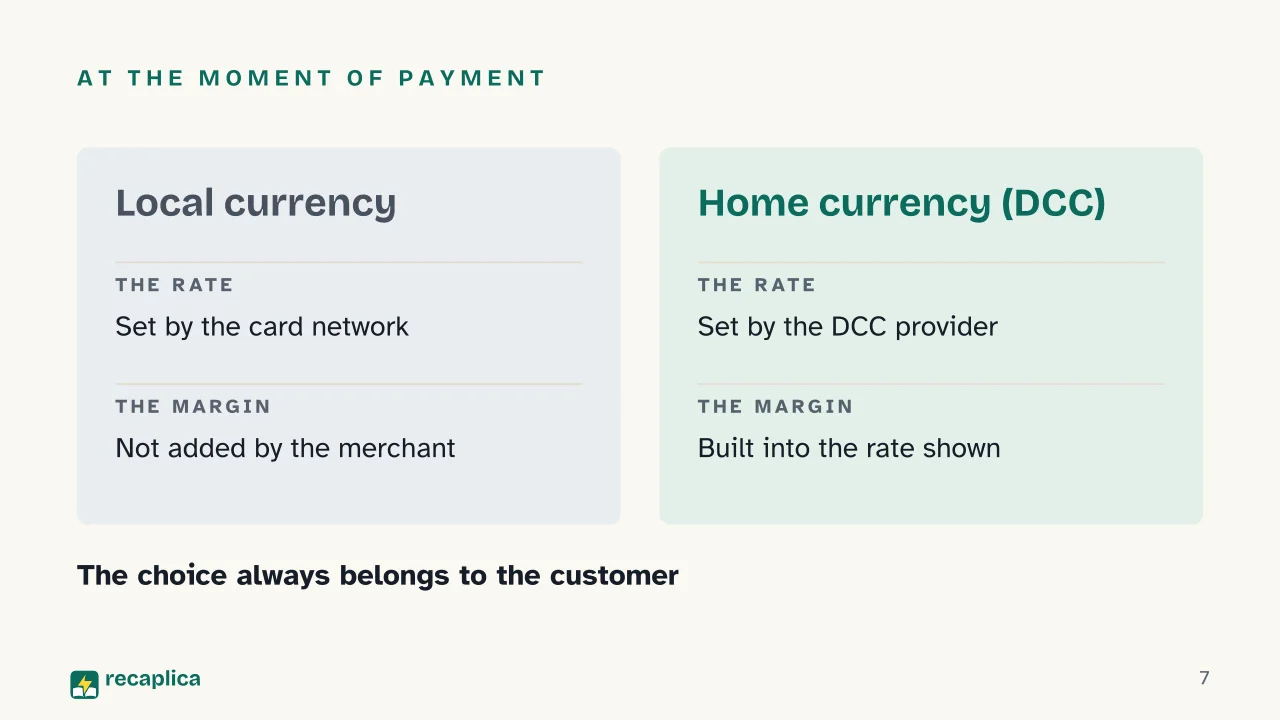  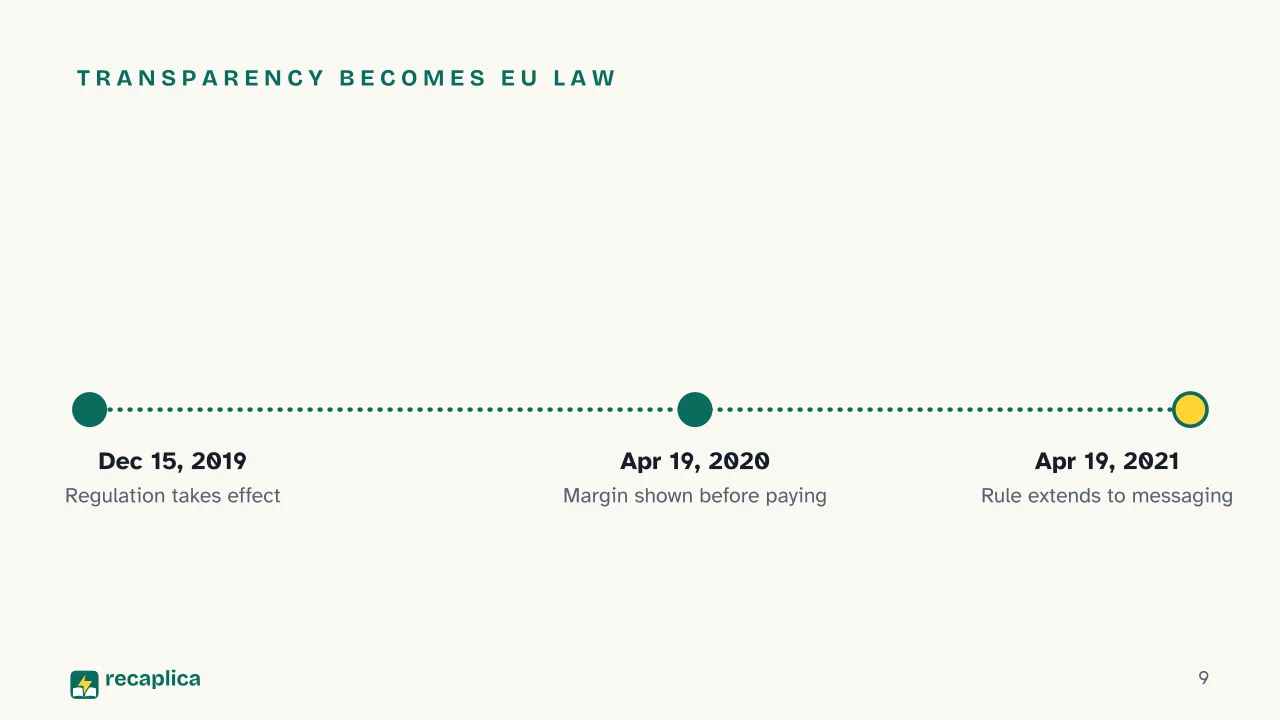 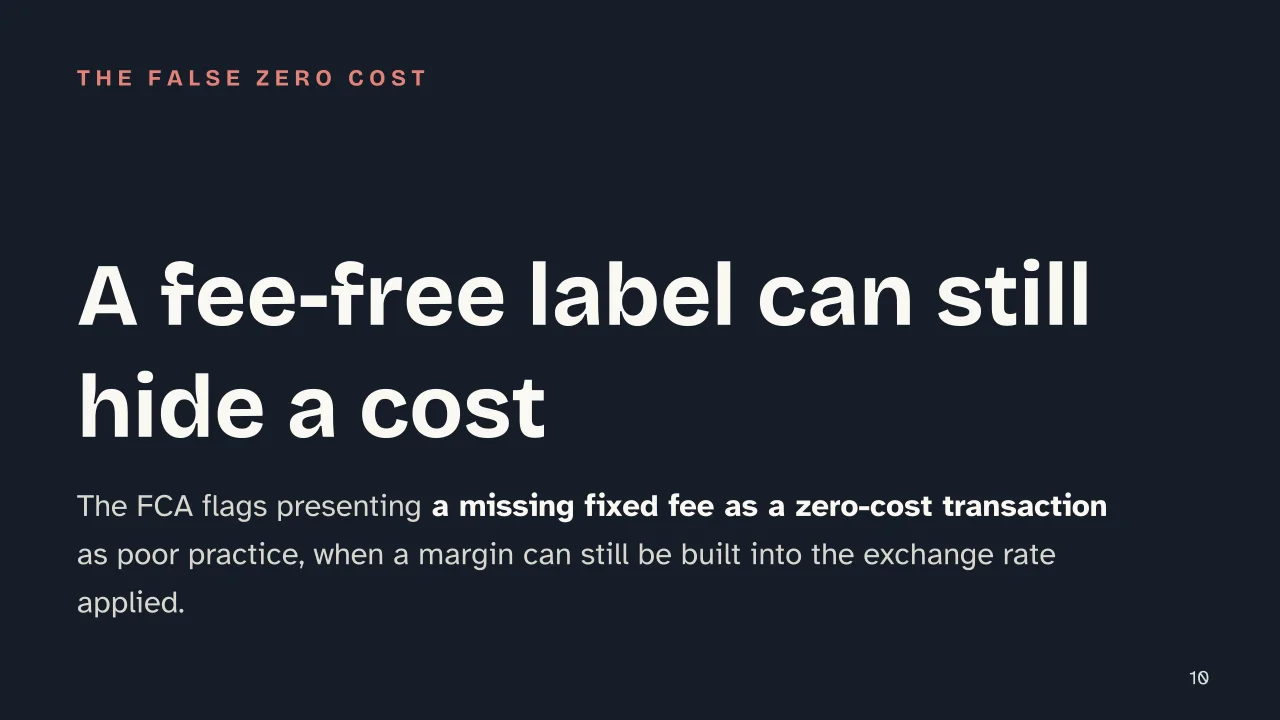  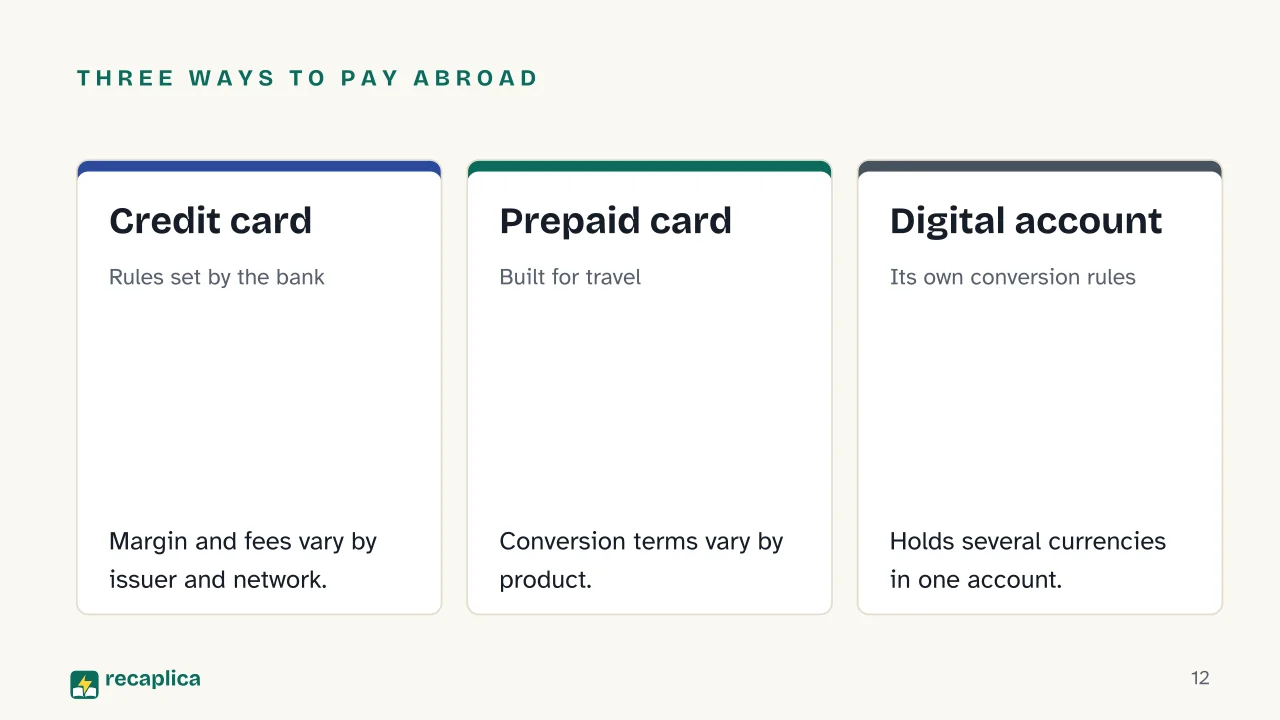   Common myths
Mind mapDrag the background to move around and the nodes to reposition them; use − and + to collapse and expand branches. 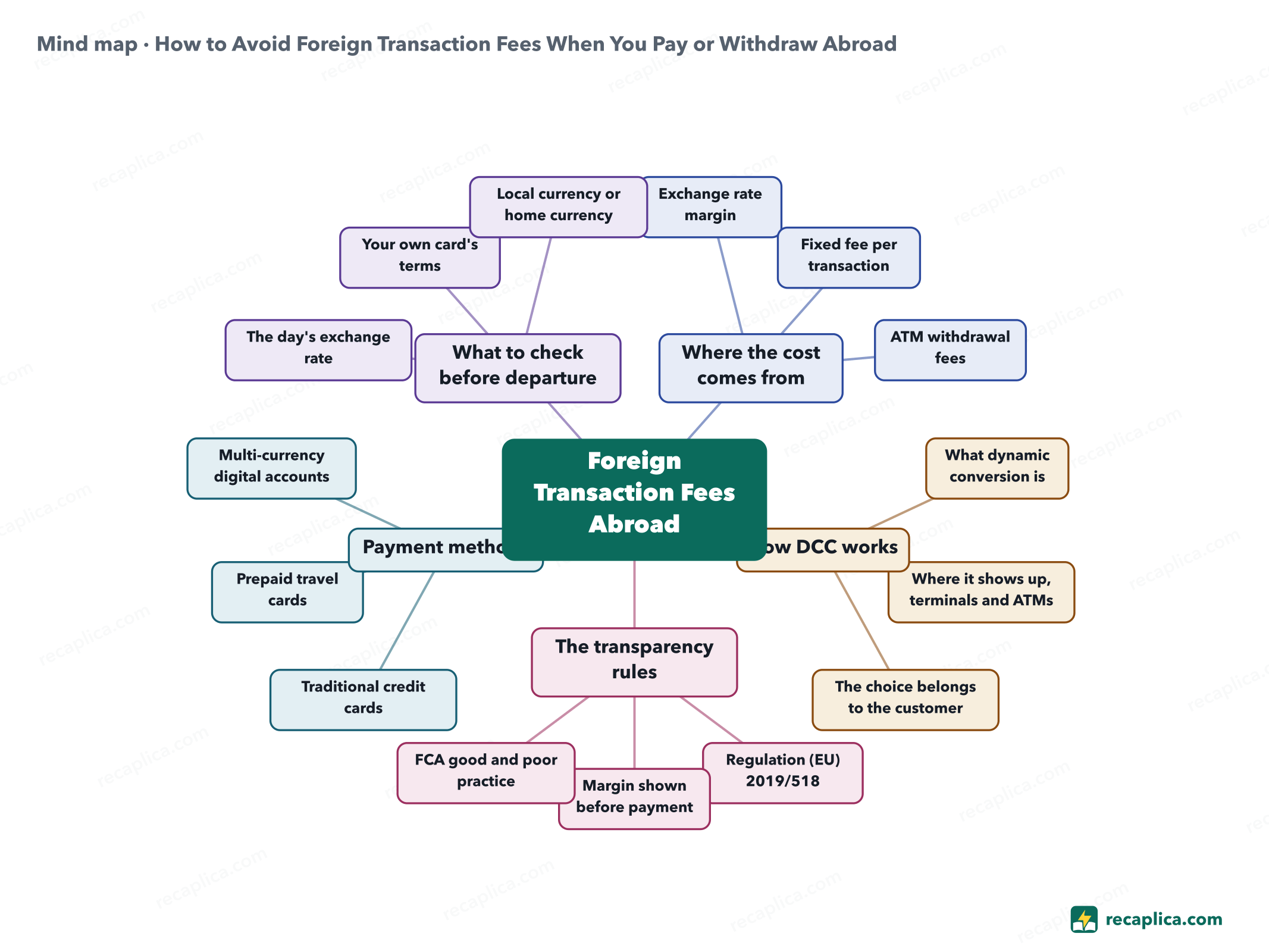
Quiz: test yourselfAnswer the questions to check what you have learned: you get instant feedback and a short explanation. Grade 0/10 0/5
FlashcardsTap the card to flip it and check whether you remember the answer, then move to the next one. 1 / 7 Explain it in your own wordsThe ultimate test: if you can explain it in simple words, you've truly understood it. Write your explanation, then compare it with the Recap. Your explanation is saved only on this device.
Frequently asked questionsWhat is a foreign currency transaction fee?It's the charge a card issuer applies when you use the card abroad or pay in a currency different from the one it was issued in. Is it better to pay in your home currency when a card terminal offers the choice?The choice always belongs to the cardholder, as Visa states: paying in the local currency leaves the conversion to the card network's own rate, while accepting DCC and paying in your home currency means the rate shown on screen already includes the margin set by whoever offers that conversion. How can you spot a currency conversion fee before paying?Regulation (EU) 2019/518 requires the amount in both currencies, the exchange rate applied and any extra charges to be shown before you confirm the payment, that screen is where the fee shows up, not only a separate line on a statement. Are forex card fees the same as foreign currency fees on a credit card?Not exactly: prepaid travel cards, sometimes marketed around forex card fees, and traditional credit cards each set their own terms for foreign currency transactions. Some products waive the fee entirely, others build a margin into the exchange rate instead of charging a flat fee, so the terms vary from issuer to issuer. Does withdrawing cash from an ATM abroad follow the same rules as paying by card?Yes, Visa's guidance on DCC applies to both point-of-sale payments and ATM withdrawals, with the same requirement to leave the currency choice to the customer and to disclose the rate and any fees before the transaction goes through. Every Recap goes through an independent review before publication. |