|
recaplica
Inflation: what it is, how it works and why prices rise | |||||||||
| © 2026 Recaplica · recaplica.com — All rights reserved | |||||||||
Inflation: what it is, how it works and why prices riseWhat to print Page numbers appear when printing with default margins. SlidesChoose a cut Flash10 slidesThe essential thread, to present in classFull18 slidesEvery chapter and the deeper detailBoth come with speaker notes. In 30 seconds quick readInflation is the general, sustained increase in the prices of goods and services. When there is inflation, the same money buys you less than before: money loses purchasing power. Moderate inflation (around 2% a year) is considered normal and even useful; when it runs too hot, it eats away at savings and wages. Key Points
Key figures
Deep DiveWhat “inflation” really meansImagine doing the same grocery run today and one year from now. Same cart, same products: if the total at the till is higher, you have just touched inflation with your own hands. Technically, it is the general, sustained increase in the price level of goods and services in an economy. The key word is general: if only the price of coffee rises after a bad harvest, that’s not inflation. It is inflation when the increase touches a bit of everything — food, utility bills, transport, rents — and lasts over time. How it’s measuredStatistical agencies measure inflation through a “basket”: a list of hundreds of products and services representing what households actually buy, from bread to fuel, from streaming subscriptions to the dentist. Every month they record the prices of these items across the country and compare them with the previous year.
The result is the consumer price index (CPI) — the number you hear on the news when they say “inflation is at 2%”. Why prices rise: the two main causes1. Demand-pull inflationIt happens when too many people want to buy more than the system can produce. If everyone wants the same thing and there is little of it, sellers can raise prices.
2. Cost-push inflationIt happens when producing gets more expensive: energy, raw materials, transport or wages rise, and companies pass those costs on to final prices.
What it does to your moneyInflation works like an invisible tax on idle savings. With inflation at 5% a year, 10,000 left in a non-interest-bearing account can buy, one year later, roughly what 9,500 buys today. The number on the account doesn’t change — its real value does. The same goes for wages: if your salary stays flat while prices rise 5%, in real terms you are earning 5% less. That is why high-inflation periods come with intense debates about wage adjustments. Who keeps inflation in checkThat’s the job of central banks — in the euro area, the European Central Bank, whose declared target is inflation at 2% over the medium term. Their main tool is the interest rate:
It is a slow mechanism — the effects show up months later — but it is the most powerful lever there is for steering prices. And if prices fell? DeflationThe opposite of inflation is deflation: a general, prolonged fall in prices. It sounds like a dream, but it’s a trap: if you know the car you want will cost less in six months, you wait. If everyone waits, companies sell less, cut production and wages, and the economy spirals downward, all the way into a recession. Japan fought this for nearly two decades. That is why central banks don’t aim for “zero inflation” but for low and stable inflation: the famous 2%. Slide deckSlides ready to download and make your own in PowerPoint or Google Slides, with speaker notes. Pick the Flash cut or the Full one.     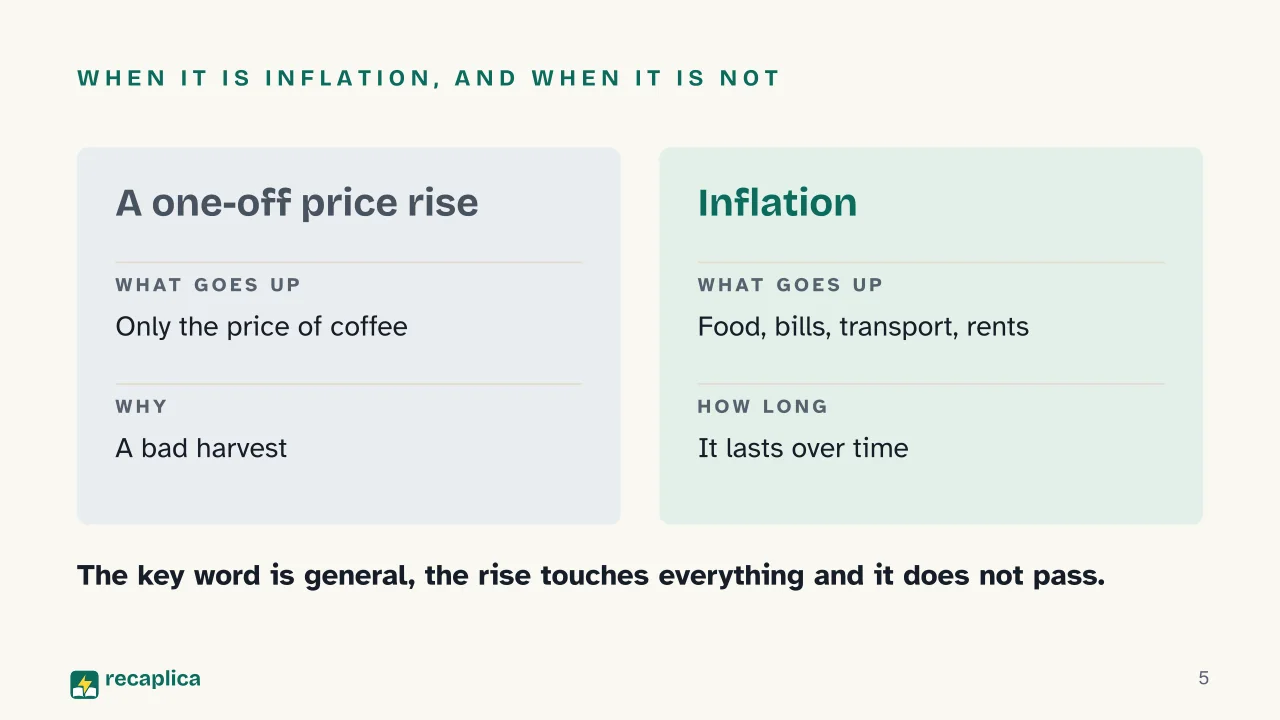 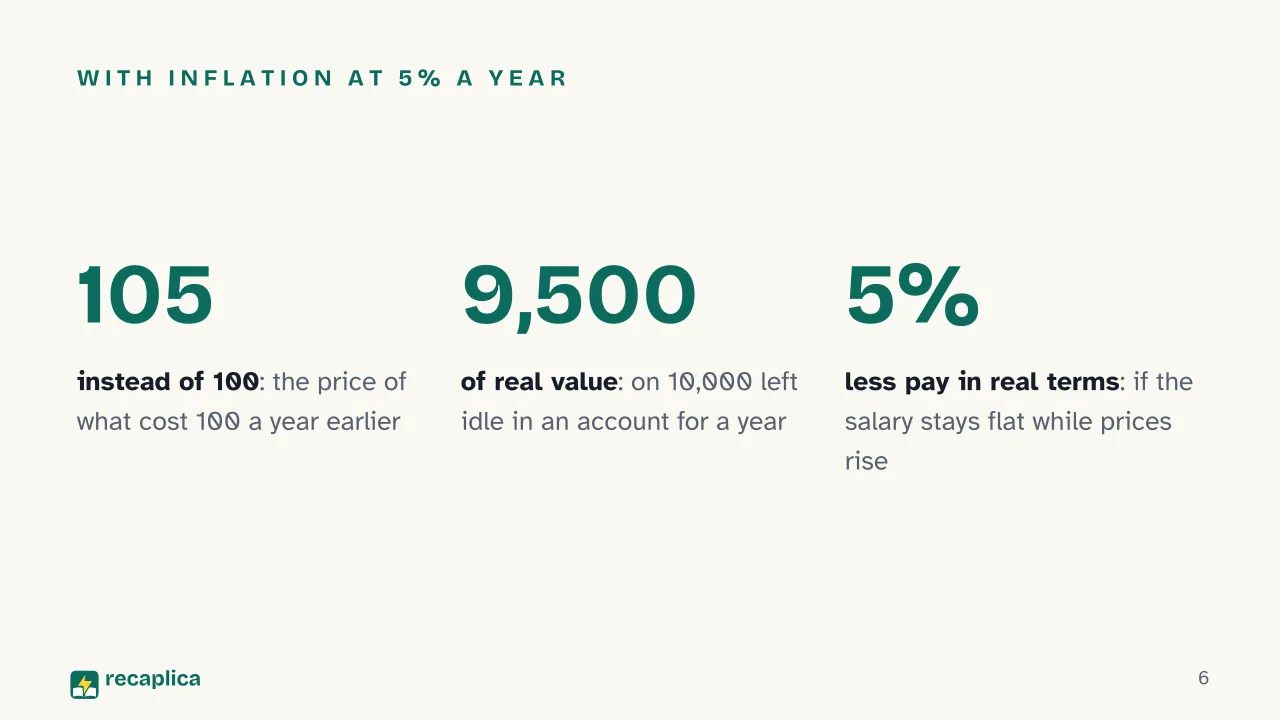  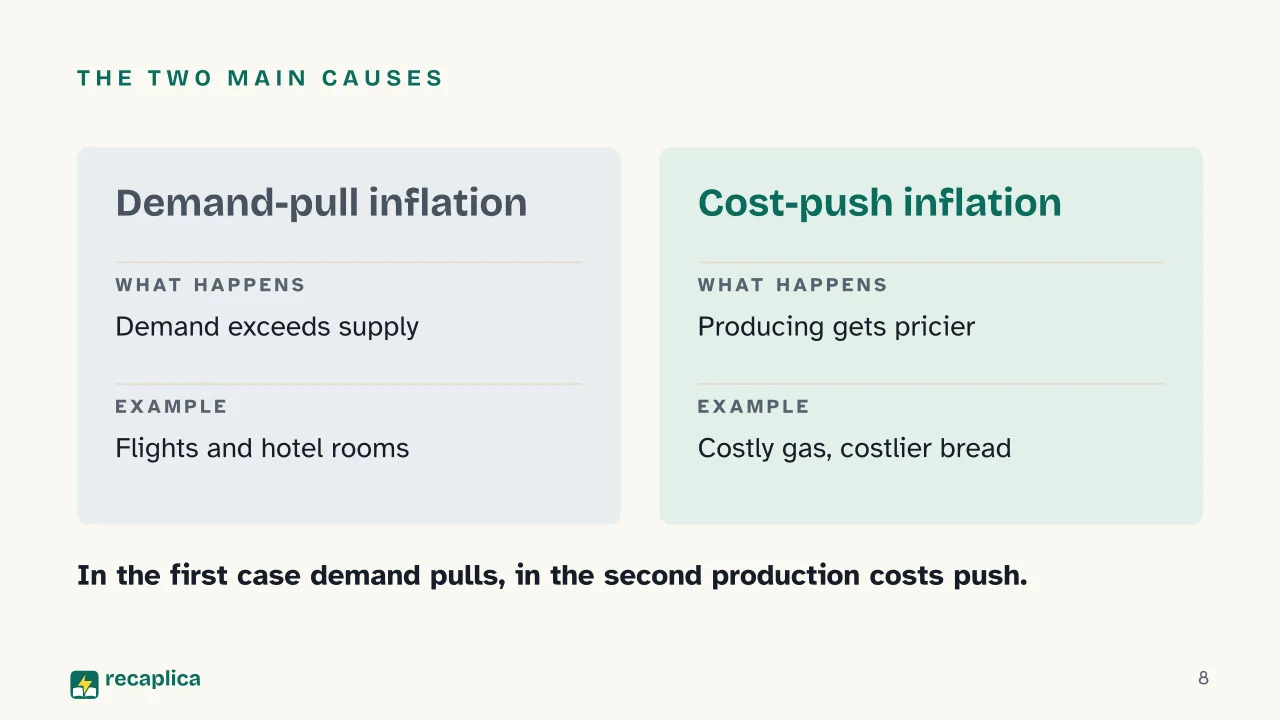   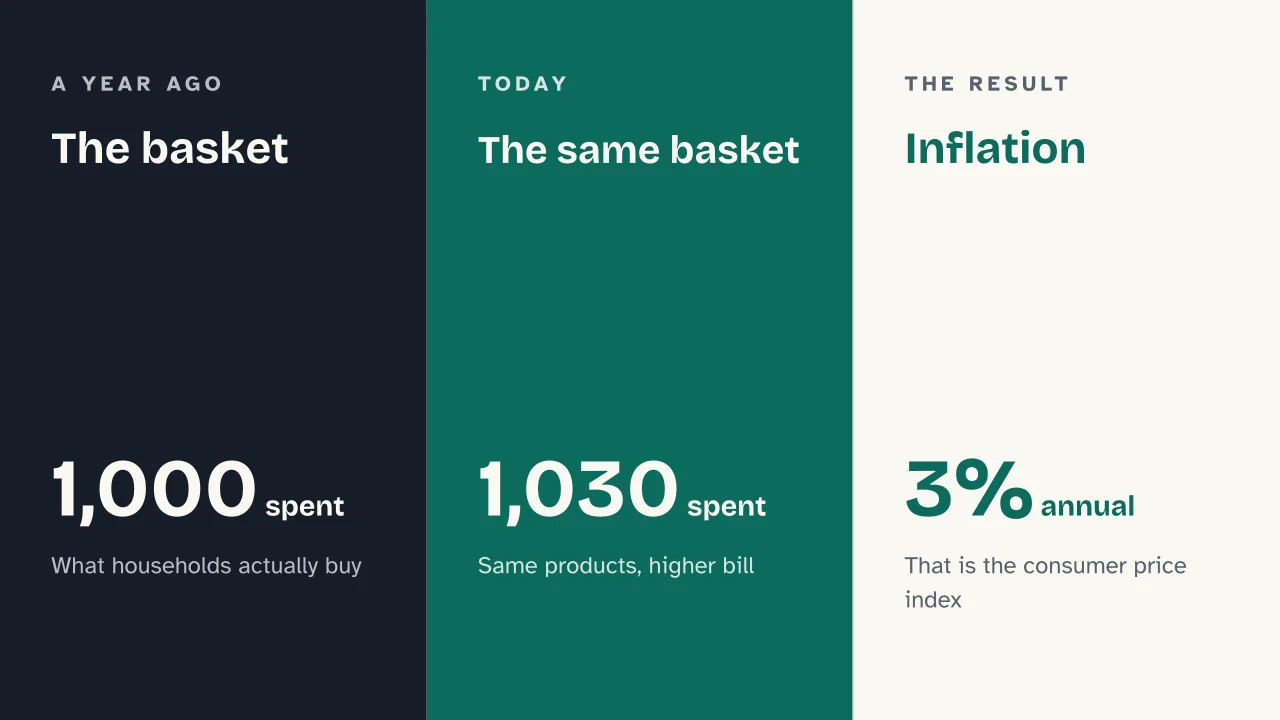 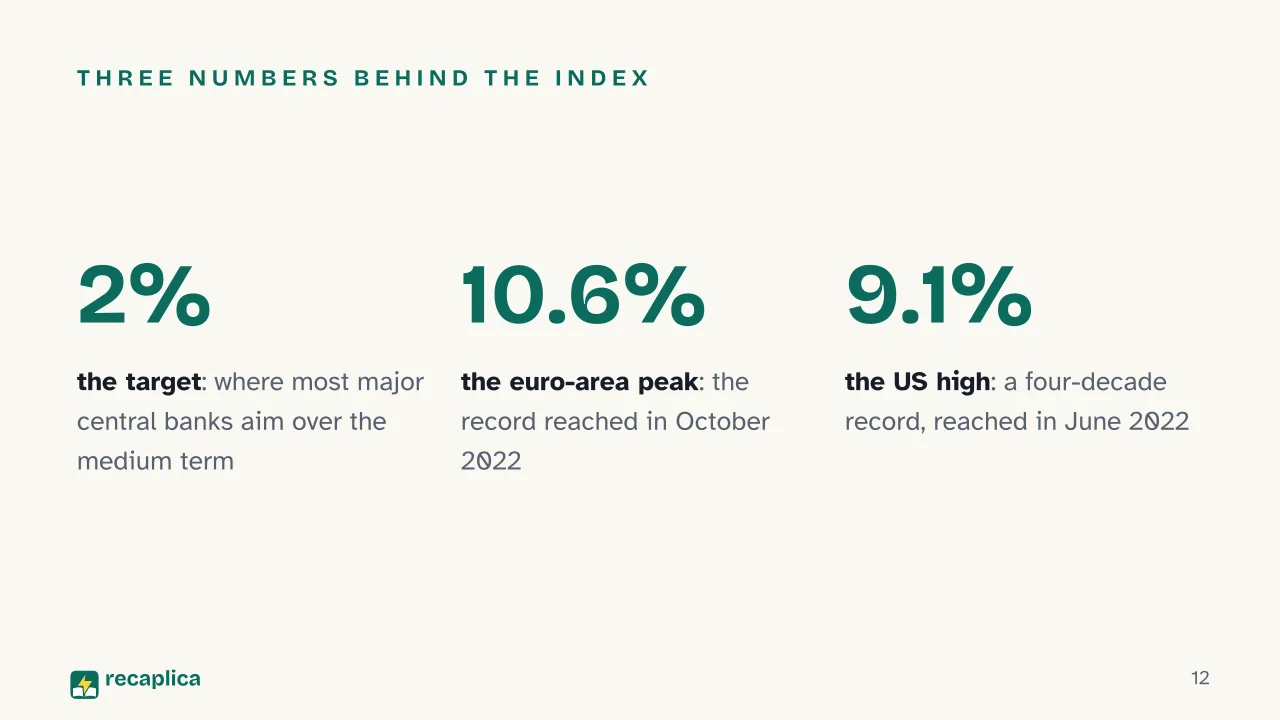  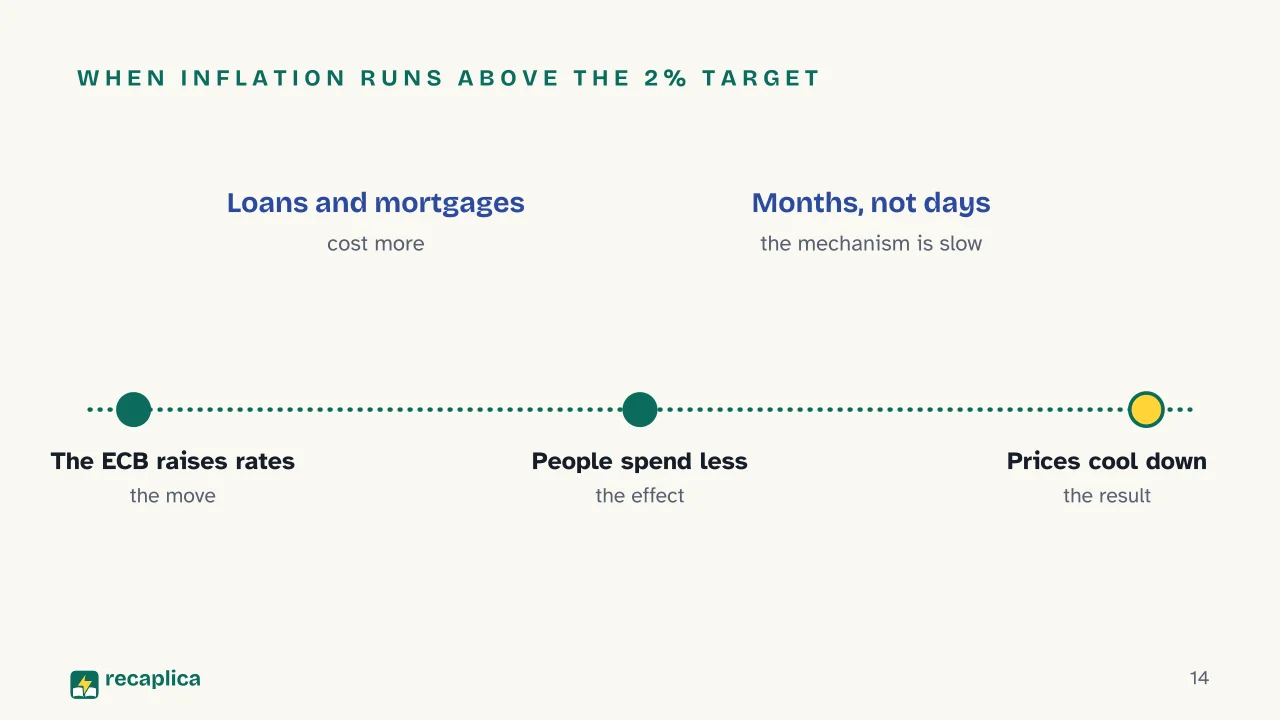 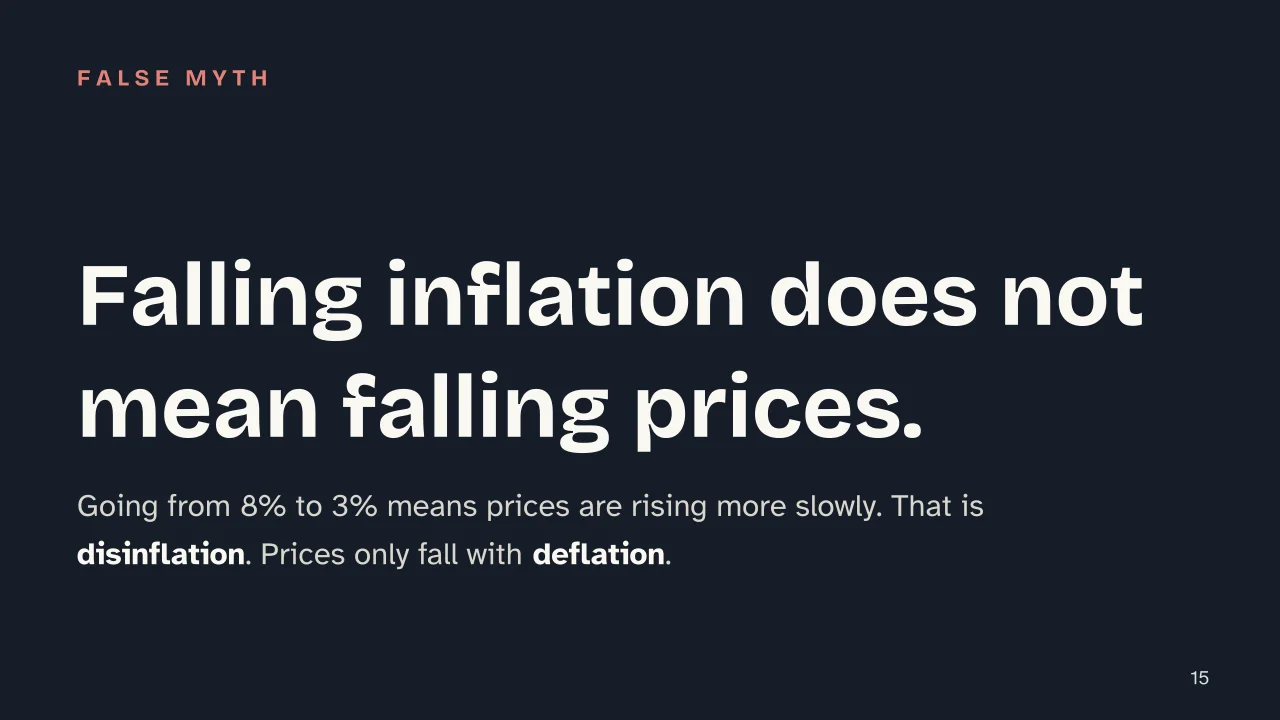 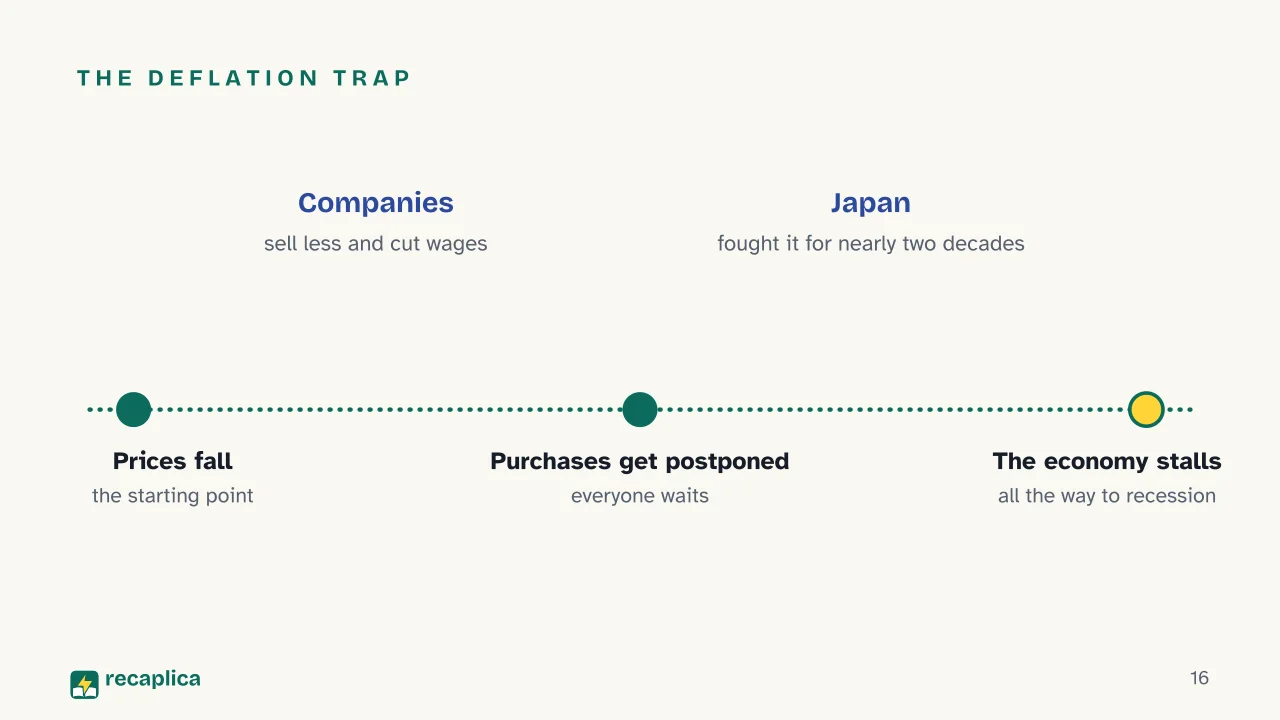 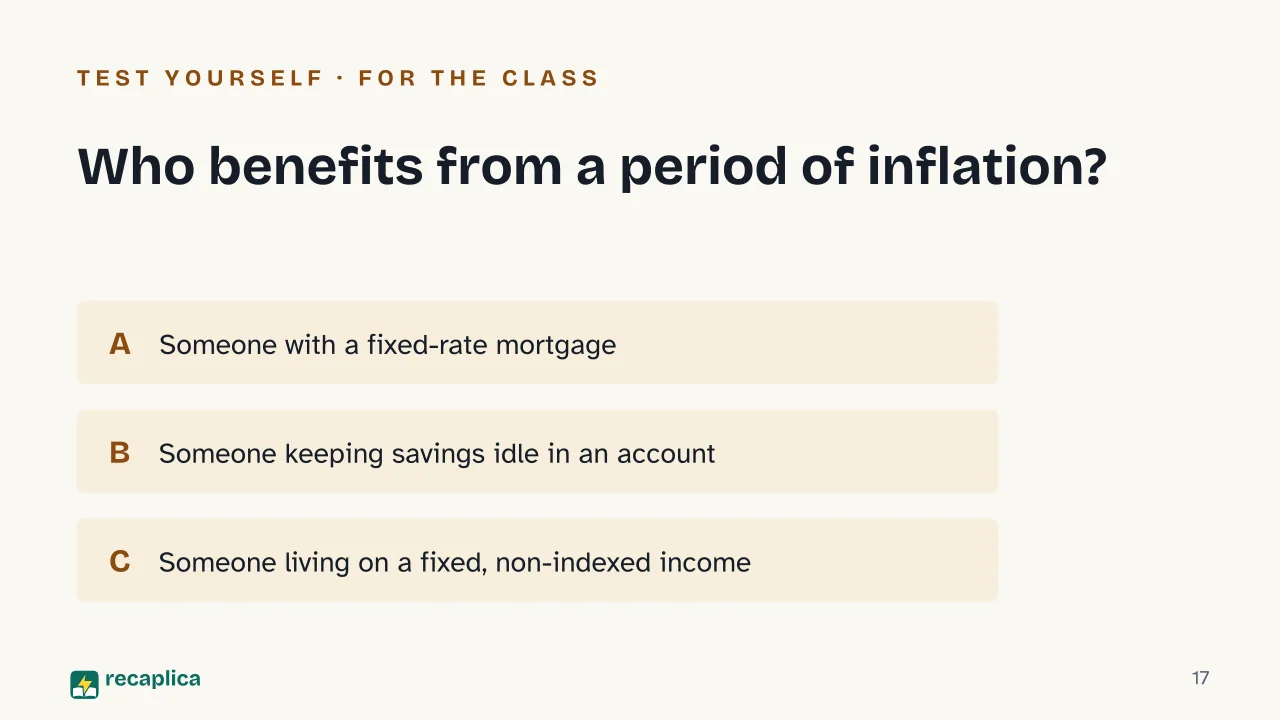  Common myths
Mind mapDrag the background to move around and the nodes to reposition them; use − and + to collapse and expand branches. 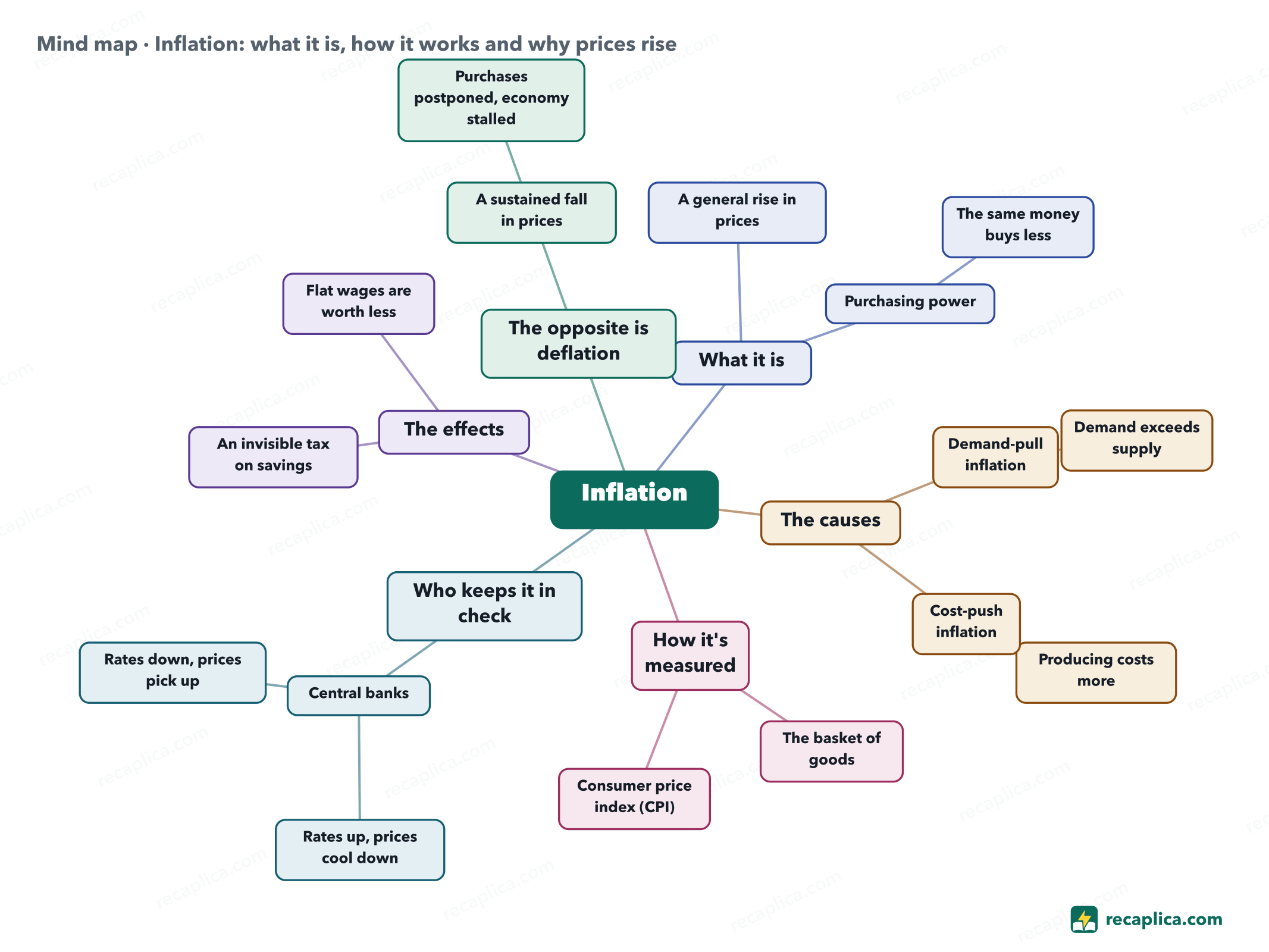
Quiz: test yourselfAnswer the questions to check what you have learned: you get instant feedback and a short explanation. Grade 0/10 0/5
FlashcardsTap the card to flip it and check whether you remember the answer, then move to the next one. 1 / 6 Explain it in your own wordsThe ultimate test: if you can explain it in simple words, you've truly understood it. Write your explanation, then compare it with the Recap. Your explanation is saved only on this device.
Frequently asked questionsWhat's the difference between inflation and the cost of living?They're closely related: the 'cost of living' is the everyday effect of inflation on households — how much you need to spend to maintain your standard of living. Why is a little inflation considered a good thing?Moderate inflation (about 2%) nudges people to spend and invest rather than hoard cash, supports consumption, and gives central banks room to maneuver on interest rates. It's the sign of an economy that's moving. How can I protect my savings from inflation?In general, money sitting in a non-interest-bearing account loses real value every year. Inflation-linked instruments or investments that return more than inflation can offset it, but every choice should be weighed with a qualified advisor. Who benefits from inflation?Fixed-rate borrowers: their installment stays the same while wages and prices rise, so the real weight of the debt shrinks. The losers are people on fixed incomes that don't adjust, and anyone holding idle cash. Every Recap goes through an independent review before publication. |