recaplica
Clear in 30 seconds, yours in 10 minutes.
In 30 seconds quick read
Foldable smartphones pair a flexible screen with an intricate mechanical hinge, and in 2026 Samsung's Galaxy Z Fold8 shows both the strengths and the limits of the category clearly. The Armor FlexHinge and Flex Titanium display have reached a genuinely refined level of engineering, but an independent iFixit teardown found that fine dust can still jam the mechanism despite the phone's stated IP48 rating. The crease down the middle of the screen remains a defining trait of the category, showing up within days on some units and barely noticeable on others after months of use. Globally, foldables are still a niche: 2.5% of smartphone shipments in the third quarter of 2025, though growing.
Key Points
The Galaxy Z Fold8's Armor FlexHinge is the eighth generation of refinements in the Fold line, yet an iFixit dust test called it "one enormous liability" for the device.
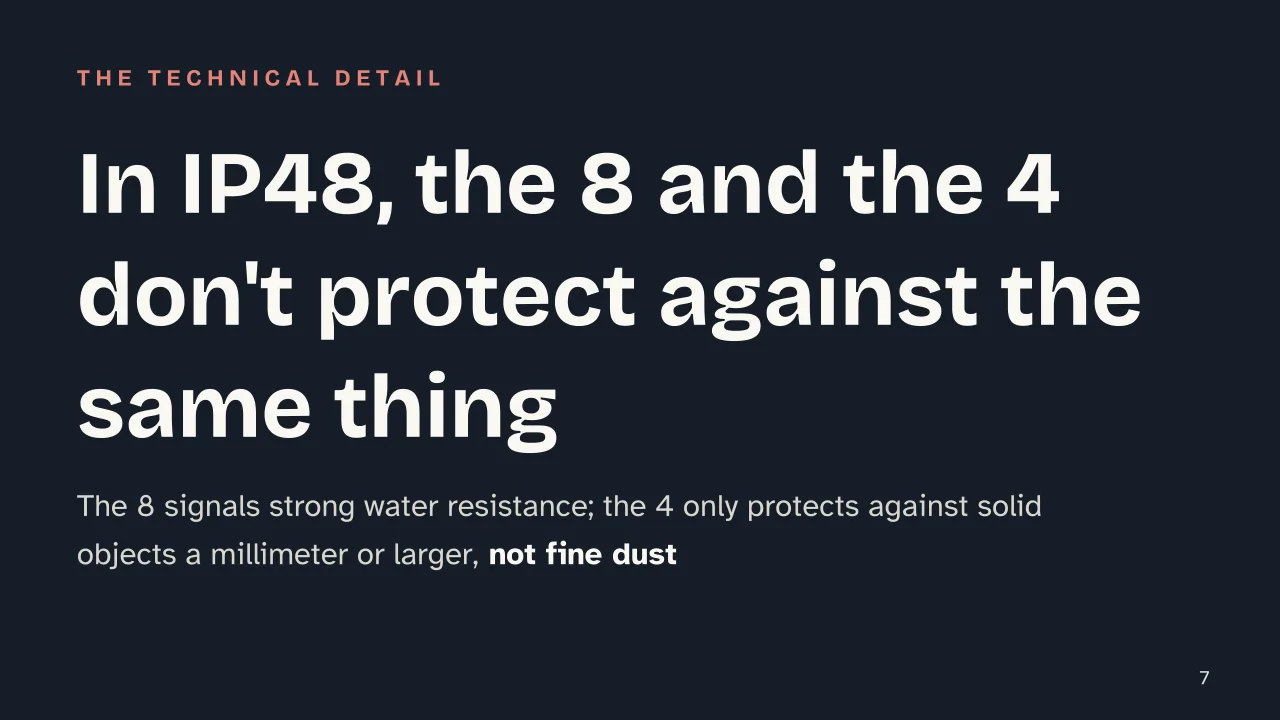
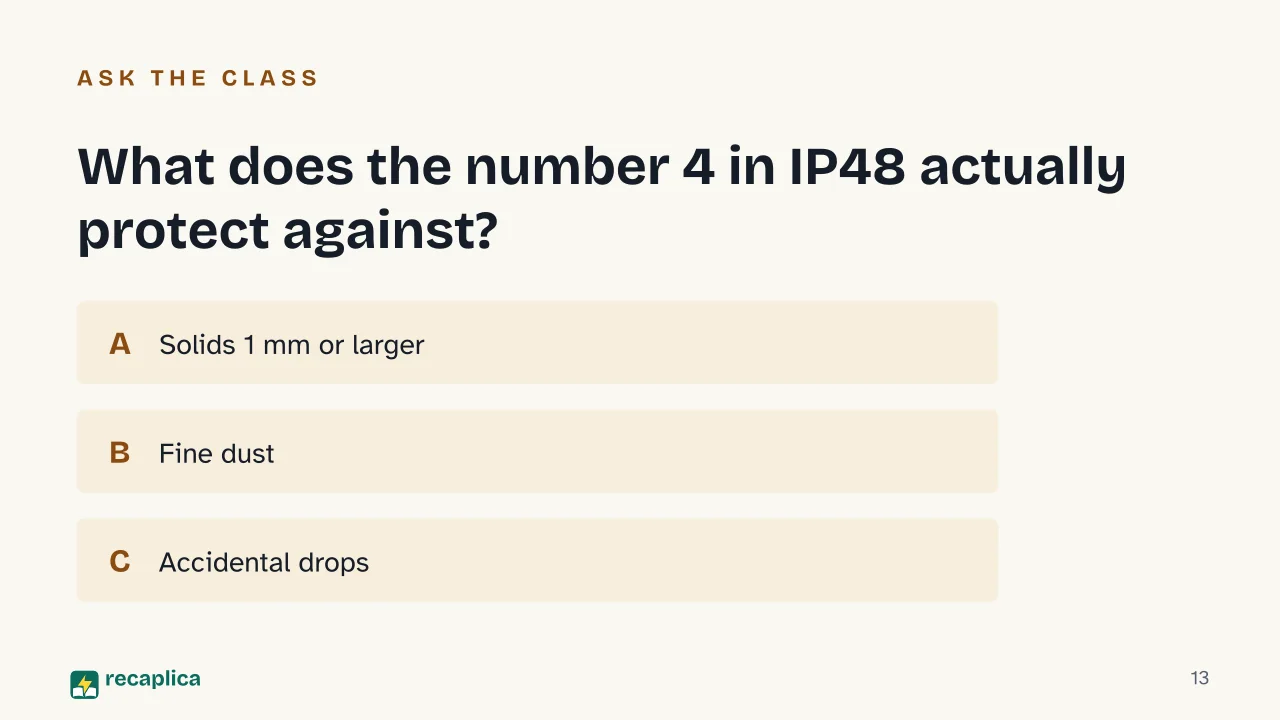
The IP48 rating covers water and accidental splashes, not fine dust: the number 4 only protects against solid objects 1 millimeter or larger.
The center crease is visible on some units within days, while other owners report never noticing it after 10 to 12 months.
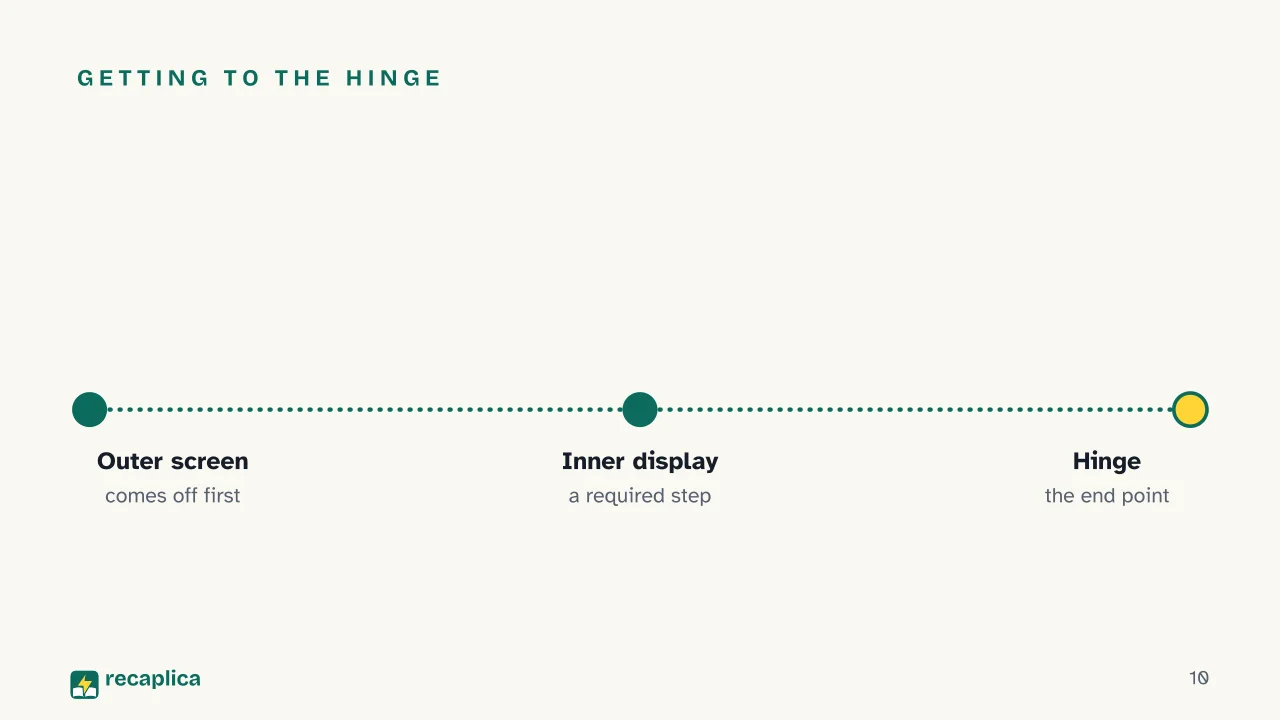
iFixit gave the Fold8 a provisional repairability score of 4 out of 10: reaching the hinge and battery means removing the inner display first.
In the third quarter of 2025, foldables accounted for 2.5% of global smartphone shipments, up 14% year over year.
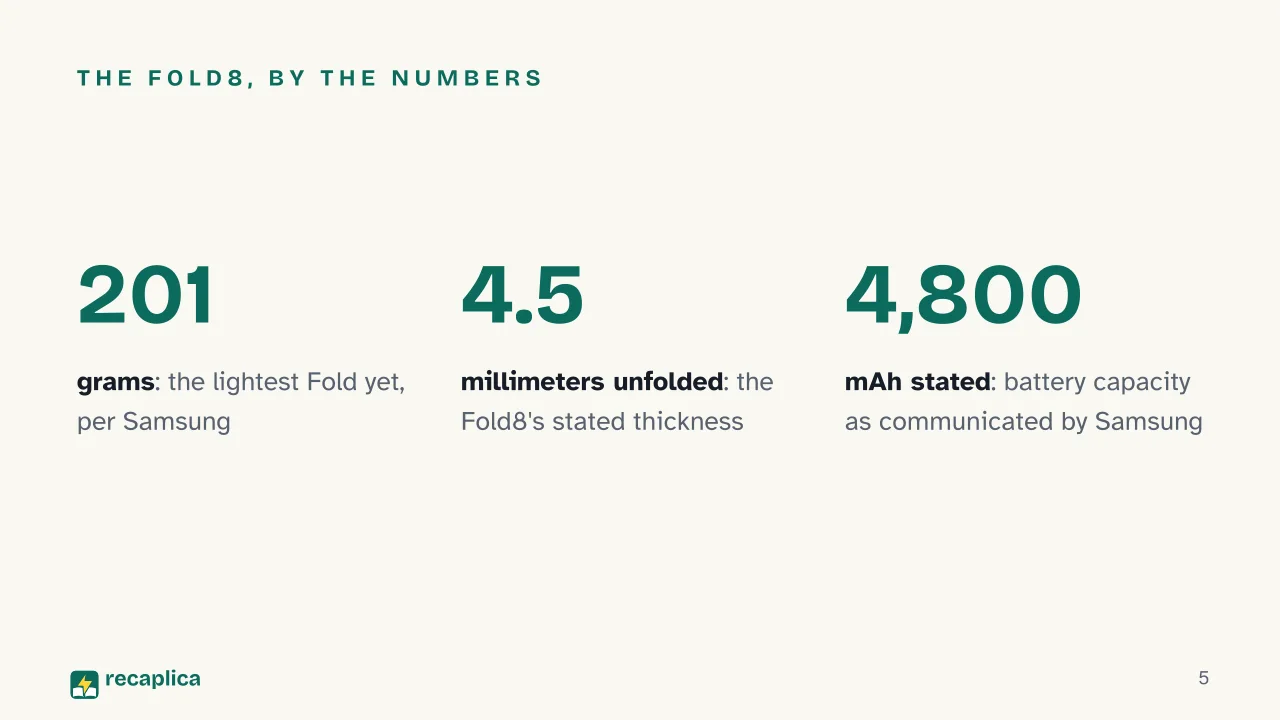
The Galaxy Z Fold8 weighs 201 grams and measures 4.5 millimeters thick when unfolded, starting at $1,899.99.
Key figures
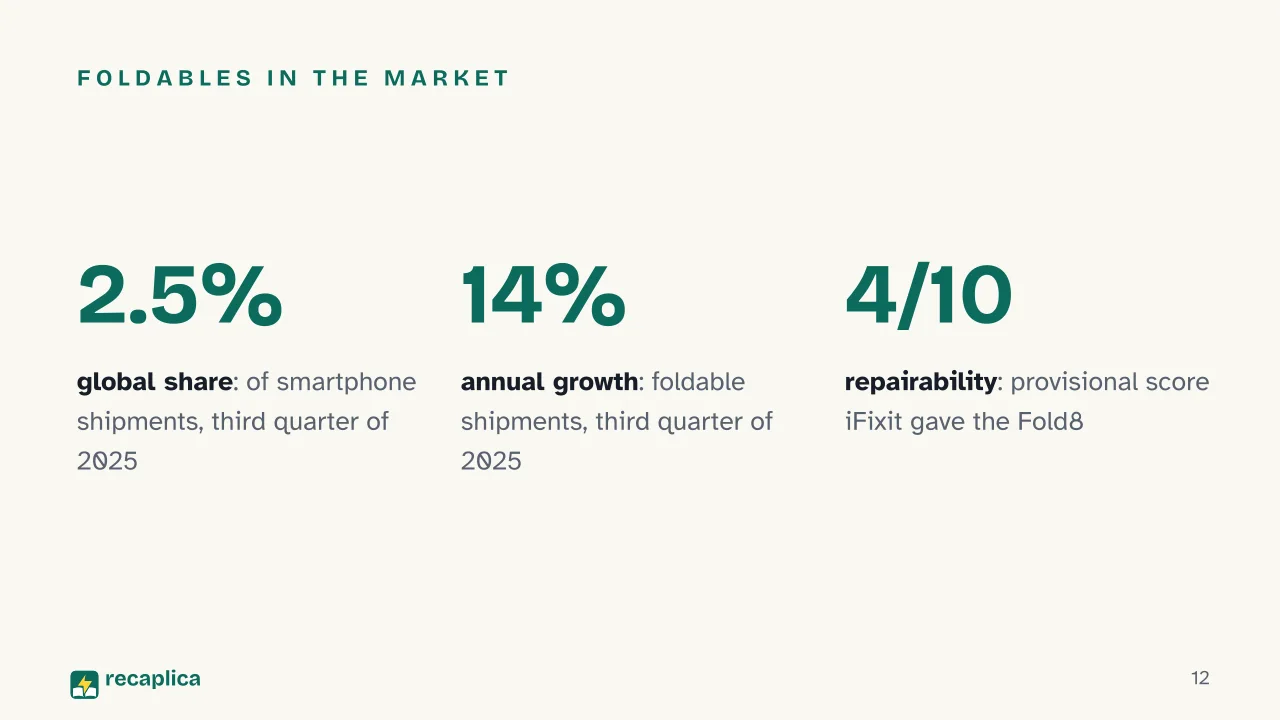
2.5% Share of global smartphone shipments held by foldables in the third quarter of 2025. Source: Counterpoint Research
14% Year-over-year growth in global foldable smartphone shipments in the third quarter of 2025, the highest quarterly volume on record. Source: Counterpoint Research
4/10 Provisional repairability score given to the Galaxy Z Fold8, the 2026 generation, in the teardown. Source: iFixit
Deep Dive
How the hinge works
The Galaxy Z Fold8’s hinge, Samsung’s 2026 model, is called Armor FlexHinge and has reached, according to the company, its eighth generation of refinements in the Fold line. Underneath the OLED panel sits what Samsung calls Flex Titanium: a titanium-alloy film that, per iFixit’s description, is about a third the thickness of a human hair, resting on a perforated titanium support plate. Samsung states that this film is twenty times stiffer than the polymer used in its earlier foldables.
The result, unfolded, is a phone 4.5 millimeters thick and 201 grams, the lightest generation in the Fold line according to Samsung.
Real-world example: opening and closing a Galaxy Z Fold8 several times a day, for years, means stressing the exact same spot on the screen every time. That’s where the center crease shows the difference between a foldable that’s been handled carefully and one that hasn’t.
The crease that won’t go away
iFixit, the independent lab that physically tears down devices to analyze them, writes that the crease is still there on the Fold8, despite the extra titanium built in to fight it. One reviewer saw the crease become more visible after just seven days of use. Other owners of earlier models, the Fold6 and Fold7, report not noticing crease problems after ten to twelve months.
The IP48 rating, read carefully
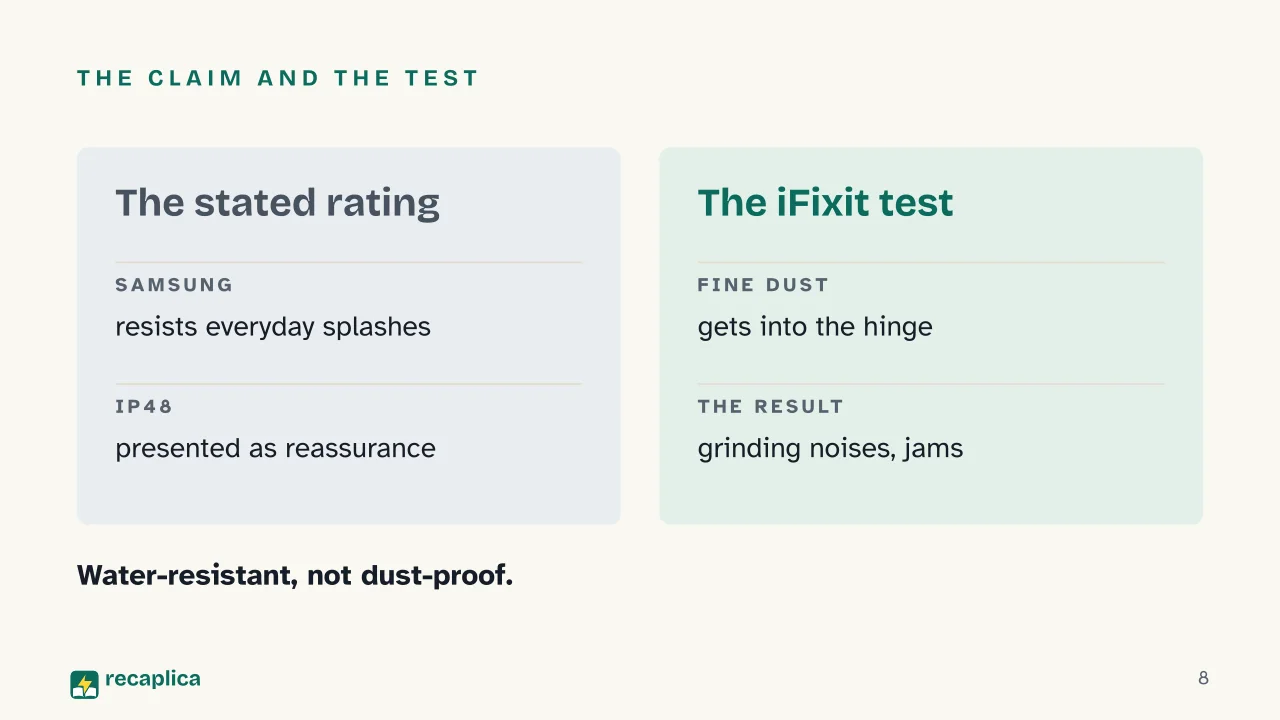
Samsung markets the Fold8 with an IP48 rating, described on its product page as protection “against accidental spills and everyday mishaps.” iFixit breaks the code down more precisely: the 8 indicates strong water resistance, while the 4 only protects against solid objects at least one millimeter in diameter, not fine dust.
IP48 digit
What it protects against
What it does NOT cover
4 (first number)
Solid objects 1 mm and larger
Fine dust and sand
8 (second number)
Immersion, strong water resistance
—
During a dust test run by iFixit, small particles still made their way into the hinge, causing what the lab describes as crunching and grinding noises, to the point of blocking the phone’s normal opening motion. iFixit calls the hinge “one enormous liability” of the device for this reason, despite the stated rating.
Battery and battery life
Samsung states a capacity of 4,800 mAh and claimed battery life of up to 26 hours of video playback. After tearing the phone down, iFixit measures two thin cells totaling 18.68 watt-hours, an 8.8% increase over the Fold7’s capacity. Battery life on a foldable has to share internal space with two screens and a mechanical hinge.
Repairability and the cost over time
iFixit gives the Fold8 a provisional repairability score of 4 out of 10. Reaching the hinge requires removing the inner display; even replacing the batteries means taking off the outer screen. A device that’s hard to open means, once the warranty runs out, repairs that take longer and cost more.
The Fold8’s list price starts at $1,899.99, or $79.17 a month on installments. Samsung’s product page also lists promotions of up to $800 in trade-in credit, or $250 off without a trade-in.
Anyone switching to an Android foldable can check some of the screen’s advanced settings, such as calibration or the options tied to switching between the two display modes, from the phone’s developer options.
How big a slice of sales foldables really are
Counterpoint Research recorded 14% year-over-year growth in global foldable smartphone shipments in the third quarter of 2025, the highest quarterly volume the category has ever seen. Over the same period, foldables made up 2.5% of all smartphone shipments worldwide. For full-year 2025, Counterpoint expects steady double-digit annual growth, with 2026 set for a more marked acceleration — a projection, not a sales figure that has already happened.
✗ Myth An IP48 rating means a foldable is protected against dust too.
✓ Reality iFixit points out that in IP48 the 8 signals strong water resistance, but the 4 only covers solid objects 1 millimeter or larger in diameter. In the lab's dust test, fine particles still worked their way into the hinge, producing grinding noises and eventually blocking normal opening: the stated protection covers splashes, not fine dust.
✗ Myth The screen crease looks and behaves the same on every foldable.
✓ Reality It varies unit to unit: one reviewer cited by iFixit saw the crease become more noticeable after just seven days, while other Fold6 and Fold7 owners say they never noticed it after 10 to 12 months of use. That gap points to product variability, not a uniform flaw.
✗ Myth Foldable phones are now as common as regular smartphones.
✓ Reality According to Counterpoint Research, foldables made up only 2.5% of global smartphone shipments in the third quarter of 2025, despite growing 14% year over year: they remain a growing niche, not the market standard.
Mind map
Drag the background to move around and the nodes to reposition them; use − and + to collapse and expand branches.
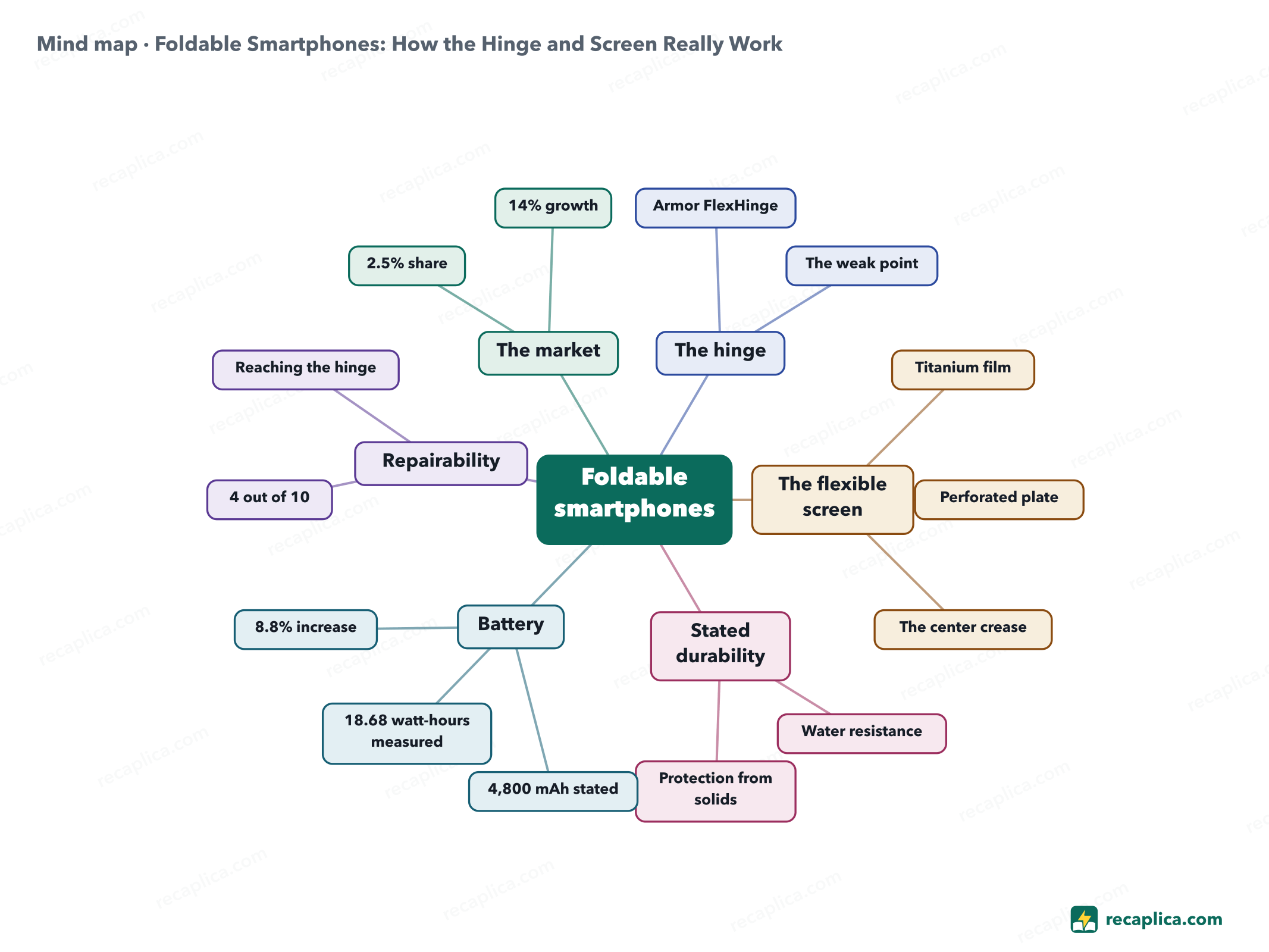
Armor FlexHingeThe Galaxy Z Fold8's hinge, the eighth generation in the Fold line according to Samsung
The weak pointIn the iFixit test, fine dust blocked the opening
The flexible screenA multi-layer structure under the OLED panel
Titanium filmAbout a third the thickness of a human hair
Perforated plateTitanium support plate under the screen
The center creaseStays visible, at a different pace on each unit
Stated durabilityThe Galaxy Z Fold8's IP48 rating
Water resistanceThe 8 signals strong protection
Protection from solidsThe 4 covers only objects 1 millimeter or larger, not fine dust
BatteryStated versus measured capacity
4,800 mAh statedCapacity as communicated by Samsung
18.68 watt-hours measuredTwo thin cells, according to the iFixit teardown
8.8% increaseCompared with the Fold7's capacity
RepairabilityThe score assigned by iFixit
4 out of 10Provisional teardown rating
Reaching the hingeRequires removing the inner display first
The marketHow widespread foldables are worldwide
2.5% shareOf global smartphone shipments, third quarter of 2025
14% growthYear over year, same quarter of 2025
Quiz: test yourself
Answer the questions to check what you have learned: you get instant feedback and a short explanation.
Grade0/100/5
Answers: 1-B · 2-C · 3-B · 4-A · 5-A
Flashcards
Tap the card to flip it and check whether you remember the answer, then move to the next one.
1 / 7
Explain it in your own words
The ultimate test: if you can explain it in simple words, you've truly understood it. Write your explanation, then compare it with the Recap.
Your explanation is saved only on this device.
Foldable smartphones pair a flexible screen with an intricate mechanical hinge, and in 2026 Samsung's Galaxy Z Fold8 shows both the strengths and the limits of the category clearly. The Armor FlexHinge and Flex Titanium display have reached a genuinely refined level of engineering, but an independent iFixit teardown found that fine dust can still jam the mechanism despite the phone's stated IP48 rating. The crease down the middle of the screen remains a defining trait of the category, showing up within days on some units and barely noticeable on others after months of use. Globally, foldables are still a niche: 2.5% of smartphone shipments in the third quarter of 2025, though growing.
Frequently asked questions
Do foldable phones break easily?
There's no single answer: iFixit found that the Galaxy Z Fold8's hinge can jam if fine dust gets inside, and gave the device a repairability score of 4 out of 10. At the same time, some owners of earlier models use their phone for 10 to 12 months without noticing crease problems: how a unit holds up varies a lot.
Are foldable phones water- and dust-resistant?
The Galaxy Z Fold8 carries an IP48 rating: the 8 signals strong water resistance (protection against splashes and brief immersion), while the 4 only covers solid objects 1 millimeter or larger, not fine dust. In iFixit's test, fine dust still made its way into the hinge.
How much does a foldable smartphone cost?
The Galaxy Z Fold8 starts at $1,899.99 (or $79.17 a month on installments), according to Samsung's product page, with promotions listed up to $800 in trade-in credit or $250 off without a trade-in.
Have foldables become the market standard?
No: according to Counterpoint Research, they made up 2.5% of global smartphone shipments in the third quarter of 2025, even while growing 14% year over year compared with the same period the year before.
Every Recap goes through an independent review before publication.
Statistics, only if you say so
To learn which Recaps help most we would use Google Analytics, with aggregate, anonymous data. It starts only with your OK, and you can change your mind anytime. Privacy policy