Skip to content
recaplica

    One moment: security check

    Cloudflare wants to make sure you're not a robot. Tick the box below and your search will continue on its own.

    IT
    recaplica Time Travel: Is It Possible? What Physics Really Says
    © 2026 Recaplica · recaplica.com — All rights reserved
    Home › Science

    Time Travel: Is It Possible? What Physics Really Says

    By Recaplica Newsroom · Updated on October 15, 2026

    What to print

    Page numbers appear when printing with default margins.

    Slides

    Choose a cut

    Flash10 slidesThe essential thread, to present in classFull17 slidesEvery chapter and the deeper detail

    Both come with speaker notes.

    Telegram channel
    recaplica Clear in 30 seconds, yours in 10 minutes.
    In 30 seconds Key points Figures Deep dive Slides Myths Mind map Quiz Flashcards FAQ

    In 30 seconds quick read

    Time travel toward the future is not science fiction: relativity predicts it, and the GPS system corrects for it every day, down to microseconds. Traveling back to the past raises a different kind of problem, one of logic, summed up in the grandfather paradox. The Stanford Encyclopedia of Philosophy notes that the equations of general relativity do allow solutions compatible with paths that loop back into the past, even though they remain theoretical. This Recap explains why only one of the two directions counts as a paradox.

    Key Points

    • Time dilation, predicted by special and general relativity, makes time run at different rates for different clocks: it is a measured effect, not a hypothesis.
    • GPS satellite clocks gain about 38 microseconds a day over clocks on the ground, according to Ohio State University: without the correction, calculated positions would drift by kilometers.
    • The grandfather paradox, described by the Stanford Encyclopedia of Philosophy, captures the problem of returning to the past: a traveler who prevented their own birth could never exist to make the trip.
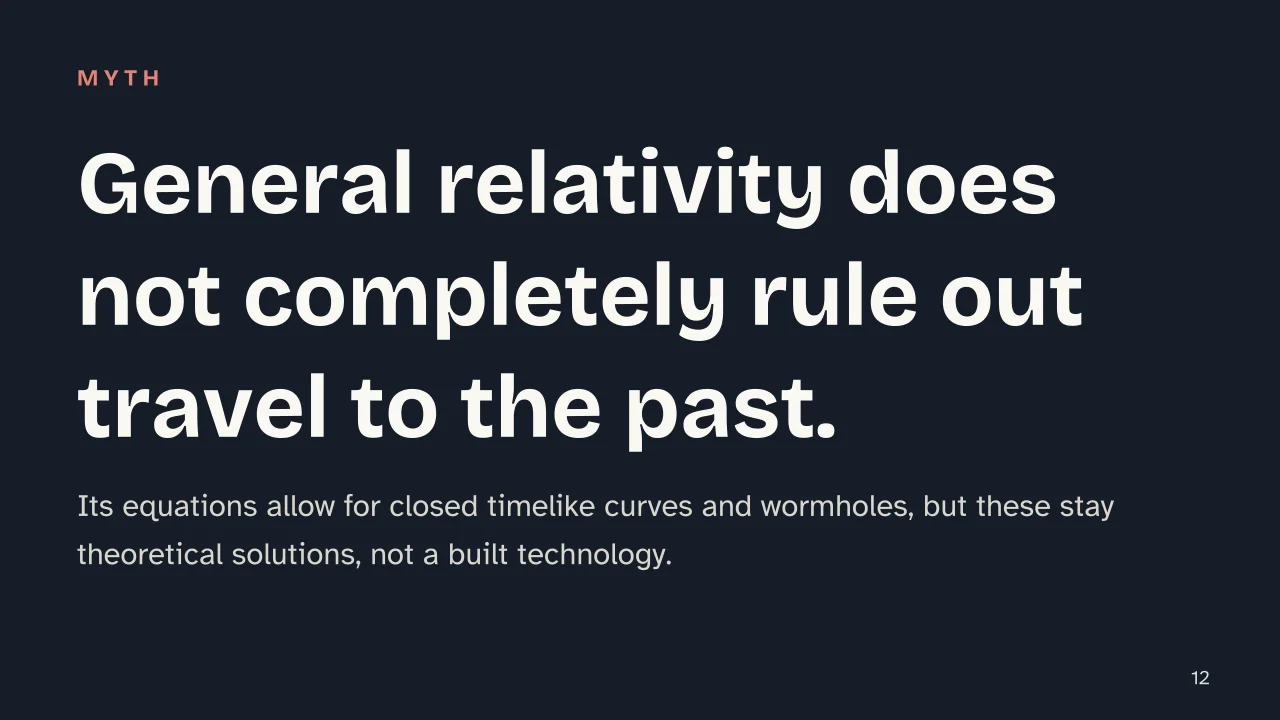
    • General relativity, strictly speaking, does not mathematically rule out closed timelike curves: they remain theoretical solutions of the equations, not available technology.
    • Muons detected at sea level, more numerous than their short half-life alone would predict, are another independent confirmation of time dilation.
    • Travel toward the future is a matter of speed and gravity; travel toward the past is mainly a problem of causality.

    Key figures

    • 38 microseconds a day The time gain that GPS satellite clocks build up over ground clocks, from the combined effect of special and general relativity. Source: Ohio State University, Department of Astronomy
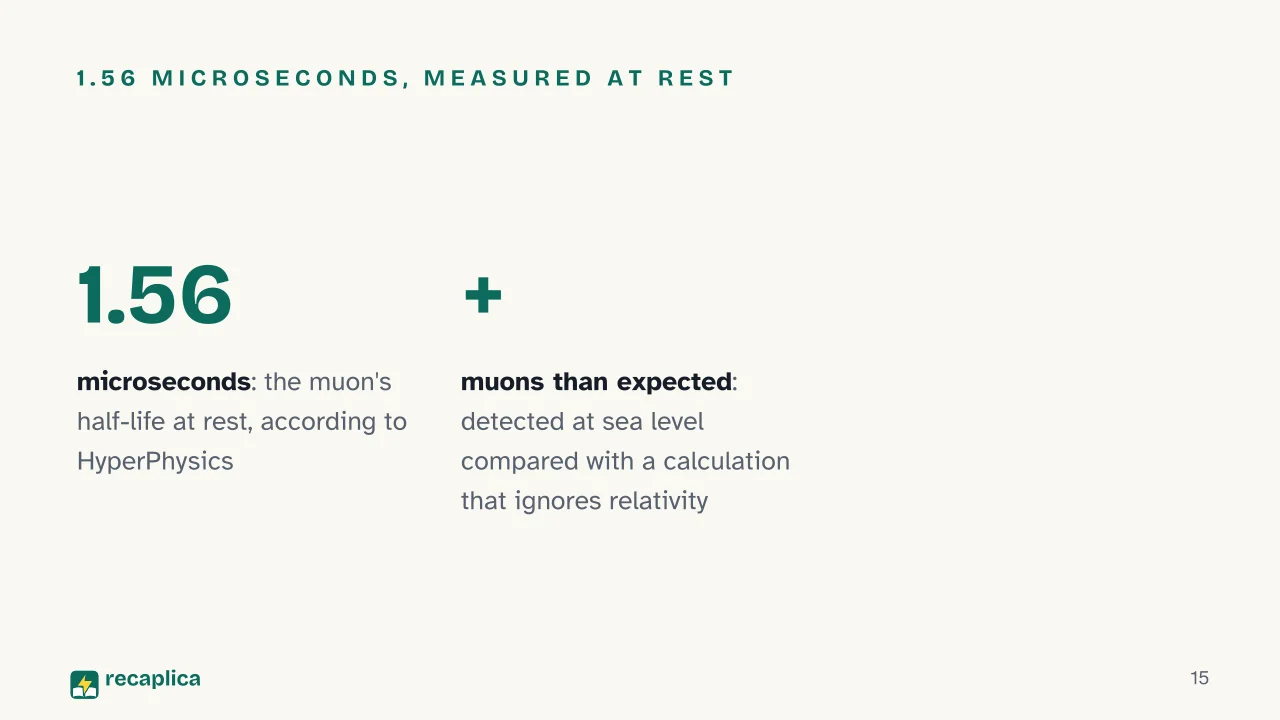
    • 1.56 microseconds The muon's half-life measured at rest: more muons than that would predict arrive at sea level once relativity is left out of the calculation. Source: HyperPhysics, Georgia State University

    Deep Dive

    A phone’s GPS works because its satellites correct, every day, for a time difference predicted by Einstein’s theory of relativity. That’s a useful place to start for understanding how physics looks at time travel.

    Time That Runs at Different Speeds

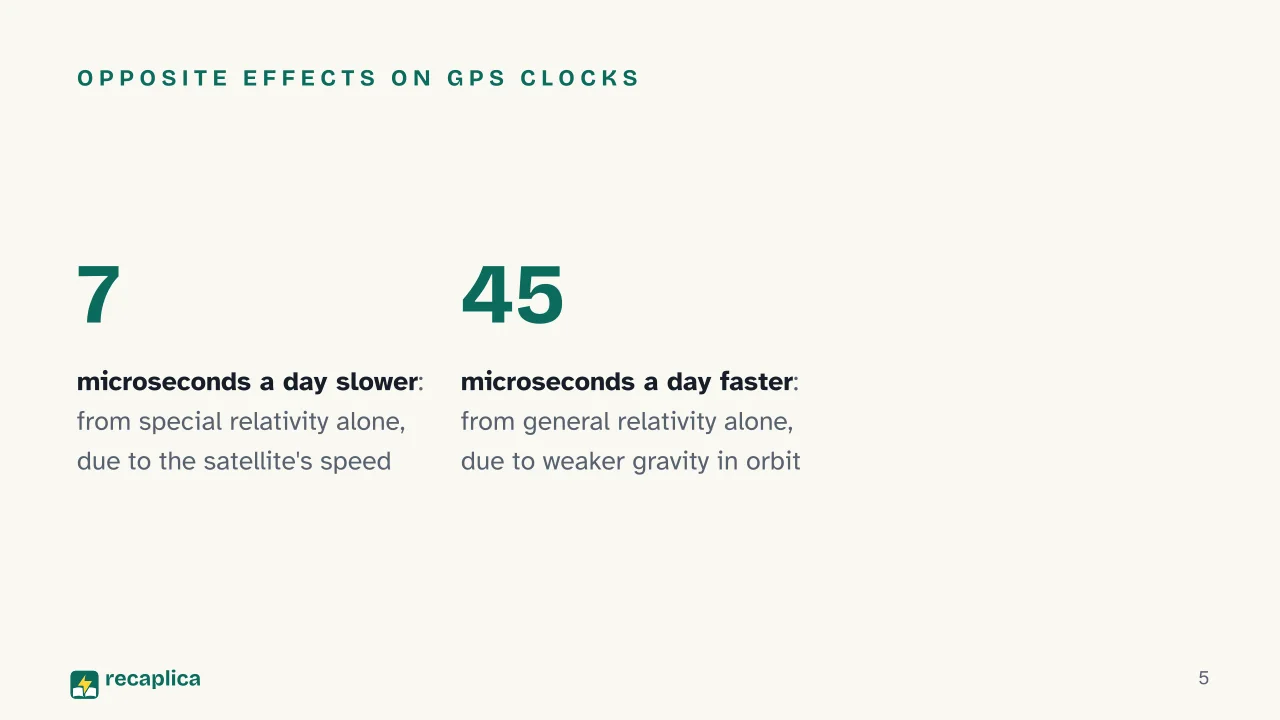
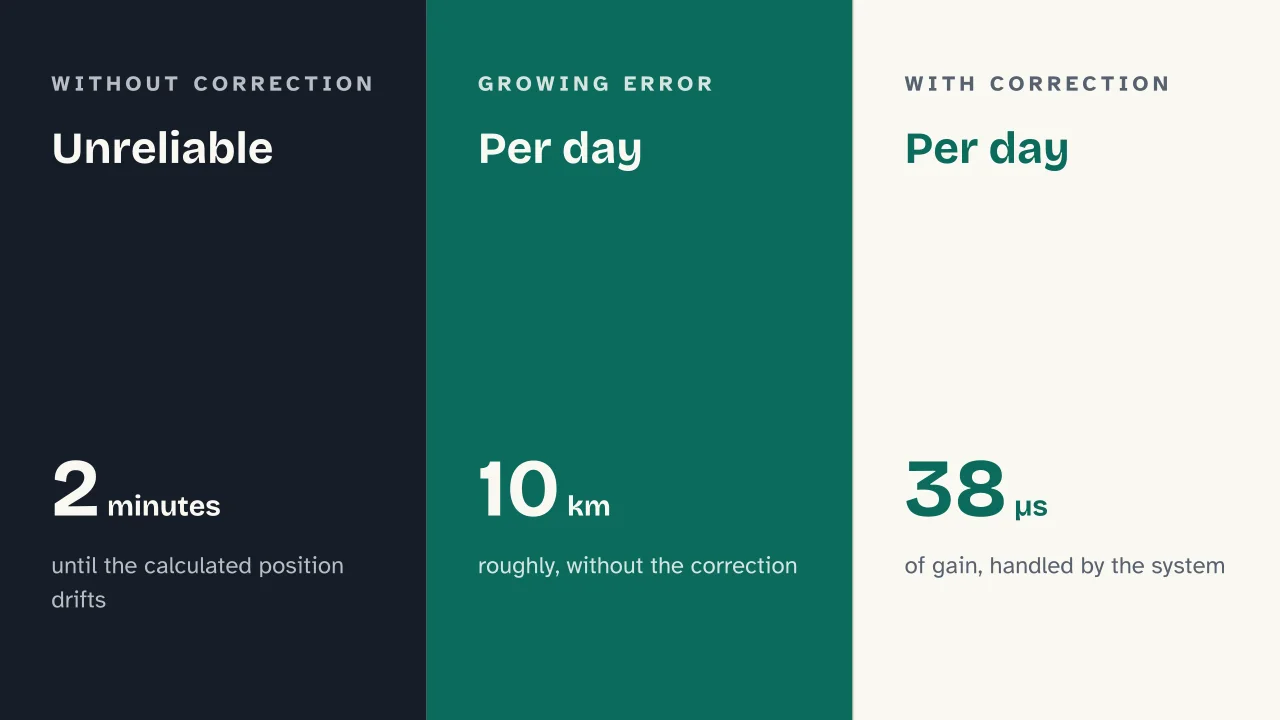
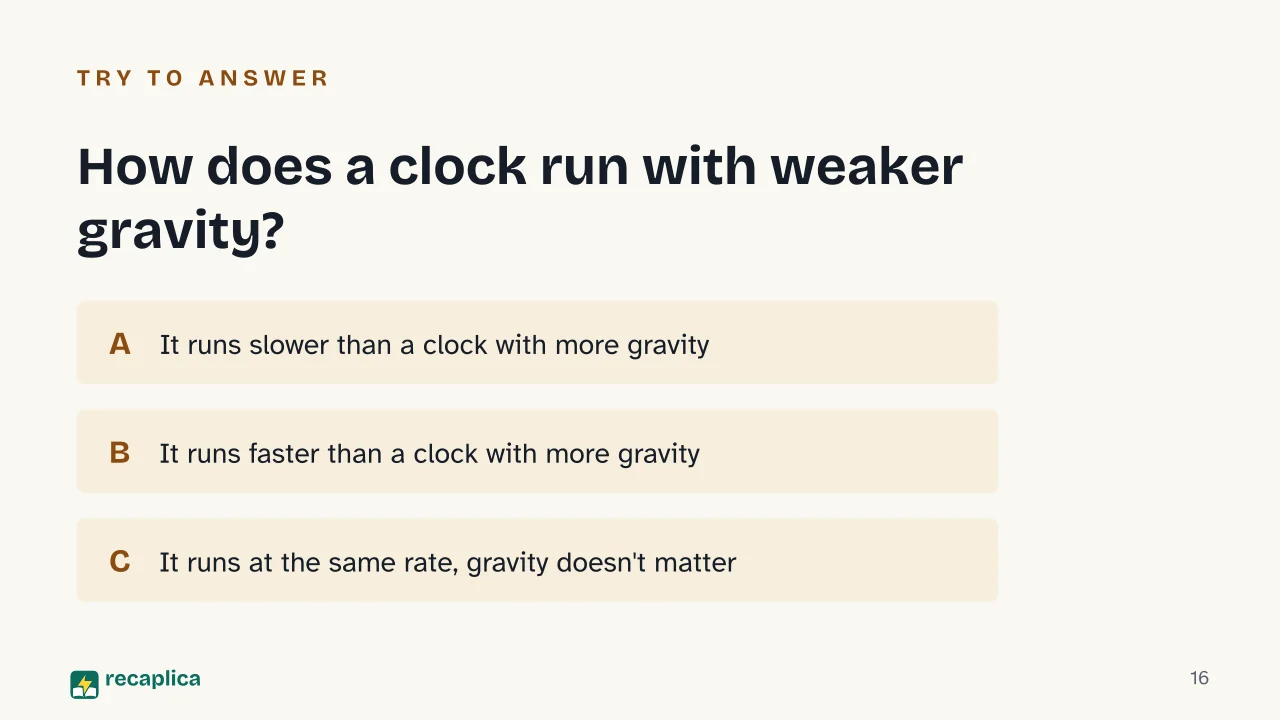
    According to NASA, the GPS system depends on corrections predicted by relativity. Two effects, both described by Einstein, act together on satellite clocks and pull in opposite directions. General relativity says that weaker gravity in orbit makes time run faster for the satellites than for the ground below; special relativity says that an object moving much faster than another experiences time running more slowly. According to Ohio State University, speed alone costs the satellite clocks roughly 7 microseconds a day against clocks on the ground, while the weaker gravity alone adds back about 45 microseconds a day; combined, the two effects leave GPS satellite clocks running about 38 microseconds a day ahead of clocks on Earth. A microsecond looks negligible for everyday life, but it builds up every day across a network of satellites used by billions of devices, and the system has to correct for it to stay accurate.

    Practical example: according to Ohio State University, a position calculated by GPS without the relativistic correction would become unreliable after just 2 minutes, with an error growing to around 10 kilometers a day. Every time a navigation app gets the turn right, a calculation that accounts for relativity is behind it.

    The same family of effects shows up outside the GPS system too. According to NASA, the gravitational redshift predicted by Einstein has been observed in a system of two stars about 29,000 light-years from Earth: a clock under stronger gravity runs slower than a clock observed from a region with weaker gravity.

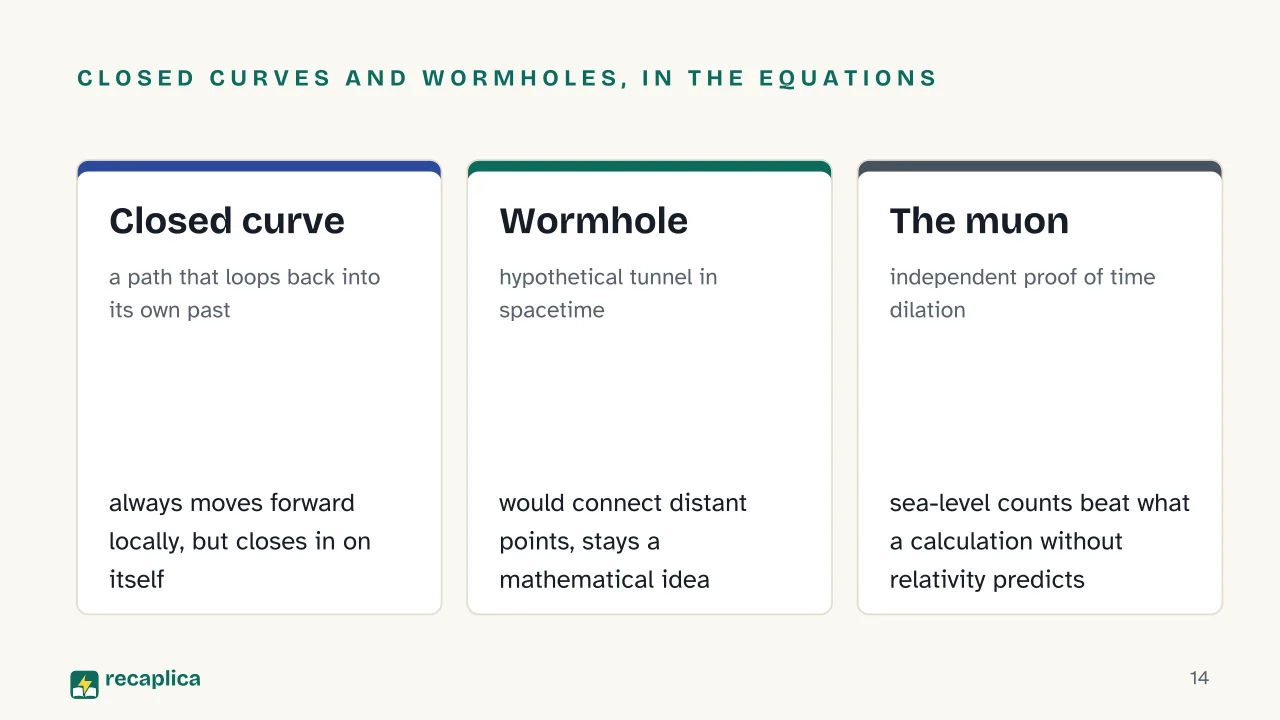
    Another confirmation comes from a subatomic particle. According to HyperPhysics, the muon has a half-life of just 1.56 microseconds measured at rest, yet counting them at sea level turns up more than a calculation that leaves relativity out would predict.

    Why Going Back Is a Different Problem

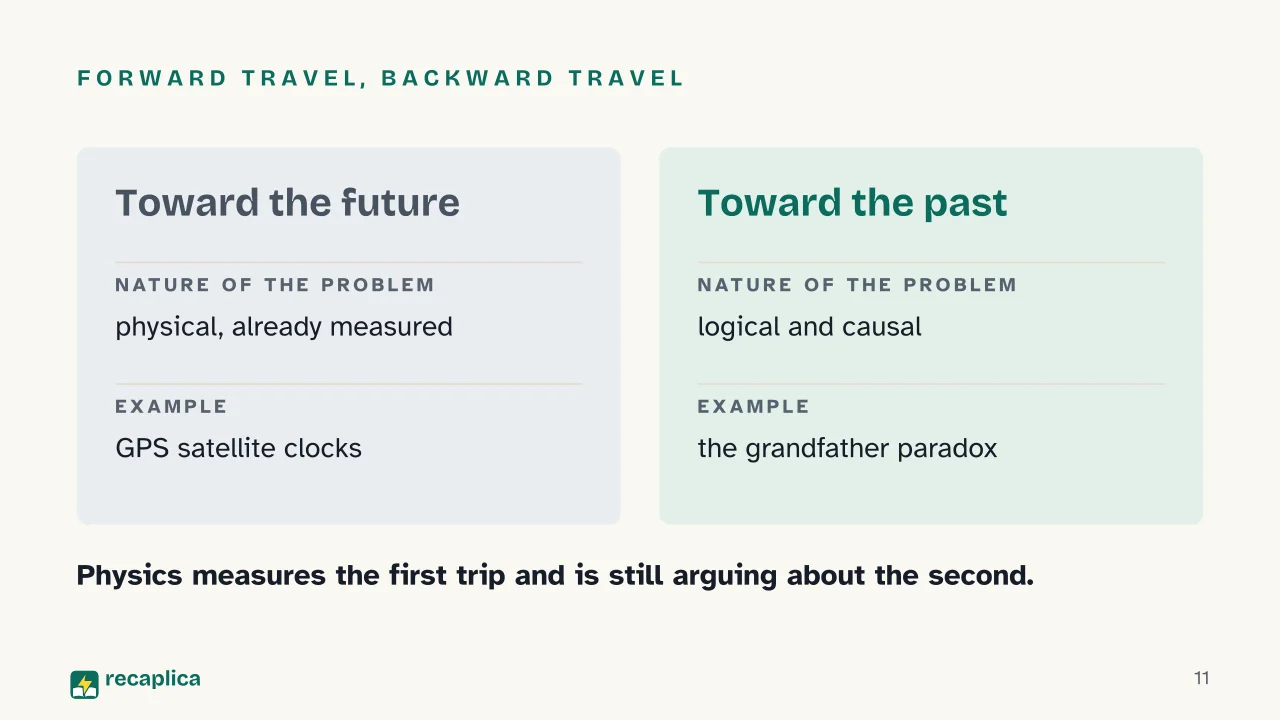
    Speed and gravity settle the forward trip, and the measurement is already in hand. Going toward the past changes nature: the Stanford Encyclopedia of Philosophy notes that time travel isn’t just a science-fiction theme, because with general relativity it has been taken seriously by physicists too.

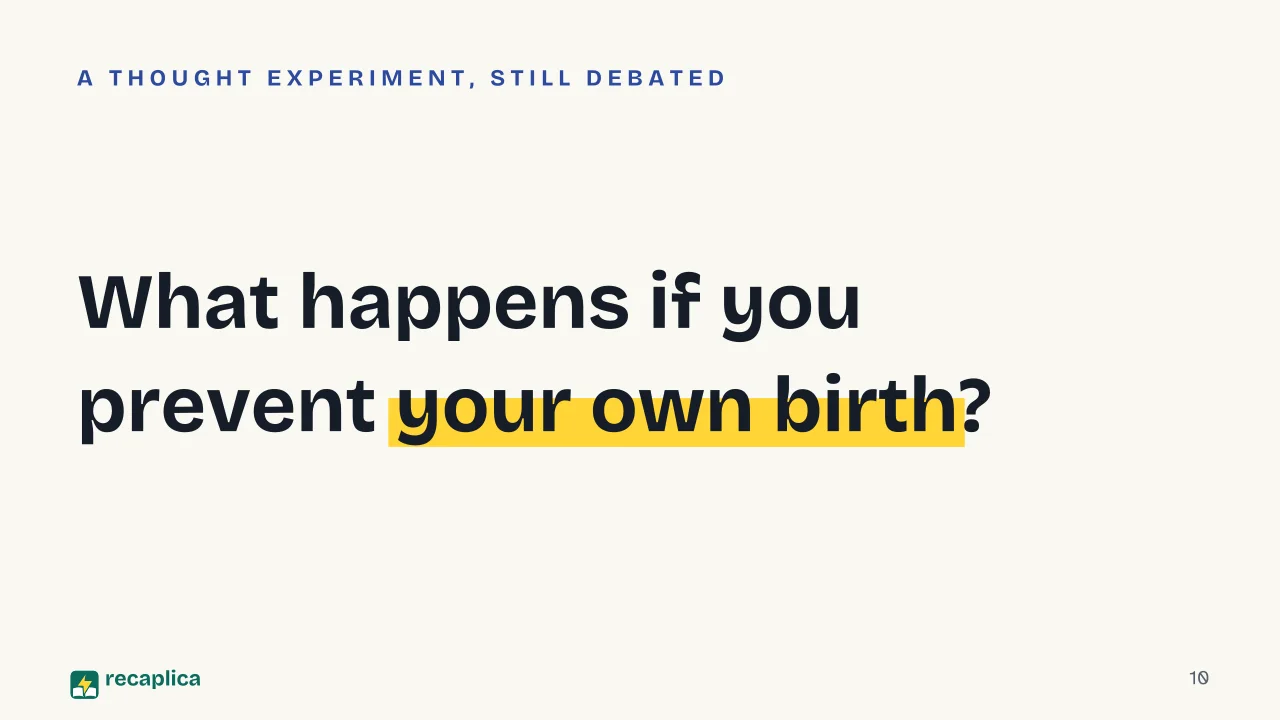
    The classic problem has a name: the grandfather paradox. A traveler goes back in time to kill their own grandfather before he becomes a parent. Succeeding at that would strip the traveler of the very possibility of being born to attempt it. It’s a logical contradiction, not a technical obstacle.

    For a long time, these causal paradoxes were used as an argument for dismissing the general relativity solutions that allow closed timelike curves, accused of violating logic as well. In its 2023 revision, the Stanford Encyclopedia of Philosophy describes a consensus that has largely reversed after deeper analysis of the paradoxes, to the point that those solutions are no longer dismissed outright.

    Strictly speaking, general relativity does not mathematically rule out backward time travel: its equations have been solved in ways that allow trajectories to loop into the past. A path that locally always moves forward in time can, taken as a whole, close back on itself, forming what the source calls a closed timelike curve. Among the theoretical solutions discussed are wormholes, hypothetical tunnels that would connect different points in spacetime: the Stanford Encyclopedia of Philosophy presents them as mathematical results, far from an engineering project ready to build.

    H.G. Wells’s novel The Time Machine popularized the idea of moving through time before relativity existed as a theory.

    Two Trips, Two Different Questions

    The same label, time travel, hides two separate questions. Forward travel has an experimental answer: different clocks, under different conditions of speed or gravity, measure time differently, and the device that proves it every day sits in the reader’s pocket. Backward travel has, for now, only a mathematical answer, with a logical problem that physics has been debating for decades.

    Anyone asking whether time travel is possible is usually thinking of the past, of going back to fix a mistake. Physics answers that direction with more caution.

    For spacetime curvature at its extreme, see what black holes are.

    Slide deck

    Slides ready to download and make your own in PowerPoint or Google Slides, with speaker notes. Pick the Flash cut or the Full one.

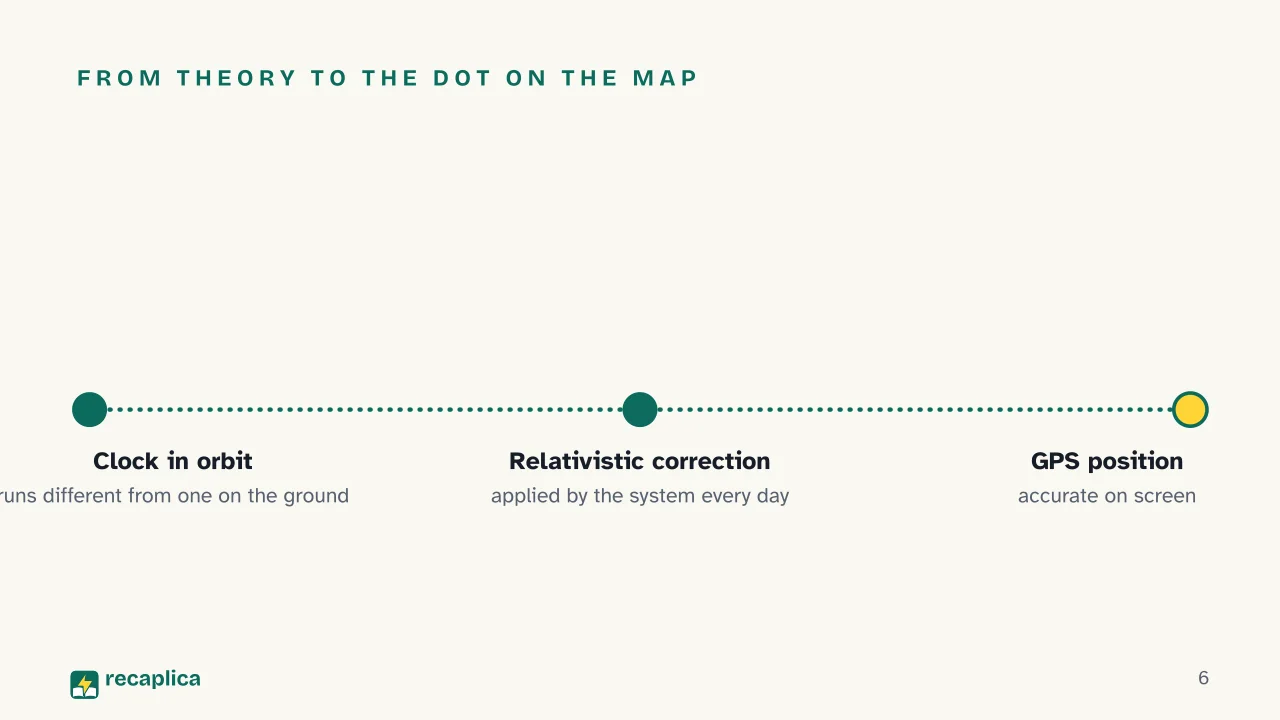
    Slide 1 of the presentation on Time Travel: Time TravelSlide 2 of the presentation on Time Travel: Why does GPS have to correct the clock?Slide 3 of the presentation on Time Travel: From GPS to the grandfather paradoxSlide 4 of the presentation on Time Travel: Chapter 01: Time running at different speedsSlide 5 of the presentation on Time Travel: Opposite effects on GPS clocksSlide 6 of the presentation on Time Travel: From theory to the dot on the mapSlide 7 of the presentation on Time Travel: Chapter 02: GPS, daily proofSlide 8 of the presentation on Time Travel: Unreliable · Per day · Per daySlide 9 of the presentation on Time Travel: Chapter 03: Going back, the paradoxSlide 10 of the presentation on Time Travel: What happens if you prevent your own birth?Slide 11 of the presentation on Time Travel: Forward travel, backward travelSlide 12 of the presentation on Time Travel: General relativity does not completely rule out travel to the past.Slide 13 of the presentation on Time Travel: Chapter 04: What stays theorySlide 14 of the presentation on Time Travel: Closed curves and wormholes, in the equations: Closed curve, Wormhole, The muonSlide 15 of the presentation on Time Travel: 1.56 microseconds, measured at restSlide 16 of the presentation on Time Travel: How does a clock run with weaker gravity?Slide 17 of the presentation on Time Travel: Now, the recap
    Flash10 slidesThe essential thread, to present in classFull17 slidesEvery chapter and the deeper detail

    Common myths

    • ✗ Myth Time travel is pure science fiction, physics doesn't take it seriously

      ✓ Reality The Stanford Encyclopedia of Philosophy reports that, with general relativity, the topic has been taken seriously by physicists too: mathematical solutions of its equations exist that are compatible with paths returning to the past, alongside forward time dilation, which is already measured.

    • ✗ Myth If physics doesn't rule out traveling to the past, sooner or later someone will build a machine for it

      ✓ Reality The solutions cited by the Stanford Encyclopedia of Philosophy, such as closed timelike curves or wormholes, remain theoretical results of the general relativity equations: the source does not describe them as buildable technology, and the grandfather paradox remains an open logical problem.

    • ✗ Myth Time dilation is a negligible effect, good only for laboratory experiments

      ✓ Reality The GPS system, used every day, depends on correcting for this effect. According to Ohio State University, a GPS system without relativistic corrections would start handing out the wrong coordinates within minutes, drifting further off course with every passing day.

    Mind map

    Drag the background to move around and the nodes to reposition them; use − and + to collapse and expand branches.
    Customize
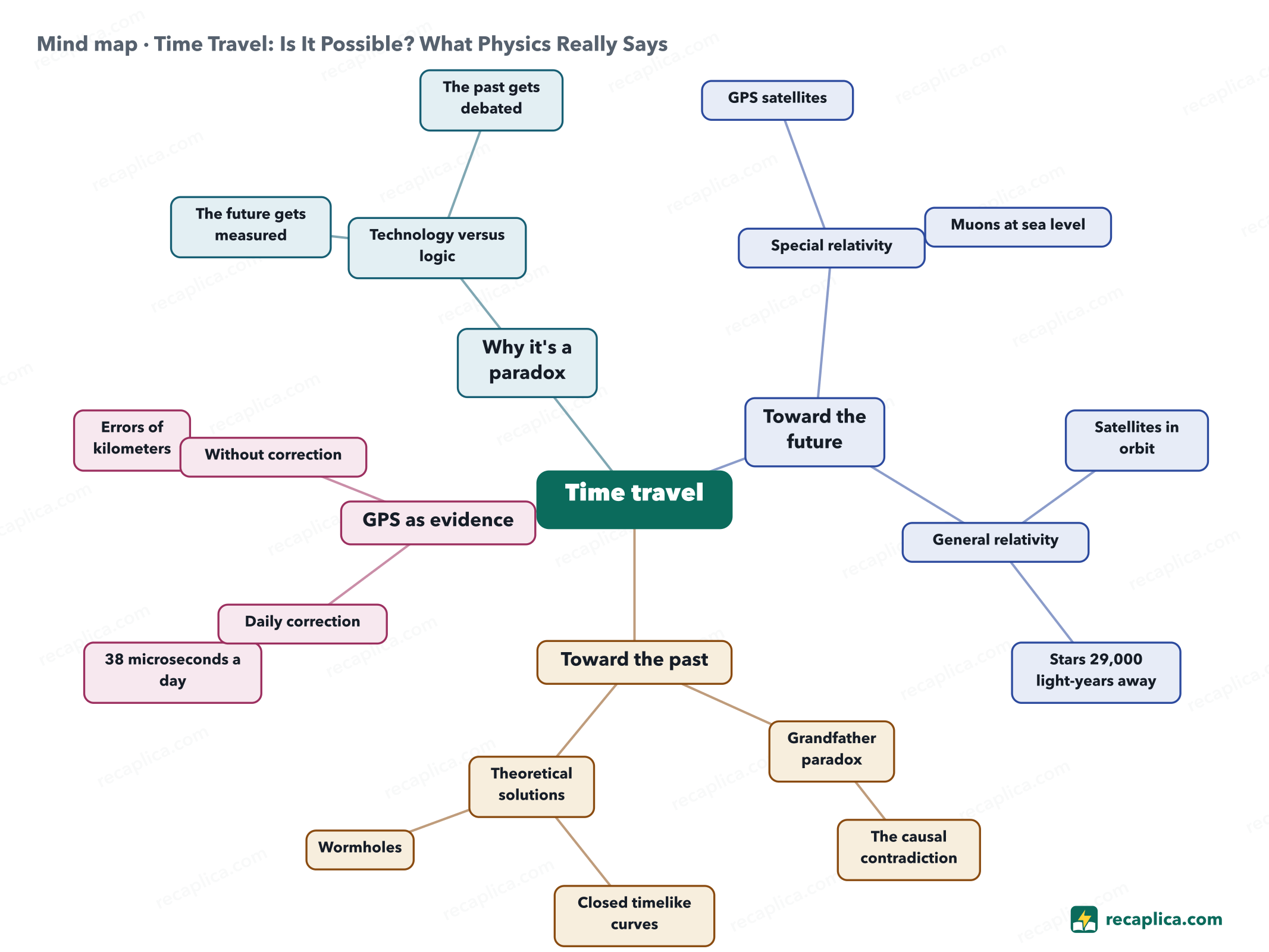
    Mind map: Time Travel: Is It Possible? What Physics Really Says
    • Time travel
      • Toward the future measured, not a hypothesis
        • Special relativity motion slows time for the one moving
          • GPS satellites
          • Muons at sea level
        • General relativity weaker gravity speeds time up
          • Satellites in orbit
          • Stars 29,000 light-years away
      • Toward the past a logical problem, not a technological one
        • Grandfather paradox
          • The causal contradiction
        • Theoretical solutions
          • Closed timelike curves
          • Wormholes
      • GPS as evidence where both relativities meet
        • Daily correction
          • 38 microseconds a day
        • Without correction
          • Errors of kilometers
      • Why it's a paradox
        • Technology versus logic
          • The future gets measured
          • The past gets debated

    Quiz: test yourself

    Answer the questions to check what you have learned: you get instant feedback and a short explanation.

    Grade 0/10 0/5
    1 What does the GPS system actually measure, according to NASA sources?

    GPS works by correcting the gap between satellite clocks and ground clocks, a gap predicted by Einstein's theory of relativity.

    2 According to Ohio State University, the net relativistic effect on GPS clocks is that they run...

    Special relativity alone would slow the satellite clocks by about 7 microseconds a day, and general relativity alone would speed them up by about 45: the combined effect leaves them running about 38 microseconds a day ahead.

    3 What does the grandfather paradox describe?

    The Stanford Encyclopedia of Philosophy frames the paradox as a logical contradiction: anyone who succeeded would erase the very possibility of having tried.

    4 True or false: general relativity, strictly speaking, mathematically excludes every path that loops back into the past.

    False: the Stanford Encyclopedia of Philosophy reports that solutions of the general relativity equations exist that are compatible with closed timelike curves, even if they remain theoretical.

    5 What do muons detected at sea level confirm, according to HyperPhysics?

    At rest the muon has a half-life of just 1.56 microseconds, yet more of them reach sea level than a relativity-free calculation would allow for: an independent sign of time dilation.

    Answers: 1-A · 2-B · 3-B · 4-B · 5-C

    Flashcards

    Tap the card to flip it and check whether you remember the answer, then move to the next one.

    1 / 7

    Explain it in your own words

    The ultimate test: if you can explain it in simple words, you've truly understood it. Write your explanation, then compare it with the Recap.

    Your explanation is saved only on this device.

    Time travel toward the future is not science fiction: relativity predicts it, and the GPS system corrects for it every day, down to microseconds. Traveling back to the past raises a different kind of problem, one of logic, summed up in the grandfather paradox. The Stanford Encyclopedia of Philosophy notes that the equations of general relativity do allow solutions compatible with paths that loop back into the past, even though they remain theoretical. This Recap explains why only one of the two directions counts as a paradox.

    Frequently asked questions

    Is time travel possible?

    Toward the future, yes, and it is already measured: time dilation makes time run at different rates for people moving at different speeds or sitting in different gravitational fields, as GPS satellites demonstrate every day. Toward the past, the answer changes nature: the Stanford Encyclopedia of Philosophy reports that in certain cases the equations of general relativity are compatible with a return to the past, as with wormholes, but only at a theoretical level.

    Why is time travel to the past considered a paradox?

    The grandfather paradox describes a traveler who, by going back in time, prevents their own birth: at that point, the person who was supposed to make the trip loses the very possibility of existing to attempt it. The problem is about the logical consistency of events, not the technology for moving through time.

    Is forward time travel actually real?

    Yes, it is a regularly measured effect. GPS satellites, through the combined action of special and general relativity, build up a time difference against ground clocks every day, and engineers correct for it to keep the system working.

    What is the grandfather paradox?

    It is the thought experiment cited by the Stanford Encyclopedia of Philosophy: a traveler goes back in time to prevent a parent from being born, and a successful attempt would erase the very possibility that the trip ever happened.

    Does H.G. Wells's time machine novel have a scientific basis?

    The novel is a work of fiction written before Einstein's theory of relativity. Modern physics describes a different effect, small in everyday life but measurable: time dilation, alongside mathematical solutions that remain theoretical for travel into the past.

    Sources

    • NASA Science, 10 Things Einstein Got Right
    • NASA, Einstein's Theory of Relativity, Critical For GPS, Seen In Distant Stars
    • Ohio State University, Dept. of Astronomy, Real-World Relativity: The GPS Navigation System
    • Stanford Encyclopedia of Philosophy, Time Travel and Modern Physics
    • HyperPhysics, Georgia State University, Muon Confirmation of Time Dilation

    Every Recap goes through an independent review before publication.

    Every evening, the day's new Recaps on our Telegram channel. Join the channel →

    Keep learning

    • Science Correlation: What It Means and How to Read the Coefficient Correlation measures how closely two variables move together, and the most common way to put a number on it is the correlation coefficient, which runs from -1 to +1. A value near +1 means the two variables rise together, near -1 means one rises while the other falls, and near 0 means no linear relationship stands out. The coefficient only captures the strength of a straight-line relationship, and a single unusual data point can push it up or down by a lot. Even when it's strong, a correlation between two variables never shows that one causes the other. Read the Recap →
    • Science Light Refraction: What It Is, the Laws Behind It, and Examples A surface that separates two transparent materials sends some light back, reflecting it, and lets the rest through while bending it toward a new direction. The law of reflection keeps the incoming and outgoing angles equal, both measured from the normal to the surface. Snell's law governs refraction instead, linking the index of each material to how much the ray tilts before and after it crosses over. These two laws alone explain mirrors, lenses, prisms and everyday sights such as a pencil that appears to snap inside a glass of water. Read the Recap →
    • Science Total Internal Reflection and the Critical Angle: Definition and Formula Total internal reflection is what happens when a light ray stops being able to leave a transparent medium and gets sent back inside it completely. It takes place past a specific angle of incidence, called the critical angle, calculated with Snell's law by comparing the refractive indices of the two materials involved. It only happens under one precise condition: the ray must be traveling from an optically denser medium into a less dense one, such as from water into air or from glass into air. Optical fibers and, in part, the sparkle of diamonds rely on this same principle. Read the Recap →

    recaplica

    Clear in 30 seconds, yours in 10 minutes.

    Recaps Mind maps Request a Recap Telegram channel Mind map maker Our method About Privacy & cookies Legal notes & terms of use

    © 2026 Recaplica · A project by Curi S.r.l. — VAT IT05472000750

    Statistics, only if you say so

    To learn which Recaps help most we would use Google Analytics, with aggregate, anonymous data. It starts only with your OK, and you can change your mind anytime. Privacy policy