recaplica
Clear in 30 seconds, yours in 10 minutes.
In 30 seconds quick read
Wine comes from the alcoholic fermentation of grape must, the process in which yeast converts sugar into ethanol and carbon dioxide. Before fermentation, grapes are crushed and destemmed to free the juice from the berries and separate it from the stems. For red wine, the must stays in contact with the skins during maceration, which gives it color and tannins; for white wine, the juice is drawn off almost immediately, so the wine stays pale. After fermentation, wine rests in barrels, oak casks or steel tanks to age before it's filtered and bottled. Under the standard set by the OIV, the international body that regulates the industry, a drink can only be called wine once it reaches a minimum alcohol content.
Key Points
Winemaking starts with crushing and destemming, which break open the berries and separate the juice from the stems.
Alcoholic fermentation is the core of the process: yeast turns the sugar in the must into ethanol and carbon dioxide.
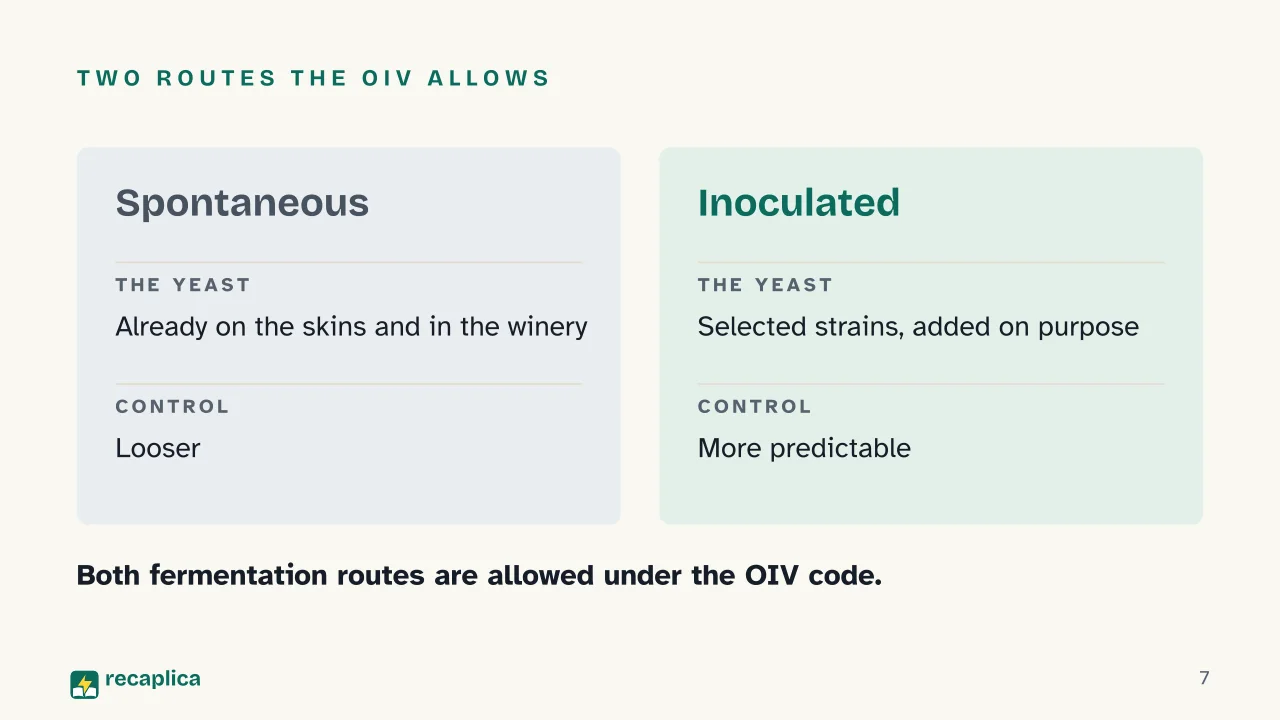
The OIV recognizes two paths to fermentation: spontaneous, using the grape's own wild yeast, or inoculated, with selected yeast strains added by the winemaker.
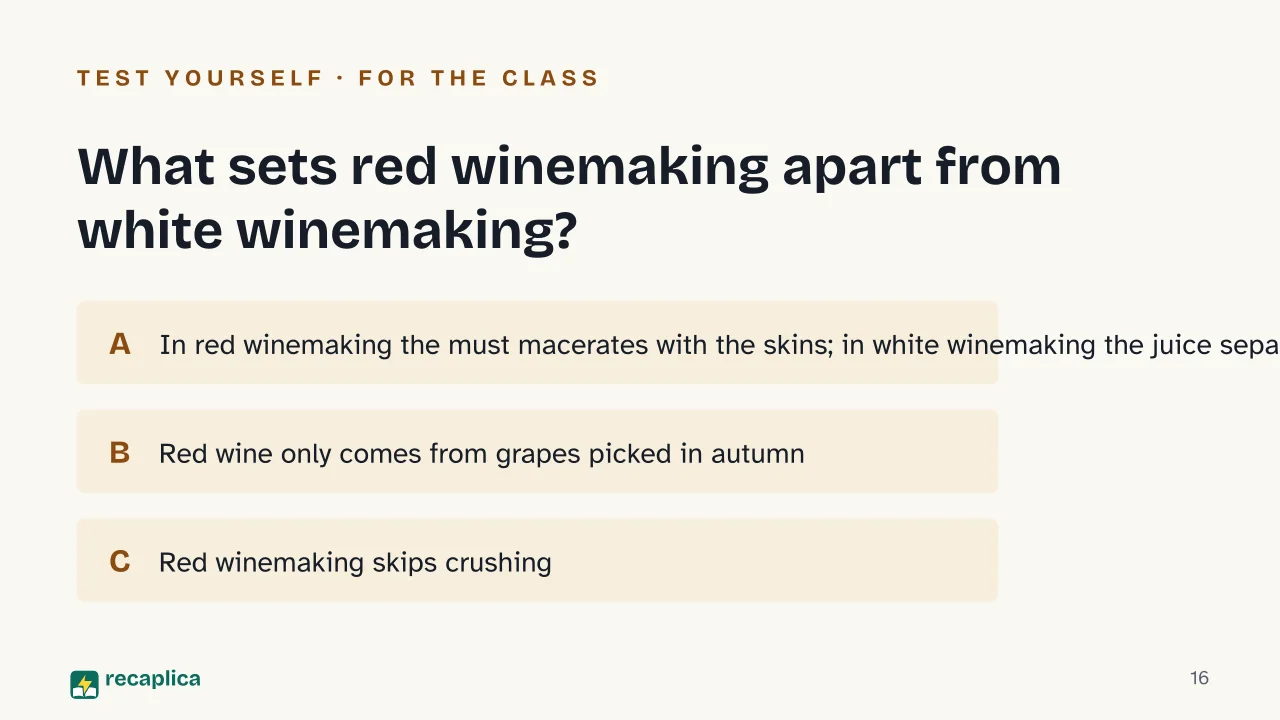
In red winemaking the must macerates together with the skins, which release color and tannins; in white winemaking the juice is drawn off right away and stays pale.
After pressing and racking, wine rests in wood or steel to age, which reshapes its acidity and aroma.
Under the OIV's legal definition, a drink only counts as wine once it reaches a minimum actual alcohol strength of 8.5% by volume, reducible to 7% for certain vineyards.
Key figures
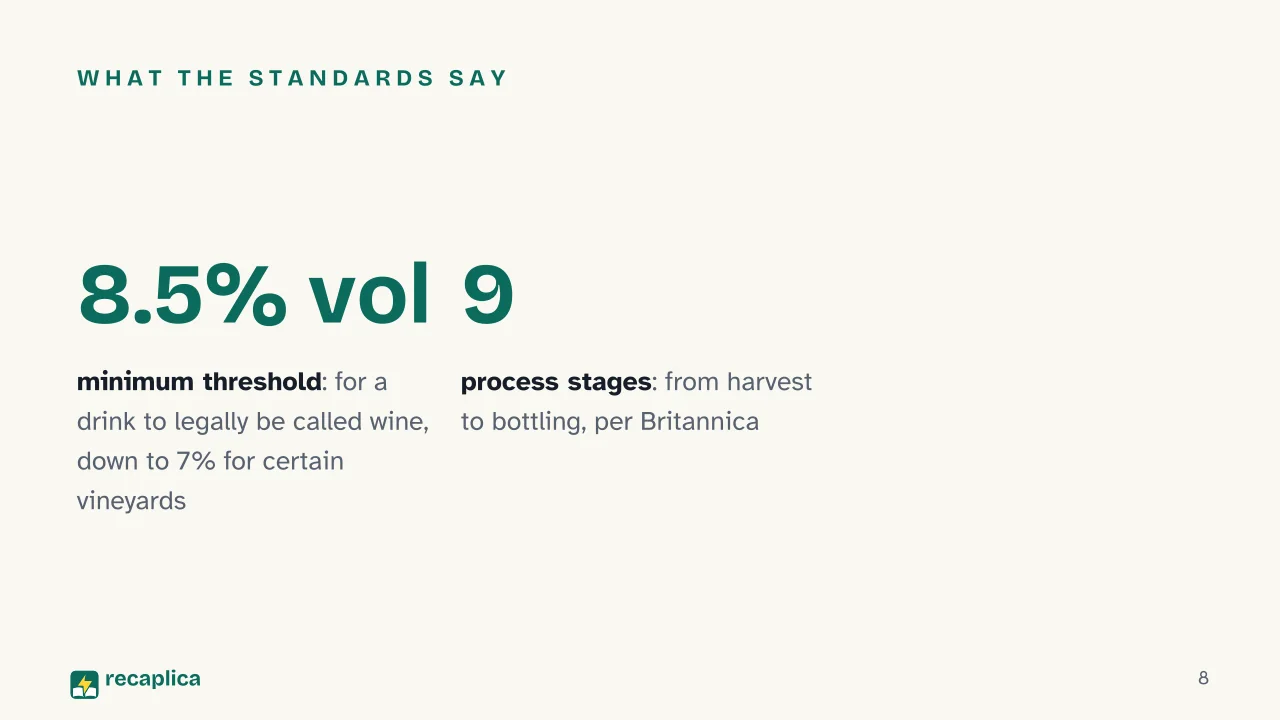
8.5% vol minimum actual alcohol strength a drink needs to be legally called wine, under the international standard set by the OIV (reducible to 7% vol for particular climates, terroirs or grape varieties) Source: OIV, legal definition of wine
9 stages the Encyclopaedia Britannica breaks the winemaking process into, from harvest to bottling Source: Encyclopaedia Britannica
Deep Dive
From grape to must
Winemaking begins with the harvest, picking the grapes once they’ve
ripened. The sources behind this Recap don’t go into the timing or methods
of the harvest itself: from this point on, the grape becomes a raw
material to be worked in the winery.
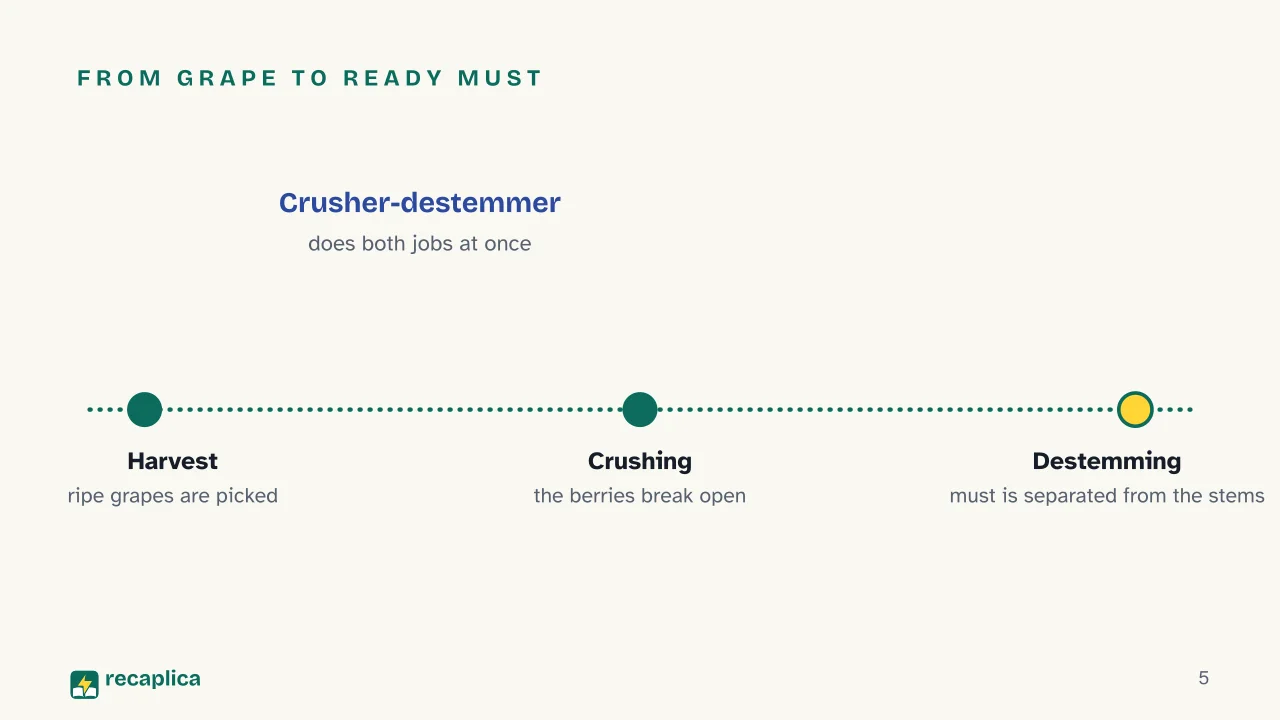
The next step is crushing: breaking open the grape berries. According
to Treccani, splitting the skin and the cell membranes underneath speeds
up the release of the juice and lets the solid and liquid parts mix,
bringing the microorganisms that drive the transformation of must into
direct contact with the liquid — the same exchange that happens inside
every cell. Alongside crushing, or right after it,
comes destemming, which separates the berries from the stems, the
bunch’s woody part. Wineries often run both steps together, in a machine
called a crusher-destemmer; some models use a spinning drum that throws
the grapes against the walls, while others add a screw press that handles
the pressing step too.
Alcoholic fermentation: yeast at work
Under the standard set by the OIV, the International Organisation of Vine
and Wine, alcoholic fermentation is the
conversion of grape sugars into ethanol, carbon dioxide and secondary
products — literally the reaction that turns must into wine. It runs on
the same mechanism that makes bread rise: yeast
draws energy from sugar without using oxygen, leaving alcohol and gas
behind as byproducts.
The OIV’s Code of Oenological Practices recognizes two routes. Fermentation
can happen spontaneously, driven by the yeast already present on the
grape skins, in the must and in the winery; or through inoculation,
adding selected yeast strains to the must before or during the process.
Among the accepted ways to encourage, slow down or stop fermentation, the
Code also lists temperature control, chosen to suit the wine being made.
Real-world example: the moment must hits the tank, the yeast finds
all the sugar it needs to multiply and starts fermenting it right away.
The carbon dioxide produced rises to the surface as bubbles — which is
why a fermenting tank seems to bubble on its own, with no flame under
it.
Red or white: maceration makes the difference
A wine’s color isn’t determined by the grape alone. According to
Treccani, red winemaking involves macerating the solid parts — skins
and seeds — together with the must: the must sits in contact with these
solids and picks up color and tannins from them. During maceration the
skins tend to rise to the surface, forming a cap that needs to be managed
so it stays submerged in the liquid.
Maceration is followed by racking, drawing the wine off the solid
parts; the leftover skins and seeds are then pressed to recover the
liquid they still hold.
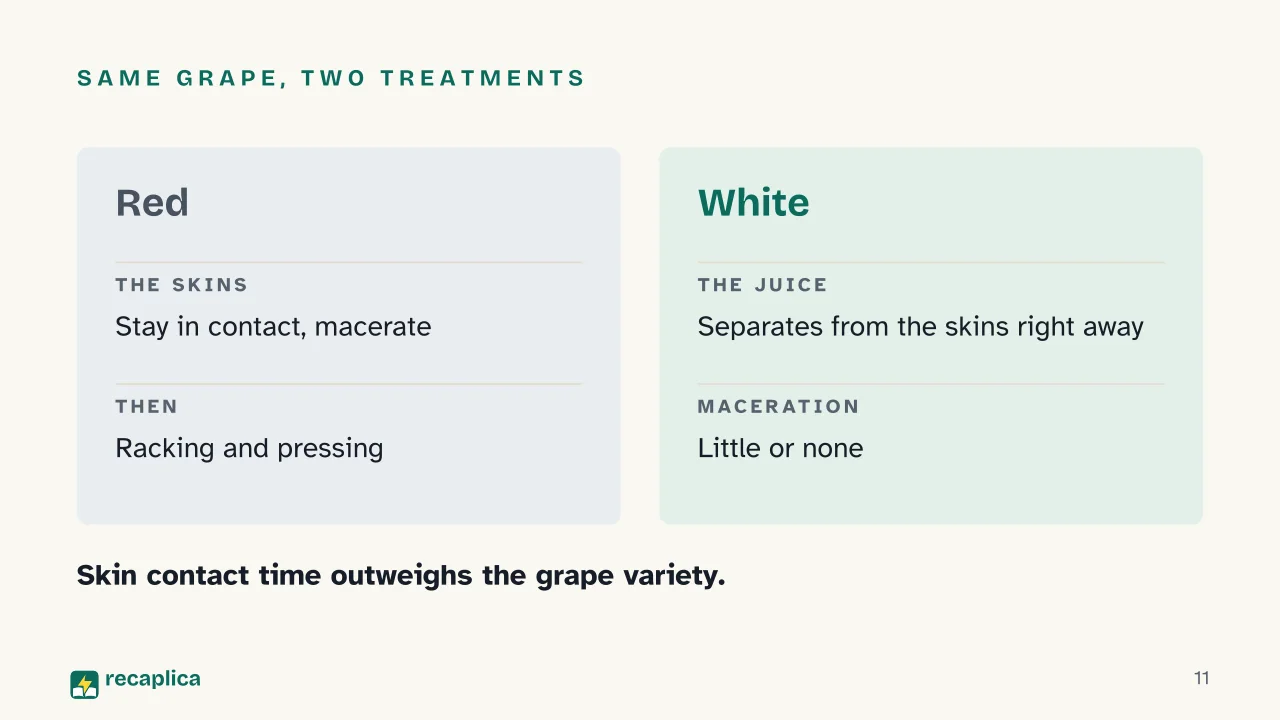
In white winemaking, the juice separates from the skins almost
immediately after crushing, with little or no maceration — which is why
even grapes with dark skins can yield a pale wine.
Red winemaking
White winemaking
Contact with the skins
Extended maceration
Near-immediate separation
What the skins release
Color and tannins
Little to nothing
Step after maceration
Racking and pressing
Draining off the juice
Aging
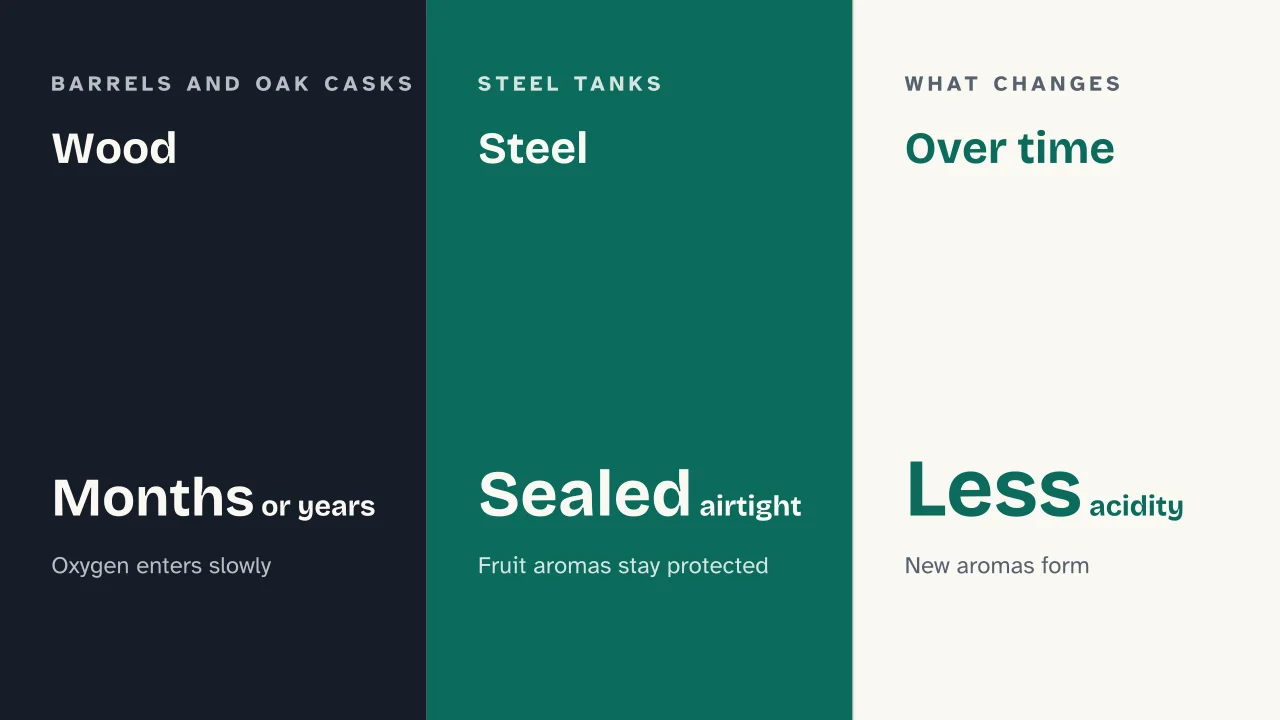
After racking, according to Treccani, wine is stored in barrels, oak
casks or stainless steel tanks for aging. Encyclopaedia Britannica
describes what happens inside the wood: oxygen enters slowly through the
staves, some water and alcohol evaporate, the wine’s acidity drops and
compounds form that add to aroma and flavor. The process can run from a
few months to several years, depending on the wine and the result the
winemaker is after.
Stainless steel tanks work differently: sealed almost airtight, they let
in far less oxygen and keep the fresh, fruit-driven aromas better
preserved.
Bottling
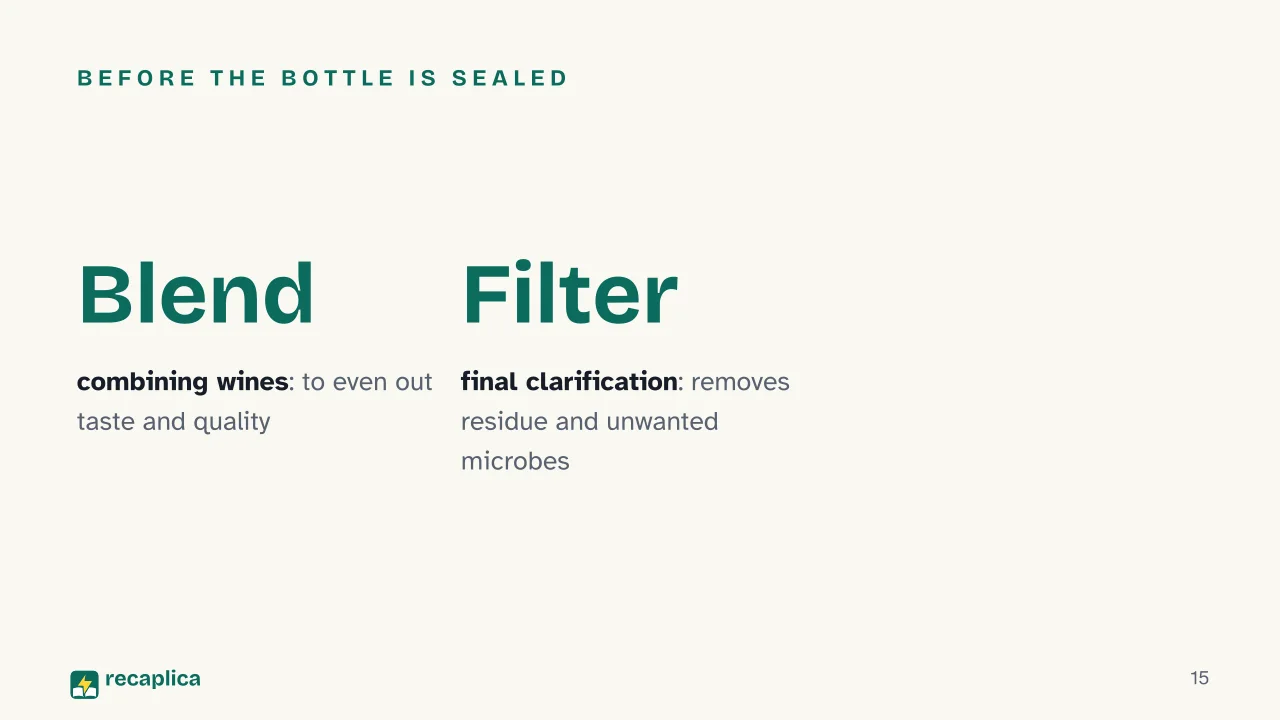
Before bottling, according to Encyclopaedia Britannica, wine may go
through blending, combining different wines to even out taste and
quality, filtration, which removes solid residue left in suspension,
and treatment with antiseptics, to keep unwanted microorganisms from
developing before the bottle is finally sealed.
The legal definition of wine
Not everything made from fermented grapes can legally be called wine.
Under an official OIV resolution, wine is exclusively the beverage
resulting from the total or partial fermentation of fresh grapes, crushed
or not, or of grape must. Its actual alcohol strength can’t fall below
8.5% vol; an allowance down to 7% vol applies for particular climates,
terroirs, grape varieties or the traditions of certain vineyards, and on
the label the stated value can differ from the real one within a
tolerance of ±0.3% vol.
Slide deck
Slides ready to download and make your own in PowerPoint or Google Slides, with speaker notes. Pick the Flash cut or the Full one.
✗ Myth Homemade wine, made without any controls, is automatically more genuine than industrial wine.
✓ Reality Among the factors that govern fermentation, the OIV lists controlling temperature to suit the wine being made: without managing temperature and yeast strains, the risk of off-flavors and defects goes up. Spontaneous fermentation with wild yeast alone is a recognized method, but it's no automatic guarantee of higher quality.
✗ Myth Wine is just fermented grape juice, with no real rules attached.
✓ Reality The OIV legally defines wine as the beverage resulting from the total or partial alcoholic fermentation of fresh grapes or grape must, with a minimum actual alcohol strength of 8.5% vol, reducible to 7% for particular climates, terroirs or grape varieties, and a labeling tolerance of ±0.3% vol.
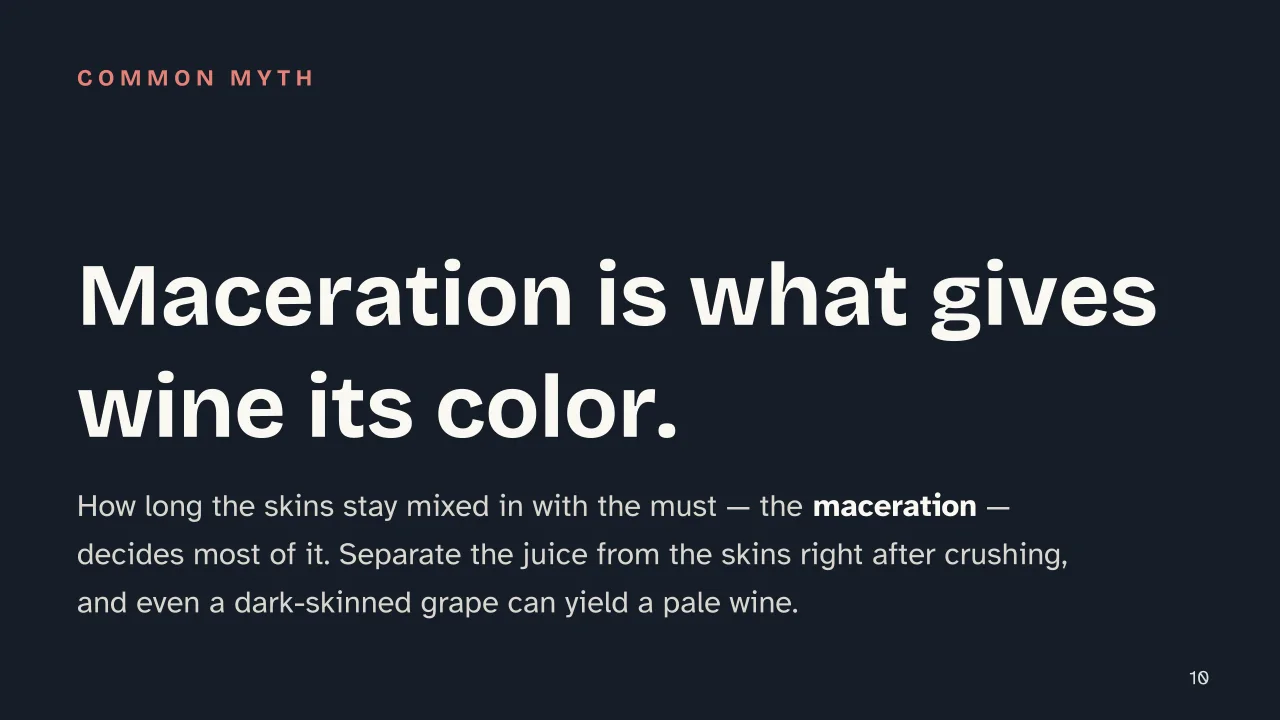
✗ Myth A wine's color depends only on the color of the grapes used.
✓ Reality Color is mostly decided by maceration — how long the must stays in contact with the skins. Red skins left to macerate release pigments and tannins into red wine; separate the juice from the skins right after crushing, and even dark-skinned grapes can produce a pale wine.
Mind map
Drag the background to move around and the nodes to reposition them; use − and + to collapse and expand branches.
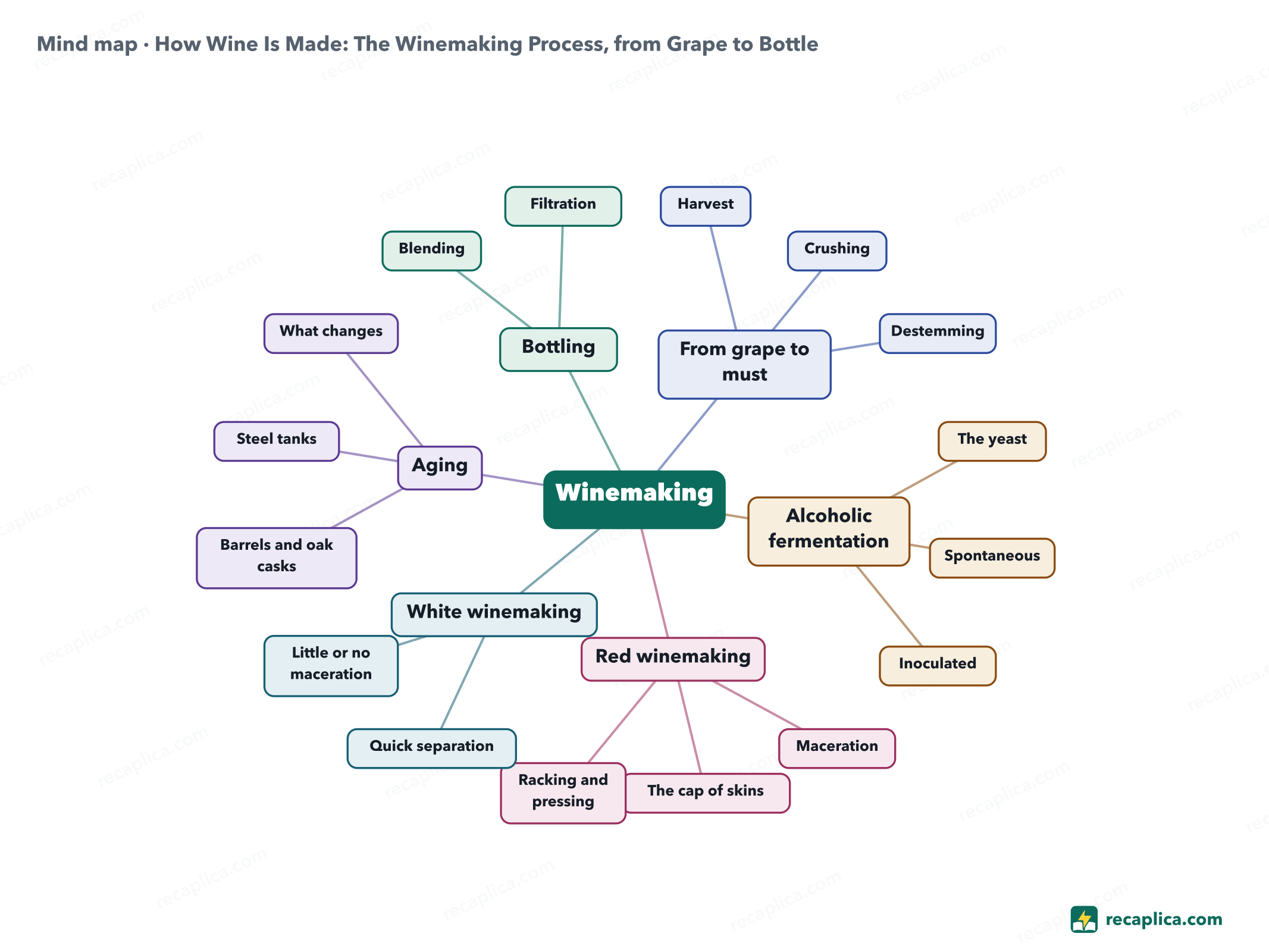
CrushingBreaks open the berries and releases the juice.
DestemmingSeparates the berries from the stems.
Alcoholic fermentation
The yeastConverts sugar into ethanol and CO2.
SpontaneousWild yeast from the skins and the winery.
InoculatedSelected yeast strains added to the must.
Red winemaking
MacerationMust stays in contact with the skins.
The cap of skinsSkins float and need managing.
Racking and pressingSeparate the wine from the solids.
White winemaking
Quick separationJuice leaves the skins right away.
Little or no maceration
Aging
Barrels and oak casksWood lets in a little oxygen.
Steel tanksKeep aromas fresher.
What changesAcidity drops, new aromas form.
Bottling
BlendingCombining different wines.
FiltrationRemoves residue and unwanted microbes.
Quiz: test yourself
Answer the questions to check what you have learned: you get instant feedback and a short explanation.
Grade0/100/5
Answers: 1-A · 2-B · 3-A · 4-B · 5-B
Flashcards
Tap the card to flip it and check whether you remember the answer, then move to the next one.
1 / 7
Explain it in your own words
The ultimate test: if you can explain it in simple words, you've truly understood it. Write your explanation, then compare it with the Recap.
Your explanation is saved only on this device.
Wine comes from the alcoholic fermentation of grape must, the process in which yeast converts sugar into ethanol and carbon dioxide. Before fermentation, grapes are crushed and destemmed to free the juice from the berries and separate it from the stems. For red wine, the must stays in contact with the skins during maceration, which gives it color and tannins; for white wine, the juice is drawn off almost immediately, so the wine stays pale. After fermentation, wine rests in barrels, oak casks or steel tanks to age before it's filtered and bottled. Under the standard set by the OIV, the international body that regulates the industry, a drink can only be called wine once it reaches a minimum alcohol content.
Frequently asked questions
What's the difference between crushing and destemming?
Crushing breaks open the berries to release the juice; destemming separates the berries from the stems, the woody part of the bunch. Wineries often do both at once, with a machine called a crusher-destemmer.
Why is red wine made with the skins on, and white wine isn't?
Because red wine's color and tannins come from maceration — the time the must spends in contact with the skins. In white winemaking the juice separates from the skins right away, so the wine stays pale even when it starts from dark-skinned grapes.
What does yeast actually do during wine fermentation?
It converts the sugar in the must into ethanol and carbon dioxide. Under the OIV standard, that yeast can be the wild strains already present on the grapes and in the winery, or selected strains added on purpose.
How long does wine aging take?
According to Encyclopaedia Britannica, it can run from a few months to several years, depending on the wine and the result the winemaker is after: more time in wood means more oxygen absorbed and more aromatic compounds formed.
What happens right before bottling?
Wine may go through blending, combining different batches, filtration, and treatment with antiseptics to keep unwanted microbes from developing, according to Encyclopaedia Britannica.
Every Recap goes through an independent review before publication.
Statistics, only if you say so
To learn which Recaps help most we would use Google Analytics, with aggregate, anonymous data. It starts only with your OK, and you can change your mind anytime. Privacy policy