Skip to content
recaplica

    One moment: security check

    Cloudflare wants to make sure you're not a robot. Tick the box below and your search will continue on its own.

    IT
    recaplica The First 1000 Days of Life: Why They Shape a Child's Development
    © 2026 Recaplica · recaplica.com — All rights reserved
    Home › Science

    The First 1000 Days of Life: Why They Shape a Child's Development

    By Recaplica Newsroom · Updated on September 6, 2026

    This Recap is about health. It explains what research and regulators say: it is not medical advice, nor a supplement or training programme. For decisions about yourself, talk to a doctor; if you are under 18, to your parents too. Legal notes

    What to print

    Page numbers appear when printing with default margins.

    Slides

    Choose a cut

    Flash10 slidesThe essential thread, to present in classFull18 slidesEvery chapter and the deeper detail

    Both come with speaker notes.

    Telegram channel
    recaplica Clear in 30 seconds, yours in 10 minutes.
    In 30 seconds Key points Figures Deep dive Slides Myths Mind map Quiz Flashcards FAQ

    In 30 seconds quick read

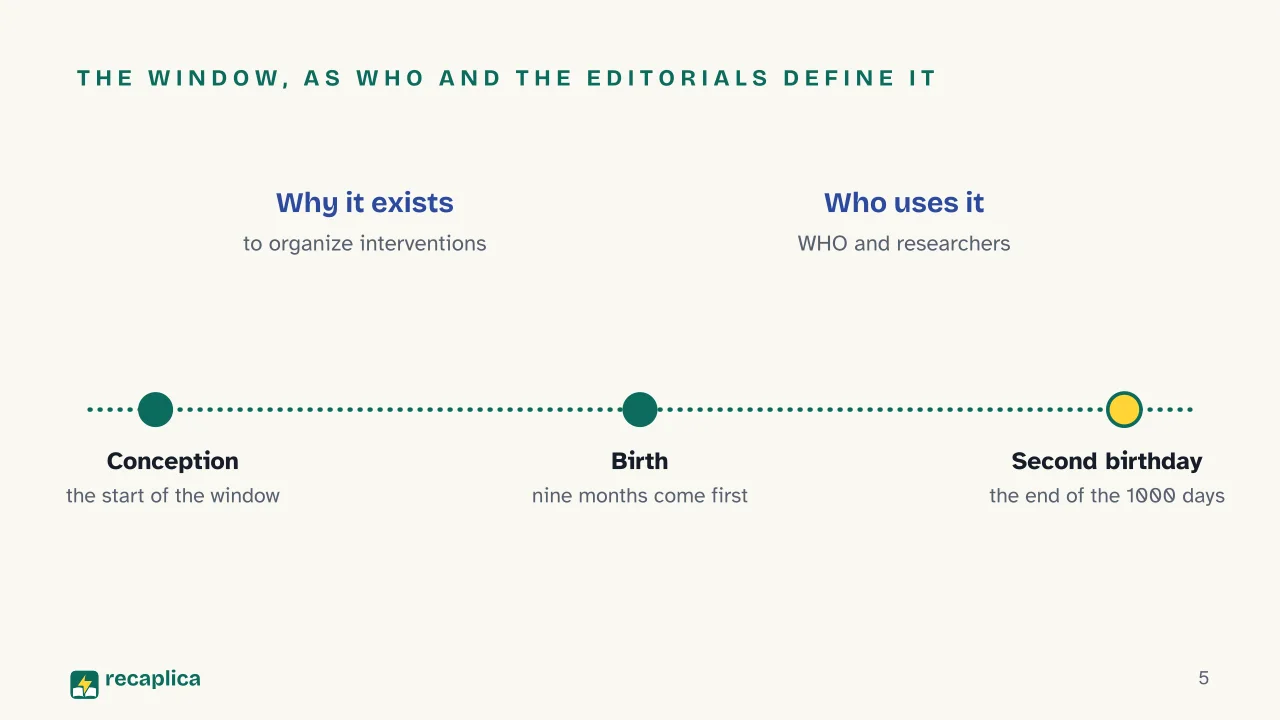
    The first 1000 days of life is the stretch from conception to a child's second birthday, a window the World Health Organization and researchers single out as unusually important for development. During those roughly 1000 days the brain builds new neural connections at a fast pace, while nutrition, health and the surrounding environment help set the stage for later physical and cognitive growth. Sources link malnutrition in this period to a large share of child deaths in low- and middle-income countries, though the numbers vary sharply from one setting to another. WHO frames interventions during this window around the "nurturing care" model, which covers health, protection, early learning and affectionate relationships, not nutrition alone.

    Key Points

    • The first 1000 days run from conception to a child's second birthday: it is the frame WHO uses to organize maternal and child health interventions (Essential Nutrition Actions, WHO).
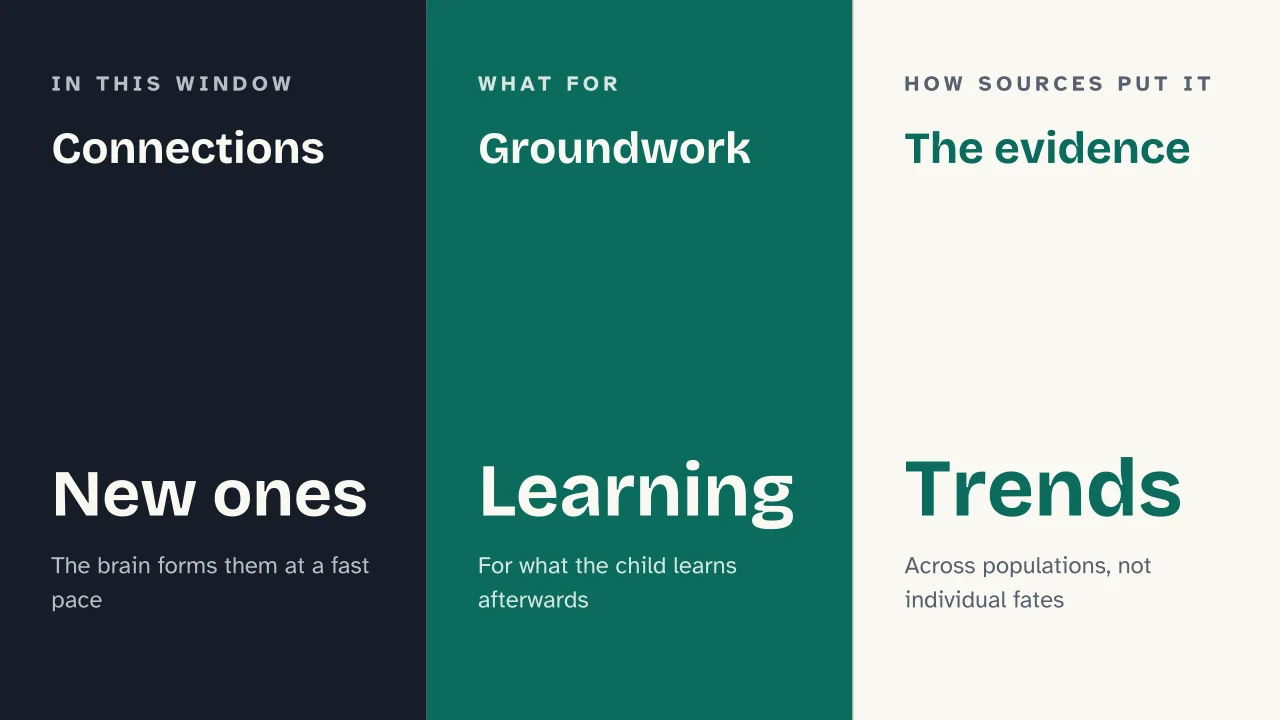
    • During this window the brain forms new neural connections at a fast pace, laying the groundwork for later learning, according to an editorial published in Frontiers in Nutrition.
    • An editorial in Frontiers in Public Health reports that malnutrition is linked to nearly half of under-five deaths in low- and middle-income countries.
    • Iodine deficiency is linked to a burden of childhood intellectual disability about 10 times higher in low sociodemographic index regions than in high-index countries, according to the study by Liu et al. in Frontiers in Public Health.
    • WHO describes "nurturing care" around five components — health and nutrition, protection, early learning, affectionate relationships, a stable environment — not just feeding the child.
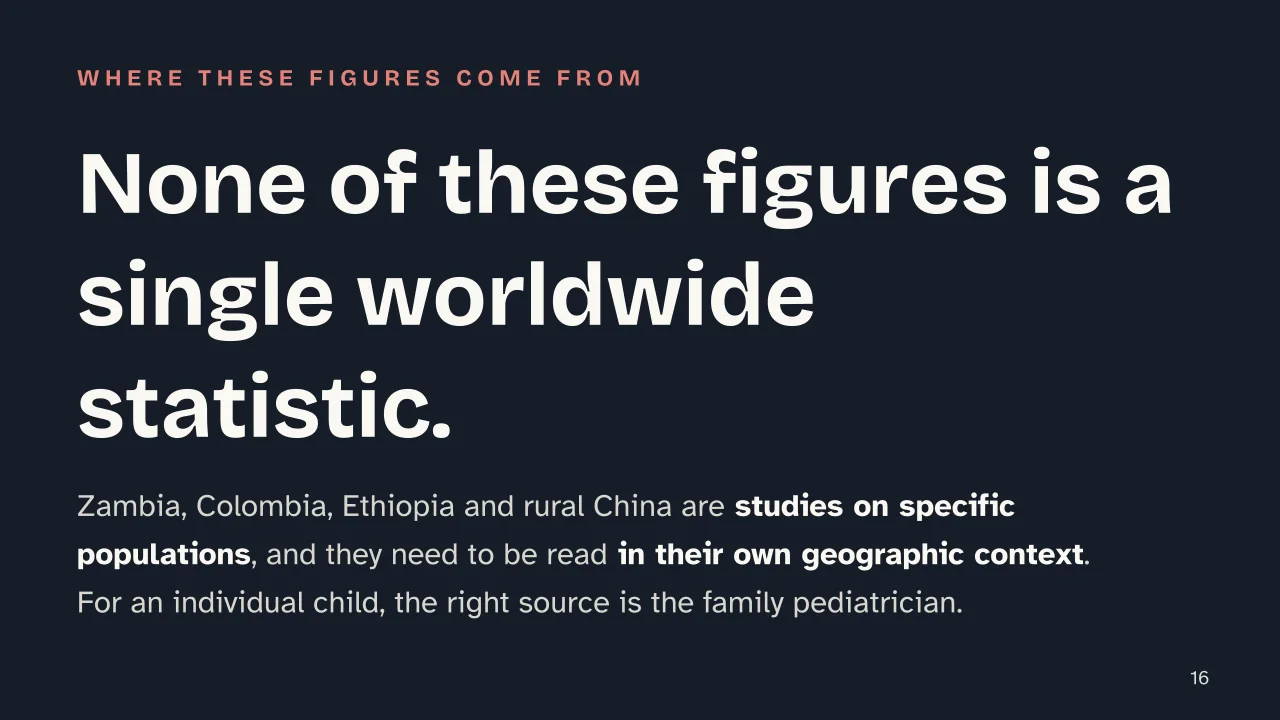
    • The epidemiological figures cited (Zambia, Colombia, Ethiopia, rural China) come from studies on specific populations, not a single worldwide statistic: they need to be read in their own geographic context.

    Key figures

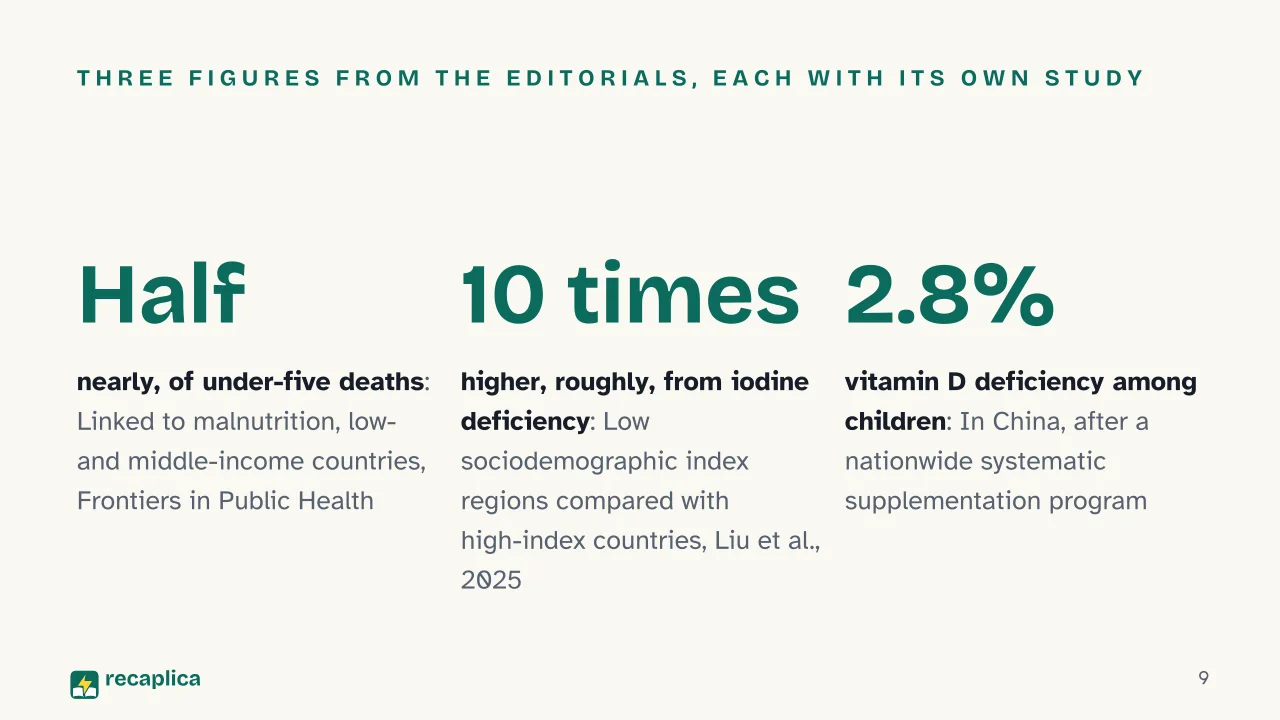
    • 10 times how much higher the burden of childhood intellectual disability linked to iodine deficiency is in low sociodemographic index regions compared with high-index countries, according to the study by Liu et al. Source: Liu et al., Frontiers in Public Health, 2025
    • 2.8% the vitamin D deficiency rate reached among Chinese children after a nationwide systematic supplementation program Source: Frontiers in Public Health, 2026
    • nearly half the share of under-five deaths in low- and middle-income countries that the editorial links to malnutrition Source: Frontiers in Public Health, 2026

    Deep Dive

    What the first-1000-days window actually is

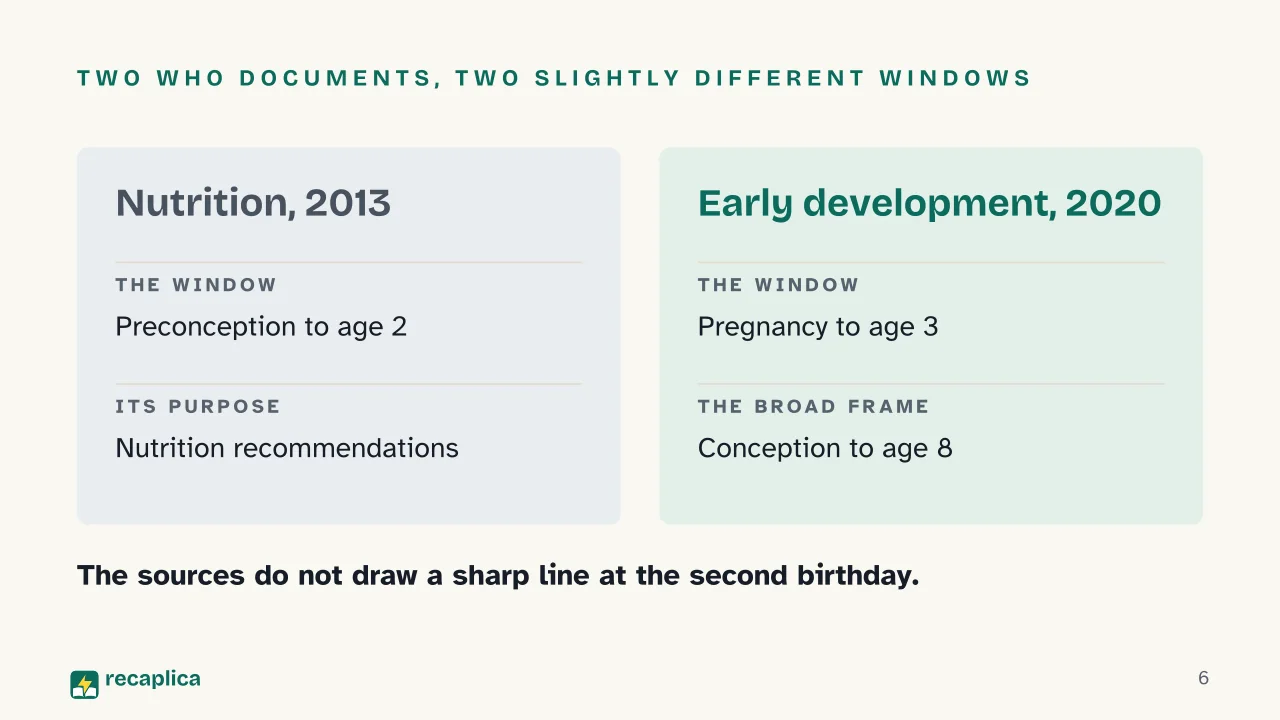
    “The first 1000 days of life” is not a poetic metaphor: it is a public health frame. The World Health Organization uses it to bundle its maternal and child nutrition recommendations into a single package, in a document that describes itself as “a compact of WHO guidance on nutrition interventions targeting the first 1000 days of life.” The window runs from preconception to the child’s second birthday — pregnancy, birth and the first two years of life, not just infancy after birth. An editorial published in Frontiers in Nutrition uses the same definition, calling it “a critical window” for child development, from conception to the second birthday.

    The WHO guideline on early childhood development, published in 2020, uses a slightly different practical window for its own operational recommendations — from pregnancy to age 3 — and frames early childhood development as a whole as a longer process covering the child’s cognitive, physical, language, temperament, socioemotional and motor development from conception up to age 8. The “1000 days” remain the most-cited core of this bigger picture: the phase where, according to the sources, investment produces the strongest effects.

    What happens to a child’s brain and body

    The reason this window gets so much attention has mostly to do with the brain. The editorial in Frontiers in Nutrition describes this period as the time when the brain rapidly forms new neural connections, laying the foundation for the learning that follows for the rest of life. The nerve cells that make up a child’s nervous system — to understand how a cell works in general, our Recap on the cell is a good starting point — build a substantial share of the connections they will rely on for the rest of life during this stage.

    The same source links neglect during this period to consequences it describes as potentially lasting, in some cases irreversible: stunted growth (stunting), cognitive deficits, impaired immunity. Conversely, interventions carried out during this window are described as capable of producing “profound and lasting effects.” This is an association, not a guaranteed outcome in every single case: the sources are describing trends observed across whole populations of children, not an individual fate written in advance.

    Not every child goes through this stage under the same conditions: some need intensive care from the first days of life, including pain management, as with the use of fentanyl in neonatal intensive care units covered in our Recap on fentanyl in neonatal intensive care.

    Nutrition, from pregnancy to weaning

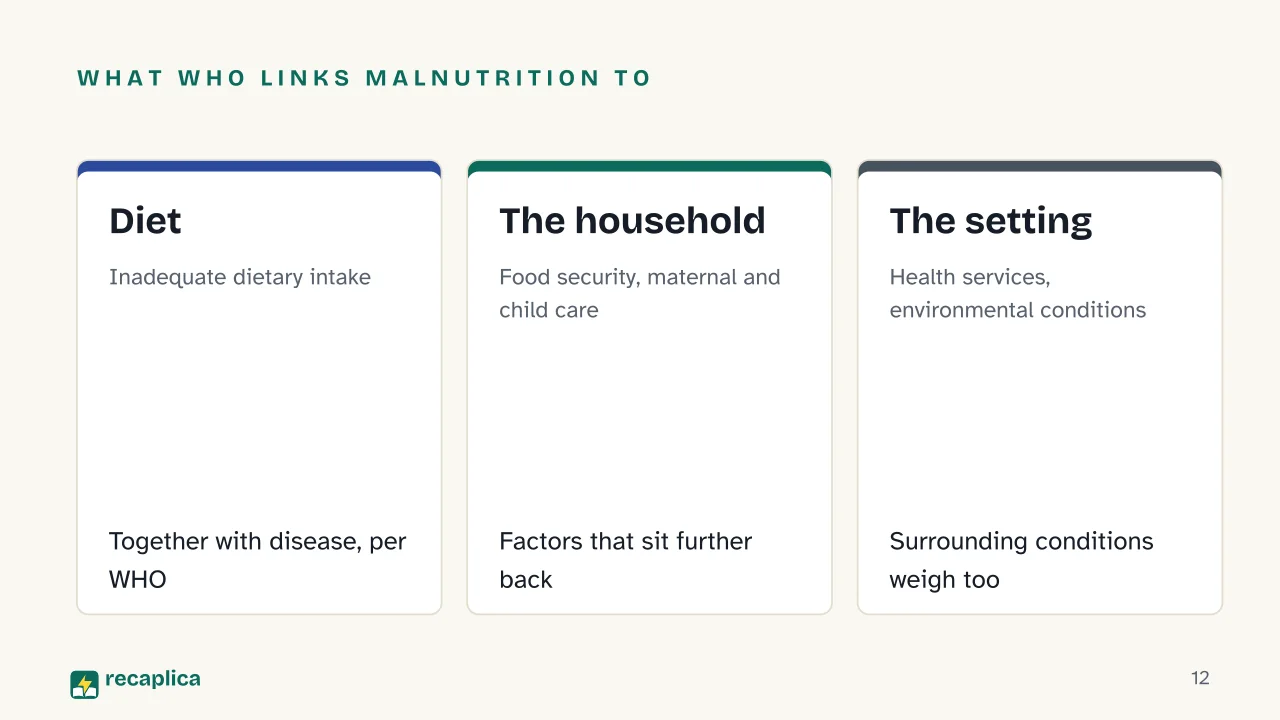
    Much of the WHO guidance on the first 1000 days concerns nutrition: exclusive breastfeeding, the transition to complementary feeding, and supplementation with vitamin A, iron, zinc and vitamin D. The WHO document Essential Nutrition Actions notes, however, that the cause of malnutrition is not just a matter of an individual child’s diet: it links malnutrition to inadequate dietary intake together with disease, and further back to factors such as household food security, maternal and child care, access to health services and environmental conditions.

    The sources consulted define the first-1000-days window in slightly different ways, depending on each document’s purpose:

    SourceWindow usedPurpose of the document
    WHO, Essential Nutrition Actions (2013)From preconception to the child’s second yearMaternal and child nutrition recommendations
    Editorial, Frontiers in Nutrition (2025)From conception to the second birthdayReview of the literature on child health and development
    WHO Guideline, early childhood development (2020)From pregnancy to age 3 (practical focus)Recommendations on nurturing care and early learning
    WHO Guideline, early childhood development (2020)From conception to age 8 (broad ECD definition)Conceptual framing of child development

    One of the starkest nutrition-related disparities concerns iodine. A study by Liu and colleagues, published in Frontiers in Public Health, links iodine deficiency to a burden of childhood intellectual disability roughly 10 times higher in low sociodemographic index regions than in high-index countries. On the other end of the scale, an editorial published in the same journal reports that in China a systematic vitamin D supplementation program reduced the deficiency rate among children to 2.8%: an example of how a nationwide intervention can be linked to a measurable change.

    Nurturing care: more than just food

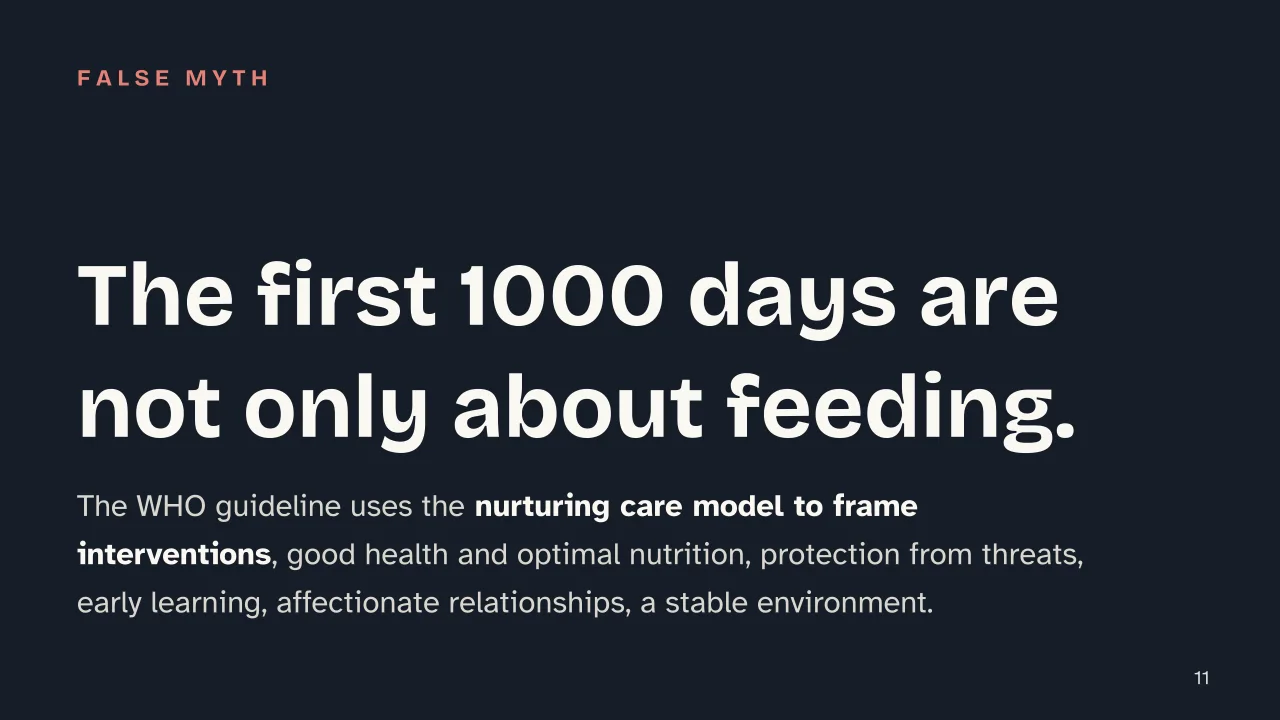
    The WHO guideline on early childhood development frames interventions during the early years within a wider model, “nurturing care,” built around five components: good health and optimal nutrition, protecting the child from threats, opportunities for early learning, affectionate interactions and relationships, and a stable environment. The affectionate bond between a child and caregivers — an area that overlaps with the development of human emotions from the earliest months of life — is treated as a component of nurturing care on par with nutrition, not as a secondary concern.

    The same guideline cites as its evidence base The Lancet series Advancing early childhood development: from science to scale (2017), which, according to the WHO document, points to substantial benefits from investing in early childhood development for learning, productivity, health and social cohesion across the life course.

    Risk factors, with sharp differences between settings

    An editorial published in Frontiers in Public Health draws together several studies documenting just how differently the first-1000-days window can play out depending on context. It reports, for instance, that nearly half of under-five deaths in low- and middle-income countries are linked to malnutrition. A study of 161,179 children across 26 Sub-Saharan African countries, cited in the same editorial (Seifu et al.), links high-risk maternal reproductive behaviors — very early or very late pregnancies, short intervals between births — to a 2.12% higher risk of stunting and a 2.68% higher risk of being underweight.

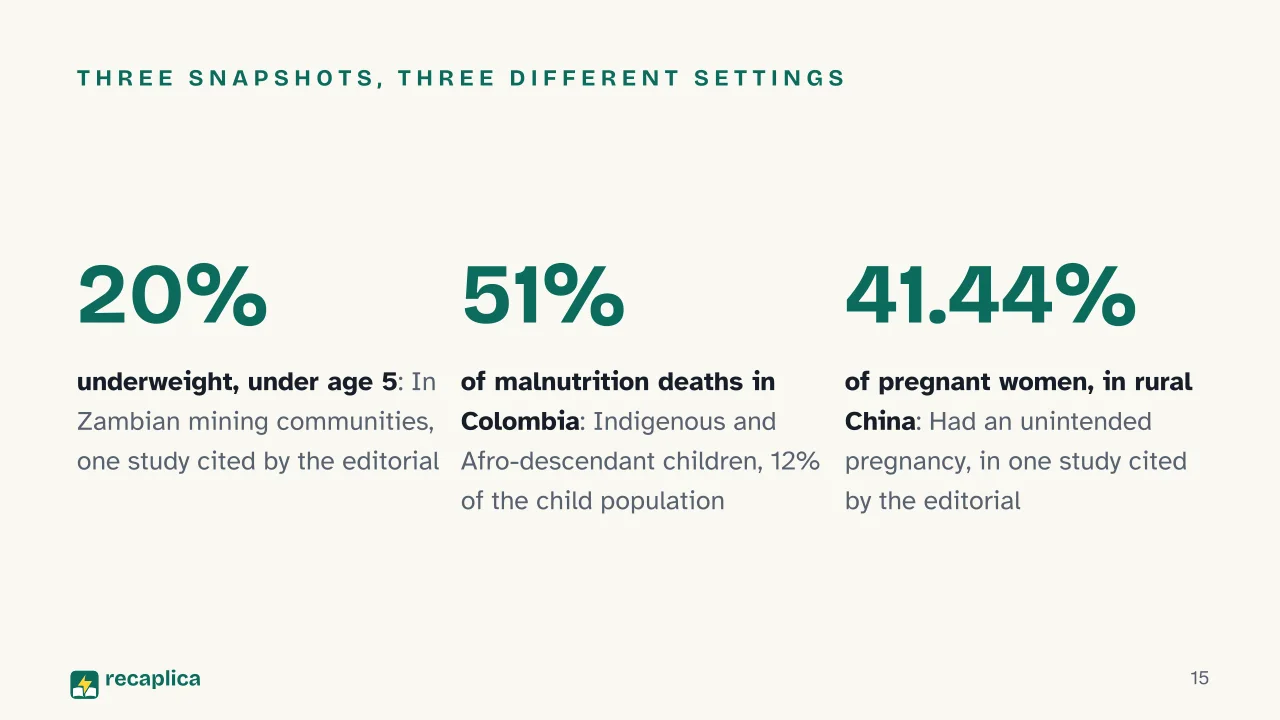
    The more specific figures, though, need to be read in their own context rather than generalized into a global picture. In Zambian mining communities, one cited study reports an underweight rate of 20% among children under 5. In Colombia, Indigenous and Afro-descendant children account for 51% of malnutrition deaths while making up only 12% of the country’s total child population. In Ethiopia, only 47.6% of mothers reportedly practice the recommended essential nutrition actions, while in rural China one study reports that 41.44% of pregnant women had an unintended pregnancy. These are four snapshots of four different settings, not a single statistic valid everywhere.

    Interventions and public policy

    The concept of the first 1000 days does not stay confined to technical documents: it gets translated into concrete programs on the ground.

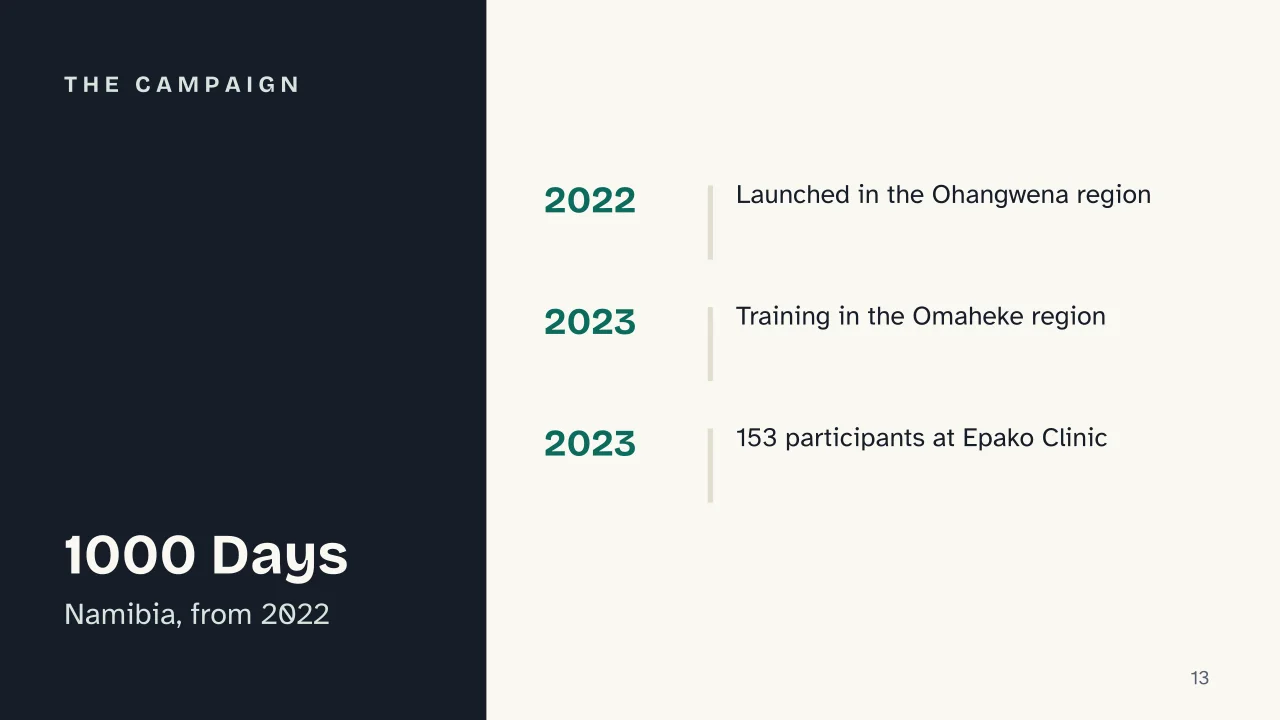
    Real-world example: in 2022, the WHO Country Office for Namibia and the World Food Programme launched the “1000 Days” campaign in the Ohangwena region, later extended to other parts of the country. A training event in the Omaheke region ran from October 30 to November 1, 2023, with the main event on November 2 at Epako Clinic in Gobabis: it brought together 153 participants for hands-on cooking demonstrations designed to raise awareness of exclusive breastfeeding and complementary feeding. Alongside WHO and WFP, the campaign involved Namibia’s Ministry of Health and Social Services, the Ministry of Gender Equality, Poverty Eradication and Social Welfare, the Namibia University of Science and Technology and UNAIDS: an example of how the same scientific concept turns into a multi-agency program reaching both health workers and pregnant and breastfeeding women directly.

    The editorials consulted close with similar policy recommendations: invest in maternal and child health programs, ensure access to nutritious food, clean water and health services, run community education campaigns, and integrate nutrition, health, education and environment instead of treating them as separate tracks. As the Frontiers in Nutrition editorial puts it, the underlying idea is that investing in this window lays the foundation for healthier, more productive and more equitable societies over the long run.

    Slide deck

    Slides ready to download and make your own in PowerPoint or Google Slides, with speaker notes. Pick the Flash cut or the Full one.
    Slide 1 of the presentation on The First 1000 Days of Life: The first 1000 days of lifeSlide 2 of the presentation on The First 1000 Days of Life: From when to when do the first 1000 days run?Slide 3 of the presentation on The First 1000 Days of Life: The routeSlide 4 of the presentation on The First 1000 Days of Life: Chapter 01: A public health frameSlide 5 of the presentation on The First 1000 Days of Life: The window, as WHO and the editorials define itSlide 6 of the presentation on The First 1000 Days of Life: Two WHO documents, two slightly different windowsSlide 7 of the presentation on The First 1000 Days of Life: Chapter 02: The brain and the figuresSlide 8 of the presentation on The First 1000 Days of Life: Connections · Groundwork · The evidenceSlide 9 of the presentation on The First 1000 Days of Life: Three figures from the editorials, each with its own studySlide 10 of the presentation on The First 1000 Days of Life: Chapter 03: More than just foodSlide 11 of the presentation on The First 1000 Days of Life: The first 1000 days are not only about feeding.Slide 12 of the presentation on The First 1000 Days of Life: What WHO links malnutrition to: Diet, The household, The settingSlide 13 of the presentation on The First 1000 Days of Life: The campaignSlide 14 of the presentation on The First 1000 Days of Life: Chapter 04: Where the numbers come fromSlide 15 of the presentation on The First 1000 Days of Life: Three snapshots, three different settingsSlide 16 of the presentation on The First 1000 Days of Life: None of these figures is a single worldwide statistic.Slide 17 of the presentation on The First 1000 Days of Life: What period do the first 1000 days of life refer to?Slide 18 of the presentation on The First 1000 Days of Life: And now, the review
    Flash10 slidesThe essential thread, to present in classFull18 slidesEvery chapter and the deeper detail

    Common myths

    • ✗ Myth The first 1000 days are only about feeding the child.

      ✓ Reality The WHO guideline on early childhood development frames interventions during this window around the "nurturing care" model, which covers five components: good health and optimal nutrition, protection from threats, early learning, affectionate relationships, a stable environment. Nutrition is an important part, but only one of the five.

    • ✗ Myth A child who grows up with deficiencies in the first 1000 days falls behind for good, with no possibility of catching up.

      ✓ Reality The editorial in Frontiers in Nutrition warns that neglect during this window can lead to consequences described as irreversible in some cases, such as stunted growth. At the same time, the editorials consulted also report measurable improvements at the population level when action is taken: in China, a systematic vitamin D supplementation program cut the deficiency rate to 2.8% among children, a sign that targeted intervention is linked to real change, not a fixed destiny.

    • ✗ Myth The critical window of the first 1000 days shuts abruptly at the child's second birthday.

      ✓ Reality The sources themselves do not draw such a sharp line: the WHO guideline on early childhood development focuses its practical recommendations on the period from pregnancy to age 3, and defines early childhood development as a whole as a process that runs up to age 8. The "1000 days" are a useful frame for communicating the urgency of early intervention, not a hard deadline after which nothing else matters.

    Mind map

    Drag the background to move around and the nodes to reposition them; use − and + to collapse and expand branches.
    Customize
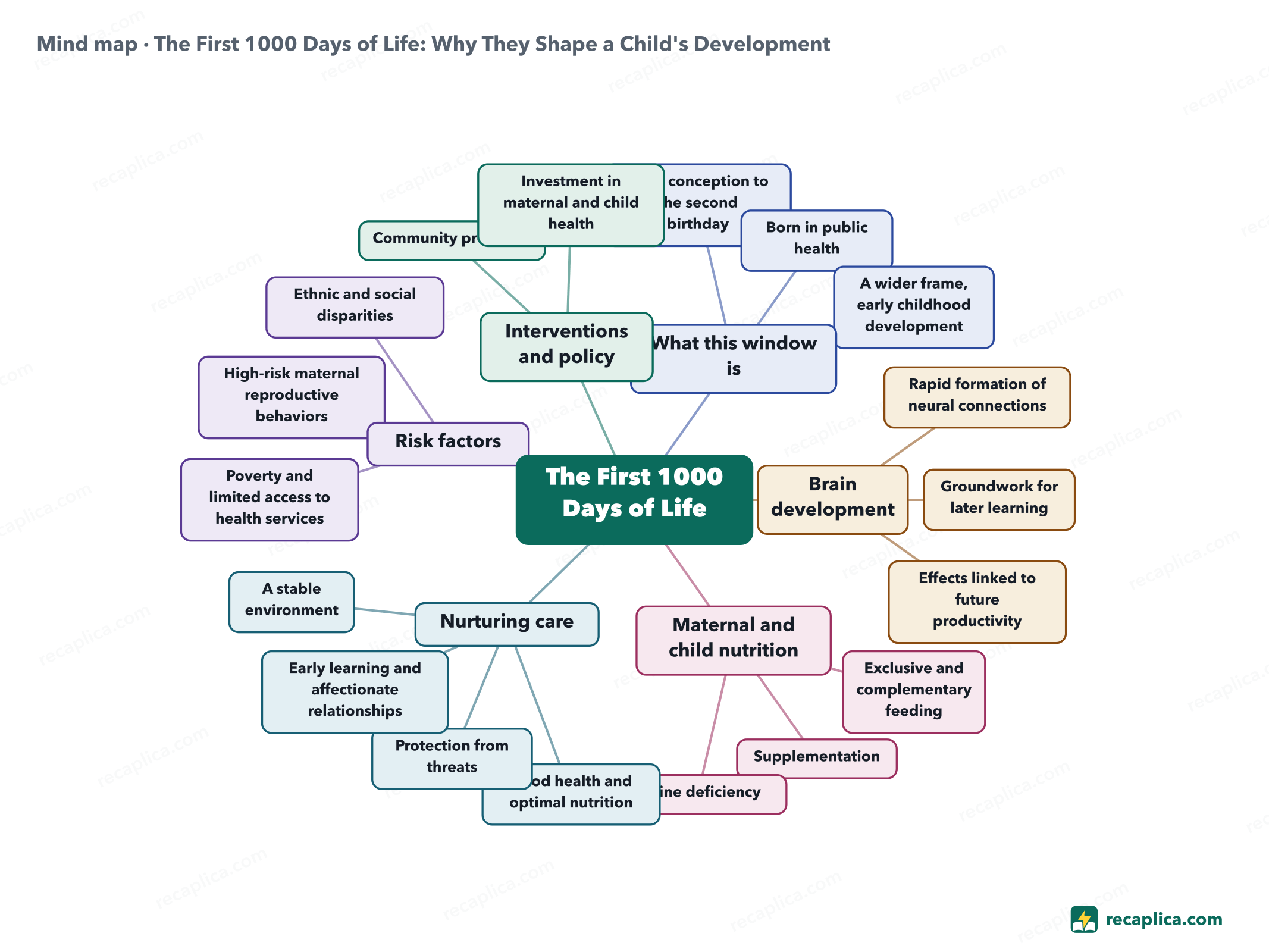
    Mind map: The First 1000 Days of Life: Why They Shape a Child's Development
    • The First 1000 Days of Life
      • What this window is
        • From conception to the second birthday definition used by WHO and the scientific editorials consulted
        • Born in public health frame for WHO's maternal and child health interventions
        • A wider frame, early childhood development defined by WHO from conception up to age 8
      • Brain development
        • Rapid formation of neural connections according to the editorial in Frontiers in Nutrition
        • Groundwork for later learning
        • Effects linked to future productivity according to the same source, in a long-term view
      • Maternal and child nutrition
        • Exclusive and complementary feeding WHO recommendations, Essential Nutrition Actions
        • Supplementation vitamin A, iron, zinc, vitamin D
        • Iodine deficiency sharp differences between regions, not a uniform figure
      • Nurturing care
        • Good health and optimal nutrition
        • Protection from threats
        • Early learning and affectionate relationships
        • A stable environment
      • Risk factors
        • Poverty and limited access to health services
        • High-risk maternal reproductive behaviors study across 26 Sub-Saharan African countries, Seifu et al.
        • Ethnic and social disparities Colombia example, Indigenous and Afro-descendant populations
      • Interventions and policy
        • Community programs example of the WHO/WFP campaign in Namibia
        • Investment in maternal and child health recommended by the editorials consulted

    Quiz: test yourself

    Answer the questions to check what you have learned: you get instant feedback and a short explanation.

    Grade 0/10 0/5
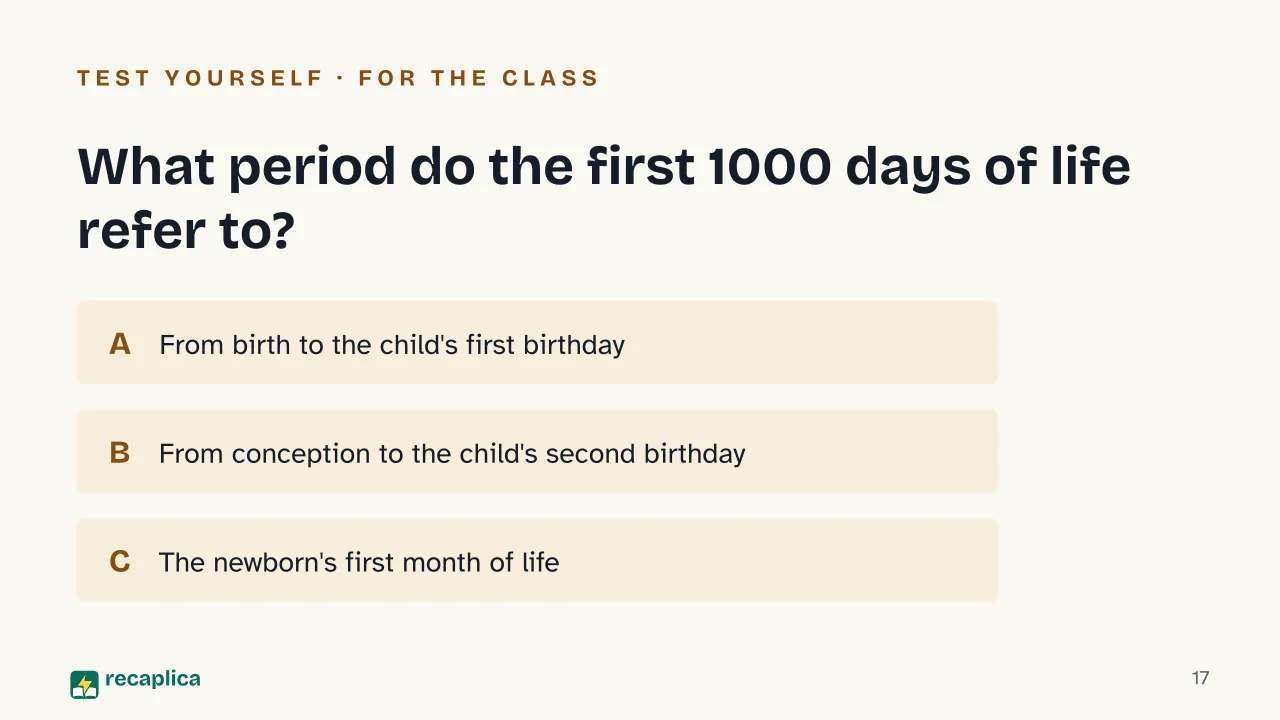
    1 According to the sources consulted, what do the "first 1000 days of life" refer to?

    The sources (WHO, an editorial in Frontiers in Nutrition) define the first 1000 days as the span from conception to the child's second birthday, which includes the nine months of pregnancy.

    2 True or false: according to the editorial published in Frontiers in Public Health, child malnutrition is linked to nearly half of under-five deaths in low- and middle-income countries.

    The editorial reports exactly this figure, attributing it to low- and middle-income countries, not the world as a whole.

    3 Which components does WHO identify in the "nurturing care" model for the early years of life?

    The WHO guideline on early childhood development identifies five components of nurturing care, of which feeding is just one.

    4 According to the study by Liu et al. published in Frontiers in Public Health, how does the burden of childhood intellectual disability linked to iodine deficiency compare between low sociodemographic index regions and high-index countries?

    The study reports roughly a 10-fold gap between the two groups of regions: a figure specific to that study, not a global average.

    5 True or false: the institutional sources consulted present the first 1000 days as a topic that concerns only a child's diet after birth.

    The sources also cover pregnancy, maternal health, protection, early learning and affectionate relationships: post-natal feeding is only one of the components considered.

    Answers: 1-B · 2-A · 3-B · 4-C · 5-B

    Flashcards

    Tap the card to flip it and check whether you remember the answer, then move to the next one.

    1 / 8

    Explain it in your own words

    The ultimate test: if you can explain it in simple words, you've truly understood it. Write your explanation, then compare it with the Recap.

    Your explanation is saved only on this device.

    The first 1000 days of life is the stretch from conception to a child's second birthday, a window the World Health Organization and researchers single out as unusually important for development. During those roughly 1000 days the brain builds new neural connections at a fast pace, while nutrition, health and the surrounding environment help set the stage for later physical and cognitive growth. Sources link malnutrition in this period to a large share of child deaths in low- and middle-income countries, though the numbers vary sharply from one setting to another. WHO frames interventions during this window around the "nurturing care" model, which covers health, protection, early learning and affectionate relationships, not nutrition alone.

    Frequently asked questions

    What exactly are the first 1000 days of life?

    It is the phrase WHO and several scientific editorials use for the period running from conception to a child's second birthday, which includes both the pregnancy and the first two years after birth. The WHO guideline on early childhood development also uses a slightly wider practical window, from pregnancy to age 3, while early childhood development as a whole is defined up to age 8.

    Why does WHO consider this period so important for a child's development?

    Because, according to the editorial published in Frontiers in Nutrition, this is the phase when the brain forms new neural connections at a fast pace, laying the groundwork for later learning. The WHO guideline adds that it is also the period when the fetus and child most need what it calls "nurturing care": health and nutrition, protection, early learning, affectionate relationships and a stable environment.

    Does malnutrition in the first 1000 days have permanent consequences?

    The sources describe potentially deep and lasting consequences when this window is neglected, in some cases described as irreversible, such as stunted growth (stunting). At the same time, the same editorials also report measurable improvements at the population level when action is taken: in China, a systematic vitamin D supplementation program cut the deficiency rate to 2.8% among children, showing that targeted intervention is linked to concrete change.

    Does the concept of the first 1000 days apply only to low-income countries?

    No: WHO proposes it as a general framework for maternal and child health, applicable everywhere. The most striking epidemiological figures cited by the editorials consulted, though, come from studies on specific low- or middle-income settings (for example mining communities in Zambia, Indigenous and Afro-descendant populations in Colombia, rural areas in Ethiopia and in China): those are figures from individual studies, not a picture that holds for the whole world population.

    Who should parents turn to for guidance on applying these findings to their own child?

    The information gathered in this Recap describes the general scientific evidence for why this window matters, not practical nutrition or childcare guidance for a specific child. For any decision about a child's feeding, growth or health, the right source remains the family pediatrician or other healthcare professionals, who know the child's individual medical history.

    Sources

    • Essential Nutrition Actions: improving maternal, newborn, infant and young child health and nutrition — World Health Organization (WHO)
    • The first 1000 days: window of opportunity for child health and development — Editorial, Frontiers in Nutrition
    • Editorial: Health and nutrition in the first 1000 days of life — Frontiers in Public Health
    • Liu et al., Global burden of childhood developmental intellectual disability caused by iodine deficiency from 1990 to 2021 and projection to 2040 — Frontiers in Public Health
    • Improving Early Childhood Development: WHO Guideline
    • The first 1,000 days of life — WHO/WFP campaign in Namibia, WHO Regional Office for Africa

    Every Recap goes through an independent review before publication.

    Every evening, the day's new Recaps on our Telegram channel. Join the channel →

    Keep learning

    • Science How the Immune System Works: Barriers, Cells, and Memory The immune system isn't a single organ — it's a network of barriers, cells and organs scattered across the whole body. Skin and mucous membranes form the outer wall, stopping most invaders before they get anywhere. Anything that gets past this wall runs into innate immunity, fast but generic, and then adaptive immunity, slower but aimed at that one invader specifically. Adaptive immunity also leaves something behind: memory, which is why a second encounter with the same pathogen gets a much quicker response. Read the Recap →
    • Science Indigestion Remedies: Symptoms, Causes, and What Really Helps Indigestion, which doctors call dyspepsia, isn't one disease but a group of symptoms that show up together after meals, according to the NIDDK (National Institutes of Health): pain or burning in the upper abdomen, feeling full too soon, bloating. The causes fall into three families, per the same source: a misfiring gut-brain conversation, certain common medications, and organic or infectious stomach problems. Heartburn from acid reflux is a different condition, with a different mechanism. Remedies range from everyday habits to over-the-counter medicine, with a doctor's visit when specific warning signs show up. Read the Recap →
    • Science How Tanning Works: Melanin, UV Rays and Why Skin Darkens A tan is not a healthy process in its own right: it is skin's response to UV damage that is already underway. Melanocytes produce more melanin to absorb radiation and protect the DNA of the cells below. It happens in two stages: a quick darkening that fades within hours, and the real tan, which shows up after a couple of days and lasts. UVA and UVB rays act on skin in different ways, with different consequences for sunburn, skin aging and cancer risk. Several widespread myths, from 'you need to burn before you can tan' to the idea that tanning beds are safe, don't hold up against the scientific sources. Read the Recap →

    recaplica

    Clear in 30 seconds, yours in 10 minutes.

    Recaps Mind maps Request a Recap Telegram channel Mind map maker Our method About Privacy & cookies Legal notes & terms of use

    © 2026 Recaplica · A project by Curi S.r.l. — VAT IT05472000750

    Statistics, only if you say so

    To learn which Recaps help most we would use Google Analytics, with aggregate, anonymous data. It starts only with your OK, and you can change your mind anytime. Privacy policy