Skip to content
recaplica

    One moment: security check

    Cloudflare wants to make sure you're not a robot. Tick the box below and your search will continue on its own.

    IT
    recaplica How to Write a Horror Story: The Techniques That Build Fear
    © 2026 Recaplica · recaplica.com — All rights reserved
    Home › Literature

    How to Write a Horror Story: The Techniques That Build Fear

    By Recaplica Newsroom · Updated on October 8, 2026

    What to print

    Page numbers appear when printing with default margins.

    Slides

    Choose a cut

    Flash10 slidesThe essential thread, to present in classFull14 slidesEvery chapter and the deeper detail

    Both come with speaker notes.

    Telegram channel
    recaplica Clear in 30 seconds, yours in 10 minutes.
    In 30 seconds Key points Deep dive Slides Myths Mind map Quiz Flashcards FAQ

    In 30 seconds quick read

    Writing horror comes down to a set of deliberate choices more than an endless supply of blood or an ever-bigger monster. Writers in the genre work the gap between an ordinary world and whatever breaks into it, and control how slowly or quickly the threat closes in. The point of view decides whether the reader feels the fear or just reads about it, and something, by design, always stays off the page. The notes below gather these techniques in the words of working writers and editors.

    Key Points

    • Mort Castle ties the most effective horror to recognizable everyday life, the ground that makes something extraordinary feel credible when it arrives.
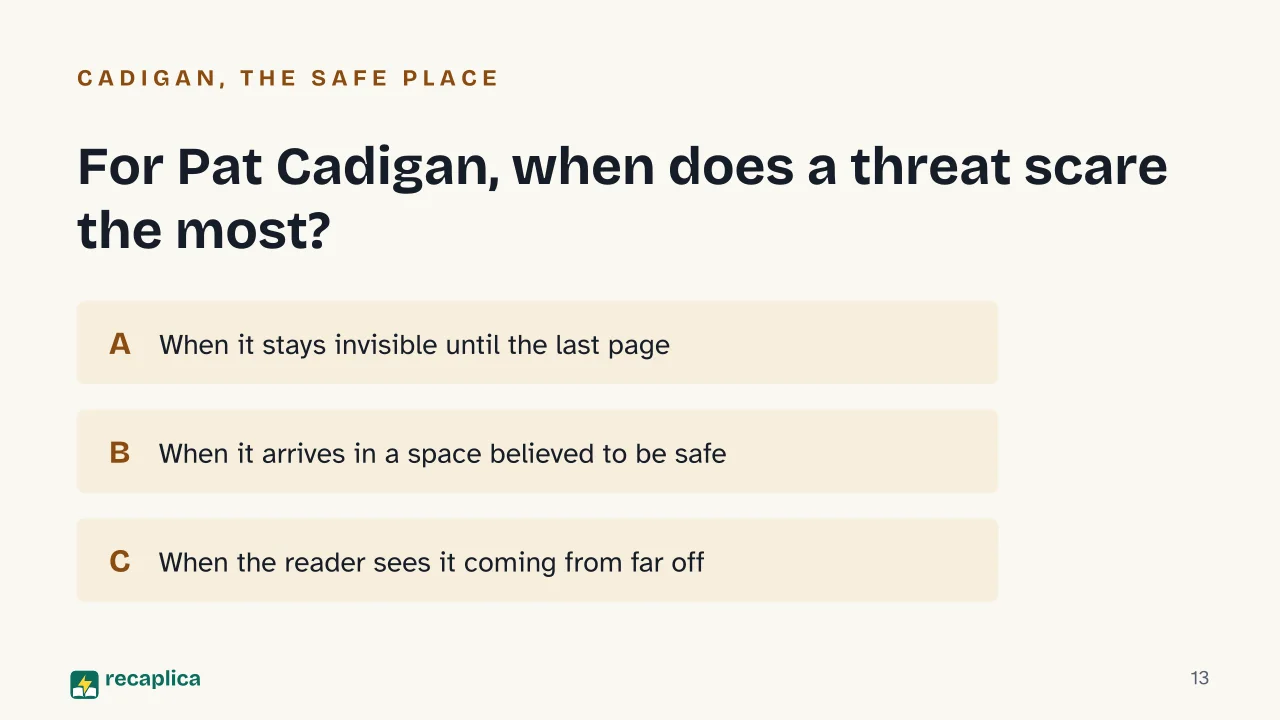
    • Writer Pat Cadigan notes a threat lands harder when it shows up in a space the character assumed was safe.
    • If the horror concept outgrows the character, editor Harrison Demchick warns, the story struggles to hold a reader's attention.
    • Writer David Moody leans on the idea that dread, the wait for a threat, often outweighs the threat itself once it arrives.
    • For writer Nathan Ballingrud, an atmosphere built from word choice, setting and tone scares longer than a monster shown in full right away.
    • Editor Harrison Demchick treats it as a good sign when a writer scares themselves while drafting a scene.

    Deep Dive

    The ordinary-versus-strange contrast

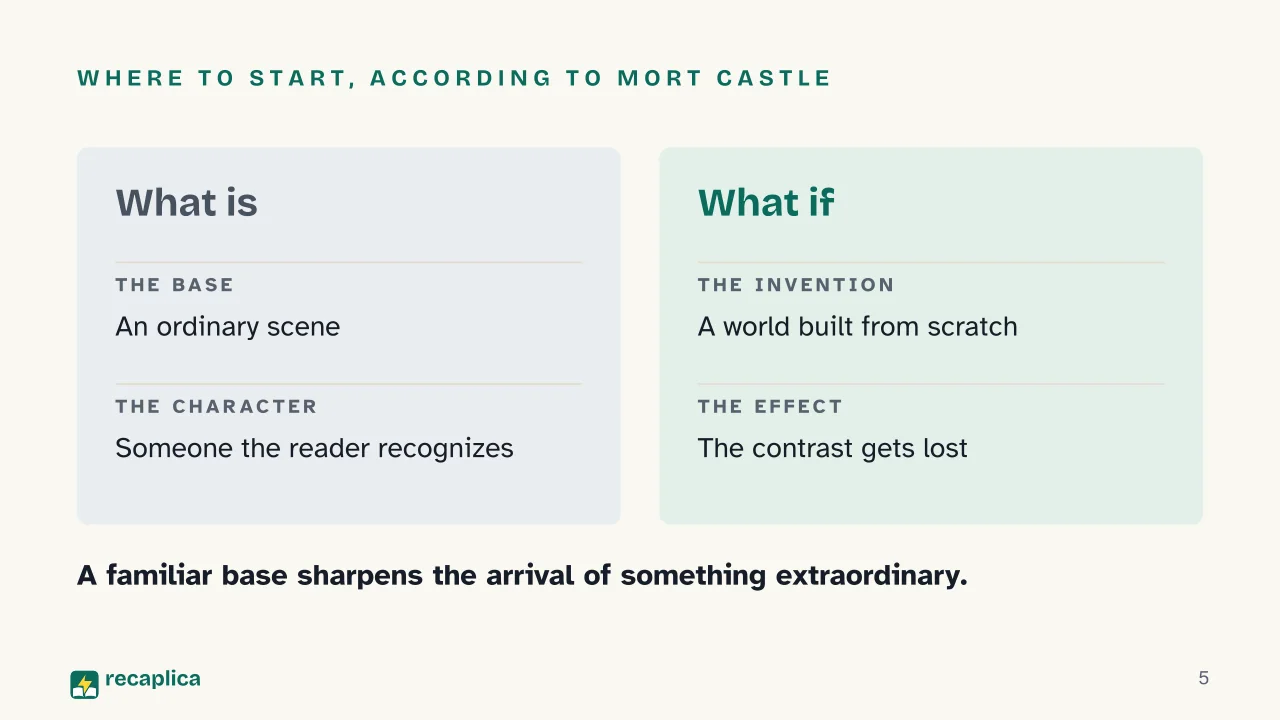
    Mort Castle ties the most effective horror to “what is”, the texture of ordinary life, rather than “what if”, pure invention. An ordinary, recognizable setting, in his view, makes the arrival of something terrifying more believable: the effect comes from the contrast between a normal context and the extraordinary element that breaks into it.

    Paul Tremblay puts the same idea into practice. For him, scaring the reader means making them feel uncertain, and one effective technique is to open with a recognizable everyday scene, with characters the reader identifies with, and then let something anomalous happen. Readers need to accept the scene as normal first, and only then watch it crack.

    Practical example: a kitchen, the lights on, dishes still waiting by the sink after dinner. Nothing unusual, until a window that was closed turns out to be open, and no one in the house remembers opening it.

    Helen Marshall notes that before you can scare a reader, you have to let their guard down, because horror readers walk into a story already primed to spot the genre’s signals. A setting that announces itself as horror too early works against the contrast Castle describes: what the story needs is a calm before, not an already-suspicious one.

    The same principle carries over to where the threat itself shows up, beyond just the opening scene. Pat Cadigan adds that the blow lands harder when danger appears somewhere a character took for granted as safe, a room, a house, a relationship built on trust. For more on how the genre built this idea of setting and atmosphere over time, see Horror Fiction: What It Means and the Classics That Shaped It.

    Pacing and the wait

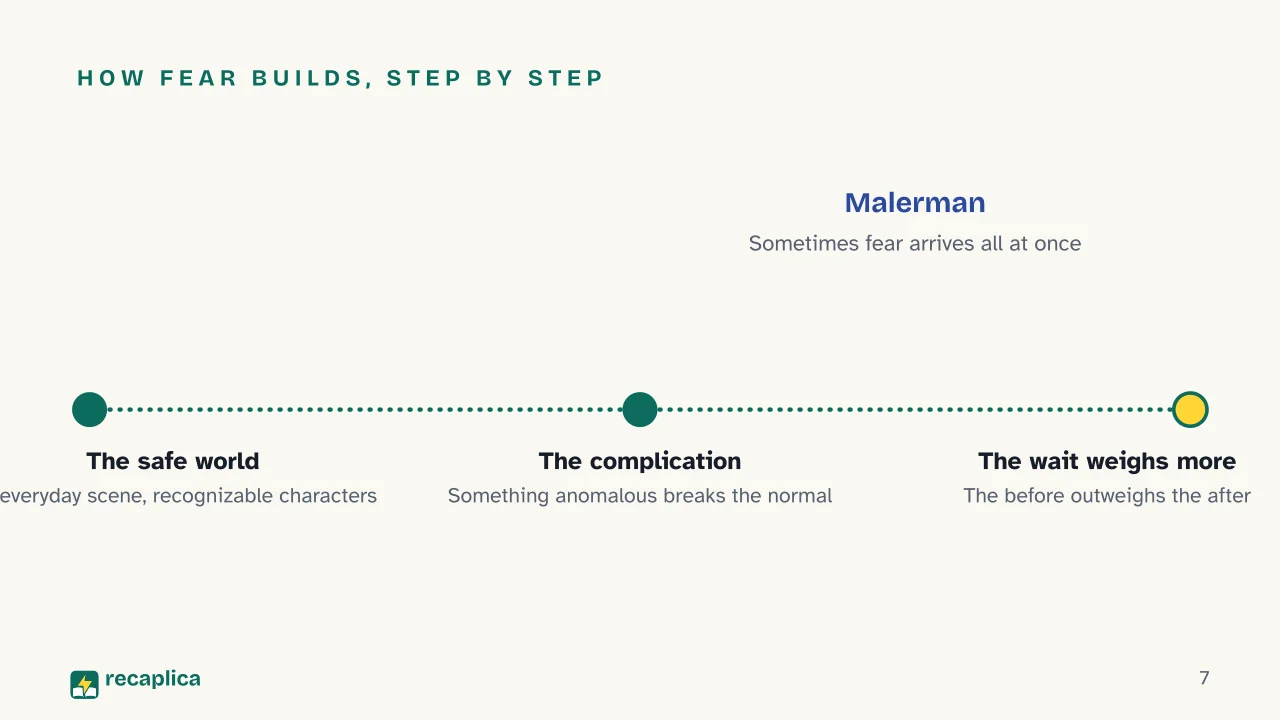
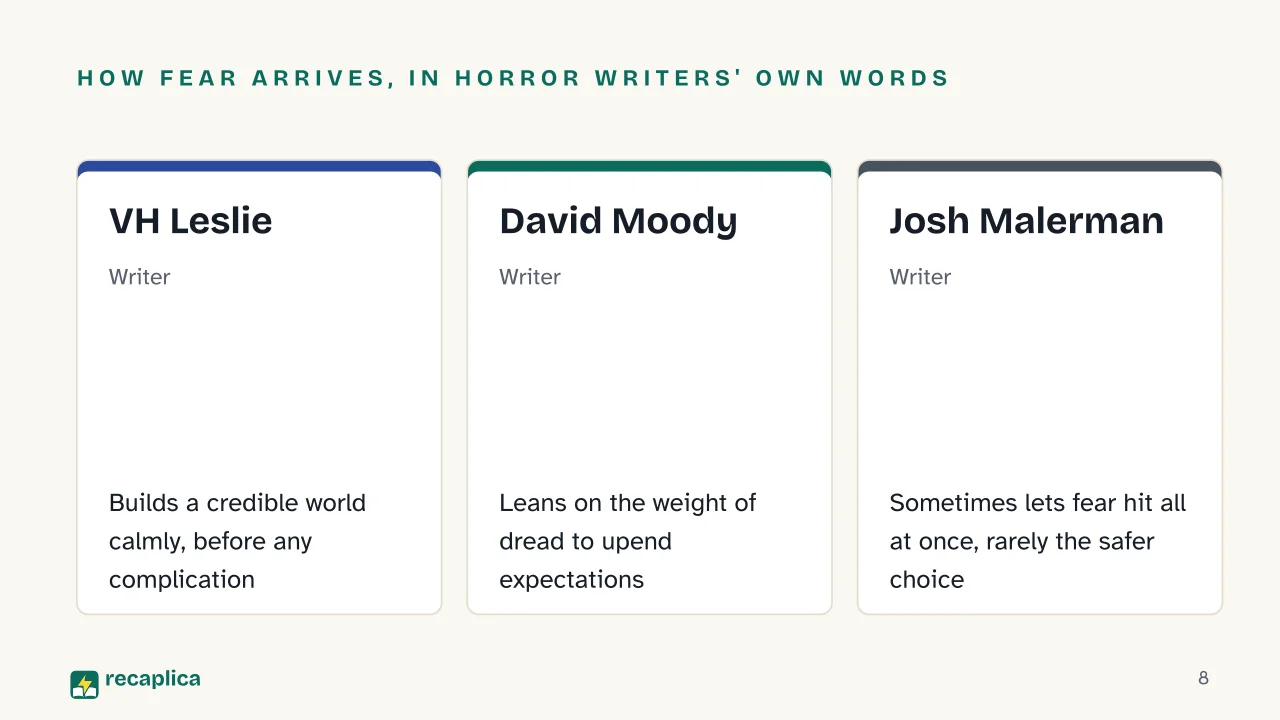
    VH Leslie argues that horror works best when the pace builds slowly, giving the world enough time to feel credible and reasonably safe before the complications arrive. It’s the same stretch of time Tremblay relies on: a well-built base of normality is exactly what the anomaly, later, gets to break.

    David Moody works the same stretch of time from a different angle. For him, waiting for something terrible often weighs more than the threat once it actually arrives, and that imbalance is exactly what he uses to upend reader expectations: tension rises while nothing happens yet.

    Josh Malerman, besides admitting he scares himself while writing, also uses the opposite technique: he lets fear drop suddenly into a scene instead of building it gradually. Malerman himself concedes this is rarely the safer choice.

    Horror short storyHorror novel
    Length of the dread Moody describesCompressed into a few pagesStretched across several chapters
    When to lower the guard, per MarshallA single moment, often early onSeveral moments, even mid-book
    Castle’s ordinary-versus-strange contrastOne scene, one break-inSeveral scenes, several thresholds crossed

    Point of view, character before concept

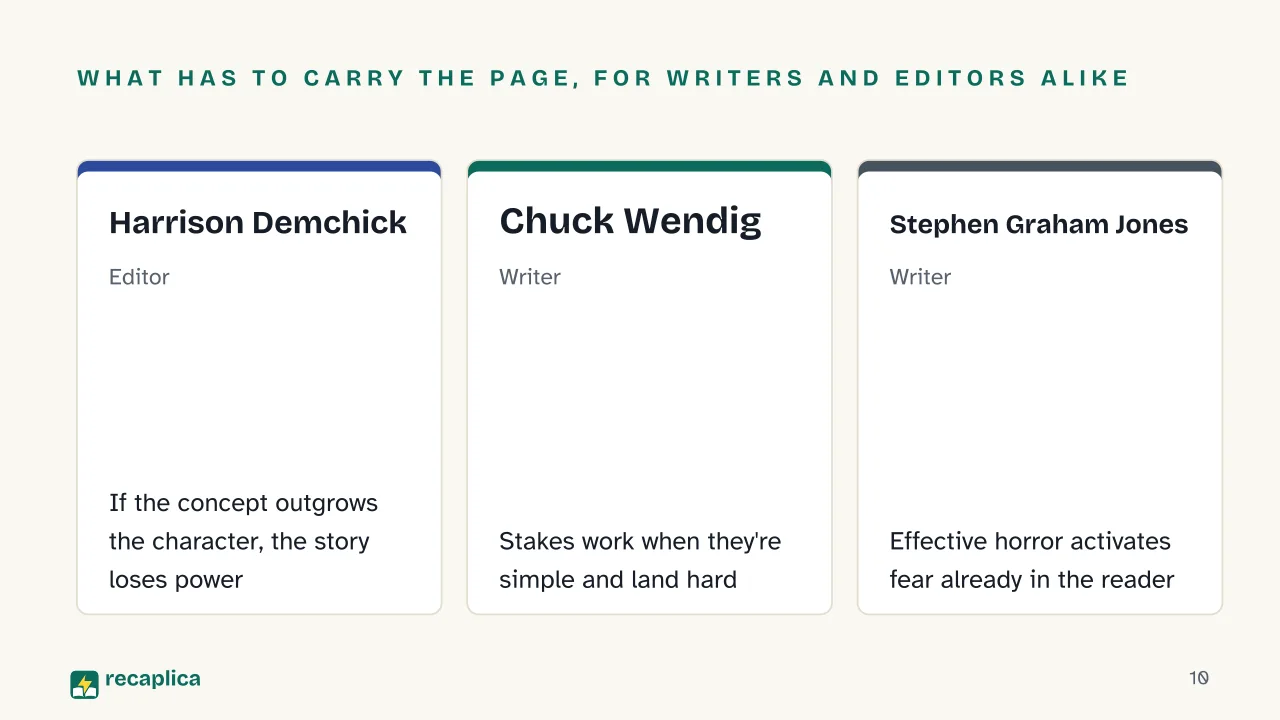
    Editor Harrison Demchick warns that a horror idea strong enough to dominate the character leaves a story without its grip on the reader. An original idea counts for little if the reader has no reason to stay in the scene alongside the person living it. Anyone still looking for that starting idea can find concrete prompts in the Recap on horror story ideas. Chuck Wendig adds a practical measure to this balance: stakes in a horror story work when they’re simple to grasp but land with direct emotional force, you don’t need a complicated threat, you need the reader to understand quickly what’s at risk, and for whom.

    Mort Castle frames the reader’s role differently: the reader needs to feel something strong toward the character, good or bad, because indifference toward the protagonist is the real risk to avoid. Stephen Graham Jones pushes this idea one step further, toward the reader directly, because for him effective horror doesn’t impose fear from outside through sheer authorial will, it wakes up a fear the reader already carries; he describes his own writing as a run through a dark tunnel, feeling afraid himself as he writes, and says effective horror changes concrete habits in readers, down to small daily rituals like how they turn off the lights at home, a sign the fear it activates doesn’t stay on the page.

    What doesn’t actually matter

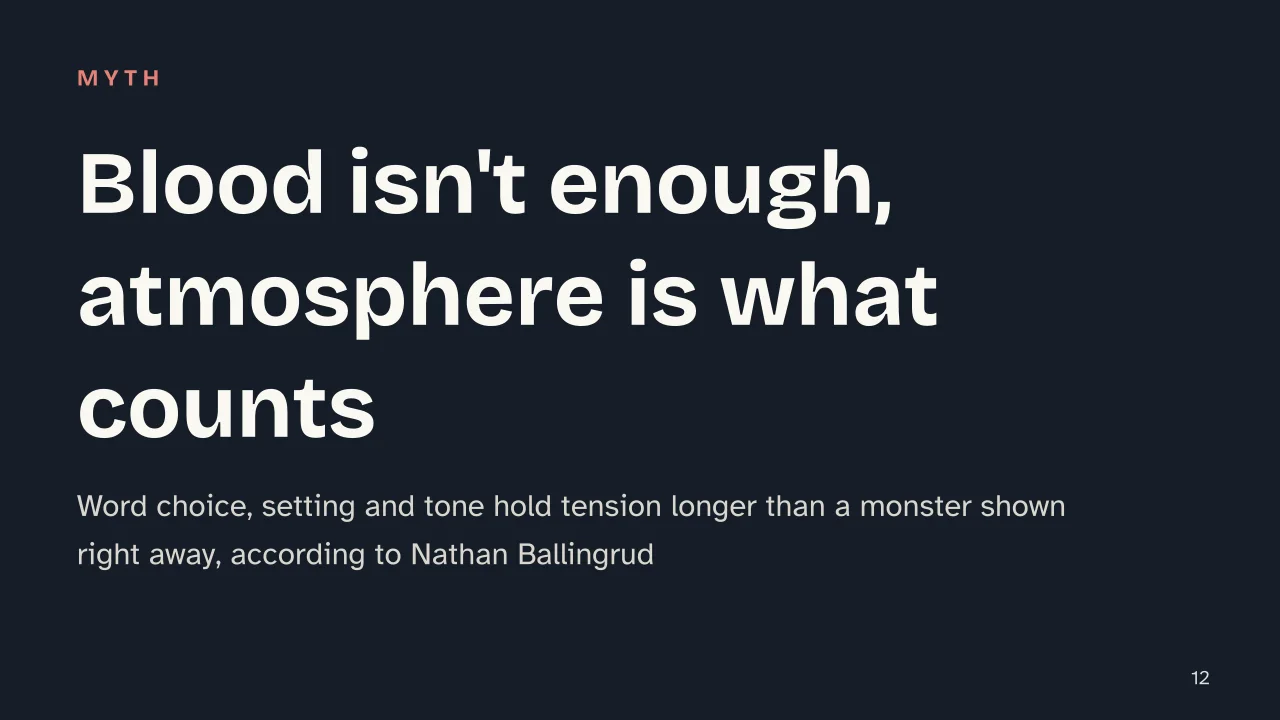
    Two shortcuts circulate often among people starting out in horror. The first is about blood. Nathan Ballingrud credits atmosphere instead: word choice, setting and tone keep tension high page after page. Revealing the threat in full detail right away burns through the effect in an instant.

    The second is about pace: the slow build, Leslie’s approach, remains the more common route, but Malerman shows that a declared exception can work once the scene has already set it up. Neither technique replaces the other on its own.

    What’s left is a practical, almost common-sense test shared by several writers. Demchick puts it plainly, a scene that scares the person writing it is almost always a scene that works. Malerman confirms it by admitting his own scenes scare him, and Jones describes a similar feeling in his own process. Before asking whether a scene will scare someone else, horror writers often check whether it scares them first.

    Readers curious to see these same mechanics, the ordinary-versus-strange contrast, a carefully built atmosphere, at work in a genre classic can look at Lovecraft’s non-Euclidean geometry or The Name of the Rose, where a medieval abbey works as the ordinary counterweight to the threat. Even the Divine Comedy, with its descent through circles that grow more frightening one step at a time, shows dread building canto after canto.

    Slide deck

    Slides ready to download and make your own in PowerPoint or Google Slides, with speaker notes. Pick the Flash cut or the Full one.
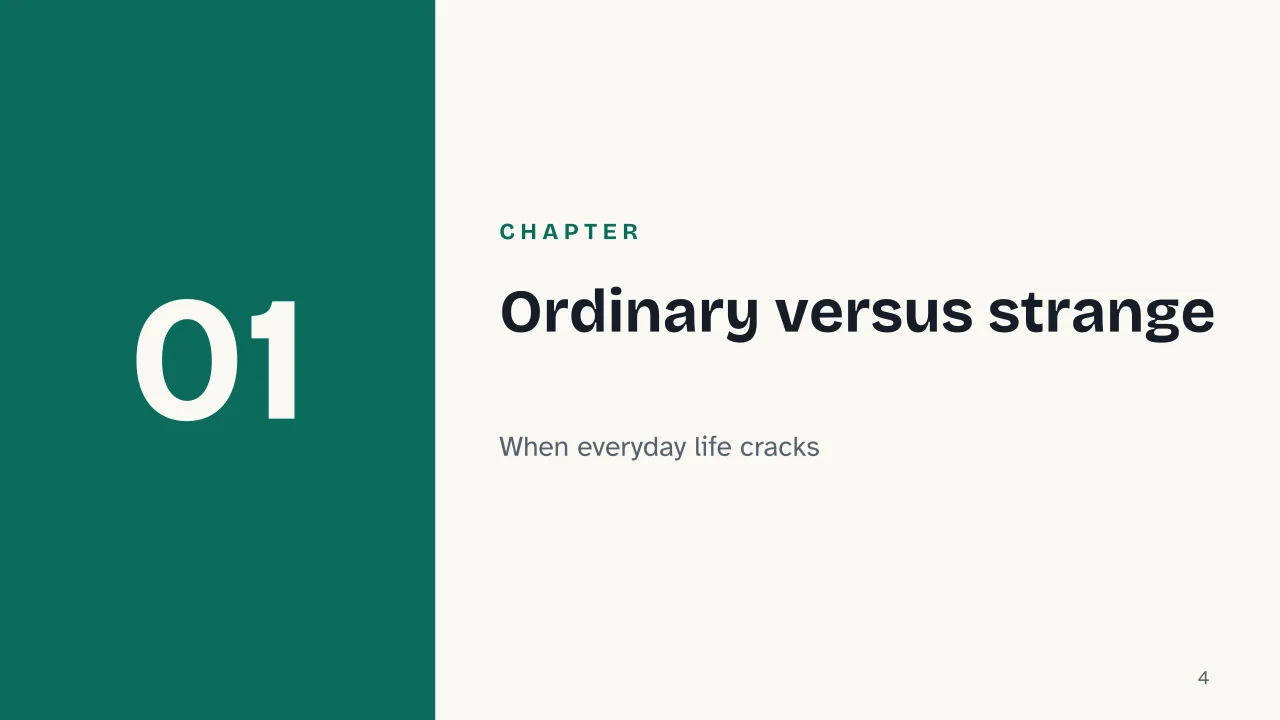
    Slide 1 of the presentation on How to Write a Horror Story: How to Write a Horror StorySlide 2 of the presentation on How to Write a Horror Story: What actually makes a scene scary?Slide 3 of the presentation on How to Write a Horror Story: From contrast to character, by way of pacingSlide 4 of the presentation on How to Write a Horror Story: Chapter 01: Ordinary versus strangeSlide 5 of the presentation on How to Write a Horror Story: Where to start, according to Mort CastleSlide 6 of the presentation on How to Write a Horror Story: Chapter 02: Pacing and the waitSlide 7 of the presentation on How to Write a Horror Story: How fear builds, step by stepSlide 8 of the presentation on How to Write a Horror Story: How fear arrives, in horror writers' own words: VH Leslie, David Moody, Josh MalermanSlide 9 of the presentation on How to Write a Horror Story: Chapter 03: Point of view and characterSlide 10 of the presentation on How to Write a Horror Story: What has to carry the page, for writers and editors alike: Harrison Demchick, Chuck Wendig, Stephen Graham JonesSlide 11 of the presentation on How to Write a Horror Story: Chapter 04: What doesn't actually matterSlide 12 of the presentation on How to Write a Horror Story: Blood isn't enough, atmosphere is what countsSlide 13 of the presentation on How to Write a Horror Story: For Pat Cadigan, when does a threat scare the most?Slide 14 of the presentation on How to Write a Horror Story: Now, time to review
    Flash10 slidesThe essential thread, to present in classFull14 slidesEvery chapter and the deeper detail

    Common myths

    • ✗ Myth The more blood and graphic detail a scene has, the scarier it is.

      ✓ Reality Nathan Ballingrud argues the opposite: word choice, setting and tone build an atmosphere that holds tension page after page, while showing the monster in full detail burns through the effect in an instant.

    • ✗ Myth Fear has to build slowly, it should never hit all at once.

      ✓ Reality Josh Malerman sometimes drops fear into the middle of a scene without warning, though he admits the sudden break is rarely the safer choice. The slow build remains the genre's more common route.

    • ✗ Myth A strong horror concept is enough on its own, the character matters less than the idea.

      ✓ Reality Editor Harrison Demchick warns that a concept allowed to dominate leaves a story with no grip on the reader: the page still needs a character worth following to go with that original idea.

    Mind map

    Drag the background to move around and the nodes to reposition them; use − and + to collapse and expand branches.
    Customize
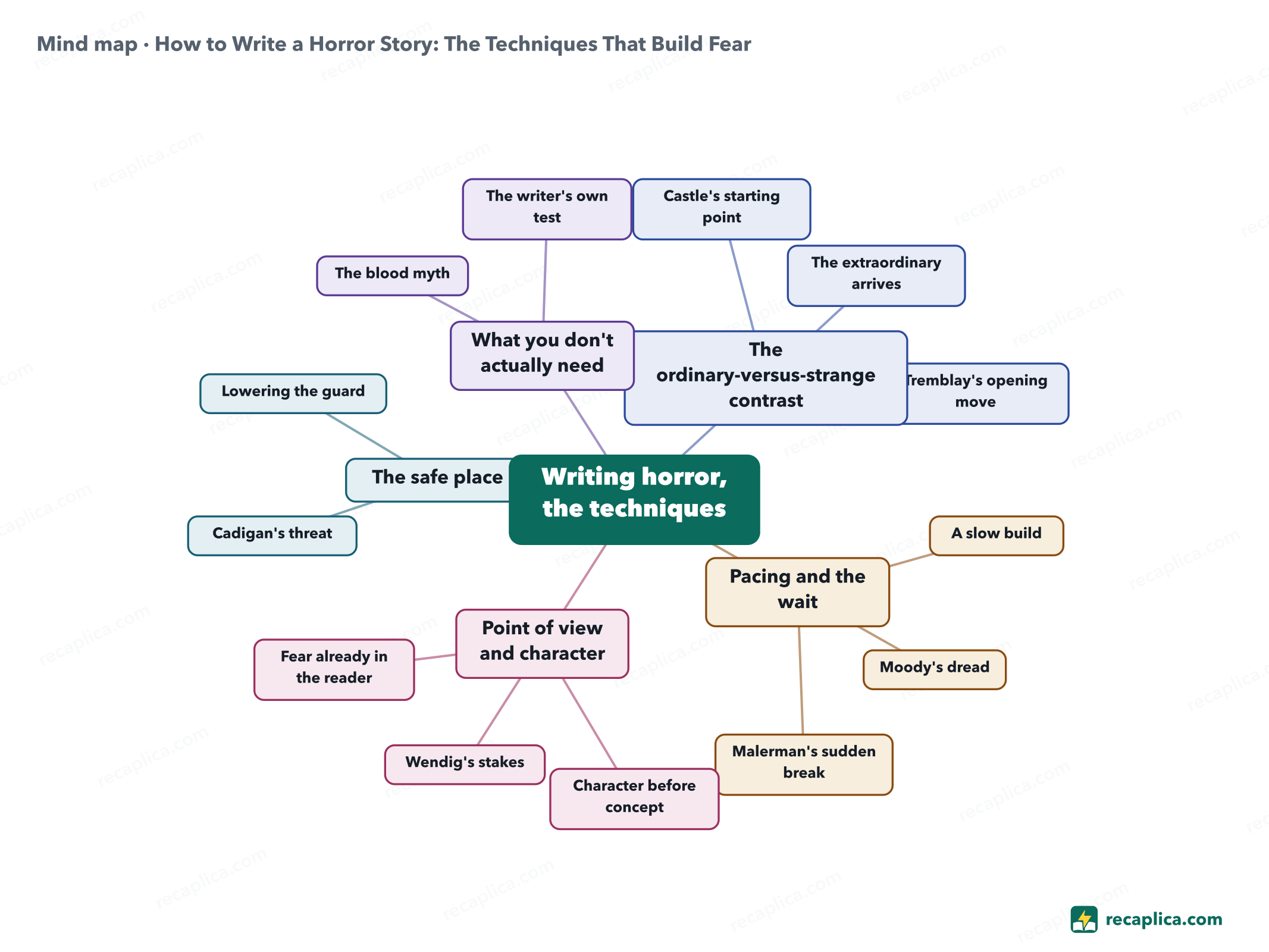
    Mind map: How to Write a Horror Story: The Techniques That Build Fear
    • Writing horror, the techniques
      • The ordinary-versus-strange contrast Where credible terror comes from
        • Castle's starting point An ordinary scene
        • The extraordinary arrives The contrast with normal life
        • Tremblay's opening move Everyday life, then the anomaly
      • Pacing and the wait How fear gets measured out over time
        • A slow build VH Leslie, time to make a world credible
        • Moody's dread Outweighs the real threat
        • Malerman's sudden break A declared exception, used rarely
      • Point of view and character Who has to carry the page
        • Character before concept Demchick, the balance that holds a story together
        • Wendig's stakes Simple to grasp, strong to feel
        • Fear already in the reader Jones, a fear the reader already carries
      • The safe place Where a threat hits hardest
        • Cadigan's threat Arrives where people feel protected
        • Lowering the guard Marshall, before the scare lands
      • What you don't actually need Two common ideas, checked against the evidence
        • The blood myth Ballingrud, atmosphere is what counts
        • The writer's own test Demchick, scaring yourself is a good sign

    Quiz: test yourself

    Answer the questions to check what you have learned: you get instant feedback and a short explanation.

    Grade 0/10 0/5
    1 According to Mort Castle, where is the best place to start a horror scene?

    Castle notes that an everyday setting, familiar to anyone, lays the right groundwork so the terrifying element feels plausible once it arrives.

    2 According to Pat Cadigan, when does a threat weigh most on the reader?

    For Cadigan the blow lands hardest when danger appears right inside the space the character treated as a safe den.

    3 According to editor Harrison Demchick, what does a horror story dominated by its concept risk?

    Demchick warns that a concept strong enough to overwhelm the character drains a story's power: an idea alone rarely holds the page.

    4 What lever does David Moody use to unsettle the reader?

    Moody relies on the fact that waiting for something terrible often feels worse than its arrival, to upend the reader's expectations.

    5 True or false, for Nathan Ballingrud a monster shown in full detail right away always scares more than a carefully built atmosphere.

    False. For Ballingrud it is atmosphere, built from word choice, setting and tone, that scares with more staying power over time.

    Answers: 1-A · 2-A · 3-A · 4-A · 5-B

    Flashcards

    Tap the card to flip it and check whether you remember the answer, then move to the next one.

    1 / 8

    Explain it in your own words

    The ultimate test: if you can explain it in simple words, you've truly understood it. Write your explanation, then compare it with the Recap.

    Your explanation is saved only on this device.

    Writing horror comes down to a set of deliberate choices more than an endless supply of blood or an ever-bigger monster. Writers in the genre work the gap between an ordinary world and whatever breaks into it, and control how slowly or quickly the threat closes in. The point of view decides whether the reader feels the fear or just reads about it, and something, by design, always stays off the page. The notes below gather these techniques in the words of working writers and editors.

    Frequently asked questions

    What's the difference between writing a horror short story and a horror novel?

    The techniques stay the same, only the scale changes. A short story compresses Mort Castle's contrast and David Moody's dread into a few scenes, often a single turn. A novel can stretch that same dread across many chapters, with more chances to let the reader lower their guard, as Helen Marshall suggests, before the real hit lands.

    What are the most-cited horror writing techniques among genre writers?

    The contrast between an ordinary setting and the arrival of something extraordinary (Mort Castle), a pace that isn't in a hurry to reach the complications (VH Leslie), a point of view that keeps the character in front of the concept (Harrison Demchick), and a mood built from tone, vocabulary and setting (Nathan Ballingrud).

    Why does a monster revealed too early scare less?

    Nathan Ballingrud credits atmosphere: tone, word choice and setting keep tension high page after page, while a monster revealed too soon loses its power in an instant.

    Where do you start to write a credible horror scene?

    Mort Castle points to everyday life as the sturdiest starting point: a familiar base sharpens the contrast with the horror that follows. Paul Tremblay applies the same logic, opening with ordinary characters the reader recognizes.

    Horror writing tips, what's the simplest test for whether a scene works?

    For editor Harrison Demchick, the simplest test is scaring yourself while writing a scene: if it works on the writer, it often works on the reader too. Josh Malerman says the same thing happens to him with his own scenes.

    Sources

    • Reedsy — How to Write a Horror Story: 7 Tips for Writing Horror
    • Literary Hub — Stephen Graham Jones on How Horror Is the Puppet of Your Own Terror
    • LitReactor — How to Scare Your Reader: 11 Tips From 11 Horror Writers
    • Horror Writers Association — Mort Castle, Write Tips

    Every Recap goes through an independent review before publication.

    Every evening, the day's new Recaps on our Telegram channel. Join the channel →

    Keep learning

    • Literature Best Dark Romance Books: A List for Every Subgenre A selection of dark romance books sorted by subgenre, for readers who already know what the genre is and just want a place to start. Dark mafia romance books cover forced marriages and warring crime families, as in Ruthless People and Killing Sarai. Dark fantasy romance books and paranormal romance move the same pull between desire and threat into worlds with gods, vampires and power struggles. Dark academia romance sets it among visions and fairy tales, while spicy dark romance books and stalker romance push the premise to the edge of real obsession. Read the Recap →
    • Literature Best Stephen King Books: 10 Novels and the Case for Each One Stephen King has written novels across several genres, from Carrie in 1974 to The Institute in 2019, and Wikipedia credits his books with more than 400 million copies sold overall. This list lines up ten titles that come up often in recommendations, with a reason for each pick, from horror staples like It and The Shining to novels that step outside the genre, such as 11/22/63 and The Green Mile. Every book comes with its publication year, its publisher and, where one exists, the award it won or was nominated for. There's no single agreed ranking: Hans-Åke Lilja, interviewed by Five Books as someone who has followed King's career for over 40 years, leaves well-known titles such as Carrie and The Shining out of his own personal picks. Read the Recap →
    • Literature Horror Story Ideas: Everyday Details, Old Fears and a Twist That Lands Writing a horror story often starts with a blank page more uncomfortable than the story itself. This Recap collects starting situations, recurring fears and ways to build a twist, with concrete examples to work from. It doesn't cover the techniques that build tension on the page — those live in the parent Recap on how to write a horror story. The sturdiest ideas tend to start with an everyday detail that stops behaving the way it should, or an old fear dressed in a setting readers recognize. Read the Recap →

    recaplica

    Clear in 30 seconds, yours in 10 minutes.

    Recaps Mind maps Request a Recap Telegram channel Mind map maker Our method About Privacy & cookies Legal notes & terms of use

    © 2026 Recaplica · A project by Curi S.r.l. — VAT IT05472000750

    Statistics, only if you say so

    To learn which Recaps help most we would use Google Analytics, with aggregate, anonymous data. It starts only with your OK, and you can change your mind anytime. Privacy policy