recaplica
Clear in 30 seconds, yours in 10 minutes.
In 30 seconds quick read
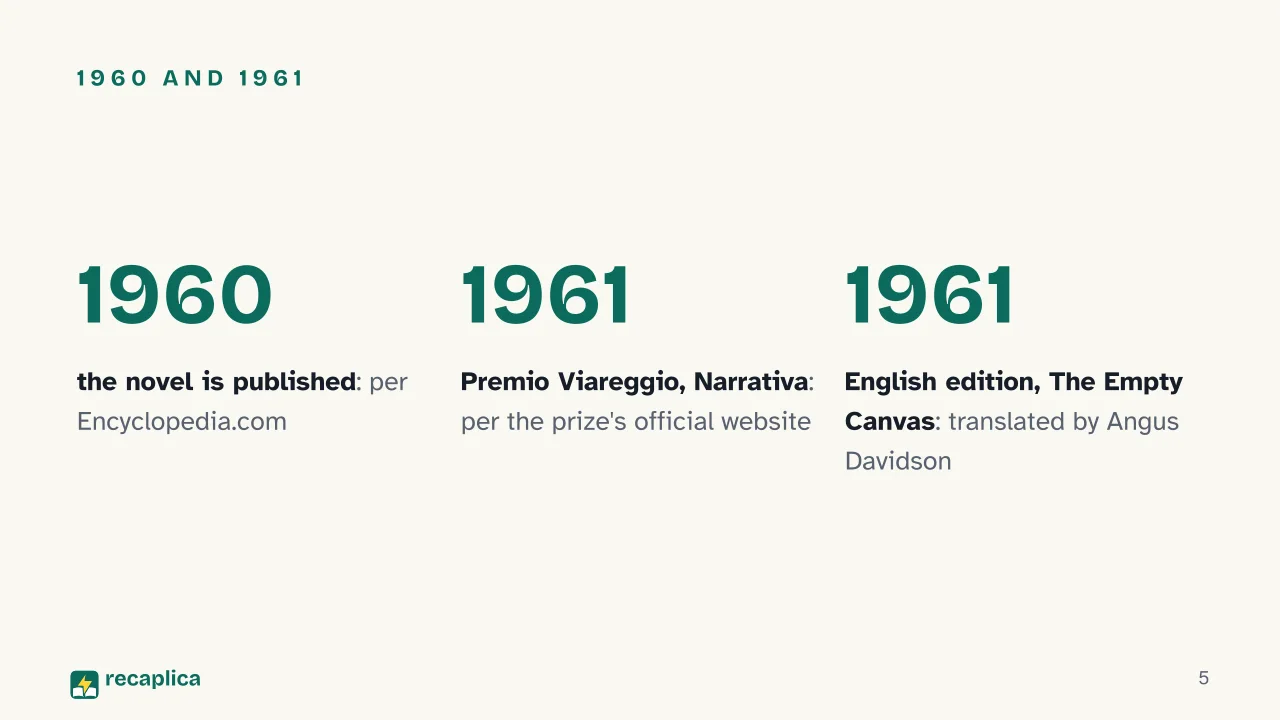
Boredom is the novel Alberto Moravia published in 1960. Its protagonist, Dino, is a painter from a middle-class family who has no job and can no longer feel interested in anything around him. The story follows his conflict with his mother, the collapse of his painting career, and his relationship with a young model named Cecilia, until a suspected betrayal sends him into crisis. Publisher Bompiani calls it the middle novel of a loose trilogy that opens with The Time of Indifference and closes with Inner Life, while Treccani places it among Moravia's essay-novels. In 1961 it won the Narrativa section of the Premio Viareggio and appeared in English as The Empty Canvas.
Key Points
Boredom (1960) follows Dino, a painter from a middle-class background with no job, who feels no interest in anything around him, according to the Bompiani publisher's synopsis.
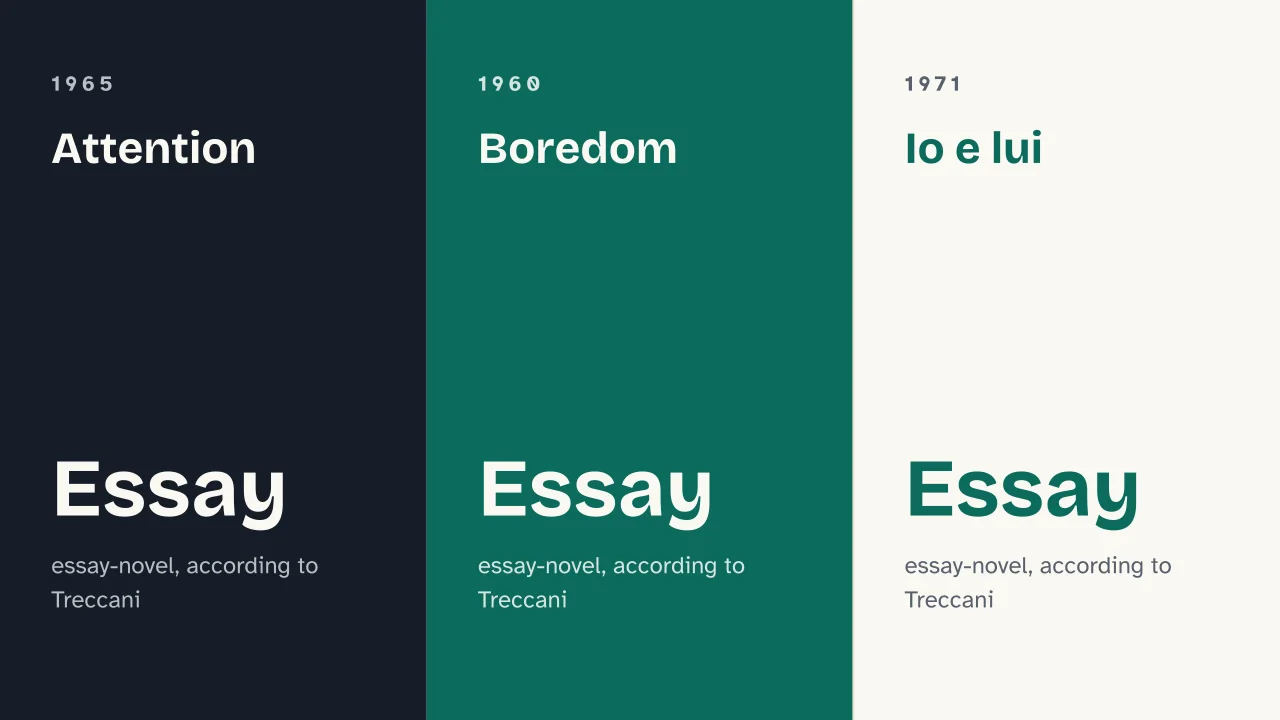
Treccani places the novel among Moravia's essay-novels, alongside Attention (1965) and Io e lui (1971).
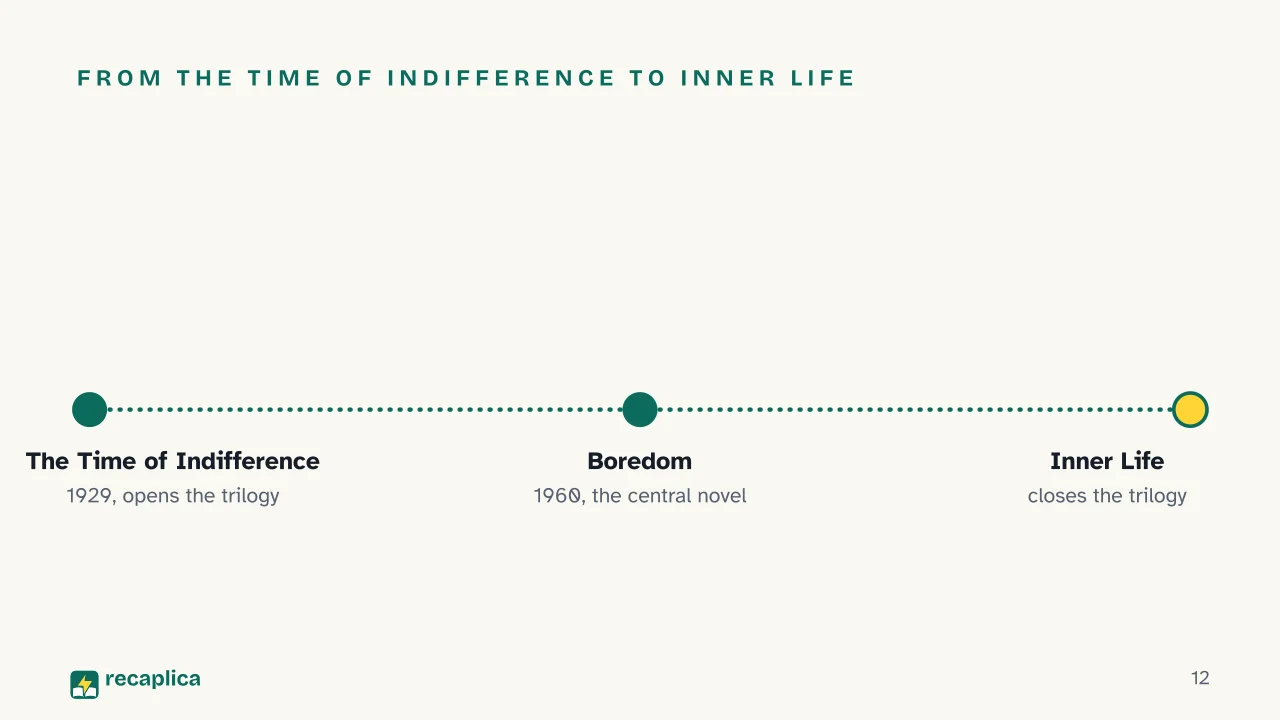
Bompiani presents Boredom as the central novel of a loose trilogy running from The Time of Indifference to Inner Life.
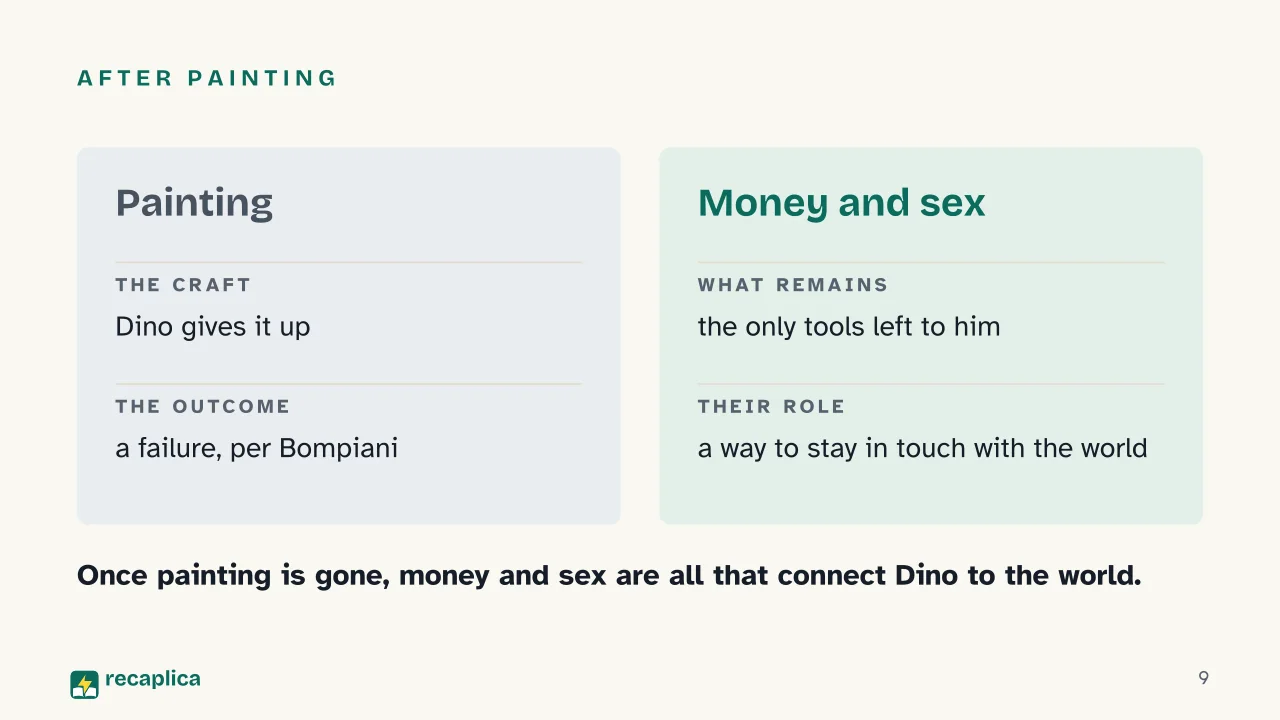
Once he gives up painting, money and sex are the only ties Dino has left to the world, until he suspects Cecilia of betraying him and spirals into crisis.
In 1961, Boredom won the Narrativa section of the Premio Viareggio.
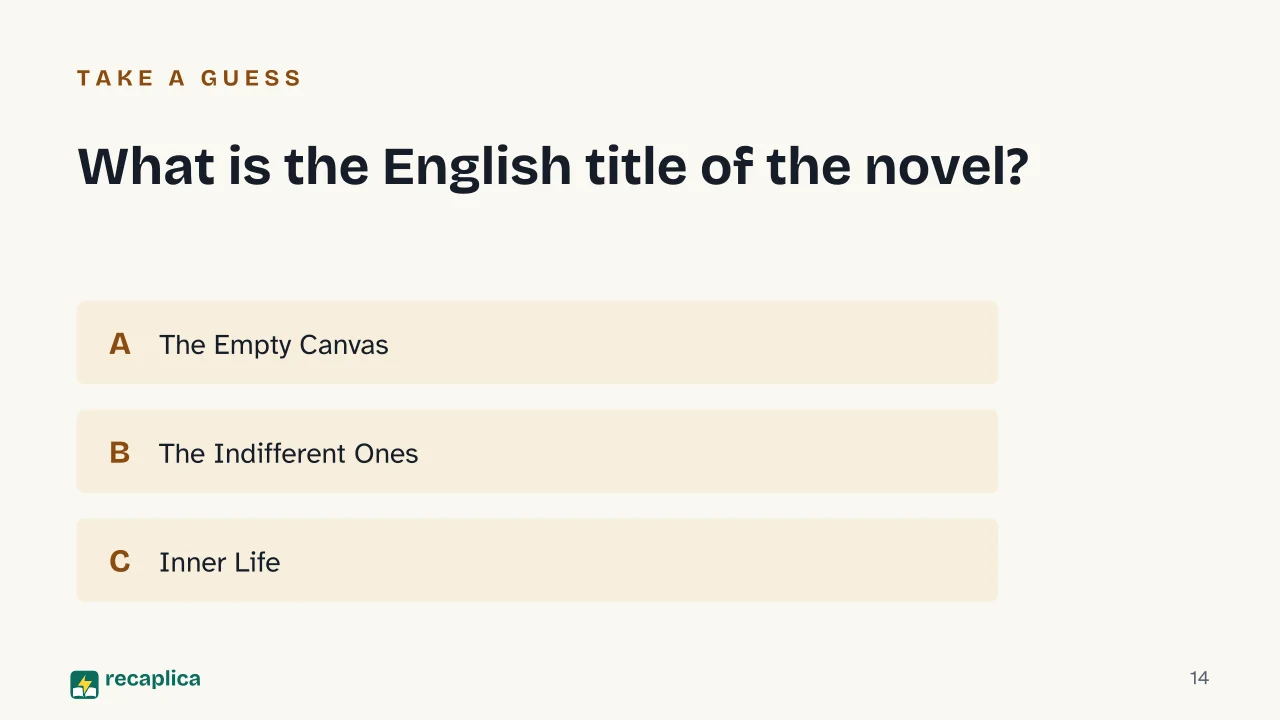
The English edition, The Empty Canvas, translated by Angus Davidson, was published in 1961 by the London house Secker & Warburg.
Key figures
1960 Year Boredom was published Source: Encyclopedia.com
1961 Year Boredom won the Narrativa section of the Premio Viareggio Source: Premio Viareggio Rèpaci, official website
Deep Dive
A painter who does nothing: who is Dino
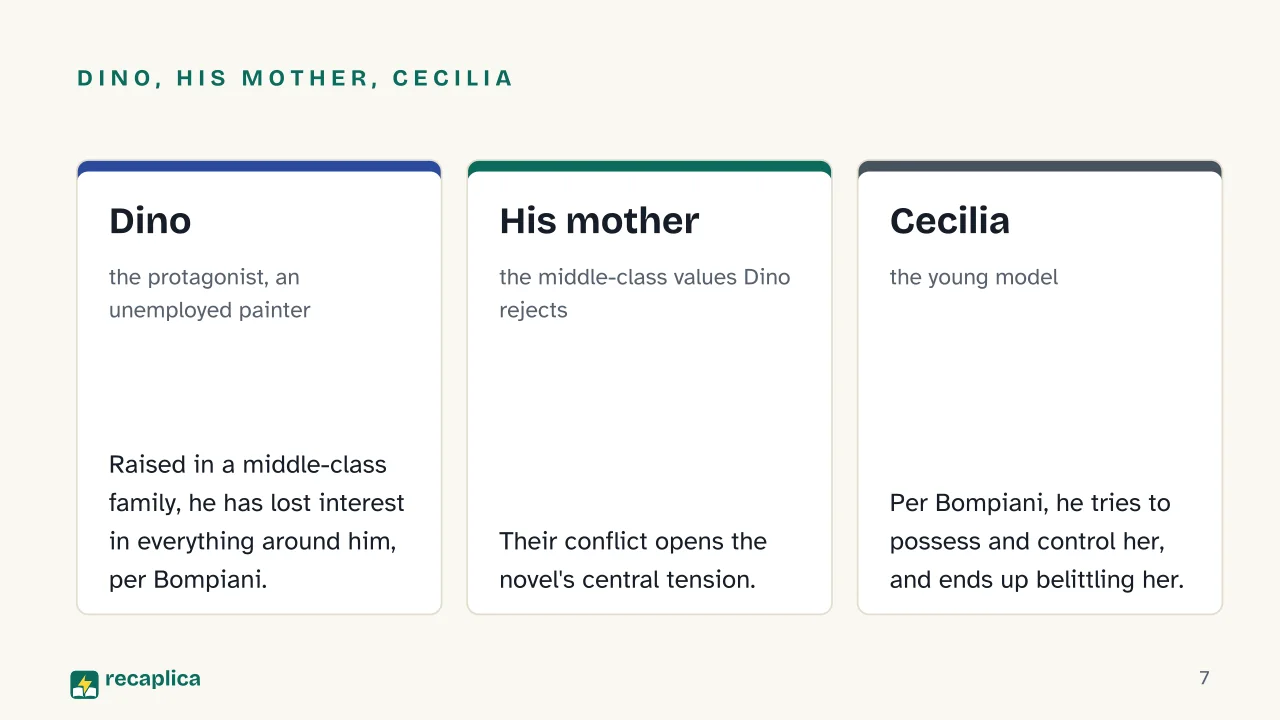
Dino, a painter raised in a middle-class family with no job, cannot find any genuine interest in what surrounds him, according to the Bompiani publisher’s synopsis, which frames the novel as a story of crisis, failure, and disappointment. The book follows him through his conflict with his mother, whose middle-class values he scorns.
The failed painting career and the relationship with Cecilia
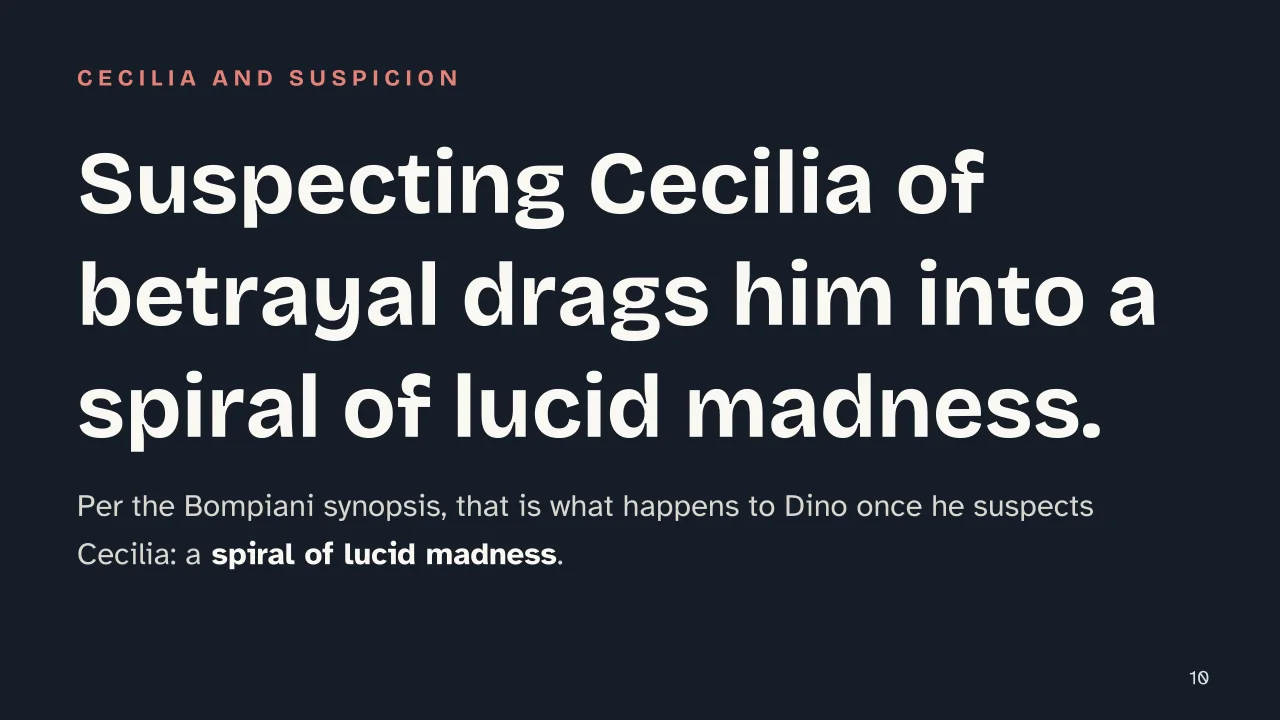
Once he abandons painting, Dino has only money and sex left as ways of feeling connected to what surrounds him, according to the Bompiani synopsis. It is at this point in the story that Cecilia enters, the young model Dino becomes involved with: he wants to possess her, control her, and belittle her, again per Bompiani, while money remains the one thing the two genuinely share. Suspecting her of betrayal sends him into what the publisher’s synopsis calls a spiral of lucid madness, the final turn of the story before the novel closes.
Practical example: a reader who comes to Boredom after The Time of Indifference, Moravia’s first novel from 1929, finds, according to Encyclopedia.com, the same theme Moravia had already explored in that debut book; critics read Boredom as a synthesis of the existential unease running through his entire body of work.
Alberto Moravia, Boredom, and the essay-novel
Treccani places Boredom among the essay-novels in Moravia’s output, novels built around an explicit underlying thesis. Bompiani, instead, sets it at the center of a three-part arc that opens with The Time of Indifference (1929) and closes with Inner Life.
In 1961, Boredom won the Narrativa section of the Premio Viareggio, according to the official website of the Premio Rèpaci. That same year, the English translation appeared in London: The Empty Canvas, by Angus Davidson, published by Secker & Warburg, as AbeBooks’ catalogue entry for the first edition records.
Other novels of existential unease in twentieth-century Italian fiction
A character unable to form a full connection with reality runs through much of twentieth-century Italian fiction: the same knot, worked with different tools, sits at the center of Zeno’s Conscience by Italo Svevo and of the work of Luigi Pirandello.
Slide deck
Slides ready to download and make your own in PowerPoint or Google Slides, with speaker notes. Pick the Flash cut or the Full one.
✗ Myth The title suggests a passing annoyance, the kind that ruins a single afternoon.
✓ Reality Per the Bompiani synopsis, Dino loses interest in everything around him, and once he abandons painting only money and sex remain as ways of staying connected to the world — a condition that runs through the entire novel, not the mood of one day.
✗ Myth Boredom and The Time of Indifference have nothing to do with each other.
✓ Reality Bompiani places the two books, together with Inner Life, inside one loose trilogy; Encyclopedia.com goes further, noting that Boredom picks up the theme of Moravia's 1929 debut novel and reads as a synthesis of the existential unease that recurs throughout his fiction.
✗ Myth The novel is simply a love story about Cecilia.
✓ Reality The Bompiani synopsis describes the protagonist across three roles, artist, man, and lover, and the plot as one marked by personal setbacks that also covers the conflict with his mother and the end of his painting career, not just the relationship with Cecilia.
Mind map
Drag the background to move around and the nodes to reposition them; use − and + to collapse and expand branches.
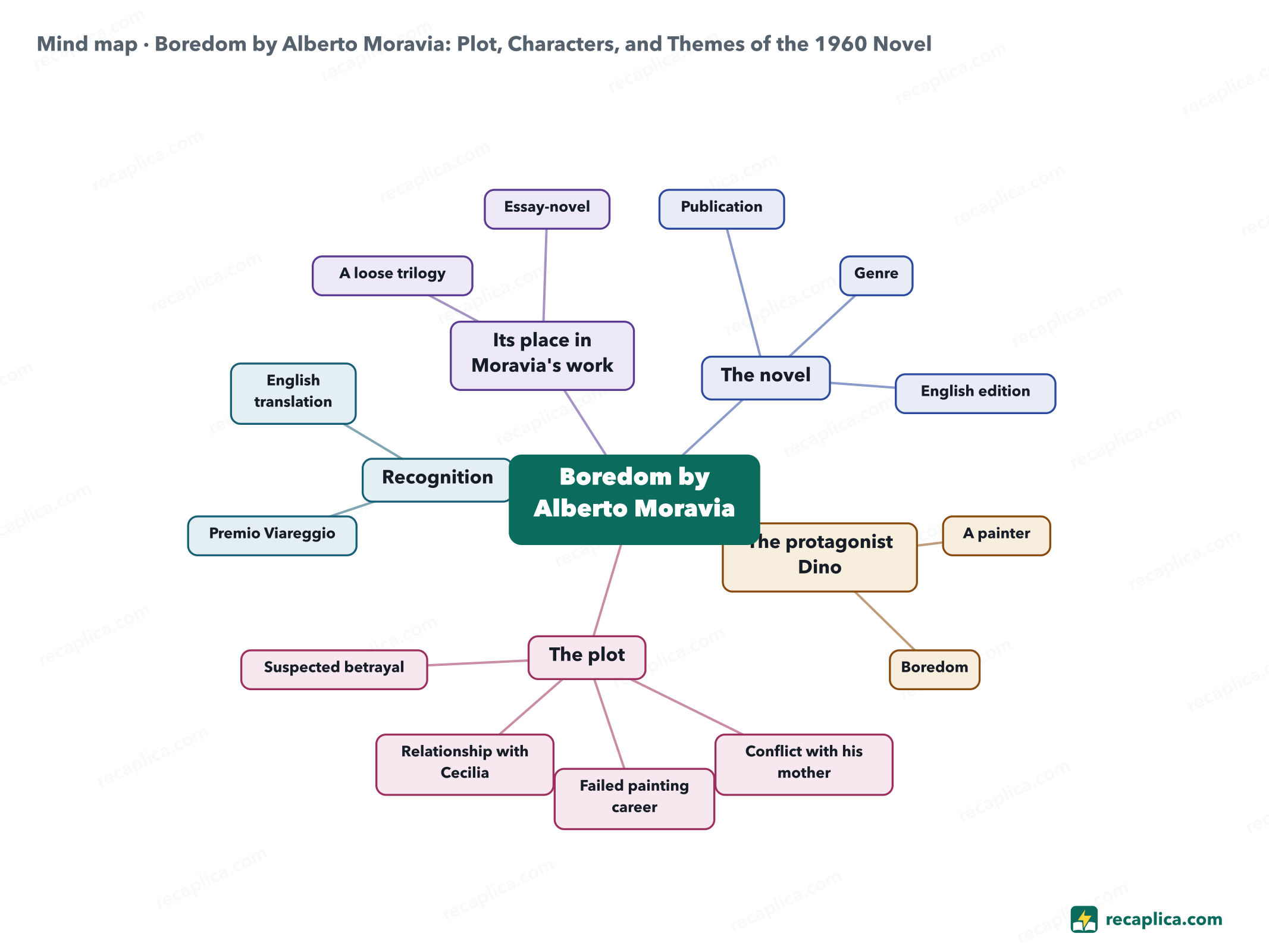
Boredomkeeps him distant from everything around him
The plot
Conflict with his motherwhose middle-class values Dino scorns
Failed painting career
Relationship with Ceciliathe young model
Suspected betrayalsends Dino into crisis, per Bompiani
Recognition
Premio ViareggioNarrativa section, 1961
English translationAngus Davidson, Secker & Warburg, 1961
Its place in Moravia's work
A loose trilogyfrom The Time of Indifference to Inner Life, per Bompiani
Essay-novelwith Attention and Io e lui, per Treccani
Quiz: test yourself
Answer the questions to check what you have learned: you get instant feedback and a short explanation.
Grade0/100/5
Answers: 1-B · 2-A · 3-B · 4-C · 5-B
Flashcards
Tap the card to flip it and check whether you remember the answer, then move to the next one.
1 / 8
Explain it in your own words
The ultimate test: if you can explain it in simple words, you've truly understood it. Write your explanation, then compare it with the Recap.
Your explanation is saved only on this device.
Boredom is the novel Alberto Moravia published in 1960. Its protagonist, Dino, is a painter from a middle-class family who has no job and can no longer feel interested in anything around him. The story follows his conflict with his mother, the collapse of his painting career, and his relationship with a young model named Cecilia, until a suspected betrayal sends him into crisis. Publisher Bompiani calls it the middle novel of a loose trilogy that opens with The Time of Indifference and closes with Inner Life, while Treccani places it among Moravia's essay-novels. In 1961 it won the Narrativa section of the Premio Viareggio and appeared in English as The Empty Canvas.
Frequently asked questions
What is Alberto Moravia's Boredom about?
It follows the crisis of Dino, an unemployed painter who can no longer take interest in anything around him: his clash with his mother's values, the end of his painting career, and his relationship with the model Cecilia, which breaks down when he suspects her of betrayal and the story moves toward its ending, according to the Bompiani synopsis.
Is Boredom connected to other novels by Alberto Moravia?
Yes. Bompiani places it as the middle book of a three-part arc that opens with The Time of Indifference (1929) and closes with Inner Life; Encyclopedia.com links it directly to Moravia's first novel, and critics read it as a synthesis of the existential unease running through his fiction.
Which prize did Boredom win?
In 1961 it won the Narrativa section of the Premio Viareggio, according to the official website of the Premio Rèpaci.
What is the English title of Boredom, and who translated it?
The Empty Canvas, translated by Angus Davidson and published in 1961 by the London house Secker & Warburg, according to the bibliographic listing for the first edition on AbeBooks.
Every Recap goes through an independent review before publication.
Statistics, only if you say so
To learn which Recaps help most we would use Google Analytics, with aggregate, anonymous data. It starts only with your OK, and you can change your mind anytime. Privacy policy