|
recaplica
Best Horror Books: 10 Novels From Gothic Classics to New Favorites | ||||||||||||
| © 2026 Recaplica · recaplica.com — All rights reserved | ||||||||||||
Best Horror Books: 10 Novels From Gothic Classics to New FavoritesWhat to print Page numbers appear when printing with default margins. SlidesChoose a cut Flash10 slidesThe essential thread, to present in classFull16 slidesEvery chapter and the deeper detailBoth come with speaker notes. In 30 seconds quick readPicking the best horror books means ranging across more than a century of fear in print: from May 27, 1897, when Bram Stoker's «Dracula» first went on sale, to titles that won a readers' award in 2025. In between sit novels that scare in very different ways, through a haunted house's slow-building atmosphere, a father's descent into madness, or the shape of the pages themselves. This Recap picks ten novels, from the gothic canon to titles that found new audiences on Reddit and TikTok in recent years, and explains why each one earns its place. Key Points
Key figures
Deep DiveGothic Roots FirstAnyone looking for the best horror books to read eventually hits a fork in the road: start with the gothic classics or dive into the newest titles. It’s worth starting where it all began. According to History.com, Bram Stoker’s «Dracula» first went on sale on May 27, 1897, and brought vampires into twentieth-century mainstream fiction: after it came dozens of films, TV series and other vampire-themed works. History.com calls it a masterpiece of Victorian gothic literature. One detail is about the author, not the plot: English Heritage says Bram Stoker chose the antagonist’s name during a stay on the Yorkshire coast. Literary Hub traces the roots of horror fiction to Mary Shelley’s Frankenstein, to Dracula itself, to Matthew Lewis’s «The Monk», to Jane Austen’s «Northanger Abbey», and to the work of Edgar Allan Poe and H.P. Lovecraft, even though its own list of recent reads focuses elsewhere, leaving those names to readers who already know the genre. Anyone who wants to understand where the genre comes from and which writers defined it can find that picture in the Recap on horror fiction; anyone curious about the thread connecting Lovecraft’s cosmic horror to mathematics can read why non-Euclidean geometry shows up in his stories. Twentieth-Century DreadAfter Victorian gothic, horror changes tools: fewer castles and fog, more doubt and atmosphere. Literary Hub ranks Shirley Jackson’s «The Haunting of Hill House» among the best-written haunted houses, a novel that works through mounting tension. Elsewhere the same outlet calls it one of the scariest books ever written, crediting its unreliable narrator. The ghosts here stay mostly unseen; what the house does, slowly, is drive the people inside it mad, and the reader never quite knows how far to trust the one telling the story.
Stephen King and the Horror of HomeFew writers have bent horror toward domestic life as thoroughly as Stephen King. Penguin Books UK calls «The Shining» (1977) one of his most terrifying novels, centered on the protagonist’s descent into madness — a father isolated with his family in a mountain hotel. Penguin Books UK also considers «Pet Sematary» (1983) one of King’s most unsettling books. The supernatural is there, but the real weight sits in the moral dilemmas at its core: what you’re willing to do to avoid losing someone you love. Readers who know «The Shining» only from the Kubrick film find more in the book, Literary Hub argues: it gives more room to the protagonist’s alcoholism and his relationship with his son. A dedicated guide covers the best Stephen King novels to read.
From Book Clubs to Reddit and TikTokThe genre didn’t stop in the twentieth century, and its newest titles arrive by different routes: readers’ awards, insider recommendations, word of mouth online. Penguin Books UK notes that Grady Hendrix’s «Witchcraft for Wayward Girls» won the 2025 Goodreads Choice Award for horror. Penguin Books UK also points to Christopher Buehlman’s «Between Two Fires», set during the 1348 plague in France, as a novel whose following has grown among readers who share it on Reddit and TikTok — a 2012 book finding an audience through channels that didn’t exist in this form when it was published. European fiction and teen horror meet in John Ajvide Lindqvist’s «Let the Right One In», which Literary Hub describes as the story of a bullied boy who befriends a “very strange” creature. Then there’s the novel that dismantles the idea of a novel itself: Mark Z. Danielewski’s «House of Leaves» creates claustrophobia and disorientation in the reader through postmodern typographic devices, not just through plot. Readers who prefer hybrid horror, straddling several genres, will find in Brian Evenson’s «Last Days» — winner of the 2010 American Library Association award for best horror novel — a cross between crime fiction, horror, and minimalist literary fiction. A Prize of Its OwnThe genre has its own ceremony, too. The Horror Writers Association established the Bram Stoker Awards right after its own founding, in 1987, naming them after Bram Stoker, the author of «Dracula»: for the association, a founding work of the genre. Naming the award after him signals which book the field treats as its own point of reference, every time a new winner is announced. The path to a winner begins with nominations from members and category juries; the final word then belongs to active members. It isn’t the only recognition in the field — the American Library Association’s award and the Goodreads Choice Award, already mentioned above, also exist — but it is the prize created specifically for horror fiction. The name chosen for it already says a great deal about how much «Dracula» still matters, more than a century after it first went on sale. Slide deckSlides ready to download and make your own in PowerPoint or Google Slides, with speaker notes. Pick the Flash cut or the Full one.   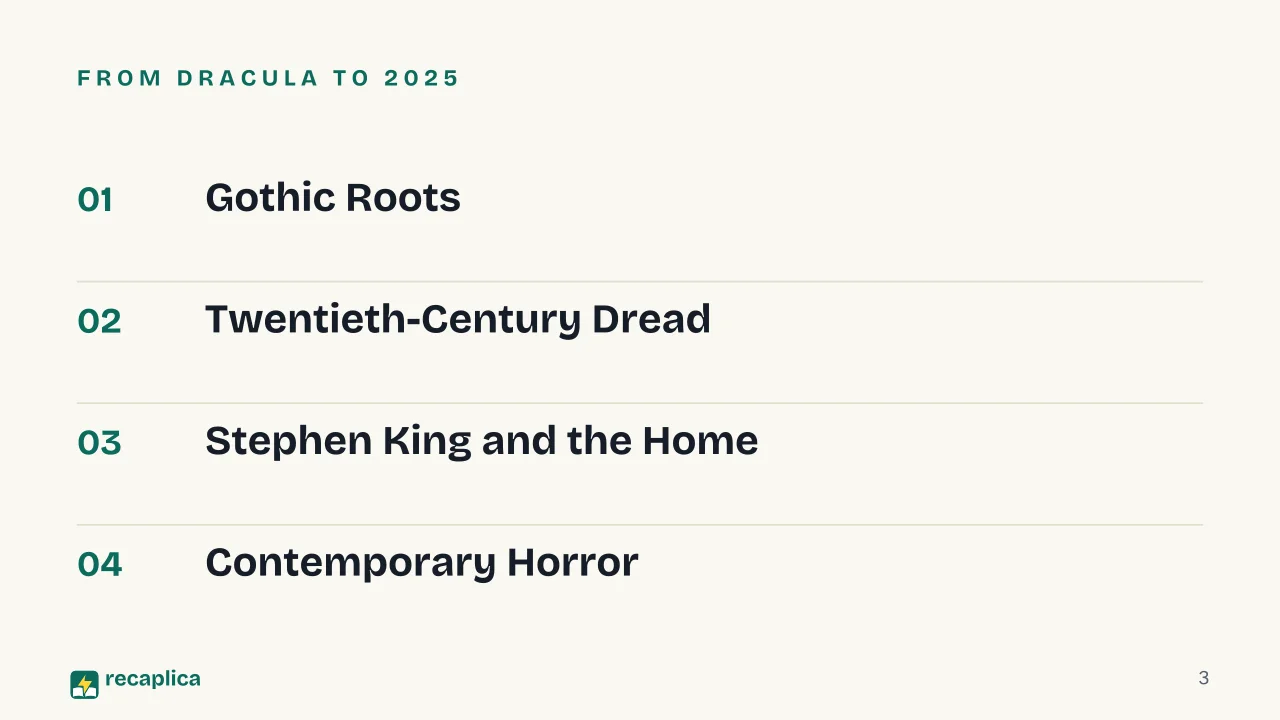  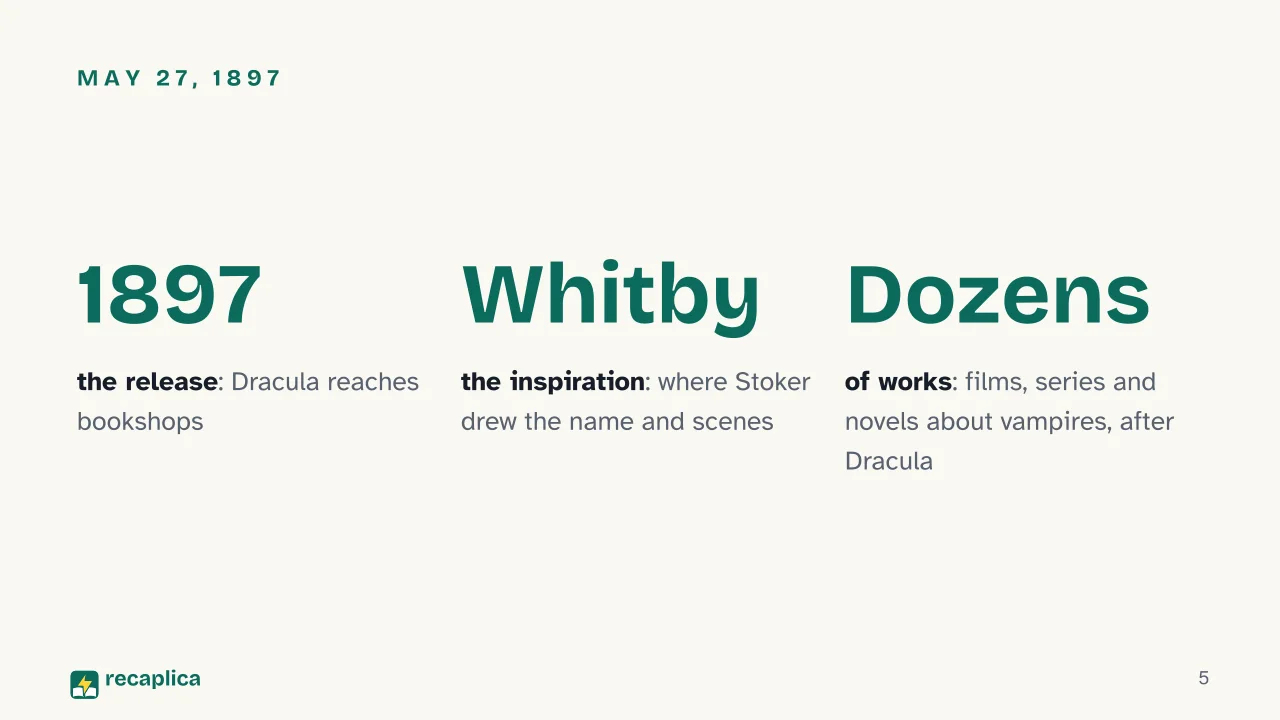  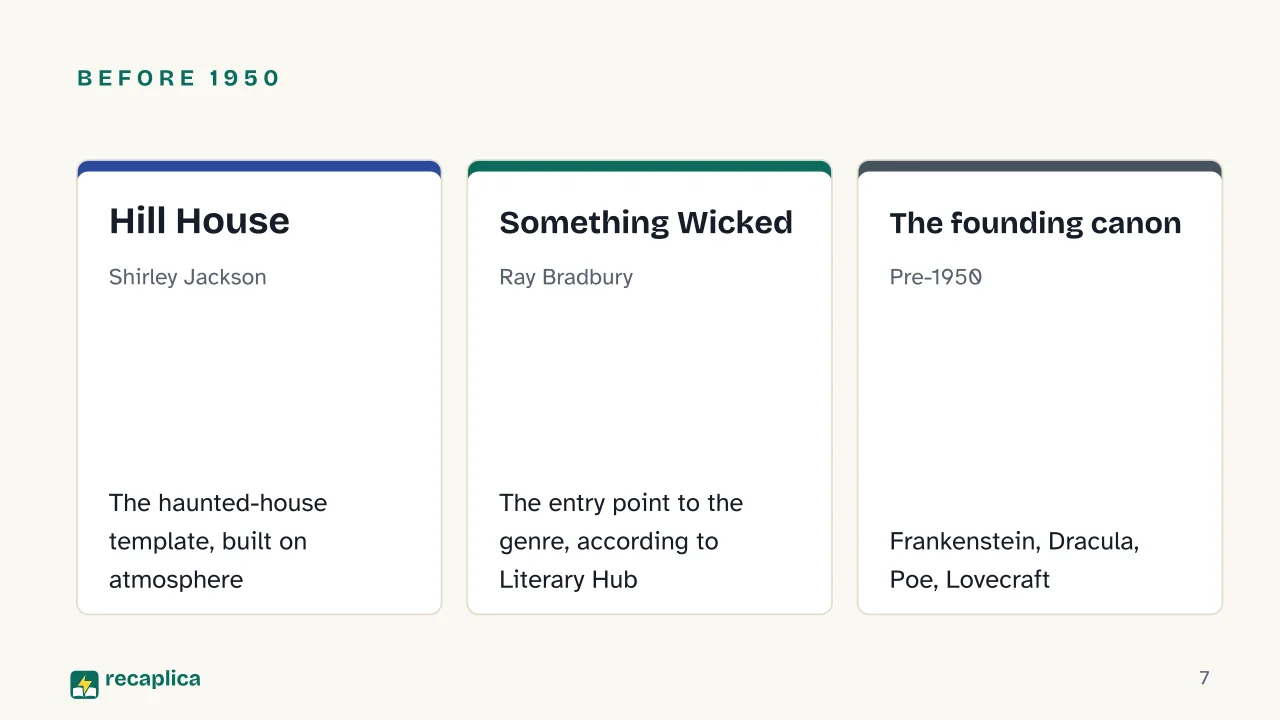  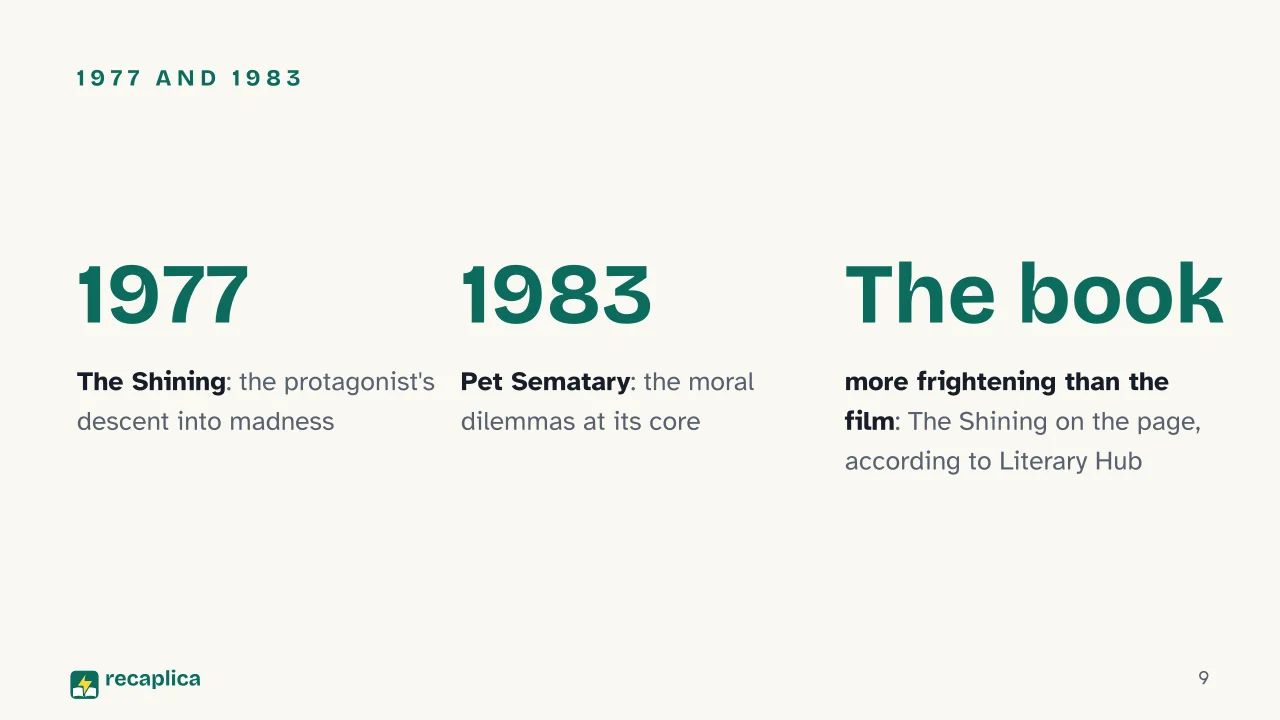   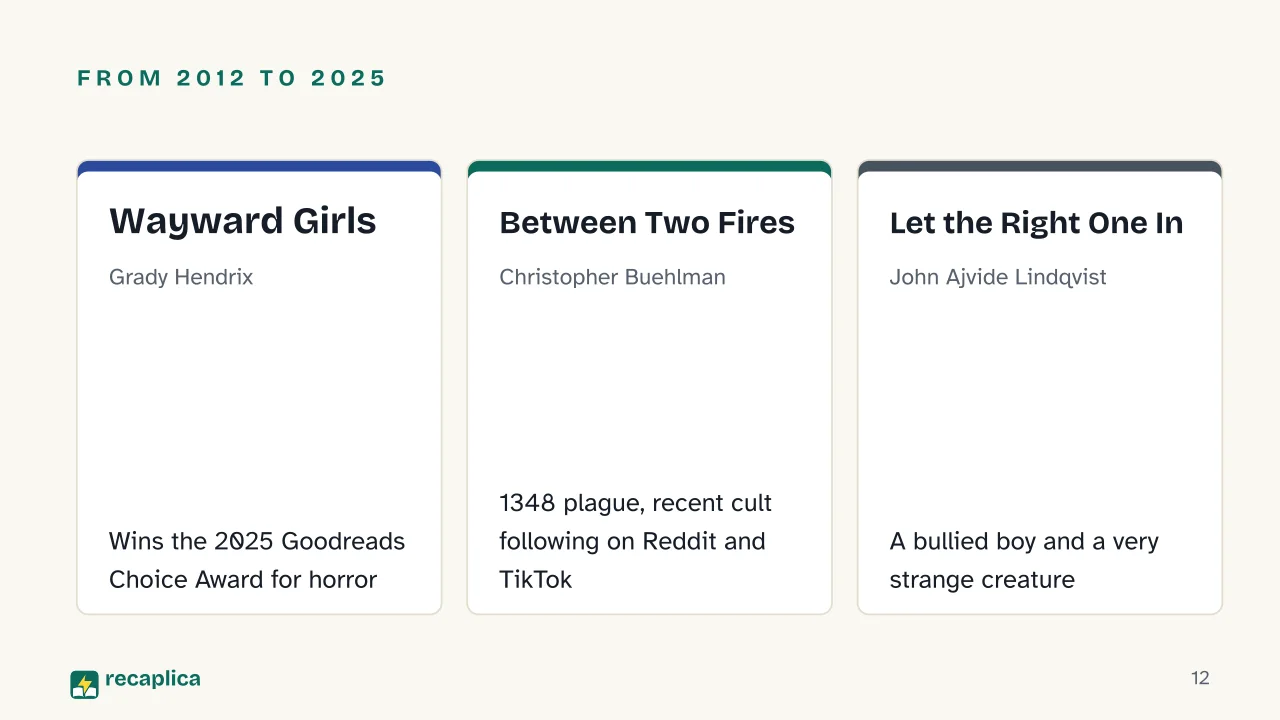 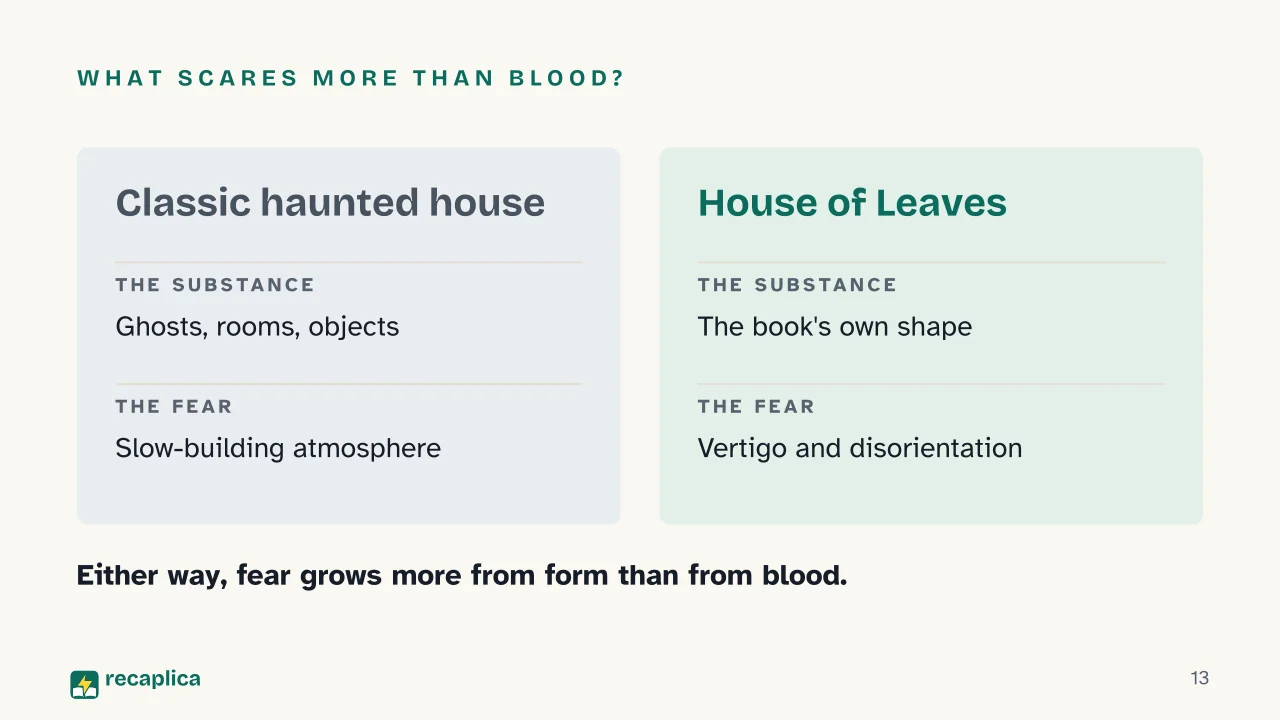 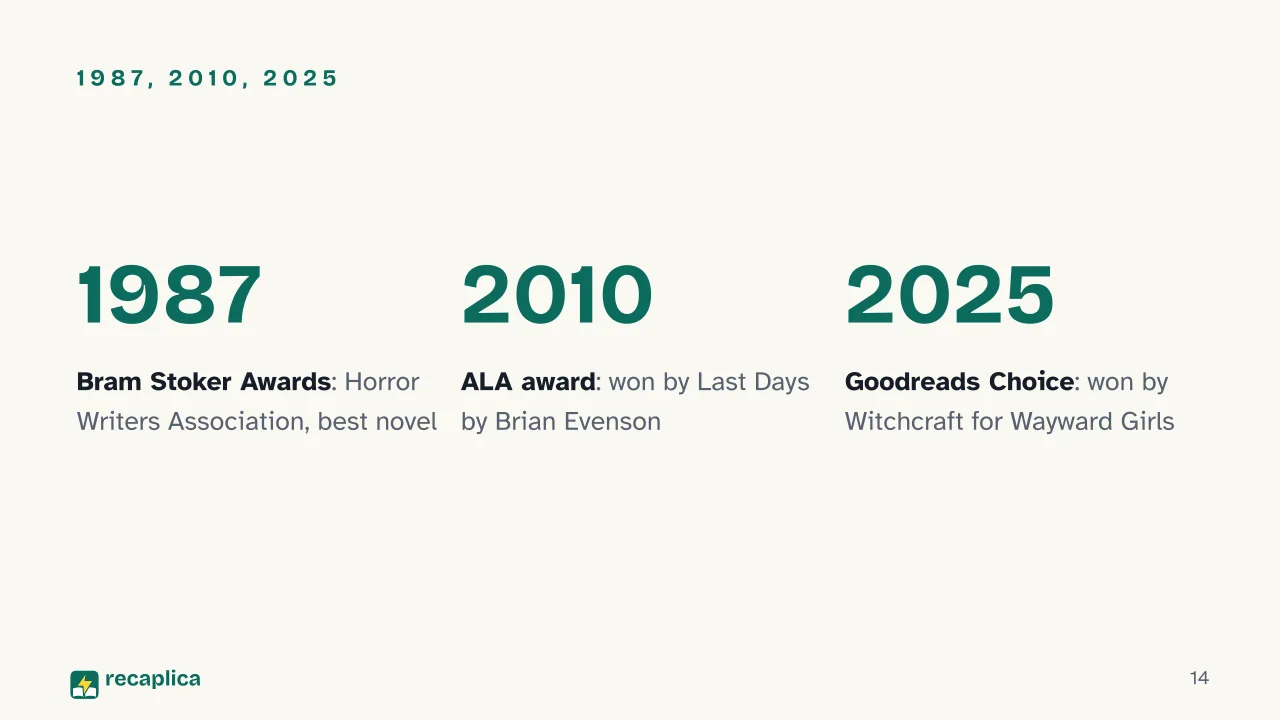 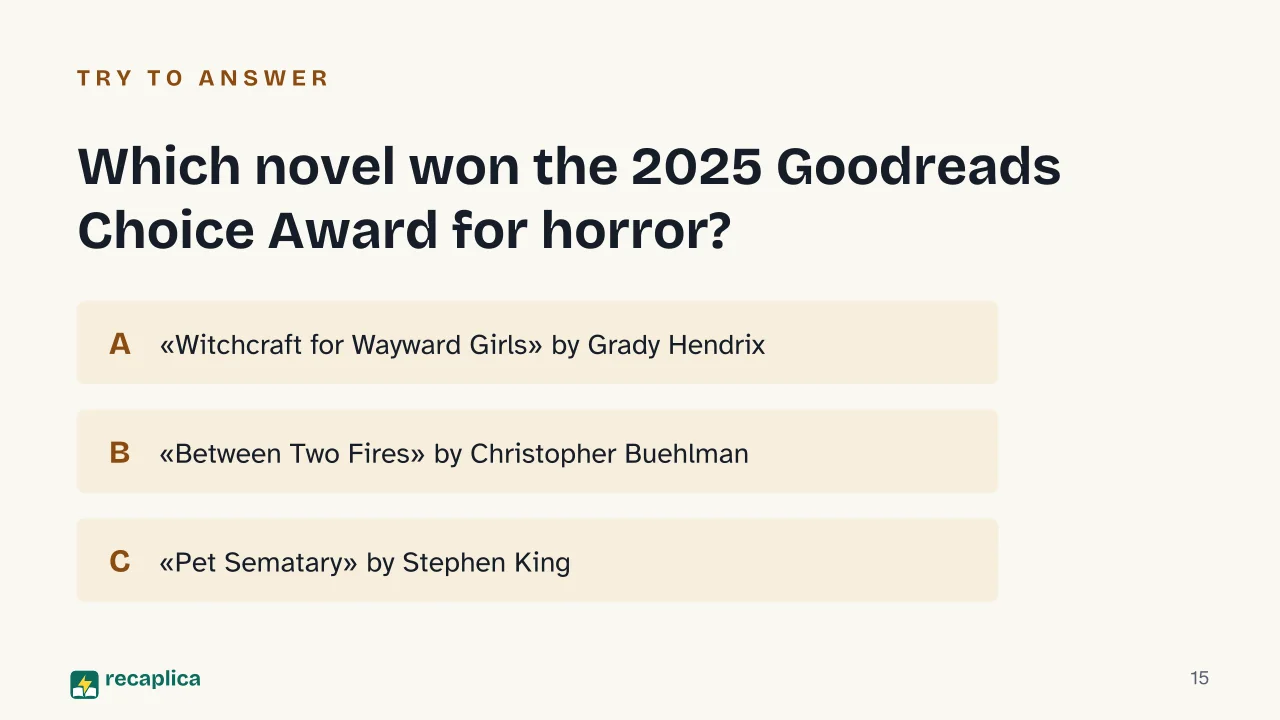  Common myths
Mind mapDrag the background to move around and the nodes to reposition them; use − and + to collapse and expand branches. 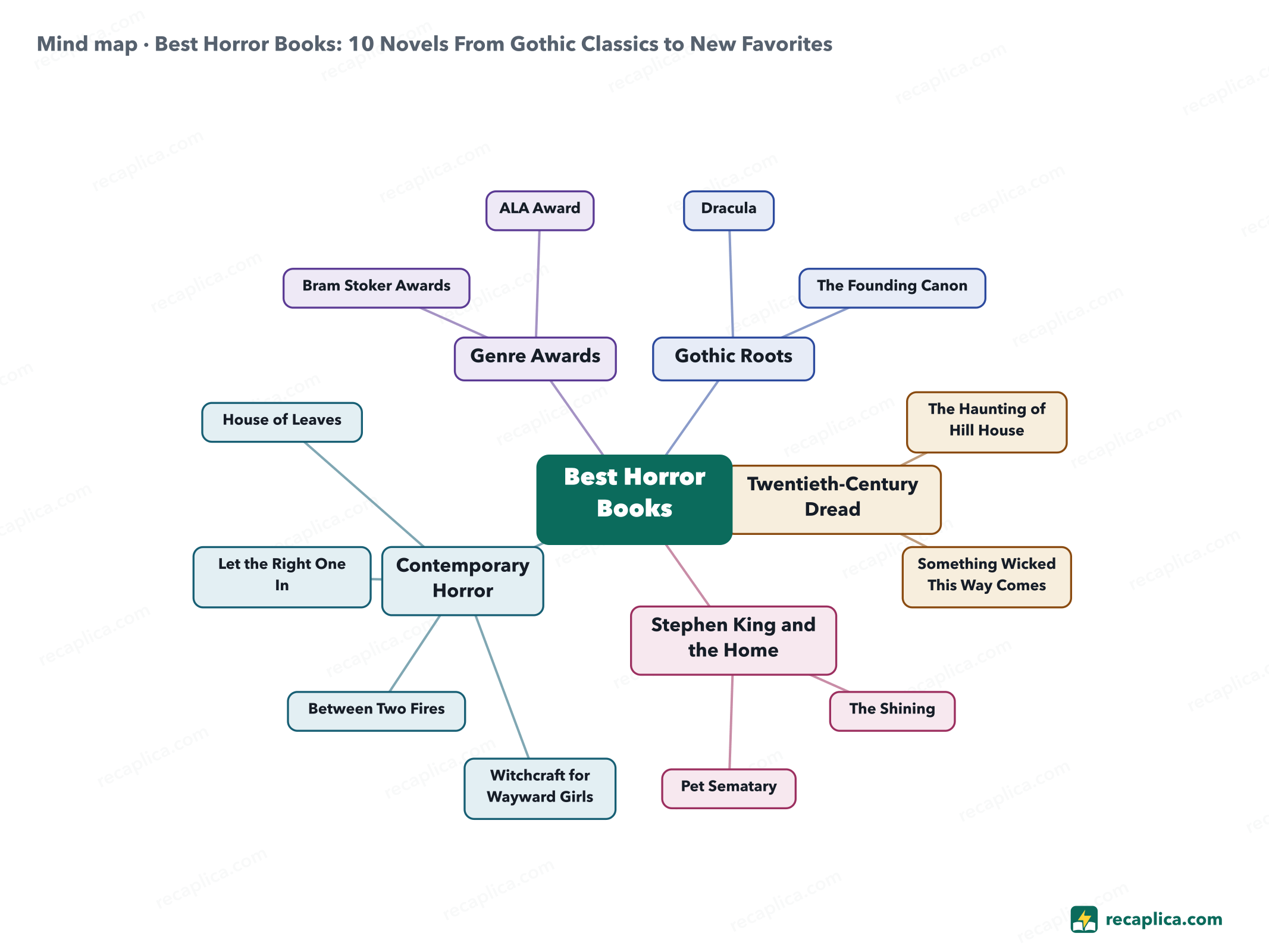
Quiz: test yourselfAnswer the questions to check what you have learned: you get instant feedback and a short explanation. Grade 0/10 0/5
FlashcardsTap the card to flip it and check whether you remember the answer, then move to the next one. 1 / 8 Explain it in your own wordsThe ultimate test: if you can explain it in simple words, you've truly understood it. Write your explanation, then compare it with the Recap. Your explanation is saved only on this device.
Frequently asked questionsWhat are the best horror books to start with?There's no single way in, but two work well for readers new to the genre: Bram Stoker's «Dracula», which according to History.com brought vampires into mass-market fiction, and Ray Bradbury's «Something Wicked This Way Comes», which Literary Hub recommends as an entry point precisely because its tone is less brutal. Which horror books suit readers who prefer psychological dread to gore?Shirley Jackson's «The Haunting of Hill House», built on atmosphere and an unreliable narrator according to Literary Hub, and Stephen King's «The Shining», which the same source calls more human and more frightening than Kubrick's film adaptation. Are there awards dedicated to horror novels?Yes. Since 1987 the Horror Writers Association has presented the Bram Stoker Awards, named after the author of «Dracula»; the winner is chosen through two rounds of voting by active members, after nominations from members and category juries. Other awards exist too, such as the American Library Association's prize, won by Brian Evenson's «Last Days» in 2010, and the Goodreads Choice Award, won in 2025 by Grady Hendrix's «Witchcraft for Wayward Girls». Do older horror novels like Frankenstein or Dracula still hold up today?Literary Hub still treats them as the genre's founding canon, alongside the work of Poe and Lovecraft, though its own reading list skips past them because they predate 1950. Readers who want the full picture of the genre's origins can start there before moving on to the newer titles on this list. What is «House of Leaves» and why is it different from other horror books?According to Literary Hub, Mark Z. Danielewski's «House of Leaves» unsettles readers with more than its plot: postmodern typographic devices break the novel's traditional layout, so the page itself becomes a source of claustrophobia and disorientation. Every Recap goes through an independent review before publication. |