Skip to content
recaplica

    One moment: security check

    Cloudflare wants to make sure you're not a robot. Tick the box below and your search will continue on its own.

    IT
    recaplica Recession: what it is, how to spot one and what it means for you
    © 2026 Recaplica · recaplica.com — All rights reserved
    Home › Economics

    Recession: what it is, how to spot one and what it means for you

    By Recaplica Newsroom · Updated on August 31, 2026

    What to print

    Page numbers appear when printing with default margins.

    Slides

    Choose a cut

    Flash10 slidesThe essential thread, to present in classFull18 slidesEvery chapter and the deeper detail

    Both come with speaker notes.

    Telegram channel
    recaplica Clear in 30 seconds, yours in 10 minutes.
    In 30 seconds Key points Figures Deep dive Slides Myths Mind map Quiz Flashcards FAQ

    In 30 seconds quick read

    A recession is a phase in which a country's economic activity contracts: less gets produced, less gets spent, jobs decline. The quick definition is "GDP falling for two consecutive quarters" (a technical recession); the serious one looks at how deep, widespread and lasting the decline is. Recessions are part of the business cycle: they hurt, but they end — and governments and central banks have levers to shorten them.

    Key Points

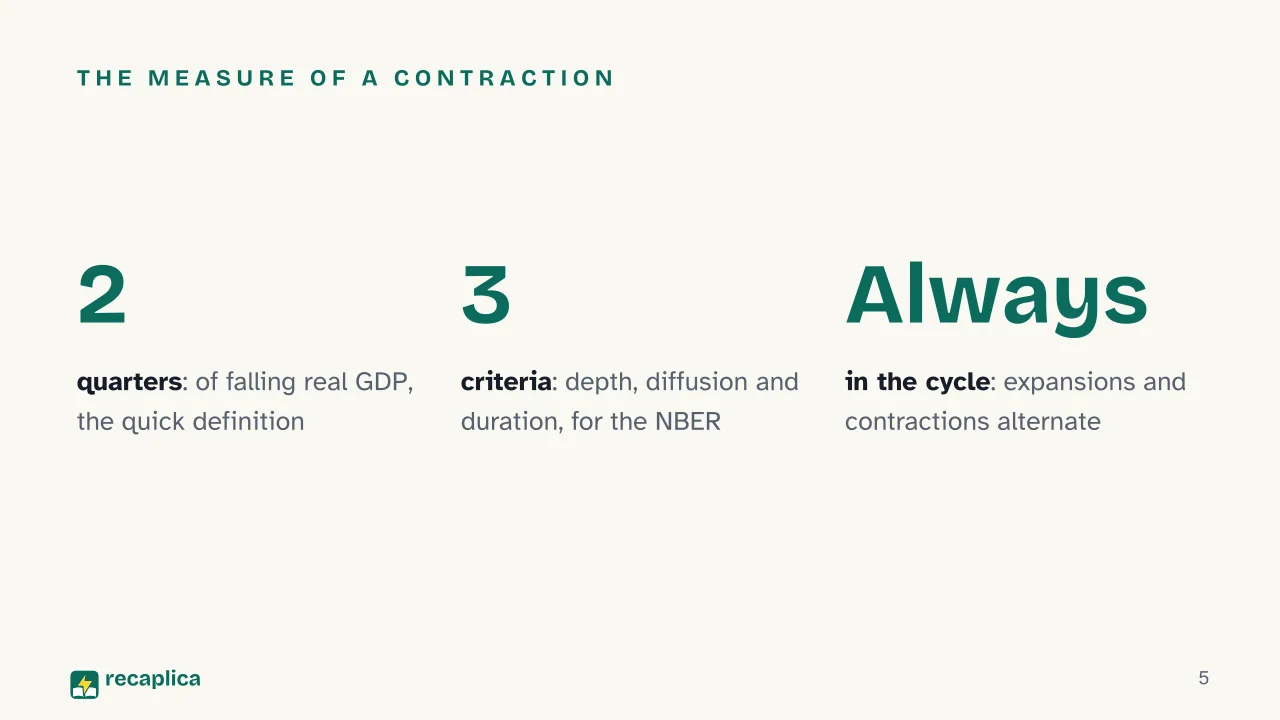
    • Technical recession: real GDP falling for at least two consecutive quarters. The quick definition, not the only one.
    • The authoritative definition (NBER) requires a significant decline in activity that is deep, widespread and lasting.
    • Expansions and contractions have always alternated in the business cycle: a recession is not an anomaly.
    • Typical effects: lower output, hiring freezes, higher unemployment, postponed spending.
    • The anti-recession levers: rate cuts (central banks) and fiscal stimulus (governments).
    • A depression is an extreme recession in depth and duration: rare, but historically real.

    Key figures

    • 2 the consecutive quarters of falling GDP that define a technical recession
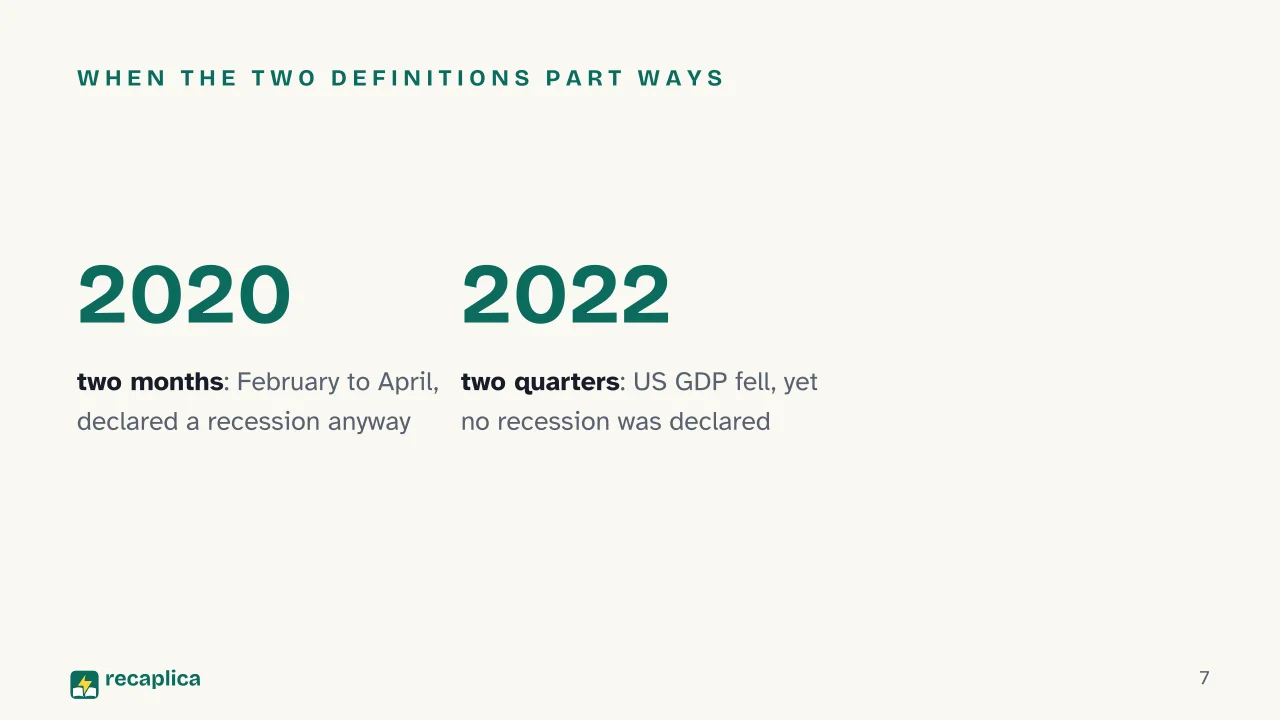
    • Feb-Apr 2020 the shortest US recession ever dated: two months, but exceptionally deep and widespread Source: NBER

    Deep Dive

    When the engine runs in reverse

    A healthy economy produces a little more each year: that’s the growth you read in GDP. A recession is the moment the engine flips into reverse: output falls, and incomes, spending and hiring fall with it. Not a freak accident, but a recurring phase of the business cycle — the alternation of expansions and contractions that has accompanied capitalism from the start.

    Two quarters: the quick definition (and its limits)

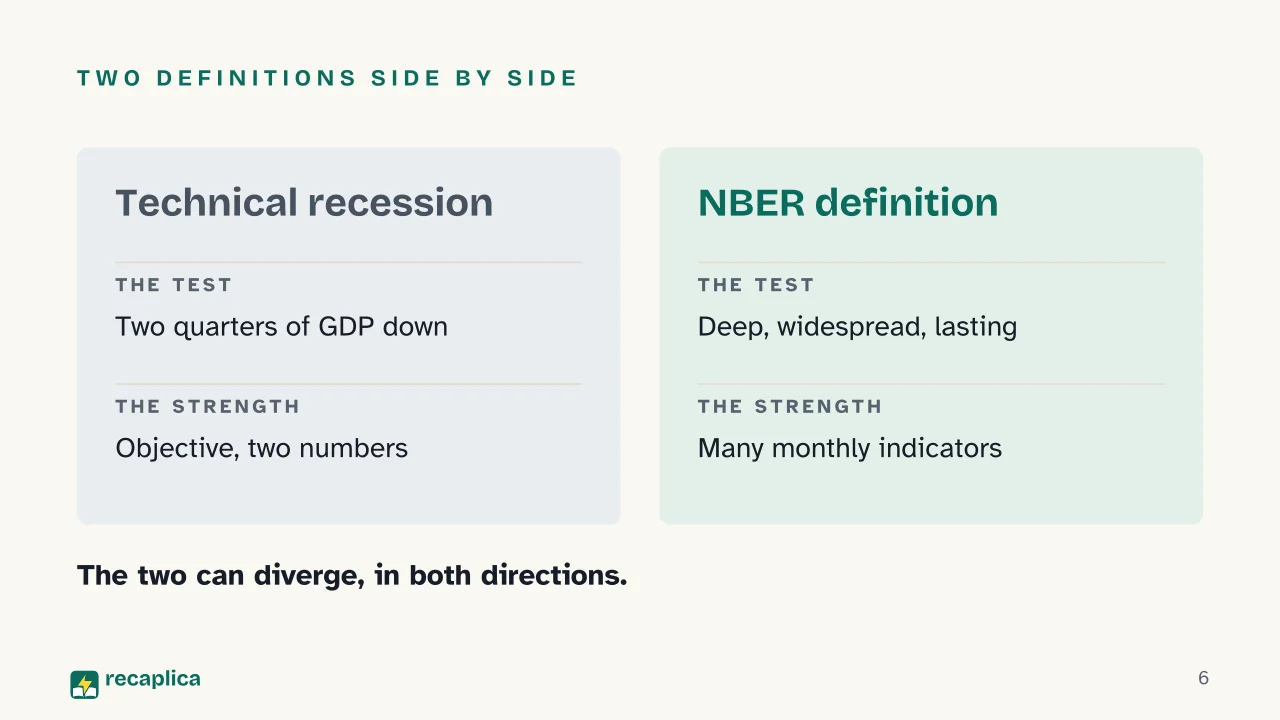
    The convention you’ll hear everywhere: a recession is real GDP falling for two consecutive quarters. It’s called a technical recession, and it’s useful precisely because it’s simple — an objective test you can run with two numbers.

    The trouble is that two numbers tell a thin story. The institute that officially dates American recessions, the NBER, works with a more serious definition: a significant decline in economic activity, spread across the economy, lasting more than a few months. Three criteria — depth, diffusion, duration — that can compensate for one another.

    Practical example: America’s Covid recession ran from February to April 2020 — two months, the shortest ever recorded. The NBER didn’t wait for quarterly data to declare it: the collapse was so deep and so widespread that it left no room for doubt. The opposite case exists too: in the first half of 2022 US GDP fell for two straight quarters, yet the NBER declared no recession. Shortcut and serious definition can diverge in both directions.

    What it actually feels like

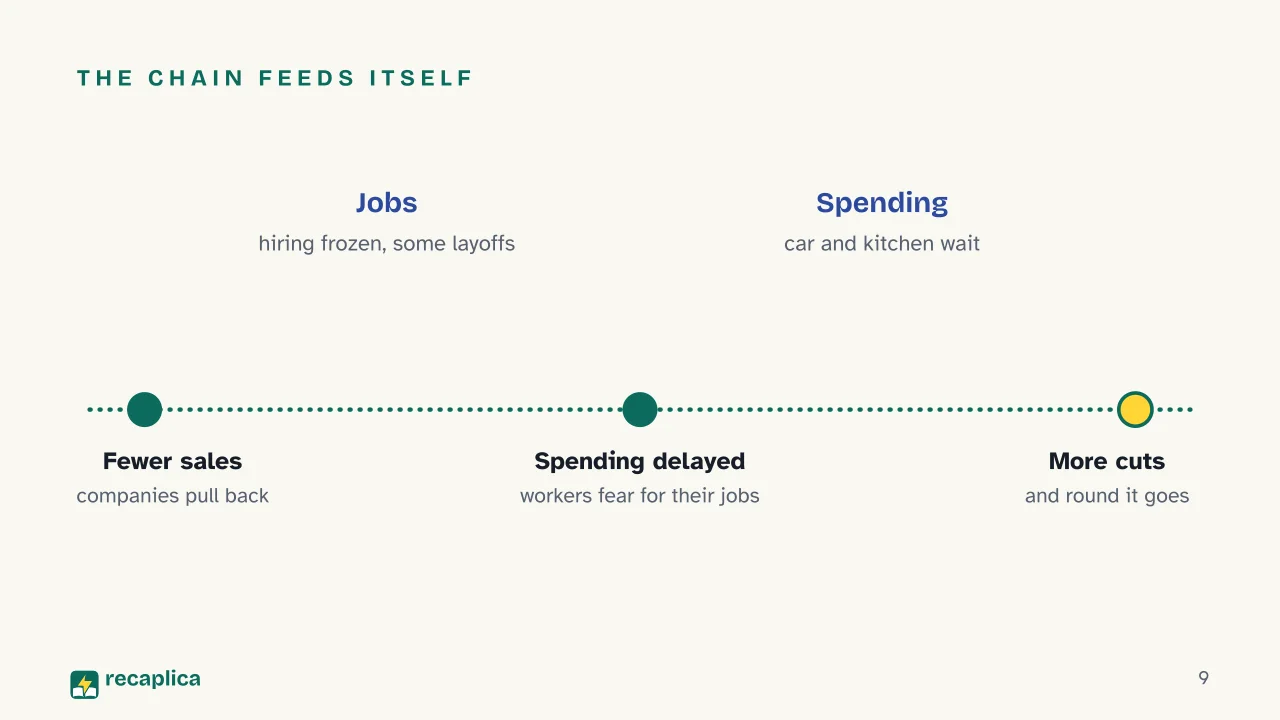
    A recession isn’t a number in a table: it’s a chain of behavior. Companies sell less and freeze hiring; some lay people off. Workers who fear for their jobs postpone the new car and the kitchen renovation. That postponed spending becomes someone else’s revenue drop, and they cut back in turn. The chain feeds itself — which is why recessions, once underway, tend to deepen before they turn.

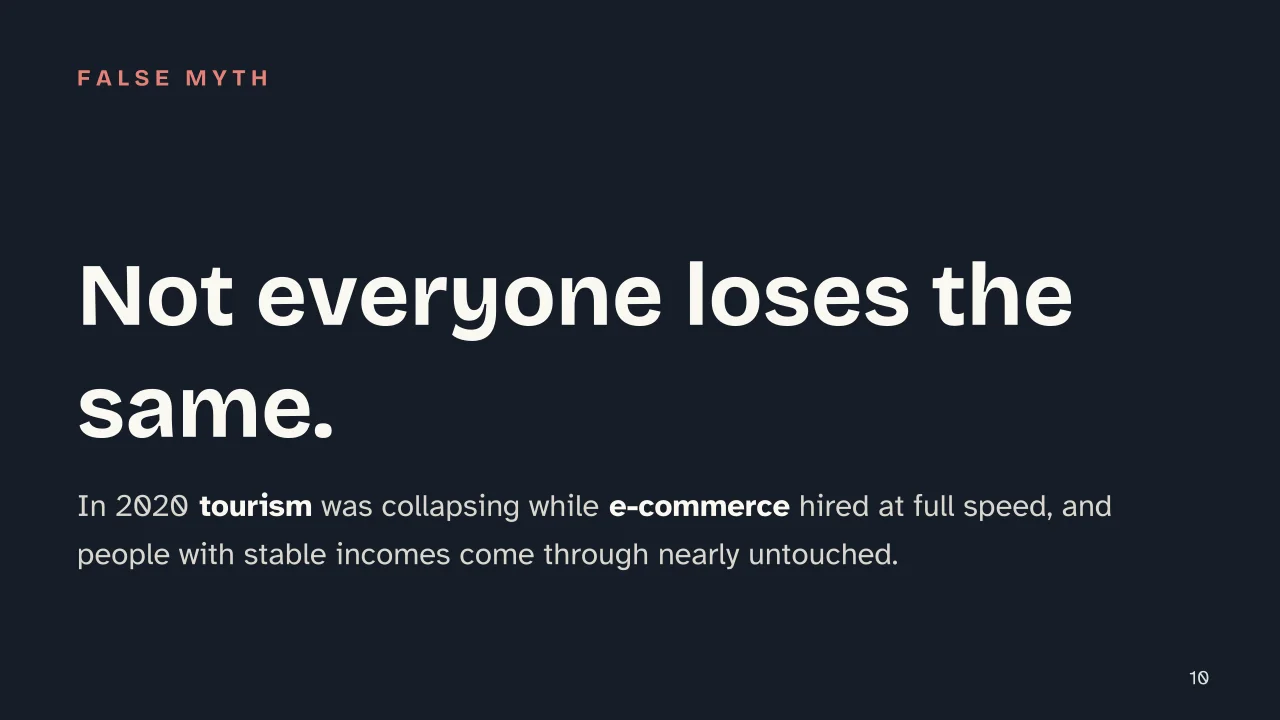
    The pain is not shared equally, though. In 2020 tourism was collapsing while e-commerce hired at full speed. Every recession has its own map of winners and losers, one reason average figures never quite capture it.

    The levers for getting out

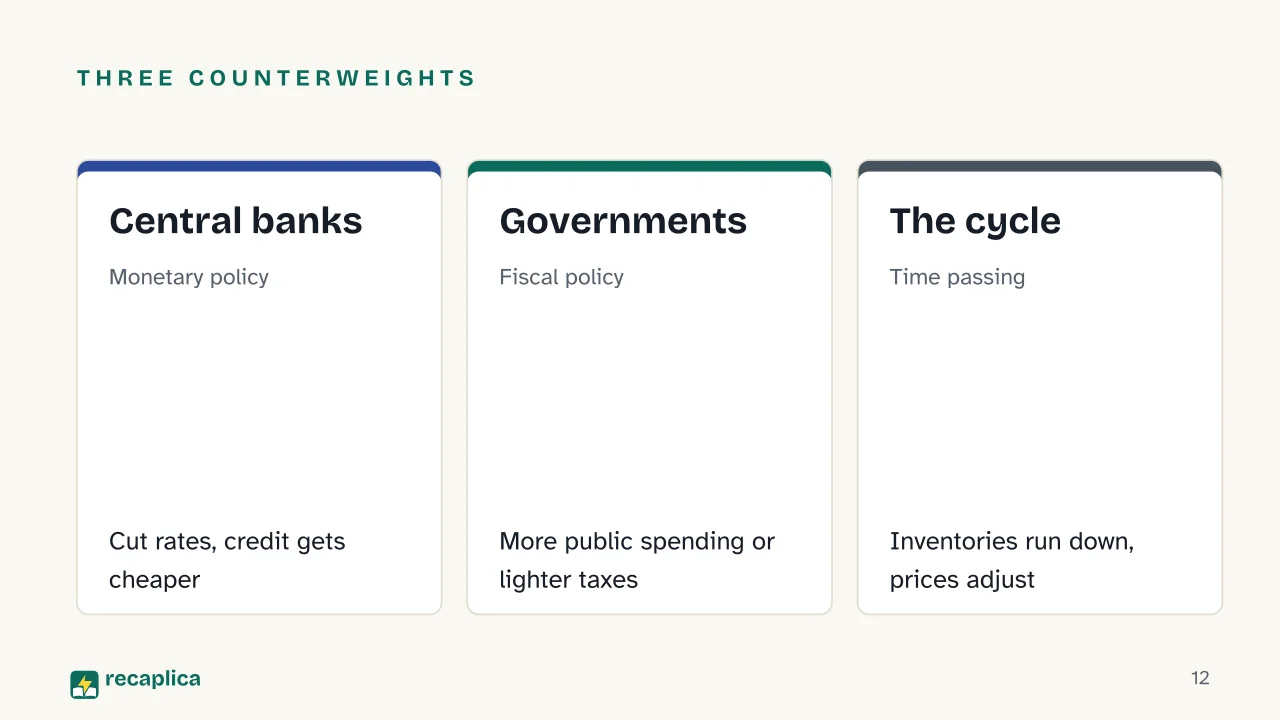
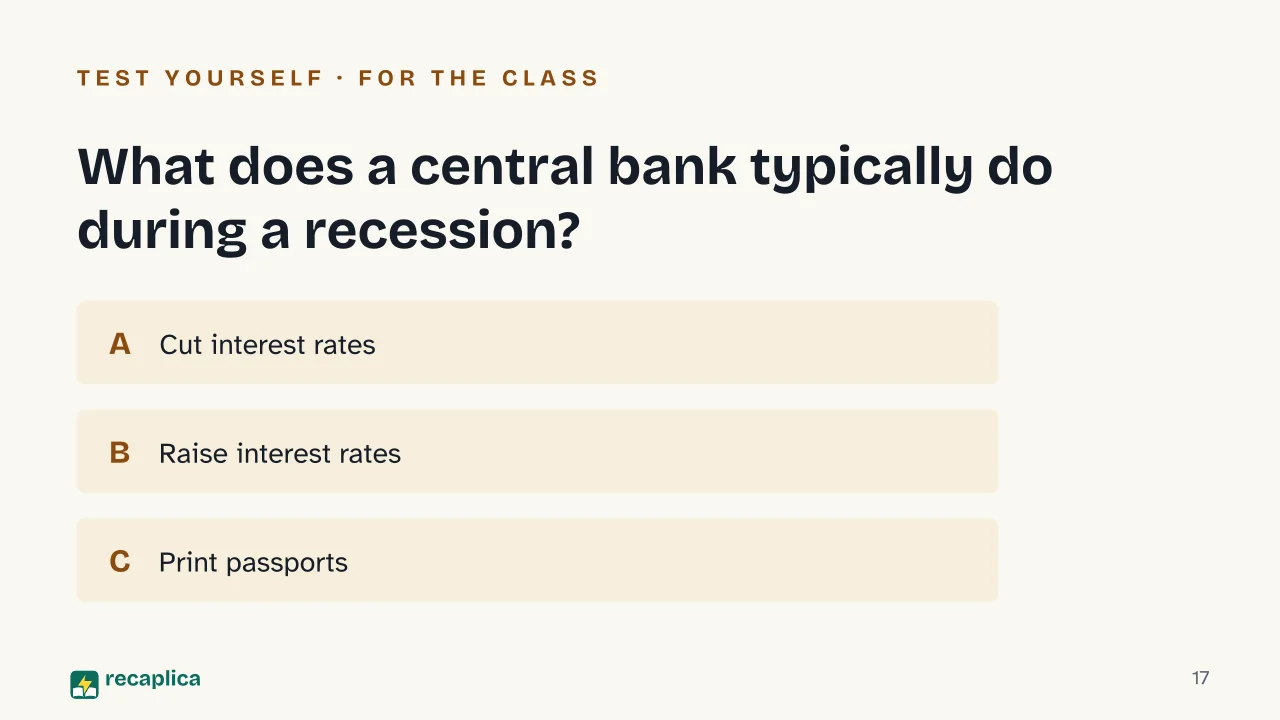
    Two counterweights work against the spiral. Central banks cut interest rates: credit gets cheaper, mortgages and loans become bearable again, demand rekindles. Governments can add fiscal stimulus, raising spending or easing taxes. And the cycle eventually turns by itself: inventories run down, prices adjust, activity restarts.

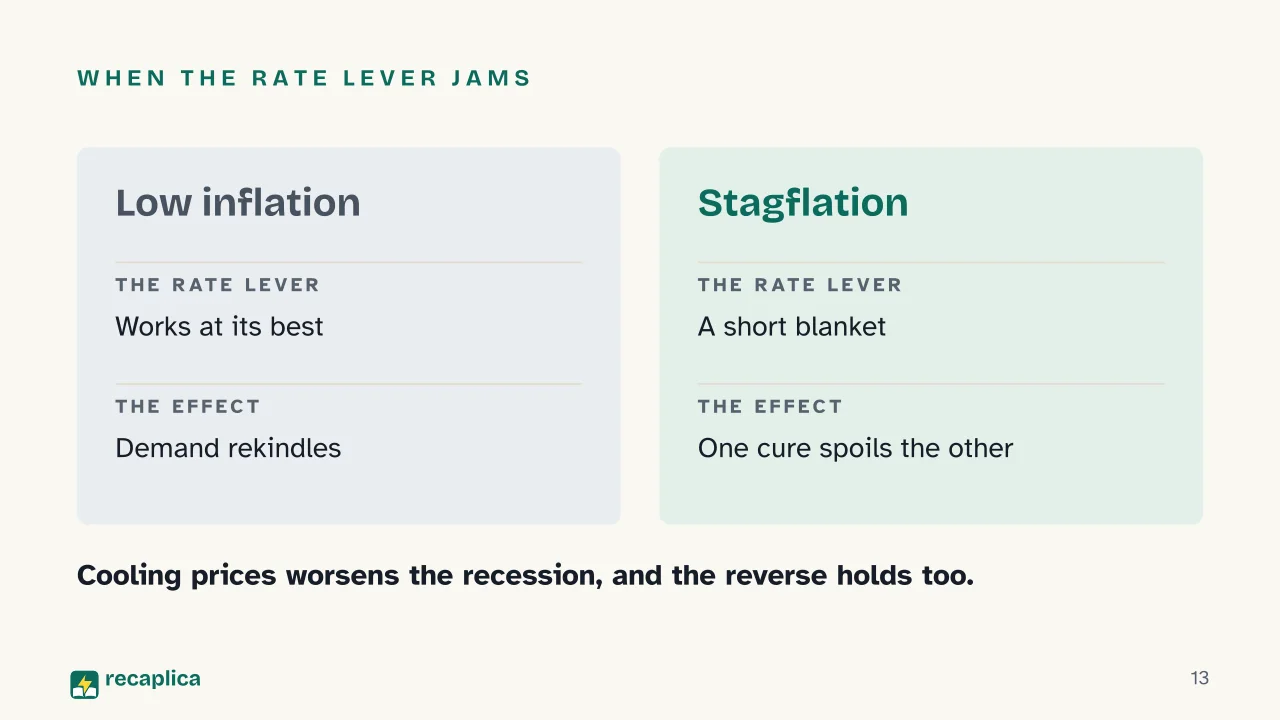
    One caveat matters: the rate lever works best when inflation is low. When high prices and falling activity arrive together — the dreaded stagflation — the central bank faces a short blanket: cooling prices worsens the recession, and vice versa.

    And a depression?

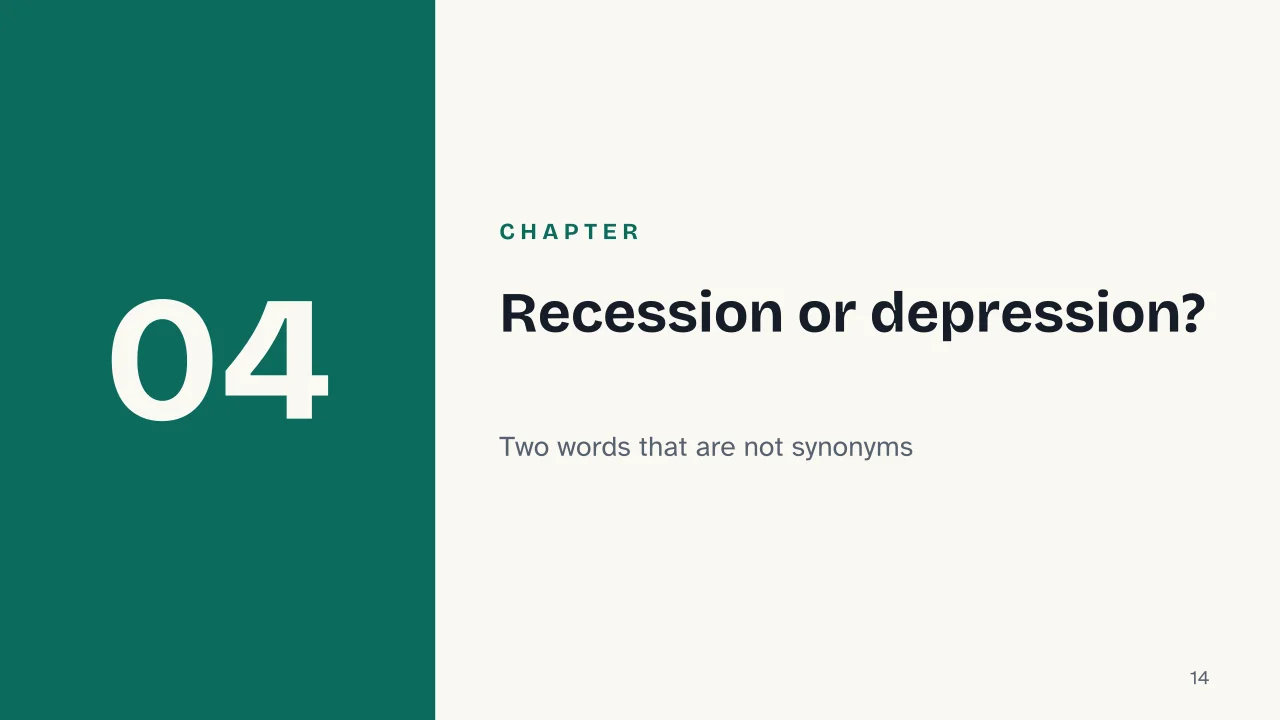
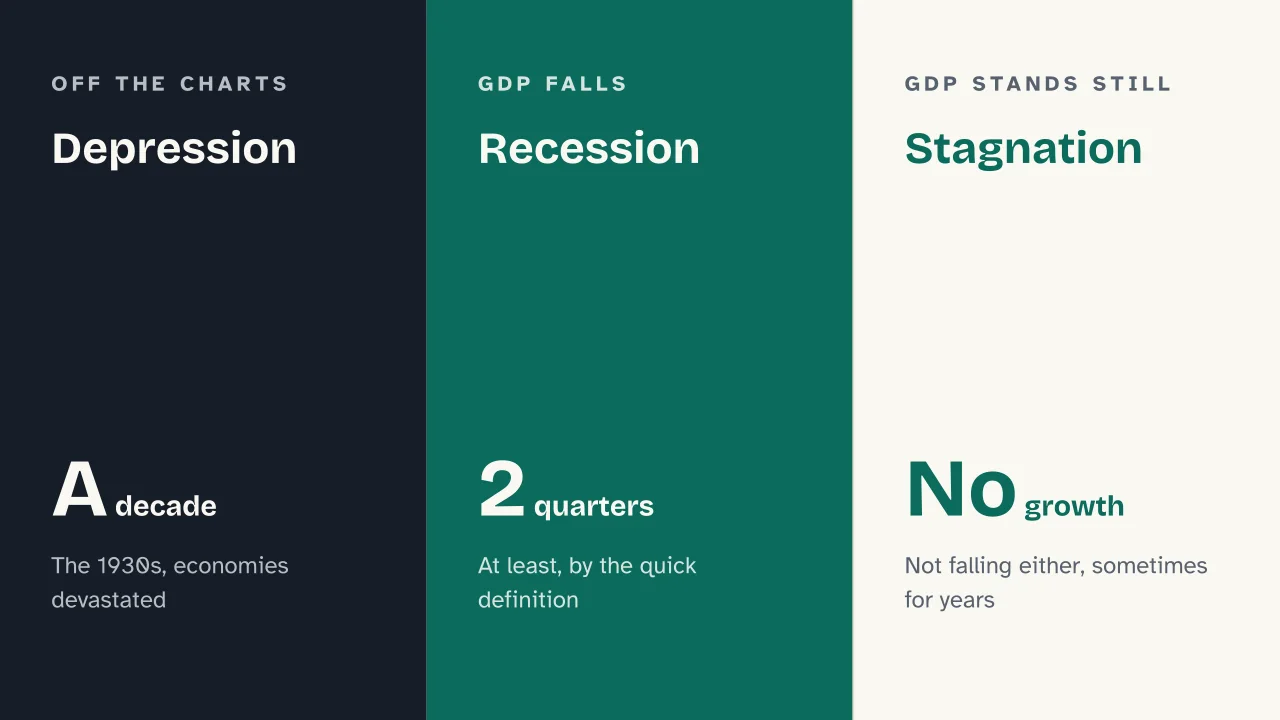
    When a contraction goes off the charts in depth and duration, the vocabulary changes: that’s a depression. The historical reference is the Great Depression of the 1930s, a decade of devastated economies. Ordinary recessions are a different animal: painful, but with a beginning and an end measured in quarters. Keeping the two words apart makes the news easier to read without getting swept up in every alarm.

    Slide deck

    Slides ready to download and make your own in PowerPoint or Google Slides, with speaker notes. Pick the Flash cut or the Full one.
    Slide 1 of the presentation on Recession: RecessionSlide 2 of the presentation on Recession: When is an economy in a recession?Slide 3 of the presentation on Recession: What we will coverSlide 4 of the presentation on Recession: Chapter 01: Two definitionsSlide 5 of the presentation on Recession: The measure of a contractionSlide 6 of the presentation on Recession: Two definitions side by sideSlide 7 of the presentation on Recession: When the two definitions part waysSlide 8 of the presentation on Recession: Chapter 02: What it feels likeSlide 9 of the presentation on Recession: The chain feeds itselfSlide 10 of the presentation on Recession: Not everyone loses the same.Slide 11 of the presentation on Recession: Chapter 03: The way outSlide 12 of the presentation on Recession: Three counterweights: Central banks, Governments, The cycleSlide 13 of the presentation on Recession: When the rate lever jamsSlide 14 of the presentation on Recession: Chapter 04: Recession or depression?Slide 15 of the presentation on Recession: Depression · Recession · StagnationSlide 16 of the presentation on Recession: Can a recession be predicted?Slide 17 of the presentation on Recession: What does a central bank typically do during a recession?Slide 18 of the presentation on Recession: And now, the review
    Flash10 slidesThe essential thread, to present in classFull18 slidesEvery chapter and the deeper detail

    Common myths

    • ✗ Myth A recession means GDP falls for two quarters, full stop.

      ✓ Reality That's just the 'technical' shortcut. The committee that officially dates US recessions (NBER) weighs depth, diffusion and duration across many indicators: the 2020 recession lasted barely two months, yet was declared one because of how deep and widespread the collapse was.

    • ✗ Myth Recession and depression are synonyms.

      ✓ Reality A depression is a recession off the charts in depth and duration, like the 1930s. Ordinary recessions typically last a few quarters; a depression scars a decade.

    • ✗ Myth In a recession, everyone loses.

      ✓ Reality The pain is anything but uniform: some sectors collapse while others hold up or even grow, and people with stable incomes come through nearly untouched. It's a harsh average, not a universal sentence.

    Mind map

    Drag the background to move around and the nodes to reposition them; use − and + to collapse and expand branches.
    Customize
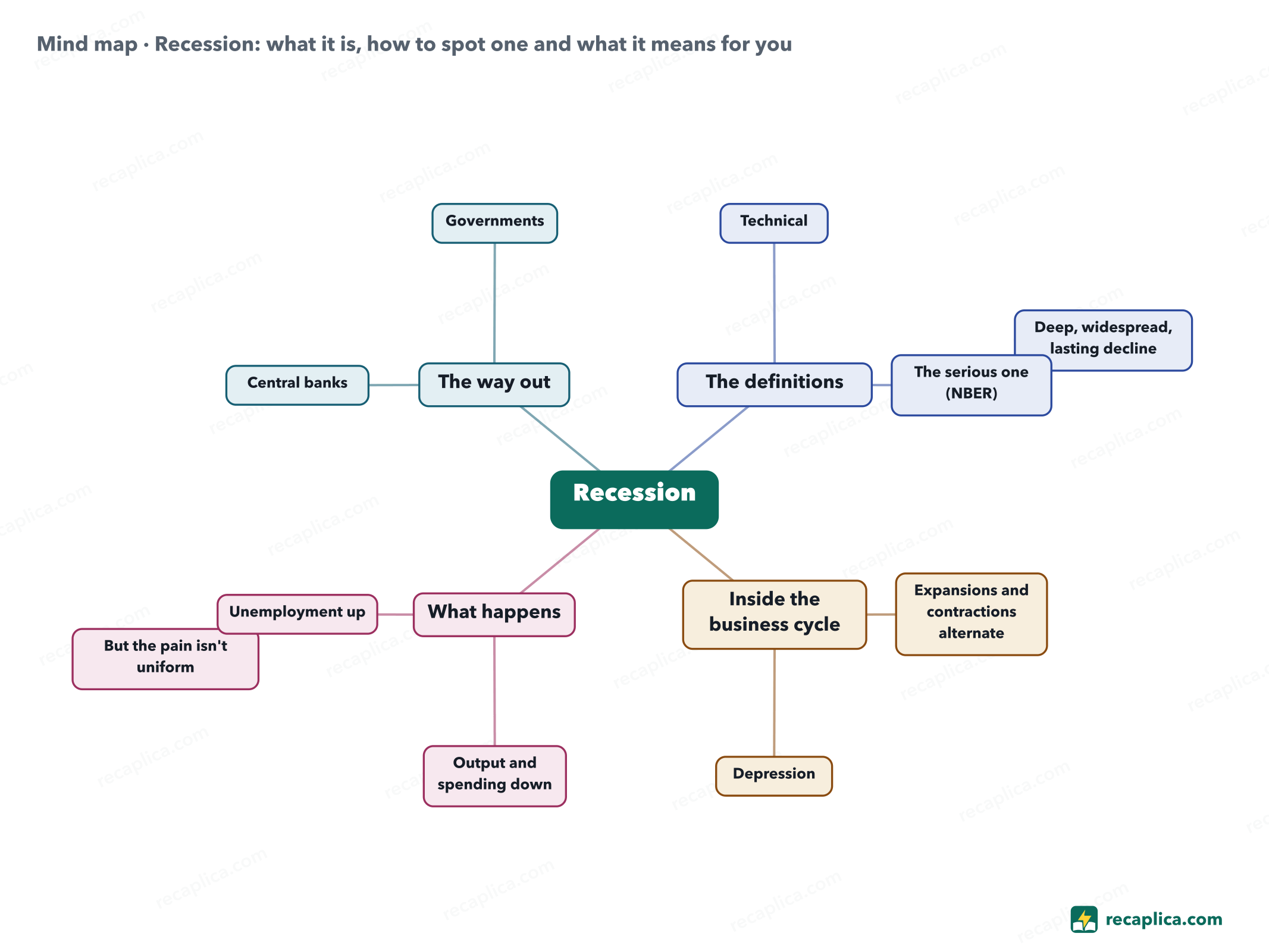
    Mind map: Recession: what it is, how to spot one and what it means for you
    • Recession
      • The definitions
        • Technical Two consecutive quarters of falling GDP.
        • The serious one (NBER)
          • Deep, widespread, lasting decline
      • Inside the business cycle
        • Expansions and contractions alternate
        • Depression An extreme recession in depth and duration.
      • What happens
        • Output and spending down
        • Unemployment up
          • But the pain isn't uniform
      • The way out
        • Central banks Cut rates, lighter credit.
        • Governments Public spending and fiscal stimulus.

    Quiz: test yourself

    Answer the questions to check what you have learned: you get instant feedback and a short explanation.

    Grade 0/10 0/5
    1 What is a technical recession?

    The two-quarter convention is the quick definition used by media and analysts. Stock markets and inflation belong to different stories.

    2 Which criteria does the NBER use to declare a US recession?

    The committee tracks many monthly indicators (employment, incomes, industrial production, consumption) and judges how deep, widespread and lasting the decline is.

    3 What does a central bank typically do during a recession?

    Cheaper money revives loans, spending and investment: the classic monetary lever for shortening a contraction.

    4 The 2020 US recession lasted two months. Why was it still classified as a recession?

    The NBER explained that the drop was so great and so widely diffused that it met the definition regardless of brevity: the three criteria can offset each other.

    5 True or false: recessions are exceptional events that happen once a century.

    They're part of the normal business cycle: expansions and contractions have always alternated. Depressions are the rare ones, not recessions.

    Answers: 1-A · 2-A · 3-A · 4-A · 5-B

    Flashcards

    Tap the card to flip it and check whether you remember the answer, then move to the next one.

    1 / 6

    Explain it in your own words

    The ultimate test: if you can explain it in simple words, you've truly understood it. Write your explanation, then compare it with the Recap.

    Your explanation is saved only on this device.

    A recession is a phase in which a country's economic activity contracts: less gets produced, less gets spent, jobs decline. The quick definition is "GDP falling for two consecutive quarters" (a technical recession); the serious one looks at how deep, widespread and lasting the decline is. Recessions are part of the business cycle: they hurt, but they end — and governments and central banks have levers to shorten them.

    Frequently asked questions

    How does an economy exit a recession?

    Through a mix of levers: the central bank cuts rates to make credit lighter, governments can raise spending or cut taxes to support demand, and the cycle eventually turns on its own as inventories and prices rebalance.

    How does saver behavior change in a recession?

    Caution typically rises: more precautionary saving, less new debt, big purchases postponed. These are the patterns economists observe in every contraction. For personal choices you need a qualified advisor — this is an educational article, not a recommendation.

    Can recessions be predicted?

    Only with limited reliability: there are watched signals (yield curves, business and consumer confidence, new orders), but economists have missed many recessions and predicted others that never came. The cycle is dated confidently only in hindsight.

    What's the difference between recession and stagnation?

    A recession is a contraction: GDP falls. Stagnation is an economy standing still — not falling, not growing either, sometimes for years. Less dramatic in the moment, corrosive over time.

    Sources

    • NBER — Business Cycle Dating (definition and chronology of US recessions)

    Every Recap goes through an independent review before publication.

    Every evening, the day's new Recaps on our Telegram channel. Join the channel →

    Keep learning

    • Economics Labor Market: How Supply, Demand and Unemployment Work The labor market is where businesses that need workers to produce goods and services meet the people willing to work for them. In the textbook model, that meeting sets wages and employment levels the way any other market would, but imperfect information, bargaining power and legal rules push the real market away from pure competition. Those gaps are where unemployment comes from, and economists split it into frictional, structural, cyclical and technological types depending on the cause. Official statistics, such as Italy's ISTAT, measure it against the labor force — people employed plus people actively looking for work — not the whole population. As of July 2026, Italy's unemployment rate stood at 5.8%, provisional, against 6.4% for the euro area. Read the Recap →
    • Economics Mercantilism: History, Examples, and Definition Mercantilism was the dominant economic doctrine in Western Europe from the 16th to the 18th century: a state grew powerful by selling more abroad than it bought, building up reserves of gold and silver. Britannica Money describes it as "an economic practice by which governments used their economies to augment state power at the expense of other countries." Colonies had one job under this system: supply raw materials to the mother country and buy finished goods back from it, while at home tariffs and monopolies shielded domestic industry. The name itself came later, from the doctrine's most famous critic: Adam Smith made it current in The Wealth of Nations, published in 1776. Read the Recap →
    • Economics Keynesianism explained: the theory born from the Great Depression Keynesianism is the body of economic thinking named after John Maynard Keynes, the British economist who in the 1930s offered a different way of reading a slump. The IMF notes that when the Great Depression hit, the economic theory of the day could neither explain the collapse nor say how to restart production and employment. Keynes put aggregate demand at the centre — the total spending of households, businesses and government — and argued that full employment is a special case rather than something markets deliver on their own. That is where the idea comes from that public spending can step in when private demand stalls. Keynesianism guided economic policy from the end of the Second World War until the 1970s, then lost ground. Read the Recap →

    recaplica

    Clear in 30 seconds, yours in 10 minutes.

    Recaps Mind maps Request a Recap Telegram channel Mind map maker Our method About Privacy & cookies Legal notes & terms of use

    © 2026 Recaplica · A project by Curi S.r.l. — VAT IT05472000750

    Statistics, only if you say so

    To learn which Recaps help most we would use Google Analytics, with aggregate, anonymous data. It starts only with your OK, and you can change your mind anytime. Privacy policy