Skip to content
recaplica

    One moment: security check

    Cloudflare wants to make sure you're not a robot. Tick the box below and your search will continue on its own.

    IT
    recaplica Creatine: what it is, how it works, and what the research really shows
    © 2026 Recaplica · recaplica.com — All rights reserved
    Home › Science Food and cooking

    Creatine: what it is, how it works, and what the research really shows

    By Recaplica Newsroom · Updated on August 31, 2026

    This Recap is about health. It explains what research and regulators say: it is not medical advice, nor a supplement or training programme. For decisions about yourself, talk to a doctor; if you are under 18, to your parents too. Legal notes

    What to print

    Page numbers appear when printing with default margins.

    Slides

    Choose a cut

    Flash10 slidesThe essential thread, to present in classFull19 slidesEvery chapter and the deeper detail

    Both come with speaker notes.

    Telegram channel
    recaplica Clear in 30 seconds, yours in 10 minutes.
    In 30 seconds Key points Figures Deep dive Slides Myths Mind map Quiz Flashcards FAQ

    In 30 seconds quick read

    Creatine is a natural compound the body makes and stores mainly in muscle, where it helps regenerate energy during short, intense effort. Taken as a supplement, usually as creatine monohydrate, it raises muscle stores and in studies improves performance in repeated high-intensity exercise by 10-20%. The available research finds no signal of kidney harm at standard doses in healthy people, while the possible cognitive benefit remains genuinely contested. Roughly a fifth to a third of people respond poorly to a classic loading protocol.

    Key Points

    • Creatine fuels the phosphocreatine system, which regenerates ATP during maximal anaerobic effort, typically under 30-60 seconds.
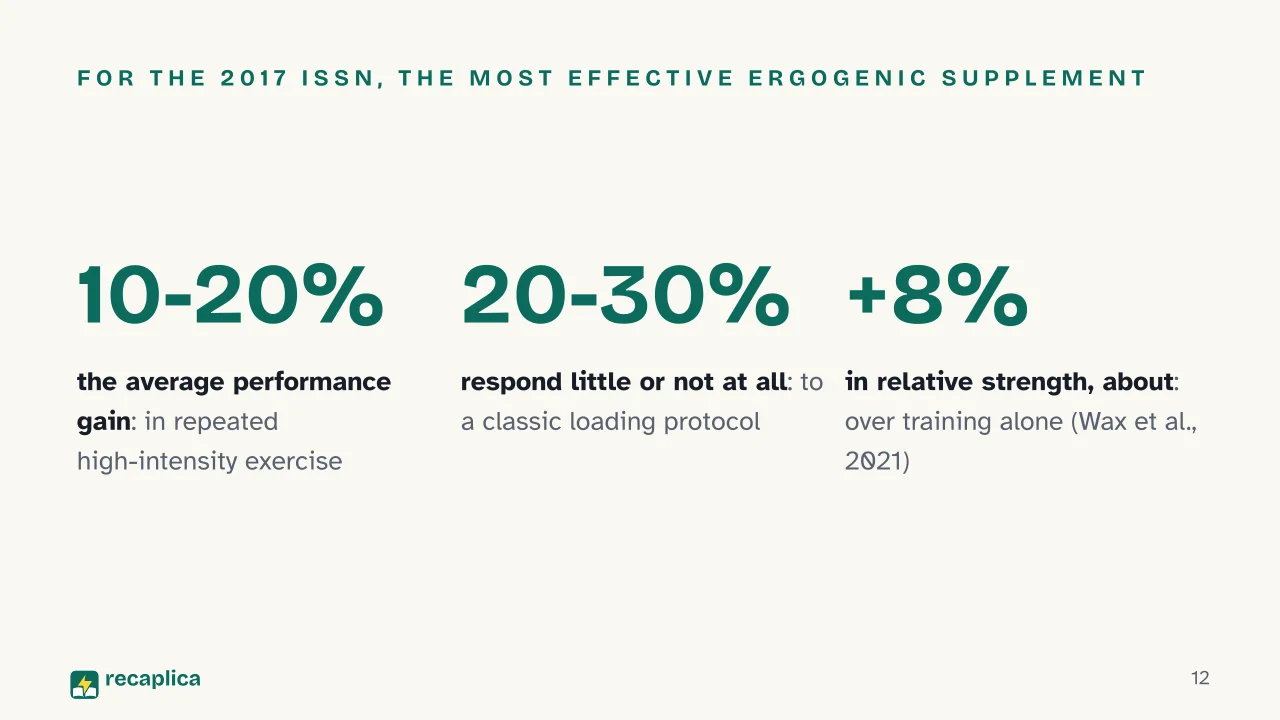
    • The 2017 ISSN position stand calls it the most effective nutritional ergogenic supplement available for high-intensity exercise capacity.
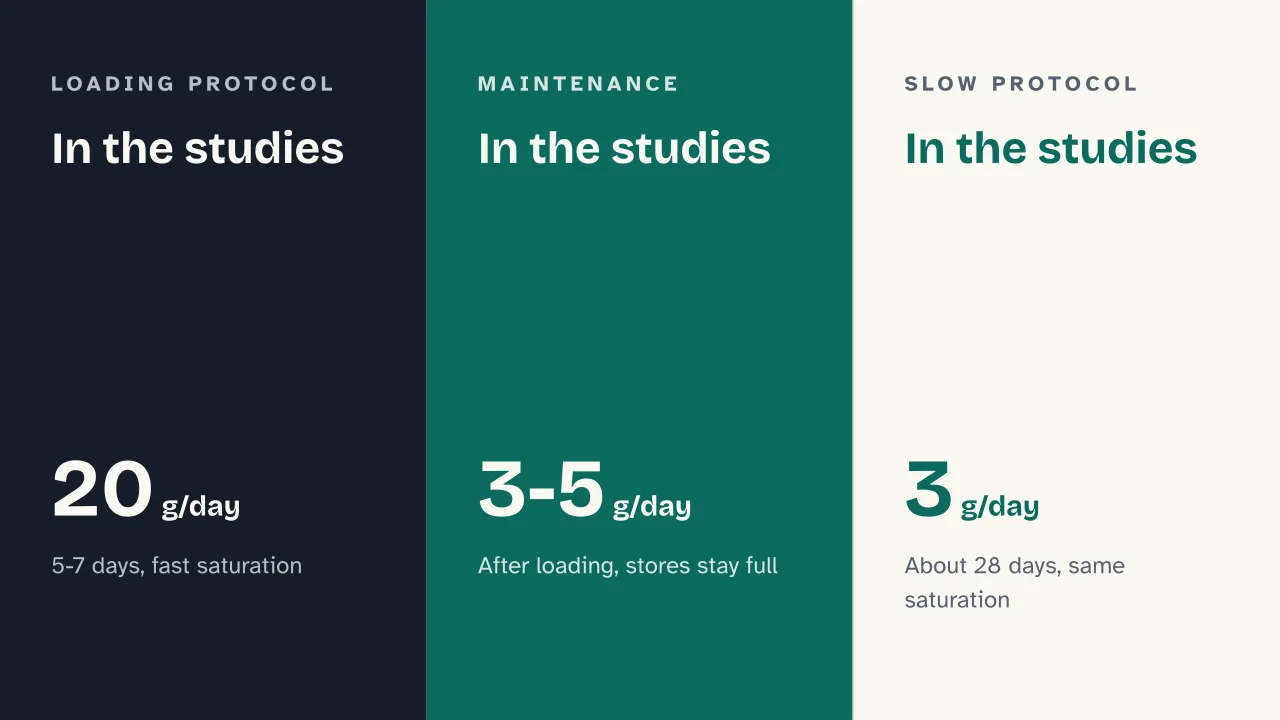
    • A loading protocol (20 g/day for 5-7 days) saturates muscle stores faster than 3 g/day for about 28 days, but the two land in roughly the same place.
    • No persuasive evidence of kidney harm in healthy people or clinical populations, at the doses and durations studied.
    • On cognitive benefit, independent literature finds positive signals for memory and processing speed, but EFSA rejected a proven causal link in 2024.
    • About 20-30% of people respond little or not at all to a classic loading protocol: those who start with already-high muscle stores tend to gain less.

    Key figures

    • 10-20% the average performance gain in repeated high-intensity exercise observed with creatine supplementation Source: ISSN Position Stand, Journal of the International Society of Sports Nutrition, 2017
    • 20-30% the share of people who, by the classic Greenhaff et al. threshold, do not respond meaningfully to a loading protocol Source: Greenhaff et al., cited in Syrotuik & Bell, Journal of Strength and Conditioning Research, 2004
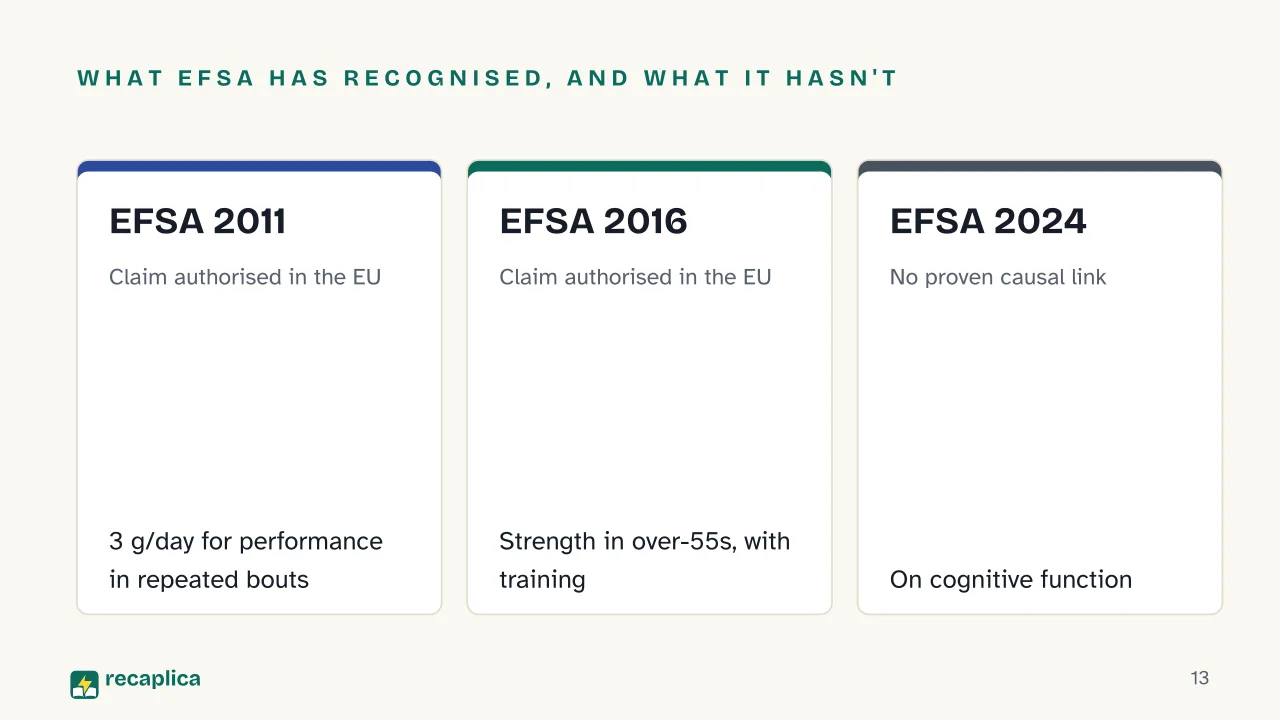
    • 3 g/day the dose EFSA recognises as sufficient for the increase in physical performance during repeated high-intensity exercise bouts, the officially authorised claim in the EU Source: EFSA NDA Panel, EFSA Journal, 2011

    Deep Dive

    What creatine is

    Creatine is a molecule the body makes on its own and also gets from food, especially red meat and fish. It’s not a protein, not a hormone and not a steroid: it’s a simple nitrogen-containing compound that muscle uses as a ready reserve of energy.

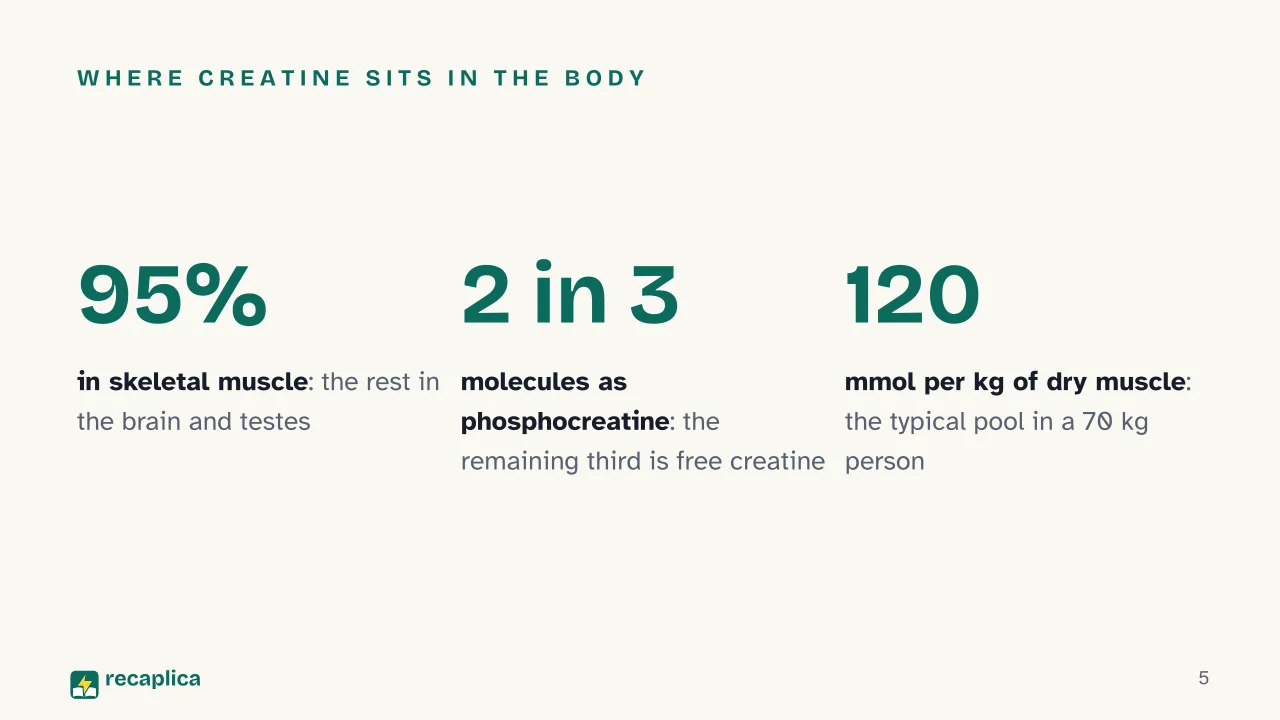
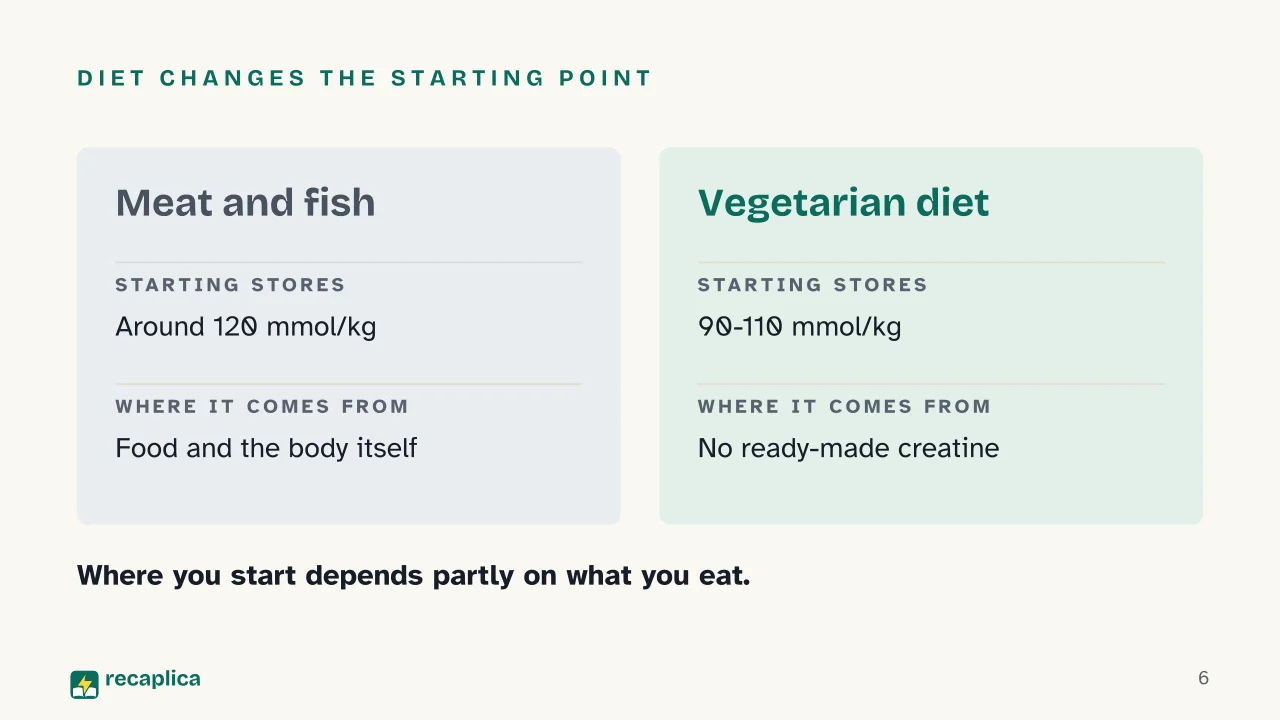
    About 95% of the body’s creatine sits in skeletal muscle, the rest in the brain and testes. Inside muscle, two-thirds exists as phosphocreatine and a third as free creatine. The total pool in a 70 kg person typically runs around 120 mmol per kg of dry muscle mass, with a physiological ceiling around 160 mmol/kg. People on a vegetarian diet start from lower stores, 90-110 mmol/kg, because their diet doesn’t supply the ready-made creatine found in meat and fish.

    The mechanism: the phosphocreatine/ATP system

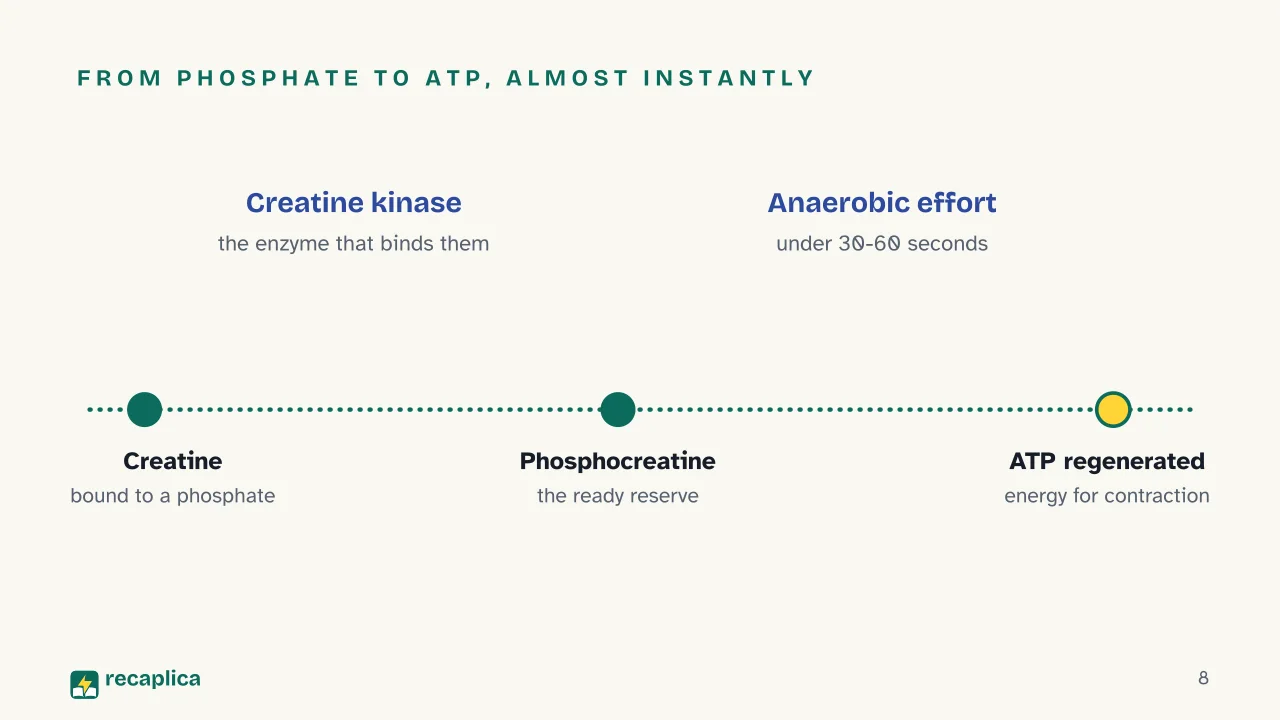
    The energy muscles use to contract always comes from the same molecule, ATP. The catch is that the ATP reserves inside a muscle cell are tiny and run out within seconds of maximal effort. That’s where creatine comes in: bound to a phosphate group via the enzyme creatine kinase, it forms phosphocreatine (PCr).

    When effort demands energy faster than ordinary metabolism can supply it, PCr hands off its phosphate and regenerates ATP almost instantly. The creatine kinase/phosphocreatine system works, in the words of the ISSN position stand, as an “energy shuttle”: a relay connecting the places where ATP is produced, glycolysis and the mitochondria, to the places where ATP gets used up by contracting fibres.

    Practical example: in a 10-second sprint or a set of five heavy squats, the energy that arrives fastest is exactly the phosphocreatine system’s share. That’s why studies measure creatine’s effect mostly in short, repeated, very high-intensity efforts, not in long-distance endurance running.

    The more phosphocreatine is available to start with, the longer the system can sustain that kind of effort before having to slow down: that’s the physiological rationale behind using creatine as a supplement.

    Dosing: loading and maintenance

    The literature describes two main strategies for raising muscle creatine stores, reaching the same endpoint on different timelines.

    ProtocolDoseDurationEffect
    Loading5 g x 4 times a day (about 20 g/day, or 0.3 g/kg)5-7 daysMuscle creatine content rises 20-40%
    Maintenance (after loading)3-5 g/day (up to 5-10 g/day in bigger individuals)OngoingKeeps stores saturated
    Slow protocol (no loading)3 g/dayAbout 28 daysSimilar saturation to loading, reached more gradually

    Loading is the fastest way to saturate stores, not the only one. In clinical settings, much higher doses have been used too, 0.3-0.8 g/kg a day (21-56 g/day for a 70 kg person), sustained over long periods under medical supervision: a very different context from everyday sports use, and not one that anyone supplementing for training should take as a reference point.

    What the research shows on performance and muscle mass

    The 2017 ISSN position stand is direct: creatine monohydrate is “the most effective nutritional ergogenic supplement” available to athletes for increasing high-intensity exercise capacity and lean mass during training. On average, performance in repeated, intense exercise rises by 10-20%, with the size of the gain tied to how much muscle phosphocreatine increases.

    A more recent review (Wax et al., 2021) breaks the effect down across disciplines, always comparing a creatine group with a placebo group:

    MeasureCreatinePlacebo
    Countermovement jump+7.0%+2.3%
    Jump power+6.8%+3.1%
    Cycling, peak power+12.8%+4.8%
    Cycling, average power+10.8%+3.1%
    Cycling, total work+10.8%+3.5%
    Muscular endurance+14% versus placebo—

    The same review reports relative strength gains (maximal strength tests) of about 8% more than training alone, and overall strength and power improvements between 5% and 15%. On a single isolated sprint, where the phosphocreatine system matters less than people expect, the gains shrink to 1-5%.

    On longer-term effects, a meta-analysis cited in the ISSN position stand followed 357 participants aged 64 or older for an average of 12.6 weeks of resistance training: those taking creatine gained more muscle mass, strength and functional capacity than those training without supplementation. Consistent with that, EFSA recognised a specific causal link in 2016 between creatine (at least 3 g/day), resistance training three times a week, and improved muscle strength in adults over 55, provided the intake is daily and ongoing, not limited to training days alone.

    A limit in the data: women appear to respond somewhat less than men in terms of strength and mass gains, for the same amount of training, according to the same position stand.

    Safety: kidneys, hydration, side effects

    The most common worry is about the kidneys. The ISSN position stand is blunt: “there is no compelling scientific evidence that creatine supplementation negatively affects kidney function” in healthy or clinical populations. Doses up to 20 g/day for 5 days, and up to 10 g/day for periods from 10 months to 5 years, showed no effect on creatinine clearance or glomerular filtration rate; a specific study on 5-10 g/day for 21 months found no significant changes.

    A more recent meta-analysis (2025, covering 21 studies) does observe a modest rise in serum creatinine in supplemented groups (mean difference of 0.07 µmol/L, 95% CI 0.01-0.12, p = 0.03), but with two important caveats: the values stay within the normal range, and overall kidney function doesn’t differ between groups. The interpretation offered is that the rise simply reflects higher creatine turnover, since creatinine is creatine’s waste product, not organ damage. The one real caution concerns people who already have kidney disease: there, the advice is to check with a doctor before supplementing, out of clinical caution, not because there’s direct evidence of risk in that population.

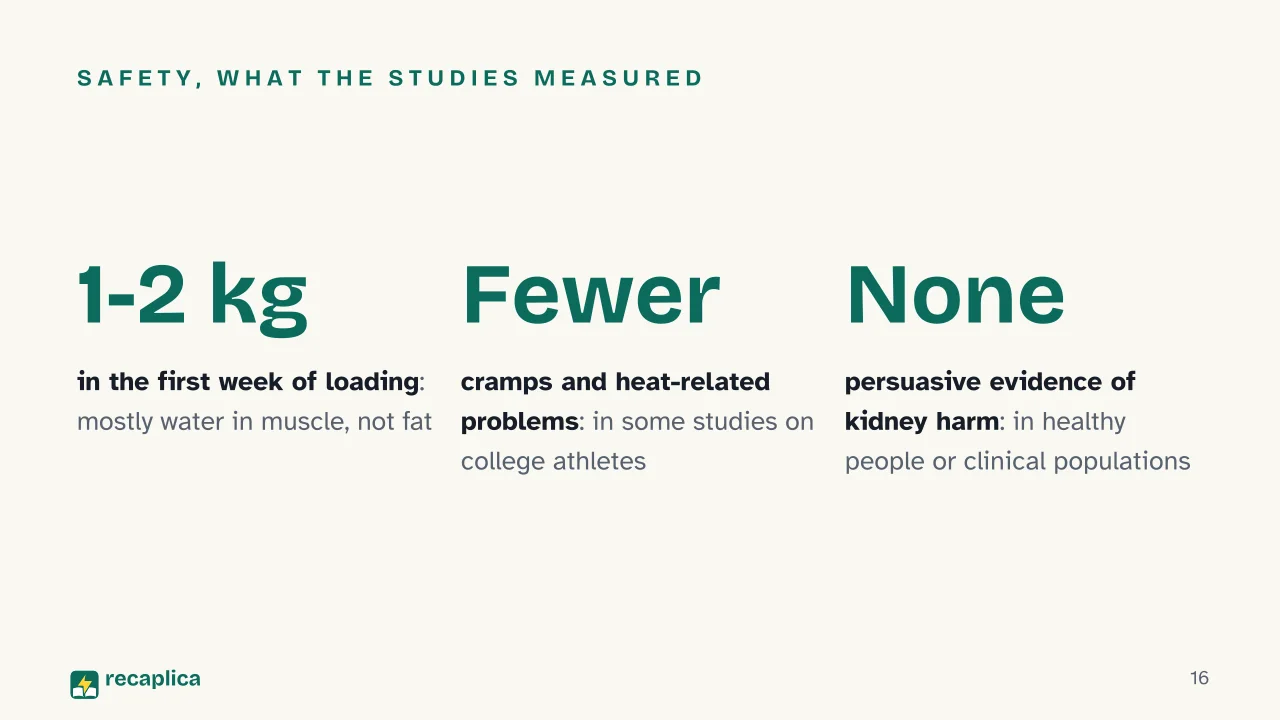
    On hydration and cramping, the literature runs opposite to the common fear. The one side effect reported consistently is an increase in body weight, tied to fluid retention: roughly 0.5-1.0 litres during loading, which shows up as 1-2 kg in the first week, mostly intracellular water. Studies on college football players found that creatine users had a lower, not higher, rate of muscle cramps, heat-related illness, stiffness and total injuries compared with non-users. In Wax et al.’s summary tables, the “adverse events” column reads “none reported” almost across the board, with only rare isolated exceptions (two cases of resting cramps in a 28-day study, one case of nausea in a 13-week study).

    Practical example: someone who starts a creatine loading phase and gains 1-1.5 kg over three or four days isn’t putting on fat: they’re holding water inside muscle fibres, an effect that’s expected and well documented in the literature.

    Creatine and cognitive function: two positions, not one certainty

    On the possible cognitive benefit of creatine, the research holds two distinct positions that shouldn’t be collapsed into a single answer.

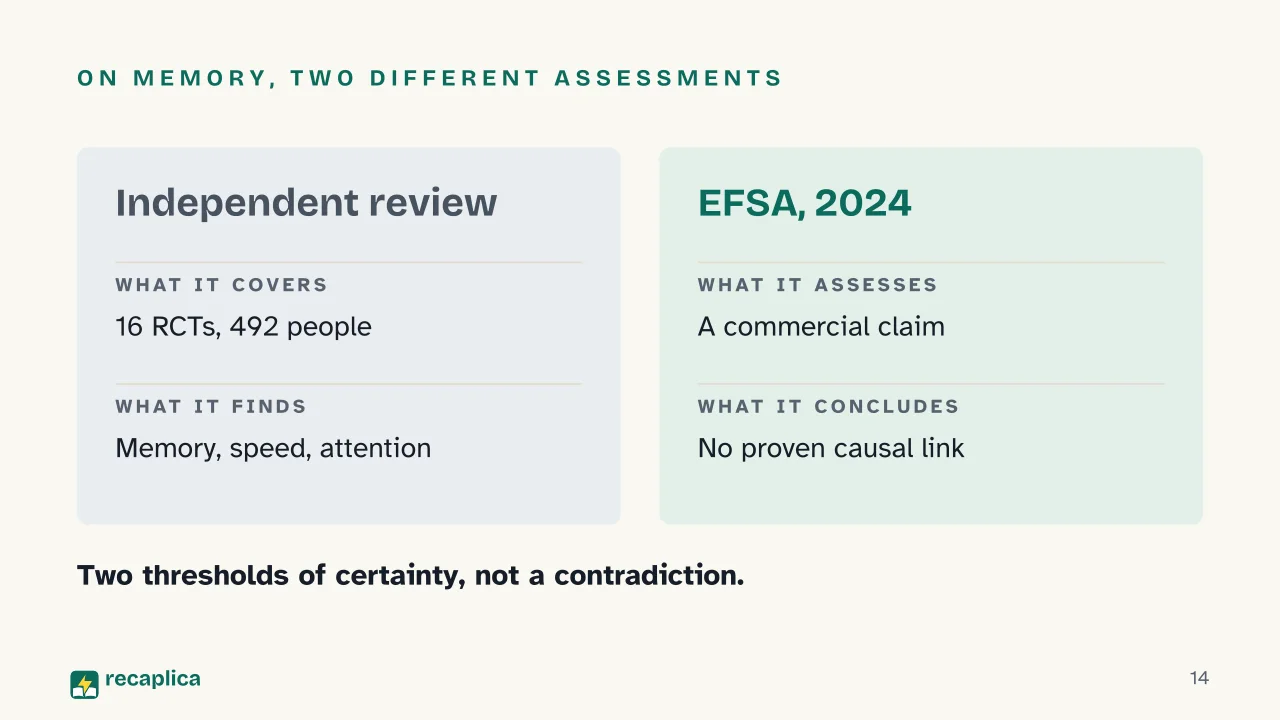
    On one side, an independent systematic review (16 RCTs, 492 participants) finds statistically significant effects on some measures: memory (SMD 0.31), processing speed and attention time, while finding no effect on global cognitive function or executive function. The authors’ conclusion is cautious but positive: creatine “may confer beneficial effects on cognitive function in adults, particularly in memory, attention time, and processing speed.”

    On the other side, EFSA, the European food safety authority, assessed the same question in 2024 to decide whether to authorise a commercial claim, and concluded the opposite: “a cause-and-effect relationship has not been established between creatine supplementation and an improvement in cognitive function in one or more of its domains.” The reasons for rejection are specific: the effects observed showed up mostly at very high doses (20 g/day for 5-7 days, the loading phase), in just one study out of ten for some measures, and weren’t consistent at the low maintenance doses (3 g/day) that most people actually use. The Panel also called the evidence for a biological mechanism “weak”.

    The two assessments aren’t necessarily in conflict: they describe different thresholds of certainty. The scientific review registers promising signals in the available literature; EFSA applies the stricter standard required to authorise a commercial claim on a product label, and by that standard the data don’t yet add up. Treating the cognitive benefit as an established fact, on a par with the effect on physical performance, would overstate what those studies have shown.

    Why not everyone responds the same way

    A fact often overlooked is that creatine doesn’t do the exact same thing for everyone. A reference study (Syrotuik & Bell, 2004) used muscle biopsies to track how 11 healthy men responded to a classic 5-day loading protocol, finding three distinct profiles: 3 true “responders” (average +27.0% increase in stores), 5 “partial responders” (+13.6%) and 3 “non-responders” (+4.8%). Consistent with the classic threshold cited in the literature (Greenhaff et al.), about 20-30% of people fall into the non-responder category after a standard loading protocol.

    The difference isn’t random: responders started with lower baseline intramuscular creatine (whoever has more room to begin with gains more) and had a higher share of type II muscle fibres, the ones geared toward explosive strength, along with a larger fibre cross-sectional area and more lean mass than non-responders. Only the true-responder group showed a measurable strength improvement in just 5 days (+25.8 kg on the leg press test), against minimal changes in the other two groups.

    The practical takeaway from this line of research is that individual variability is real and documented: two people following the same protocol can end up with very different results, depending on each person’s starting physiology, regardless of how closely they follow the instructions.

    Part of a broader training story, not just creatine

    This all sits inside a bigger picture, of which creatine is just one piece: how muscle adapts to training. The mechanism by which muscle fibres grow in size in response to load, muscle hypertrophy, depends above all on mechanical tension and weekly training volume; creatine helps sustain that effort, without replacing it.

    Slide deck

    Slides ready to download and make your own in PowerPoint or Google Slides, with speaker notes. Pick the Flash cut or the Full one.
    Slide 1 of the presentation on Creatine: CreatineSlide 2 of the presentation on Creatine: What gives a muscle its energy in the first ten seconds?Slide 3 of the presentation on Creatine: What we'll coverSlide 4 of the presentation on Creatine: Chapter 01: What it is, and where it sitsSlide 5 of the presentation on Creatine: Where creatine sits in the bodySlide 6 of the presentation on Creatine: Diet changes the starting pointSlide 7 of the presentation on Creatine: Chapter 02: How it regenerates energySlide 8 of the presentation on Creatine: From phosphate to ATP, almost instantlySlide 9 of the presentation on Creatine: Why does creatine matter less in a marathon?Slide 10 of the presentation on Creatine: Chapter 03: How much, and what research showsSlide 11 of the presentation on Creatine: In the studies · In the studies · In the studiesSlide 12 of the presentation on Creatine: For the 2017 ISSN, the most effective ergogenic supplementSlide 13 of the presentation on Creatine: What EFSA has recognised, and what it hasn't: EFSA 2011, EFSA 2016, EFSA 2024Slide 14 of the presentation on Creatine: On memory, two different assessmentsSlide 15 of the presentation on Creatine: Chapter 04: Safety and cautionsSlide 16 of the presentation on Creatine: Safety, what the studies measuredSlide 17 of the presentation on Creatine: This Recap doesn't replace a doctor's advice.Slide 18 of the presentation on Creatine: What did EFSA conclude in 2024 about creatine and memory?Slide 19 of the presentation on Creatine: Now, the review
    Flash10 slidesThe essential thread, to present in classFull19 slidesEvery chapter and the deeper detail

    Common myths

    • ✗ Myth Creatine damages your kidneys.

      ✓ Reality The 2017 ISSN position stand finds no persuasive evidence of kidney harm in healthy people or clinical populations: doses up to 20 g/day for 5 days, or 5-10 g/day for periods from 10 months to 5 years, changed neither creatinine nor glomerular filtration rate. A 2025 meta-analysis of 21 studies does find a modest rise in serum creatinine, but explains it by creatine's own higher turnover: the values stay within the normal range and overall kidney function does not change. Anyone with existing kidney disease should still talk to a doctor first, out of clinical caution.

    • ✗ Myth You absolutely need a loading phase or the supplement won't work.

      ✓ Reality Loading (about 20 g/day for 5-7 days) is the fastest way to saturate muscle stores, but it isn't the only way: 3 g a day for about 28 days reaches similar saturation, just more slowly. In practice, loading is an optional shortcut: skip it and you land in the same place, just later.

    • ✗ Myth Creatine is an anabolic steroid.

      ✓ Reality It's a naturally occurring non-protein compound, not a hormone or a steroid: the body makes it on its own and also gets it from food, mainly meat and fish. The ISSN position stand explicitly describes it as a nutritional alternative with a favourable safety profile compared with anabolic-androgenic drugs.

    Mind map

    Drag the background to move around and the nodes to reposition them; use − and + to collapse and expand branches.
    Customize
    Mind map: Creatine: what it is, how it works, and what the research really shows
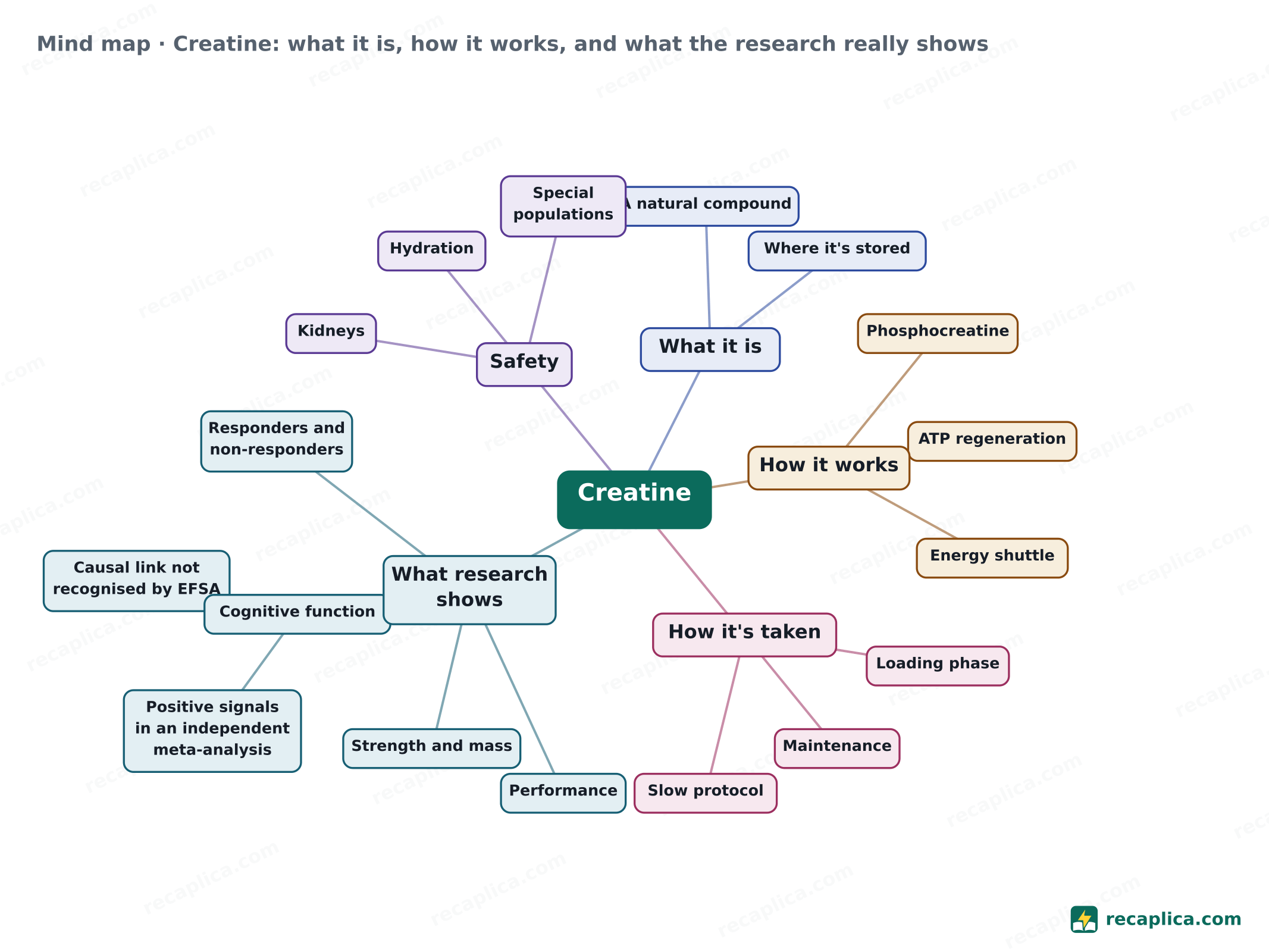
    • Creatine
      • What it is
        • A natural compound Not a protein or a hormone, found in meat and fish.
        • Where it's stored About 95% in skeletal muscle.
      • How it works
        • Phosphocreatine Formed by linking creatine and phosphate via the enzyme creatine kinase.
        • ATP regeneration Energy for short anaerobic effort.
        • Energy shuttle Links ATP production and use.
      • How it's taken
        • Loading phase About 20 g/day for 5-7 days.
        • Maintenance 3-5 g/day after loading.
        • Slow protocol 3 g/day for about 28 days, no loading.
      • What research shows
        • Performance Average increase of 10-20% in repeated intense exercise.
        • Strength and mass Positive effect in older adults and trained adults.
        • Cognitive function
          • Positive signals in an independent meta-analysis
          • Causal link not recognised by EFSA
        • Responders and non-responders 20-30% respond little to classic loading.
      • Safety
        • Kidneys No persuasive evidence of harm in healthy people.
        • Hydration Fluid retention in the first days, not dehydration.
        • Special populations A doctor's advice is needed.

    Quiz: test yourself

    Answer the questions to check what you have learned: you get instant feedback and a short explanation.

    Grade 0/10 0/5
    1 From an energy standpoint, what does creatine do inside a muscle?

    Creatine binds a phosphate group to form phosphocreatine (PCr). When energy is needed fast, PCr hands off that phosphate to regenerate ATP, keeping it available especially during maximal anaerobic effort.

    2 What's the main difference between a loading protocol and gradual maintenance dosing?

    Classic loading (about 20 g/day for 5-7 days) reaches maximal stores in under a week; 3 g/day for about 28 days reaches similar saturation, just over a longer stretch of time.

    3 What did EFSA conclude in 2024 about the link between creatine and cognitive function?

    The EFSA Panel concluded that a causal relationship between creatine supplementation and improved cognitive function has not been established: the effects observed showed up only at very high doses (20 g/day) and were not consistent at low, maintenance-level doses like 3 g/day.

    4 True or false: everyone responds to a creatine loading protocol in the same way.

    False. By the classic threshold from Greenhaff et al., about 20-30% of people don't meaningfully increase muscle stores after a standard loading protocol; those who start with already-high stores, or with fewer type II fibres, tend to respond less.

    5 What do the studies say about the one side effect reported consistently in the literature?

    The ISSN position stand names weight gain as the one side effect reported consistently, tied mainly to fluid retention in the first few days (roughly 0.5-1.0 litres). If anything, the literature links creatine to fewer cramps and heat-related problems in some studies on athletes.

    Answers: 1-B · 2-B · 3-B · 4-B · 5-C

    Flashcards

    Tap the card to flip it and check whether you remember the answer, then move to the next one.

    1 / 8

    Explain it in your own words

    The ultimate test: if you can explain it in simple words, you've truly understood it. Write your explanation, then compare it with the Recap.

    Your explanation is saved only on this device.

    Creatine is a natural compound the body makes and stores mainly in muscle, where it helps regenerate energy during short, intense effort. Taken as a supplement, usually as creatine monohydrate, it raises muscle stores and in studies improves performance in repeated high-intensity exercise by 10-20%. The available research finds no signal of kidney harm at standard doses in healthy people, while the possible cognitive benefit remains genuinely contested. Roughly a fifth to a third of people respond poorly to a classic loading protocol.

    Frequently asked questions

    Can I take creatine too? Does this article replace a doctor's advice?

    No. This article reports what studies show across groups of people, not personalised advice for your situation. Talk to a doctor or dietitian before starting any supplement, especially if you have kidney disease, are under 18, are pregnant or breastfeeding, or take medication: those are all cases where an individual assessment is needed and general research data isn't enough.

    Does creatine make you fat?

    The weight gain seen in studies, typically 1-2 kg in the first week of loading, mostly comes from fluid retention in the muscle, not fat gain. Over time, combined with training, the literature also links creatine to real gains in lean mass, not just water.

    What's the difference between creatine and protein powder?

    They're two different supplements with different jobs. Creatine is a single molecule that helps regenerate fast energy in the muscle during short, intense effort; protein is the material the body uses to build new muscle tissue during recovery. They aren't interchangeable.

    Can children and teenagers take creatine?

    The 2017 ISSN position stand reports no scientific evidence that children or adolescents shouldn't take it, citing short- and long-term studies with no risks detected at recommended doses under 18. Even so, these remain choices to discuss with a paediatrician or sports doctor, not decide alone.

    Why does creatine seem to do nothing for some people?

    Because individual response varies a lot: about 20-30% of people don't meaningfully increase muscle stores with a classic loading protocol, especially those who already start with high creatine stores or have fewer type II muscle fibres. The most likely explanation lies in each person's starting physiology, which varies widely from one person to the next.

    Sources

    • Kreider et al., International Society of Sports Nutrition position stand: safety and efficacy of creatine supplementation in exercise, sport, and medicine (Journal of the International Society of Sports Nutrition, 2017)
    • EFSA NDA Panel, Scientific Opinion on creatine and increase in physical performance during short-term, high intensity, repeated exercise bouts (EFSA Journal, 2011)
    • EFSA NDA Panel, Creatine in combination with resistance training and improvement in muscle strength (EFSA Journal, 2016)
    • EFSA NDA Panel, Creatine and improvement in cognitive function (EFSA Journal, 2024)
    • The effects of creatine supplementation on cognitive function in adults: a systematic review and meta-analysis
    • Wax et al., Creatine for Exercise and Sports Performance, with Recovery Considerations for Healthy Populations (Nutrients, 2021)
    • Syrotuik & Bell, Acute Creatine Monohydrate Supplementation: A Descriptive Physiological Profile of Responders vs. Nonresponders (Journal of Strength and Conditioning Research, 2004)
    • de Souza e Silva et al., Effects of Creatine Supplementation on Renal Function: A Systematic Review and Meta-Analysis (Journal of Renal Nutrition, 2019)
    • Effect of creatine supplementation on kidney function: a systematic review and meta-analysis (BMC Nephrology, 2025)

    Every Recap goes through an independent review before publication.

    Every evening, the day's new Recaps on our Telegram channel. Join the channel →

    Keep learning

    • Science Swimming after eating: is the cramp myth actually true? For generations, parents have warned that swimming right after a meal blocks digestion and triggers cramps severe enough to drown you. The American Red Cross, after reviewing the scientific literature, found no single documented drowning linked to eating beforehand, and the physiology behind the myth runs backwards: resting digestion only shifts blood toward the gut in a mild way. The real, well-documented danger in open water goes by a different name — cold water shock — and it has nothing to do with whether you just ate. Read the Recap →
    • Science Arginine: what it is and how it affects nitric oxide, blood pressure, and exercise Arginine is an amino acid the body partly makes on its own and also gets from food, mainly grains, meat and dairy; it's the precursor of nitric oxide, the molecule that relaxes blood vessels. Independent meta-analyses find modest but measurable effects on blood pressure, athletic performance, mild-to-moderate erectile dysfunction and wound healing, often at doses well above what a normal diet provides. The European food safety regulator, EFSA, has nonetheless rejected all the major health claims proposed for arginine, citing the absence of a recognised cause-and-effect relationship at the required standard. There's also a serious, well-documented contraindication: in a clinical trial of patients with a recent heart attack, arginine was linked to significantly higher mortality, serious enough that the trial was stopped early. Read the Recap →
    • Science Gluten: what it really is and how it works Gluten is not a mysterious additive: it is the set of storage proteins in wheat grain, two families called gliadins and glutenins, which form an elastic net when flour meets water and trap the gases of fermentation. That net is what makes bread rise and pizza dough stretch. In roughly one person in a hundred, though, fragments of these proteins trigger celiac disease, a permanent autoimmune inflammation of the gut. For everyone else, the available research does not show that gluten is harmful in itself, nor that gluten-free products are automatically healthier. Read the Recap →

    recaplica

    Clear in 30 seconds, yours in 10 minutes.

    Recaps Mind maps Request a Recap Telegram channel Mind map maker Our method About Privacy & cookies Legal notes & terms of use

    © 2026 Recaplica · A project by Curi S.r.l. — VAT IT05472000750

    Statistics, only if you say so

    To learn which Recaps help most we would use Google Analytics, with aggregate, anonymous data. It starts only with your OK, and you can change your mind anytime. Privacy policy