|
recaplica
Gluten: what it really is and how it works | ||||||||||||||||||
| © 2026 Recaplica · recaplica.com — All rights reserved | ||||||||||||||||||
Gluten: what it really is and how it worksWhat to print Page numbers appear when printing with default margins. SlidesChoose a cut Flash10 slidesThe essential thread, to present in classFull18 slidesEvery chapter and the deeper detailBoth come with speaker notes. In 30 seconds quick readGluten is not a mysterious additive: it is the set of storage proteins in wheat grain, two families called gliadins and glutenins, which form an elastic net when flour meets water and trap the gases of fermentation. That net is what makes bread rise and pizza dough stretch. In roughly one person in a hundred, though, fragments of these proteins trigger celiac disease, a permanent autoimmune inflammation of the gut. For everyone else, the available research does not show that gluten is harmful in itself, nor that gluten-free products are automatically healthier. Key Points
Key figures
Deep DiveWhat gluten is (and why the grain doesn’t contain it)The most honest way to define gluten is to describe the experiment used to isolate it for centuries: make a dough of wheat flour and water, then wash it gently under running water. The starch and the soluble material drain away; what stays between your fingers is a rubbery, elastic mass that, once dried, is roughly 75-80% protein. That mass is gluten. In the wheat grain itself, though, gluten as such does not exist. What exists are its proteins, stored inside the cells of the seed as a food reserve for the embryo of the future plant. They are reserve proteins, the kind a cell sets aside for later use: wheat evolved them to feed a seedling, not to bake bread. The continuous elastic network we call gluten appears only when flour meets water and hands (or a mixer) do the rest. One clarification about cereals: in the strict chemical sense, gluten is a wheat story. Barley and rye contain closely related proteins, called hordeins and secalins, which behave the same way for people with celiac disease; that is why food regulations treat them as gluten for all practical purposes. Gliadins and glutenins: the two familiesGluten proteins split into two families, present in roughly equal amounts, with almost opposite characters.
Glutenins build the frame: three-dimensional networks of protein chains welded together by disulphide bonds, sturdy chemical links between sulphur atoms. Gliadins slip into that structure and soften it, interacting through weaker forces. The result is a material physicists call viscoelastic: it lets itself be stretched like a thick fluid and springs back like a coil. The chemistry of these proteins is unusual: between roughly 20 and 50% of their amino acids are glutamine, and proline reaches 10-30%, concentrated in long, nearly identical repeated sequences. That repetitiveness will matter again when we get to celiac disease: according to Shewry’s review, all 31 protein fragments recognised as relevant to the disease sit precisely in those repetitive regions.
What it does in doughDuring kneading, the hydrated proteins from the flour’s individual cells hook onto one another until they form a single continuous network wrapped around starch granules and air bubbles. When yeast ferments the sugars and releases carbon dioxide, that network behaves like the fabric of a hot-air balloon: it tightens, it swells, but it does not tear. This is why a wheat dough rises and keeps its honeycombed structure after baking. The balance between the two families decides the dough’s temperament. More weight on the glutenin side means a tenacious dough that resists and pulls back; more weight on the gliadin side means a dough that lets itself be stretched. Bakers have played with this balance forever without needing to name it. The dependence on disulphide bonds can be shown in the lab with a single gesture: add a reducing agent, which breaks exactly those links, and the network collapses, taking the dough’s properties with it. Shewry describes the effect on functionality as “catastrophic”: without those welds between chains, gluten stops being gluten.
Celiac disease, described without alarmFor most people the story ends there: gluten is the protein that gives bread its structure. In about one person in a hundred, however, the immune system reads those repeated glutamine-and-proline sequences as an alarm signal. Italy’s National Institute of Health (ISS) defines celiac disease as a permanent inflammatory disease of the gut, triggered by eating gluten-containing food in genetically predisposed people: an autoimmune disease, in which the reaction to gluten ends up damaging the gut’s own healthy tissue, in particular the villi, the microscopic folds of the intestinal lining through which nutrients are absorbed. The predisposition lies in normal variants of genes in the HLA-DQ region, written in the DNA like any other inherited trait: carrying them does not mean falling ill, they simply mark the predisposition. Two cases out of three are women. The symptoms span a wide range. The classic form shows up in the gut: diarrhoea, bloating, abdominal pain, weight loss, slowed growth in children. The atypical form is more elusive and can present as fatigue, mouth ulcers, menstrual disorders or osteoporosis; there is also a skin form, dermatitis herpetiformis. Diagnosis follows a precise path: first a blood test for anti-transglutaminase and anti-endomysium antibodies, then confirmation with an intestinal biopsy. The only treatment available today is a strict, permanent gluten-free diet, which reverses the symptoms and prevents complications. Italy’s numbers give a sense of scale. As of 31 December 2023, 265,102 people had a diagnosis, with 13,163 new diagnoses in a single year (there had been 10,210 in 2022). Since celiac disease affects about 1% of the population, the expected number of cases in Italy is around 600,000: the diagnosed are just 37%, meaning hundreds of thousands of people live with the disease without knowing it. To close that gap, a pilot paediatric screening project has started in four regions (Lombardy, Marche, Campania and Sardinia), looking for celiac disease and type 1 diabetes in children and teenagers aged 0 to 17. The gluten-free market: what the research showsA market has grown up around gluten, reaching far beyond celiac disease. Up to 13% of people report some sensitivity to gluten, and about 5% of the Western population says it follows a gluten-free diet: five times the share of those with a documented need. Research has tested this self-reported sensitivity with the strictest tool it has, the double-blind study, where neither the participant nor the experimenter knows who is eating gluten and who is not. The result scales the phenomenon down without erasing it: only about one third of people who believed they were sensitive showed symptoms with disguised gluten, and the nocebo effect, feeling ill because you expect to, has been estimated at up to 40%. Here too, as with other food topics, beliefs outrun the data: it happens with creatine as well, a textbook case. The heart of the matter is the gap between what gets repeated and what experiments confirm. As for the idea that gluten-free products are healthier across the board, the studies gathered by Diez-Sampedro and colleagues observe the opposite: a gluten-free diet can end up lower in fibre and in several micronutrients (calcium, iron, magnesium, zinc, vitamin B12, folate, vitamin D), at prices 2 to 3 times higher. For people with celiac disease these products are a daily necessity, protected by law: in the European Union the statement “gluten-free” requires a content no higher than 20 mg/kg, while “very low gluten” allows up to 100 mg/kg. Thresholds designed to protect those who genuinely must avoid gluten. All told, the balance is calmer than the supermarket shelves make it look. Gluten is a pair of protein families with a rare talent for making a net; for 1% of the population it is the trigger of a serious autoimmune disease with a well-defined diagnostic pathway; for everyone else, the available research has found no reason for fear. Slide deckSlides ready to download and make your own in PowerPoint or Google Slides, with speaker notes. Pick the Flash cut or the Full one.     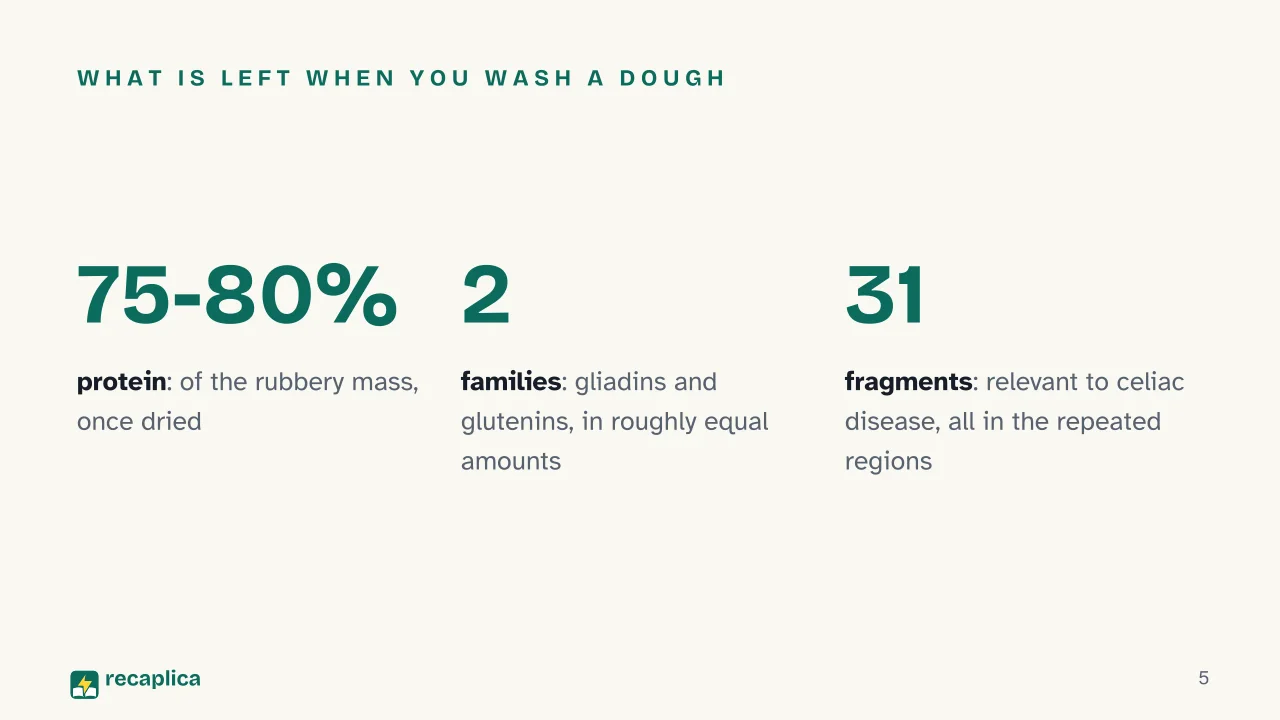 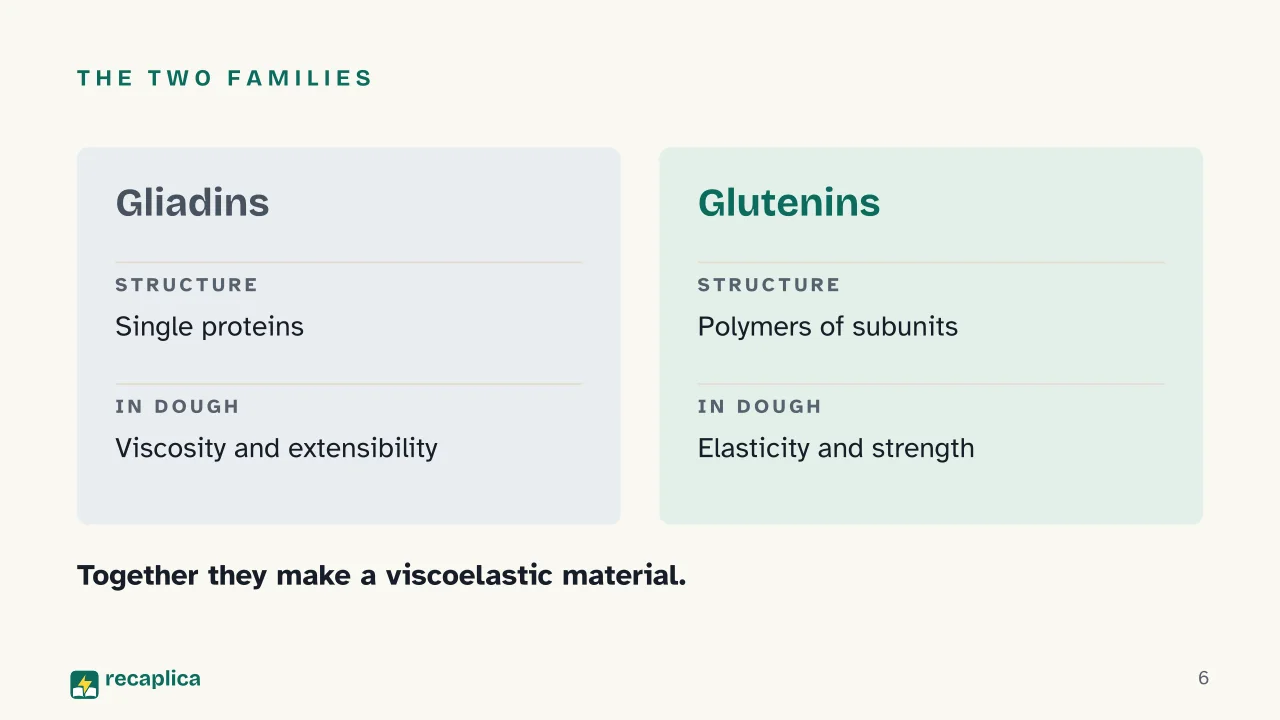 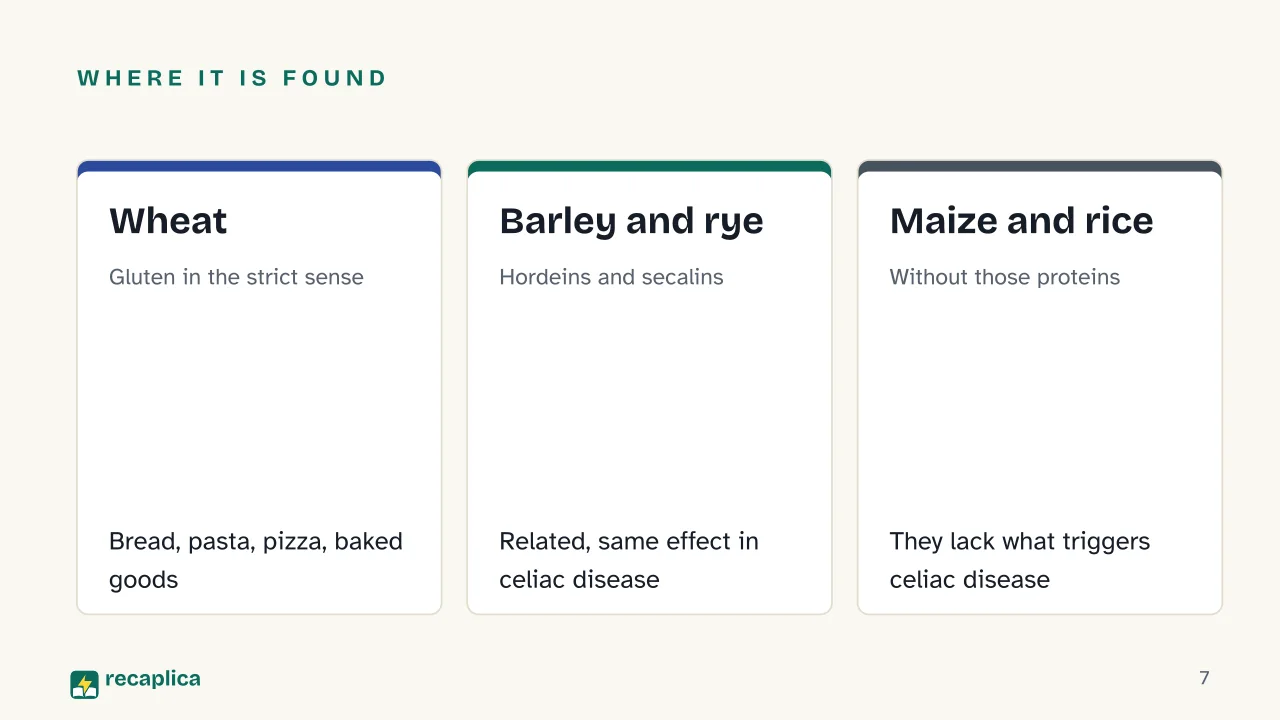  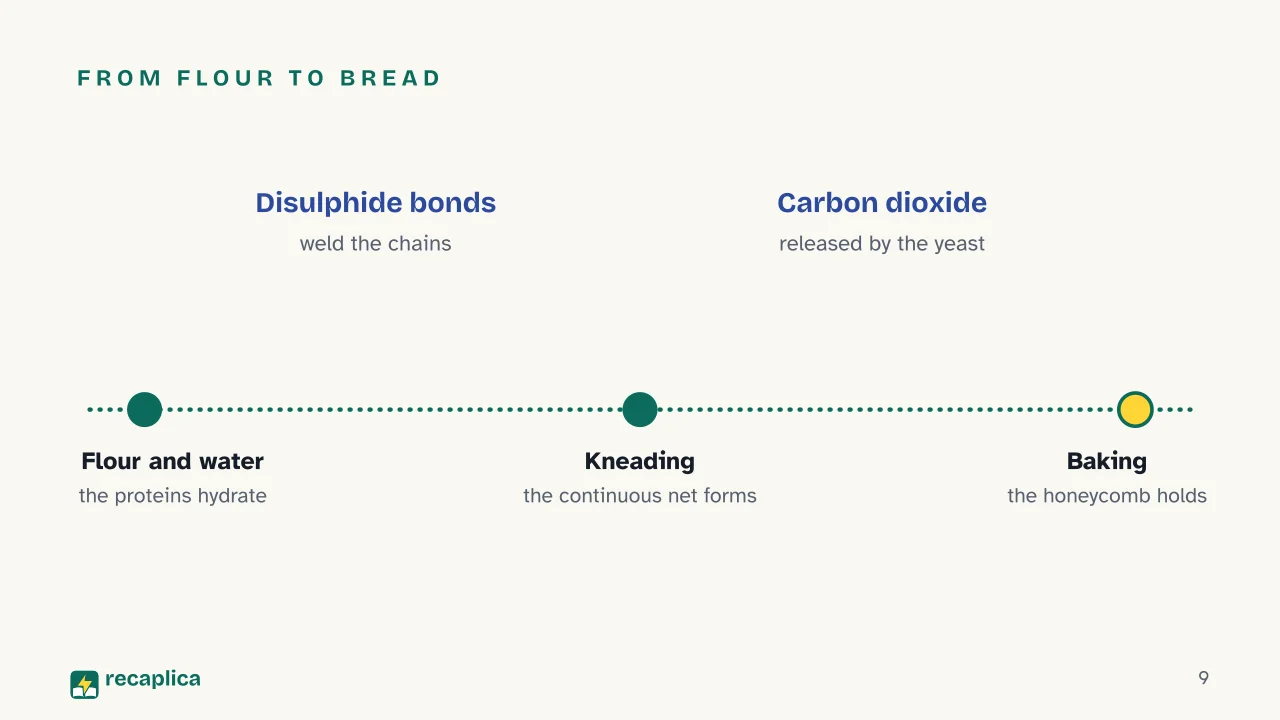   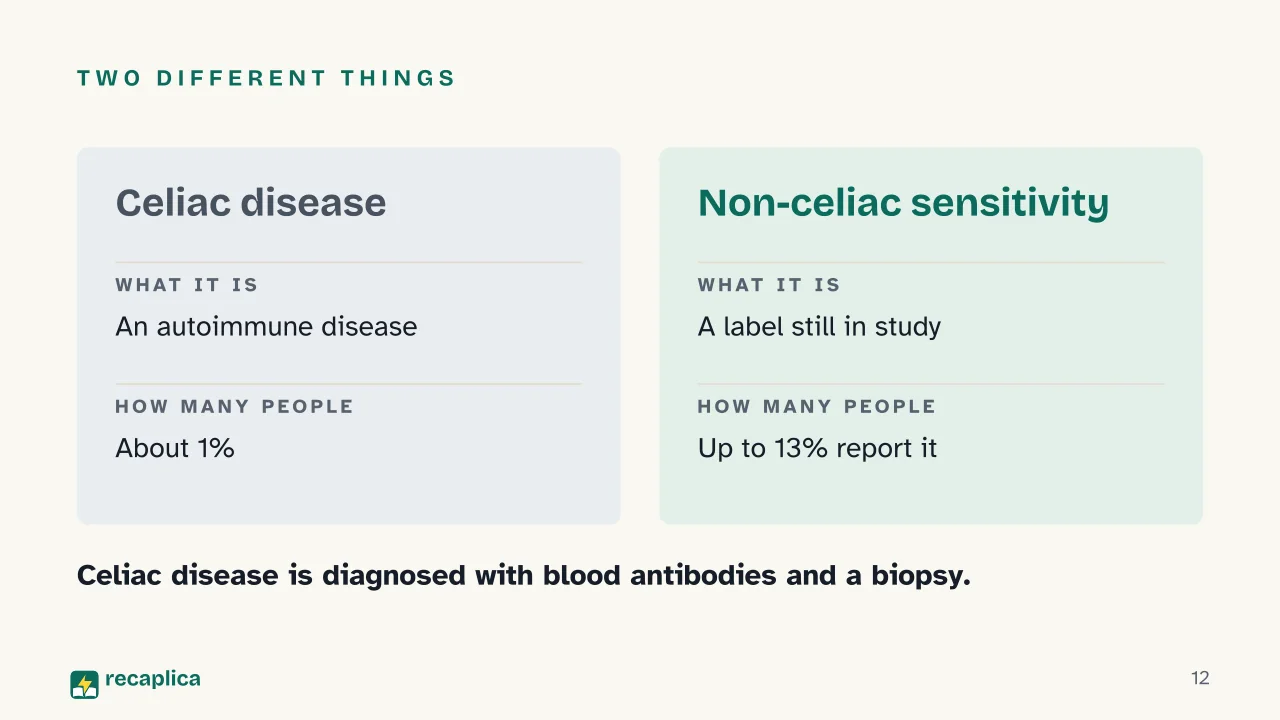 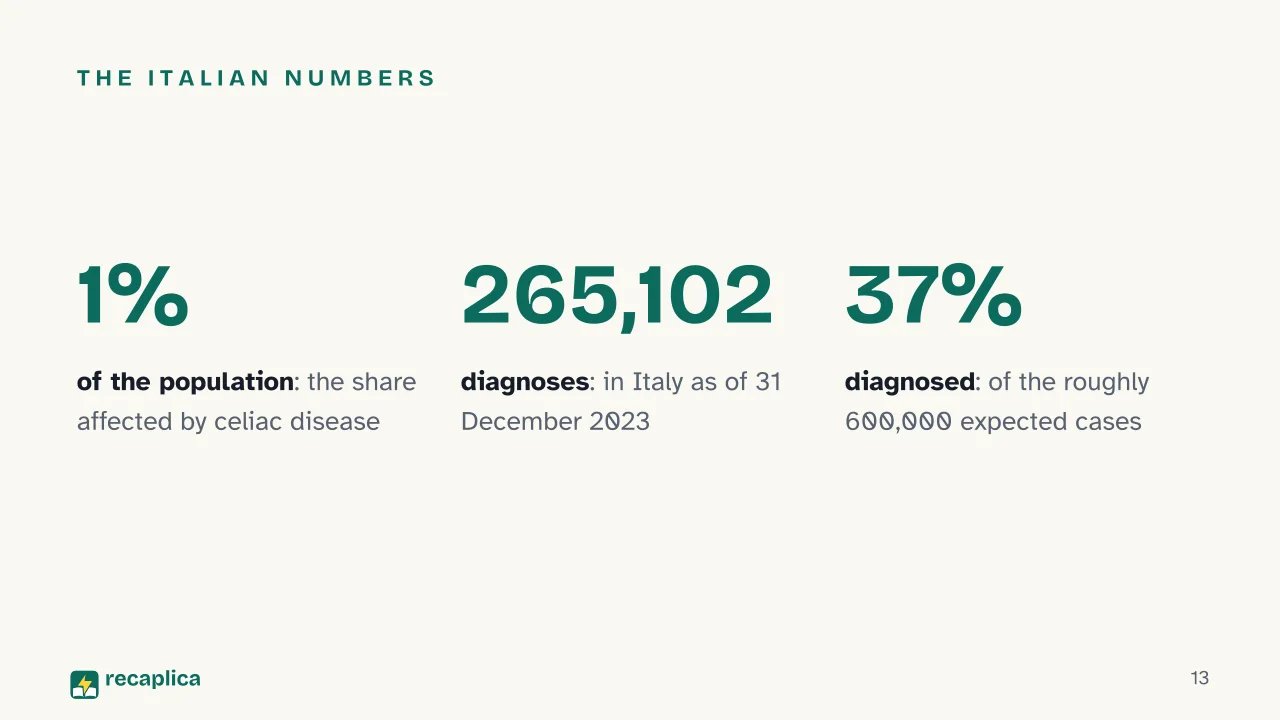  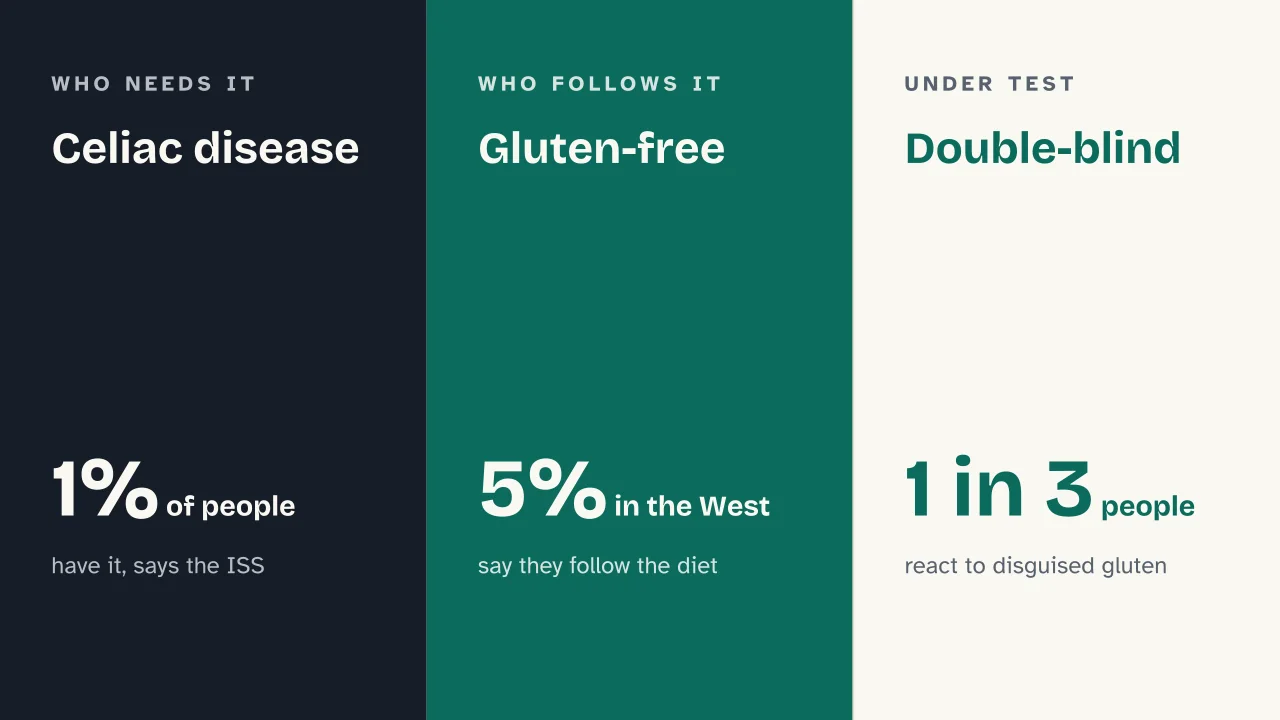 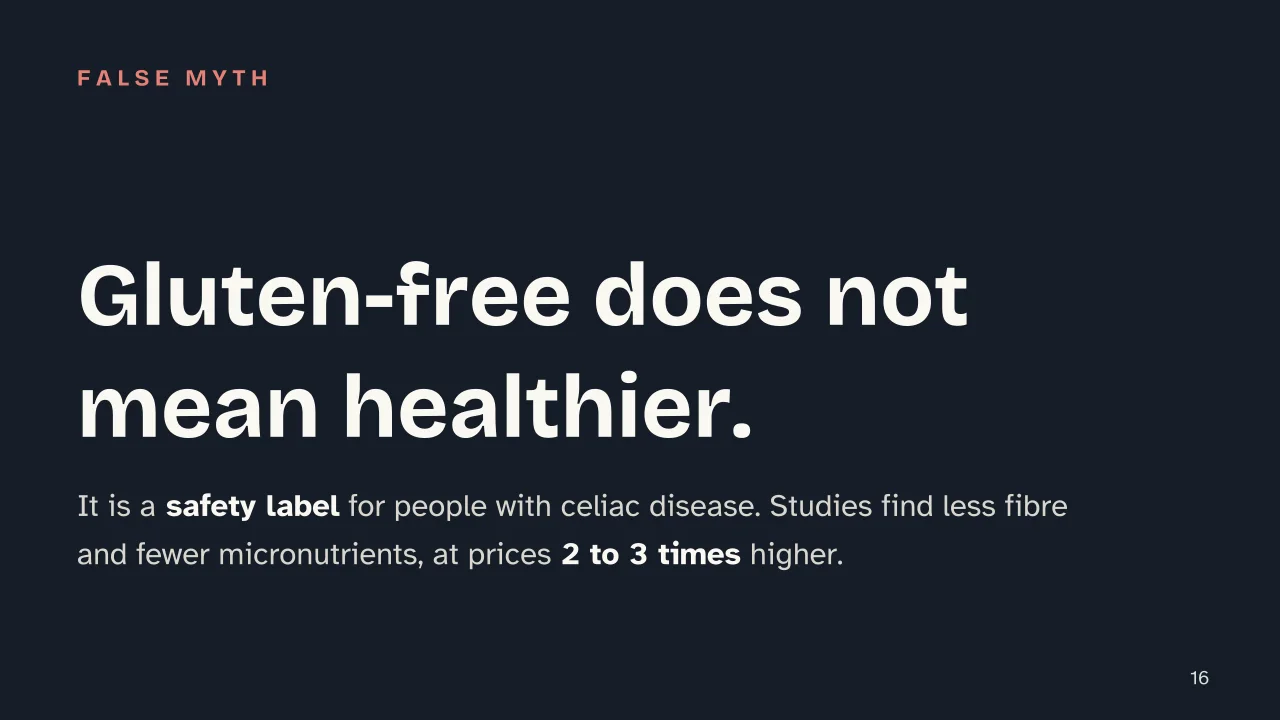 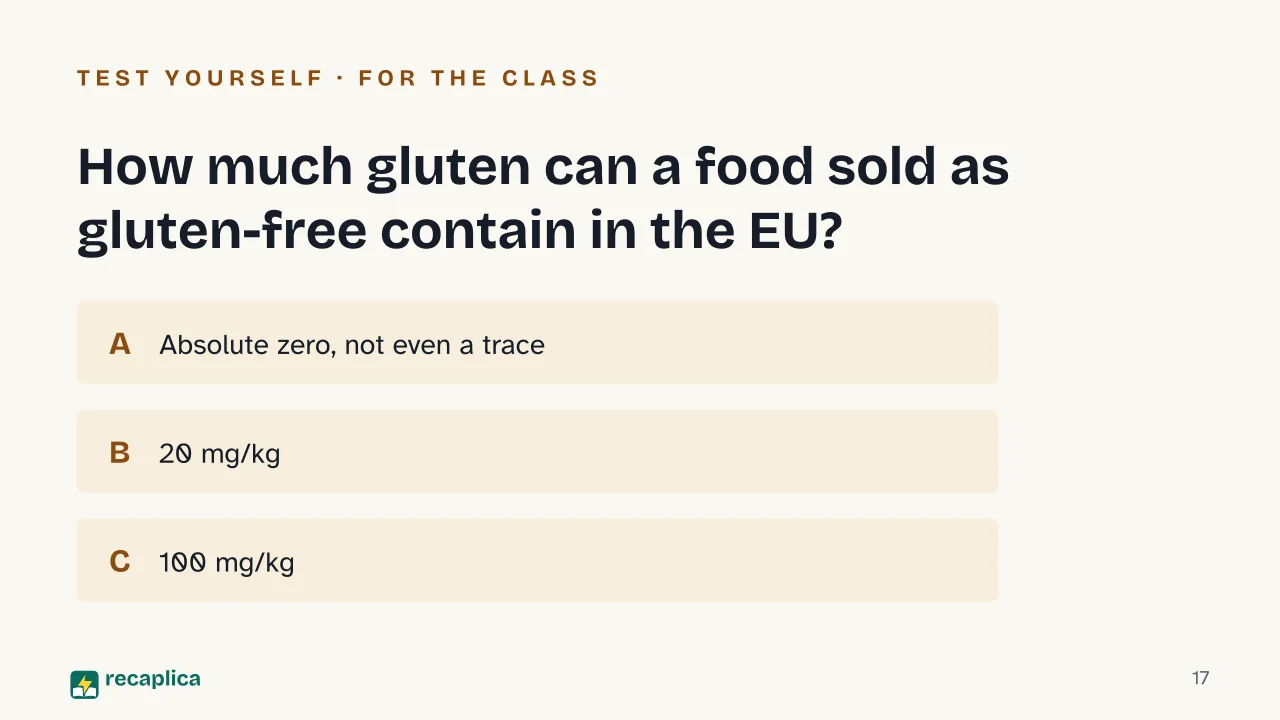  Common myths
Mind mapDrag the background to move around and the nodes to reposition them; use − and + to collapse and expand branches. 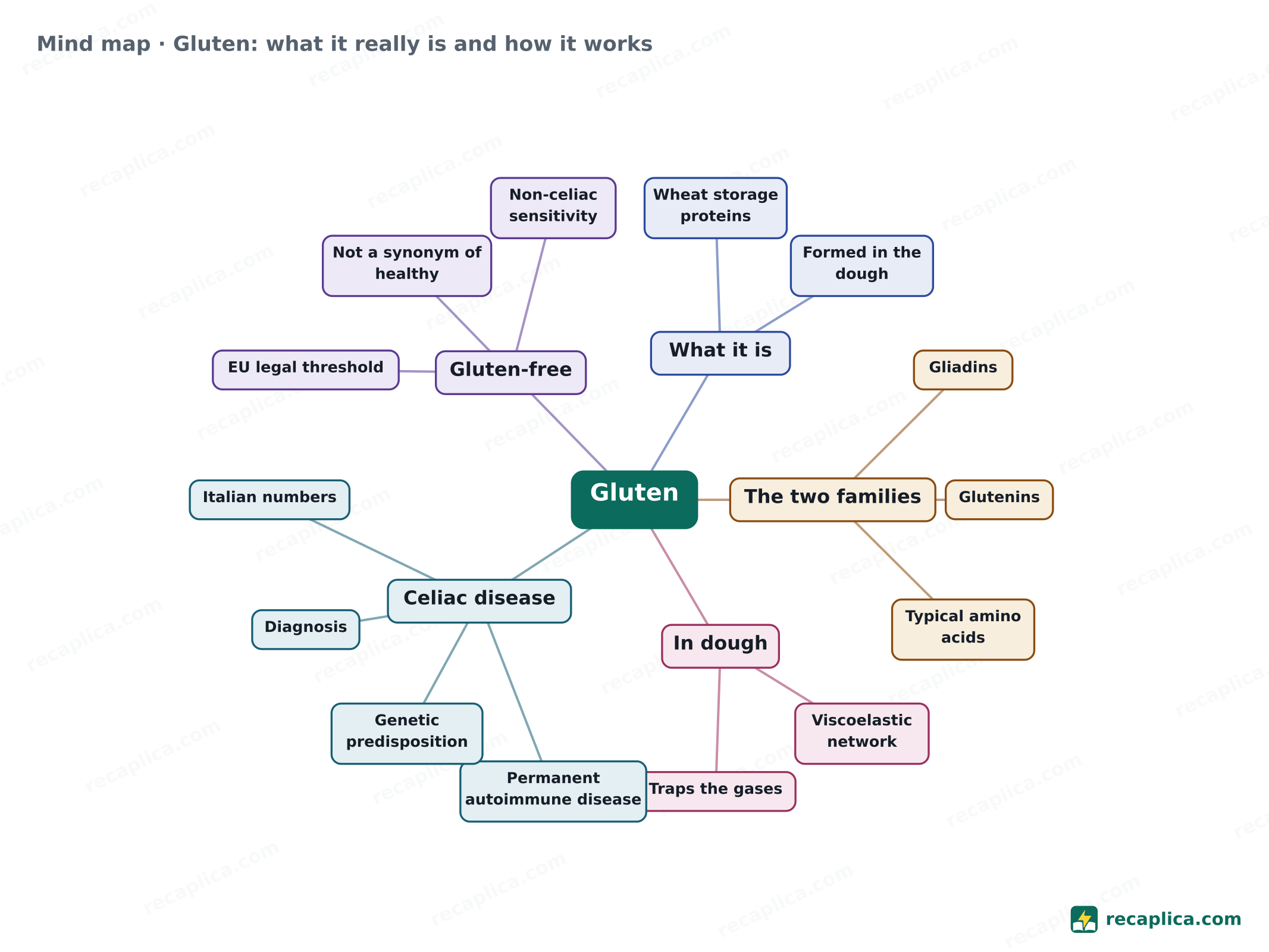
Quiz: test yourselfAnswer the questions to check what you have learned: you get instant feedback and a short explanation. Grade 0/10 0/5
FlashcardsTap the card to flip it and check whether you remember the answer, then move to the next one. 1 / 8 Explain it in your own wordsThe ultimate test: if you can explain it in simple words, you've truly understood it. Write your explanation, then compare it with the Recap. Your explanation is saved only on this device.
Frequently asked questionsWhich foods contain gluten?Gluten proper is the one in wheat, so bread, pasta, pizza, baked goods and anything made with wheat flour. Barley and rye contain closely related proteins (hordeins and secalins) that have the same effect on people with celiac disease, which is why gluten-free food regulations cover these cereals too (along with oats, treated separately because of contamination risk). Maize and rice, on the other hand, contain none of the proteins that trigger celiac disease. What is non-celiac gluten sensitivity?It is the label used for people who report gluten-related symptoms without having celiac disease. Research is still bringing it into focus: up to 13% of people report some sensitivity, but in double-blind experiments only about one third of them react to disguised gluten, and the estimated nocebo effect reaches 40%. This does not mean the symptoms are imaginary; it means their cause is not yet clear, and gluten may not always be the culprit. How is celiac disease discovered?The pathway described by Italy's National Institute of Health starts with a blood test looking for specific antibodies (anti-transglutaminase and anti-endomysium) and is confirmed with an intestinal biopsy documenting damage to the villi. It is a fully medical process. I often feel bloated after bread and pasta: should I cut out gluten?This is exactly the question an article cannot answer. What you find here is what research shows across groups of people, not an assessment of your case: digestive complaints have many possible causes and should be examined by a doctor or a registered nutritionist, who can order the right tests in the right order. Cutting out gluten on your own is, in the words of the scientific literature, not an appropriate choice without a diagnosis: the right first step is to talk it over with a professional. Every Recap goes through an independent review before publication. |