|
recaplica
Jesuit Education and the Ratio Studiorum: the Counter-Reformation Model | ||||||||||||
| © 2026 Recaplica · recaplica.com — All rights reserved | ||||||||||||
Jesuit Education and the Ratio Studiorum: the Counter-Reformation ModelWhat to print Page numbers appear when printing with default margins. SlidesChoose a cut Flash10 slidesThe essential thread, to present in classFull16 slidesEvery chapter and the deeper detailBoth come with speaker notes. In 30 seconds quick readIn the 1500s the Society of Jesus built a network of schools run on the same blueprint everywhere, from Sicily to Poland. The code that fixed this method is the Ratio Studiorum, finalized in 1599 by the superior general Claudio Acquaviva. Jesuit colleges taught grammar, then humanities and rhetoric, with large classes split into small groups led by a student captain. The system lasted nearly two centuries, until the suppression of the Society in 1773, and returned in 1832 after the order was restored. Key Points
Key figures
Deep DiveIn 1547, Ignatius of Loyola was asked to open a school in Messina for anyone, not only those planning to join the Society of Jesus: that’s how Xavier University tells it. Jesuit colleges arose in those same years, between 1546 and 1551, on criteria set out by Ignatius of Loyola (1491-1556) himself, the Society’s founder, according to Treccani. According to Xavier University, by the time he died, in 1556, 35 had already been founded — rapid growth in just a few years from that one school in Messina. One code for every schoolIgnatius gave the push, but the method itself came later, under a different superior general. Claudio Acquaviva, elected the Society’s fifth general in 1581, had a six-person committee draft a trial version of the Ratio in 1586, and the final text, the «Ratio atque institutio studiorum Societatis Jesu», was completed in 1599. From then on it governed the teaching and schooling of Jesuit colleges across Europe, with the same curriculum and the same roles from Mediterranean ports to central European cities. The code lasted nearly two centuries, until 1773, when the Society of Jesus was suppressed; after the order was restored, a new version of the Ratio was issued in 1832, then revised again in the 1900s. What studying at a college looked likeAccording to Encyclopedia.com, the language-and-letters path of the Ratio ran through three classes of grammar, a year of humanities centered on poetry, and finally rhetoric. The sequence picked up a structure already laid out in antiquity by writers such as Quintilian, the first rhetorician to think systematically about how to train an orator (see Quintilian and the education of the orator). In the larger classes, the Ratio required a practical split into groups of ten students, the decuriae, each with a captain tasked with keeping an eye on classmates; motivation leaned more on prestige and academic recognition than on punishment.
The college model and its rivalsThe Jesuit college didn’t appear out of nowhere: before Ignatius of Loyola, a different idea of school had already marked the Italian Renaissance, that of Vittorino da Feltre, built around attention to the individual student. The Ratio Studiorum, arriving centuries later, bet instead on standardization — the same curriculum, the same roles, the same schedule in every college of the Society.
The Catholic Counter-Reformation was also answering an educational challenge posed by the Protestant Reformation: Martin Luther had insisted on direct access to Scripture. The Society of Jesus built a school network capable of forming Catholic elites with equal rigor. A useful comparison also comes from outside continental Europe: the English boarding-school model of Eton College, born in a different religious setting, shares with Jesuit colleges the idea of a boarding school that shapes character and learning together. The ignatian legacyA September 2026 update on the Society of Jesus’s own site (Jesuits.global) notes that the network of Jesuit schools keeps growing, without giving an exact count of institutions or students. The phrase “ignatian education” now points to that legacy in the Society’s schools — an idea of education that still holds together the subjects and roles the 1599 Ratio Studiorum set down, and that people still call the jesuit tradition. Slide deckSlides ready to download and make your own in PowerPoint or Google Slides, with speaker notes. Pick the Flash cut or the Full one.     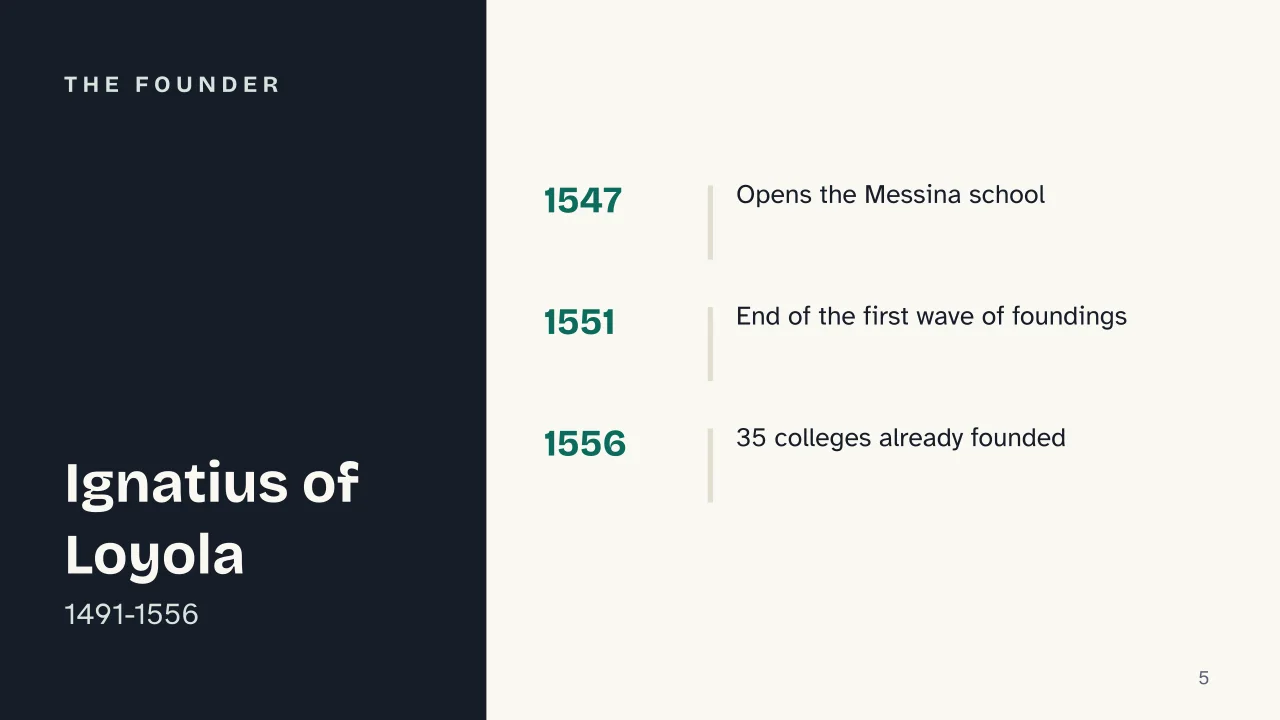 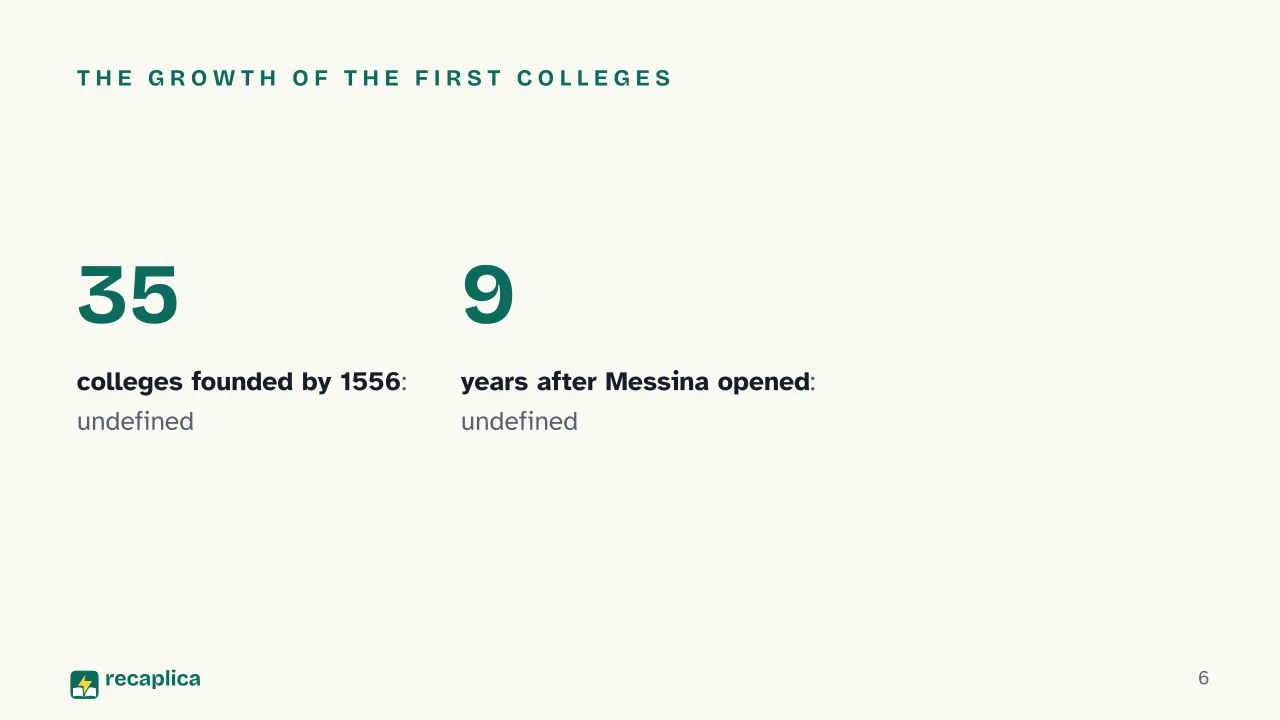  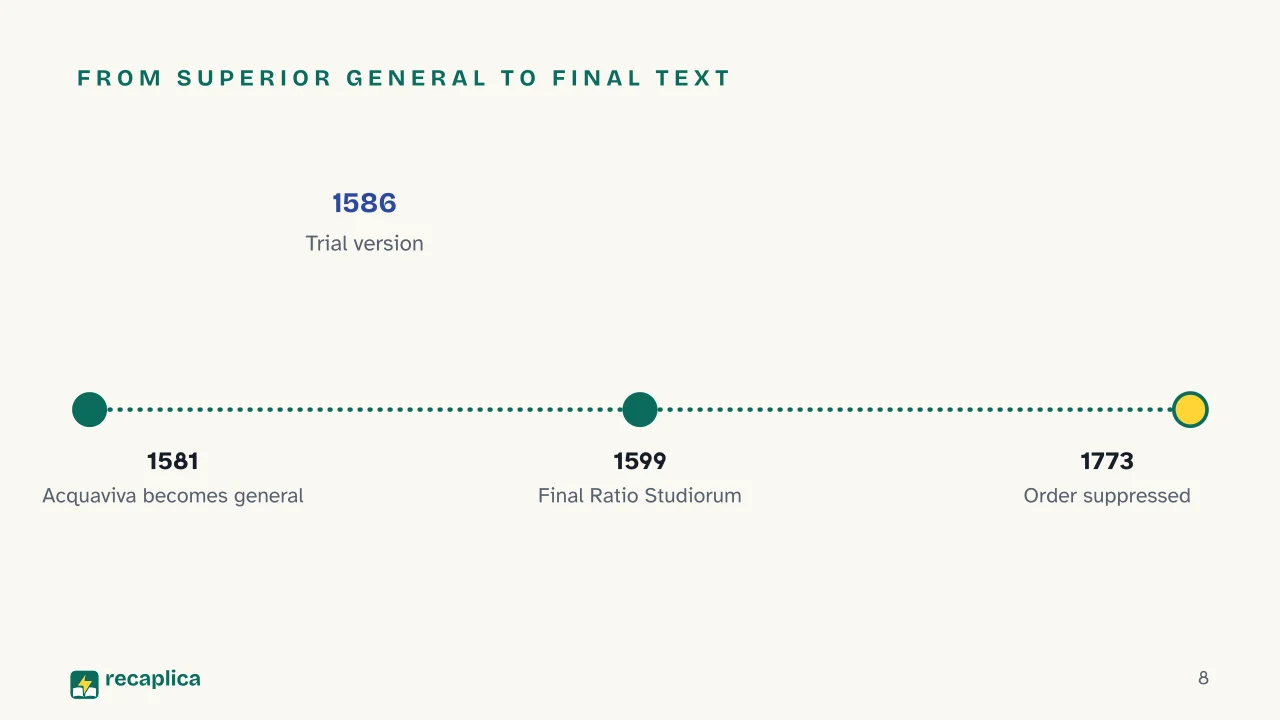 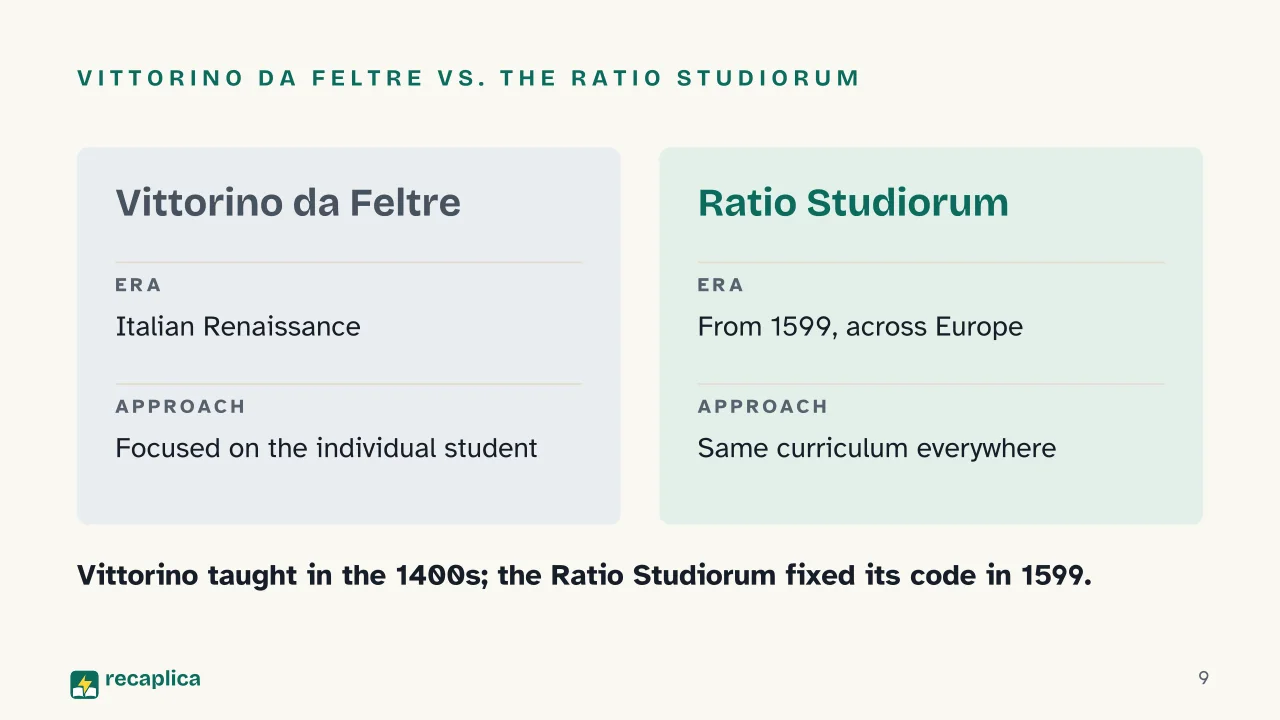  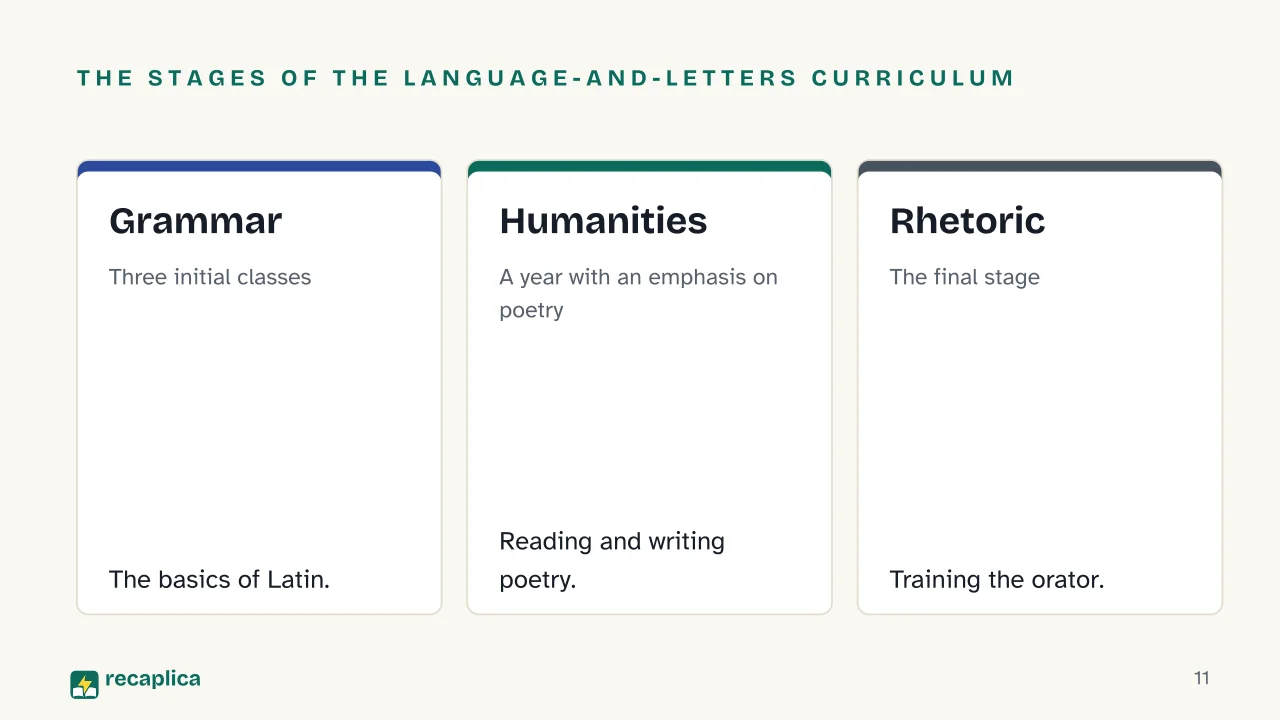 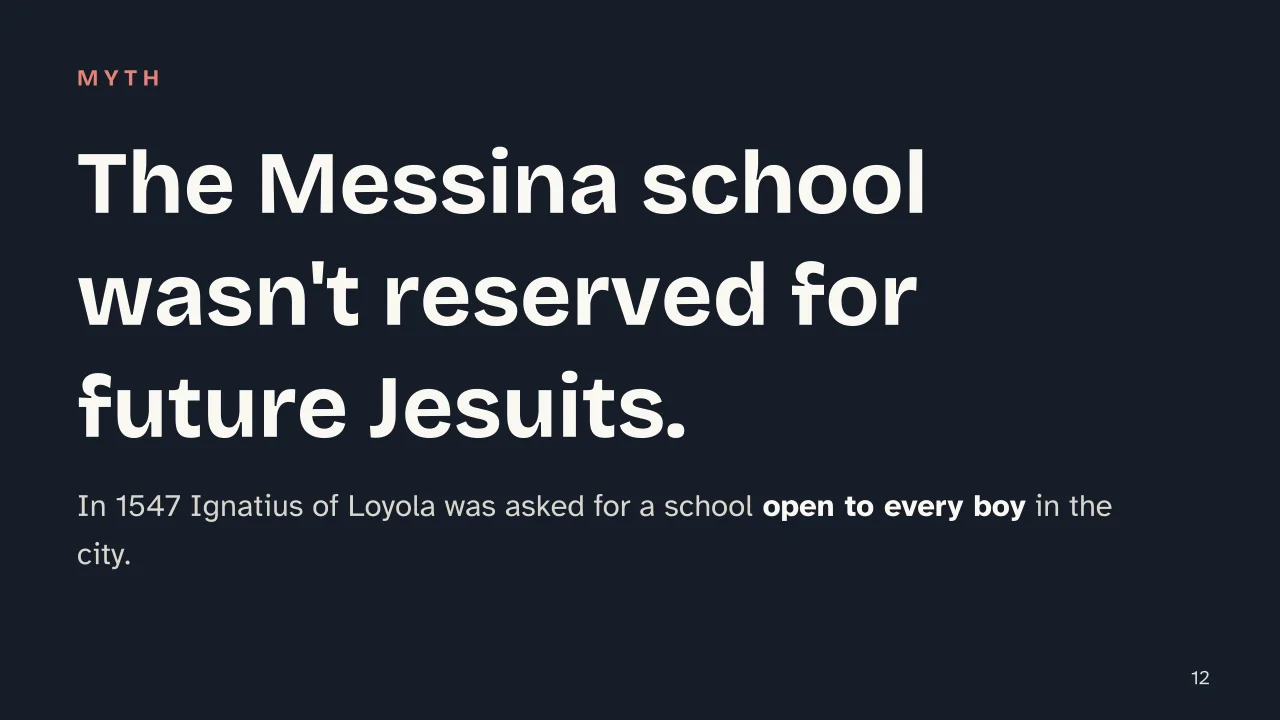  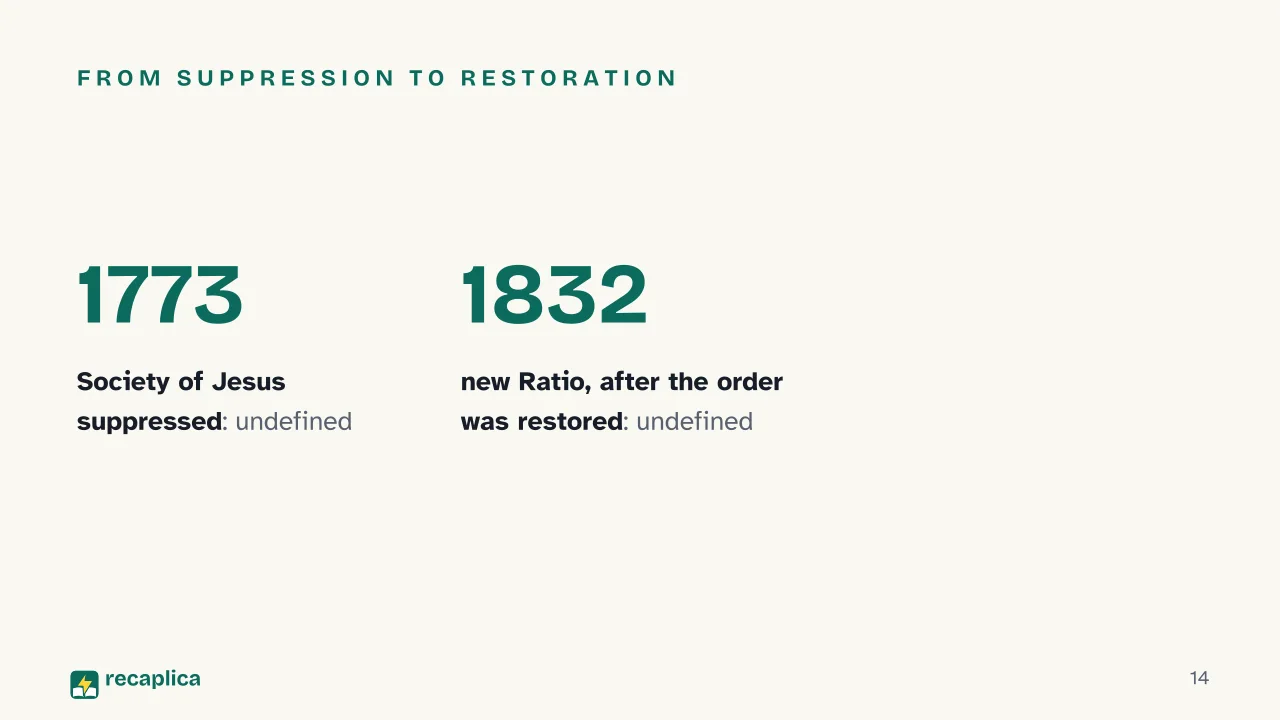 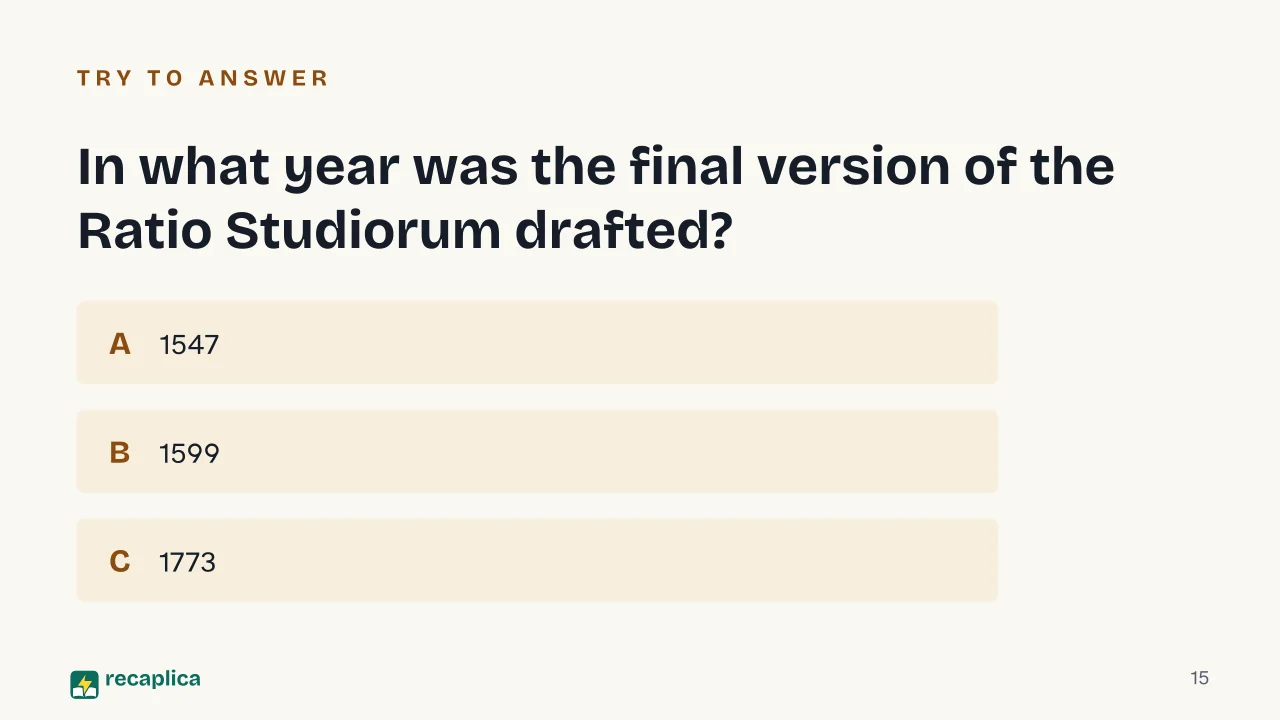  Common myths
Mind mapDrag the background to move around and the nodes to reposition them; use − and + to collapse and expand branches. 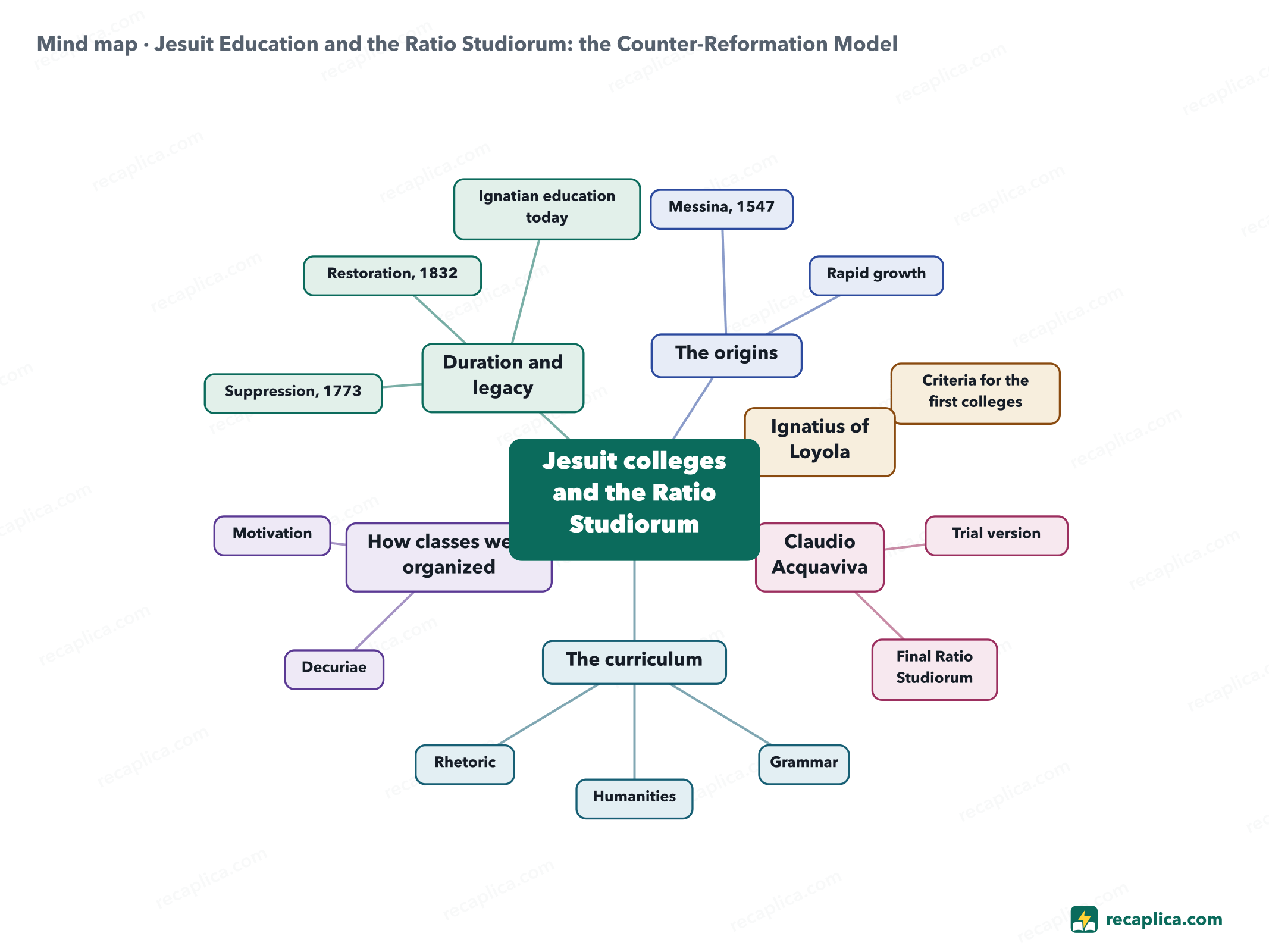
Quiz: test yourselfAnswer the questions to check what you have learned: you get instant feedback and a short explanation. Grade 0/10 0/5
FlashcardsTap the card to flip it and check whether you remember the answer, then move to the next one. 1 / 7 Explain it in your own wordsThe ultimate test: if you can explain it in simple words, you've truly understood it. Write your explanation, then compare it with the Recap. Your explanation is saved only on this device.
Frequently asked questionsWhat is the Ratio Studiorum?It's the code governing the teaching and schooling of the Society of Jesus, drafted in its final version in 1599 under superior general Claudio Acquaviva. When did the first Jesuit colleges appear?Between 1546 and 1551, on criteria set out by Ignatius of Loyola, with the first school open to everyone opening in Messina in 1547. What does ignatian education mean today?It's the legacy of the Jesuit method as it survives in today's schools run by the Society of Jesus — a focus on forming the whole person that traces back to the curriculum and shared roles the 1599 Ratio Studiorum set up, and that still shapes what people mean by the jesuit tradition. Why did the Ratio Studiorum stop applying in 1773?Because that year the Society of Jesus was suppressed; a new version of the code only arrived in 1832, after the order was restored. What were the decuriae?Groups of ten students with a captain, designed to manage large classes and motivate students more through prestige than through punishment, according to Encyclopedia.com. Every Recap goes through an independent review before publication. |