recaplica
Clear in 30 seconds, yours in 10 minutes.
In 30 seconds quick read
Opening a partita IVA under Italy's flat-rate regime forfettario means filing form AA9/12 with the Agenzia delle Entrate within 30 days of starting the activity, using that same filing to state an intention to join the flat-rate scheme. The form can go in by certified email (PEC), registered post, or through the tax agency's own software from an online account. Anyone running a business or craft activity follows a different route instead, the Comunicazione Unica, which also brings an annual Chamber of Commerce fee that a professional filing only the AA9/12 doesn't owe. Before reaching the form, it's worth checking the regime's entry requirements: a revenue ceiling and a handful of conditions that rule people out, which apply even to someone starting completely from scratch.
Key Points
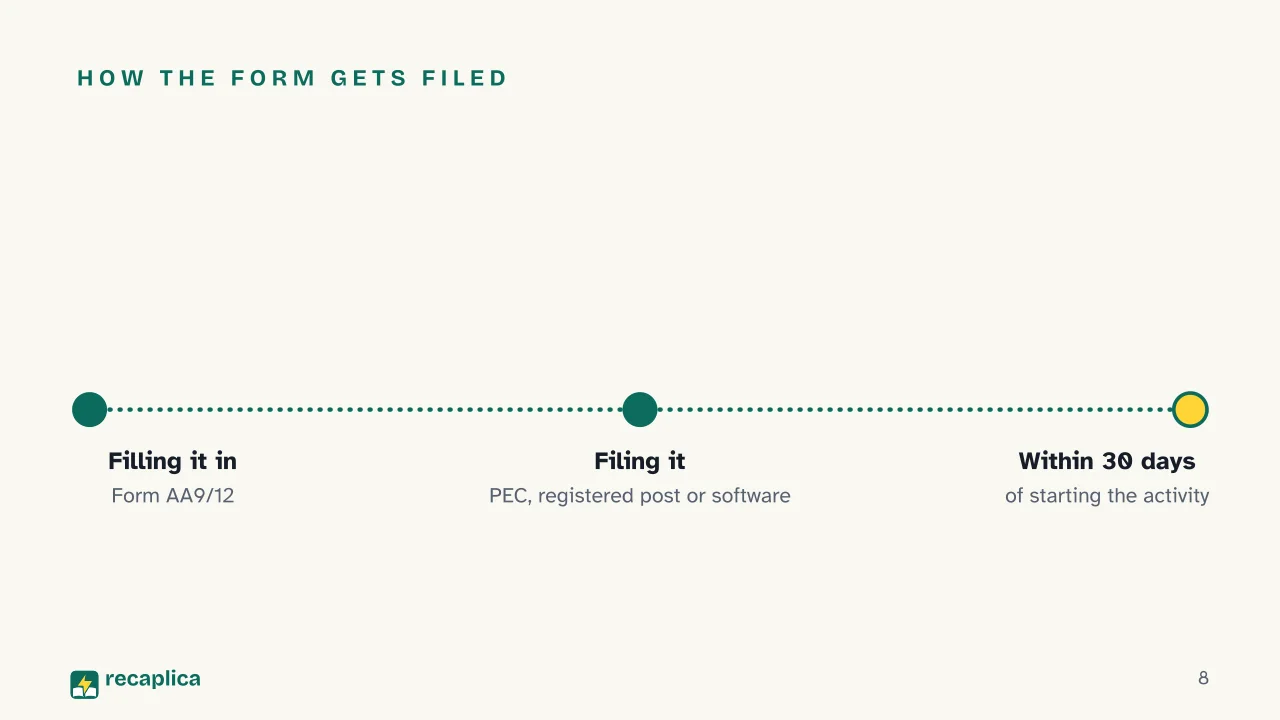
Form AA9/12 has to reach the Agenzia delle Entrate within 30 days of the date an activity starts.
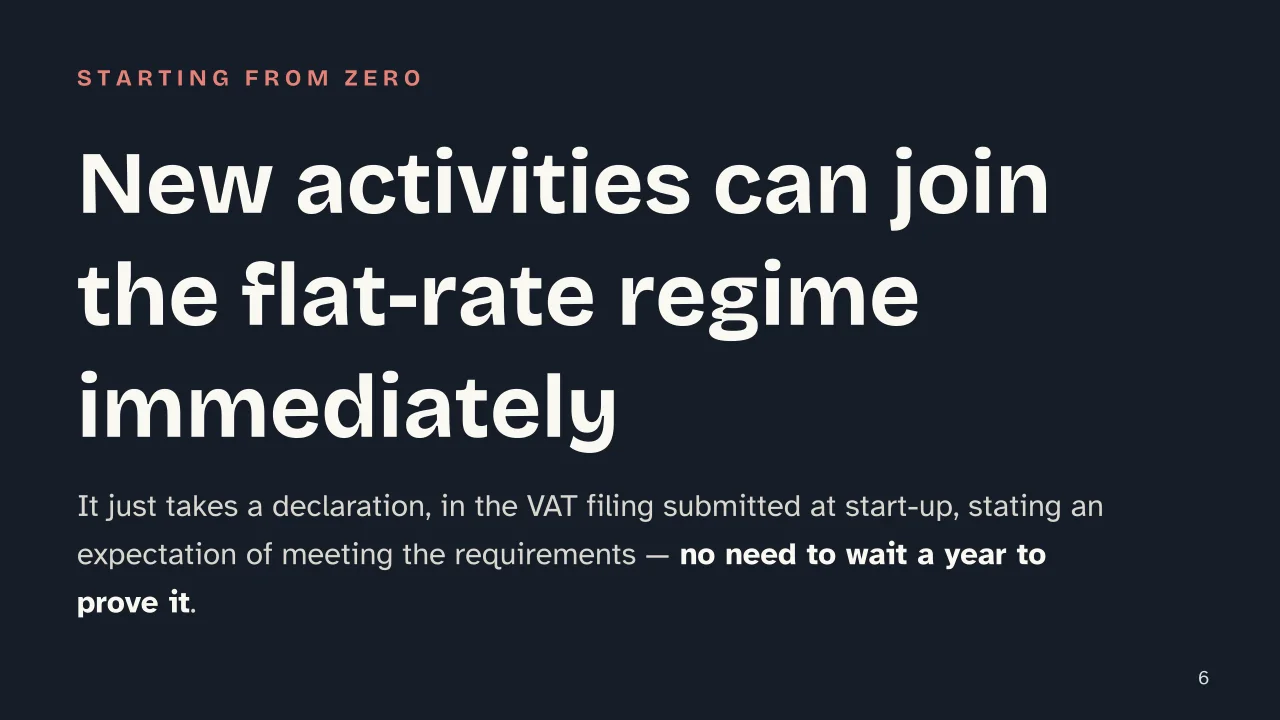
Someone starting a brand-new activity can join the flat-rate regime right away, by stating on that same filing that they expect to meet the requirements.
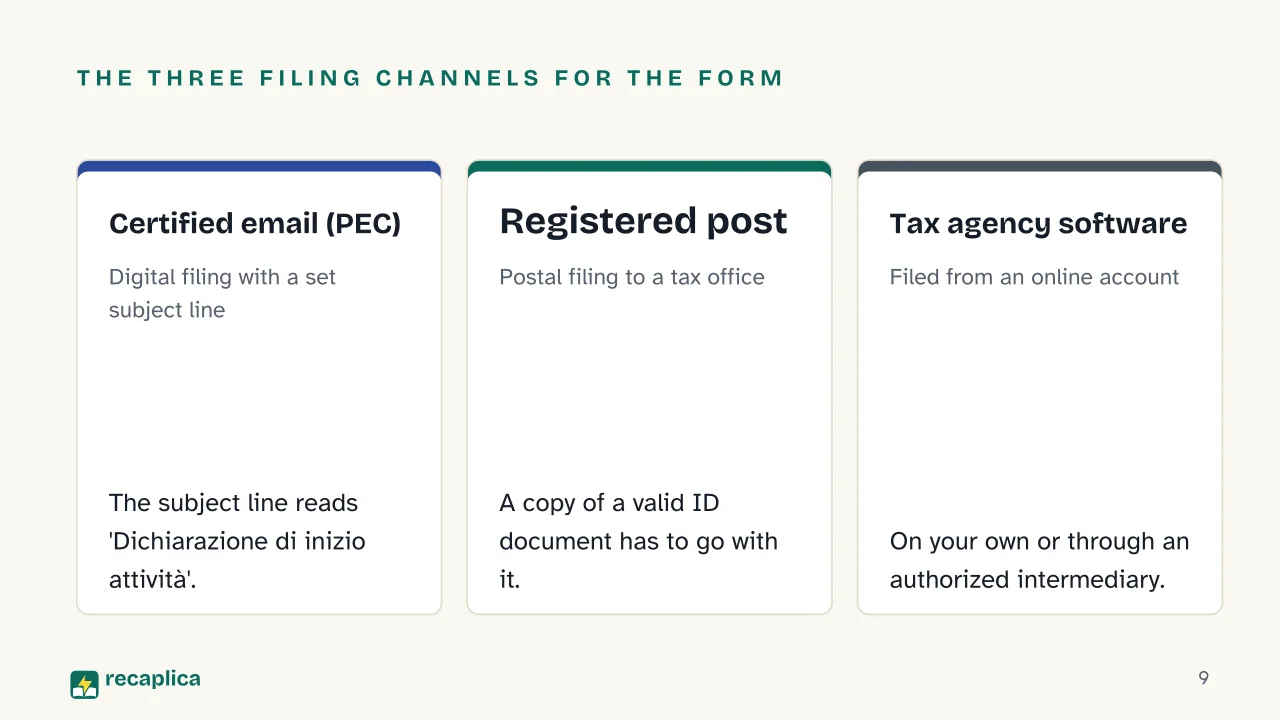
The form can be filed by certified email (PEC), registered post, or through the tax agency's own software from an online account.
Anyone running a business or craft activity uses the Comunicazione Unica instead of form AA9/12 alone.
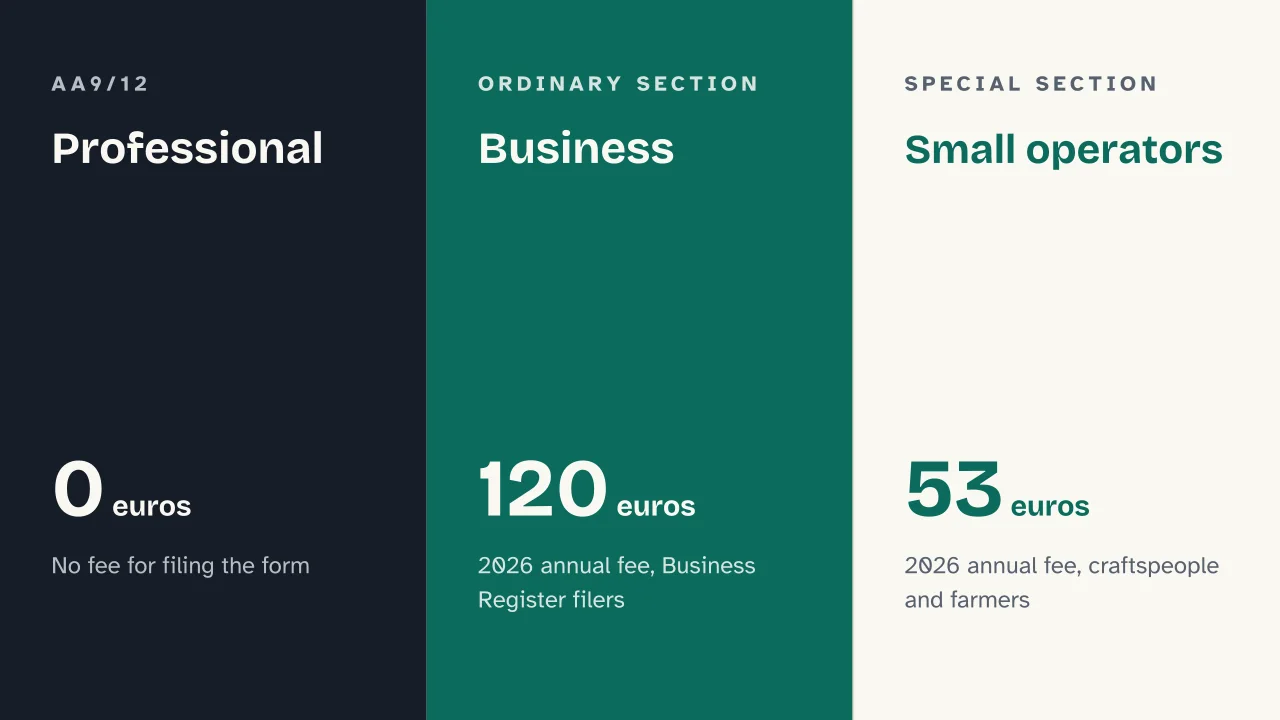
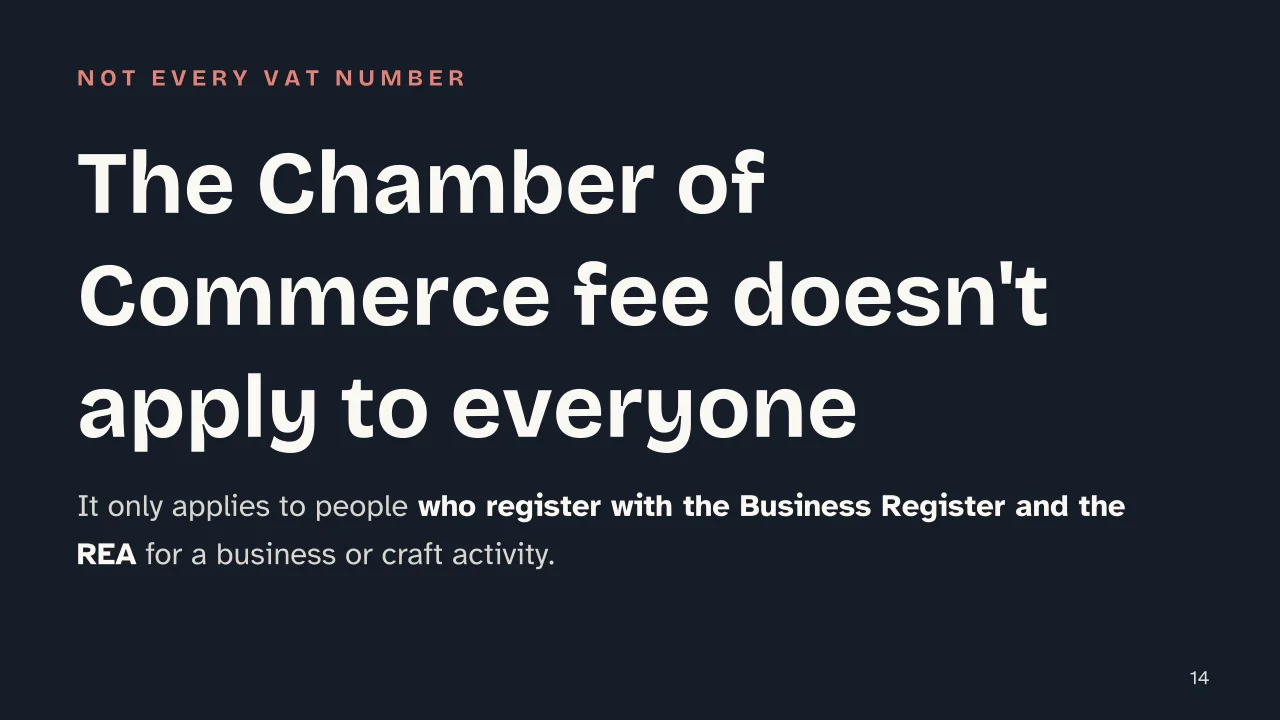
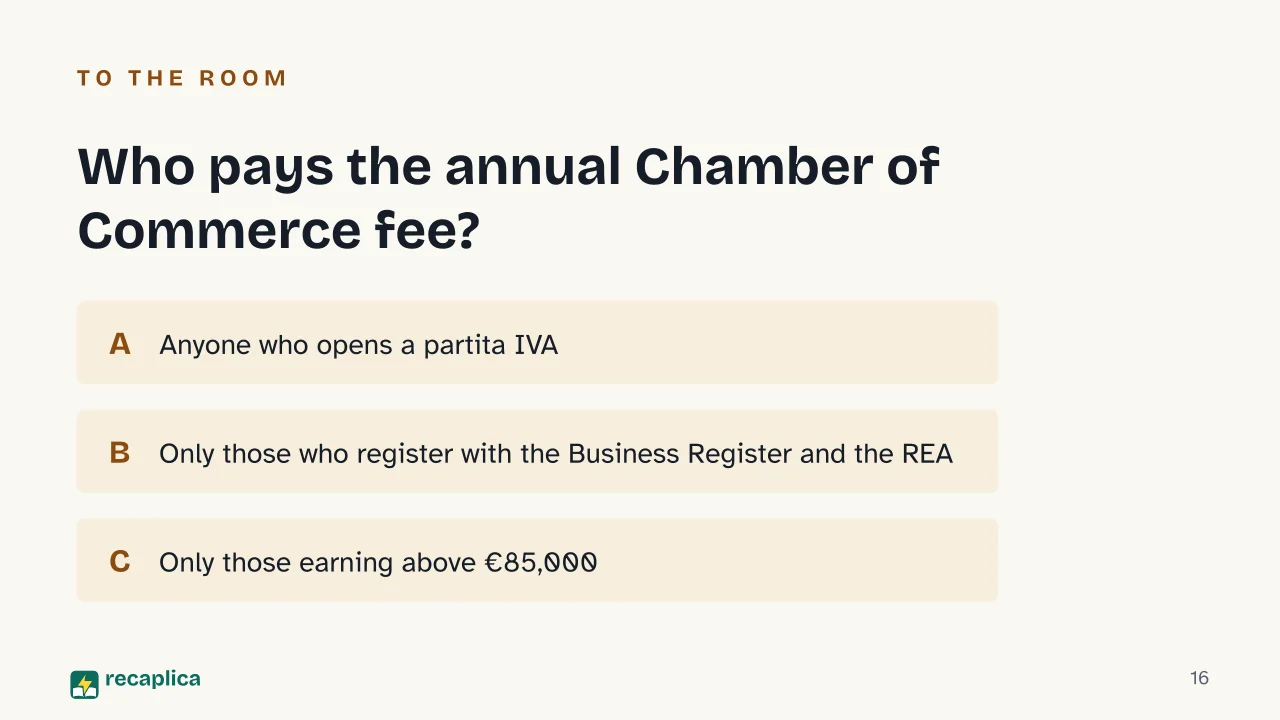
The annual Chamber of Commerce fee (€120 for the ordinary section, €53 for the special section in 2026) applies to people who register with the Business Register, not to a professional who opens a partita IVA on their own.
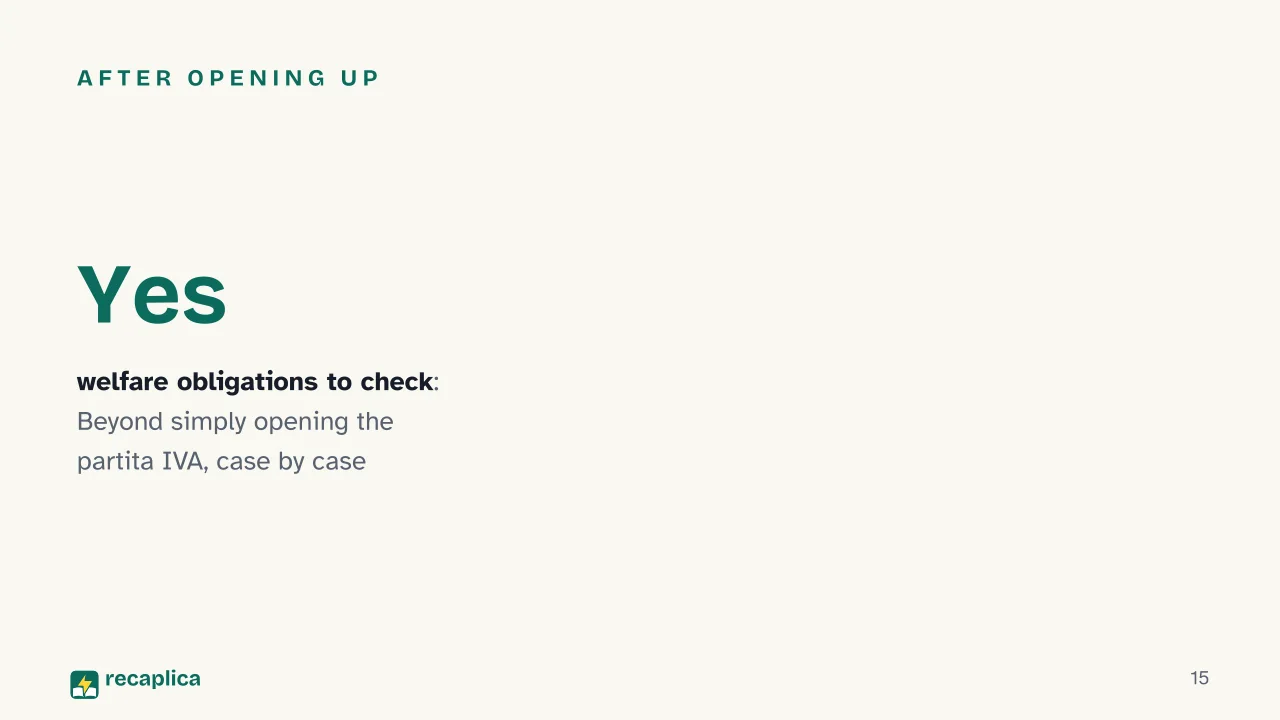
Starting an activity also brings welfare-related obligations that need checking case by case, beyond simply opening the VAT number.
Key figures
€120 The 2026 annual fee sole proprietorships owe in the Chamber of Commerce's ordinary section, due from anyone who registers with the Business Register and the REA. Source: Chamber of Commerce of Rome
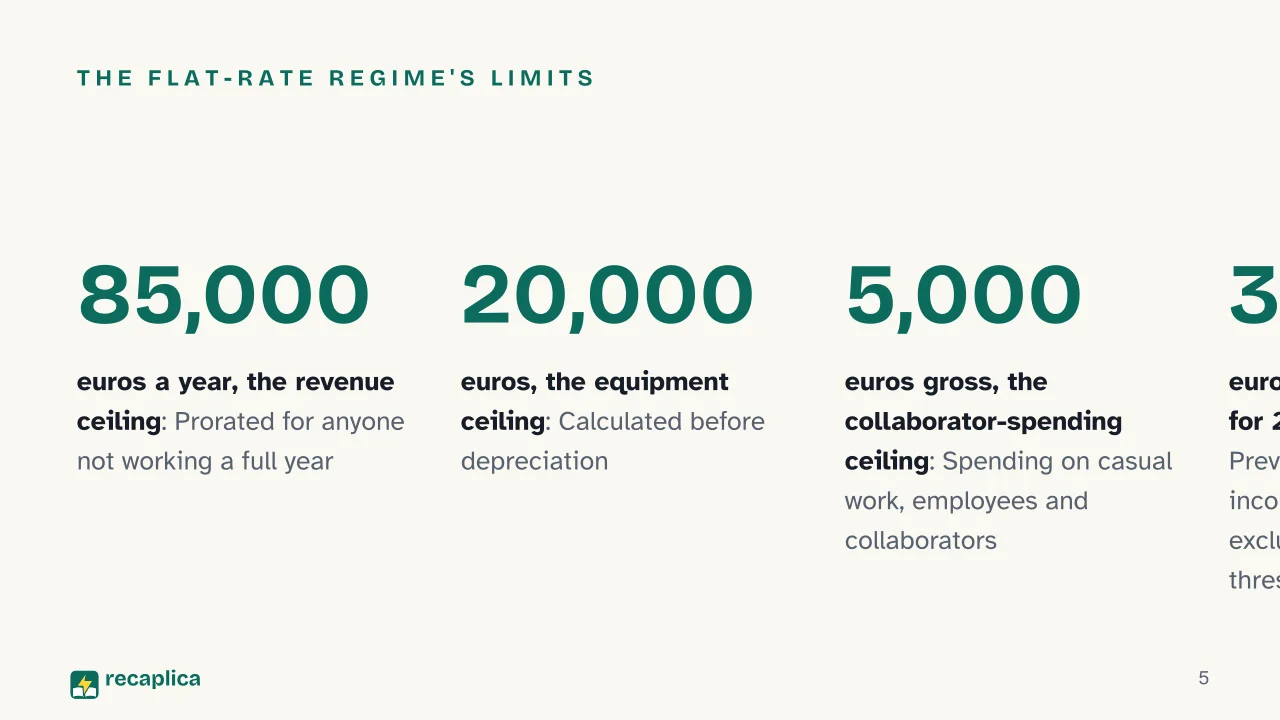
€35,000 For 2025 and 2026, the previous-year employment-income threshold above which the exclusion from the flat-rate regime kicks in. Source: Agenzia delle Entrate
Deep Dive
Form AA9/12 is what an individual uses to tell the Agenzia delle Entrate they’re opening a partita IVA for a professional activity, when registration with the Business Register isn’t required. It has to be filed within 30 days of the date the activity starts, and it’s on that same filing that someone states they want to use the flat-rate regime: anyone starting a brand-new activity can do this by stating, in the VAT filing, that they expect to meet the requirements, without having to wait a year to demonstrate it.
The form can be filed in more than one way. One is certified email, or PEC, with “Dichiarazione di inizio attività” as the subject line. Another is registered post, with a copy of a valid ID document attached, sent to any Agenzia delle Entrate office. The third is filling in the form using the software the tax agency provides and filing it directly through the online service in an account, on your own or through an authorized intermediary.
Practical example: someone starting out as a consultant fills in form AA9/12 with their ATECO business-activity code, states on the same filing that they want to use the flat-rate regime by declaring an expectation of meeting its requirements, and files everything through the Agenzia delle Entrate’s software from their own online account, within 30 days of the first day of activity.
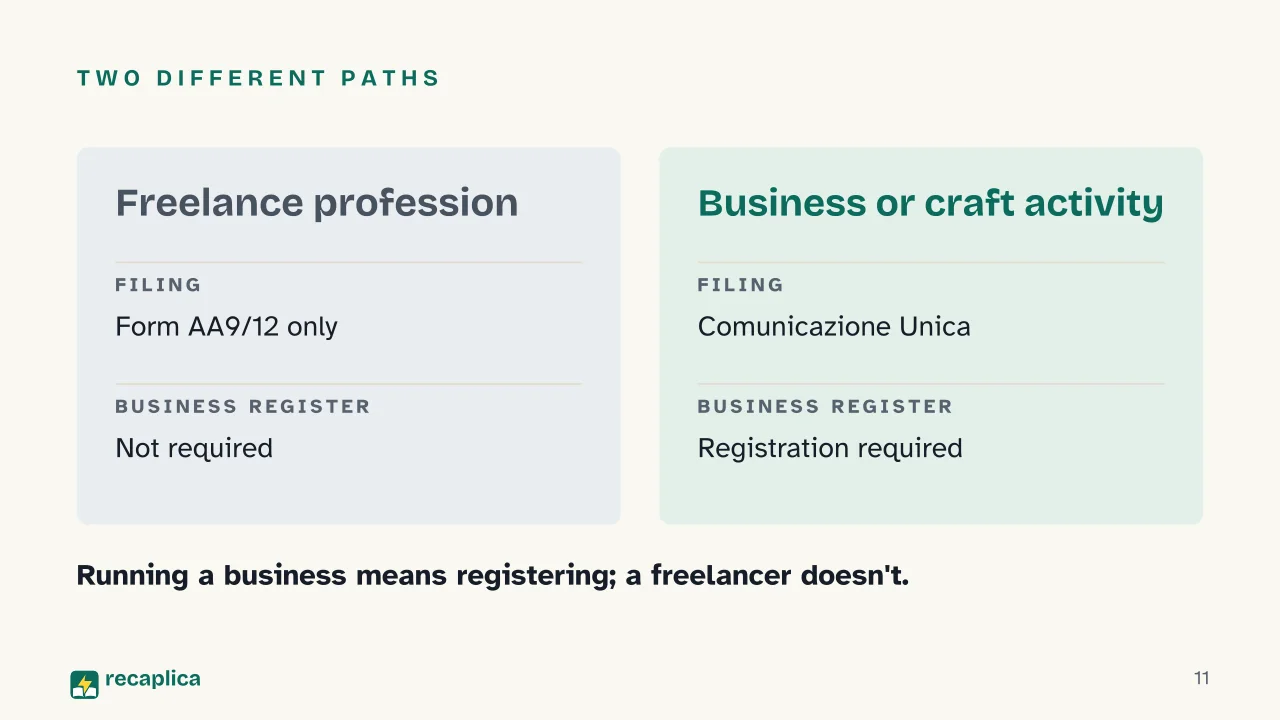
Anyone running a business or craft activity instead follows a different path: opening, changing or closing that kind of partita IVA requires the Comunicazione Unica d’Impresa, not form AA9/12 alone.
Path
Who uses it
Requires Business Register registration
Form AA9/12
Professional activities (freelancers)
No
Comunicazione Unica d’Impresa
Business or craft activities
Yes
Opening a partita IVA with only form AA9/12 doesn’t carry a filing fee of its own. The Chamber of Commerce’s annual fee does exist, but it only applies to those who register with the Business Register and the REA: in 2026 it comes to €120 for sole proprietorships in the ordinary section, and €52.80 (rounded to €53) for the special section, covering small operators, craftspeople and farmers. A freelance professional who opened a partita IVA with only the AA9/12, without registering with the Business Register, doesn’t owe this fee.
Opening a partita IVA for a professional activity generally brings welfare-related obligations too, which need checking case by case against your own position, beyond simply filing form AA9/12.
Before even reaching the form, there are entry requirements to check for the chosen regime: the Italian partita IVA is the identifier this procedure produces, while the flat-rate regime is the tax scheme someone declares they want from the moment they open up, with its own thresholds and exclusions — including the one tied to employment income that was too high in previous years.
Slide deck
Slides ready to download and make your own in PowerPoint or Google Slides, with speaker notes. Pick the Flash cut or the Full one.
✗ Myth Opening a partita IVA under the flat-rate regime always costs a few hundred euros just for the paperwork.
✓ Reality Form AA9/12, used by anyone with a professional activity, doesn't carry a filing fee at the Agenzia delle Entrate. The Chamber of Commerce's annual fee does exist, but it only applies to people who register with the Business Register and the REA for a business or craft activity through the Comunicazione Unica.
✗ Myth Someone who already has a job can never open a partita IVA under the flat-rate regime.
✓ Reality They can, unless their previous-year employment income was above a certain threshold: €30,000 in general, raised to €35,000 for 2025 and 2026. Below that threshold, the exclusion doesn't apply.
✗ Myth Opening a partita IVA means going in person to an intermediary or a tax office.
✓ Reality Form AA9/12 can be filed alone, by certified email (PEC), registered post, or through the software the Agenzia delle Entrate provides from an online account.
Mind map
Drag the background to move around and the nodes to reposition them; use − and + to collapse and expand branches.
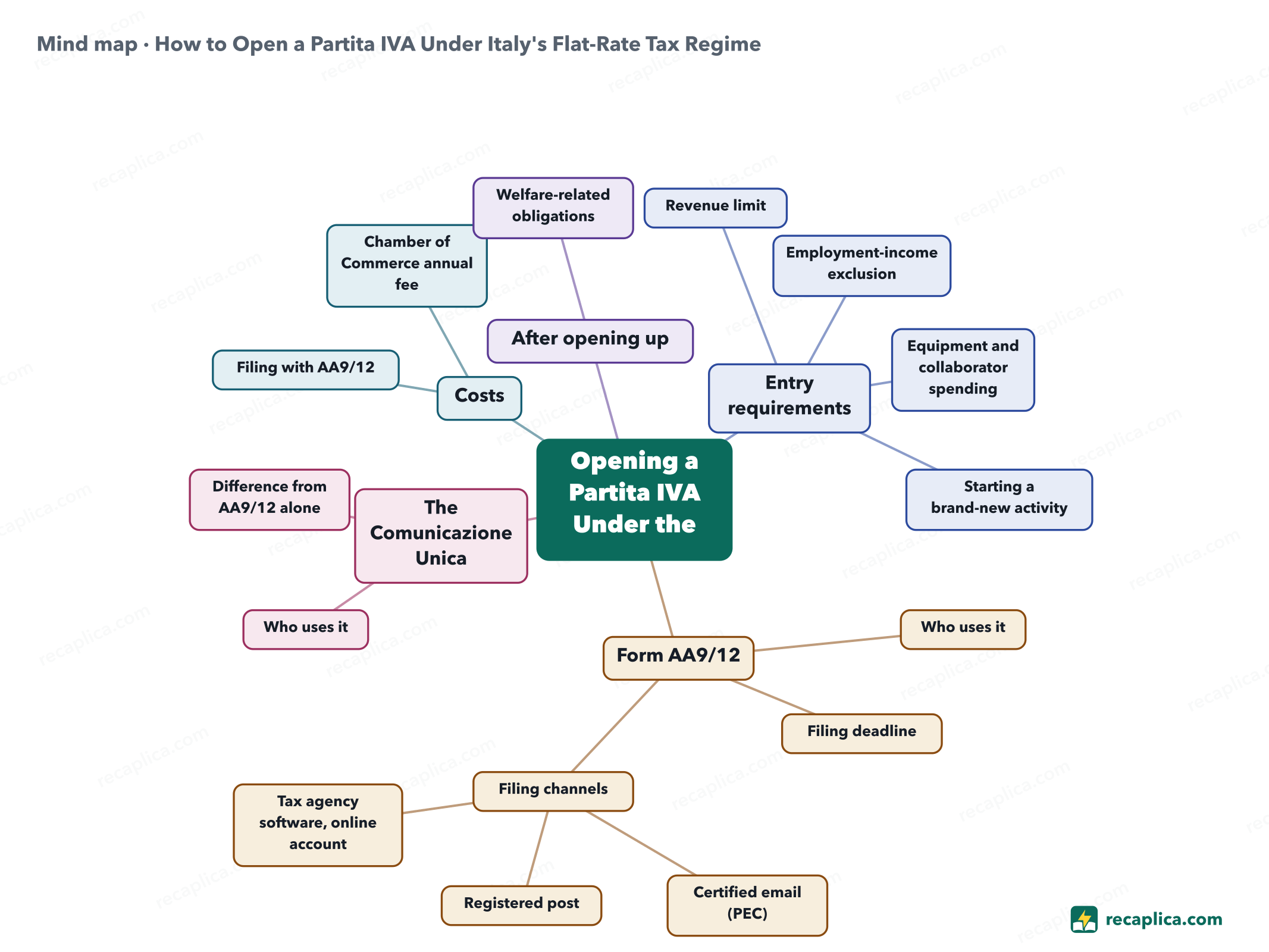
Revenue limitNo more than €85,000 a year, prorated
Employment-income exclusion€30,000 in general, €35,000 for 2025-2026
Equipment and collaborator spendingUp to €20,000 in equipment, up to €5,000 gross for collaborators
Starting a brand-new activityJoin by stating expected requirements in the VAT filing
Form AA9/12
Who uses itProfessional activities, when Business Register registration isn't needed
Filing deadlineWithin 30 days of starting the activity
Filing channels
Certified email (PEC)
Registered post
Tax agency software, online account
The Comunicazione Unica
Who uses itBusiness or craft activities
Difference from AA9/12 aloneBrings registration with the Business Register and the REA
Costs
Filing with AA9/12No fee for the filing itself
Chamber of Commerce annual fee€120 ordinary section, €53 special section in 2026, only for Business Register filers
After opening up
Welfare-related obligationsTo check case by case, beyond simply opening the partita IVA
Quiz: test yourself
Answer the questions to check what you have learned: you get instant feedback and a short explanation.
Grade0/100/5
Answers: 1-B · 2-A · 3-B · 4-B · 5-C
Flashcards
Tap the card to flip it and check whether you remember the answer, then move to the next one.
1 / 6
Explain it in your own words
The ultimate test: if you can explain it in simple words, you've truly understood it. Write your explanation, then compare it with the Recap.
Your explanation is saved only on this device.
Opening a partita IVA under Italy's flat-rate regime forfettario means filing form AA9/12 with the Agenzia delle Entrate within 30 days of starting the activity, using that same filing to state an intention to join the flat-rate scheme. The form can go in by certified email (PEC), registered post, or through the tax agency's own software from an online account. Anyone running a business or craft activity follows a different route instead, the Comunicazione Unica, which also brings an annual Chamber of Commerce fee that a professional filing only the AA9/12 doesn't owe. Before reaching the form, it's worth checking the regime's entry requirements: a revenue ceiling and a handful of conditions that rule people out, which apply even to someone starting completely from scratch.
Frequently asked questions
How do you open a partita IVA under the flat-rate regime?
You fill in and file form AA9/12 with the Agenzia delle Entrate within 30 days of starting the activity, stating in that same filing that you want to join the flat-rate regime. Anyone running a business or craft activity uses the Comunicazione Unica d'Impresa instead.
What are the requirements for opening a partita IVA under the flat-rate regime?
You need revenue or fees, prorated for partial years, not exceeding €85,000, equipment costing no more than €20,000 overall, and spending on employees and collaborators no higher than €5,000 gross. Anyone whose previous-year employment income was above a certain threshold (€30,000, raised to €35,000 for 2025 and 2026) is excluded.
How much does it cost to open a partita IVA under the flat-rate regime?
Filing form AA9/12 doesn't carry a fee of its own. Anyone who registers with the Business Register and the REA for a business or craft activity instead pays the Chamber of Commerce's annual fee: €120 for the ordinary section and €53 for the special section in 2026.
Can you open a partita IVA under the flat-rate regime online?
Yes: form AA9/12 can be filled in using the software the Agenzia delle Entrate provides and filed straight from an online account, on your own or through an authorized intermediary. Certified email (PEC) and registered post also work.
Does opening a partita IVA also bring obligations toward INPS?
Starting a professional activity with a partita IVA generally brings welfare-related obligations too, which need checking against your own situation beyond simply opening the VAT number.
Every Recap goes through an independent review before publication.
Statistics, only if you say so
To learn which Recaps help most we would use Google Analytics, with aggregate, anonymous data. It starts only with your OK, and you can change your mind anytime. Privacy policy