|
recaplica
VAT Number in Italy: What It Is and How It Differs from the Tax Code | ||||||||||||
| © 2026 Recaplica · recaplica.com — All rights reserved | ||||||||||||
VAT Number in Italy: What It Is and How It Differs from the Tax CodeWhat to print Page numbers appear when printing with default margins. SlidesChoose a cut Flash10 slidesThe essential thread, to present in classFull14 slidesEvery chapter and the deeper detailBoth come with speaker notes. In 30 seconds quick readAn Italian VAT number (partita IVA) is an 11-digit code that uniquely identifies anyone carrying out a business activity in Italy, and it must appear on every invoice or commercial document issued or received. You get one by filing a start-of-activity declaration with the Agenzia delle Entrate (the Italian tax agency) within 30 days of starting the activity: form AA9/12 for individuals with a sole proprietorship, form AA7/10 for companies, sent through Comunicazione Unica, the Fisconline or Entratel online services, in person at a tax office, or by registered mail. It is a different code from the personal tax code (codice fiscale), which identifies the person in every dealing with public bodies regardless of any business activity: a VAT number arrives later, only once the person starts a business activity. For entities other than individuals, such as companies, the picture changes: their tax code has the same 11-digit structure as a VAT number and, in practice, coincides with it. Key Points
Deep DiveWhat a VAT number isAccording to the Agenzia delle Entrate, a VAT number (partita IVA) is an 11-digit code that uniquely identifies anyone carrying out a business activity across Italian territory. It must appear on every invoice or commercial document issued or received in the course of the activity: it’s essentially the identification number the tax authority uses to follow every transaction of a business, a professional, or a self-employed worker. Anyone who registers for a VAT number is almost always stepping outside the payroll employment that makes up most of the labor market: they supply goods or services on their own account, and with the VAT number they also take on the tax obligations that come with it, starting with invoicing. How the code is assigned depends on who’s applying for it. Businesses already listed in the business register file the start-of-activity declaration through Comunicazione Unica, electronically. Individuals not listed in the register — professionals and self-employed workers, among others — fill in form AA9/12 or AA7/10 instead. Non-residents in Italy follow a third path, filing a direct identification declaration with the Pescara Operations Center. How to register for a VAT numberTo register for a VAT number, you need to fill in and send the Agenzia delle Entrate a start-of-activity declaration within 30 days of starting the activity. Which form to use depends on who’s filing it: individuals with a sole proprietorship use form AA9/12, companies use form AA7/10. The declaration can be filed electronically through Comunicazione Unica d’impresa, or online through the Agenzia delle Entrate’s Fisconline or Entratel services. Anyone using these online channels logs in with the same digital credentials that, across other public administration services, run through SPID, Italy’s public digital identity system. Alternatively, the declaration can be filed in person at an Agenzia delle Entrate office or sent by registered mail.
The same 30-day deadline doesn’t only apply to registration: it also applies if, during the course of the activity, one of the details listed in the original declaration changes. In that case, the same form is filled in and filed again, with the updated details, within 30 days of the change. And it still applies when the activity closes: the closure has to be reported using the same form and within the same deadline. The difference between a VAT number and the tax codeConfusing the two codes is common, but their function has always been different. The tax code (codice fiscale) is the tool used to identify a person in every dealing with public bodies and administrations, and for an individual it’s assigned regardless of whether they carry out a business activity. The VAT number, instead, only arrives once that person decides to start a business activity: it doesn’t take the tax code’s place, it sits alongside it.
The picture changes for entities other than individuals, such as companies: for them, the tax code is made of 11 numeric characters, with a defined structure — the first seven identify the taxpayer with a sequential number, the next three identify the office that issued it, the last is a check character. That’s the same length and the same logic as the VAT number, and in practice the two codes coincide: a company doesn’t have a tax code on one side and a separate VAT number on the other, but a single number that serves both functions. There are also entities other than individuals that aren’t required to file the VAT start-of-activity declaration — bodies, associations, foundations, condominiums, and parishes among them — because they don’t carry out an activity relevant for VAT purposes. Even so, they remain required to state a tax code wherever one is needed, and to get one they can apply at any Agenzia delle Entrate office. When it changes or closesA VAT number isn’t a number assigned once and then left unmanaged. If one of the details declared at registration changes — the business address or the type of activity, for example — the change has to be reported to the Agenzia delle Entrate within 30 days, using the same form used to register. The same applies to closure: when the activity ends, closing the VAT number follows the same procedure and the same 30-day deadline. Slide deckSlides ready to download and make your own in PowerPoint or Google Slides, with speaker notes. Pick the Flash cut or the Full one.   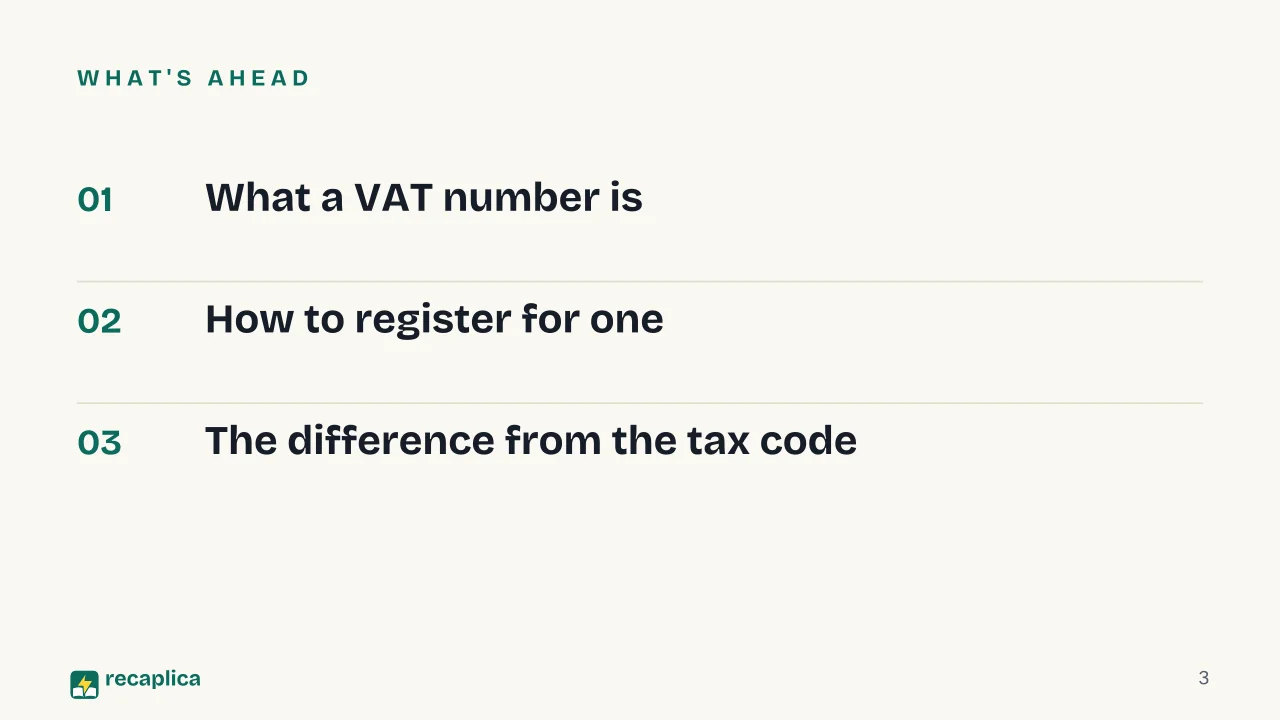  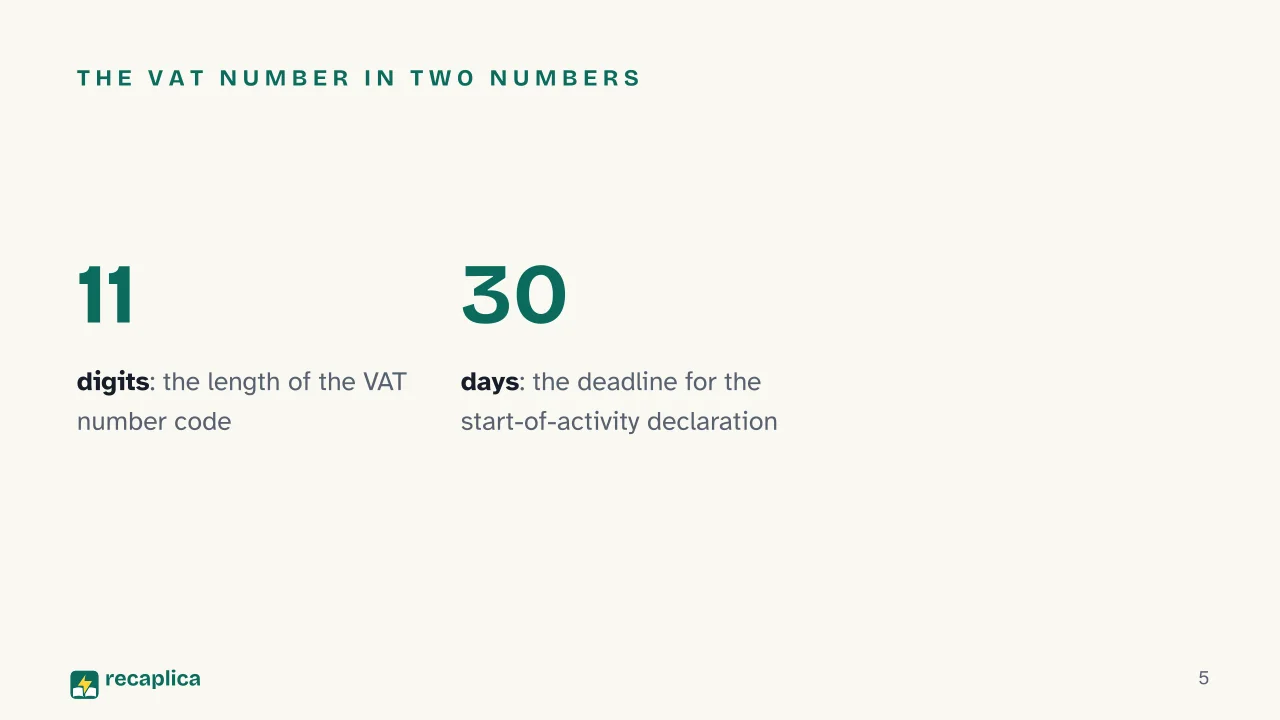 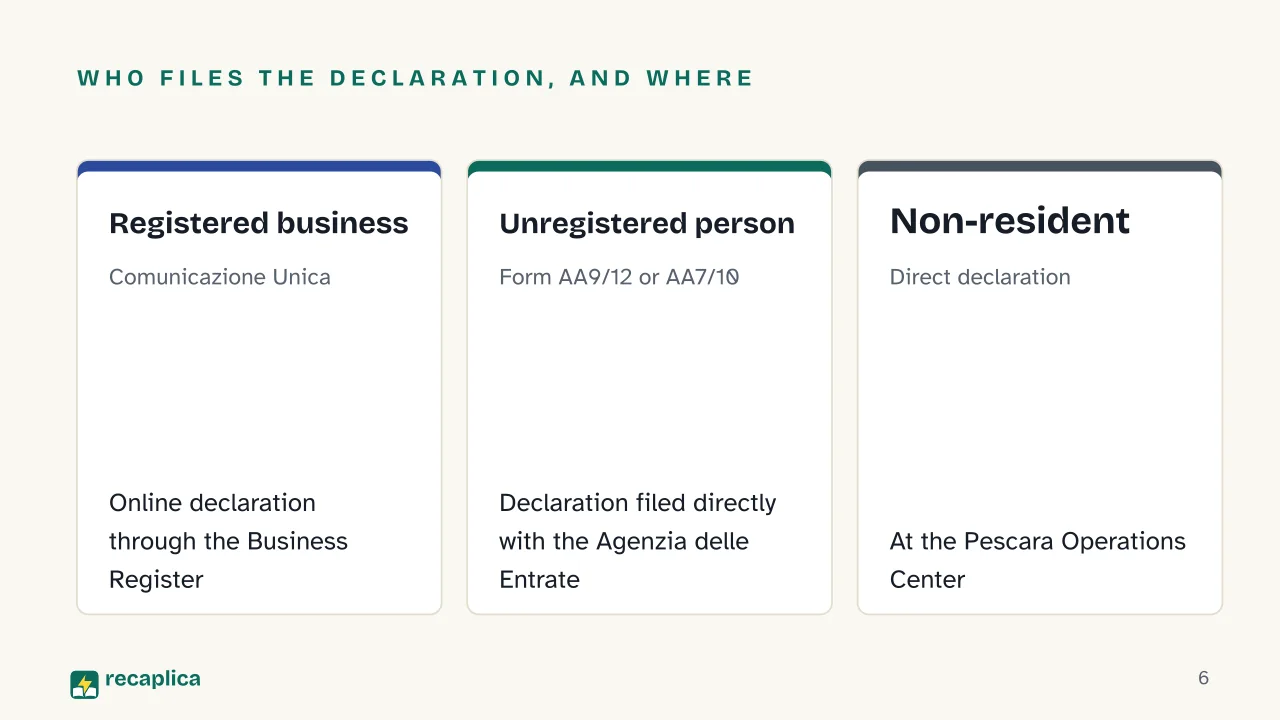  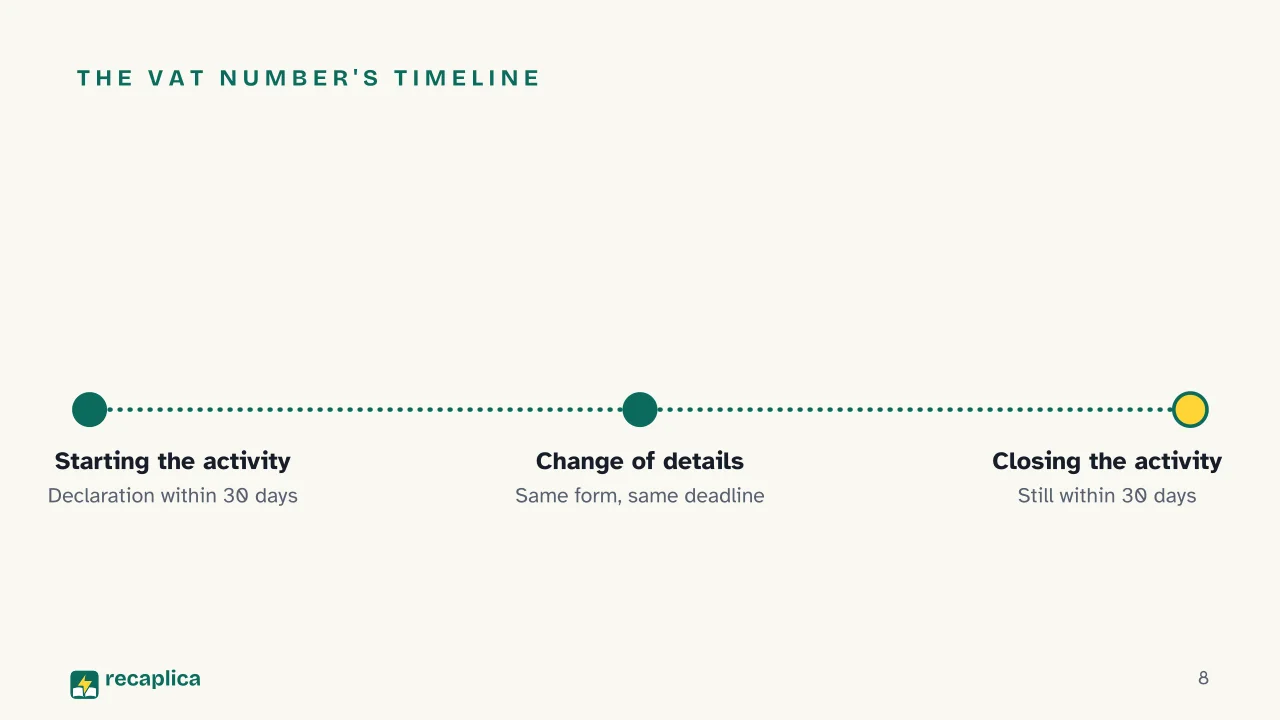 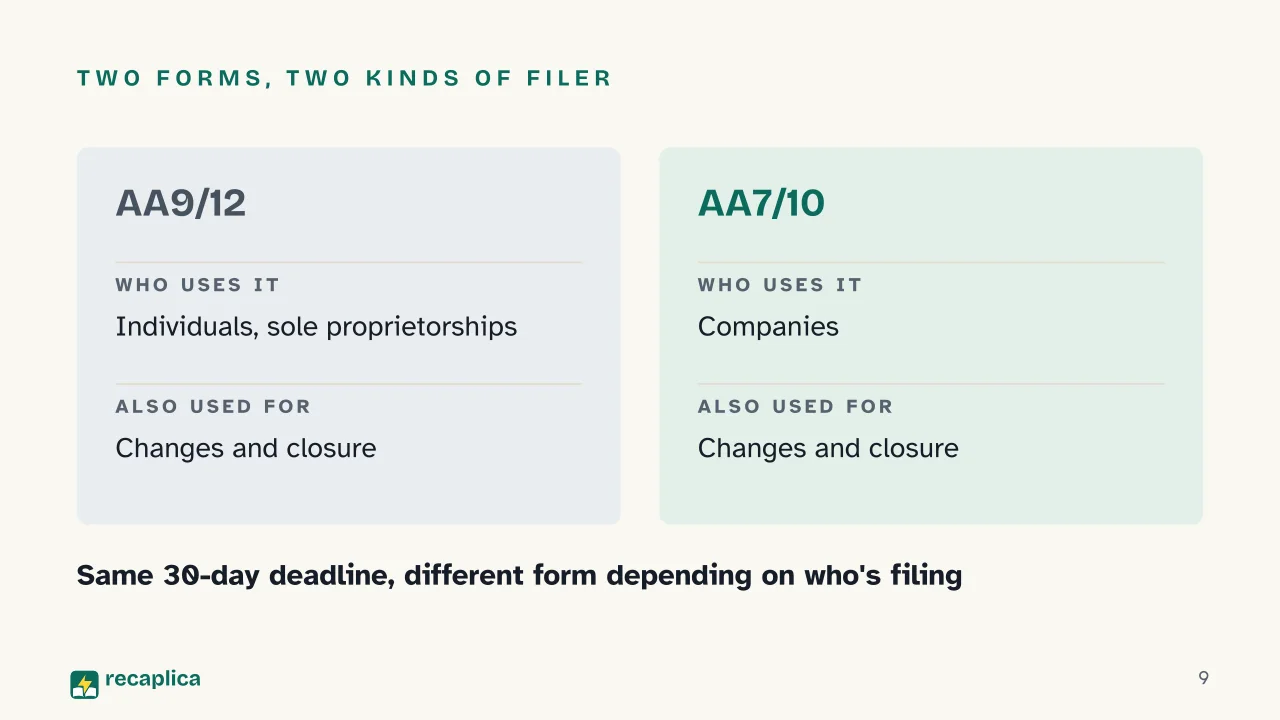  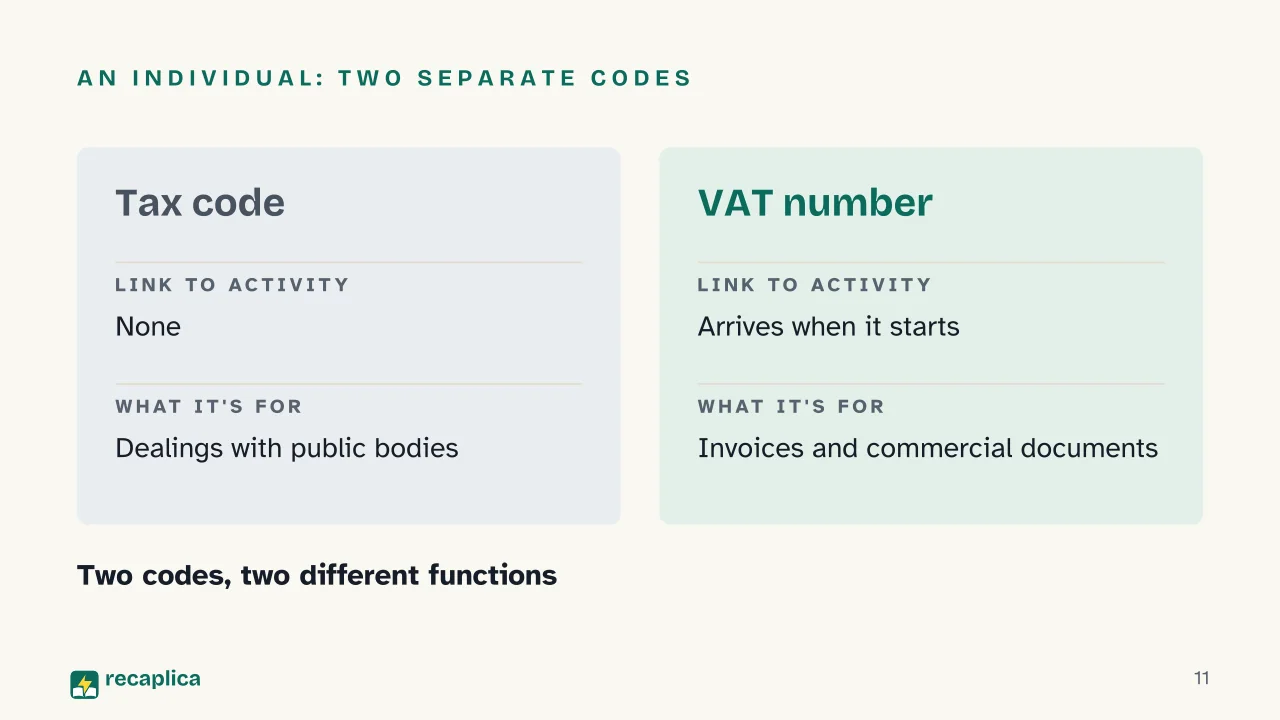 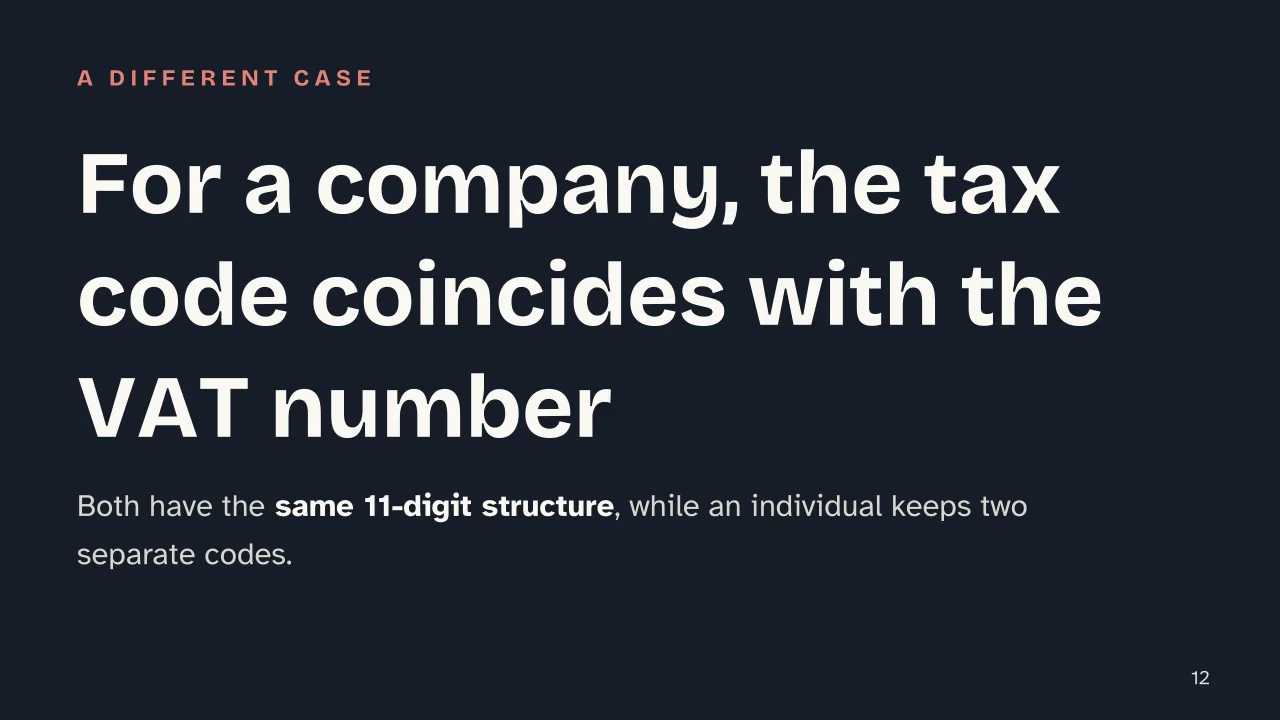 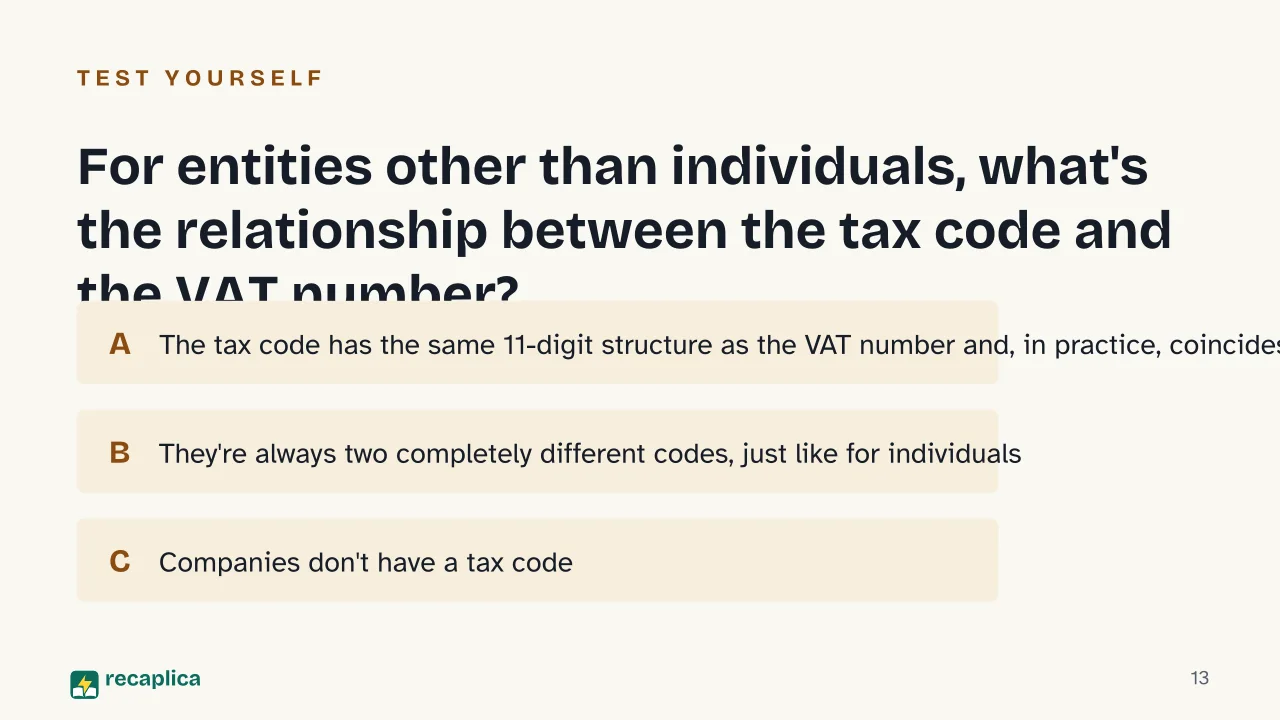  Common myths
Mind mapDrag the background to move around and the nodes to reposition them; use − and + to collapse and expand branches. 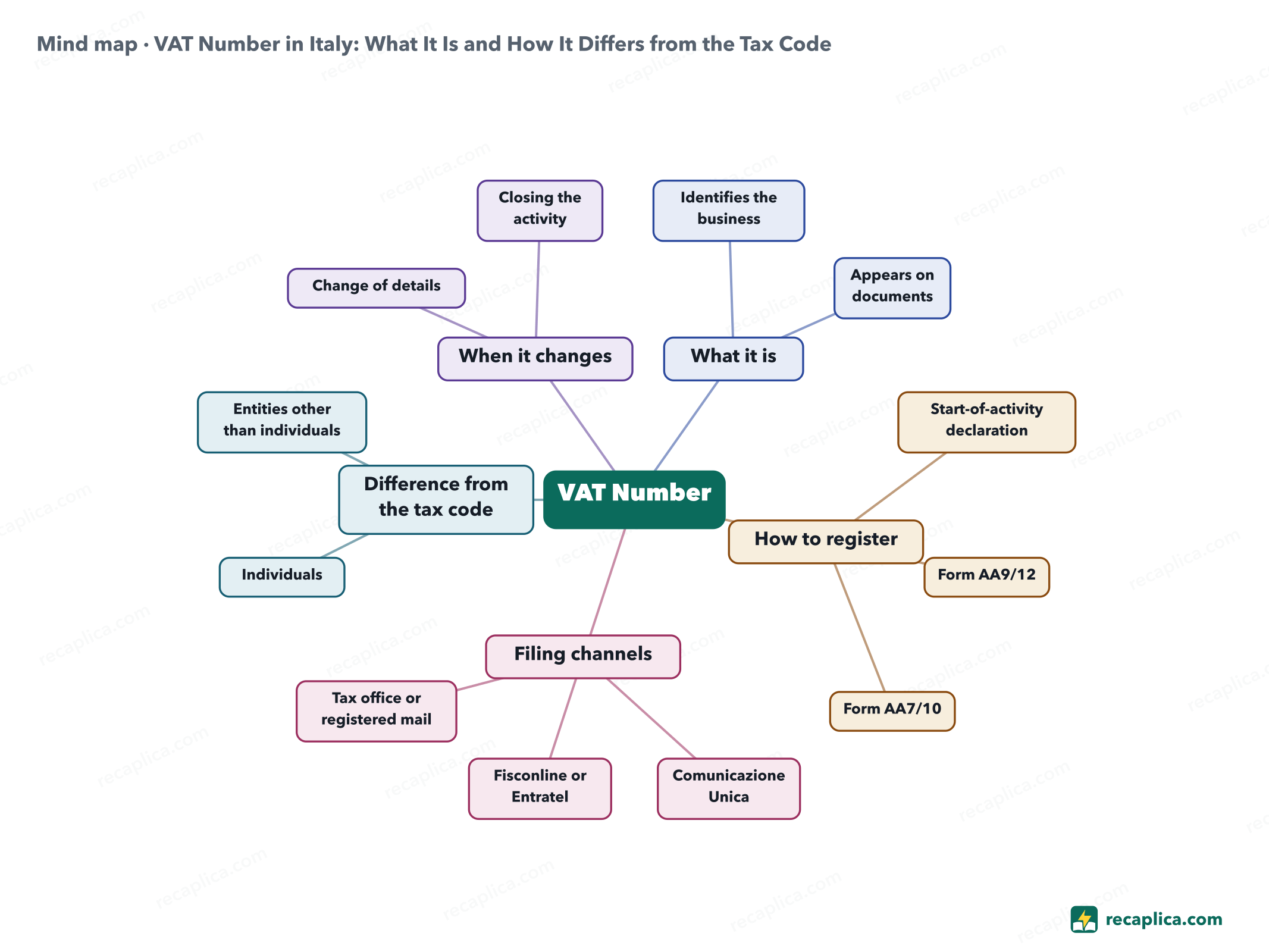
Quiz: test yourselfAnswer the questions to check what you have learned: you get instant feedback and a short explanation. Grade 0/10 0/5
FlashcardsTap the card to flip it and check whether you remember the answer, then move to the next one. 1 / 8 Explain it in your own wordsThe ultimate test: if you can explain it in simple words, you've truly understood it. Write your explanation, then compare it with the Recap. Your explanation is saved only on this device.
Frequently asked questionsWhat is an Italian VAT number?It's an 11-digit code that, according to the Agenzia delle Entrate, uniquely identifies anyone carrying out a business activity in Italy; it must appear on every invoice or commercial document issued or received. How do you register for a VAT number in Italy?You file a start-of-activity declaration with the Agenzia delle Entrate within 30 days of starting the activity: form AA9/12 for individuals with a sole proprietorship, AA7/10 for companies, sent through Comunicazione Unica, the Fisconline or Entratel online services, in person at a tax office, or by registered mail. What's the difference between a VAT number and the Italian tax code?For an individual they're two separate codes: the tax code identifies the person in every dealing with public bodies regardless of any activity, while the VAT number is only added once a business activity starts. For a company, on the other hand, the tax code has the same 11-digit structure as the VAT number and, in practice, coincides with it. What happens if the VAT number's details change or the activity closes?A new declaration must be filed using the same form used to register, within 30 days of the change or the closure, according to the Agenzia delle Entrate. Every Recap goes through an independent review before publication. |