Skip to content
recaplica

    One moment: security check

    Cloudflare wants to make sure you're not a robot. Tick the box below and your search will continue on its own.

    IT
    recaplica Local Transportation While Traveling: How to Pick the Right Option
    © 2026 Recaplica · recaplica.com — All rights reserved
    Home › Technology

    Local Transportation While Traveling: How to Pick the Right Option

    By Recaplica Newsroom · Updated on September 21, 2026

    What to print

    Page numbers appear when printing with default margins.

    Slides

    Choose a cut

    Flash10 slidesThe essential thread, to present in classFull14 slidesEvery chapter and the deeper detail

    Both come with speaker notes.

    Telegram channel
    recaplica Clear in 30 seconds, yours in 10 minutes.
    In 30 seconds Key points Figures Deep dive Slides Myths Mind map Quiz Flashcards FAQ

    In 30 seconds quick read

    Arriving somewhere unfamiliar always raises the same question: which way of getting around actually fits the trip. Buses and subways cost the least but ask you to figure out lines and tickets on the spot; taxis and ride-sharing apps are more convenient but reward a few checks before you get in; renting a car only pays off in specific situations. The gap between a smooth trip and a stressful one usually comes down to a handful of things verified in advance: cost, safety, time on hand and how far you actually need to go.

    Key Points

    • Cost, safety, time on hand and distance all factor into picking the right mode of transportation.
    • Public transportation is almost always the cheapest option, but its quality swings widely from one city to another, even within Europe.
    • With taxis and ride-sharing apps, checking the license plate, the driver's name and the app's safety features before getting in is worth the extra minute.
    • Rules about who is allowed to drive for these services differ by place, and checking them ahead of time avoids unpleasant surprises.
    • Airport transfers work out better when arranged before arrival, with a company that can be identified on sight.
    • Unmarked cars, hitchhiking and drivers who aren't sober are among the risks travel authorities flag most often.

    Key figures

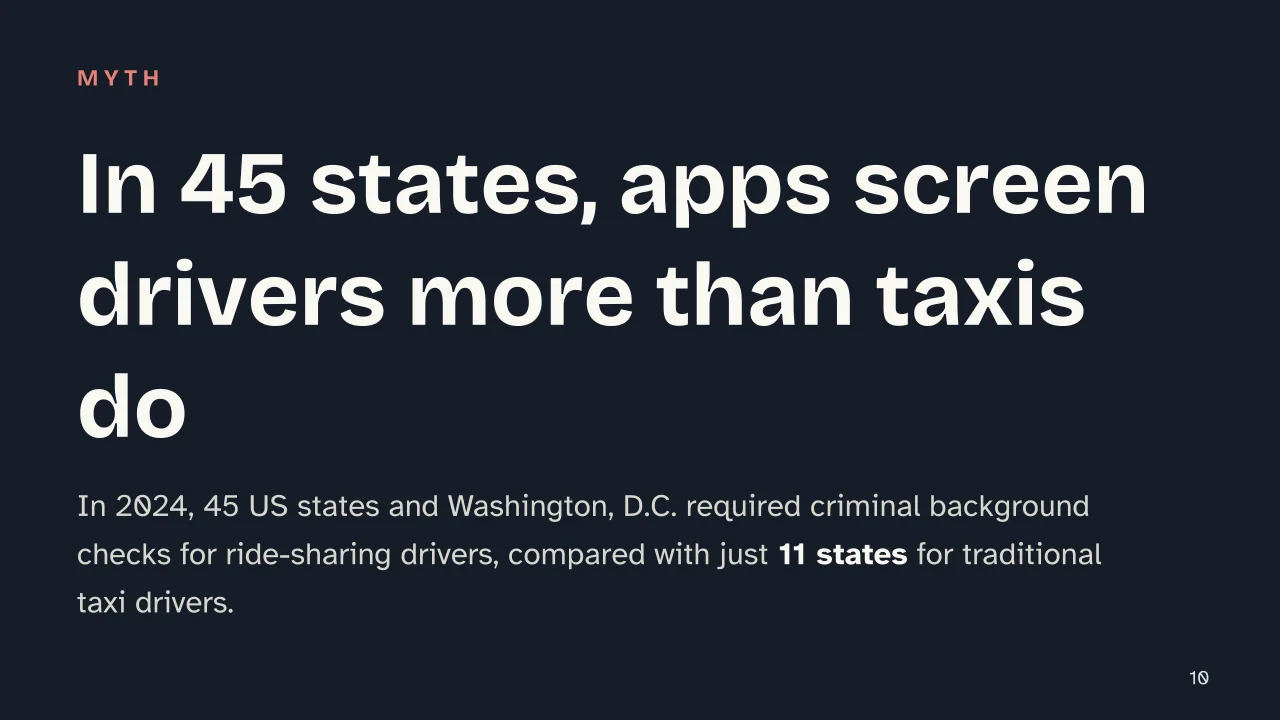
    • 45 states + Washington, D.C. US states that in 2024 required criminal background checks for ride-sharing drivers, compared with just 11 states for traditional taxi drivers: rules differ even within a single country. Source: GAO (Government Accountability Office), 2024
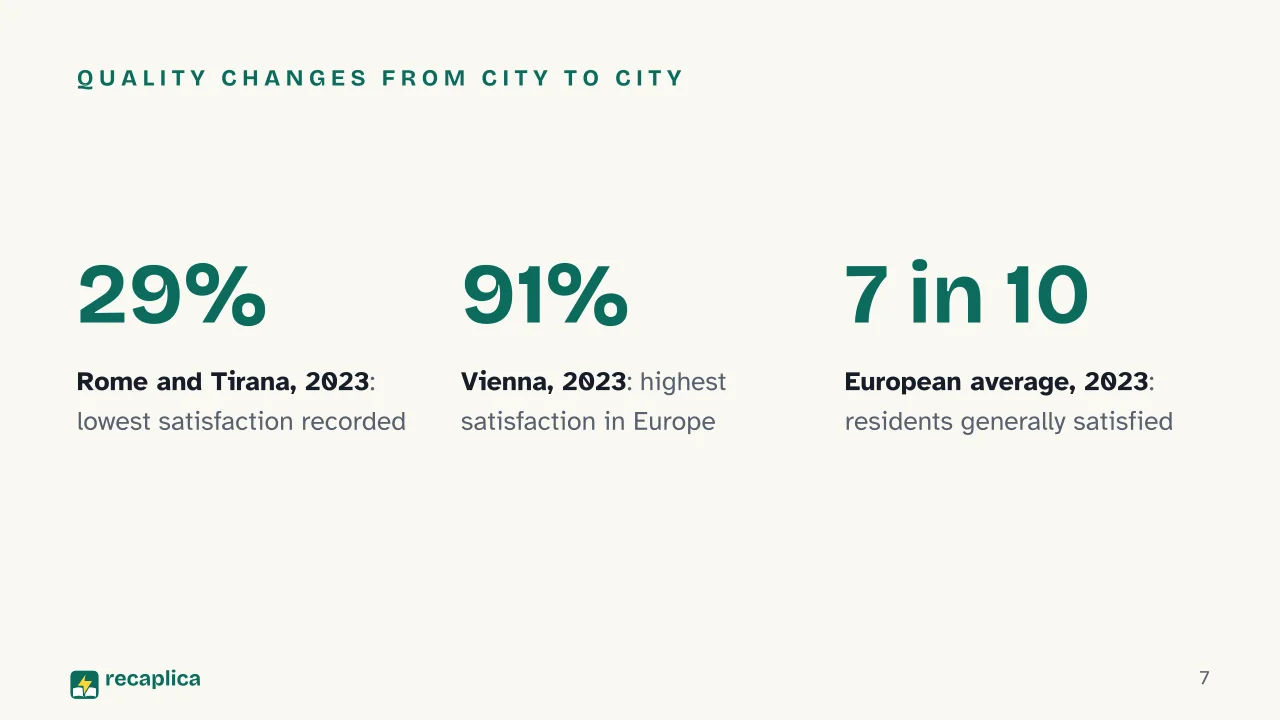
    • 29% to 91% Range of resident satisfaction with public transportation among European capitals in 2023, from a low in Rome and Tirana to a high in Vienna. Source: European Commission, Quality of Life in European Cities 2023 survey
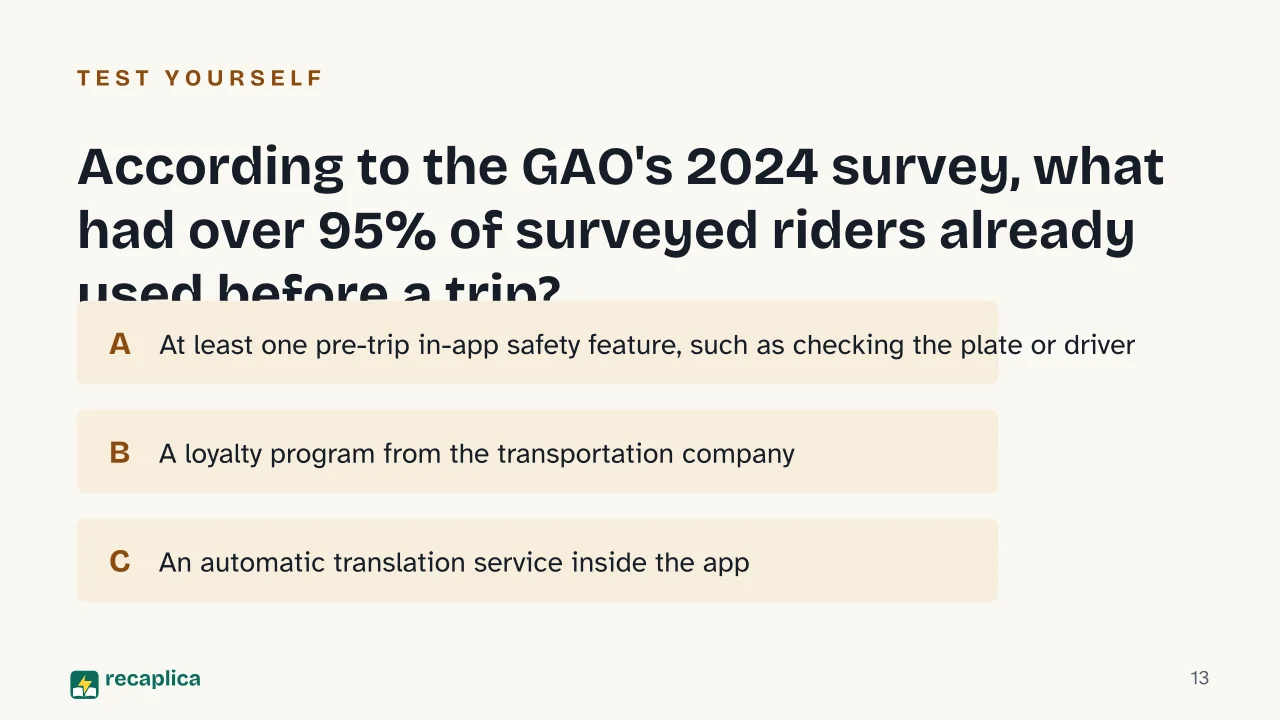
    • Over 95% Share of the 267 respondents who, in a 2024 survey of 304 people across four US locations, had already used at least one in-app safety feature before a ride. Source: GAO, 2024

    Deep Dive

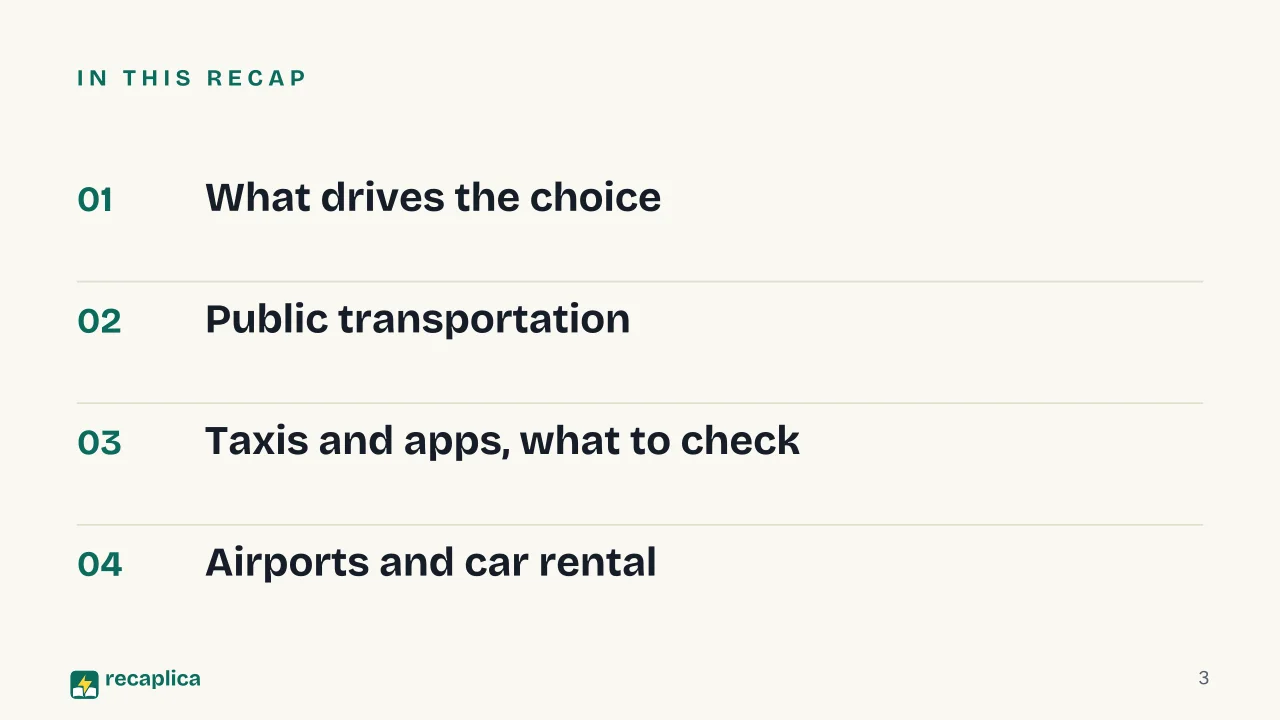
    What actually drives the choice

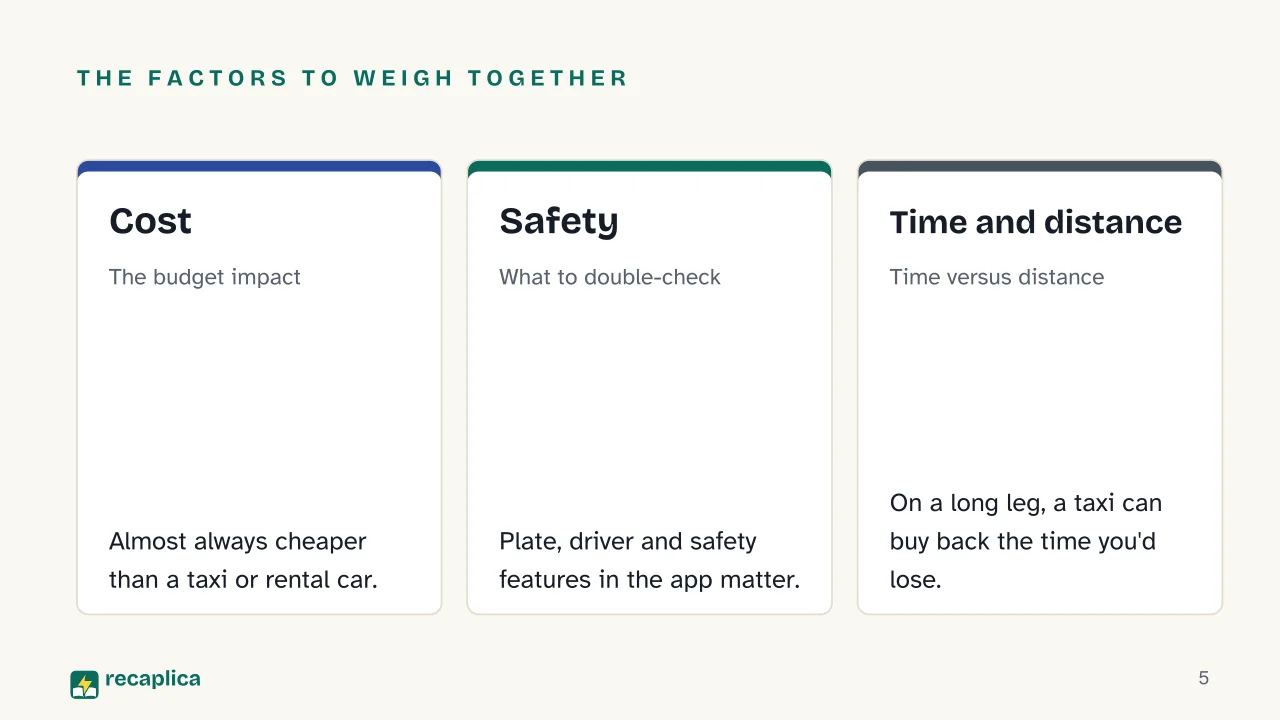
    There is no single best way to get around in a place you don’t know. There is only the option that fits the situation, and that’s almost always the result of four questions asked together: how much it costs, how safe it is, how much time you have, and how far you actually need to go. A bus might be the cheapest way to cover a short hop across town, and still be the wrong call if a connecting train leaves in twenty minutes.

    Public transportation, cheap but different from city to city

    According to UITP, the international association representing urban public transport operators, car-owning families spend noticeably more on getting around each month than people who rely on public transportation, whether you look at the euros spent in the Netherlands or at the share of income low-income households put toward mobility in the United States. These are specific examples, with no precise year attached by the source, not a rule that applies everywhere, but they point to a recurring pattern: public transportation tends to cost less than owning a car.

    Cost isn’t the only thing that changes from one place to the next. A European Commission survey run by IPSOS across 83 European cities in 2023 found that resident satisfaction with public transportation ranged from 29% in Rome and Tirana to 91% in Vienna, with Helsinki, Oslo and Stockholm all above 85%. On average, roughly seven residents in ten said they were generally satisfied, but a gap that wide between capitals means a single verdict on “European public transport” doesn’t say much: what matters is the specific city you’re landing in.

    OptionTypical costTime and convenienceWhat to check first
    Bus and tramLowRequires figuring out lines and ticketsSchedules, departure point, payment method
    SubwayLowFast in big cities, less flexible off the main linesNetwork map, hours of service
    TaxiMedium to highDirect, convenient with luggageCompany signage, visible license, fare or meter
    Ride-sharing appVariableBookable ahead of time, often trackablePlate, driver’s name and photo, in-app safety features
    Car rentalMedium to high, plus insuranceMaximum freedom of movement, requires driving locallyRequired documents, local rules, where to park
    Booked airport transferFixed, known in advanceConvenient with luggage, no haggling on arrivalCompany name, booking confirmation, meeting point

    Taxis and ride-sharing apps, what to check before you get in

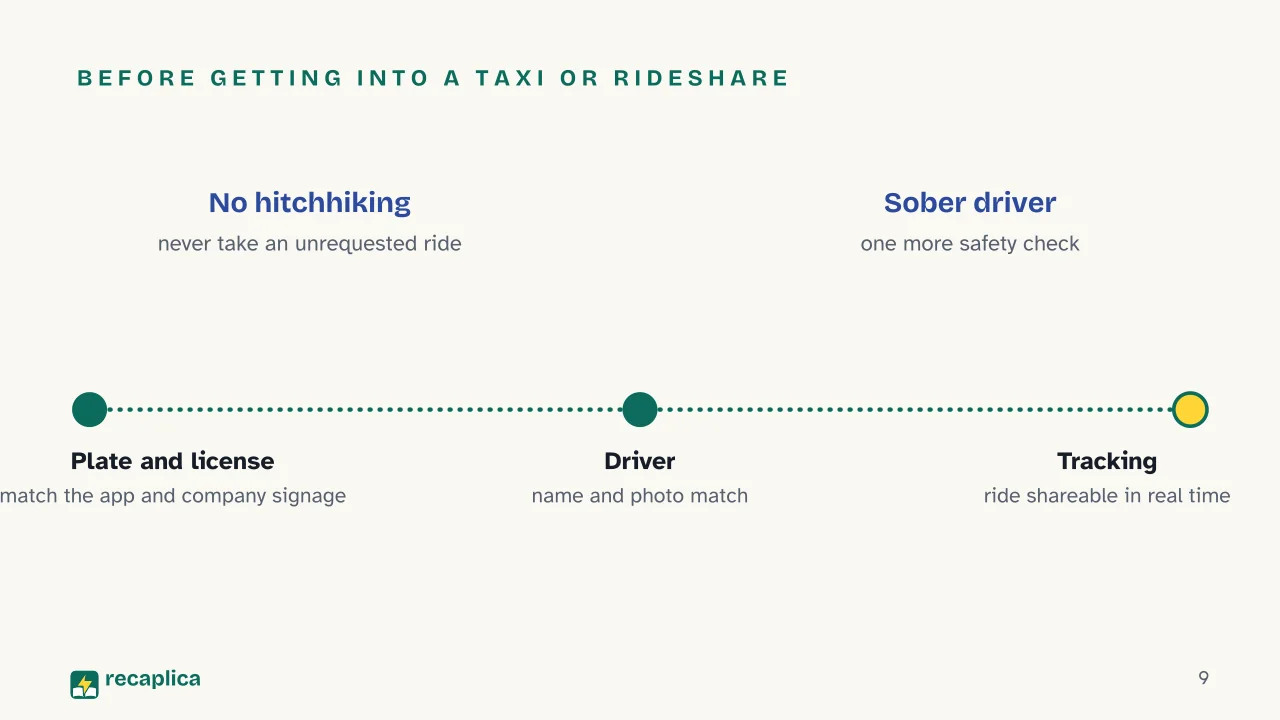
    The US Department of State recommends researching taxis and ride-sharing companies before departure, only getting into cars marked with a reputable company’s signage and a visible license, avoiding cars without markings, never accepting rides from strangers, and never hitchhiking. Some transportation apps let you track a ride in real time, share it with someone else, or verify a unique PIN with the driver at pickup: features that leave less room for error than a taxi hailed off the street.

    A 2024 report from the Government Accountability Office (GAO), the audit arm of the US Congress, interviewed five ride-sharing companies and five taxi companies: all ten ran background checks on drivers, in some cases going beyond what local law required. In the same report, a survey of 304 people across four locations found that over 95% of the 267 respondents to that question had already used at least one pre-trip safety feature, such as checking the plate or driver’s name, and the license plate together with the driver’s name and photo came out as the details riders rated most important for safety.

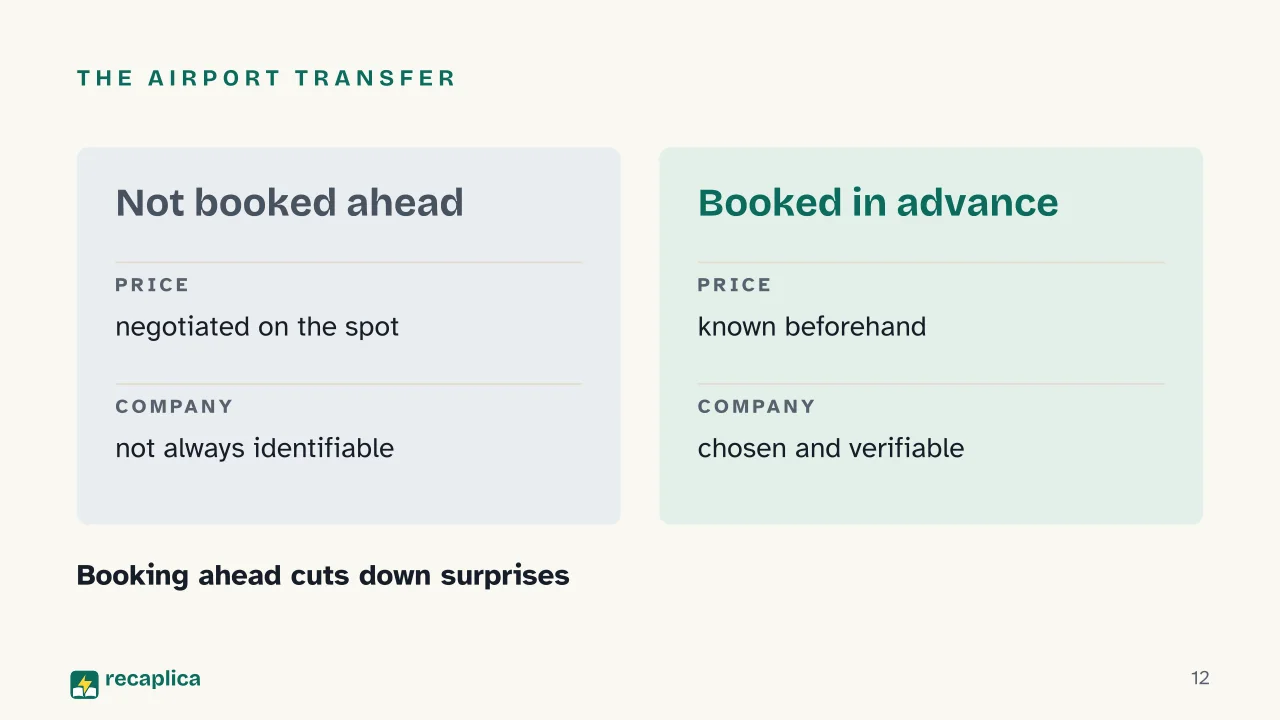
    Practical example: You land at an airport you’ve never seen and need a ride into town. Book a transfer ahead of time with a recognizable company, and you already know the price and who to look for outside; haggle with whichever car shows up instead, and the price stays open until you arrive, with no way to verify who’s actually behind the wheel.

    Car rental and airport transfers

    Renting a car makes the most sense when the destination is poorly served by public transportation, when traveling with several people or bulky luggage, or when moving between multiple stops would make taxis add up fast. It makes less sense in historic centers with restricted traffic or hard parking, where public transportation or ride-sharing apps usually work better. Navigation and transportation apps drain the battery exactly when you need them most, right after landing with the route still to figure out: carrying a charged power bank helps, as long as you follow the rules for carrying and using one on a plane.

    The airport transfer is the moment where deciding ahead beats improvising. The US Department of State recommends arranging transport to and from the airport before arrival, with a licensed and recognizable company: a price agreed in advance avoids surprises, and knowing who to expect outside cuts the risk of getting into the wrong car. In some cities, public transit tickets are still sold only for cash at vending machines: knowing how an ATM actually works means not getting caught without cash right when you need it for that first ticket. Before leaving, checking the travel guidance published by the Italian Ministry of Foreign Affairs, which also runs the country-by-country advisory pages for Italian travelers, helps flag any specific warnings about local transportation at the destination ahead of time.

    Slide deck

    Slides ready to download and make your own in PowerPoint or Google Slides, with speaker notes. Pick the Flash cut or the Full one.
    Slide 1 of the presentation on Local Transportation While Traveling: Local Transportation While TravelingSlide 2 of the presentation on Local Transportation While Traveling: How do you get downtown when you don't know the place?Slide 3 of the presentation on Local Transportation While Traveling: In this RecapSlide 4 of the presentation on Local Transportation While Traveling: Chapter 01: What drives the choiceSlide 5 of the presentation on Local Transportation While Traveling: The factors to weigh together: Cost, Safety, Time and distanceSlide 6 of the presentation on Local Transportation While Traveling: Chapter 02: Public transportationSlide 7 of the presentation on Local Transportation While Traveling: Quality changes from city to citySlide 8 of the presentation on Local Transportation While Traveling: Chapter 03: Taxis and apps, what to checkSlide 9 of the presentation on Local Transportation While Traveling: Before getting into a taxi or rideshareSlide 10 of the presentation on Local Transportation While Traveling: In 45 states, apps screen drivers more than taxis doSlide 11 of the presentation on Local Transportation While Traveling: Chapter 04: Airports and car rentalSlide 12 of the presentation on Local Transportation While Traveling: The airport transferSlide 13 of the presentation on Local Transportation While Traveling: According to the GAO's 2024 survey, what had over 95% of surveyed riders already used before a trip?Slide 14 of the presentation on Local Transportation While Traveling: Your turn
    Flash10 slidesThe essential thread, to present in classFull14 slidesEvery chapter and the deeper detail

    Common myths

    • ✗ Myth Taxis are always more tightly regulated than ride-sharing apps.

      ✓ Reality Not necessarily: in the United States, as of 2024, criminal background checks were legally required for ride-sharing drivers in 45 states plus Washington, D.C., but in only 11 states for traditional taxi drivers. Rules vary by service and by place, so it pays to check the specific situation rather than assume which option is safer.

    • ✗ Myth Public transportation works roughly the same way in every city.

      ✓ Reality Resident satisfaction with local public transportation, in 2023, ranged from 29% in Rome and Tirana to 91% in Vienna. A gap that wide within Europe alone makes a blanket judgment nearly useless: it is worth looking up the specific city before you land.

    • ✗ Myth Every transportation app offers the same safety features.

      ✓ Reality In the GAO's 2024 survey, only some of the ride-sharing and taxi companies interviewed required or allowed drivers to use in-vehicle security cameras. What a given app offers varies from company to company, so it is worth checking before booking a ride.

    Mind map

    Drag the background to move around and the nodes to reposition them; use − and + to collapse and expand branches.
    Customize
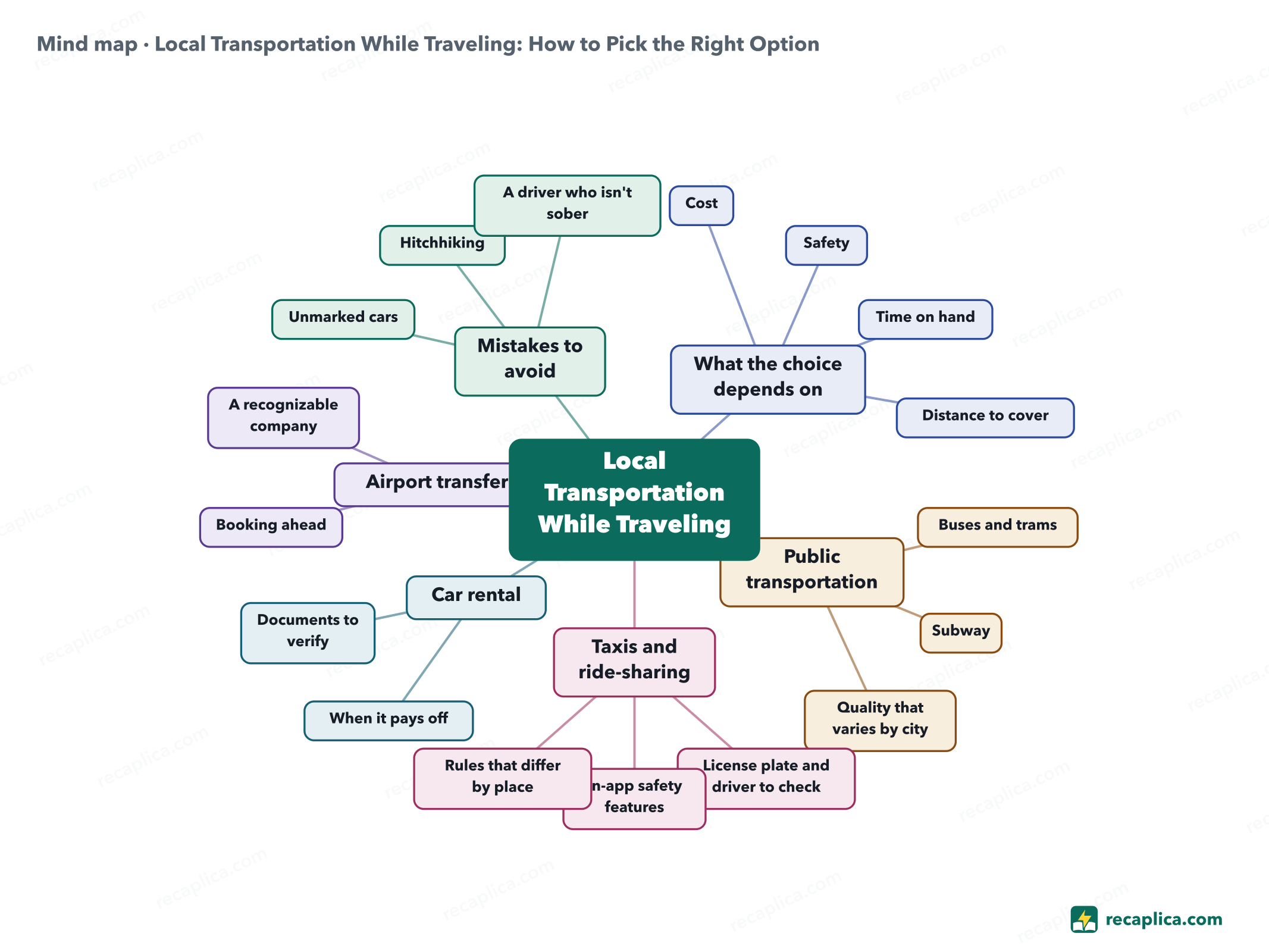
    Mind map: Local Transportation While Traveling: How to Pick the Right Option
    • Local Transportation While Traveling
      • What the choice depends on
        • Cost
        • Safety
        • Time on hand
        • Distance to cover
      • Public transportation
        • Buses and trams
        • Subway
        • Quality that varies by city
      • Taxis and ride-sharing
        • License plate and driver to check
        • In-app safety features
        • Rules that differ by place
      • Car rental
        • When it pays off
        • Documents to verify
      • Airport transfer
        • Booking ahead
        • A recognizable company
      • Mistakes to avoid
        • Unmarked cars
        • Hitchhiking
        • A driver who isn't sober

    Quiz: test yourself

    Answer the questions to check what you have learned: you get instant feedback and a short explanation.

    Grade 0/10 0/5
    1 According to the GAO's 2024 survey, what had over 95% of surveyed riders already used before a trip?

    The GAO's 2024 report found that over 95% of the 267 respondents had used at least one pre-trip in-app feature, such as checking the license plate or driver, in the year before the survey.

    2 How many US states required criminal background checks for ride-sharing drivers in 2024, according to the GAO?

    The GAO reports that in 2024, 45 states plus Washington, D.C. required criminal background checks for ride-sharing drivers, compared with just 11 states for traditional taxi drivers.

    3 In the European Commission's 2023 survey, which capital had the highest satisfaction with public transportation?

    Vienna recorded 91% resident satisfaction, the highest figure among the cities surveyed in 2023, while Rome and Tirana sat at 29%.

    4 What does the US Department of State recommend before getting into a taxi in an unfamiliar country?

    Among the US Department of State's recommendations is avoiding cars without markings or a visible license, and not accepting rides offered by drivers who were not called.

    5 True or false: satisfaction with public transportation is similar across European cities.

    False: in 2023 satisfaction ranged from 29% in Rome and Tirana to 91% in Vienna, a wide gap even within Europe.

    Answers: 1-A · 2-B · 3-C · 4-A · 5-B

    Flashcards

    Tap the card to flip it and check whether you remember the answer, then move to the next one.

    1 / 7

    Explain it in your own words

    The ultimate test: if you can explain it in simple words, you've truly understood it. Write your explanation, then compare it with the Recap.

    Your explanation is saved only on this device.

    Arriving somewhere unfamiliar always raises the same question: which way of getting around actually fits the trip. Buses and subways cost the least but ask you to figure out lines and tickets on the spot; taxis and ride-sharing apps are more convenient but reward a few checks before you get in; renting a car only pays off in specific situations. The gap between a smooth trip and a stressful one usually comes down to a handful of things verified in advance: cost, safety, time on hand and how far you actually need to go.

    Frequently asked questions

    What is the cheapest way to get around in a city you don't know?

    Usually local public transportation: according to UITP, car-owning families spend noticeably more each month on getting around than people who rely on public transportation. Fares vary by country, but the gap almost always favors public transportation.

    How can I tell if a taxi is trustworthy?

    The US Department of State recommends only getting into cars marked with a reputable company's signage and a visible license, and avoiding cars without markings or drivers offering a ride without being called.

    Are ride-sharing apps safer than traditional taxis?

    Not uniformly: safety depends on local rules and the specific company, not on the type of service itself. Checking the license plate, the driver's name and the app's safety features remains worthwhile either way.

    Is it worth booking an airport transfer before departure?

    Yes: the US Department of State recommends arranging transport to and from the airport in advance, with a licensed and recognizable company, rather than improvising on arrival.

    Why does public transportation quality vary so much from city to city?

    In 2023, resident satisfaction with public transportation across Europe ranged from 29% in Rome and Tirana to 91% in Vienna. Looking up the specific city before you go tells you more than a general impression of the country.

    Sources

    • UITP, 50 Statistics That Show How Public Transport Makes Cities Better
    • GAO, Ridesharing and Taxi Safety: Information on Background Checks and Safety Features
    • U.S. Department of State, Driving and Transportation Safety Abroad
    • European Commission / Euronews, Quality of Life in European Cities 2023

    Every Recap goes through an independent review before publication.

    Every evening, the day's new Recaps on our Telegram channel. Join the channel →

    Keep learning

    • Technology Offline Maps: Getting Around and Translating Without a Connection An offline map is a chunk of the map your phone stores locally before you leave, so navigation keeps working even without mobile data or Wi-Fi. Google Maps, the app most people search for, lets you download an area and drive it, but with sharp limits worth knowing before you rely on it mid-trip. Apple Maps and alternatives such as Organic Maps handle offline coverage differently, while Waze is the outlier: it has no real offline mode. Translation works the same way in advance, through Google Translate's downloadable language packs. Read the Recap →
    • Technology How Does an Aircraft Carrier Work? Flight Deck, Catapults and Nuclear Power An aircraft carrier is a warship built to launch and land aircraft in the middle of the ocean, turning its deck into a floating airport runway. Since the first one, the British HMS Argus, entered service in 1918, aircraft carriers have become among the most important warships in the world's navies. Some, like the American Nimitz class, use catapults and arresting wires; others, like the Italian Cavour, rely on an angled ramp and aircraft built for short takeoff or vertical landing. Below deck, between the hangar and the crew quarters, a single ship can house thousands of people. Read the Recap →
    • Technology Power bank on a plane: the rules for carrying and using it safely Power banks and other spare lithium batteries must always travel in carry-on luggage, never in a checked suitcase: it's the rule shared by the FAA, TSA, IATA and EASA. The limit depends on the battery's capacity, measured in watt-hours (Wh): up to 100 Wh you can fly with no permission, between 101 and 160 Wh you need the airline's approval and can carry at most two spare batteries in that range, and above 160 Wh the power bank stays on the ground. The reason is technical, not bureaucratic: if a lithium battery overheats (a phenomenon called thermal runaway), the crew can act immediately only if the device is visible, in the cabin, not if it's sealed away in the hold or an overhead bin. After an Air Busan plane caught fire in January 2025, ignited by a power bank stored above passengers' heads, several Asian airlines added stricter rules on in-flight use. Individual airline rules keep changing, so it's always worth checking them before you travel. Read the Recap →

    recaplica

    Clear in 30 seconds, yours in 10 minutes.

    Recaps Mind maps Request a Recap Telegram channel Mind map maker Our method About Privacy & cookies Legal notes & terms of use

    © 2026 Recaplica · A project by Curi S.r.l. — VAT IT05472000750

    Statistics, only if you say so

    To learn which Recaps help most we would use Google Analytics, with aggregate, anonymous data. It starts only with your OK, and you can change your mind anytime. Privacy policy