recaplica
Clear in 30 seconds, yours in 10 minutes.
In 30 seconds quick read
A redox reaction is a reaction in which electrons move from one chemical species to another. The species that gives up electrons is oxidized and acts as the reducing agent. The one that takes them in is reduced and acts as the oxidizing agent. Neither half happens alone. Oxidation numbers let you follow the transfer: the number goes up in the species being oxidized and down in the one being reduced.
Key Points
Redox reactions, also called oxidation-reduction reactions, are reactions in which one chemical species passes electrons to another.
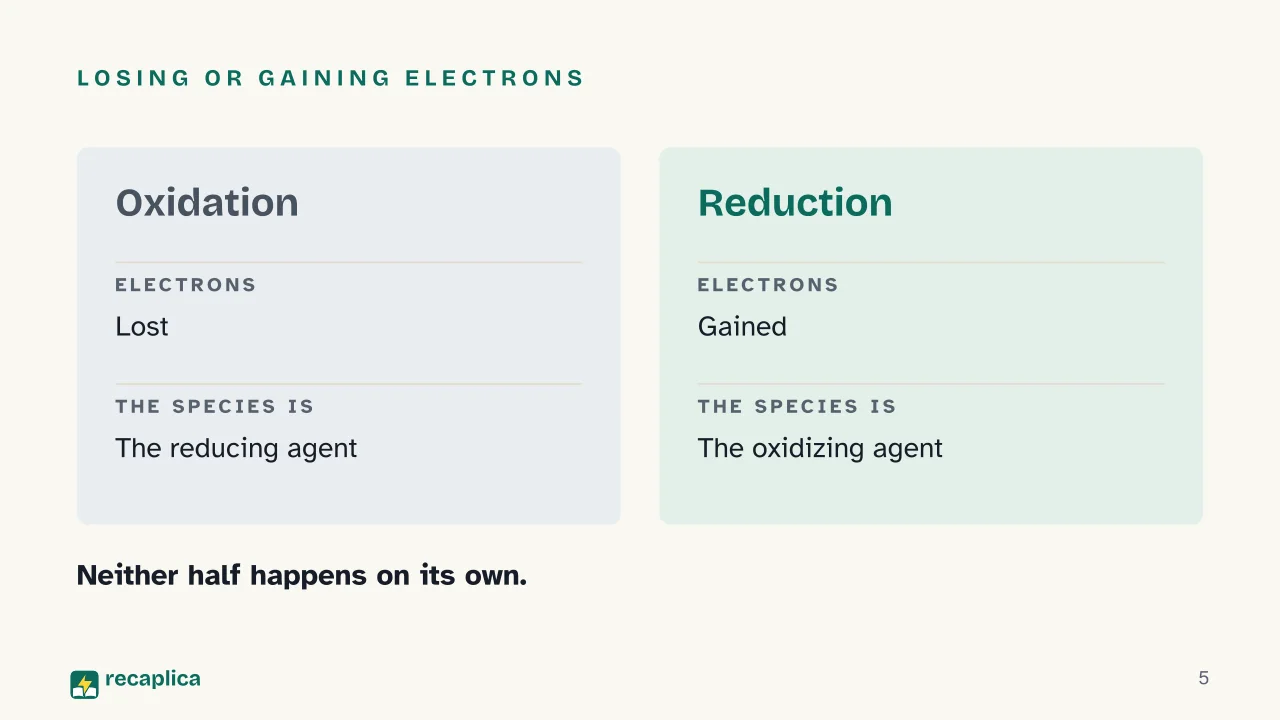
Losing electrons is oxidation and gaining them is reduction, and each one needs the other.
The reducing agent is the species that gets oxidized. The oxidizing agent is the species that gets reduced.
In the oxidizing agent the oxidation number of an atom drops, in the reducing agent it rises.
A half-reaction describes one half of a redox reaction, either the oxidation or the reduction.
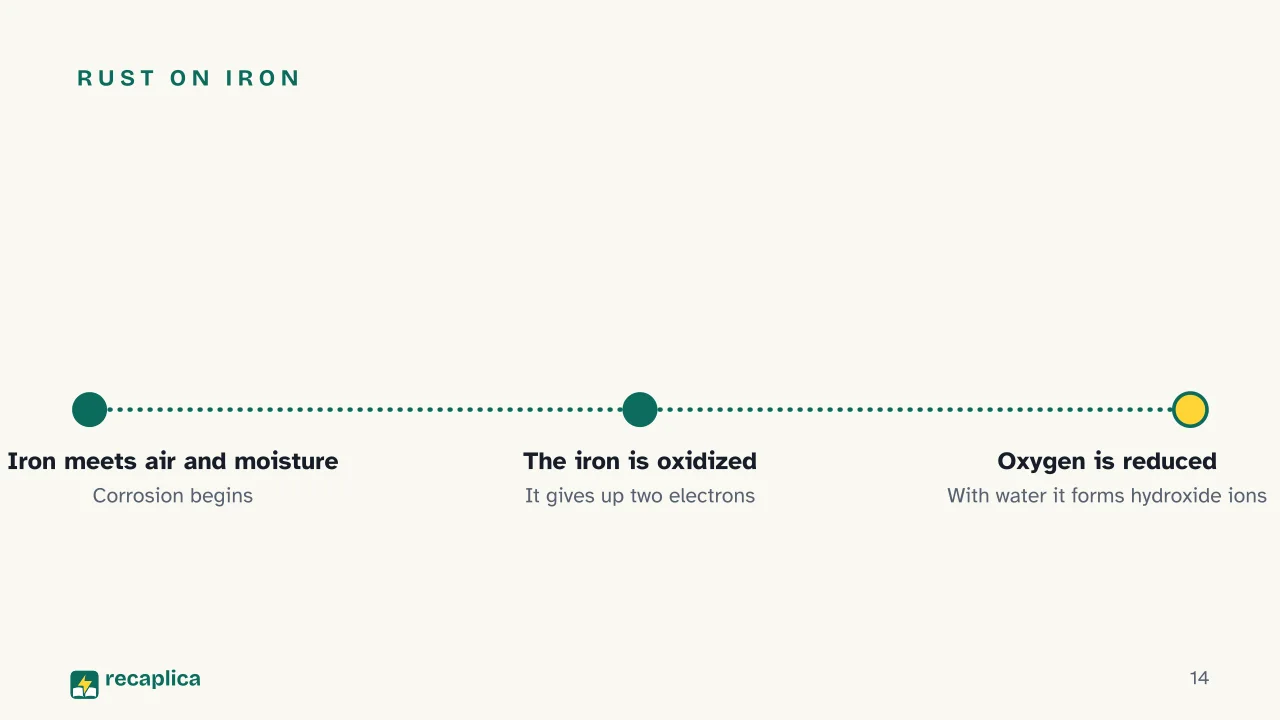
In the corrosion described by Oak National Academy, iron goes to Fe²⁺ by giving up two electrons, and oxygen, together with water, gains electrons.
Deep Dive
What is a redox reaction? Define oxidation and reduction
According to Treccani, an oxidation-reduction reaction is a reaction in which electrons pass from one chemical species to another. Chemistry LibreTexts puts it in two verbs: oxidation is the loss of electrons, and reduction is the gain of electrons.
The two processes always happen together. The electrons one species loses end up on another species.
From oxygen to electrons
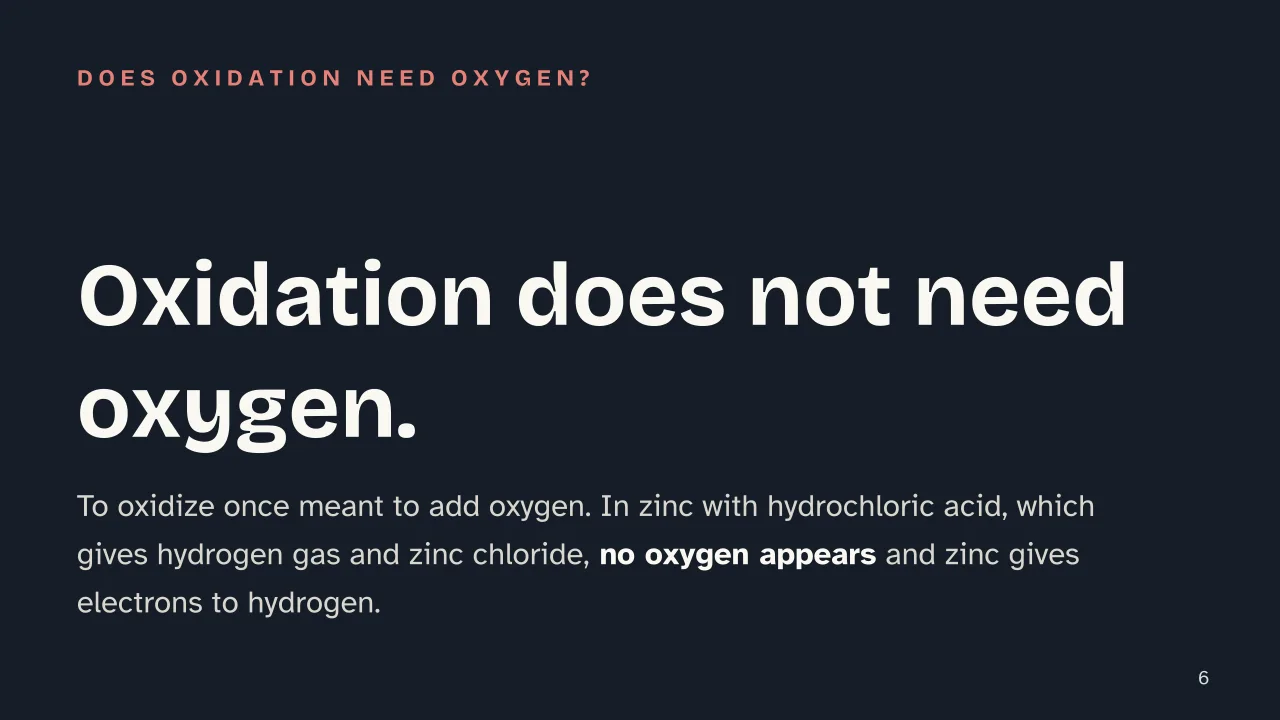
The word “oxidation” started out with a narrower meaning: according to Chemistry LibreTexts, it originally meant adding oxygen. Chemguide gives the definition in electrons, in which oxidation is the loss of electrons. Chemistry LibreTexts shows the equation for zinc reacting with hydrochloric acid to give hydrogen gas and zinc chloride, and the transfer of electrons from zinc to hydrogen. The equation has no oxygen, so the definition in electrons holds even where oxygen does not appear.
Oxidizing agent and reducing agent
The species that is oxidized gives up electrons and so causes another substance to be reduced: it is the reducing agent. The species that is reduced takes in electrons and causes the other to be oxidized: it is the oxidizing agent. Each name looks at what the species does to its reaction partner.
Species
What it does to electrons
What it does to the other species
Name
The one that is oxidized
Loses them
Causes it to be reduced
Reducing agent
The one that is reduced
Gains them
Causes it to be oxidized
Oxidizing agent
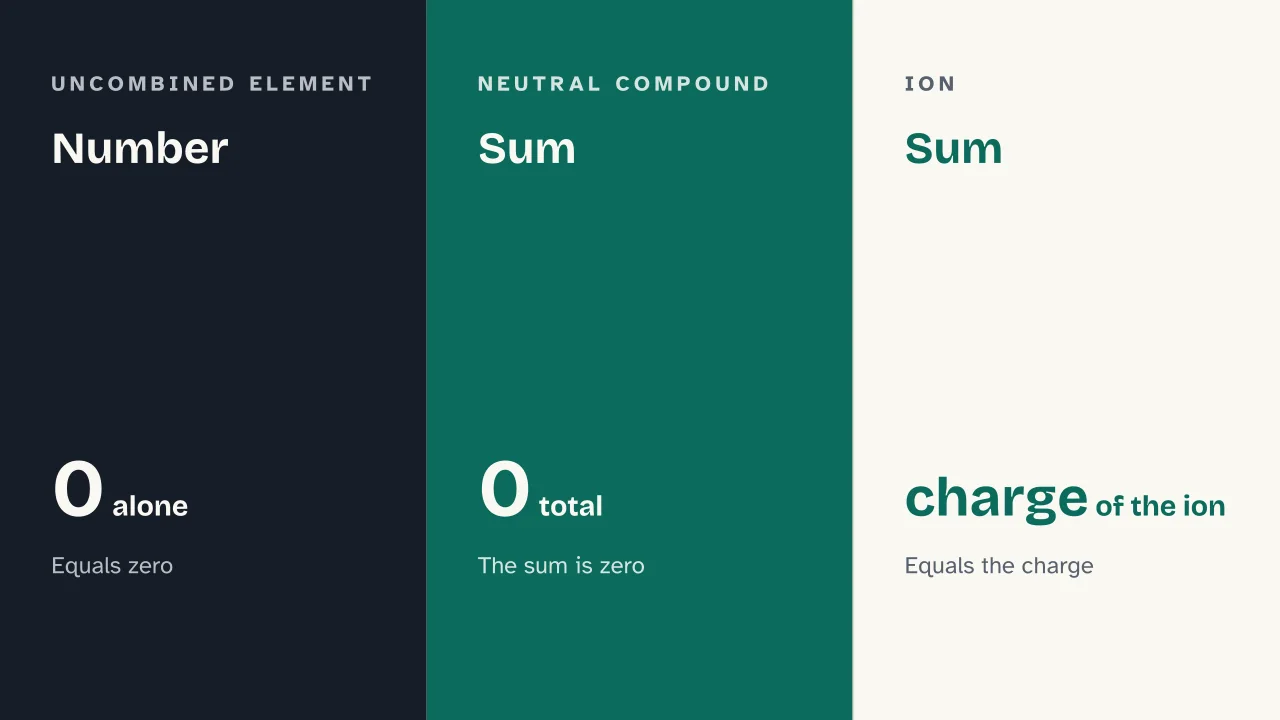
Oxidation numbers
Treccani ties the two roles to the oxidation number: in the oxidizing agent the number of one atom goes down, in the reducing agent it goes up. For an ion made of a single atom, the number is its charge.
Chemistry LibreTexts collects the basic rules for working out the other cases.
Situation
Oxidation number
Uncombined element
0
Neutral compound
The numbers add up to zero
Ion
The numbers add up to the charge of the ion
Oxidation reduction examples
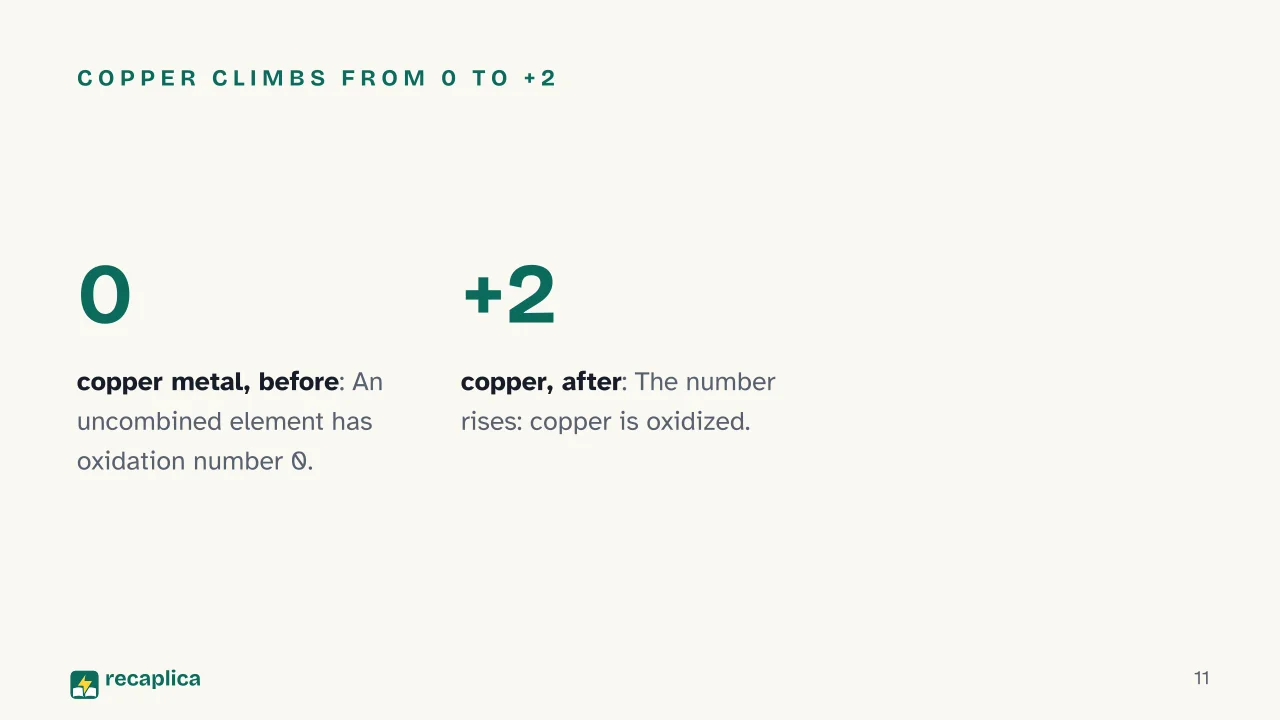
Practical example: in the example Treccani gives, copper metal goes from oxidation number 0 to +2. The number rises, so copper is oxidized and acts as the reducing agent. Treccani also lists the change from iron(II) to iron(III) as an oxidation: applying the rule for one-atom ions, the number goes from +2 to +3.
Zinc with hydrochloric acid, covered above, is the example where oxygen plays no part. Rust, covered below, is the case of iron.
Half reactions
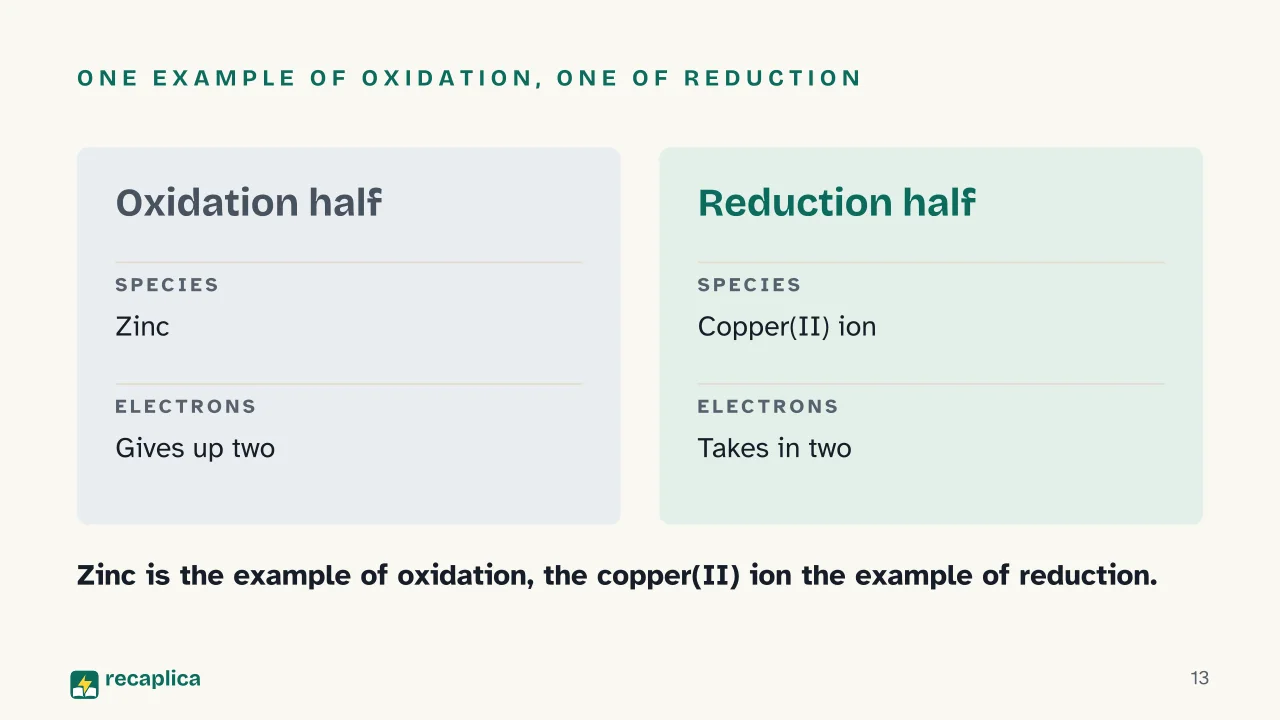
A half-reaction, explains Chemistry LibreTexts, is the oxidation part or the reduction part of a redox reaction. For zinc, the oxidation half-reaction shows two electrons given up. For the copper(II) ion, the reduction half-reaction shows two electrons gained. How the two half-reactions are added together to balance an equation is covered in balancing redox reactions.
Rust
According to Oak National Academy, rust is iron corroding when air and moisture are present. In this corrosion the iron becomes Fe²⁺ after losing two electrons, while oxygen together with water takes up electrons and forms hydroxide ions. By the electron definition in Chemistry LibreTexts, the iron is oxidized and the oxygen is reduced.
Slide deck
Slides ready to download and make your own in PowerPoint or Google Slides, with speaker notes. Pick the Flash cut or the Full one.
✗ Myth To be oxidized, a substance has to react with oxygen.
✓ Reality According to Chemistry LibreTexts, oxidation first meant adding oxygen. Defining it through electrons also works where oxygen is absent: the equation for zinc with hydrochloric acid has none, yet zinc gives electrons to hydrogen. A substance is oxidized when it loses electrons, whatever picks them up.
✗ Myth The oxidizing agent is the substance that gets oxidized.
✓ Reality It is the species being reduced. Its name describes what it does to the other species: it takes electrons away and so causes that species to be oxidized. The reducing agent goes the other way, giving up electrons and being oxidized itself.
✗ Myth A species can lose electrons even if nothing takes them.
✓ Reality Oxidation and reduction always happen together, and in a redox reaction the electrons move from one species to another. Every loss of electrons has a matching gain somewhere else.
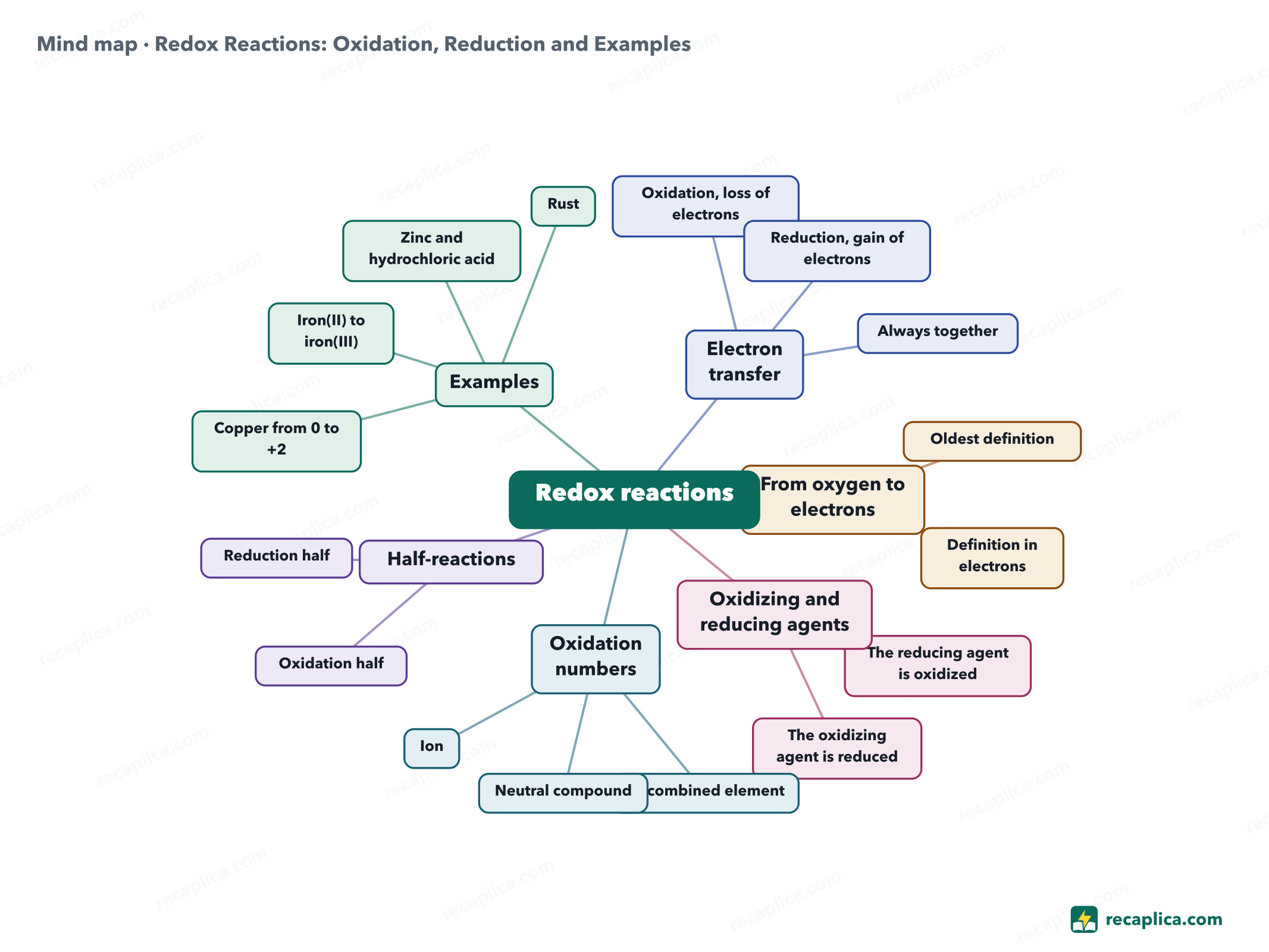
Mind map
Drag the background to move around and the nodes to reposition them; use − and + to collapse and expand branches.
Definition in electronsMore general, works without oxygen
Oxidizing and reducing agents
The reducing agent is oxidized
The oxidizing agent is reduced
Oxidation numbers
Uncombined elementEquals zero
Neutral compoundThe sum is zero
IonThe sum equals its charge
Half-reactions
Oxidation half
Reduction half
Examples
Copper from 0 to +2
Iron(II) to iron(III)
Zinc and hydrochloric acid
Rust
Quiz: test yourself
Answer the questions to check what you have learned: you get instant feedback and a short explanation.
Grade0/100/5
Answers: 1-A · 2-B · 3-C · 4-D · 5-B
Flashcards
Tap the card to flip it and check whether you remember the answer, then move to the next one.
1 / 8
Explain it in your own words
The ultimate test: if you can explain it in simple words, you've truly understood it. Write your explanation, then compare it with the Recap.
Your explanation is saved only on this device.
A redox reaction is a reaction in which electrons move from one chemical species to another. The species that gives up electrons is oxidized and acts as the reducing agent. The one that takes them in is reduced and acts as the oxidizing agent. Neither half happens alone. Oxidation numbers let you follow the transfer: the number goes up in the species being oxidized and down in the one being reduced.
Frequently asked questions
What is the difference between oxidation and an oxidizing agent?
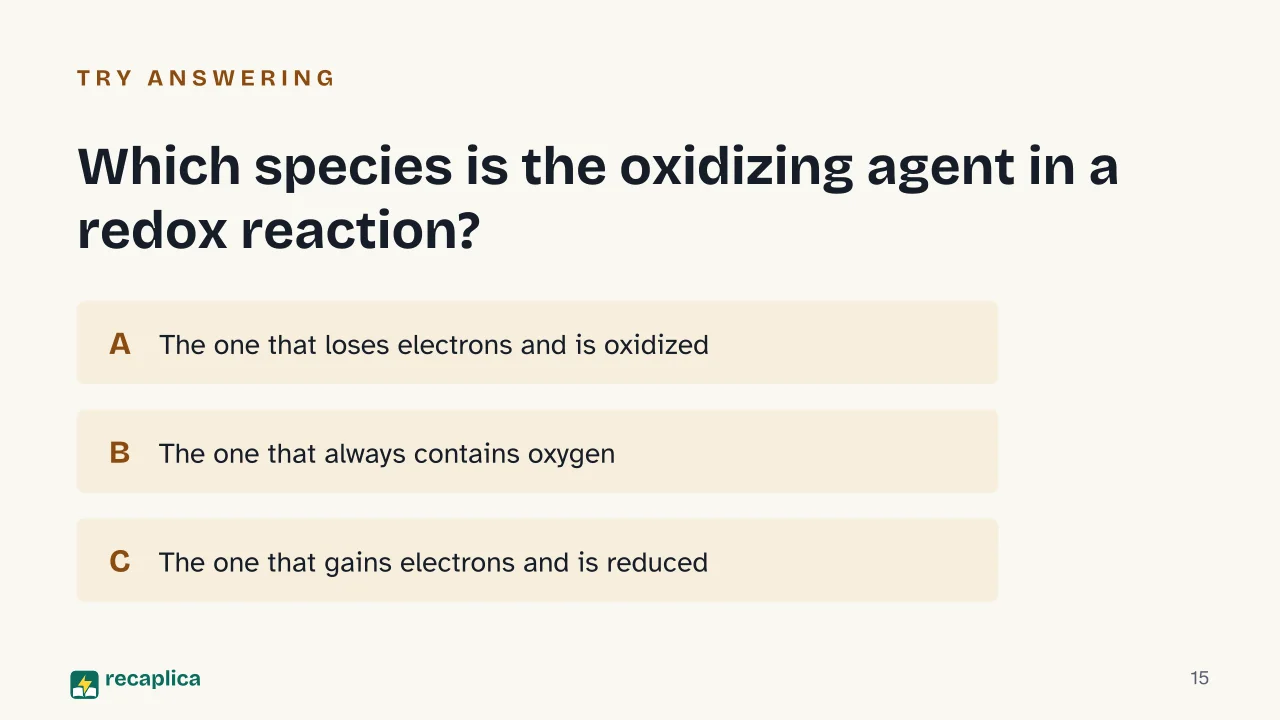
Oxidation is the process in which a species loses electrons. The oxidizing agent is the species that gains them and is therefore reduced, causing the other species to be oxidized.
How do I tell which species is oxidized in a reaction?
Compare the oxidation numbers of the atoms before and after. If the number rises, the species holding that atom is oxidized and is the reducing agent. If it drops, the species is reduced and is the oxidizing agent.
How do you work out an oxidation number?
An uncombined element is zero. Then the total has to match: zero for a neutral compound, the ion's charge for an ion. If the ion has a single atom, the number is the charge itself.
Is rusting iron a redox reaction?
Yes. Oak National Academy describes iron turning into Fe²⁺ as it loses two electrons, while oxygen together with water takes up electrons and forms hydroxide ions. By the electron definition in Chemistry LibreTexts, the iron is oxidized and the oxygen is reduced.
Can you have oxidation without oxygen?
Yes. According to Chemistry LibreTexts, the original meaning was adding oxygen. The electron definition also works where oxygen is absent: in zinc with hydrochloric acid, zinc gives electrons to hydrogen.
Every Recap goes through an independent review before publication.
Statistics, only if you say so
To learn which Recaps help most we would use Google Analytics, with aggregate, anonymous data. It starts only with your OK, and you can change your mind anytime. Privacy policy